BACKGROUNDER
US Senator Lindsey Graham on January 27 described the Syrian Kurds as “under threat from the new Syrian government that is aligned with Turkey”.
The Republican lawmaker said that he plans to this week put forward legislation, named the “Save the Kurds Act”, that will impose “crippling sanctions” on any government or group seen as involved in hostilities against the Kurds.
As fears grow that an ongoing brittle ceasefire between the Syrian Kurds and Syria’s post-Assad government will prove to be nothing but a delay leading up to a conflict over the lands still held by the Kurdish-led Syrian Democratic Forces (SDF) in northeastern Syria, bordering Turkey, Graham warned that abandoning the Kurds would be “a disaster for America’s reputation and national security interests”.
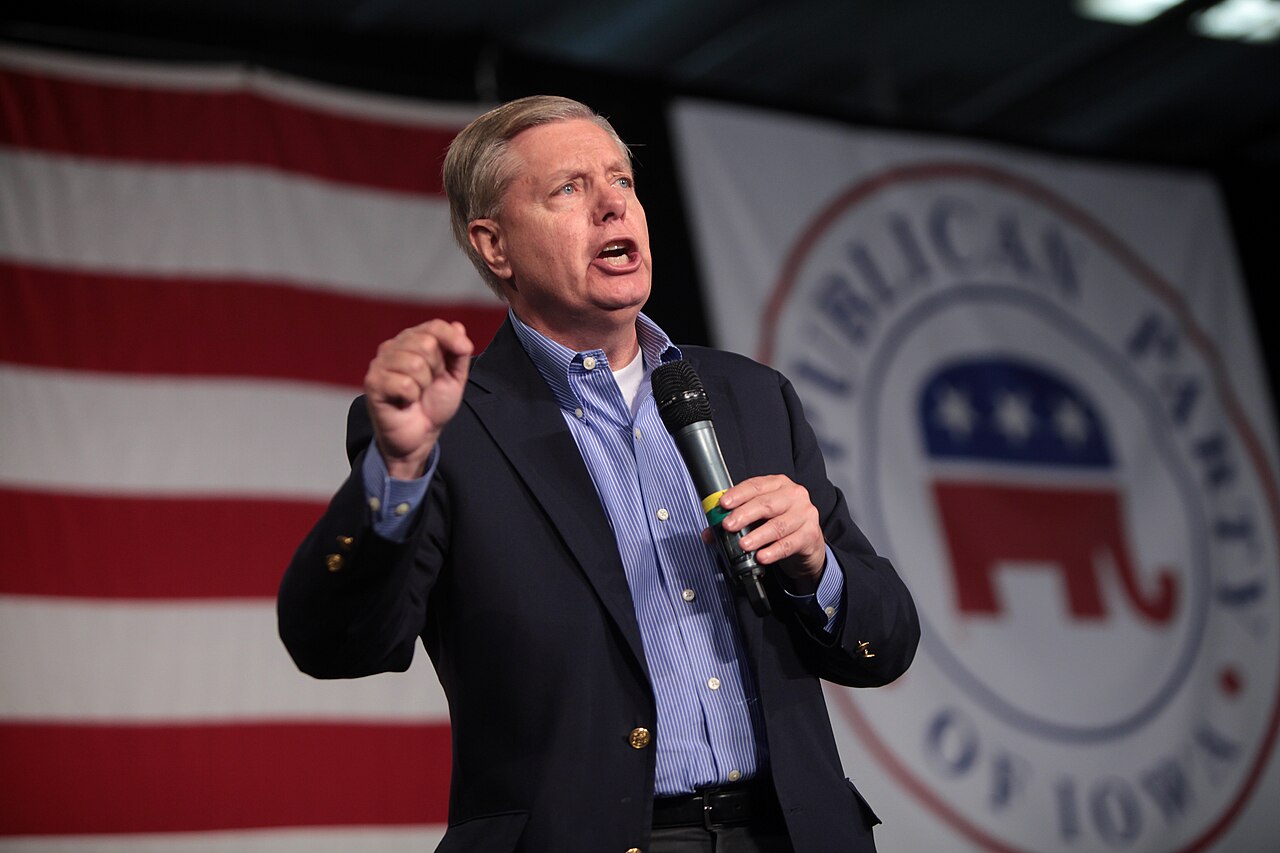
If the US abandons the SDF, it will be “a disaster for America’s reputation and national security interests”, according to Senator Lindsey Graham (Credit: Gage Skidmore, cc-by-sa 3.0).
It was the SDF, reminded Graham, that served as the chief US ally in destroying the Islamic State group’s territorial hold on extensive parts of Syria.
The “Save the Kurds Act” should attract bipartisan support but “must have teeth to make it effective”, the senator added.
With a potential war looming, Syria’s Defence Ministry and the SDF on January 24 extended a ceasefire by 15 days.
The US Trump administration has made it clear that Washington no longer regards the SDF as its key partner in battling remnants of Islamic State in Syria, saying that that role has been handed to Damascus.
The US military is using the pause in fighting to move thousands of Islamic State detainees, previously guarded by the SDF in northeastern Syria, to Iraq. There is anxiety that prison breaks could lead to the spread of many hardened Islamist terrorists across the region. US Central Command said on January 21 it would “help ensure the terrorists remain in secure detention facilities.”
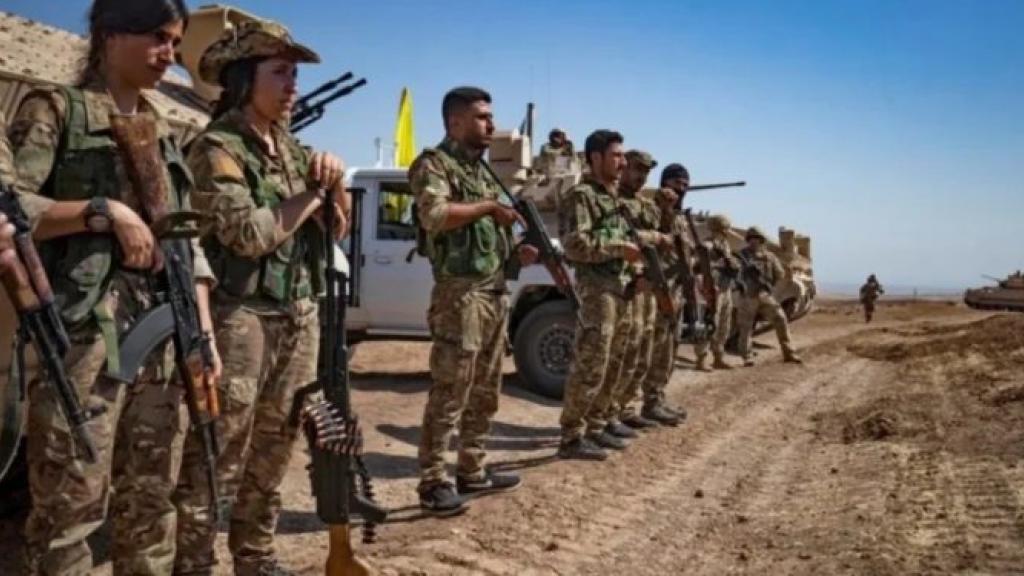
Regional reports indicate that SDF forces have spent time provided by the ceasefire distributing weapons to residents in Kurdish-majority areas willing to take up arms, with calls having gone out for a general mobilisation.
On January 24, a Guardian reporter filing from the city of Deir ez-Zor in eastern Syria, reported: “Many residents in Kurdish-majority areas have armed themselves. Kurdish forces have dug in, having prepared for this fight for years, creating a vast subterranean tunnel network to facilitate guerrilla fighting against a better armed force.”
Turkey, which strongly backs the government in Damascus, regards the SDF, whose military backbone is the People’s Protection Units (YPG), as little different to the Kurdistan Workers’ Party (PKK), which, designated a terrorist organisation by Turkey and its Western allies, fought a four-decade insurgency against Ankara. That ended last year as Turkish and PKK officials agreed talks. Any permanent peace deal that results would require the full surrender of weapons by the PKK, which is based in the Qandil Mountains of northern Iraq.
The danger is that a war between the Damascus administration, headed by former Al-Qaeda jihadist but now Trump-backed Ahmed al-Sharaa, and the SDF could draw in both the PKK and Turkish forces. Groups among the millions of Kurds who live in Iran in proximity to the Turkish and Iraqi borders must also be a consideration.
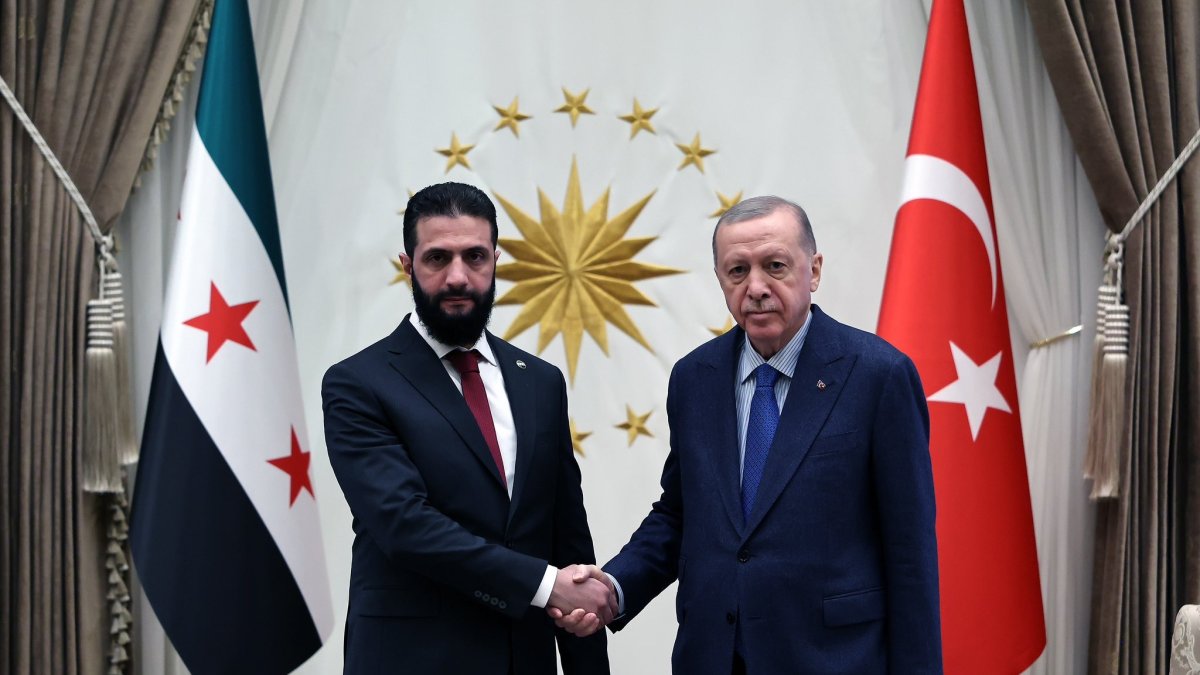
Syria's Turkey and Trump-backed president, Ahmed al-Sharaa, with Turkey's leader Recep Tayyip Erdogan (Credit: Turkish presidency).
Turkish President Recep Tayyip Erdogan said on January 21 that the Kurdish forces in northeastern Syria must disarm and disband. He welcomed the ceasefire but said full disbandment would be required to prevent further fighting.
In 2019, when Turkey made an incursion into Syria to pursue Kurdish forces, Graham announced that he was intending to introduce legislation that would hit Ankara with “devastating” sanctions.
AFP on January 27 reported a spokesman for the political wing of the PKK as saying that recent clashes between Syria’s military and the SDF were a setback for PKK’s peace efforts with Turkey. He contended that the fighting was a “plot and conspiracy” aimed at derailing the talks with the Erdogan administration.
“The developments in Syria and the larger Middle East have a direct effect on the peace process in Turkey,” said Zagros Hiwa, the spokesman.
The SDF has controlled large parts of northeastern Syria for nearly a decade.
INTERVIEW
Kurds in Syria 'sacrificed' says head of Kurdish Institute of Paris
Syrian government forces have seized swathes of territory from Kurdish forces in the north of the country, effectively dismantling more than a decade of self-rule by the Kurds. The head of the Kurdish Institute of Paris tells RFI that the Kurdish-dominated Syrian Democratic Forces, who fought alongside the United States to combat Islamic State, have been not only abandoned, but sacrificed.
Issued on: 22/01/2026 - RFI
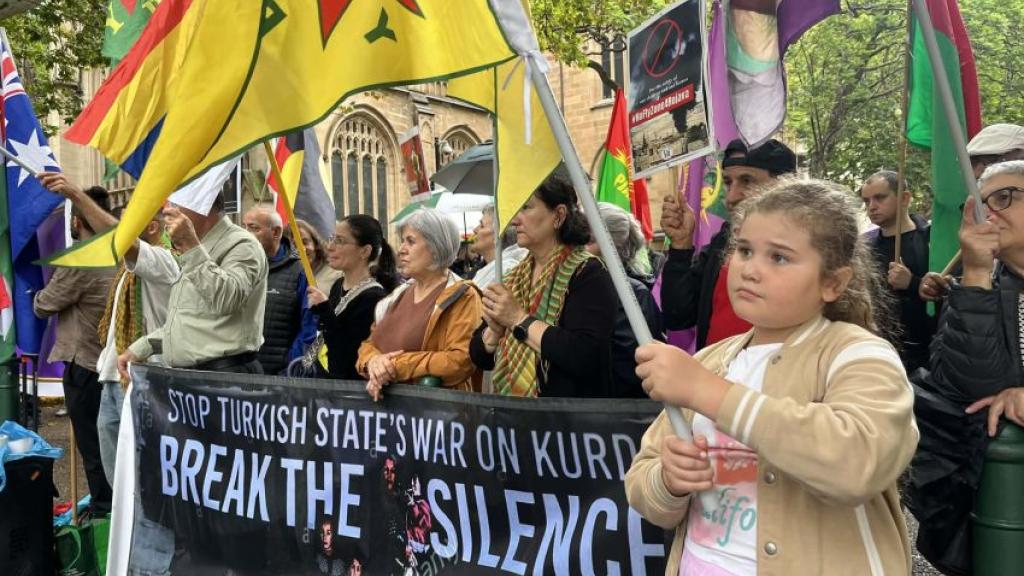
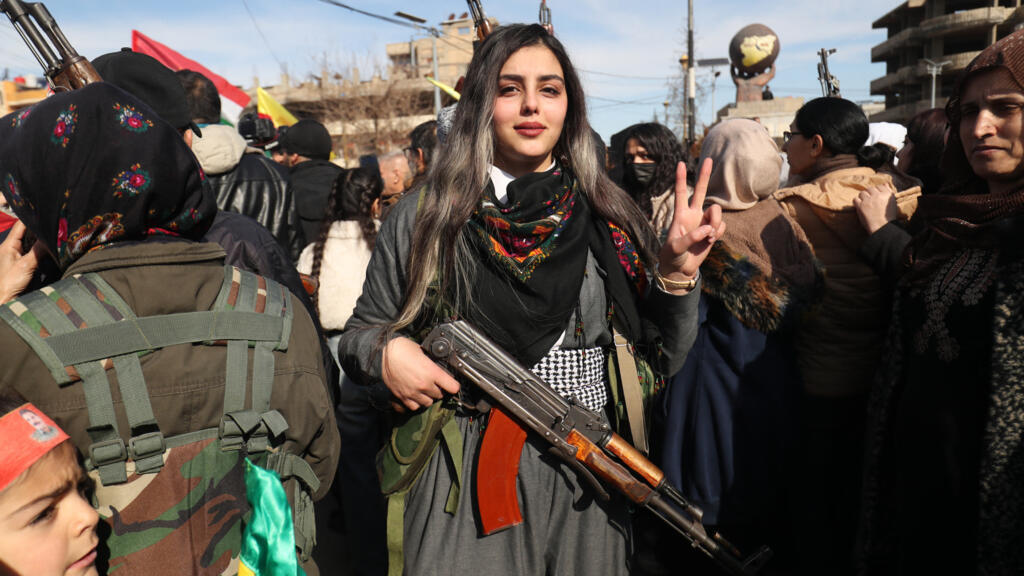 Kurds rallied in Qamishli on 20 January 2026 against a Syrian government advance, before the announcement of a truce deal that many now see as a betrayal. © AFP - DELIL SOULEIMAN
On Tuesday, the Syrian Defence Ministry announced a ceasefire with Kurdish forces and gave them four days to agree to integrate into the forces of President Ahmed al-Sharaa – the Islamist military strongman who came to power in December 2024.
The United States, the main ally of the Syrian Democratic Forces (SDF), has urged them to accept.
The SDF has so far resisted joining the central state, and ceasefire negotiations have collapsed.
Syrian government forces have seized swathes of territory from Kurdish forces in northern Syria, driving them out from Aleppo, Raqqa and Deir ez-Zor – effectively dismantling more than a decade of self-rule by the Kurds.
RFI spoke to Kendal Nézan, the president of the Kurdish Institute of Paris, about the latest developments.
Kendal Nezan: Obviously, we are very worried. The offensive began on 6 January, after a deal between President Trump and Turkish President Erdoğan, so with an American green light.
We saw nearly 40,000 militiamen from the Syrian Arab Army mobilised against two Kurdish neighbourhoods where there were around 450,000 displaced refugees. The neighbourhoods have been defended since 2011 by just a few hundred local police. That gives you a sense of the disproportion.
The neighbourhoods were encircled and, after six days of fighting, the Kurds withdrew. Afterwards, under American pressure, they decided to pull out of towns with an Arab majority, which they did. The Syrian army then retook these cities, which had been liberated by Kurdish forces from the grip of Islamic State.
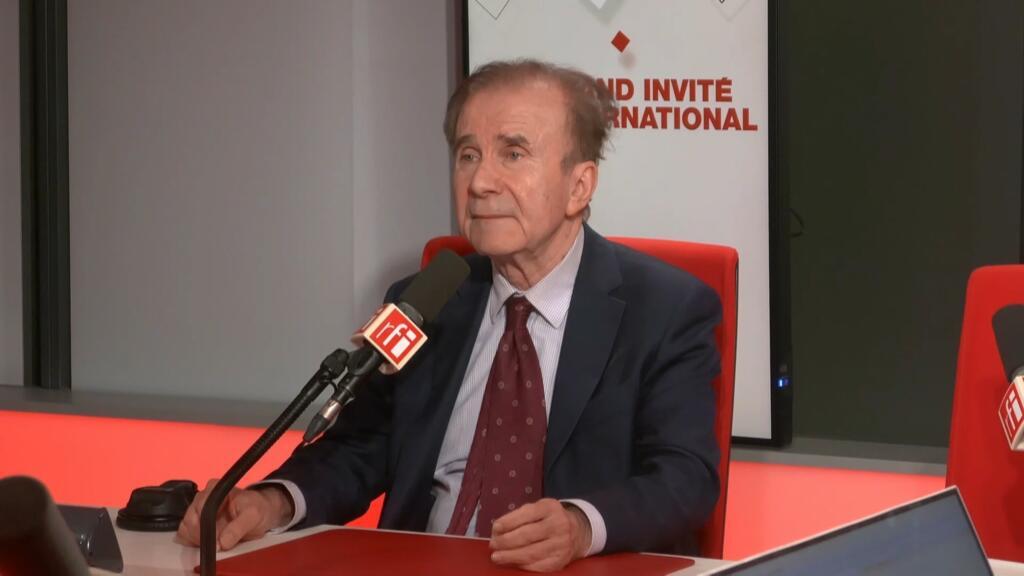 Kendal Nezan at RFI, 21 January, 2026. © RFI
RFI: A four-day ceasefire came into effect on Tuesday night. Could this help bring the current confrontation to a peaceful resolution?
KN: The issue obviously goes far beyond the fate of the Kurds alone. The fate of the Kurds matters because they defended not only their country and their territory, but also Europe, and humanity, against the Islamist scourge. More than 15,000 young Kurds were killed in that fight. They defeated Islamic State and captured tens of thousands of its members, who were held in camps. They have been doing this since 2014.
And how are they thanked? By being handed over to the Syrian regime and told 'listen, your mission is over, find an arrangement with the new Syrian regime', which is Islamist in nature, given that the current leader is a former jihadist.
So what will happen? The Kurds are faced with a dilemma. They are now confined to areas with a Kurdish majority. Either they come to terms with the regime by individually integrating into the new Syrian army, case by case, or they shift into resistance against this regime.
Syria says Sharaa, Trump discuss Kurdish rights as forces deploy in country's north, east
RFI: What is President Ahmad al-Sharaa trying to achieve?
KN: His intention is to establish his authority across the entire territory, with the logistical, diplomatic and political backing of Turkey, his sponsor. That's very important to point out.
And to establish an Islamic Syrian republic that is already in conflict internally. We saw the massacres of Alawites in March and of Druze in July. The Christian community is very worried. Now it is the Kurds.
So after the dictatorship of Bashar al-Assad, we are moving rapidly towards a new dictatorship – this time Islamist. And I say this for Europeans who think the regime will stabilise: such a regime, with so much power concentrated in the hands of one man, will generate a new influx of refugees and will become an Islamist hub.
RFI: So what is happening in Syria will have consequences for Europe and elsewhere?
KN: It will certainly have consequences in the region, and in Europe. It could tip over and become a centre of jihadism, because within the current Syrian Arab Army you have a heterogeneous mix of various Islamist militias – including between 6,000 and 8,000 foreign jihadists.
RFI: Do the events of recent weeks definitively mark the end of the Kurdish dream of autonomy in Syria?
KN: The Kurds are a resilient people. Over the course of their turbulent history, they have experienced setbacks, betrayals and shifting alliances. Definitive end? No.
But for the moment there is an autonomous zone in northern and north-eastern Syria. That zone has now shrunk to almost nothing and will probably no longer exist. The Kurds had in fact established an alternative system that was ecological and feminist, in which all components of the population – Arabs, Assyrian Chaldeans, women, everyone – took part. And we are heading towards an authoritarian regime where there is only the voice of the leader, who has appointed a parliament and rules the country with an iron fist.
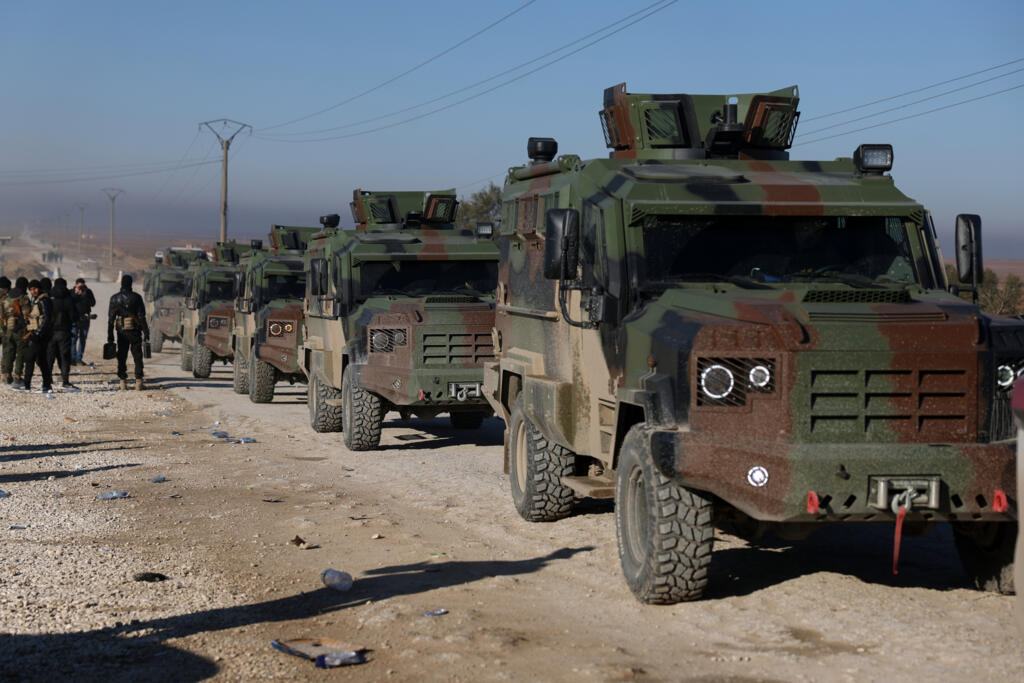 Syrian government forces in armoured vehicles enter the al-Hol camp in northeastern Syria's Hasakeh province on 21 January, after the withdrawal of the Syrian Democratic Forces. AP - Ghaith Alsayed
What's driving France's sudden deportation of Kurdish activists?
RFI: There was also talk of a repressive Kurdish authority installed in Arab regions. It was not an ideal, democratic system either.
KN: Repressive? Certainly not. But conservative Arab tribes did not agree with the model that was put in place, because women were involved, because there were local councils and democracy, so there was irritation. Now they feel liberated.
One of the symbols of the Kurdish resistance was a female fighter, a statue of a Kurdish woman fighter who had liberated Raqqa. The first thing the current Syrian army did was to pull down that statue of a woman. For them, it's heresy. And they opened prison doors to free Kurdish detainees.
RFI: The issue of controlling the region’s prisons, where jihadists or people close to Islamic State are held, is one of the big questions. The Syrian army accuses the SDF of having opened the doors, notably at Shahdad prison, where 120 Islamic State terrorists were held. Does this mean the Kurdish forces are now playing a dangerous game, using the prisons as their last card, at the expense of security?
KN: The Syrian government is coached and briefed by Turkey, which has an extraordinary mastery of black, negative and deceitful propaganda. If the Kurds had wanted to open the prison doors, they would have done so. They have guarded these prisons for around 10 years.
But on Tuesday, for example, the Kurds withdrew from al-Hol, the largest detention camp in the area, where there are 24,000 relatives of jihadists. The camp was attacked from all sides by drones, by the Syrian army and by the Americans. The international coalition was informed and did nothing. They said 'listen, we cannot, we must first defend our own territories, and then it is up to you'. They no longer have the means to act.
Turkey warns Kurdish-led fighters in Syria to join new regime or face attack
RFI: Do you feel that you've been abandoned by the West, by the Americans?
KN: Yes, we've been abandoned. Ingratitude is, of course, a constant in human and political history. I would even say we've been sacrificed by the allies of the international coalition, the Americans of course. But the others remained silent.
RFI: Would you include the French in that?
KN: The voice of France is inaudible. I may be a little hard of hearing, but France’s voice is inaudible. Have you seen any statements of support for our 'brothers in arms'? That was the expression used by a French minister only recently.
This interview, adapted from the original version in French, has been lightly edited for clarity
Kurds in Syria 'sacrificed' says head of Kurdish Institute of Paris
Syrian government forces have seized swathes of territory from Kurdish forces in the north of the country, effectively dismantling more than a decade of self-rule by the Kurds. The head of the Kurdish Institute of Paris tells RFI that the Kurdish-dominated Syrian Democratic Forces, who fought alongside the United States to combat Islamic State, have been not only abandoned, but sacrificed.
Issued on: 22/01/2026 - RFI
On Tuesday, the Syrian Defence Ministry announced a ceasefire with Kurdish forces and gave them four days to agree to integrate into the forces of President Ahmed al-Sharaa – the Islamist military strongman who came to power in December 2024.
The United States, the main ally of the Syrian Democratic Forces (SDF), has urged them to accept.
The SDF has so far resisted joining the central state, and ceasefire negotiations have collapsed.
Syrian government forces have seized swathes of territory from Kurdish forces in northern Syria, driving them out from Aleppo, Raqqa and Deir ez-Zor – effectively dismantling more than a decade of self-rule by the Kurds.
RFI spoke to Kendal Nézan, the president of the Kurdish Institute of Paris, about the latest developments.
Kendal Nezan: Obviously, we are very worried. The offensive began on 6 January, after a deal between President Trump and Turkish President Erdoğan, so with an American green light.
We saw nearly 40,000 militiamen from the Syrian Arab Army mobilised against two Kurdish neighbourhoods where there were around 450,000 displaced refugees. The neighbourhoods have been defended since 2011 by just a few hundred local police. That gives you a sense of the disproportion.
The neighbourhoods were encircled and, after six days of fighting, the Kurds withdrew. Afterwards, under American pressure, they decided to pull out of towns with an Arab majority, which they did. The Syrian army then retook these cities, which had been liberated by Kurdish forces from the grip of Islamic State.
RFI: A four-day ceasefire came into effect on Tuesday night. Could this help bring the current confrontation to a peaceful resolution?
KN: The issue obviously goes far beyond the fate of the Kurds alone. The fate of the Kurds matters because they defended not only their country and their territory, but also Europe, and humanity, against the Islamist scourge. More than 15,000 young Kurds were killed in that fight. They defeated Islamic State and captured tens of thousands of its members, who were held in camps. They have been doing this since 2014.
And how are they thanked? By being handed over to the Syrian regime and told 'listen, your mission is over, find an arrangement with the new Syrian regime', which is Islamist in nature, given that the current leader is a former jihadist.
So what will happen? The Kurds are faced with a dilemma. They are now confined to areas with a Kurdish majority. Either they come to terms with the regime by individually integrating into the new Syrian army, case by case, or they shift into resistance against this regime.
Syria says Sharaa, Trump discuss Kurdish rights as forces deploy in country's north, east
RFI: What is President Ahmad al-Sharaa trying to achieve?
KN: His intention is to establish his authority across the entire territory, with the logistical, diplomatic and political backing of Turkey, his sponsor. That's very important to point out.
And to establish an Islamic Syrian republic that is already in conflict internally. We saw the massacres of Alawites in March and of Druze in July. The Christian community is very worried. Now it is the Kurds.
So after the dictatorship of Bashar al-Assad, we are moving rapidly towards a new dictatorship – this time Islamist. And I say this for Europeans who think the regime will stabilise: such a regime, with so much power concentrated in the hands of one man, will generate a new influx of refugees and will become an Islamist hub.
RFI: So what is happening in Syria will have consequences for Europe and elsewhere?
KN: It will certainly have consequences in the region, and in Europe. It could tip over and become a centre of jihadism, because within the current Syrian Arab Army you have a heterogeneous mix of various Islamist militias – including between 6,000 and 8,000 foreign jihadists.
RFI: Do the events of recent weeks definitively mark the end of the Kurdish dream of autonomy in Syria?
KN: The Kurds are a resilient people. Over the course of their turbulent history, they have experienced setbacks, betrayals and shifting alliances. Definitive end? No.
But for the moment there is an autonomous zone in northern and north-eastern Syria. That zone has now shrunk to almost nothing and will probably no longer exist. The Kurds had in fact established an alternative system that was ecological and feminist, in which all components of the population – Arabs, Assyrian Chaldeans, women, everyone – took part. And we are heading towards an authoritarian regime where there is only the voice of the leader, who has appointed a parliament and rules the country with an iron fist.
What's driving France's sudden deportation of Kurdish activists?
RFI: There was also talk of a repressive Kurdish authority installed in Arab regions. It was not an ideal, democratic system either.
KN: Repressive? Certainly not. But conservative Arab tribes did not agree with the model that was put in place, because women were involved, because there were local councils and democracy, so there was irritation. Now they feel liberated.
One of the symbols of the Kurdish resistance was a female fighter, a statue of a Kurdish woman fighter who had liberated Raqqa. The first thing the current Syrian army did was to pull down that statue of a woman. For them, it's heresy. And they opened prison doors to free Kurdish detainees.
RFI: The issue of controlling the region’s prisons, where jihadists or people close to Islamic State are held, is one of the big questions. The Syrian army accuses the SDF of having opened the doors, notably at Shahdad prison, where 120 Islamic State terrorists were held. Does this mean the Kurdish forces are now playing a dangerous game, using the prisons as their last card, at the expense of security?
KN: The Syrian government is coached and briefed by Turkey, which has an extraordinary mastery of black, negative and deceitful propaganda. If the Kurds had wanted to open the prison doors, they would have done so. They have guarded these prisons for around 10 years.
But on Tuesday, for example, the Kurds withdrew from al-Hol, the largest detention camp in the area, where there are 24,000 relatives of jihadists. The camp was attacked from all sides by drones, by the Syrian army and by the Americans. The international coalition was informed and did nothing. They said 'listen, we cannot, we must first defend our own territories, and then it is up to you'. They no longer have the means to act.
Turkey warns Kurdish-led fighters in Syria to join new regime or face attack
RFI: Do you feel that you've been abandoned by the West, by the Americans?
KN: Yes, we've been abandoned. Ingratitude is, of course, a constant in human and political history. I would even say we've been sacrificed by the allies of the international coalition, the Americans of course. But the others remained silent.
RFI: Would you include the French in that?
KN: The voice of France is inaudible. I may be a little hard of hearing, but France’s voice is inaudible. Have you seen any statements of support for our 'brothers in arms'? That was the expression used by a French minister only recently.
This interview, adapted from the original version in French, has been lightly edited for clarity
 |
| WOMAN, LIFE, FREEDOM |
Issued on: 24/01/2026 -
PODCAST Play - 06:21 INTERNATIONAL REPORT
The Syrian Army has made sweeping gains against Kurdish-led forces in northeast Syria, dealing a major blow to Syrian Kurdish autonomy and handing victories to both Damascus and neighbouring Turkey. With Washington abandoning its backing of the militia alliance, the Syrian Democratic Forces now face disbandment or renewed fighting.
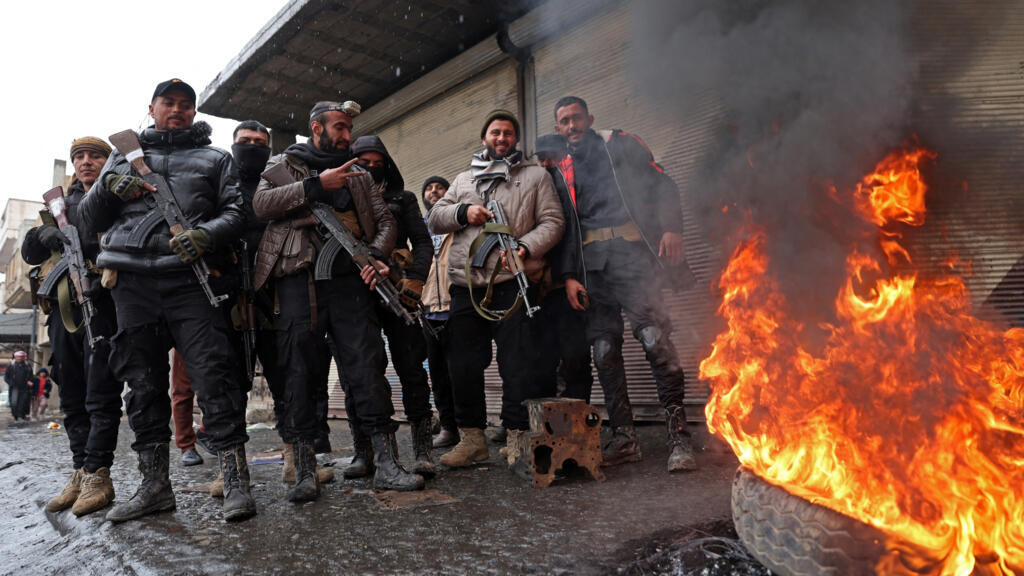
Within days, Syrian government troops swept aside the SDF and took control of vast areas of territory. The offensive followed the collapse of talks on integrating the SDF into the Syrian Army.
Washington’s shift proved decisive.
“The game changer was the American permission, the American green light to [Syrian President] Ahmed al-Sharaa. That opened the door to Damascus launching the offensive,” said Syria expert Fabrice Balanche, of Lyon University.
The SDF had been a key US ally in the fight against Islamic State and relied on American support to deter an attack by Damascus. But with Islamic State now weakened and Sharaa joining Washington’s alliance against the group, the Kurds lost their leverage.
“Trump viewed the relationship as temporary, not a true alliance,” said Balanche, a municipal councillor with France's rightwing Republicans party.
French journalist arrested in Turkey while covering pro-Kurdish protest released
US withdrawal and rapid collapse
As Washington ended its support, many Arab tribes quit the Kurdish-led coalition. They aligned with Damascus, allowing government forces to advance quickly in Arab-majority areas.
Several prisons holding Islamic State members fell to government control, with reports that hundreds escaped. Fears of wider instability pushed Washington to broker a ceasefire between the SDF and the Syrian government.
Under the deal, SDF forces are to disband and merge into Syrian government units, a move backed by Ankara.
Turkey has strongly supported the Damascus offensive. It accuses Kurdish elements within the SDF of links to the PKK, which has fought a decades-long insurgency against the Turkish state.
“Turkey is certainly behind all these operations,” said international relations professor Huseyin Bagci of Ankara’s Middle East Technical University. “The Turkish defence minister, General Chief of Staff, has recently been in Syria. So there is probably a common action.”
Kurdish tensions inside Turkey
The assault has triggered protests by members of Turkey’s large Kurdish minority in support of Syrian Kurds. It has also coincided with talks between the pro-Kurdish Dem Party, the Turkish government and the outlawed PKK aimed at ending the conflict.
The PKK declared a ceasefire and pledged to disband last year, but talks stalled months ago. Ankara has blamed the deadlock on the SDF’s refusal to join the PKK’s disarmament commitment.
The fighting in Syria could deepen Kurdish disillusionment with the peace process, political analyst Sezin Oney, of the Politikyol news portal, warned.
“They pictured this peace process as a big win for the PKK that finally all these rights, all the political rights, cultural rights, everything would be recognized, and a new era would begin," Oney said.
"It's not that, and it won't be that there is nobody in Turkey on the side of the government who was envisioning such a change or anything of the sort."
The Dem Party had few options left. “The only thing Dem can do is rally the Kurdish public in Turkey, and it is just going to be disbursed,” Oney added.
Syrian army offensive in Aleppo draws support from Turkey
Risk of wider bloodshed
Turkish police have broken up many pro-SDF protests using water cannon and gas, carrying out hundreds of arrests.
French journalist Raphael Boukandoura was detained and later released, in a move rights groups said was meant to intimidate foreign media.
Without US intervention, Damascus would push further into Kurdish-held areas, Balanche warned. “Sharaa will seize everything."
The risk of large-scale violence, he added, was growing in a region marked by tribal rivalries and years of war.
“Northeastern Syria is a very tribal area. The tribal leaders who are mobilizing their groups, their fighters, and they’re attacking," Balanche said.
“Because of 10 years of civil war, you have a lot of vengeance that was under the table, and now everything is exploding. So it could be very bloody.”
By: Dorian Jones

INTERVIEW
After Syrian forces on Wednesday seized Kurdish strongholds in the northeast of the country, the Syrian government gave Kurdish forces until Saturday to reach an agreement on how they will integrate into the state. Is the dream of an autonomous state over for Syria’s Kurds?
Issued on: 23/01/2026 -
By: Assiya HAMZA
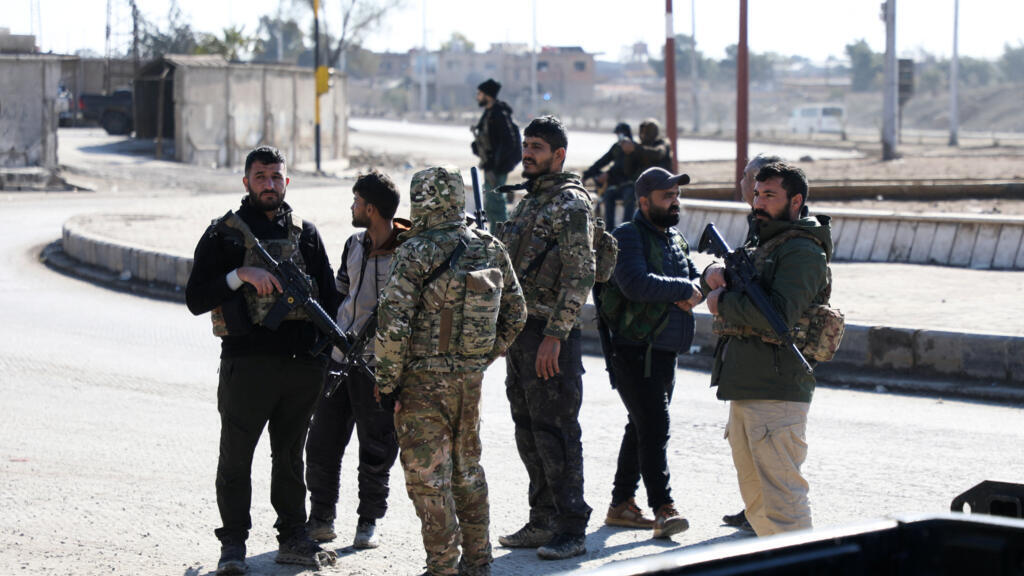
As Syria’s Kurds come under increased pressure from the central government in Damascus, they have seen their alliance with the US crumble.
Backed by the US, the Kurds have long spearheaded efforts by the West to fight against the Islamic State (IS) group.
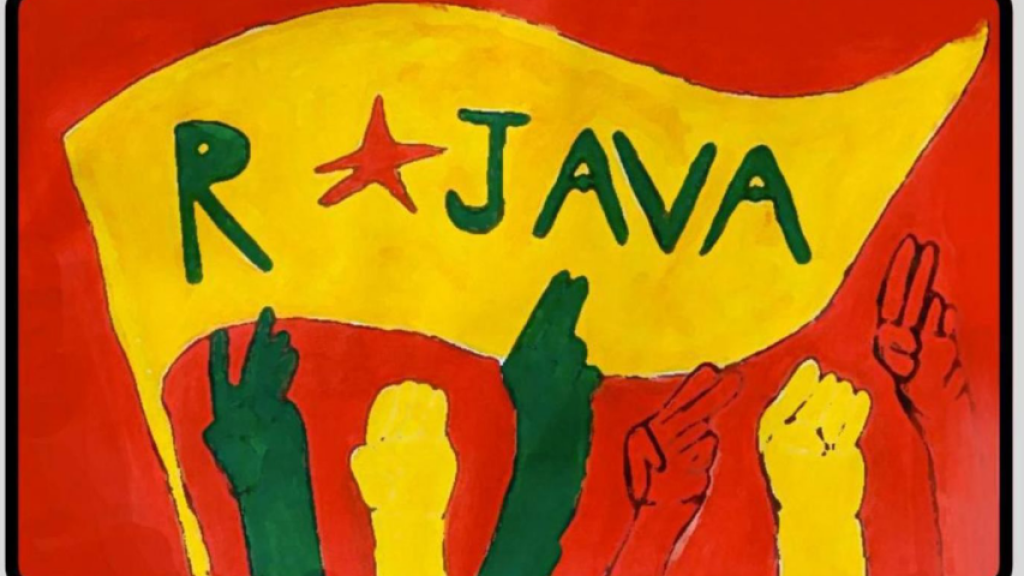
The Kurdish-led armed group, the Syrian Democratic Forces (SDF), in 2012-2013 established its governance over swathes of territory in the north and northeast of the country that became known as the Autonomous Administration of North and East Syria, or Rojava (meaning “west” in Kurdish).
But since the fall of dictator Bashar al-Assad, Syria’s new leadership has formed its own alliance with Washington and pushed the Kurds to give up their aspirations of autonomy.
Violent clashes with government forces in January saw the Kurds driven out from the city of Aleppo. They later evacuated Raqqa and Deir Ezzor.
The SDF, which previously controlled around 30 percent of Syria’s territory, has been pushed back to strongholds along the Turkish border in al-Hasakah, Qamishli and Kobane and handed over governance of prisons holding thousands of IS group members.
“The original purpose of the SDF as the primary anti-ISIS force on the ground has largely expired, as Damascus is now both willing and positioned to take over security responsibilities, including control of ISIS detention facilities and camps,” US ambassador to Syria Tom Barrack wrote on X, using an alternative acronym for the IS group.
Syria, Kurdish-led SDF agree to ceasefire as US says IS group fight largely over
Syrian President Ahmed al-Sharaa has now given the Kurds until January 24 to propose a plan for the peaceful integration of Rojava into the Syrian state.
Are the Kurds' gains in autonomy and sovereignty over the last few years now disintegrating?
Adel Bakawan, director of the European Institute for Studies on the Middle East and North Africa (EISMENA) and author of "La Décomposition du Moyen-Orient. Trois ruptures qui ont fait basculer l'Histoire” (“The Decomposition of the Middle East: Three Breakdowns that Changed History”) explains.
FRANCE 24: Why have Syria’s Kurds been cornered so successfully by Sharaa?
During the Syrian civil war from 2011-2014, around 105 different groups were fighting, sometimes against each other.
This is when Daesh [also known as the Islamic State group] emerged from a split with al Qaeda. The United States and Europe chose to train and support the Kurds so that they could lead the fight against Daesh.
In doing so, the SDF advanced as far as Raqqa and Deir Ezzor – zones controlled by Arab tribes.
When Sharaa took power on December 8, 2024, it was thanks to his network in the Gulf: Saudi Arabia, Qatar and Turkey.
When he visited Riyadh, [Saudi leader] Mohammed bin Salman convinced [US President] Donald Trump to normalise relations with Syria, lifting sanctions and integrating it into the international coalition against Daesh.
The SDF no longer held the card of fighting against Daesh, and when the new Syrian state was integrated into the international coalition, the Kurds also had to hand over control of prisons holding thousands of Daesh leaders and militants.
READ MOREUS begins transfer of up to 7,000 IS group detainees from Syria to Iraq
Next, the Americans asked the Arab tribes that were integrated in the Kurd’s autonomous administration in north-east Syria to cut their ties with the SDF and to join Sharaa’s new army. The Kurds could not wage war against their former allies and the Syrian army, so the cities they were holding fell very quickly.
Finally, the Kurds lost control of the oil and gas fields that had financed their economy, and dams that were very important for geostrategy and geopolitics.
What room for manoeuvre do the Kurds have now?
They don’t have much leverage, except through Iraqi Kurdistan, with whom they have had disagreements throughout the 13 years of Rojava’s governance.
READ MOREKurds march in Iraqi Kurdistan against Syrian government takeover of minority
Thanks to strong international lobbying, Donald Trump picked up the telephone to tell Sharaa not to enter Rojava, the historic Kurdish territory.
Kurdish fighters have now left Aleppo and Raqqa. Clashes there did not spark a war – although the Kurds do still have a very powerful army. It’s a trained and armed ideological organisation, which will not surrender. And that is a means of exerting pressure.
What does the future hold for Rojava? Is it the end of the Kurds' dream of their own state?
We are entering into a grey area. It was predictable that the US would drop the Kurds, and we foresaw that. The Kurds in Rojava have also been abandoned by Israel – even though Israel has helped the Druze.
READ MOREDeadly clashes in Damascus plunge Syria's Druze minority into uncertainty
Israel will not intervene to defend the Kurds against the Syrian army now that Israel and Syria are normalising their relations.
It’s an existential question. In 2017, as they were coming out of a war with Daesh, the Iraqi Kurds played a major role in toppling the caliphate in Mosul and organised a referendum on independence for Iraqi Kurdistan.
Iraq’s Kurds voted 93 percent in favour, but the international community was fiercely opposed, and all the territories were recovered.
In 2019, when the Syrian Kurds were at the height of their powers in Afrin, a very strategic location for them, the Americans gave the green light for pro-Turkish militia organisations to occupy the city. It was a tragic blow for the Kurds.
Is it the end of the dream of independence? There are 50-60 million Kurds, making them the largest people in the Middle East without their own state. How can you stabilise and secure the Middle East when you have 60 million people that have been betrayed and abandoned?
If the international community wants to secure and stabilise the region there must be a Palestinian state and a Kurdish state.
And as the dream of independence has become fragile in Rojava, it has become much more plausible in Iraqi Kurdistan.
What impact will this have on Turkey and its peace process with the Kurdistan Workers’ Party (PKK)?
[PKK leader] Abdullah Ocalan sent a letter to the group from prison asking it to disband, put down its weapons and stop demanding Kurdish independence, federalism, autonomy and even decentralisation.
Its goal is now to fight for a democratic society in Turkey.
The Turks believe this applies to not only the PKK in Turkey but also its branches in Iraq, Syria and Iran – but Abdullah Ocalan has not clearly stated a position on this.
READ MOREPKK fighters destroy weapons at key ceremony in Iraqi Kurdistan
Turkey has strongly encouraged and supported Sharaa’s offensive into territory controlled by the Kurds, while asking that he integrates the Kurds into the new Syria.
But for Turkey to implement its grand strategy across the Middle East, it needs to foster a relationship of “eternal brotherhood” with the Kurds.
Turkey, 20 years ago, did all it could to undermine the regional government in Kurdistan. Today its greatest ally in the region is the Kurdistan regional government in Iraq.
The West has for years relied on the Kurds to fight Daesh. Can the Syrian army really take over this fight?
Sharaa has renounced his former radical beliefs. He is pragmatic and knows how the international arena works. A Qatari communication firm has been helping him with everything from the choice of his suits to trimming his beard.
What interests me is his militant base that must now wage war against Daesh, the Kurds, the Alawites and the Druze.
Sharaa abandoned al Qaeda for Daesh and created its Syrian branch with authorisation from the caliph Abu Bakr al-Baghdadi. And his militant base has absolutely not changed.
When I analyse videos, accounts and speeches on the ground I don’t really see a big difference between the Daesh of 2014 and 2019. Their entire lives are shaped by radical ideology.
For example, they still associate the Kurds with pigs and heretics who must be killed. It’s exactly the same ideology as before.
READ MOREFears mount for Syria’s minorities as video emerges showing rebel fighters executing suspects
Personally, I think that the international community will regret transferring the fight against Daesh from the SDF to Hayat Tahrir al-Sham [HTS, the Islamist rebel group directed by Sharaa during the war]. How can he control his militant base?
Beyond this, the new Syrian army, which has been entrusted with the fight against Daesh, is not homogenous.
There were around 500 armed groups fighting against Bashar al-Assad. Their loyalty ranges from the Syrian state, to Turkey, to Saudi Arabia. So, it’s a very, very risky gamble.
This article was adapted from the original in French by Joanna York.
Syria’s al-Sharaa meets Putin as Moscow seeks to secure military bases
.jpg)
Russian President Vladimir Putin met with Syrian President Ahmed al-Sharaa at the Kremlin on January 28 during the Syrian leader's official visit to Moscow.
Al-Sharaa’s aircraft landed at Vnukovo International Airport, where he was received by Russian Deputy Foreign Minister Sergey Vershinin before being delivered to the Kremlin to meet with the Russian leader, where he exchanged pleasantries.
Putin congratulated al-Sharaa on what he described as the leadership in Damascus's efforts to preserve Syria’s unity.
“Relations with Syria have deep roots,” Putin said, expressing his keenness to expand economic and trade cooperation with Damascus. adding that "the return of areas east of the Euphrates to Syrian state authority represents an important step in strengthening Syria’s territorial unity."
“Russia was ready to participate in Syria’s reconstruction, reiterating Moscow’s support for the country’s territorial integrity,” Putin added.
Al-Sharaa welcomed Russia’s stance, praising what he called Moscow’s “positive position on Syria’s unity” and voicing hope for continued Russian support.
He said there were “many shared issues that the two countries can work on together,” adding that Syria had overcome numerous obstacles over the past year. Ahead of the visit, the Kremlin said, “Relations with Syria are developing actively after the change of regime,” signalling continued engagement between Moscow and Damascus.
According to the Kremlin, Putin and al-Sharaa will discuss the future of Russian forces in Syria, economic cooperation and the broader regional situation. In an earlier statement, the Kremlin said the two sides intended to review “the current situation and prospects for developing bilateral relations in various fields, as well as the situation in the Middle East.”
Asked about the fate of ousted Syrian leader Bashar al-Assad, who is in Russia, the Kremlin declined to comment.
The visit will be al-Sharaa’s second to Moscow. He last travelled to the Russian capital on October 15, 2025, when he met Putin at the Kremlin.
Since Assad’s removal, Damascus under al-Sharaa has adopted a conciliatory tone towards Moscow. Weeks after Assad’s fall, Russia sent officials to Damascus, followed by al-Sharaa’s October visit to Moscow, where he received a warm reception from Putin.
Russia is seeking to secure the future of its naval base in Tartous and its Hmeimim air base, its only military facilities outside the former Soviet Union. The two bases remain a prominent and sensitive issue in political debate in both countries.
Ahead of the latest visit, Russia’s foreign ministry reiterated its respect for Syria’s sovereignty and territorial integrity, commenting on developments in northern and eastern Syria and clashes involving the Syrian Democratic Forces.
Earlier reports said that Russia has begun withdrawing military equipment and personnel from its base at Qamishli airport in northeast Syria, in what appears to be preparations for a full evacuation of the site.
Qamishli airport has been one of Russia’s most prominent military footholds in northeastern Syria since 2015, serving as a logistical and military hub following Moscow’s intervention in the conflict at the request of the Assad government.