EU Offshore Study: Average Wind Turbine Hits Only One Dozen Birds Per Year
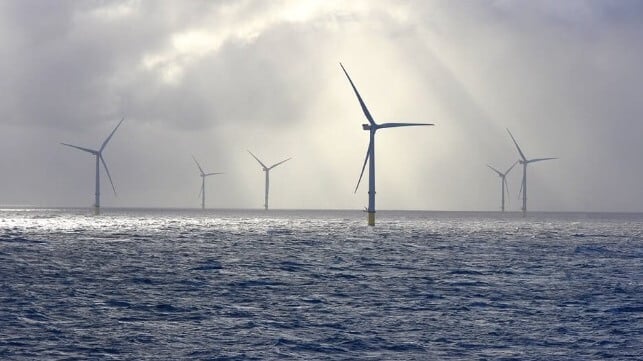
A new industry-backed study aims to push back on claims that the offshore wind industry is a threat to migratory birds. The consultancy-performed study concludes that (at least in the EU) birds almost completely avoid wind turbines and that the risks of collisions are significantly lower than previously assumed.
The study commissioned by industry lobby group German Offshore Wind Energy Association (BWO) has now refuted assumptions that high migration intensity by birds in waters where offshore wind farms are being developed automatically lead to collisions. In its findings, the study contends that over 99.8 percent of migratory birds avoid wind turbines. In essence, it means that blanket shutdowns of turbines during periods of heavy bird migration is not a sensible approach.
Conducted by research and consulting firm BioConsult SH GmbH, the study sought to establish the risks of collisions between migratory birds and offshore wind farms in the North and the Baltic Sea, regions that are fast becoming hubs for offshore wind power.
With the study site being the Windtestfeld Nord wind farm near Husum, Germany, the researchers were able to analyze the movement patterns of over 4.2 million birds over a period of one and a half years. The wind farm spans approximately 150 hectares with five operating wind turbines of varying types and sizes being used for the study, where bird species like geese, ducks, gulls, waders and songbirds are common.
To understand the movements of the birds, camera systems were installed on two of the turbines and recorded all bird (and bat) passages through the rotor plane both during the day and at night. Nocturnal activity was captured using infrared cameras in combination with infrared emitters. To assess general migration intensity in the area, the team used a specialized bird radar that was operated continuously throughout the entire study period, and which was designed for real-time monitoring of bird movements.
BWO has described the combination of radar and the AI-based cameras as a methodological breakthrough that enabled unprecedented accuracy in recording bird flight movements in the rotor plane. In effect, this allowed the team to come to the conclusion that nocturnally migrating birds avoid collisions with wind farms and that the overall collision risk in relation to the total amount of birds passing a wind farm at night is very low.
This was based on the results of the fatality surveys, which indicated a relatively low number of collision victims of an estimated total of 99.7 fatalities of all bird species being recorded across the study period at the five monitored wind turbines. This corresponds to a mean of 12.9 collision fatalities per year and turbine.
“The new study shows that migratory birds avoid wind turbines. This confirms that the environmentally sound expansion of offshore wind energy works in harmony with these birds and not against them. With this research, we want to depoliticize the discussion, improve the data basis, and make decisions based on facts,” said Stefan Thimm, BWO Managing Director.
The study, which now provide a solid basis for the expansion of offshore wind energy, comes when Germany is pursuing growth in renewable energy. The country has set targets to increase offshore wind capacity to 30 GW by 2030, 40 GW by 2035 and 70 GW by 2045. By end of last year, a total of 1,639 turbines with a capacity of 9.2 GW were installed in the country.

Ocean Winds Secures Financing to Begin Offshore Wind Farm in Poland
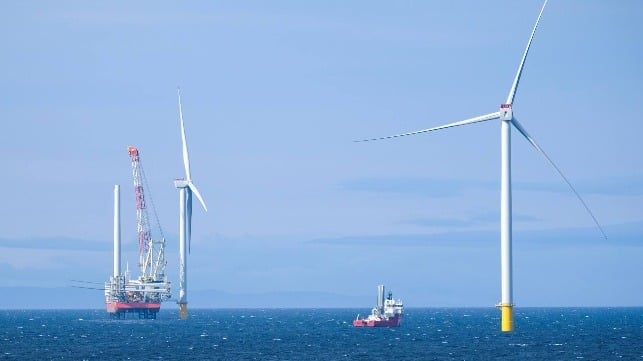
In another bit of positive news for the beleaguered offshore wind power industry, Ocean Winds reports it has secured financing and completed the financial close for one of the first offshore wind farms in Poland. The company, which is a 50-50 joint venture between EDP Renewables and ENGIE, highlights strong support from the European finance community that is making the project possible.
The company reports that as part of the financial close, it secured nearly €2 billion (US$2.3 billion) from a syndicate that includes the European Investment Bank. EIB contributed nearly a third of the total financing, along with Instituto de Credito Official Español and 13 commercial banks.
The company said work will begin on the wind farm in 2026 with the design and construction of the onshore substation and export cable route. It emphasizes that the project will be conducted in large part by Polish companies. The service base will be in Wladystawowo.
“At Ocean Winds, we are convinced that Poland has the potential to become a regional leader in offshore wind – both in terms of clean energy production and industrial capability,” said Bautista Rodriguez, Chief Operating Officer, at Ocean Winds. “In Poland, offshore wind energy is a key driver of the country’s energy transition and a real opportunity for the development of a revitalized economic sector.”
Poland has substantial goals for offshore wind power, targeting 6 GW by 2030 and a total of 8–11 GW by 2040. Its first offshore wind farm, Baltic Power, is currently under construction and is expected to be operational in 2026.
Kacper Kostrzewa, Managing Director for Poland at Ocean Winds, said it marked a milestone for the project and for the company. It will be Ocean Wind’s first offshore wind farm in the Baltic. Critically, he said that the financial close for the project is also a milestone for the Polish offshore wind industry.
The project will also be the first to be fully delivered from Polish ports. Swinoujscie will serve as the marshaling harbor for foundations. Gdansk will be used for the wind turbines.
Known as BC-Wind, the project will be 23 kilometers (14 miles) north of the Polish coast, located entirely in the Polish EEZ. It will consist of 26 turbines rated at 14 MW, but with a power boost feature, the capacity can be increased to 15 MW. Total planned capacity is up to 390 MW.
Seatrium Seeks Arbitration Against Maersk Offshore Wind Over WTIV

Singapore-based Seatrium has filed a counterclaim for arbitration against Maersk Offshore Wind in the ongoing dispute over the nearly completed newbuild wind turbine installation vessel ordered in 2023. The dispute emerged in October after Maersk Offshore Wind filed a surprise termination notice for the nearly completed vessel.
Seatrium rejected an arbitration claim made by Maersk Offshore Wind in October, which alleged problems with the construction project without supplying specific details. The claim that “disputes had arisen” during the project. Seatrium said it would “vigorously prosecute its position and defend any claims.”
On November 28, Seatrium filed its notice of arbitration seeking to commence a case against the buyer of the vessel. The builder continues to claim that the contract was wrongfully terminated in a notice dated October 9. It is seeking a declaration that the contract is “valid and subsisting” and that Maersk Offshore should be ordered to meet its obligations. Further, it seeks to have damages assessed.
Seatrium reported that when it received the cancellation notice, the vessel was 98 percent complete. Since then, it has said that the vessel would be delivered by January 30, 2026.
The contact, which is reportedly valued at approximately $475 million, was placed before the merger that created Seatrium. The company reports the order was not structured with progressive milestone payments, and as such, Maersk Offshore has only paid 20 percent of the contract price. It is seeking to compel the buyer to pay the remaining 80 percent.
The 475-foot-long ship was launched in May 2025 and was designed as part of a push by the then Maersk Supply Services to expand into the wind turbine installation space. It incorporates a unique locking system to receive feeder vessels from shore with the components for the wind farms. The plan was to use the vessel in the United States with the supply system providing a solution to meet the requirements of the Jones Act. Maersk Supply Services, which is owned by AP Moller Holdings, was renamed Maersk Offshore Wind to further emphasize its business focus.
The WTIV is under contract to Empire Wind for the installation of the project offshore from New York. Seatrium has said that it would also be exploring opportunities directly with Empire Wind for the vessel.
Trump Administration Targets Another Offshore Wind Farm Project
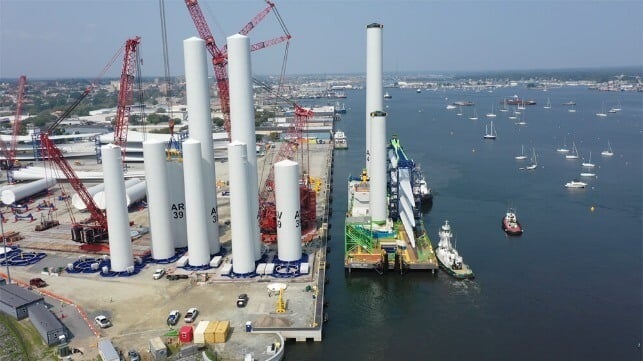
Using a now familiar technique, the U.S. Department of Justice on Tuesday, December 2, made a filing in U.S. District Court targeting yet another offshore wind farm project. Speaking on behalf of the Bureau of Ocean Energy Management, the Department of Justice confirmed that the Bureau is reviewing the approval for the New England Wind project, which is to be developed by Iberdrola’s subsidiary Avangrid.
The filing asks the court for a voluntary remand of a case filed by a local environmental group, saying it is warranted to “promote judicial economy.” The Department of Commerce and Avangrid were sued in May 2025 by a group calling itself Ack For Whales, which is challenging the July 2024 approval of the wind farm by the federal government. The plaintiffs argue that the approval by BOEM failed to adequately ensure there would be less interference with other users, such as commercial fishing, sportfishing, recreation activities, boating/shipping, etc. The courts in the past have viewed these as nuisance suits and dismissed them on the grounds that the groups have time to make their cases during the permit approval process.
The original lease was awarded in April 2015 to a project then known as Park City Wind. It was amended on several occasions, splitting the project into two phases and renaming it New England Wind. It would be located southwest of Vineyard Wind, which is nearing construction completion in an area selected for a series of wind farms south of Martha’s Vineyard and Nantucket, Massachusetts. Phase 1 would be for between 41 and 62 wind turbines with a projected total generation capacity of 804 MW. The second phase, which has also been called Commonwealth Wind, would consist of up to 88 wind turbines and a total generation capacity of 1,232 MW.
The project gained its federal approval with the Record of Decision from the Department of the Interior in April 2024. BOEM approved the Construction and Operation Plan in July 2024. Since then, the developer has been seeking to complete its power agreements with the state’s power authority.
DOJ asks the court to stay the litigation by Ack, saying BOEM is “likely to make a new agency action, and that action may affect – or potentially moot” the claims. The Bureau is reviewing the construction plan, saying it believes the COP “understated impacts that were improperly weighed in reaching the determinations.” It points to Donald Trump’s executive order on the first day in office in January, calling for a review of the leases and leasing process. A group of states filed a separate case earlier this year challenging the open-ended review process.
It is a similar tactic that was also used with a suit by Nantucket against SouthCoast Wind, also in Massachusetts, and by activists against U.S. Wind in Maryland. The court sided with BOEM and DOJ, permitting the review for SouthCoast Wind to proceed while also saying timelines must be established as the reviews cannot drag on indefinitely. The court hearing the Massachusetts case ordered regular reviews and updates and set deadlines.
In the new filing, DOJ argues New England Wind is not under construction, and it is not imminent, and as such, the review does not cause harm. It neglects that the review sidelined negotiations for the power purchase agreements, which were placed in jeopardy.
The New Bedford Light newspaper, reporting on the filing, also highlights that it jeopardizes planned large investments in the local community. New England Wind and SouthCoast Wind were to base operations at the New Bedford Foss Marine Terminal, where they plan to locate their operations and maintenance facilities. New England Wind was also participating in the planned redevelopment in Salem for a terminal that would be the staging for the construction of the project.
DOJ, in its filing, asks for an indefinite stay of the environmentalists' case. It does not propose a timeline for completing the review.


No comments:
Post a Comment