Saturday, July 19, 2025

French court suspends local beach burkini ban after rights group challenge

Judge says beach rule illegally violated fundamental freedoms, according to BFM TV


Beyza Binnur Donmez |19.07.2025 - TRT/AA



GENEVA

A French court on Friday suspended a municipal order banning burkini coverall swimsuits on public beaches in a town near Cannes, ruling that the decree violated fundamental freedoms, according to local media.

The ruling by the administrative court in Nice followed a legal challenge filed by the Human Rights League, which argued the ban unlawfully targeted Muslim women and restricted civil liberties.

The ban specifically mentioned the burkini – swimwear that covers almost all of the body in line with Muslim modesty guidelines – as falling under this category.

The mayor of Mandelieu-la-Napoule, a town on France’s Mediterranean coast, introduced the ban on July 15.

The decree barred beach access to anyone wearing swimwear that “ostentatiously demonstrates the practice of worship and is likely to cause public disorder,” specifically citing the burkini.

Authorities had cited “interreligious cohabitation” tensions and public disturbances during the summer of 2024 as justification for the ban. But the court found that no evidence was provided to support these claims.

The judge ruled the measure “seriously and illegally infringes on the freedom to come and go, freedom of conscience, and personal liberty,” according to BFM TV.

In a statement, the rights group called the ban “targeted and intentional,” saying it sought to exclude Muslim women who wear the burkini for reasons of modesty and faith.

“The burkini does not turn a beach into a mosque,” the group said. “It simply allows women to swim while respecting their beliefs. Refusing their presence is denying equality and criminalizing a peaceful faith.”

France has seen multiple local attempts to ban the burkini in recent years, often citing secularism and public order. Courts have routinely overturned such bans, ruling they violate constitutional rights.
Ukrainian medic killed while rescuing dogs and wounded soldier honored by animal orgs.

Before her death, she had told soldiers “Until I leave food for every animal, we won’t go further.”

Dr. Yeryomenko with one of the many dogs she helped evacuate from the war zone.(photo credit: ARK)

JULY 19, 2025

Dr. Olena ‘Leleka’ Yeryomenko, a Ukrainian combat medic, was killed on June 29 while rescuing 42 dogs and a wounded soldier. Her sacrafice is now being honored by international animal rights organisation PETA with a white rose bush and memorial plaque in the Bea Arthur Dog Park in Norfolk, Virginia.

Leleka has formerly worked with PETA Germany and its partner Animal Rescue Kharkiv (ARK) to evacuate wounded and starving animals out of the war zone for veterinary care and adoption to safe homes.

In her missions to rescue the animals of Ukraine, the fallen veteran visited some of the most dangerous combat zones near the Russian border, including Avdiivka and Sumy, according to PETA.

It was during a mission in Sumy that she was killed.

'Beacon of light'Before her death, she had told soldiers “Until I leave food for every animal, we won’t go further.”


 Repudiation of Khrushchev’s Denunciation of Stalin Shows Putin is Set to Be Even More Repressive and Aggressive, Arkhangelsky Says


Paul Goble
Saturday, July 19, 2025

– With its “unerring intuition,” the Communist Party of the Russian Federation has declared Khrushchev’s denunciation of Stalin “a mistake,” thus putting itself in line with Vladimir Putin’s current thinking and opening the way for the Kremlin leader to be even more repressive at home and aggressive abroad, Andrey Arkhangelsky says.

The Russian writer says that the KPRF’s action reflects the evolution of Putin’s thinking. Earlier, the Kremlin leader like his post-Stalin Soviet predecessors said he wanted to take the best from all eras of the Russian past; but now, he has narrowed the past from which he will select to that of Stalin and others like him (moscowtimes.ru/2025/07/15/bezoshibochnoe-chute-kprf-blagoslovlyaet-putinskii-rezhim-na-nasilie-a168832).

In Putin’s system, Arkhangelsky says, “Stalinism is Soviet power and all else can be viewed as a deviation from it.” That is now clear, he continues, as “Putin is reviving the Soviet Union not just stylistically but in terms of its core values: The construction of communism is impossible without victory of revolution throughout the world.”

And “in the same way, “Soviet power is impossible without total dictatorship and massive and permanent repression from within. Otherwise,” the Russian commentator says, Putin believes that “nothing works, that compromises do not work” and must be rejected ab initio.

“Power in the country belongs to the apparatus of the force structures, to the chekists,” Arkhangelsky continues. “They do not have any wish to restrain themselves and voluntarily share power with someone else. This is the logic of Stalinism,” not the compromise variants that succeeded it.

For Russians, and the KPRF decision confirms that, “soon new purges and repressions will begin with the unmasking of enemies of the people, now already among their own and not among those who have moved abroad – and in this situation, there are today no hopes for a thaw or for changes within the country.”

What is most striking about all this, the commentator says, is that “the people as a whole turned out to be ready for a new Stalinism” because of their “mass disappointment with and general fatigue from civilization.” Asa result, for Russians now, “catastrophe seems more accept able than any creative act.”

“Everyone is simply fed up with everything,” he writes, “and people are ready to accept any apocalypse, and then come what may.”

For the rest of the world, the KPRF move is “yet another signal that Putin will not stop.” He will behave as Stalin did in the pre-war years. And even if Putin himself might decide to change, the logic of the Stalinism he has accepted and is seeking to impose will push him in that direction.

Russians and others need to recognize that “unfree people are satisfied with the unfreedom of others and in the ideal case, the unfreedom of all. The only good news today is that happily in the world at least so far there are not only such people” but others who value freedom and will fight for it.

In the least bad outcome, Arkhangelsky says, “a new round of ideological war awaits us;” “and in the 21st century the question of values - freedom or unfreedom - will again become just as central as it was in the last.
Brutal Milestone”: 2000 Attacks on Ukraine’s Hospitals, Clinicians, and Health Infrastructure Since Russia’s Full-Scale Invasion

July 17, 2025
Physicians for Human Rights (PHR)


 Attacks on Health Care, Ukraine

Ukraine has endured 2000 attacks on the country’s health care system, according to documentation and monitoring by human rights and humanitarian organizations. Since Russia’s full-scale invasion in February 2022 Ukraine has experienced: 2000 total attacks on health care 1059 attacks damaged or destroyed hospitals 285 health workers killed 245 health workers injured 105 attacks affecting children’s hospitals 81 attacks affecting maternal health facilities 178 attacks on hospital utilities

“This brutal milestone and pattern of attacks clearly illustrates the Russian Federation’s aim to eliminate Ukrainians’ access to life-saving medical care and create conditions that jeopardize basic treatment and survival,” said Uliana Poltavets, PHR’s Ukraine emergency response coordinator. “As Ukrainian civilians across the country – including health workers and patients – come under sustained attack, the global community must prioritize and advance accountability for these crimes.”

Russia’s escalating assault on Ukraine in recent months has included mounting attacks on the country’s civilian population and infrastructure, including hospitals and health workers.

The attacks on health care have picked up pace in 2025 with the intensification of drone attacks on Ukrainian cities. On Monday, Russian forces reportedly attacked a hospital in Sumy region, with 10 people injured. Last week, a Russian drone and missile assault reportedly damaged a maternity hospital in Kharkiv and destroyed a primary care clinic in Kyiv.

The new data is from a coalition of global and Ukrainian organizations, including eyeWitness to Atrocities, Insecurity Insight, the Media Initiative for Human Rights, Physicians for Human Rights, Truth Hounds, and the Ukrainian Healthcare Center. The 2,000 attacks are depicted on an interactive map (attacksonhealthukraine.org).

The organizations have been monitoring and documenting attacks on Ukraine’s health care system since the onset of the full-scale invasion, including through a series of publications. The dataset uses the definitions of attacks on health care as defined by the World Health Organization and used by the Safeguarding Health in Conflict Coalition. The interactive map is updated with attacks on health care as of April 2025.

“The global community should safeguard the Ukrainian health workers who risk it all to save lives,” said Poltavets. “Russia’s continued assault on civilian infrastructure underscores the life-saving impact of humanitarian and health aid. At this critical moment, global leadership, particularly sustained support for accountability efforts, is more needed than ever.”

Physicians for Human Rights (PHR) is a New York-based advocacy organization that uses science and medicine to prevent mass atrocities and severe human rights violations. Learn more here.

South Africa building collapse that killed 34 was 'entirely preventable', minister says

Shingai Nyoka
BBC News, Harare
AFP via Getty Images
Workers had reported feeling vibrations in the partially built structure, and being told to cover up holes with sand

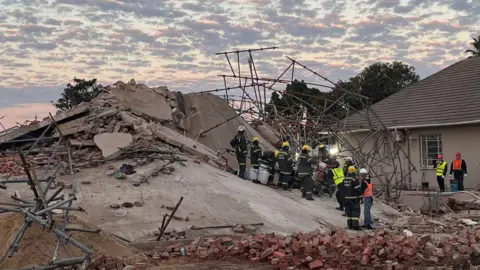
A building collapse that killed 34 construction workers and injured dozens in Western Cape province last year was "entirely preventable", South Africa's government says.

A new report into the tragedy reveals that serious safety concerns had been raised well before the partially built five-storey apartment block collapsed in the town of George in May 2024.

Public Works Minister Dean Macpherson said the collapse was the result of multiple failures including the use of substandard materials, structural cracks, and visible gaps.

"There were a number of red flags that were continually raised about this project," said a visibly angry Macpherson.

Some of the defects were detected a year before the collapse. The health and safety officer even resigned in protest but work continued, the report found.

"The work should have stopped," Macpherson said.

He added that these signs were a chance to turn back but instead, problems with the building were "covered up".

Workers reported feeling vibrations in the structure, and being told to cover up holes with sand and substandard concrete, the report revealed.

Following what the minister described as an "emotional and painful" private meeting with survivors and families of victims, he called for criminal accountability for those found to have been negligent.

A police investigation is under way but no arrests have been made.

Many survivors are still facing trauma, medical bills and struggling to put food on the table, Macpherson said.

Electrician Delvin Safers was pinned under the tonnes of concrete and mangled metal for 28 hours. He sent voice notes to his family believing he might die.

A colleague of his was killed instantly as the concrete fell on top of them.

After his rescue Mr Safers told the BBC he had noticed no warning signs, but believed that if shortcuts were taken during construction, then those responsible "should be held accountable".

He did not attend the minister's briefing but his father Deon, who did, told the BBC that he was impressed by the report.

"We want justice," he said, adding that his son had received no compensation

Another survivor of the disaster, Elelwani, tearfully told local media, that her life had changed in the last year.

She lost many teeth, struggles to eat and has been the subject of bullying. She appealed for money from well wishers.

Macpherson pledged to introduce regulations to improve oversight in construction and reform outdated legislation.

The probe was conducted by the Council for the Built Environment and a parallel investigation by the Engineering Council of South Africa.
Maharashtra: ‘crypto-Christians’, Hindu nationalists’ latest phobia

by Nirmala Carvalho

In the state that includes Mumbai, the state government is targeting people who allegedly hide their conversion to Christianity to avoid losing benefits reserved for disadvantaged groups. The state legislature is expected to vet a new anti-conversion law in the coming winter session. The Church is against forced conversions,” said Card Gracias. For Fr Devasagaya Raj, crypto-Christians is a meaningless term. The real problem is discriminatory laws in a multicultural country.


Mumbai (AsiaNews) – In the Indian state of Maharashtra, for several months the epicentre of the latest controversy over so-called forced conversions, a new group has been front-page news for the past few weeks, which Hindu nationalists derogatorily call "crypto Christians."

The latter allegedly conceal their conversion to Christianity to avoid losing the benefits guaranteed to them by law because they belong to one of the so-called Scheduled Castes/Backward Classes (SC/BC).

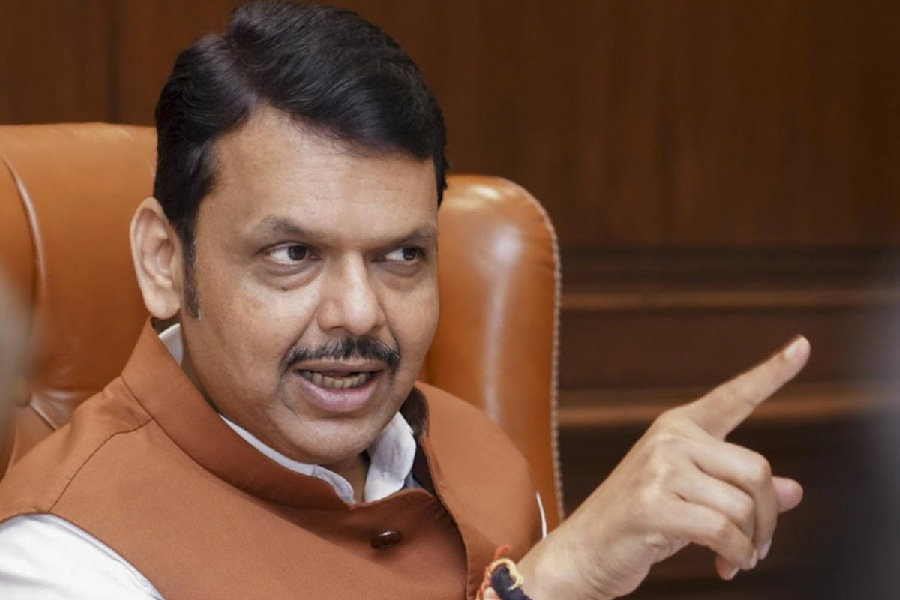
On Thursday, Maharashtra Chief Minister Devendra Fadnavis announced that anyone from a religion other than Hinduism, Buddhism, or Sikhism fraudulently obtains a certificate granting access to the reserved quotas provided by Indian law for Dalits and other historically marginalised groups, they would have their certificate revoked.

He added that the state government also intends to introduce stricter provisions to deal with cases of religious conversion through coercion or deception.

Fadnavis made these remarks in the state Legislative Assembly in response to a question by Amit Gorkhe, a member of the Bharatiya Janata Party (BJP), Prime Minister Narendra Modi's Hindu nationalist party, who claims that “crypto-Christians” are abusing religious freedom.

“On the face of it, they belong to Scheduled Castes (SC) and avail reservation benefits like government jobs and use it during elections, but they secretly follow different religions,” he said.

Fadnavis noted that the Supreme Court itself issued a ruling in November last year, stating that reservations should be available only to Hindus, Buddhists, and Sikhs.

“If anyone from religions other than Hindus, Buddhists and Sikhs has availed an SC certificate or reservation, their validity certificate and caste certificate will be declared as cancelled,” he said.

The chief minister added that action can already be taken against them under the Indian Penal Code. “But a panel has been formed to suggest strict provisions. The government has plans to bring in strong provisions to deal with such cases and we will take a decision on this soon.’’

Maharashtra’s Minister of State for Home (Rural), Housing, School Education, Cooperation and Mining Pankaj Bhoyar announced that an anti-conversion bill will be introduced during the winter session of the Maharashtra Legislative Assembly.

Local BJP leader Chitra Wagh also weighed in on the debate, claiming that some women were tricked into marriage to "crypto-Christians"; he cited an alleged case in Sangli where a 28-year-old Hindu woman committed suicide after marrying a "crypto-Christian" whose family forced her to practise Christianity.

In the heated controversy sparked by this tragic case, BJP MLA Gopichand Padalkar, during a public rally in Sangli district on 17 June, offered a reward of hundreds of thousands of rupees for acts of violence against Christian priests and missionaries involved in "forced conversions”.

“The Church is against forced conversions,” said Cardinal Oswald Gracias, Archbishop Emeritus of Mumbai, speaking to AsiaNews. “Conversions that are fraudulently carried out or forced are illicit. The church has a structured and lengthy period of preparation, which also involves stages of inquiry. Even as chancellor, I've given advisory to priests to carefully check genuine candidates”.

“The Chief Minister has acknowledged that a person can follow any religion and convert another person with consent, but the law does not permit the use of force, cheating or enticement for conversion,” the cardinal explained. “The Church has selflessly served to bring Gospel values and the principles of Jesus – principles of truth, justice, peace, and harmony, compassion, love and forgiveness.

“Our sympathies and condolences to the family of the young lady who took her life; it is absolutely wrong for anyone to force another to convert. It is just not correct, and should never be done.

“The Catholic Church is absolutely against forced conversions or any pressure to force a person to become a Christian or to change religion – it is a matter of conscience, a matter of conviction, it should be a sacred”.

Speaking to AsiaNews, Fr Z. Devasagaya Raj, former secretary of the Office for Scheduled Castes/Backward Classes of the Catholic Bishops' Conference of India (CBCI), condemned the use of the term "crypto-Christians”.

“The term Crypto Christians should not be used in any case. There are no such people called crypto-Christians. Either they are Christians or they belong to other religions,” he said. “These arguments rise because of the Article 340 paragraph three, which denies reservation [status] to Dalit Christians.”

For the clergyman, many have questioned this provision “since it is against freedom of religion and is discrimination on the basis of religion.

“While defining a Hindu, Article 25(2)( b) says that whoever is not Christian or a Muslim or Jewish or Parsi are Hindus, which include Sikhs, Jains, and Buddhists. According to this definition, people who are atheists and don’t believe in any god are also categorised as Hindus.”

“In a multicultural country like ours, people go to churches, temples and mosques irrespective of their religion and attend prayers. That does not make them members of a particular religion.”

“Bringing such laws in Maharashtra will bring a lot of chaos and confusion,” Fr Devasagaya Raj warned. It “will diminish the interreligious relationship we have at present. It will bring an unhealthy situation among people of different religion


FALSE EQUIVALENTS,THEY ARE OPPOSITES 

Czechia president approves law criminalizing support for communism and Nazism

Czech President Petr Pavel signed a new law on Friday introducing changes to the country’s criminal code that ban support for ideologies considered harmful to public order and societal cohesion, including communism and Nazism. The law forms part of broader initiatives across Eastern Europe to enhance legal frameworks aimed at addressing totalitarian movements.

As reported by Euractiv, the amended law establishes prison sentences of up to five years for individuals who create, endorse, or advocate for Nazi, communist, or other movements that are proven to seek the suppression of human rights and freedoms or to provoke hatred based on race, ethnicity, nationality, religion, or social class.

While the measure applies to a broad range of ideologically motivated actions, how the law will be applied to political organisations, especially those with communist affiliations, remains uncertain.

The new legal revision has drawn widespread criticism from communist parties. The Czech Communist Party of Bohemia and Moravia (KSČM) denounced the legislation as a politically driven initiative aimed at silencing opposition. The Communist Party of India also condemned the new legislation in the Czech Republic, considering it an effort to undermine the historical legacy of Czech communists, a threat to democratic rights and political pluralism.

The new amendment to the Czech Criminal Code comes in response to earlier appeals from Czech institutions, which argued that communist symbols and imagery should be treated the same way as Nazi propaganda due to their similar “devastating impacts on individuals and social groups.”

The Czech Republic was once a part of Czechoslovakia, which was led by the Communist Party of Czechoslovakia (KSČ) under Soviet influence post-WWII until the 1989 Velvet Revolution. It is now among other Eastern European countries that have enacted laws banning or limiting the use of communist symbols and the activities of related organizations.

Article 256 of the Polish Criminal Code allows prison sentences of up to two years for individuals who “[promote] a fascist or other totalitarian system of state” and up to three years for those who publicly promote, produce, register, possess, distribute, or display communist symbols or ideas. Similar legislative provisions can be found in Lithuania, where public display of images of Soviet and Nazi leaders, flags, and emblems, as well as the public use of the Nazi and Soviet national anthems, is considered a criminal offence.

Immigration arrest at Oregon preschool’s morning drop-off rattles parents

A guardian drops off a child at the Guidepost Montessori school on Friday, July 18, 2025, in Beaverton, Ore. (AP Photo/Jenny Kane) 

By Claire Rush - Associated Press - Saturday, July 19, 2025

BEAVERTON, Ore. — Parents at a preschool in a Portland suburb are reeling after immigration officers arrested a father in front of the school during morning drop-off hours, breaking his car window to detain him in front of children, families and staffers.

“I feel like a day care, which is where young children are taken care of, should be a safe place,” Natalie Berning said after dropping off her daughter at the Montessori in Beaverton on Friday morning. “Not only is it traumatizing for the family, it’s traumatizing for all the other children as well.”

Mahdi Khanbabazadeh, a 38-year-old chiropractor and citizen of Iran, was initially pulled over by Immigration and Customs Enforcement, or ICE, while driving his child to the school Tuesday. After asking if he could drop off the child first, he continued driving and called his wife to tell her what happened, according to his wife, who spoke on condition of anonymity due to privacy concerns for her and her young child.

His wife rushed to the school, took their child from his car and brought him inside. Khanbabazadeh stayed in the vehicle in the parking lot and asked if he could move somewhere not on school grounds out of consideration for the children and families, his wife said. He pulled out of the lot and onto the street and began to open the car door to step out when agents broke the window and took him into custody, according to his wife.

Kellie Burns, who has two children attending the preschool, said her husband was there and heard the glass shatter.

“More than anything, we want to express how unnecessarily violent and inhumane this was,” she said. “Everyone felt helpless. Everyone was scared.”

PHOTOS: Immigration arrest outside Oregon preschool rattles parents

ICE said it detained Khanbabazadeh because he overstayed his visa, which his wife disputes.

‘Fair shake’: Scalise helps free Iranian woman from ICE detention

“Officers attempted to arrest Khanbabazadeh during a traffic stop when he requested permission to drop his child off at daycare,” ICE said in a statement. “Officers allowed him to proceed to the daycare parking lot where he stopped cooperating, resisted arrest and refused to exit his vehicle, resulting in ICE officers making entry by breaking one of the windows to complete the arrest.”

Immigration officials have dramatically ramped up arrests across the country since May. Shortly after President Donald Trump took office in January, his administration lifted restrictions on making immigration arrests at schools, health care facilities and places of worship, stirring fears about going to places once considered safe spaces.

After U.S. military strikes on Iran in June, officials trumpeted immigration arrests of Iranians, some of whom settled in the United States long ago.

Khanbabazadeh’s wife said he has always maintained lawful status. After he arrived on a valid student visa and they subsequently married, she said, they submitted all required paperwork to adjust his status and were waiting for a final decision following their green card interview months ago.

Khanbabazadeh is being held at the ICE detention facility in Tacoma, Washington, she said.

Guidepost Global Education, which oversees the Montessori school, called the incident “deeply upsetting.”

“We understand that this incident raises broader questions about how law enforcement actions intersect with school environments,” CEO Maris Mendes said in a statement. “It is not lost on us how frightening and confusing this experience may have been for those involved - especially for the young children who may have witnessed it while arriving at school with their parents.”

Parents said they want to support the family and teachers.

“We know it’s happening across the country, of course, but no one is prepared for their preschool … to deal with it,” Burns said. “It’s really been a nightmare.”


Immigration crackdown under Trump squeezes U.S. nursing homes’ workforce

Loss of Temporary Protected Status and slow visa processing leave elder care facilities scrambling to fill jobs

Jul. 16, 2025
Dining room staff listen to instructions from their manager just before the start of an Independence Day buffet service, in the independent living community at the Toby and Leon Cooperman Sinai Residences, July 4, 2025, in Boca Raton, Fla. 
AP Photo/Rebecca Blackwell.

Overview:

As President Donald Trump's administration rolls back immigration programs, U.S. nursing homes report critical staffing shortages, particularly among immigrants who make up a sizable portion of the elder care workforce. Workers from countries like Haiti, Venezuela and the Philippines face revoked work permits and visa delays, exacerbating an already strained industry.


By Matt Sedensky | The Associated Press

NEW YORK (AP) — Nursing homes already struggling to recruit staff are now grappling with President Donald Trump’s attack on one of their few reliable sources of workers: immigration.

Facilities for older adults and disabled people are reporting the sporadic loss of employees who have had their legal status revoked by Trump. But they fear even more dramatic impacts are ahead as pipelines of potential workers slow to a trickle with an overall downturn in legal immigration.

“We feel completely beat up right now,” says Deke Cateau, CEO of A.G. Rhodes, which operates three nursing homes in the Atlanta area, with one-third of the staff made up of foreign-born people from about three dozen countries. “The pipeline is getting smaller and smaller.”

Eight of Cateau’s workers are expected to be forced to leave after having their Temporary Protected Status, or TPS, revoked. TPS allows people already living in the U.S. to stay and work legally if their home countries are unsafe due to civil unrest or natural disasters and during the Biden administration, the designation was expanded to cover people from a dozen countries, including large numbers from Venezuela and Haiti.

While those with TPS represent a tiny minority of A.G. Rhodes’ 500 staffers, Cateau says they will be “very difficult, if not impossible, to replace” and he worries what comes next.

“It may be eight today, but who knows what it’s going to be down the road,” says Cateau, an immigrant himself, who arrived from Trinidad and Tobago 25 years ago.

Nearly one in five civilian workers in the U.S. is foreign born, according to the Bureau of Labor Statistics, but as in construction, agriculture and manufacturing, immigrants are overrepresented in caregiving roles.

More than a quarter of an estimated 4 million nursing assistants, home health aides, personal care aides and other so-called direct care workers are foreign born, according to PHI, a nonprofit focused on the caregiving workforce.

The aging of the massive Baby Boom generation is poised to fuel even more demand for caregivers, both in institutional settings and in individuals’ homes. BLS projects more growth among home health and personal care aides than any other job, with some 820,000 new positions added by 2032.

Nursing homes, assisted living facilities, home health agencies and other such businesses were counting on immigrants to fill many of those roles, so Trump’s return to the White House and his administration’s attack on nearly all forms of immigration has sent a chill throughout the industry.

Katie Smith Sloan, CEO of LeadingAge, which represents nonprofit care facilities, says homes around the country have been affected by the immigration tumult. Some have reported employees who have stopped coming to work, fearful of a raid, even though they are legally in the country. Others have workers who are staying home with children they have kept out of school because they worry about roundups. Many others see a slowdown of job applicants.

“This is just like a punch in the gut,” she says.

Rachel Blumberg, CEO of the Toby and Leon Cooperman Sinai Residences in Boca Raton, Florida, has already lost 10 workers whose permission to stay in the U.S. came under a program known as humanitarian parole, which had been granted to people from Cuba, Haiti, Nicaragua and Venezuela. She is slated to lose 30 more in the coming weeks with the end of TPS for Haitians.

“I think it’s the tip of the iceberg,” says Blumberg, forecasting further departures of employees who may not themselves be deported, but whose spouse or parent is.

Blumberg got less than 24 hours’ notice when her employees lost their work authorization, setting off a scramble to fill shifts. She has already boosted salaries and referral bonuses but says it will be difficult to replace not just aides, but maintenance workers, dishwashers and servers.

“Unfortunately, Americans are not drawn to applying and working in the positions that we have available,” she says.

Front-line caregivers are overwhelmingly female and a majority are members of minority groups, according to PHI, earning an average of just $16.72 hourly in 2023.

Long-term care homes saw an exodus of workers as COVID made an already-challenging workplace even more so. Some facilities were beginning to see employment normalize to pre-pandemic levels just as the immigration crackdown hit, though industry-wide, there is still a massive shortage of workers.

Some in the industry have watched in frustration as Trump lamented how businesses including farming and hospitality could be hurt by his policies, wondering why those who clean hotel rooms or pick tomatoes deserve more attention than those who care for elders. Beyond rescinded work authorizations for people living in the U.S., care homes are having difficulty getting visas approved for registered nurses and licensed practical nurses they recruit abroad.

What used to be a simple process now stretches so long that candidates reconsider the U.S. altogether, says Mark Sanchez, chief operating officer of United Hebrew, a nursing home in New Rochelle, New York.

“There are lines upon lines upon lines,” says Sanchez, “and now they’re saying, ‘I’m going to go to Canada’ and ‘I’m going to go to Germany and they’re welcoming me with open arms.’”

Looking around a facility with a majority-immigrant staff, the son of Filipino immigrants wonders where his future recruits will come from.

“I don’t have ICE coming in my door and taking my people,” Sanchez says, “but the pipeline that was flowing before is now coming in dribs and drabs.”

Long-term care workers are routinely lured away not just by hospitals and doctors’ offices, but restaurants, stores and factories. Half of the average nursing home’s staff turns over each year, according to federal data, making the attraction and retention of every employee vital to their operation.

Robin Wolzenburg of LeadingAge in Wisconsin began working to place an influx of people from Afghanistan after the U.S. pulled out its final troops four years ago and thousands of refugees arrived in her state. Care homes began hiring the refugees and were so delighted with them, some facilities began hiring refugees who arrived from Ukraine, Somalia and Congo.

Though many homes had employee retention rates around 30%, Wolzenburg said the figure was above 90% with refugees.

Trump has halted most refugee admissions, meaning Wolzenburg’s successful outreach program has no new arrivals to target.

“It’s been really devastating,” Wolzenburg says. “Our communities that were actively working with the resettlement agencies are not seeing those referrals to long-term care like we were. There’s no refugees coming in.”

Lynne Katzmann, the founder of Juniper Communities, which runs 21 facilities across five states, says it’s hard enough to find the right workers with a passion for older adults. Now, just as homes gird for an influx of residents brought on by the country’s demographic shift, they’re facing another challenge to a stable workforce.

“The work is hard. It’s not always been the highest-paying job that one can get,” she says. “But many of the immigrants who actually have chosen this work consider caregiving a noble profession.”

Matt Sedensky can be reached at msedensky@ap.org and https://x.com/sedensky


Thousands of Californians lost work after LA immigration raids — including citizens

UC Merced report shows Trump’s immigration crackdown in California triggered massive job losses, impacting Latino and white citizens the most

Jul. 19, 2025

Demonstrators protest against ICE immigration raids in downtown Los Angeles on June 8, 2025. Photo by J.W. Hendricks for CalMatters


Overview:

A CalMatters investigation found that Trump-era immigration raids in Los Angeles led to steep job losses, disproportionately affecting Latino and white citizens. The UC Merced study shows ripple effects from ICE crackdowns hurt entire communities.


By Levi Sumagaysay
CalMatters.

California saw a 3.1% drop in private-sector employment the week immediately after the Trump administration stepped up its immigration raids in the state, according to a new analysis of U.S. Census data.

UC Merced researchers said the steep drop is second only to the unemployment surge the state experienced during the onset of the coronavirus pandemic in 2020, and greater than the immediate decline during the Great Recession in 2007 and 2008.

This appears to be the first analysis of the data from the Census Bureau’s Current Population Survey from the time when federal agents’ focus on the state became clear in early June, when a raid at a garment factory in downtown Los Angeles preceded weeks of sweeps and unrest.

The Census Bureau surveys Americans every month about whether they worked the week before. The UC Merced researchers compared survey results from the week of May 11 to the week of June 8, and found that in California, more citizens than non-citizens reported that they did not work the week after that first raid.

The percentage decline would equate to a loss in California of 271,541 jobs from citizens and 193,428 non-citizens, the report said.

“What we know from previous research is that the work that undocumented immigrants or non-citizens do does not exist in a vacuum,” Edward Flores, lead author of the report, told CalMatters. “If there’s disruptions to the work that undocumented immigrants do, it has ripple effects. A slowdown in one industry could cause slowdowns in other industries.”

That’s consistent with other studies that have shown that mass deportations of undocumented workers reduces job opportunities for U.S.-born workers, and studies that have shown the raids’ negative effects on local economies.

Flores, the faculty director of the UC Merced Community and Labor Center, said he plans to keep tracking and analyzing the Census data and will release similar reports as the federal immigration crackdown continues. He said he expects further escalations of raids because a new federal spending bill substantially increased funding for immigration enforcement.

The effects of the enforcement may continue to be felt more strongly in California. The report also showed that the number of male citizen workers slightly increased in the rest of the U.S. compared with California during the same periods.

White and Latino workers in California were the most affected, the researchers found. The number of Latinos in California who reported work between May and June declined 5.6%, while the number of whites in the state who reported work during the same period decreased 5.3%, according to the report.


The researchers recommended that state policymakers consider “significant action” that may include economic stimulus and disaster relief, similar to what was available during the pandemic.

Flores pointed out that undocumented immigrants lack a financial safety net, such as access to unemployment benefits. As they continue to lose work, that’s not just a problem for them and their families, but for the state.

“When low-income people spend money, they spend it on things they immediately need, which can stimulate the local economy,” he said.

Gov. Gavin Newsom has twice vetoed California lawmakers’ attempts to extend unemployment benefits to undocumented workers. In addition, the state just cut Medi-Cal benefits to undocumented immigrants and froze new enrollments because of budget constraints.

When reached for comment, Tara Gallegos, spokesperson for Newsom, said: “Donald Trump’s ruthless and cruel raids have sent families into hiding, impacting our schools, churches, businesses, and workforce — hurting not only California, but the entire nation.” She added that the governor will continue to fight the Trump administration in court; the state has sued Trump over his deployment of Marines to Los Angeles soon after the stepped-up raids.

The California Finance Department closely monitors demographic and economic trends as it shapes state spending plans. When asked to comment about the UC Merced report, Finance Department spokesperson H.D. Palmer pointed to the “downside risk” mentioned in the state’s most recent economic forecast in the revised May budget. It stated that the Trump administration’s large-scale deportation program could “significantly degrade the state’s labor force.”


Congo and M23 rebels sign declaration of principles for permanent ceasefire


By — Chinedu Asadu,
 Associated Press
Jul 19, 2025 


DAKAR, Senegal (AP) — Congo and Rwanda-backed rebels on Saturday signed a declaration of principles in Qatar to end decadeslong fighting and commit to a comprehensive peace agreement that would include the restoration of state authorities in key eastern cities controlled by the insurgents.

Congo and the M23 rebels committed to “building trust” through various measures, including an exchange of prisoners and detainees as well as restoring state authority in all parts of the country, including rebel-held areas, Mohammed bin Abdulaziz bin Saleh Al-Khulaifi, Qatar’s minister of state, said at a briefing.

It was not immediately clear if the declaration involves M23’s withdrawal from cities it controls, as the two parties seemed to interpret the agreement differently.

Bertrand Bisimwa, an M23 leader, said the declaration is “not a question of withdrawal but of mechanisms for empowering the state, enabling it to assume its prerogatives and obligations.” However, Congolese government spokesman Patrick Muyaya said the declaration takes into account “the non-negotiable withdrawal” of the rebels, followed by the deployment of government forces and institutions. Both officials posted on X.

Backed by neighboring Rwanda, the M23 is the most prominent of more than 100 armed groups fighting for control in Congo’s mineral-rich east. With 7 million people displaced in Congo, the U.N. has called the conflict in eastern Congo “one of the most protracted, complex, serious humanitarian crises on Earth.”

Saturday’s signing is the first direct commitment by both sides since the rebels seized two key cities in eastern Congo in a major advance early this year. A final peace deal is to be signed no later than Aug. 18, and it “shall align with the Peace Agreement between Congo and Rwanda,” facilitated by the U.S. in June, according to a copy of the declaration seen by The Associated Press.

WATCH: Rubio hosts peace deal signing ceremony between Rwanda and Democratic Republic of Congo

M23 had been pushing for the release of its members held by Congo’s military, many of them facing the death sentence. Congo had requested the withdrawal of the rebels from seized territories.

“The Declaration of Principles signed today paves the way for direct negotiations towards a comprehensive peace that addresses the deep-rooted causes of the conflict,” the Qatari minister said.

The document touches on most of the highlights of the peace deal Congo and Rwanda signed on June 27, including the protection and safe return of millions who fled the conflict.

Massad Boulos, a senior adviser to U.S. President Donald Trump who attended the Doha-led talks, said on Saturday: “It is time to find a final solution” to the conflict, reiterating that the most important article of the agreement is the affirmation of state control in rebel-held territories.

“The issue requires dialogue, and following up on this dialogue and requires persistence,” Boulos said.

Another key issue the two sides will have to face is whether Rwanda will stop supporting the rebels, including the thousands of troops that the United Nations experts said are in eastern Congo.

When Rwanda and Congo signed the peace deal in Washington, Rwandan Foreign Minister Olivier Nduhungirehe said Rwanda agreed to lift its “defensive measures” — suggesting a reference to its troops in eastern Congo — once Congo neutralizes an armed group whose members Kigali accuses of carrying out the 1994 genocide in Rwanda.

Analysts have said it is going to be difficult for the M23 rebels to withdraw from the eastern Congolese cities of Goma and Bukavu and that it would depend on concessions the Congolese authorities agree to make. There have also been doubts about long-lasting peace if justice for the victims of the war is not addressed.

Associated Press journalists Ahmed Hatem in Cairo, Egypt and Jean-Yves Kamale in Kinshasa, Congo contributed to this report.