Friday, September 12, 2025


Ancient DNA reveals deeply complex Mastodon family and repeated migrations driven by climate change


McMaster University
A new study reveals how complex Mastodon evolution 

image: 

Study co-author Emil Karpinski examining ancient bone in McMaster’s Ancient DNA lab.

view more 

Credit: McMaster University


An ancient DNA analysis of the remains of several mastodons, including those which roamed along the Pacific and Atlantic coasts of North America, has revealed the Ice Age giants migrated vast distances in response to shifting climates and were far more genetically diverse than previously known.

In the study published today in the journal Science Advances, researchers from McMaster University and Harvard provide new evidence which significantly revises and reshapes our understanding of the species’ deeply complex evolutionary history.

Well-preserved fossilized specimens of teeth, tusks and bone—dating back hundreds of thousands of years—coupled with new scientific techniques, have allowed researchers to reconstruct genomes from ancient, tiny, degraded DNA fragments.

They reconstructed the mitochondrial genomes from several mastodon specimens: five from Nova Scotia and the eastern seaboard, one of which may date to approximately 500,000 years ago, and for the first time, a unique specimen of a Pacific mastodon from Tualatin, Oregon, in addition to a partial mitochondrial genome from Northern Ontario.

Mastodons were initially split into numerous separate species but later consolidated back into a single one - Mammut americanum. More recently, this classification has been revised to potentially include at least two distinct species: the American and the Pacific mastodon (M. pacificus), although a debate over the split has persisted.

The genetic analyses confirm the Pacific mastodons belong to a very old, well-established and separate genetic branch, with a range that extended much farther than previously believed—reaching deep into the Pacific Northwest, possibly south to Mexico, and as far north as Alberta.

Interestingly, Alberta appears to have been a ‘hot spot’, say scientists, where Pacific and American mastodons congregated, expanded northward and may have interbred.

The East Coast and Northern Ontario specimens revealed two new and distinct genetic groups, known as clades, of mastodons living in the same region but at different times. The eastern species were surprisingly diverse, arriving in distinct waves of migration at least three times —a pattern driven by repeated cycles of climate warming, leading to glacial melting and the opening of new territory for northward expansion. When climate cooled and glaciers expanded, mastodons were driven south or went locally extinct.

“The data shifts our view of the region today known as Alberta and the north more generally, from a marginal roaming ground to a repeatedly occupied migratory corridor and significant landscape for mastodons with possible interbreeding,” says senior author and evolutionary geneticist Hendrik Poinar, director of the McMaster Ancient DNA Centre and the Michael G. DeGroote Chair in Genetic Anthropology.

Researchers also pinpointed a mysterious and genetically distinct Mexican mastodon lineage, which they believe could be a deeper branch of the western species M. pacificus or possibly an entirely new, third mastodon species.

The mastodon was among the largest living land animals on Earth during the Ice Age, roaming from Beringia (present-day Alaska and the Yukon) east to Nova Scotia and south to Central Mexico. They were primarily browsers, living in swampy settings, eating shrubs and low-hanging tree branches, and occupied a very different habitant from their distant cousins, the Ice Age iconic woolly mammoths which roamed on open grasslands and tundra.

“This study represents several firsts which includes our work on the Pacific mastodon. It also poses many new questions. For example, how did these distant species of mastodon interact in Alberta? Did they compete for resources, or did they interbreed as our lab has previously shown for mammoths?” says lead author Emil Karpinski, a former graduate student at the McMaster Ancient DNA Centre, now a research fellow in the Department of Genetics at the Harvard Medical School.  

These new findings, combined with those reported in a 2020 study conducted by the same team, create a much more complete picture of how mastodons moved and diversified across North America, helping conservationists today prepare for an ever warming artic and northern migrating species, say researchers.

The paper's co-authors also included Sina Baleka, a postdoctoral researcher at the McMaster Ancient DNA Centre; Andrew Boehm, senior archaeologist at the University of Oregon's Museum of Natural and Cultural History; Tim Fedak, curator of geology at the Nova Scotia Museum of National History; and Chris Widga, director of Earth and Mineral Sciences Museum & Art Gallery at Penn State University. 

Attention editors: Photos related to the research can be downloaded at: https://photos.app.goo.gl/GTGNk8w763zPHgyq6

A sample of a mastodon femur 

Middle River Mastodon femur, estimated to be 91,000 years old, found in a gypsum sinkhole in Nova Scotia.

Windsor Sinkhole Mastodon tusk, dated to approximately 178,000 years ago, was found in a gypsum sinkhole in Nova Scotia.

Little Narrows Mastodon tibia, estimated to be 358,000 years old, is likely the oldest mastodon with available genetic data.

Credit

Nova Scotia Museem

MSU researchers explore how virtual sports aid mental health


Michigan State University


Sept. 12, 2025

MSU researchers explore how virtual sports aid mental health[HJ1] 

EAST LANSING, Mich. – Physical sports have long been known to help with anxiety and mental health. But can augmented and virtual reality sports games improve psychological well-being and reduce loneliness? Researchers at Michigan State University’s Department of Kinesiology say yes.


Assistant professors Sanghoon Kim and Sangchul Park, at MSU’s College of Education, led a study to explore layered questions on the psychological benefits of using augmented/virtual reality, or AR/VR, technology.

Published in the International Journal of Human-Computer Interaction, the study shows that playing AR/VR sports games can promote psychological well-being by helping players feel connected to others and engage in real-time communication. More interestingly, the positive effects of feeling socially present were even stronger for those experiencing loneliness.

“These findings remind us that psychological well-being is multifaceted,” said Kim and Park, both lead authors on the study. “Even in gaming, it’s shaped not only by what people experience in virtual environments, but also by how those experiences connect with their real-life relationships and social ties.”

Methodology

The study analyzed results from a survey of 345 individuals who played various AR/VR sports games, such as table tennis, bowling or billiards. These games can be found on platforms like Wii Sports (Nintendo), Home Sports (Meta) and others.

The recruited participants voluntarily completed a questionnaire to assess their game involvement, psychological well-being, loneliness and other factors.

“The importance of these findings is to show that well-being is a complex and multidimensional construct that can be more fully understood when both individuals’ sources of enjoyment — for example, games — and their social experiences — for example, loneliness — are considered simultaneously,” Kim and Park said.

Research findings

Researchers found that those who were more engaged in gaming showed higher levels of psychological well-being. This finding provides valuable insights into the ongoing debate on the advantages and disadvantages of gaming involvement, adding new perspectives from AR/VR gaming.

They also found that AR/VR sports games can create a strong sense of being with others by using avatars, real-time communication and nonverbal cues. Importantly, these social connections not only create a shared presence but also play a key role in improving players’ psychological well-being.

“When people feel present with others through avatars or virtual interaction, the experience becomes more than just a game,” said Kim. “That’s the power of social presence.”

The findings also expand traditional ideas about online interaction, showing that AR/VR gaming goes beyond text to include richer, more human-like ways of connecting.

Users who gamed more often and who experienced loneliness in their daily lives were more likely to experience a positive psychological benefit. The authors speculated that AR/VR sports games might be offered into therapeutic interventions for those experiencing loneliness or mental health challenges.

Looking ahead

Still, the researchers say AR/VR sports games are not a catch-all solution for resolving loneliness. Some users, they found, may still feel uneasy about communicating and interacting in virtual settings, making it harder for them to develop a sense of belonging through gaming.

It’s one of the reasons the researchers encourage practitioners and policymakers to also consider regulating how AR/VR sports games are used to support mental health and engagement.

“The study revealed not all individuals benefit from social AR/VR sport gaming,” according to the study, which was co-authored with Jun-Phil Uhm at Inha University and Sungsook Ahn at Cheongju University. “This highlights the importance of educating users, practitioners and policymakers on how to harness its potential while being mindful of its possible drawbacks.”

This finding provides valuable insights into the ongoing debate on the advantages and disadvantages of gaming involvement, adding new perspectives from AR/VR gaming.

By Lauren Knapp

###

Michigan State University has been advancing the common good with uncommon will for 170 years. One of the world’s leading public research universities, MSU pushes the boundaries of discovery to make a better, safer, healthier world for all while providing life-changing opportunities to a diverse and inclusive academic community through more than 400 programs of study in 17 degree-granting colleges.

For generations, Spartans have been changing the world through research. Federal funding helps power many of the discoveries that improve lives and keep America at the forefront of innovation and competitiveness. From lifesaving cancer treatments to solutions that advance technology, agriculture, energy and more, MSU researchers work every day to shape a better future for the people of Michigan and beyond. Learn more about MSU’s research impact powered by partnership with the federal government.

For MSU news on the web, go to MSUToday or x.com/MSUnews.


China's newest aircraft carrier sails through Taiwan Strait

12/09/2025

The Fujian is China's newest aircraft carrier, and experts say it features advanced take-off systems for air force jets. China called the ship's trip through the Taiwan Strait "a routine arrangement."


Fujian was first introduced in 2022
Image: Japan's Ministry of Defense/Jiji Press/AFP

China's third and latest aircraft carrier, the Fujian, sailed through the Taiwan Strait and into the South China Sea to conduct exercises, the Chinese navy said on Friday.

The vessel was first unveiled in 2022, but began the sea trials last year. Currently, China has two carriers in operation — the Liaoning and the Shandong — while the Fujian is undergoing sea trials and is yet to join the service formally.

"Our country's third aircraft carrier, the Fujian, recently transited the Taiwan Strait en route to relevant waters in the South China Sea to conduct scientific research trials and training missions," China's navy said.

"This cross-regional trial and training exercise for the Fujian is a routine arrangement in the carrier's construction process and is not directed at any specific target," it added.


China claims the Taiwan Strait as its own territory; however, Taiwan's government rejects Beijing's sovereignty.

Taiwan's Defense Ministry said it has been monitoring the situation with joint intelligence surveillance and has taken appropriate measures.

China's expansion of naval power

In the past few years, China has steadily been expanding its naval capacity as it seeks to broaden its reach in the Pacific and challenge the US and its allies in the region.

The Liaoning, which China bought from Ukraine in 1998, is the oldest Chinese aircraft carrier, and the Shandong entered service in 2019. Experts say the Fujian is expected to feature more advanced features that will allow the Chinese air force to deploy jets carrying larger payloads and more fuel.

Edited by Sean Sinico
Is China's SCO a counterweight to NATO or just geopolitical theatre?

Once a modest Central Asian security forum, the Shanghai Cooperation Organisation now pits Beijing’s ambitions against Western dominance, with its August summit casting President Xi Jinping as a champion of a new multipolar order. But internal rifts raise doubts that it can rival NATO.


Issued on: 12/09/2025 - RFI

Xi Jinping and his wife, Peng Liyuan, with international guests at a welcome banquet for the SCO Summit in Tianjin, China on 31 August. via REUTERS - CHINA DAILY

By:Jan van der Made

From a small-scale security-building mechanism to a heavyweight bloc showcasing China’s geopolitical ambitions, the Shanghai Cooperation Organisation (SCO) has evolved dramatically since its inception in 1996.

Originally known as the Shanghai Five, the group was initially formed of China, Russia, Kazakhstan, Kyrgyzstan and Tajikistan, and aimed to resolve border disputes and bolster security cooperation.

“It was really concerned with China's internal borders with countries like Kazakhstan, Kyrgyzstan and looking at things like drug misuse, gun running and political opposition,” explains Michael Dillon of the Lau China Institute at King's College London.

Uzbekistan joined in 2001, prompting the rebranding to SCO, and India and Pakistan later became full members, with Iran the most recent addition, two years ago.

Over time, the SCO’s agenda expanded well beyond border security to include economic cooperation, cultural exchange and coordinating their political message.

The organisation now has 10 member states (with observer states such as Afghanistan and dialogue partners including Turkey), highlighting its growing global footprint.

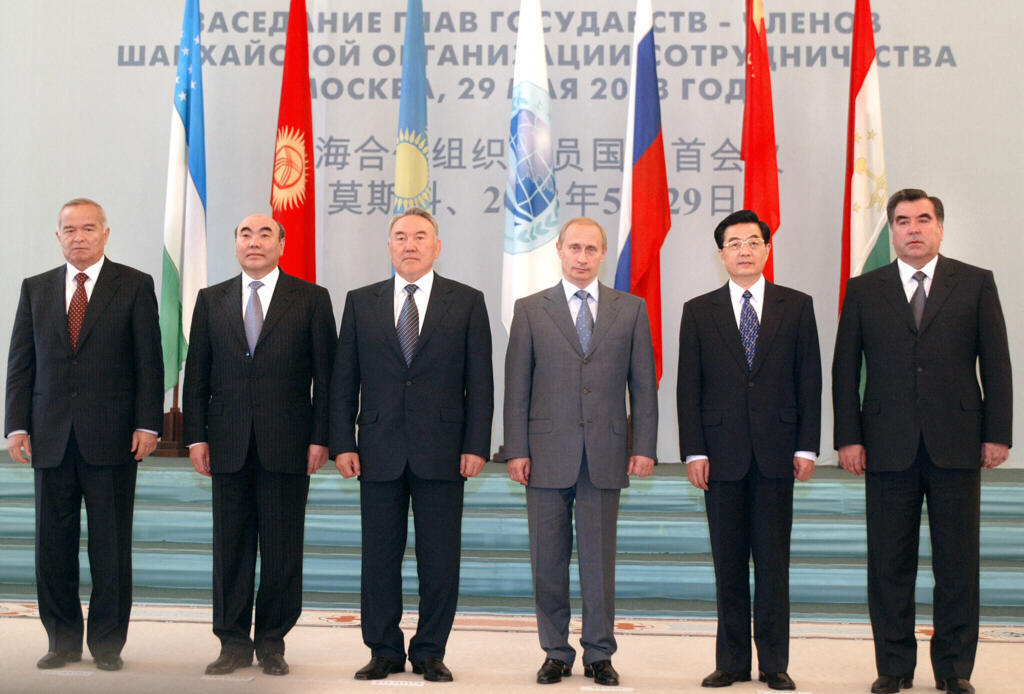
This picture from May 2003 shows the then leaders of the SCO meeting at the Kremlin: Uzbekistan’s Islam Karimov, Kyrgyzstan’s Askar Akayev, Kazakhstan's Nursultan Nazarbayev, Russia’s Vladimir Putin, China’s Hu Jintao and Tajikistan's Emmomali Rakhmonov. AFP - ALEXANDER NEMENOV


Last month's much-publicised SCO summit, held in the Chinese port city of Tianjin alongside China’s grand military parade marking 80 years since the end of the Second World War, provided a vivid demonstration of the organisation's expanded role.

President Xi met with almost 30 world leaders – including Russia's Vladimir Putin, India's Narendra Modi and North Korea's Kim Jong-un – projecting the image of a China-led alliance of mainly authoritarian regimes challenging Western influence.

Putin and Modi in China for Shanghai Cooperation summit hosted by Xi

“Xi Jinping is using this to shape perceptions of China and of himself,” Dillon told RFI. The optics of Xi flanked by Putin and Kim symbolised an assertive bloc willing to counterbalance NATO and the US-led liberal international order.

But how far does the SCO truly stand as a counterweight to NATO?

On this, Dillon is cautious. "It's beginning to look like it," he said, but added: "There isn’t any [military coordination], apart from the policing functions across the border with Central Asia ... it doesn’t seem to have any military functions outside of China."

Internal rivalries complicate the picture and prevent the SCO from acting as a fully cohesive bloc, such as the strained relationship between India and Pakistan – both members.
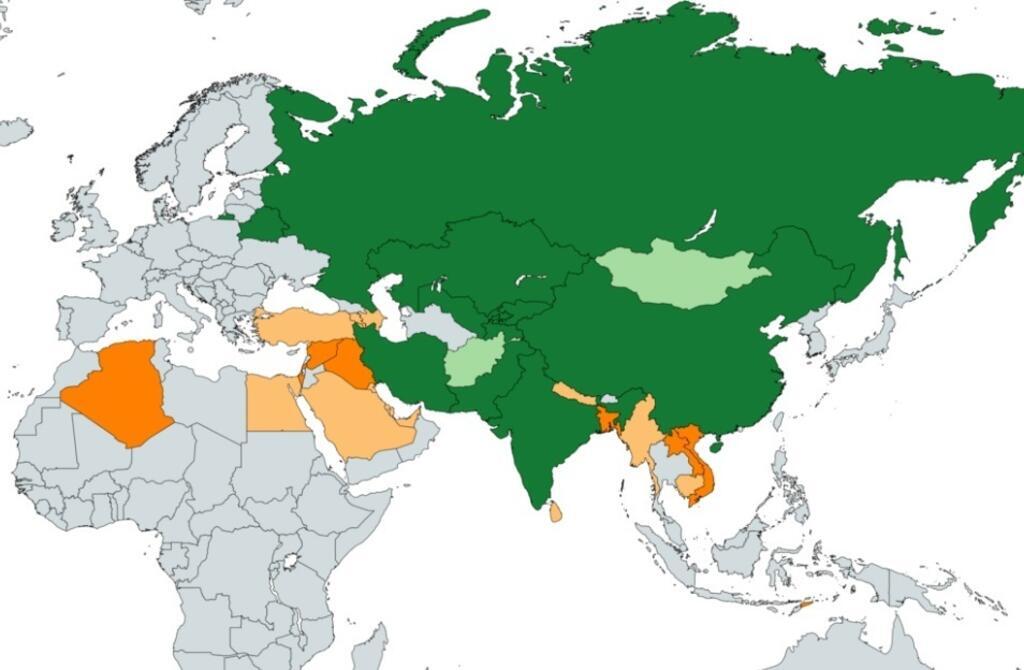
The SCO on the global stage: dark green, members; light green, partners; dark orange, possible future members; light orange, dialogue partners. © Wikimedia commons

Meanwhile, relations between Europe and the SCO also reveal divisions within the former. While few European Union leaders engage with the organisation, countries such as Turkey and Hungary have shown willingness.

“The EU really does need to respond to China's increasing influence,” says Dillon.

But Europe faces challenges due to China’s growing economic leverage and the United States' diminished credibility in some quarters. “Trump thinks of himself as the great strong man, but it’s clear to seasoned diplomats in China and elsewhere that Washington is incredibly weak,” said Dillon.

According to him, Trump’s actions have inadvertently contributed to China’s rise within Eurasia’s power vacuum. This environment has allowed Beijing to position the SCO as an alternative framework – even attracting traditionally Western-facing countries such as India and Turkey into the fold.


You can see the basis of a counterweight to NATO emerging.

01:23

REMARKS by China specialist Michael Dillon on the Shanghai Cooperation Organisation

Jan van der Made


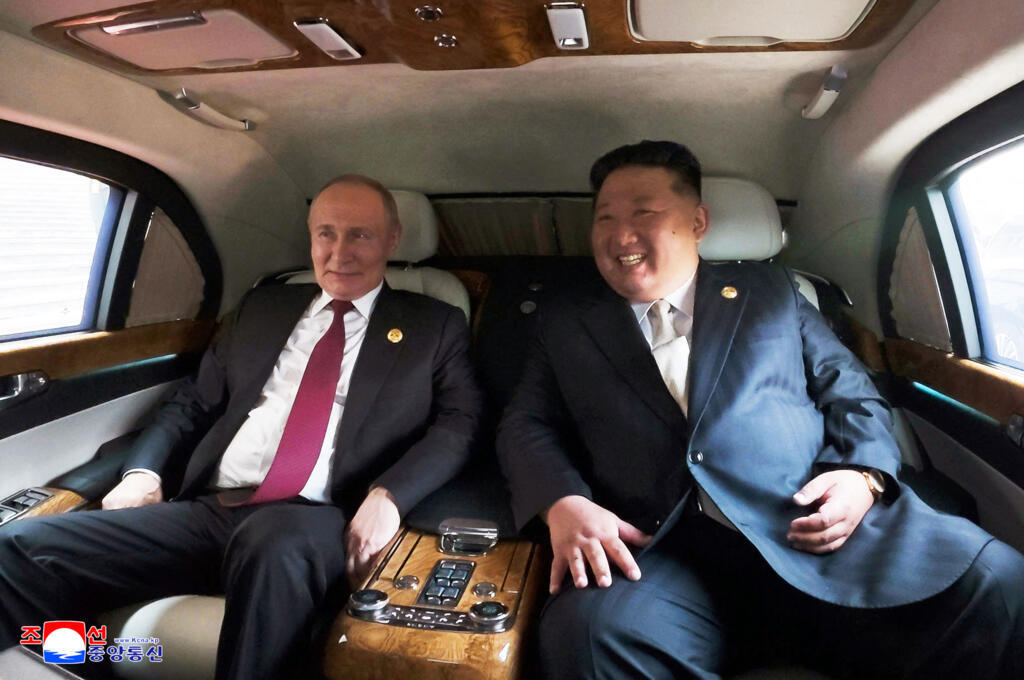
A photo released by North Korea's official Korean Central News Agency shows Kim Jong Un and Vladimir Putin in Beijing, after attending the military parade marking the 80th anniversary of victory over Japan and the end of the Second World War, on 3 September. AFP - STR

But the summit also exposed underlying tensions within the bloc. Russia’s invitation to Kim Jong-un to Moscow shortly after the Tianjin meeting showcased Putin’s rivalry with Xi for influence over North Korea. Meanwhile, Modi’s absence from the military parade suggested caution among SCO members in fully endorsing China’s military bravado.

Western observers remain divided on how seriously to take the SCO – both as symbolic political theatre and as a potentially strategic challenge.

Looking ahead, Dillon is sceptical about the SCO transforming into a formal military alliance akin to NATO anytime soon.

“I haven’t seen anything from China recently to suggest they’re trying to turn the SCO into something more permanent and as a counterweight to NATO,” he says. But he acknowledges that institutionalisation of the SCO is likely to be the next “obvious move” if China continues to consolidate its Eurasian coalition.
Albania hopes world's first AI-generated minister can cut back corruption

Albania is looking to artificial intelligence to tackle corruption in public finance, as Prime Minister Edi Rama appoints the world's first AI-generated government minister to oversee public tenders.


Issued on: 12/09/2025 - RFI

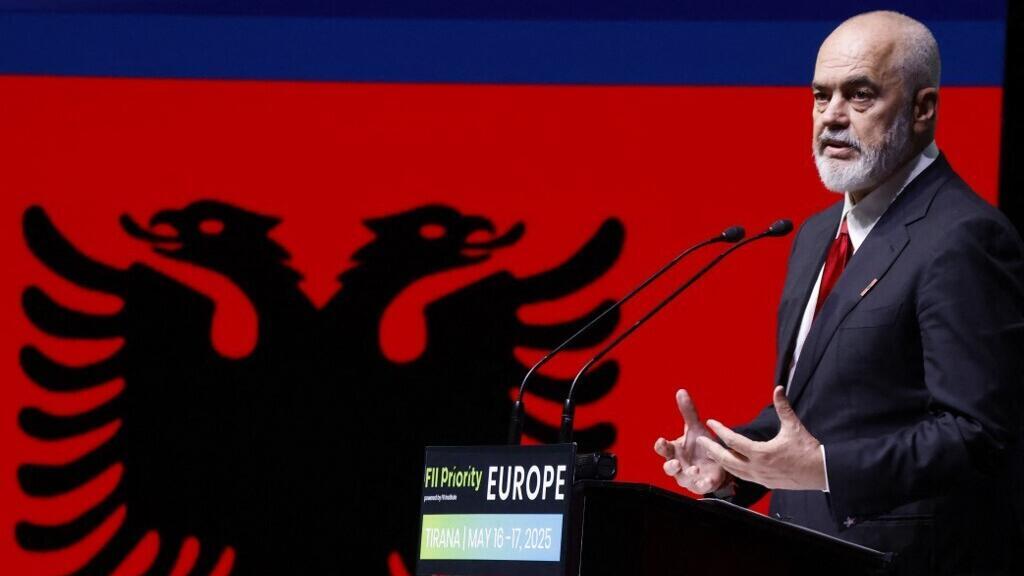
Albanian Prime Minister Edi Rama in Tirana on 17 May 2025. © AFP - LUDOVIC MARIN

Presenting his new cabinet on Thursday following a big election victory in May, Rama introduced the new team member, named "Diella" – which means "sun" in Albanian.

"Diella is the first [cabinet] member who is not physically present, but virtually created by artificial intelligence," Rama said at a meeting of his Socialist Party.

Diella will be entrusted with all decisions on public tenders, making them "100-percent corruption-free and every public fund submitted to the tender procedure will be perfectly transparent", he added.

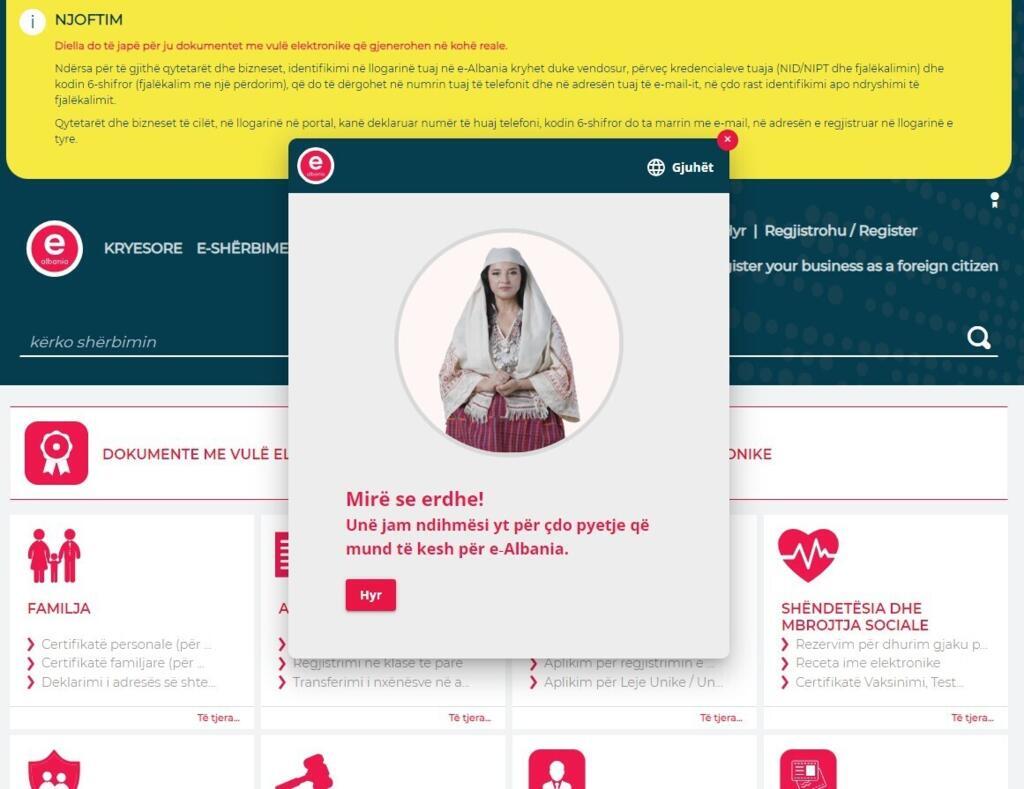
Diella was launched in January as an AI-powered virtual assistant – resembling a woman dressed in traditional Albanian costume – to help people use the official e-Albania platform that provides documents and services.

So far, it has helped issue 36,600 digital documents and provided nearly 1,000 services through the platform, according to official figures.

Screengrab of the Albanian government website e-Albania featuring the world's first AI-generated minister "Diella", now in charge of public tenders. © e-Albania

Albania hopes that fighting corruption, particularly in public administration, will put it in good stead as it prepares its bid to join the European Union.

Rama aspires to lead the Balkan nation of 2.8 million people into the political bloc by 2030.
Fears of meddling, fakes

Other countries, including France, are also turning to artificial intelligence to help with running public services.

A French programme called "Albert" will be used by tax agents, for example, to deal with the approximately 16 million queries they receive each year.

The AI tool will also be programmed to transcribe legal hearings and medical reports, track forest fires and manage HR for civil servants.

Polish radio experiment replaces journalists with AI presenters

However, the advent of artificial intelligence – notably its power to generate convincing text and images – has renewed concerns about disinformation and the potential harm the technology could cause during elections.

The EU called on Facebook, TikTok and other social media giants to crack down on deepfakes and other AI-generated content by using clear labels ahead of the Europe-wide polls held last June.

(with newswires)
Relief for Chagos descendants as UK vote restores Mauritius sovereignty

The British House of Commons this week adopted a bill on the handing back of the Chagos archipelago to Mauritius. The decision has been welcomed by the descendants of those who were expelled from the Indian Ocean territory more than 50 years ago to make way for a military base.


Issued on: 12/09/2025 -  RFI

People from the Chagossian community demonstrate outside the High Court in London, 22 May, 2025. AP - Thomas Krych


The "Diego Garcia Military Base and British Indian Ocean Territory Bill" passed after a second reading, with 330 votes to 174 on 9 September – thus ratifying Mauritian sovereignty over the Chagos archipelago.

However, Diego Garcia island will remain under an Anglo-American military lease for 99 years with an annual payment of £101 million (€120 million), or £3.4 billion pounds (more than €4 billion) in total.

Based on an agreement signed by a British court in May, the bill also provides significant financial support to the Mauritian government and the Chagossian community.

Chagos Refugee Group spokesperson Olivier Bancoult expressed relief after the vote, which puts the dream of returning home within reach. "This vote shows that everything is moving in the right direction," he said.

The announcement came as the Mauritian prime minister began his first state visit to India.

Navin Ramgoolam hopes to secure New Delhi's support to organise a visit by Mauritian leaders and Chagossian representatives to the archipelago. The trip is expected to take place before the end of the year, with a highlight being a Mauritian flag-raising ceremony.
Colonial history

Tuesday's vote marks a new chapter in the long story of Mauritian efforts to have Chagos returned.

Located several hundred kilometres south of the Maldives, the Chagos Islands were colonised by France in the 18th century, ceded to the UK in 1814 and merged with Mauritius in 1903.

In 1965, three years before Mauritius gained independence from the UK, London detached the Chagos from Mauritian territory.

At Washington's request, the British then emptied the archipelago of its inhabitants to establish a military base on Diego Garcia, in the heart of the Indian Ocean.

More than 2,000 Chagossians were uprooted and expelled to Mauritius, the Seychelles and the UK.

Dispersed for half a century, they now hope for a return to their roots.

Chagos Islands sovereignty case - the end of the end of British colonial rule in Africa?
'A betrayal'

However, for some Chagossians, such as the group Lalit, Mauritius is "selling its sovereignty" over the Chagos.

The group's spokesperson Ragini Kistnasamy, who took part in a protest in front of the Mauritian parliament on Tuesday, told Le Mauritien website the bill was "a betrayal" after years of struggle.

"This bill stipulates that the king can, at any time, make Orders in Council, which he deems important for the base, concerning Diego Garcia and the other islands. It is clear that Great Britain and the United States will have total control over the Chagos."

Handover of Chagos Islands to Mauritius 'not an outright win'


For Mauritius's Attorney General Gavin Glover, while this is a significant step forward, he says the biggest battle will remain in the House of Lords, the UK's upper house of parliament.

Indeed, the bill must pass five stages in the House of Commons and the House of Lords respectively (first reading, second reading, committee stage, postponement stage, and third reading), then the final stage of Consideration of Amendments before Royal Assent.

"It will be a real test," Glover told Mauritian news portal L'express.

Glover says this is because the anti-treaty lobby in the UK remains powerful, and the political composition of the House of Lords could lead to difficult debates.

"We must remain mobilised to... prepare for the future, because implementation will also be a long-term project."

A Foreign Office director from the UK is expected in Mauritius from 29 September to 1 October to finalise technical aspects of the process.
'We don't want to become a memory': minister of endangered Tuvalu

Paris (AFP) – Climate action is a "moral responsibility" for wealthy polluting nations, Tuvalu's climate minister told AFP Friday, as the low-lying island nation pursues UN recognition for its heritage threatened by rising seas.


Issued on: 12/09/2025 - RFI

One of the most climate-threatened corners of the planet, scientists fear Tuvalu will be uninhabitable this century 
© TORSTEN BLACKWOOD / AFP/File


The Pacific island nation is one of the places most threatened by climate change, to the point that it might become uninhabitable this century if planet-heating emissions are not constrained.

Tuvalu has already agreed a landmark climate migration deal with Canberra that provides a way for its citizens to obtain visas to live and study in Australia.

It has launched a series of initiatives to ensure its heritage and identity live on even if its physical territory is swallowed by the sea.

"For us Tuvaluans, disappearance is not part of who we are," climate minister Maina Talia told AFP.


"Resilience is always part of our being, it's part of our DNA," he added.

But he expressed alarm at a lack of climate ambition from wealthy nations and at new fossil-fuel development -- particularly by Australia, whose bid to host next year's UN climate talks has been backed by the Pacific islands.

"It should be a moral responsibility and we should hold them accountable," he said.
A 'digital nation'

Rising sea levels in Tuvalu are already causing saltwater to bubble up through the ground during high tides even in the middle of Funafuti atoll, the nation's capital.

In response, local people have already created raised gardens so that they can continue to plant.

The country has started painstakingly building a 3D map of its remaining land, part of a project to become the world's first "digital nation".

And it has launched an effort to inscribe the islands' cultural landscape -- its oral traditions, sacred sites and communal meeting halls -- on the UN's World Heritage List.

The application process is likely to take several years, but Talia argued: "It is important, because we don't want Tuvalu to become a memory."

While the country has agreed the migration plan with Australia -- which Canberra says is "the first agreement of its kind anywhere in the world" -- the idea was not to encourage a large-scale population movement, he argued.

"(We have) no intention at all to relocate the country to Australia. The whole idea is just a manageable migration pathway," said Talia.

Nor does the programme absolve Australia -- a major fossil fuel exporter -- of its climate obligations, he added. "It should not be an excuse for Australia."
'It's about survival'

Talia urged all major carbon-emitting nations to finalise "strong" new climate plans in the coming weeks.

The United Nations has urged all countries to submit their ambitious 2035 emissions-reduction targets -- and detailed blueprints for achieving them -- by the end of the month.

But major polluters including China, India, and the European Union are still to submit their plans, which are seen as a crucial benchmark for accountability.

For wealthy nations, this process is "all about numbers", said Talia.

But for Tuvalu, barely above sea level, "it's about (our) very survival".

© 2025 AFP


Key Facts

Population
11,790 (2022)
Area
25.6 square kilometres
Capital city
Vaiaku (government offices), Fongafale islet, Funafuti atoll
Joined the Commonwealth
1978


Brazil's great divide: Half the population doesn't trust the Supreme Court


Issued on: 12/09/2025 - 

Brazil's Supreme Court found former President Jair Bolsonaro guilty of plotting a coup after he lost the 2022 elections, a conviction carrying a sentence of over 27 years. Bolsonaro has very narrow avenues of appeal to avoid prison. For in-depth analysis and a deeper perspective, Gavin Lee welcomes Anthony W. Pereira, Visiting Professor in the Brazil Institute at the School of Global Affairs at King’s College London and the Director of the Kimberly Green Latin American and Caribbean Centre at Florida International University.

Video by:  Gavin LEE


Are France's Yellow Vests and Block Everything protests two sides of the same coin?

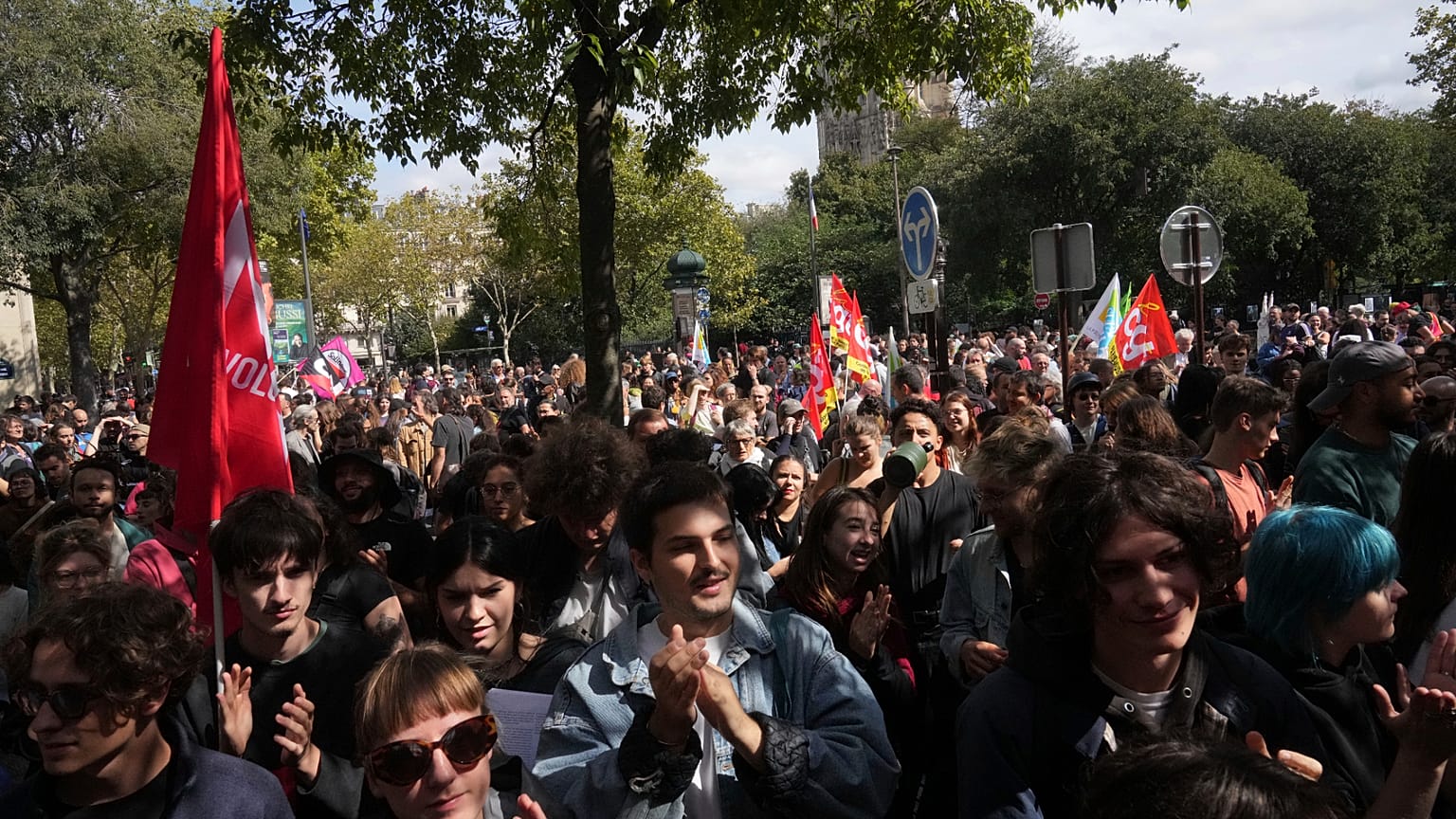
Thousands took to the streets in France to join the Block Everything protest, 10 September 2025
Copyright Copyright 2025 The Associated Press. All rights reserved.


By Valérie Gauriat
Published on 

A new citizens' movement called Block Everything has taken to the streets of France. Is there more to it than a remake of the 2018 Yellow Vests anti-government protests?

Seven years after the "Gilets Jaunes" or Yellow Vests protests and iconic roundabout occupations shook France, a new citizen-based movement called "Bloquons Tout" — Block Everything — is challenging President Emmanuel Macron's government, drawing comparisons to the 2018 events.

But to what extent are the popular uprisings comparable?

The immediate similarity to both is that they emerged on social media, the primary platform for social discontent and rallying people worldwide.

"The Yellow Vests protests were primarily on Facebook, with groups boasting up to 1 million active members, revealing a popular mobilisation fueled by massive, emotional, and viral expression", Véronique Reille Soult, a social media specialist, commented in Les Echos.

"The visible expression of the Block Everything movement is primarily on X and corresponds to a more militant, event-driven mobilisation, which at this stage has not reached the same level of spontaneous support."

The Yellow Vests and Block Everything movements also share the fact that calls for action came not from traditional political parties or trade unions, or clearly identified public leaders, but citizens’ initiatives, defiant of established circles of power.

But besides common disruption strategies, involving high-visibility actions, there are nuances when it comes to identifying protagonists, motives and aims of the individual protests.

Root causes of unrest

Initially sparked by a government fuel tax hike proposal, the Yellow Vests was a spontaneous grassroots movement, later evolving into a massive show of anger against social inequalities and ruling elites.

Drawing support among the working class, pensioners and those most affected by precarity, it highlighted France’s divide between its rural, peripheral areas and its major urban centres.

“We are not the invisible France,” claimed one of their pamphlets.

Jerome Rodrigues, a prominent figure of the movement, told Euronews at the time that what drove people to the streets was simple.

“All that people want is to be able to live from their salaries,” Rodrigues said.

“Just having enough to eat until the end of the month and being able to take the kids to the movies once in a while."

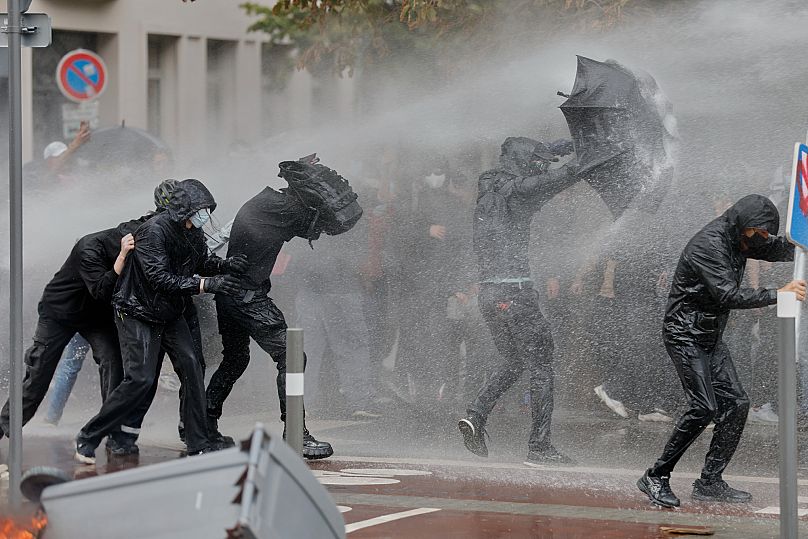
Protesters of the "Block Everything" movement take cover from a spraying water canon in Lille, 10 September 2025 AP Photo

Triggered by the now-former Prime Minister Francois Bayrou's 2026 budget plan, which included a proposal to scrap two public holidays, the Block Everything protest encompasses austerity measures, cuts in pensions and social services, and targets the open-market approach as a whole.

“There is a desire to block the economy in particular,” Patrick Vassort, sociologist and political scientist at the University of Caen, told Radio France. “I think activists have understood that the only way to exert pressure is no longer to march in cities, but to block flows."

"Economic flows include both monetary flows and flows of workers, trucks, and products.”

Like the Yellow Vests, Block Everything has no clearly identifiable leadership. However, it is structured by various internet sites showing ideological, though disparate, roots.

While the alleged initiator of the movement, "Les essentiels" (The Essentials), is a conservative sovereignist group promoting Christianity and France leaving the EU or the so-called Frexit, it was shadowed by groups identifying with radical left ideology, such as “Indignons-nous” ("Let Us Be Indignant"), which now appears as one of the main organisers.

Turmoil and tipping over tables

On the whole, as shown in a recent study by the French Fondation Jean Jaures, the base of the Block Everything movement is more politicised, younger, and from a broader social spectrum than that of the Yellow Vests.

Hence its broader agenda, aiming at “flipping the table” of what supporters deem as a neoliberal political and economic model they slam as ineffective, unfair, corrupt and unable to address the ailments of French society, from financial hardship to the environment.

However, neither the Yellow Vests nor Block Everything can be fully pigeonholed, which is no doubt one of the keys to the catch-all movements’ popularity.

A
 burning command car belonging to France's anti-terror 'Vigipirate' squad, during a Yellow Vests demonstration in Paris, 9 February 2019 AP Photo

The Block Everything's reach at this stage, dwarfed by the Yellow Vests, has yet to be assessed.

In the seven years that separate the two movements, a trail of events both internal and external has shaken societies worldwide: the COVID-19 pandemic, Russia's war in Ukraine, the Israel-Hamas war, a myriad of climate change-related disasters, and the Trump administration-led transatlantic feud, to name only the most potent.

All of which contributed to an increased sense of despair and anger towards political leadership, widely perceived as incapable of steering the country out of the global rut.

Feelings which are not exclusive to France. Whether in Spain, Germany, Italy, the UK or the Netherlands, a trend of disruptive, citizens-based protest movements has developed across Europe.

The scale of the French movements is nonetheless unique. Beyond its immediate goal of ousting Macron, the question is now whether Block Everything has the potential to develop and contribute to reshaping the country’s political future.

And for Block Everything, there is an obvious lesson it could learn from its neon-coloured hi-viz-wearing predecessor.

“Clearly, there is a ‘before’ and an ‘after’ Yellow Vests in the public debate,” Le Bart said, calling the movement “democracy of the roundabouts”.

According to Le Bart, the Yellow Vests shed light on social groups that usually consider themselves as invisible, “a France that has difficulties at the end of the month, a France of precarity, which limits its own consumption — quite discrete but yet numerically very important.”