Wednesday, May 20, 2026

Citing ‘Callous Disregard’ of Hegseth, Top House Dem Does Not ‘Trust’ Pentagon Answers on Iran School Massacre

“Eighty days on, we have not taken responsibility for that attack,” said Rep. Adam Smith, ranking member of the House Armed Services Committee.
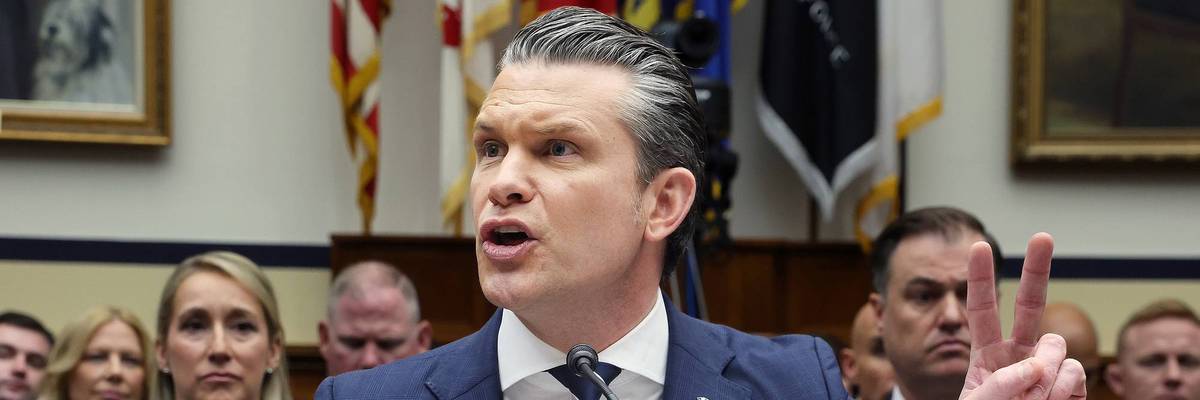

US Secretary of Defense Pete Hegseth testifies before the House Armed Services Committee in the Rayburn House Office Building on April 29, 2026 in Washington, DC.
(Photo by Kevin Dietsch/Getty Images)


Brad Reed
May 19, 2026
COMMON DREAMS

The top Democrat on the House Armed Services Committee delivered a scathing rebuke to US Defense Secretary Pete Hegseth’s leadership on Tuesday while asking questions about a February US military strike on an Iranian primary school in the city of Minab.

Rep. Adam Smith (D-Wash.), the ranking member of the mommittee, confronted Adm. Brad Cooper about the fact that the US still hasn’t taken responsibility for the attack on the school, which killed more than 100 children, even though “it’s really pretty clear what happened there.”

“Eighty days on, we have not taken responsibility for that attack,” Smith said. “The endless stalling—'It’s being investigated, it’s being investigated, it’s being investigated.’ In the past, when we’ve had these type of mistakes, they’ve been quickly acknowledged, even if a further investigation is necessary to figure out prevention methods. So can you, at this moment, acknowledge that that mistake was made?”

Cooper responded by emphasizing that the US “does not deliberately target civilians,” while stating that the Iranian people are not “our enemy.”


Smith was not satisfied with this, however, and pressed Cooper to answer whether the US takes responsibility for the attack on the school.

“The investigation is ongoing,” Cooper said. “As soon as it’s complete, I’m happy to...”

“So that’s a no,” Smith interjected. “We will not take responsibility for something we very obviously did.”

“It’s a complex investigation,” Cooper replied. “The school itself is located on an active [Islamic Revolutionary Guard Corps] cruise missile base. It’s more complex than the average strike. As soon as we’re complete, I’m fully committed to transparency.”

Smith did not buy this explanation.

“I have an enormous amount of respect for you and an enormous amount of respect for the Pentagon,” said Smith. “I do not trust that answer. What we’ve seen from this secretary of defense and his callous disregard for any sort of rules of engagement or protecting of civilian life, they make us suspicious.”

Smith’s grilling of Cooper earned praise from the National Iranian American Council (NIAC), which said the bombing of the school “cannot be swept under the rug” by Hegseth and the Pentagon brass.

Hegseth during his tenure leading the US Department of Defense has repeatedly attacked rule of engagement as “stupid,” while also authorizing a series of military strikes on purported drug-smuggling boats in international waters that many legal experts consider acts of murder.

During President Donald Trump’s first term, when Hegseth was a Fox News host, he successfully lobbied the president to pardon members of the US armed forces accused or convicted of killing civilians in Iraq and Afghanistan.
The Abolish Super PAC Act: Sanders and Lee Seek End to ‘Corrupting Influence’ of Dark Money

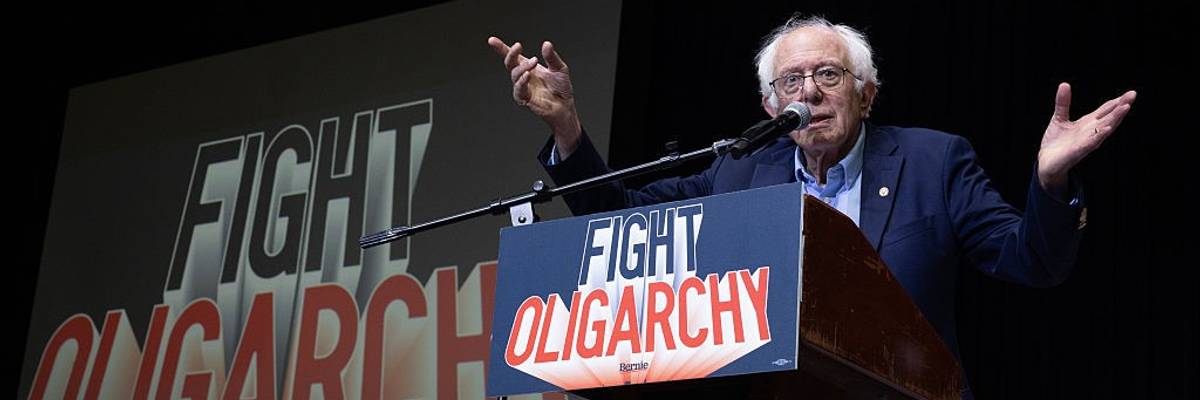
“You, as a citizen, get one vote,” said Sen. Bernie Sanders. “They, as oligarchs, get to buy the candidates.”


US Sen. Bernie Sanders (I-Vt.) speaks during a stop on his Fighting Oligarchy Tour at the UIC Forum on August 24, 2025 in Chicago, Illinois.
(Photo by Scott Olson/Getty Images)

Brad Reed
May 20, 2026
COMMON DREAMS

Two progressive lawmakers on Wednesday unveiled new legislation aimed at stomping out the existence of so-called Super PACs, the dark money groups that allow corporations and ultra-wealthy individuals to to spend limitless sums of money on US elections.

The Abolish Super PACs Act, introduced by Sen. Bernie Sanders (I-Vt.) and Rep. Summer Lee (D-Pa.), would cap Super PAC donations from individuals at $5,000 in an effort to end billionaires’ outsize influence over the US political process.

According to a fact sheet summarizing the bill shared with Common Dreams, the legislation is necessary to close the “judicially created loophole” that resulted from the 2010 US Supreme Court ruling in Citizens United v. FEC, which allowed “staggering sums of money” to be spent in every election since.

“At a time when billionaire oligarchs and corporations are spending billions of dollars to buy elections and erode democracy,” the document argues, “we must put an end to the corrupting influence of money in politics and ensure that American elections are decided by the people, not just the top 1%.”

In justifying the bill, Sanders pointed to the unprecedented sums of money Tesla CEO Elon Musk spent to elect President Donald Trump in 2024, and to the projected record amounts being spent by billionaire-funded Super PACs in the 2026 midterm elections.

“You, as a citizen, get one vote,” Sanders explained. “They, as oligarchs, get to buy the candidates. That’s not democracy. If we’re going to create a government that works for all, and not just the 1%, we have to end Citizens United, get super PACs out of elections, and move to public financing of elections.”

Lee, who has in the past been the target of big spending from dark money groups, including those associated with the American Israel Public Affairs Committee (AIPAC), decried Super PACs for allowing “limitless money to flow into our elections and influence every aspect of our lives.”

“Our government is now undeniably held in the hands of the powerful and the wealthy few,” she said. “I’m proud to be the lead sponsor of the Abolish Super PACs Act in the House to put democracy back in the hands of the people.”

Joseph Geevarghese, executive director of Our Revolution, praised the Abolish Super PACs Act as essential to ending what he described as the “auction” of US democracy.

“Unlimited outside spending and billionaire-funded super PACs are one of the root causes of political corruption and public distrust in government,” Geevarghese said. “If Democrats want to truly become the party of working people and seriously tackle affordability, corporate greed, and economic inequality, we have to break the grip wealthy interests and corporate money have over our political system.”
‘We’re Making Progress!’ Says Bernie Sanders as Union Leader Bob Brooks Wins PA Primary

“This November, we’re going to unite our party and welcome working people who are ready to come home,” said the working class champion.


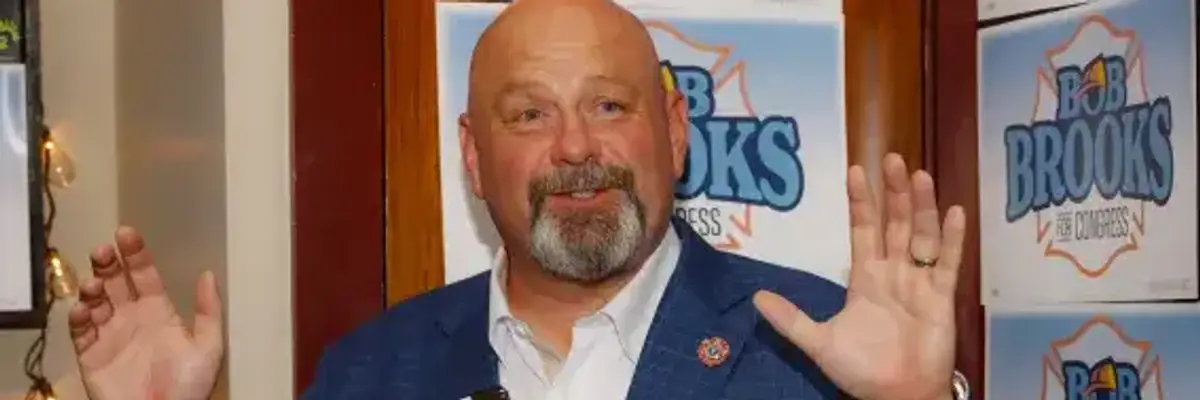
Former Bethlehem firefighter and Democratic congressional candidate Bob Brooks attends his election party on Primary Day, Tuesday, May 19, 2026, at Artisan in Bethlehem.
(Photo: Monica Cabrera/The Morning Call)

Jon Queally
May 20, 2026
COMMON DREAMS

Bob Brooks, president of the largest firefighters’ union in Pennsylvania and a champion of working-class politics, came out victorious in the Democratic primary race for the state’s 7th district on Tuesday as he vowed to unify voters during the general election and flip a seat currently held by first-term Republican Rep. Ryan Mackenzie.

“This November, we’re going to unite our party and welcome working people who are ready to come home,” Brooks told a crowd of supporters, many holding union signs back the candidate, at a victory rally in Bethlehem, the historic steel town in the state’s western Lehigh Valley.

Brooks, backed Sen. Bernie Sanders (I-Vt.) and a long list of national and regional unions but also endorsed by Democratic Gov. Josh Shapiro and former transportation secretary Pete Buttigieg, overcame a crowded field—that included Lamont McClure, Ryan Crosswell, and Carol Obando-Derstine—to win the contest with nearly 48% of the total vote.

As Common Dreams reported, Republican forces launched a mysterious spending effort to thwart Brooks’ campaign in the final weeks before the primary, with an outside group called Left PAC launching a $1 million ad campaign against him.


“Bob Brooks just showed what can happen when Democrats run unapologetically as working-class economic populists,” said the progressive advocacy group Our Revolution in response to the win. “A firefighter and union voice running in tough political terrain by directly taking on corruption, concentrated wealth, and a system failing ordinary people.”

Democratic strategist Lis Smith echoed many who said the fight to flip the 7th District from red to blue will be key in the effort to take the House away from Republicans in the fall.

“We need Bob Brooks and more Bob Brooks’s in Congress,” said Smith. “This is one of Dems’ best flip opportunities.”

And Sanders also weighed in, placing Brooks in the context of other progressives who won primaries this season and look to change the makeup of Congress come next year.

“Congratulations to Bob Brooks, a retired firefighter and union leader, on winning the Democratic primary in Pennsylvania’s 7th Congressional District,” said Sanders. “His win follows the recent progressive victories of iron worker and union leader Brian Poindexter in Ohio, and union organizer Analilia Mejía in New Jersey. We’re making progress!”

Also in Pennsylvania on Tuesday, democratic socialist candidate Chris Rabb won his primary race in Pennsylvania’s 3rd District, which represents large portions of Philadelphia.

The Working Families Party noted that the Brooks and Rabb victories, taken together, point Democrats toward a very important lesson.

“These are two candidates who centered working-class issues,” Nicholas Gavio, a spokesperson for the Pennsylvania Working Families Party, which backed both candidates, told Politico. “They’re obviously from different districts and demographics. But the message of populism—in Philadelphia and in the Lehigh Valley—sells and works.”


‘AIPAC Lost!’ Democratic Socialist Chris Rabb Wins US House Primary in Pennsylvania

“This victory would not have been possible without the work of thousands of working class people across Philadelphia organizing for a better world.”


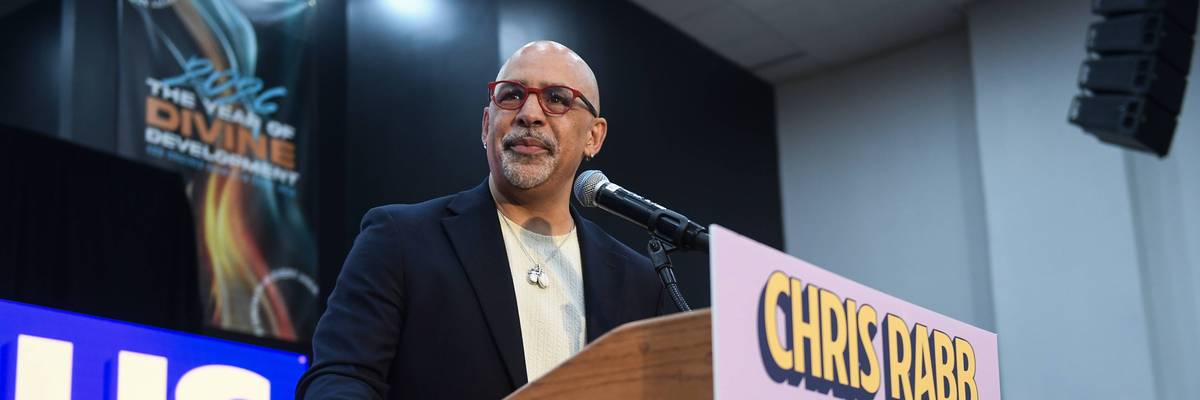
Pennsylvania State Rep. Chris Rabb takes the stage to deliver remarks during a rally with Rep. Alexandria Ocasio-Cortez (D-NY) on May 15, 2026 in Philadelphia.
(Photo by Matthew Hatcher/Getty Images)


Julia Conley
May 20, 2026
COMMON DREAMS

“Standing against genocide is good policy and good politics!” proclaimed the grassroots group Track AIPAC after Pennsylvania state Rep. Chris Rabb won the Democratic US House primary in the state’s 3rd Congressional District in Philadelphia.

Rabb, a democratic socialist, was outspoken in his criticism of Israel and the American Israel Public Affairs Committee (AIPAC) and his support of Palestinian rights during the campaign—aligning himself with a growing majority of Democratic voters while the pro-Israel lobby worked to secure a victory for one of his opponents, Dr. Ala Stanford.

314 Action Fund, a super political action committee (PAC) that supported Stanford, covertly received $500,000 from the powerful but increasingly toxic pro-Israel lobbying group, despite the fact that Stanford claimed she did not take money from AIPAC.

Democratic Gov. Josh Shapiro, a vehement supporter of Israel who butted heads with Rabb over US Immigration and Customs Enforcement in the state, also reportedly worked behind the scenes to defeat the progressive.

With 92% of votes in early Wednesday morning, Rabb had secured 44.3% of the vote compared to 24.1% for Stanford and 29.5% for a third candidate, Sharif Street.

Chants of “AIPAC lost!” rang out at Rabb’s victory party in Philadelphia.


In a victory speech to supporters, Rabb said his campaign—which also centered on his calls for Medicare for All; a Civilian Climate Corps to work toward decarbonizing the US economy; and universal basic guarantees for housing, childcare, and other essentials—had been dismissed by the Democratic establishment

“They told me this wasn’t possible. That’s what they said,” said Rabb. “I don’t know who ‘they’ are, but I know who we are. I’m looking at ‘We the People.’ And I’m not talking about ‘We the People’ 250 years ago. That was a much smaller ‘we.’”

Rabb was outspoken in his criticism of the Democratic establishment during his campaign, and said in a one interview that a key question facing the party is whether it is “prepared to listen to the base that demands this progressivism because what many people are calling progressive are pretty much standard things in other nations where universal healthcare is the thing, where there’s no notion of healthcare insurance, it’s just healthcare.”


Rabb secured endorsements from influential progressive leaders including US Reps. Alexandria Ocasio-Cortez (D-NY), Ro Khanna (D-Calif.), and Summer Lee (D-Penn.) as the election drew near.

Should he win the general election in the deep-blue district in November, journalist Prem Thakker noted, he’ll be one of at least four democratic socialists in the US Congress, including Ocasio-Cortez, Rep. Rashida Tlaib (D-Mich.), and Sen. Bernie Sanders (I-Vt.).

Others whose primaries are coming up include former Rep. Cori Bush in Missouri and Darializa Avila Chevalier and state Rep. Claire Valdez in New York.


Ryan Grim of Drop Site News credited progressive organizations, including pro-Palestine super PAC American Priorities and the Justice Democrats, with giving crucial support to Rabb’s campaign.

“And Rabb himself ran an exceptional race, building on years of relationships he built among progressives and activists in the city,” said Grim. “And also AIPAC royally screwed up, got caught trying to spend money through 314 Action to prop up a flawed candidate, and then never recovered when she flopped.”

Khanna said that along with Tuesday night’s loss in Kentucky of Republican Rep. Thomas Massie, who has joined Democrats in pushing for the release of files related to sex offender and President Donald Trump associate Jeffrey Epstein and for a stop to Trump’s military assault on Iran, the primaries sent a clear message to candidates.

“If you take a stand against war, AIPAC, and the Epstein class, you have no place in the Trump coalition,” said Khanna. “But the future of the Democratic Party that is done with the establishment is yours to shape.”

‘Profound Disappointment’: Democratic Virginia Gov. Spanberger Vetoes Legal Cannabis Sales

“The governor’s decision leaves the commonwealth exactly where we have been since 2021: with an unchecked illicit market hurting our communities, harming our youth, and putting adults at risk,” said one critic.


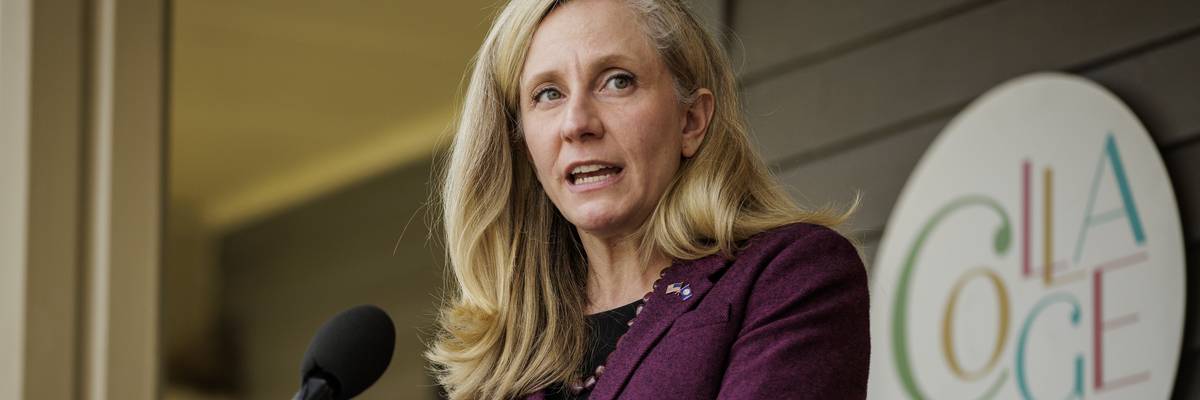
Then-Congresswoman Abigail Spanberger (D-Va.) speaks during a press conference in Fredericksburg, Virginia on November 3, 2022.
(Photo by Samuel Corum/Getty Images)


Brett Wilkins
May 19, 2026
COMMON DREAMS

Criminal justice reform and cannabis legalization advocates led condemnation of Democratic Virginia Gov. Abigail Spanberger’s Tuesday veto of legislation that would have established a retail market for the sale of recreational-use marijuana, which has been legal in the state for five years.

In 2021, Virginia became the then-16th state to pass an adult-use marijuana legalization law, with sales set to begin in 2024. However, former Republican Gov. Glenn Youngkin repeatedly vetoed the legislation, which would establish the framework for regulating and taxing the plant’s recreational use.

Today, while adults can legally consume cannabis recreationally, cannabis sales in Virginia are still restricted to medical use, and patients must travel to one of the five licensed providers in the commonwealth.

In March, Virginia lawmakers passed a package of bills to legalize recreational cannabis sales to people age 21 and older via a regulated market, place oversight of such sales under the Virginia Cannabis Control Authority, increase the public possession limit from one ounce to 2.5 ounces, allow delivery sales, establish new state and local cannabis taxes, and set January 1, 2027 as the launch date for sales.

Spanberger—who had campaigned on a promise to sign legislation establishing recreational cannabis sales—proposed amendments to the bill that were rejected by the General Assembly.

“I support the intent of many of the bills I am vetoing,” she explained in a statement. “However, it is my responsibility as governor to make sure all new laws can be successfully implemented and protect against unintended consequences that harm Virginians.”

“I look forward to continuing to work with bill patrons, state and local leaders, and advocates on legislation addressing these issues in the future,” the governor said.

Marijuana Moment reported that Spangberger sought to delay the start of sales by six months, increase taxes, and institute new criminal penalties for cannabis consumers.

“Once again, Virginia’s efforts to establish a safe, regulated, and equitable adult-use cannabis marketplace has been halted despite years of work, public input, and broad recognition that the status quo is failing Virginians,” state Sen. Lashrecse Aird (D-63), who sponsored one of the bills, said in a statement Tuesday.

“The governor’s decision leaves the commonwealth exactly where we have been since 2021: with an unchecked illicit market hurting our communities, harming our youth, and putting adults at risk,” she added.

Del. Paul Krizek (D-16), who sponsored the House of Delegates version of the sales bill, said, “Five years ago, Virginia legalized cannabis in recognition that the War on Drugs has caused disproportionate harm to Black families and communities.”

“The question now is whether Virginia will continue allowing an unregulated illegal market to thrive, or finally establish a safe, transparent system that protects consumers, keeps products away from children, and keeps our commitment to ending racially discriminatory marijuana policing in Virginia,” he added.

JM Pedini, development director for the advocacy group National Organization for the Reform of Marijuana Laws and executive director for Virginia NORML, told Marijuana Moment that Spanberger’s veto is “a profound disappointment to the many Virginia voters who believed her when she said on the campaign trail that she supported establishing a regulated adult-use cannabis market.”

“It is also a slap in the face to the years of serious work undertaken by lawmakers, policy experts, advocates, public health stakeholders, and regulators who spent more than half a decade researching, debating, and carefully crafting this legislation,” Pedini added. “Rather than build upon that work, the governor dismissed it in favor of out-of-touch proposals to recriminalize cannabis consumers that lawmakers rightly rejected.”


Chelsea Higgs Wise, executive director of the Richmond-based nonprofit Marijuana Justice, said in a statement that “for five years, Virginia has been stuck in a limbo where adults can legally possess, share, and grow cannabis, but there is still no regulated way to purchase it.”

“By rejecting the retail bill,” Wise added, “the governor has chosen to extend that chaos rather than move us toward a transparent, accountable retail system that centers public health, public safety, and justice.”

Twenty-four states have legalized recreational marijuana, while 16 states allow medical use of the plant. Last month, the US Department of Justice began reclassifying cannabis from Schedule I—a category that includes dangerous drugs like heroin, LSD, and MDMA to Schedule III, which includes codeine, ketamine, anabolic steroids, and testosterone.
‘Bond Villain’ Jeff Bezos Claims ‘You Could Double the Taxes I Pay’ and It Won’t Help Anyone

“Too much money contorts any human being,” said one critic of the Amazon founder.

2 X 0 IS STILL 0


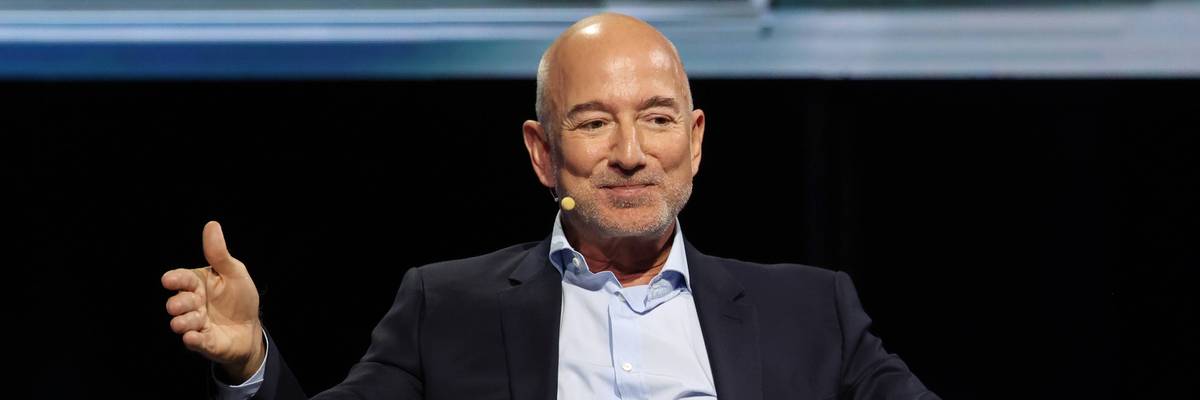
Amazon founder Jeff Bezos speaks at the America Business Forum on November 6, 2025 in Miami, Florida.

Brad Reed
May 20, 2026
COMMON DREAMS

Amazon founder Jeff Bezos drew ridicule on Wednesday after he claimed that doubling the amount of taxes he pays wouldn’t be beneficial to society.

During an interview on CNBC, journalist Andrew Ross Sorkin asked Bezos about arguments made by Sen. Elizabeth Warren (D-Mass.) that the super-rich have lower effective tax rates than average Americans given how much of their wealth comes from unrealized capital gains and not traditional income earned through actual labor.

“I pay billions of dollars in taxes,” replied Bezos, whom Forbes estimates is worth $267 billion. “If people want me to pay billions more, then let’s have that debate. But don’t pretend, you know, that that’s going to solve the problem. You could double the taxes I pay, and it’s not gonna help that teacher in Queens, I promise you.”


A 2021 investigation by Pro Publica found that Bezos’ effective tax rate of less than 1% between 2014 and 2018, as he paid a total of $973 million in taxes over a period in which his net worth grew by $99 billion.

As explained by the Institute of Taxation and Policy (ITEP), this effective tax rate was “significantly lower” than the tax rate paid by middle-class Americans over that period.

“There were multiple years where Bezos paid nothing at all in income taxes,” ITEP noted. “While having billions of dollars of wealth, Bezos consistently avoided income tax by offsetting earned income with other investment losses and various deductions, all while Amazon stock was rapidly rising.”

Democratic congressional candidate Melat Kiros in Colorado suggested Bezos had a point about taxation—“because we tax income, not wealth.

“Bezos takes out a tiny salary, pays the income tax, and lives off loans borrowed against his stocks, basically tax-free,” said Kiros. “They all do this and now 935 billionaires hold more wealth than 170 million Americans. It’s time to tax wealth.”

Melanie D’Arrigo, executive director of the Campaign for New York Health, took issue with Bezos’ claim that doubling his taxes would produce no benefits.

“Jeff Bezos paid $500 million for his super-yacht and $75 million for his super-yacht’s mini-yacht—both of which he’s allowed to write off on his taxes,” she wrote in a social media post. “That alone would cover $180 in classroom supplies for every public school teacher in the US.”

Craig Harrington, research director at Media Matters for America, marveled at how out of touch Bezos seemed to be.

“There’s a funny thing about being uber wealthy,” he observed. “They get so rich that they lose all sense of place, they essentially manifest as stateless people with no connection to or understanding of the world outside their private airports and resplendent villas.”

Journalist and screenwriter David Simon expressed a similar view of the impact of immense wealth on Bezos’ psyche.

“Too much money contorts any human being,” Simon wrote. “And what was once a man is now, for the rest of the world, a fully metastasized cancer.”

Author Hemant Mehta, meanwhile, simply wondered if Bezos “auditioning to be the next Bond villain.”

CNN panel comes unglued over Jeff Bezos's tax plan: 'What are you talking about?'

Robert Davis
May 20, 2026 
RAW STORY


CNN screenshot

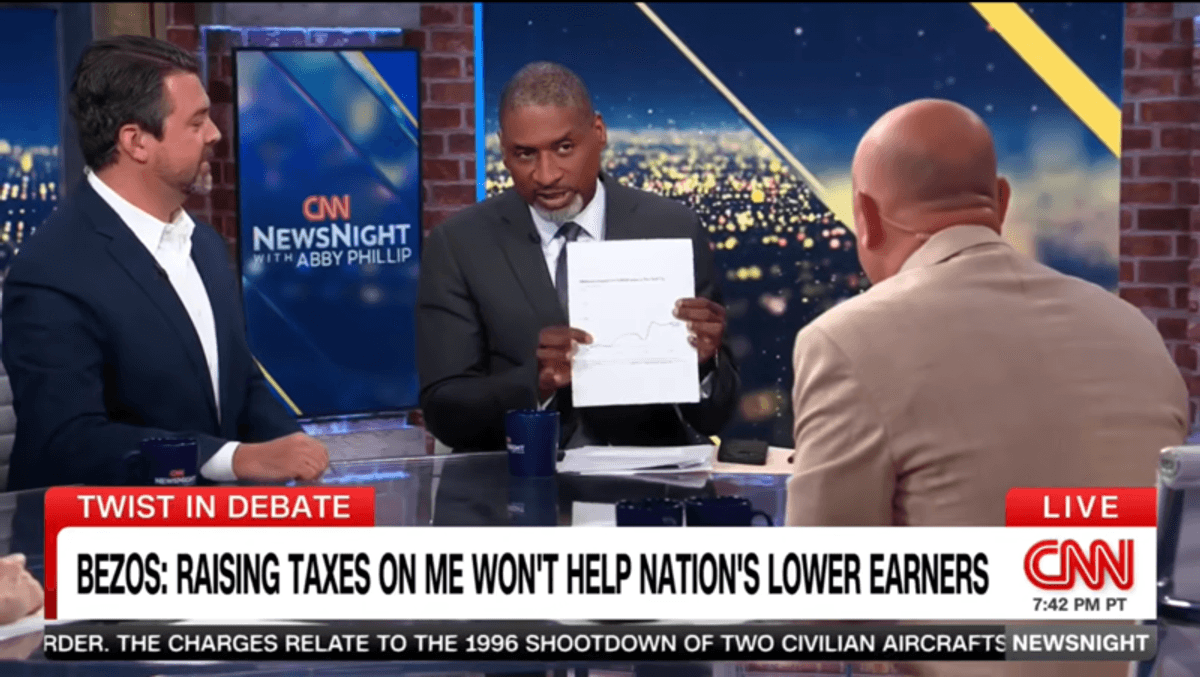
The panel on CNN's "NewsNight" came unglued on Wednesday while discussing Amazon founder Jeff Bezos's tax plan, which he shared with CNBC earlier that day.

In an interview with Aaron Ross Sorkin, Bezos claimed that the bottom percentile of workers should pay no income tax. He said that the plan would benefit more middle-income earners, like a nurse in Queens, New York, than economic plans put forward by Democrats like Rep. Alexandria Ocasio-Cortez (D-NY) and Zohran Mamdani, the Democratic Socialist mayor of New York City, to increase taxes on the wealthy.

“You could double the taxes I pay, and it’s not going to help that teacher in Queens,” Bezos claimed.

Bezos's idea set off a firestorm on CNN.

Arthur Aidala, a criminal defense attorney, claimed that Bezos was right that increasing taxes on the wealthy would be detrimental to the middle class. He argued that increasing taxes could cause wealthy people to flee certain areas for low-tax havens.


Aidala also claimed that Mamdani was about to "ruin the economy" in New York by raising taxes on the wealthy, a claim that didn't sit well with other panelists.


"What set of facts do you have to back that up?" Charles Blow, a political journalist, shot back.

Aidala claimed that Citadel Capital CEO Ken Griffin's recent comments about Mamdani putting people like him in danger were one example. Noah Rothman, a writer for the National Review, argued that Florida's population growth shows how Mamdani's tax plan has made the wealthy leave New York City.

"Not everybody in Florida is moving from New York," Blow countered. "So I want to know ... What are your numbers?"


Host Jessica Dean attempted to intervene, but the conversation got more heated from there.

Aidala wouldn't say where he got his data from, which led Blow to attack further.

"We can't just do this whole thing like, 'I know a guy,'" Blow said. "You have no data."


Blow held up a chart showing that millionaires continue to move to New York City despite Mamdani's policies.

"What are you talking about?" Blow said to Aidala.


Death Penalty Nearly Doubled in US as Global Figure Hits 44-Year High

“This alarming spike in the use of the death penalty is due to a small, isolated group of states willing to carry out executions at all costs, despite the continued global trend towards abolition,” said Amnesty International’s secretary general Agnès Callamard.


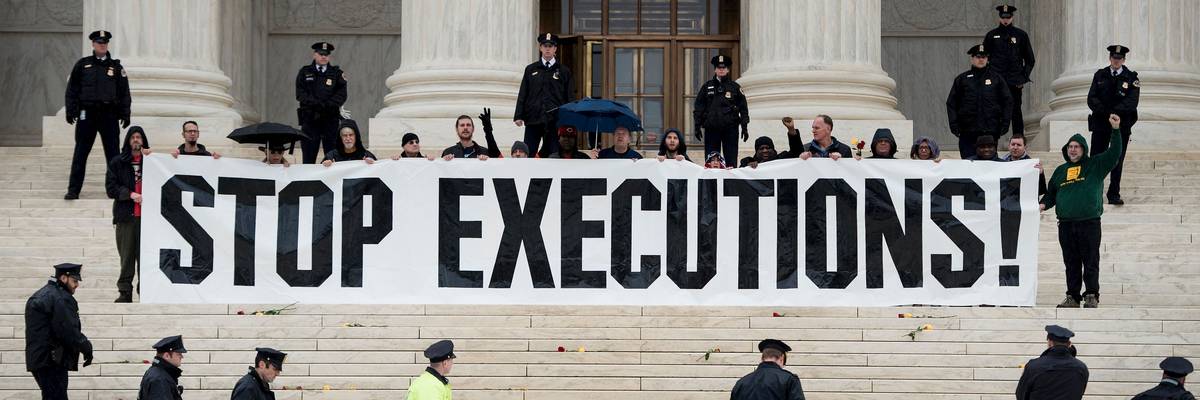
Police officers gather to remove activists during an anti-death penalty protest in front of the US Supreme Court on January 17, 2017 in Washington, DC.

(Photo: Brendan Smialowski/ AFP via Getty Images)

Jon Queally
May 18, 2026
COMMON DREAMS

With its number of state-sponsored executions nearly doubling in 2025, the United States joined an ignominious handful of nations around the globe that helped bring death penalty punishments worldwide last year to their highest level in nearly half a century.

Amnesty International released its annual review of the death penalty on Monday, showing that the “staggering” overall increase of executions—up from 1,518 in 2024 to at least 2,707 people—was due “to a handful of governments determined to rule by fear.”

While 17 nations carried out at least one death sentence in 2025, it was significant increases in five of those countries—the United States, Iran, Saudi Arabia, Kuwait, Egypt, and Singapore—that account for the historic spike. With rates in those countries doubling or even tripling compared to the 2024 figures, Amnesty found, executions overall rose by 78% worldwide in 2025.

As the human rights group notes:
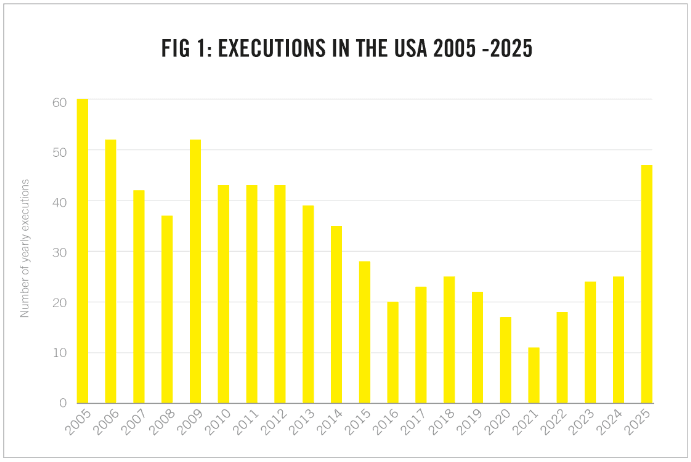
Iranian authorities, the main drivers behind the spike, executed at least 2,159 people, more than double its 2024 figure. Elsewhere, Saudi Arabia raised its execution tally to at least 356, using the death penalty extensively for drug-related offenses. Executions in Kuwait almost tripled (from 6 to 17), while they near doubled in Egypt (from 13 to 23), Singapore (from 9 to 17), and the United States of America (from 25 to 47).

Notably, the 2025 total put forth by Amnesty does not include thousands of executions the human rights group believes were carried out in China, which it says likely carries out thousands each year.

“This alarming spike in the use of the death penalty is due to a small, isolated group of states willing to carry out executions at all costs, despite the continued global trend towards abolition,” said Agnès Callamard, Amnesty International’s secretary general. “From China, Iran, North Korea and Saudi Arabia to Yemen, Kuwait, Singapore and the USA, this shameless minority are weaponizing the death penalty to instill fear, crush dissent and show the strength state institutions have over disadvantaged people and marginalized communities.”

Under President Donald Trump, who has championed the return of the federal death penalty during both his first and second terms in office, the 47 executions took place across 11 states, with the highest number being carried out in Florida, where 19 people were killed.


(Source: Amnesty International)


Despite the surge in countries like the US and Iran, Amnesty highlighted that “progress was made elsewhere around the world, proving hope is stronger than fear.”

The report notes that no “executions or death sentences were recorded in Europe and Central Asia” and that, for the 17th consecutive year, the US remained the “only country in the Americas to execute people, with close to half of all US executions carried out in Florida.”

The group celebrated legislative progress in countries like Nigeria and Lebanon, where bills were introduced in the last year to abolish the death penalty once and for all.

“With human rights under threat around the world, millions of people continue to fight against the death penalty each year in a powerful demonstration of our shared humanity,” said Callamard in her statement. “Total abolition is possible if we all stand strong against the isolated few. We must keep the flame of abolition burning bright until the world is entirely free from the shadows of the gallows.”
‘Telling the Public to Drink Poison’: Trump EPA Targets Drinking Water Limits for ‘Forever Chemicals’

“You cannot make America healthy again while allowing toxic PFAS to flow freely from our taps,” said the Environmental Working Group’s president.


This man’s water delivery is shown in Westminster, Massachusetts on June 24, 2022. His household’s tap water is contaminated with high levels of “forever chemicals.”
(Photo by Suzanne Kreiter/The Boston Globe via Getty Images)

Jessica Corbett
May 18, 2026
C0MMON DREAMS

President Donald Trump is yet again facing accusations of breaking his campaign promise to “Make America Healthy Again” after the US Environmental Protection Agency on Monday proposed repealing and delaying some landmark limits on “forever chemicals” in drinking water.

Per- and polyfluoroalkyl substances (PFAS) are commonly called forever chemicals because they persist in the environment, humans, and wildlife for long periods. Despite their links to various health issues, including cancer, they have been used in products such as firefighting foam, food packaging, nonstick pans, and water-resistant fabrics for clothing and furniture.

The Biden administration was praised for its historic steps to reduce PFAS contamination of tap water and urged to go even further. However, the Trump EPA is now pushing to delay those limits for two common contaminants, PFOA and PFOS, and abandon the restrictions for four others: PFBS, PFHxS, and PFNA, and HFPO-DA—also known as GenX.

Announcing the proposed rules on Monday, EPA Administrator Lee Zeldin and US Department of Health and Human Services Secretary Robert F. Kennedy Jr. claimed not only that the Biden administration failed to follow federal law in implementing its restrictions, but also that the new proposals are part of the president’s Make America Healthy Again pledge. They highlighted “innovative” technologies plus funding for states to address PFAS in tap water.

However, campaigners who have long called for stricter PFAS policies excoriated the Trump administration over its two proposed rules—which are set to be published in the Federal Register with a 60-day public comment period, and the subject of an EPA hearing scheduled for July 7.

“Zeldin and Kennedy are trying to sell potions out of the back of a covered wagon. The millions of Americans demanding safe drinking water are not going to fall for their hocus pocus,” said Anna Reade, director of PFAS advocacy at the Natural Resources Defense Council, in a statement. “By repealing and delaying PFAS standards, EPA is abandoning communities in desperate need of drinking water protections, especially those who live near polluting industries.”

Food and Water Watch’s water program director, Mary Grant, declared that “with today’s proposals, the Trump administration is telling the public to drink poison. It has once again shown that it represents the interests of billionaire corporate polluters—not the health of people in this country.”

“One thing is absolutely clear, we cannot roll back or delay protections against PFAS,” she said. “For decades, communities have been sounding the alarm and demanding action on these toxic forever chemicals. Instead of implementing commonsense regulations, Trump’s EPA has doubled down on weakening our drinking water protections. Every person deserves and needs clean, safe water, and today’s proposed rules are threats to millions of people.”

Grant argued that “EPA must not delay or roll back these hard-won limits on toxic PFAS contaminants in drinking water. It must immediately cease these deregulatory actions, stop approving new PFAS chemicals, ban all nonessential uses, hold polluters accountable for clean up, expand protections to regulate the entire class, and ramp up support to ensure that every community has access to safe, affordable water.”


Ken Cook, president and co-founder of the Environmental Working Group (EWG), which has tracked PFAS contamination across the United States and publicly released its findings, was similarly outraged by the EPA proposals.

“You cannot make America healthy again while allowing toxic PFAS to flow freely from our taps,” Cook said. “The Trump EPA is caving to chemical industry lobbyists and water utility pressure—and in doing so, it is condemning millions of Americans to drink contaminated water for years to come.”

“The price of this decision will be paid by ordinary people, in the form of more PFAS-related diseases,” he warned.

While Trump’s agency leaders claimed Monday that the Biden administration ran afoul of the Safe Drinking Water Act, EWG accused them of violating that same law, given its requirement that any revision to a tap water standard “maintain, or provide for greater, protection of the health of persons.”

Melanie Benesh, vice president of government affairs at EWG, said that “this is a deliberate decision to expose American families to chemicals linked to cancer and other serious health harms. Rolling back limits on four PFAS and then allowing water systems to push compliance deadlines to 2031, when contamination is ongoing, is unconscionable.”

“The communities least able to protect themselves will pay the highest price,” she added. “That is not regulatory reform. It is an environmental injustice.”
Amid Fury Over AI Data Centers, Watchdogs Denounce ‘Absurd’ $67 Billion NextEra-Dominion Merger

“These megautilities are merely using rising concern about data centers as an excuse to concentrate political and economic power of two giant utilities to maximize financial returns to shareholders,” one advocate said.


The logo of NextEra Energy is seen at the entrance of its headquarters on May 18, 2026 in Juno Beach, Florida.
(Photo by Marco Bello/Getty Images)


Stephen Prager
May 18, 2026
COMMON DREAMS

Seeking to cash in on spiking energy demand from the expansion of artificial intelligence data centers across the US, the Florida energy giant NextEra announced a $67 billion deal on Monday to acquire Virginia’s Dominion Energy.

But while the deal is expected to be lucrative for the massive new entity, with national power demands projected to spike perhaps by as much as 25% over the next five years, consumer advocates fear that the proposed merger will be bad for consumers, creating an unaccountable corporate behemoth that will raise costs on ratepayers.

According to Utility Dive, the new entity created by the merger will serve a combined 10 million customers across Florida, Virginia, North Carolina, and South Carolina.

With a market cap of $250 billion, the companies said they’d be the “world’s largest regulated electric utility business by market capitalization and one of the world’s largest energy infrastructure companies.”

But the deal still needs to be approved by federal regulators, a process that will likely pose minimal difficulty given the Trump administration’s friendliness toward other corporate megamergers across industries, from media to railroads.

It will also be required to obtain local approvals, including in Virginia, where the recently elected Democratic Gov. Abigail Spanberger has made lowering utility costs and requiring data centers to “pay their fair share” central campaign promises, as massive new projects have been met with furious local backlash around the country.

Tyson Slocum, director of the energy program for the consumer advocacy watchdog Public Citizen, said that “this absurd proposal to merge two massive, well-capitalized utilities should be dead on arrival for state and federal regulators.” He added that “household customers have everything to lose and nothing to gain by allowing two behemoths, NextEra and Dominion, to merge.”

The company’s combined rate base—the value of assets recognized by regulators when setting rates—are valued at about $138 billion, according to the deal announcement. It said they plan to expand that value by 11% by 2032 with major infrastructure expansions.

Though the company has proposed offering $2.25 billion in credits to customers for two years after the deal closes, consumer advocates fear it is simply meant to ease upfront investment costs, leaving the real rate hikes to show up later once the credits expire.

The group Clean Virginia argued that the proposal needed to be subject “to the most rigorous scrutiny possible,” given NextEra’s “deeply troubling track record” in Florida.

The company and its subsidiaries in Florida have faced criticism for profiting from a $1.5 billion rate hike on Floridians and for pocketing $1 billion in tax savings without passing it on to consumers.

The company is also renowned for its extensive use of dark money to influence legislators in both parties, as well as Republican Florida Gov. Ron DeSantis, to kill clean energy and other policies that disfavor its business.

David Pomerantz, the executive director of the Energy and Policy Institute, told The New York Times that “a megamonopoly of this size, with the kind of money to buy political influence that NextEra will have, will be nearly impossible to regulate.”

NextEra CEO John Ketchum has said the deal is necessary to accommodate “America’s golden age of power demand.”

“Electricity demand is rising faster than it has in decades,” Ketchum said. “We are bringing NextEra Energy and Dominion Energy together because scale matters more than ever.”

But Slocum called this “a false narrative.”

“The merger will do nothing to increase generating capacity, let alone desperately needed renewable generating capacity,” he said. “These megautilities are merely using rising concern about data centers as an excuse to concentrate political and economic power of two giant utilities to maximize financial returns to shareholders.”

He said federal and state regulators “should reject this outlandish, unnecessary merger as completely contrary to the public interest.”
US enforces law to crack down on sexual deepfakes


ByAFP
May 19, 2026


An online boom in non-consensual sexualized deepfakes currently outpaces efforts to regulate AI technology, experts say. - Copyright AFP Stefani REYNOLDS


Anuj CHOPRA

The United States on Tuesday began enforcing a law requiring tech platforms to remove sexual deepfakes and other non-consensual intimate imagery, but experts warned of shortcomings and raised online censorship concerns.

President Donald Trump signed the Take It Down Act last year, criminalizing the online distribution of non-consensual sexual imagery that is often created using cheap and widely available artificial intelligence tools.

The Federal Trade Commission said that starting Tuesday tech platforms were required to establish a process allowing victims to request the removal of such content and must take it down within 48 hours of receiving a valid request — or face penalties.

“We stand ready to monitor compliance, investigate violations, and enforce the Take It Down Act,” FTC Chairman Andrew Ferguson said after sending letters to over a dozen tech firms — including Meta, TikTok, X, and Snapchat — ahead of the enforcement.

“Protecting the vulnerable — especially children — from this harmful abuse is a top priority for this agency and this administration.”

In a post on Monday, X’s Safety account said there is “no place in our society for predators to share intimate photos and videos of others without their consent.”

“X has zero tolerance for non-consensual intimate images, unwanted sexual content, or any kind of exploitative behavior.”

– ‘Shoot first, ask questions never’ –

The assurance comes after Elon Musk’s AI tool Grok faced international backlash earlier this year for virtually undressing women and minors without their consent. Researchers said Grok generated an estimated three million sexualized images in a matter of days.

Still, some experts warn the Take It Down Act is far from a perfect solution.

Riana Pfefferkorn, a policy fellow at the Stanford Institute for Human-Centered Artificial Intelligence, said that the law creates a “shoot first, ask questions never” dynamic.

The incentive structure is in the “direction of just remove it, remove it, remove it,” she was quoted as saying in Indicator, a newsletter focused on investigating digital deception.

Pfefferkorn also expressed concern that the law could be weaponized against trans people, sex workers whose content is consensual, and political speech the administration disagrees with.

The law’s takedown provision has also alarmed other free speech advocates, who warn it could encourage tech firms to zealously moderate non-offending content to reduce risk.

An online boom in non-consensual deepfakes is currently outpacing efforts to regulate the technology around the world due to a proliferation of AI tools, including “nudification” apps, experts say.

While high-profile politicians and celebrities, including singer Taylor Swift, have been victims of deepfake porn, researchers say women not in the public eye are equally vulnerable.

A wave of AI porn scandals have been reported at schools across US states — from California to New Jersey — with hundreds of teenagers targeted by their own classmates.

Such non-consensual imagery can lead to harassment, bullying or blackmail, sometimes causing devastating mental health consequences, experts warn.
Four takeaways from Musk vs OpenAI trial


By AFP
May 18, 2026


After three weeks, the high-profile trial over Elon Musk's lawsuit against the co-founders of OpenAI is coming to a close - Copyright AFP JOSH EDELSON

After three weeks of intense hearings, Silicon Valley’s first major AI trial — over the lawsuit filed by Elon Musk against the co-founders of OpenAI — is nearing an end. It is expected to go to the jury on Monday.

Here are four scenes that defined the trial:

Musk blames his own naivety

At the opening of the trial on April 28, Musk portrayed himself as a selfless benefactor and Good Samaritan concerned with protecting humanity from an AI that, if left in the wrong hands, could “kill us all.”

“I came up with the idea, the name, recruited the key people, taught them everything I know, provided all of the initial funding,” the SpaceX CEO said regarding OpenAI’s founding in 2015.

“I gave $38 million essentially for nothing, which they used to build a company worth $800 billion. I was literally an idiot,” he said, blaming his own naivety.

Musk was visibly annoyed during the trial as he called out OpenAI’s lawyer for asking questions “designed to trap me.”

“Mr. Musk, you are a brilliant man,” said OpenAI’s lawyer William Savitt, as he doubled down on his attacks, disguised with a show of courtesy.

Altman strikes back

Swapping his usual T-shirt, jeans and sneakers for a dark suit and tie, OpenAI CEO and co-founder Sam Altman sat stone-faced in the front row of the Oakland courtroom for most of the proceedings.

But on May 12, it was finally his turn. Musk’s lawyer, Steven Molo, was waiting for him, asking if he had always told the truth.

Altman responded: “I’m sure there have been times in my life when I didn’t.”

But then, with a blank expression and wide eyes, he struck back, saying Musk in 2017 had demanded “90 percent of the equity” and “refused to commit in writing” to sharing power.

Altman said he had no choice as “we did not think that artificial general intelligence should be under the control of a single person.”

Brockman’s notebook

Every day in the courtroom, Greg Brockman, the president and co-founder of OpenAI, took extensive notes on yellow notepads.

During his questioning on May 4, old journals he kept from years ago took center stage, with Musk’s lawyer highlighting some of the most embarrassing excerpts.

Brockman wanted to make money, writing, “financially, what will take me to $1B?” He also wanted “to convert to a b-corp without him (Musk),” a reference to a private company with social and environmental standards.

The journal recorded his concerns about a plan to “steal the non-profit from him (Musk)” as “pretty morally bankrupt.”

“There’s nothing in there I’m ashamed of,” Brockman hit back, claiming that the journal did not include details of an outburst from Musk in 2017.

“I really thought he was going to hit me,” Brockman said of the incident. Musk did not touch him, but took a painting of a Tesla, a gift from one of the co-founders, down from the wall and left the room, he said.

Brockman’s shares in the company are now worth $30 billion.

The secret go-between

Shivon Zilis — the mother of four of Musk’s children — is a woman in the shadows, rarely appearing in public.

So her May 6 appearance in the courtroom attracted intense curiosity.

Zilis, who was appointed to the OpenAI board from 2020 to 2023, was asked about her awkward role as both Musk’s colleague at Neuralink and Altman’s friend.

At the time, her mysterious relationship with Musk was secret. Their children were conceived through in vitro fertilization.

OpenAI accuses her of working as a mole for Musk.

Zilis responded to questions briefly and, at times, sarcastically.

“Relationship is a relative term,” she said when asked about her relationship with Musk, before conceding, “there have been romantic moments.”

But ultimately, her testimony may matter less than the content of her messages to Musk and Altman.

Those could lead the jury to conclude that Musk, having been sufficiently informed by Zilis, knew of OpenAI’s direction long before 2023. If so, his lawsuit could be thrown out before the jury even starts deliberating the merits of the case.