The Syrian conflict is not yet over: Assad has fallen, but the revolution hasn’t won
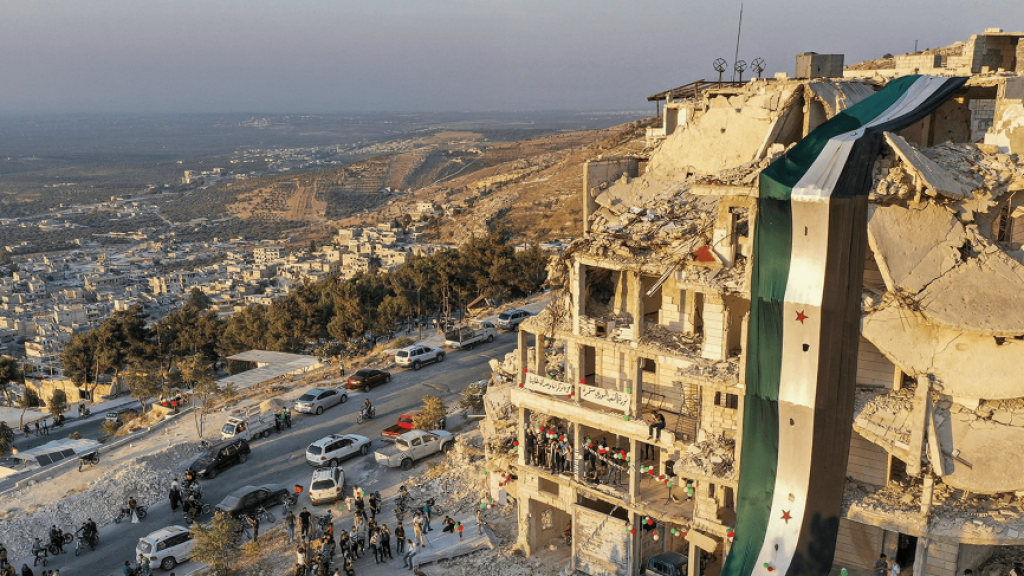
First published at Al-Jumhuriya.
Has the Syrian revolution triumphed with the fall of the Assad regime? Is what we have witnessed since last December a successful revolution — albeit after a long, tortuous path?
This question carries cognitive significance, since it demands a detailed understanding of the almost 14 years which passed in Syria between the outbreak of the revolution and the collapse of the regime. It also carries political weight, since the answer will shape how public actors engage with Syria’s present reality and its post-Assad future.
A detailed understanding is unlikely to emerge any time soon: the history of these fourteen years will be written and rewritten for decades. Nevertheless, political discussion is not just possible, it is necessary — to clarify our thinking as we navigate a pivotal moment dissimilar to anything in our generation’s living memory.
For this writer, the question bears some personal charge. I had argued several times that the Syrian revolution failed, and that Syrian democrats should ground their political vision in that sobering reality.
To some, the regime’s fall — and the subsequent outpouring of joy after years of melancholy — seemed to prove me wrong, and some friends have already expressed this view. But I remained unconvinced, even if I lacked, at the time, either the argument or the energy to defend my position.
What follows is a first attempt in that direction.
There are victors!
Perhaps the Assad regime could only have fallen the way it did — at the hands of a coalition of Sunni Islamist forces, ideologically cohesive, battle-hardened, and enabled by a favorable regional and international climate. Yet the convoluted trajectory of the post-revolution years undermines any assumption of even minimal homogenous continuity between March 2011 and December 2024.
What began as a Syrian–Syrian conflict — at first peaceful and then, until mid-2012, a mix of peaceful and armed — later morphed into a Sunni–Shiite confrontation with rising regional stakes, primarily involving Iran and some Gulf states. This phase persisted until the US–Russia chemical weapons deal in September 2013, which marked the beginning of remote internationalization — later followed by direct military interventions: the US in 2014, Russia in 2015, and Turkey in 2016.
As control slipped steadily from Syrian revolutionaries, the revolution was buried beneath a growing mound of non-revolutionary conflicts — sectarian and regional — and was ultimately recast as a “war on terror” that, in effect, rehabilitated Assad’s rule.
The years after 2016 were marked by misery and decomposition — far from revolutionary. They signaled the revolution’s defeat, the domination of sectarian forces within it, the complete collapse of the Free Syrian Army, and the political opposition’s subordination to Turkey.
This period also saw the emergence of a “Sunni entity” in Idlib amid deepening national fragmentation. The dominant forces within this entity were only partly shaped by internal processes of radicalization, militarization, and sectarianization — driven by Sunni communities’ experience of systematic violence, massacres, and the discriminate use of chemical weapons and barrel bombs against them. However, those forces were equally consequences of globalized and unsocial forms of Islamic nihilism that had been taking root in Iraq years before the Syrian revolution.
The faction now in power played no role in the early stages of the Syrian revolution, nor did it emerge from Syrian society. Its transitional president is a former jihadi who operated under multiple aliases in Iraq, where his formative years were spent fighting the Americans and the new Shiite-led government. For years after, this little-known figure led in Syria the Salafi-jihadist group Jabhat al-Nusra.
Both he and his group — hostile in word and deed to the revolution, its symbols, and its national formation — were more rooted in a savage, transnational nihilism that rejects both our societies and the wider world than in the dynamics of the Syrian uprising, which began as a popular intifada in the context of the Arab Spring. Rather, he belongs to an elitist, conspiratorial minority, prone to dissidence — one whose ideas and model cannot be a ground for a broad social or political majority, and whose very makeup stands at complete odds with nationalism, democracy, Syria’s history, and even the notion of Syrian society or any form of modern political order.
It is nihilistic for this reason — not simply because it radically rejects the political system, but because it denies the foundations of collective political existence altogether.
Over time, Hay’at Tahrir al-Sham (HTS) distanced itself from the extreme nihilism that ISIS continues to embrace. It gradually adopted the language of the Syrian revolution and stopped rejecting its flag, yet continued to operate from a distinctly Sunni supremacist position.
Alongside HTS, the coalition that toppled the regime — “Operation Deterrence of Aggression” — included rogue, corrupt factions with no public cause and long records of abuse, primarily against Kurds in Afrin but also against the wider population of northern Syria under their control, effectively acting as Turkish proxies.
So, with this in mind: can the fall of the regime still be called a victory for the revolution — rising out of the rubble, like those who emerged from the depths of Sednaya prison and Assad’s security branches?
The collapse sparked widespread and justified joy across Syria, buoyed by the absence of the fear of massacres, reprisals, or destruction. This joy was further fueled by hopes that the regime’s end would bring peace, the lifting of Western sanctions, and the start of economic recovery.
Yet many celebrating do not feel victorious. The fall of the regime is seen less as a win for the 2011 revolution and more as a triumph for the so-called “Sunni entity”.
This group, having endured years of massacres, displacement, and poverty after the revolution, developed a strong narrative of victimhood and a sharp desire for revenge — impulses poorly suited to the post-Assad phase and more likely to fuel discrimination, extremism, and irrationality.
These impulses exploded in genocidal violence on the coast this March, targeting many peaceful Alawites, following a limited revolt by remnants of regime forces.
People may argue, rightly, that the conflict wouldn’t have endured or led to the regime’s fall without being firmly rooted amongst the Sunni community. But that doesn’t erase the conflict’s profound shift toward an exclusionary, sectarian trajectory — now taking shape in political and institutional realities.
… But not the revolution!
I offer these reflections to better frame the central question: Did the 2011 revolution triumph with the fall of the regime in late 2024?
Two ready-made answers dominate. The first — mostly voiced by those within the so-called “Sunni entity” or those who viewed the revolution as a Sunni coup rather than a national liberation movement — insists that, yes, the revolution clearly triumphed.
The second rejects that claim, framing the outcome as an armed Islamist takeover — arguing that Syria is now under extremist rule, deemed terrorist by the UN and major powers. Whether or not it explicitly calls for toppling the new regime, that is where its logic points to.
Those who hold this view may not mourn Assad’s fall (some do), but they are not joyful either. What follows is an attempt to move beyond both responses toward a more nuanced, less polarized understanding of what the fall of Assad truly represents.
To restate: the fall of the Assad regime is a truly monumental event. This is not a matter of personal opinion. It was a regime defined by bloodlines and decay until its final collapse, as evidenced by Sednaya Prison and its vast security apparatus. It ruled too long, shed much blood of its own people, seized their property, entrenched sectarianism, and traded national sovereignty for foreign protection — at the expense of Syria’s land, society, and resources.
In slightly archaic terms, it was a non-national regime — a regime of national betrayal — that had to be overthrown. Whatever comes next does not alter this fact: Syria urgently needed to close that lethal, stagnant chapter of its history — if it was to have any chance at survival.
The scale of the event cannot be overstated. It is a tectonic shift, leaving nothing in society, thought, or collective identity untouched. Alliances and rivalries have been redrawn, new polarizations are emerging, and people are being pulled in all directions before they can even make sense of what’s happening — as if caught in the aftershocks of a massive earthquake.
This comparison to a geological catastrophe is not meant to deny the agency of Syrians. Rather, it tries to convey the sheer force of what has unfolded — and how that force is shaping Syrian agency itself, making it as volatile and unsettled as the moment.
And it puts everybody in a crisis.
No Syrian today — especially those involved in public life — is outside this crisis or unaffected by this immense and unexpected change of our world. The victors included.
We are in an interstitial moment, fertile but disorienting — one that demands reflection, even as it leaves little space for anything else. We inhabit a state of flux, a formless and still-malleable condition whose eventual shape depends, at least in part, on us. This is what it means to be in an in-between state: a time when things, selves, and ideas exist in historical transition — a chaos in which the old world fades daily, while the new one resists taking form. It is also the state of our analysis: in-between, provisional, and largely experimental — struggling for a language and faltering in its struggle, speaking of unformed realities, and risking formlessness itself.
The enormity of the event is one thing; claiming the revolution has triumphed is another. Toppling the regime was a core objective of the Syrian revolution — but as a means to greater ends, not an end in itself.
The revolution aimed to build a new, free Syria — one grounded in equality, dignity, the rule of law, and free of sectarianism and torture. In that sense, no — the revolution has not triumphed. And months after Assad’s fall, there is no sign we are moving toward the goals that once defined it.
The 2011 revolution failed. It collapsed — whether in mid-2012, spring 2013, or, more generously, with the regime and its allies recapturing eastern Aleppo in late 2016. The regime’s fall is of a different order entirely: undeniably monumental, but not the revolution’s victory. The gap between the two is vast — an unbridgeable chasm.
What endured from 2011 to December 2024 was the Syrian conflict — a struggle involving many forces, some Syrian, though most, including the most powerful, were not.
Did this conflict end with the fall of the regime? That was the hope, especially since the regime’s collapse was, to a large extent, a Syrian achievement.
But signs suggest otherwise: the massacres of Alawites, ongoing acts of revenge, security chaos, and the dominant faction’s frantic push to monopolize power all point to a conflict still very much alive.
Another nihilism
In light of the above, the writer finds himself closer to the second, negative answer to the question “Did the revolution triumph?” — though he shares little else with its advocates.
He especially distances himself from the claim — often implied in talk of “terrorists” and “extremists” — that the new ruling order must now be overthrown by any means necessary. This reflects a troubling misuse of terms like “terrorism” and “extremism”, stripped of their moral, legal, and conceptual grounding and reduced to sloganistic labels for specific groups — often deployed in contexts that are themselves extreme, even nihilistic.
Properly defined, “terrorism” is the targeting of civilians to achieve political aims — a definition that places its most frequent users, like the US, Israel, and the defunct Assad regime, among the world’s leading practitioners.
The term is also easily co-opted for sectarian purposes, implicitly applied only to armed Sunni Islamists. “Extremism” functions similarly — no longer describing a rejection of negotiation, compromise, or coexistence, but simply designating certain ideological formations: Islamist, and earlier, Palestinian nationalist ones.
This is not the language of revolution — nor of critical thought or democratic politics. It is stale, elitist, and authoritarian, steeped in discrimination and racism, and lacking any emancipatory potential. Worse, it often appears in rage-filled, hostile rhetoric — verbal and emotional violence aimed not just at political movements or ideologies, but at entire communities.
Those who speak this way are not calling for a revolution, nor working toward one, nor renewing a democratic struggle in a changed context.
To the extent there is discernible politics here, it relies on the explosive potential of inherited divisions and hopes for international backing to bring down the current order.
There is something deeply nihilistic in this — strikingly similar to the early Islamic nihilism that emerged in Syria in 2012: a furious rejection of reality, indifferent to consequences, and driven by a hostility to society itself — much like the jihadist disdain for the very humanity of our contemporary society.
A politics rooted in this dual hostility is, by nature, extremist. It rejects politics, negotiation, and compromises — making it impossible to build any meaningful social or political majority around it.
Anti-extremism, pro-politics
Syria needs a calm transitional phase — free of violence, provocations, and imposed agendas. It must be a time to catch breath, restore services, lift sanctions, enable large-scale returns of the displaced, and advance efforts to uncover the fate of the disappeared.
This transition also requires political arrangements for regions with unique circumstances, where Damascus offers meaningful concessions — supporting forms of local governance or “self-administration” that preserve national unity and reduce foreign interference.
Concessions to Syria’s local and ethnic constituencies — Druze, Kurds, Alawites — are far preferable to a politics of force, which would ultimately rely on regional or international powers for support.
Pacification is the right approach today, both internally and externally. It offers the best conditions for Syrian society to move toward moderation, and for public actors to regroup and reorient. The politics of force that devastated Syria under Assad will not serve it now.
Some may ask: Why delay? Why not confront the new rulers, as we did the old? The answer lies in both prudence and realism. There is little social support for such politics — not even among the communities some rely on. Neither the Kurds in the Jazira, nor the Druze in Suwayda, nor even the Alawites — despite the massacres — are seeking revolution or armed revolt today.
Instead, the widespread demand is for a more pluralistic, representative, and decentralized system — one that is truly just and emancipatory — and pursued, for now, through political means.
Could that change? Could a revolutionary coalition emerge from non-Arab Sunni groups and some non-conservative Sunni Arabs? Only if the current ruling power veers toward extremism — that is, if it rejects political solutions — could such a trajectory begin to take shape. Or to put it mathematically: the extremism of the rulers, multiplied by the duration of their extremist policies, may eventually equal a new revolutionary coalition.
But such a coalition must be seen as a counter-force to extremism: one that builds a shared public cause, wins the battle for hegemony, and steers toward moderation and inclusion — unlike the exclusionary, frenzied rhetoric so common these days among detractors of the current administration.
In fact, we are witnessing two types of extremist tendencies within the current governing structure. First, there are the Salafi or jihadist extremist impulses, or both — these attract media attention and generate social fear, but they are not the most dangerous. Second, there are centralist extremist tendencies, embodied in the constitutional declaration and the formation of the government, seemingly driven by a desire to concentrate power in the hands of a narrow group at the top. These centralist tendencies are less dramatic than the scattered extremism of Salafis and jihadists, but more dangerous in the long run.
Instead of solving a problem, a new one has been created: the institutional stability that the constitutional declaration and the government formation seek to guarantee is not viable under the country’s social and geographic fragmentation. Efforts toward institutional stability should have followed the resolution of these social and geographic issues — not preceded them.
By handling it the way they did, Ahmed al-Sharaa and his team put the cart before the horse. They tailored a tight-fitting suit for Syria that entices no one to wear it — in fact, the right thing to do is to reject it.
No one knows how this problem will be resolved. On one hand, it’s inconceivable that Druze or Kurds will accept the current institutional framework. On the other, a solution imposed by force seems impossible (and of course, undesirable.)
The most appropriate path today is to initiate a serious negotiated restructuring of the current state, especially of the constitutional declaration, the government, and the military formation processes — in a way that overcomes current divisions, breaks with the suffocating centralism that has plagued Syria’s history, and responds flexibly to the actual pluralism of Syrian society.
This means taking two or three steps back, to a point before last March, in order to move more firmly forward. The best approach is for political solutions to precede the formation of public institutions, not the reverse.
Politics means negotiation, it means compromise and mutual concessions, middle-ground solutions, and institutions built to uphold the emerging consensus.
But if the door of politics is shut, then the door of revolution will open — even if only after some time. And no one should delude themselves into thinking this rule applies to others but not to themselves.
Three Requisites for Syria’s Reconstruction Process
Sunday 18 May 2025, by Joseph Daher
For the country’s revival to be successful after years of war, inclusion of the population and democratization during the transitional period will be necessary, or national cohesion may be undermined.
The Assad regime’s downfall on December 8, 2024, raised expectations for a better future in Syria. However, the initial optimism has been superseded by rising difficulties, including territorial and political fragmentation, foreign influence and occupation, and sectarian tensions. This has had a negative impact on a potential economic recovery and reconstruction process, which the country desperately needs. The cost of reconstruction is estimated at $250–400 billion. More than half the population remains displaced, 90 percent lives under the poverty line, and, in 2024, 16.7 million people in Syria (or 75 percent of the population) required humanitarian assistance, according to the United Nations.
In this context, discussions of economic recovery and development have already begun among Syrian social and political actors and international representatives. However, three major factors are needed for successful and sustained national rehabilitation and reconstruction. First, an inclusive political transition creating conditions for participation by different sectors of society. Second, the establishment of a counterweight to those in power that deepens the democratization of Syria’s political space. And finally, an improvement in socioeconomic conditions to increase participation from below, particularly among the most vulnerable classes of society facing difficult living conditions.
Absent these conditions, Syria’s economic recovery will be endangered and the likelihood of instability will rise as various political and social actors are left out. Even worse, if the new authorities continue to try to impose their will, this could lead to armed conflict. Similarly, the failure to more actively involve broader sectors of the population in the transitional phase could damage the latter’s legitimacy. A lack of inclusivity could also nurture sectarian and ethnic tensions, further undermining national cohesion.
The Political Context After Assad’s Downfall
After the collapse of the Assad regime, Hay’at Tahrir al-Sham, which had led the offensive against Syrian government forces, concentrated power in its own hands. Soon after taking over, the group’s leader, Ahmad al-Sharaa, chose Mohammed al-Bashir to lead a caretaker government. Bashir previously headed the Syrian Salvation Government in Idlib. His government was composed solely of individuals from Hay’at Tahrir al-Sham or close to it. In January 2025, Sharaa went a step further and appointed- himself interim president, before naming a transitional government under his authority on March 29 to serve until elections.
Once in office, Sharaa formed an “interim legislative council” after dissolving parliament and froze the constitution. He also appointed ministers, security figures, and regional governors affiliated with Hay’at Tahrir al-Sham, or with armed groups of the Syrian National Army close to it. For example, Anas Khattab was initially named head of the intelligence services until his replacement by Hussein al-Salama in May. Khattab is a founding member of Jabhat al-Nusra, a predecessor of Hay’at Tahrir al-Sham, and was its leading security figure. As of 2017, he managed Hay’at Tahrir al-Sham’s internal affairs and security policy. Khattab announced a restructuring of the intelligence services, even as the authorities also established a new Syrian army. They named Hay’at Tahrir al-Sham commanders as its highest-ranking officers, and chose Murshid Abou Qasra as defense minister, elevating him to the rank of general. By reviving the army, the new regime sought to consolidate its control over Syria’s fragmented armed groups and give the state a monopoly over weapons.
Similarly, key positions in the new transitional government are held by figures close to Sharaa. For example, Asaad al-Shibani and Abu Qasra retained their positions as foreign minister and defense minister, respectively, while Khattab was appointed interior minister. However, the government’s real powers are in question, especially as the National Security Council in Syria, headed by Sharaa and made up of his close associates (the foreign minister, defense minister, interior minister, and director of general intelligence), was formed at the same time with the aim of managing security and political policy. In a similar vein, the Foreign Ministry established the General Secretariat for Political Affairs at the end of March to supervise domestic political activities, formulate general policies related to political matters, and manage assets of the dissolved Baath Party.
Syria’s new authorities have also taken measures to consolidate their power over economic and social actors. They have, for instance, restructured the country’s chambers of commerce by replacing a majority of members with appointees, including for the governorates of Damascus, Rural Damascus, Aleppo, and Homs. Several of the new board members are known for their close ties to Hay’at Tahrir al-Sham. This includes the new president of the Federation of Syrian Chambers of Commerce, Alaa Al-Ali, a former head of the Hay’at Tahrir al-Sham-affiliated Idlib Chamber of Commerce and Industry. In addition, in mid-April the brother of Ahmad Al-Sharaa, Maher Al-Sharaa, was appointed secretary-general of the presidency, which involves managing the presidential administration and acting as a link between the presidency and state bodies.
The authorities have also brought in new, affiliated figures to head trade unions and professional associations. Notably, they selected a union council for the Syrian Bar Association, composed of members of the Free Bar Association Council operating in Idlib. Syrian lawyers responded by organizing a petition calling for democratic Bar Association elections.
The new regime’s lack of democratic inclusivity has also been reflected in initiatives, conferences, and committees to shape Syria’s future. For example, after the authorities had initially postponed the Syrian National Dialogue Conference, they held it in February 2025 with around 600 participants. However, the process was strongly criticized. First, the Preparatory Committee was established less than two weeks prior to the conference and invitations were generally sent out only two days before, preventing the participation of many invitees from outside the country. The time allocated for discussions in the working sessions—on transitional justice, the economy, personal freedoms, and the constitution—was limited to four hours and prevented deeper exchanges. There was also an absence or underrepresentation of participants from certain regions, such as southern Syria and coastal areas, while the main Kurdish political actors, the Autonomous Administration of the North and East Syria (AANES) and the Kurdish National Council, denounced the fact that they were not invited to participate in the conference.
The temporary constitution signed by Ahmad al-Sharaa in March was also panned by political and social actors, because of its content and lack of transparency in the selection criteria for the drafting commission. The document maintains provisions from the previous constitution. The official name of the country remains the Syrian Arab Republic, Arabic remains the sole official language, and there continues to be a stipulation that the president has to be a Muslim male. However, Islamic jurisprudence is now “the primary source of legislation” not “a major source of legislation.” While proclaiming the separation of powers, the temporary constitution hampers this by placing a wide range of powers in the presidency’s hands. The president can submit laws, promulgate decrees, and veto parliamentary decisions. He is also in charge of designating the judges of the Constitutional Court, further strengthening the powers of the executive branch.
On the economy, the government’s orientation has not been discussed or shared outside a narrow circle of officials, whose primary aim is to secure power. The decisions taken by the new authorities have sought to impose their economic vision, one rooted in deepening neoliberalism and austerity measures. Such policies generally favor the business class. Ahmad al-Sharaa and his ministers have held numerous meetings with representatives of the country’s chambers of commerce and industry, as well as with Syrian businessmen inside Syria and outside, to listen to their grievances and explain their own economic vision.
There are signs Hay’at Tahrir al-Sham wants to encourage privatization and impose austerity measures. Before his presence in January at the World Economic Forum in Davos, which personifies the interests of global neoliberal and capitalist elites, Shaibani, told the Financial Times that the Syrian authorities planned to privatize state-owned ports and factories, invite foreign investment, and boost international trade. He added that the government “would explore public-private partnerships to encourage investment into airports, railways and roads.” Damascus also reduced customs duties on over 260 Turkish products, harming national production, particularly in manufacturing and agriculture, which is struggling to compete with Turkish imports. Turkish exports to Syria in the first quarter of this year totaled about $508 million, an increase of 31.2 percent compared to the same period in 2024, according to the Turkish Ministry of Commerce.
The government has also implemented austerity measures. Since December, it has raised the price of the standard 1,100 grams of subsidized bread from 400 Syrian pounds to 4,000 Syrian pounds, when initially the standard weight was 1,500 grams. The end of bread subsidies was announced for the following months, but without any specific date set. In January 2025, Electricity Minister Omar Shaqrouq stated that the government would also reduce or even remove subsidies on electricity prices, because “[current] prices are very low, much below their costs, but only gradually and only provided average incomes increase.” Currently, the state does not provide more than two hours of electricity daily to Syria’s main cities. Meanwhile, in January, the price of a gas cylinder used for cooking was raised from 25,000 Syrian pounds to 150,000 Syrian pounds, significantly affecting Syrian families.
Between December and January, the Ministry of Economy and Foreign Trade announced the dismissal of between a quarter and a third of the public workforce, corresponding to employees who, according to the new authorities, were earning a salary without working. Minister for Administrative Development Mohammed al-Skaff, who supervises the public-sector’s headcount, went even further, saying state institutions required between 550,000 and 600,000 workers, less than half the current number. Since then, there have been no official figures for the employees dismissed, while some have been placed on paid leave for three months until their situation is clarified. Following this decision, protests by dismissed or suspended government workers erupted throughout the country.
At the same time, the Syrian authorities have repeated promises since the beginning of the year to increase the salaries of public employees by 400 percent and set the minimum salary at 1.12 million Syrian pounds (approximately $86). Although these are steps in the right direction, they still await implementation and the salary amounts fail to cover living expenses amid a continuing economic crisis. At the end of March, the minimal monthly expenses for a five-member family in Damascus was estimated at 8 million Syrian pounds (equivalent to $666).
Building a Counterweight to Those in Power
A prerequisite for a successful process to revive and rebuild Syria is a strong civil society able to act as a counterweight to those in power. Civil society is not limited to local and international nongovernmental organizations, but also includes political parties, trade unions, professional associations, feminist and environmental organizations, local associations, and more. The aim would be to oppose new authoritarian dynamics in the country and Hay’at Tahrir al-Sham’s consolidation of power through state institutions and its economic orientation. Democratic political space is crucial for encouraging participation from large sectors of society in economic and political reconstruction. The involvement of a majority of the population, especially the poorer and working classes, in the country’s rehabilitation is crucial, as this should not be limited to political and economic elites and the wealthier strata in society. To promote such an approach, two prerequisites are required: guaranteeing civil peace and security and improving Syria’s socioeconomic environment.
Civil peace remains elusive in Syria today. In some areas, particularly Homs and the coastal areas, there has been an absence of security, visible in violent sectarian incidents committed by the new security services and associated armed groups, including executions and assassinations. In March Hay’at Tahrir al-Sham and the Syrian National Army engaged in sectarian massacres of Alawite civilians in the coastal regions, resulting in hundreds of deaths. While the violence was provoked by remnants of the Assad regime who organized coordinated attacks against members of the security services and civilians, the counterreaction encompassed all Alawites, according to a logic of sectarian hatred and revenge. In April and May, armed groups connected to or supportive of the authorities mounted attacks against the Druze population.
Responsibility for the massacres in March and the continued killings of Alawite civilians, and now the Druze, lies principally with the new Syrian authorities. They failed to prevent them, and indeed were directly implicated and produced the political conditions making them possible. The authorities also failed to establish a mechanism promoting a comprehensive transitional justice process aimed at punishing all individuals and groups implicated in war crimes during the Syrian conflict. This could have played a crucial role in preventing acts of revenge and putting a lid on rising sectarian tensions. However, Ahmad al-Sharaa and his allies have no interest in transitional justice, almost certainly fearing that they may be judged for their own crimes and abuses committed against civilians.
Transitional justice also has a socioeconomic dimension in that it includes measures to recover public assets and prosecute financial crimes. These cover the privatization of such assets and the distribution of public land to profit businessmen affiliated with the former regime, to the detriment of the population and its right to benefit from public resources more generally. However, the economic preferences of the new authorities, which involve reaching agreements and reconciliations with some of the business personalities associated with the Assad regime and deepening neoliberal policies and the privatization of state assets, run against the dynamics associated with a comprehensive transitional justice process.
In early March, the government signed a memorandum of understanding with AANES and sought a rapprochement with certain sectors of the Druze population in Suwayda. These initiatives demonstrated a need to strengthen its legitimacy nationally, regionally, and internationally, which was strongly shaken by the massacres in the coastal areas. However, implementation of the initiatives still needs to be assessed, as local communities in Syria’s northeast and Suwayda oppose them. These communities organized demonstrations against the temporary constitution and the ruling authorities’ policies, including their unwillingness to punish the armed groups that had participated in the killings among coastal communities. Moreover, sectarian fighting in April once again resumed in certain areas of the country targeting Druze populations. To calm the tensions and prevent outside interference in national affairs, particularly by Israel, the Syrian government and Druze representatives concluded an agreement in early May covering security issues.
In addition to the risk of Syria’s fragmentation, some foreign countries, particularly Iran and Israel, have an interest in heightening sectarian and ethnic violence. In this way, they can portray themselves as defenders of a particular sect and generate more instability. For example, Israeli officials have made statements expressing their readiness to protect Syria’s Druze by military means, most recently conducting warning airstrikes after fighting took place near Damascus in the towns of Jaramana and Sahnaya, where many Druze are located. The main Druze social and political actors have largely rejected such calls and reaffirmed their loyalty to Syria and the country’s unity. At the same time, the Turkish army has not completely ceased its threats against the Kurdish population of the northeast, despite the agreement reached between Damascus and AANES.
A second main requirement that would help widen political space in Syria is the improvement of the country’s socioeconomic environment. This is especially necessary given the massive destruction from the war and the fact that 90 percent of the population lives below the poverty line. The inability of large sectors of the population to cover their essential needs, rent, electricity, school fees, and more, impedes their inclusion and participation in a reconstruction process in whose success they have a direct and objective interest.
The economic decisions of the new authorities are further impoverishing large swathes of the population and deepening underdevelopment in Syria’s productive economic sectors. That is why the authorities cannot limit their discussions to businessmen and foreign actors. They must widen them to include other local social and political actors, including trade unions and peasant and professional associations. Therefore, dynamizing these organizations should be a priority, which can be done through free elections that mobilize their constituencies, as well as mobilizing the national labor force.
The revival of democratic mass labor organizations is essential for improving the living and working conditions of the population and expanding the space for political and class representation in reconstruction. In light of this, the protests in different governorates in January and February 2025 by laid-off public employees were promising, as were attempts to organize alternative trade unions, or at least coordination structures. These new entities, in addition to opposing the mass layoffs, also demanded that salaries and wages be increased and rejected the government’s plans to privatize state assets. However, the sectarian massacres in the coastal areas significantly reduced the potency of the protest movement, because of fears that armed groups close to the regime might react with violence.
The risk of an exclusive and elite-led reconstruction process will only reproduce social inequalities, impoverishment, a concentration of wealth in the hands of a minority, and the absence of productive development. All these elements, it should be remembered, were at the root of the popular uprising against Assad rule in 2011. Therefore, building a post-Assad transition on such foundations is bound to backfire.
What Future for Syria?
Any successor to Bashar al-Assad’s regime would have faced enormous political and socioeconomic challenges. This cannot be underestimated. However, Hay’at Tahrir al-Sham’s political and economic predispositions have only made it more difficult to put in place the prerequisites of a successful and sustained reconstruction process during Syria’s transitional phase. This has resulted in a poorer and more socially and politically fragmented society, which may bring new cycles of violence and sectarian tensions. Consequently, no economic recovery, let alone a successful reconstruction endeavor, is likely to occur. Syria is at a crossroad. If no measures are taken to bring about a more socially inclusive and democratic path, the country’s agony will continue and may lead to the establishment of new authoritarian rule and forms of exclusion. This is a recipe for renewed catastrophe.
8 May 2025
Source: Carnegie.
Attached documentsthree-requisites-for-syria-s-reconstruction-process_a9001.pdf (PDF - 954.9 KiB)
Extraction PDF [->article9001]
Joseph Daher
Joseph Daher is a Swiss-Syrian academic and activist. He is the author of Syria After the Uprising: The Political Economy of State Resilience (Pluto, 2019) and Hezbollah: The Political Economy of Lebanon’s Party of God (Pluto, 2016), and founder of the blog Syria Freedom Forever. He is also co-founder of the Alliance of Middle Eastern and North African Socialists.
International Viewpoint is published under the responsibility of the Bureau of the Fourth International. Signed articles do not necessarily reflect editorial policy. Articles can be reprinted with acknowledgement, and a live link if possible.

No comments:
Post a Comment