Comments come as condemnation of plans to expand the war grows domestically
The National
August 10, 2025
Israeli far-right Finance Minister Bezalel Smotrich on Saturday said he no longer had faith Prime Minister Benjamin Netanyahu was able to lead the army to a “decisive victory” in Gaza, calling for the annexation of large parts of the enclave.
A day earlier, the prime minister's office said the security cabinet had voted on seizing Gaza city and expanding operations in the enclave.
An invasion of Gaza city would be the beginning of reoccupying the entire strip, sources told The National, 20 years after Israel's “disengagement” from the Palestinian territory.
But Mr Smotrich said this was a half measure and called on Mr Netanyahu to aim at a complete victory in which Hamas would either surrender and release all hostages or be defeated. This would include the “annexation of large parts of the Gaza Strip and opening its gates to voluntary migration”, he said.
“We were striving for decisive victory,” he said, adding that he has “lost faith that the prime minister is able and wants to lead the [military] to decisive victory”.
The Israeli army already controls about 75 per cent of Gaza, displacing hundreds of thousands of Palestinians whose towns and homes have been reduced to ruins.
Under the latest plan, half the population of Gaza would be pushed forcibly to the south of the territory, an Israeli source confirmed. Israel plans to “gradually” send four to five divisions to carry out the campaign, the source added.
They did not elaborate on how long the operation is expected to take, but Israeli media reports say about five months.
Mr Netanyahu told Fox News in an as that aired on Thursday that the military intended to take control of all of Gaza but that Israel did not want to keep the territory.
Hamas on Saturday expressed willingness to reach an agreement with Israel for a ceasefire in Gaza, saying it had offered “all possible flexibility” through the Egyptian and Qatari mediators.
Sources told The National that the blueprint for a comprehensive deal was being discussed between Israel and the US on one hand and the US and mediators from Qatar and Egypt on the other.
Mr Smotrich urged Mr Netanyahu to convene the cabinet and announce “there will be no more partial deals”. The far-right minister has openly called for the annexation of Palestinian land in both Gaza and the occupied West Bank but Saturday's statement was the strongest he made against the Israeli prime minister. However, he stopped short of announcing his resignation as he has repeatedly threatened to do so.
Israeli media reported that he had threatened to bring down the Israeli government and force a new election during Thursday night's cabinet meeting.
The ruling coalition holds 60 seats in the 120-seat Knesset after the United Torah Judaism faction and far-right Knesset member Avi Maoz quit. An election can be called if the parties agree to vote in the Knesset to bring down the government.
Religious Zionism Kensset Member Zvi Sukkot appeared to also threaten to bring down the government in a video message unless it adopts a more aggressive strategy in Gaza.
National Security Minister Itamar Ben Gvir, also of the far right, told Kan radio on Sunday: "It is possible to achieve victory. I want all of Gaza, transfer and colonisation. This plan will not endanger the troops."

But while the far-right may view the plan as not being strong enough, it has led to widespread condemnation both at home and abroad.
On Sunday, the UN security council is set to meet to discuss the latest development.
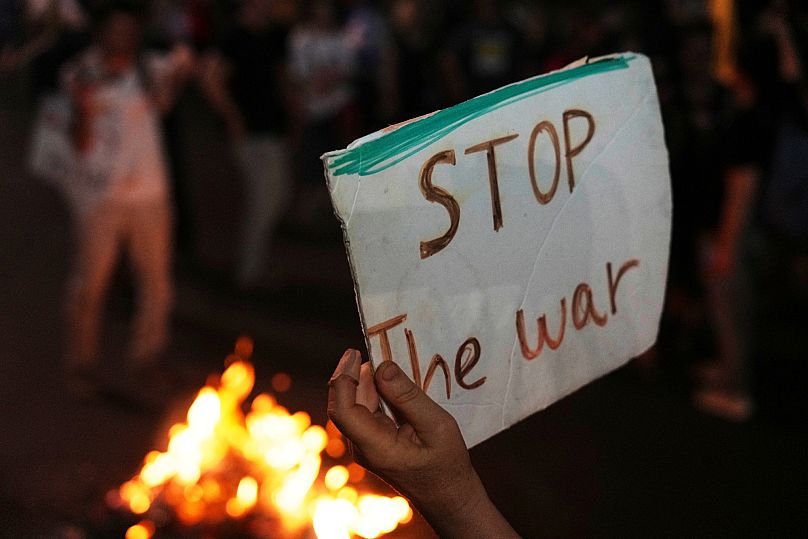
Thousands of protesters took to the streets of Tel Aviv on Saturday night to oppose the decision to escalate the war in Gaza, demanding an immediate end and for the release of the hostages.
“This isn't just a military decision. It could be a death sentence for the people we love most,” Lishay Miran Lavi, the wife of hostage Omri Miran told the rally, pleading to US President Donald Trump to intervene and end the war.
Public opinion polls show an overwhelming majority of Israelis favour an immediate end to the war to secure the release of the remaining 50 hostages held by militants in Gaza. Israeli officials believe about 20 hostages are still alive.
Protesters waved Israeli flags and carried placards bearing the images of hostages. Others held signs directing anger at the government or urging Mr Trump to take action to stop Mr Netanyahu from moving forward with plans to escalate the war. A small number of protesters held images of Gazan children killed by the military.
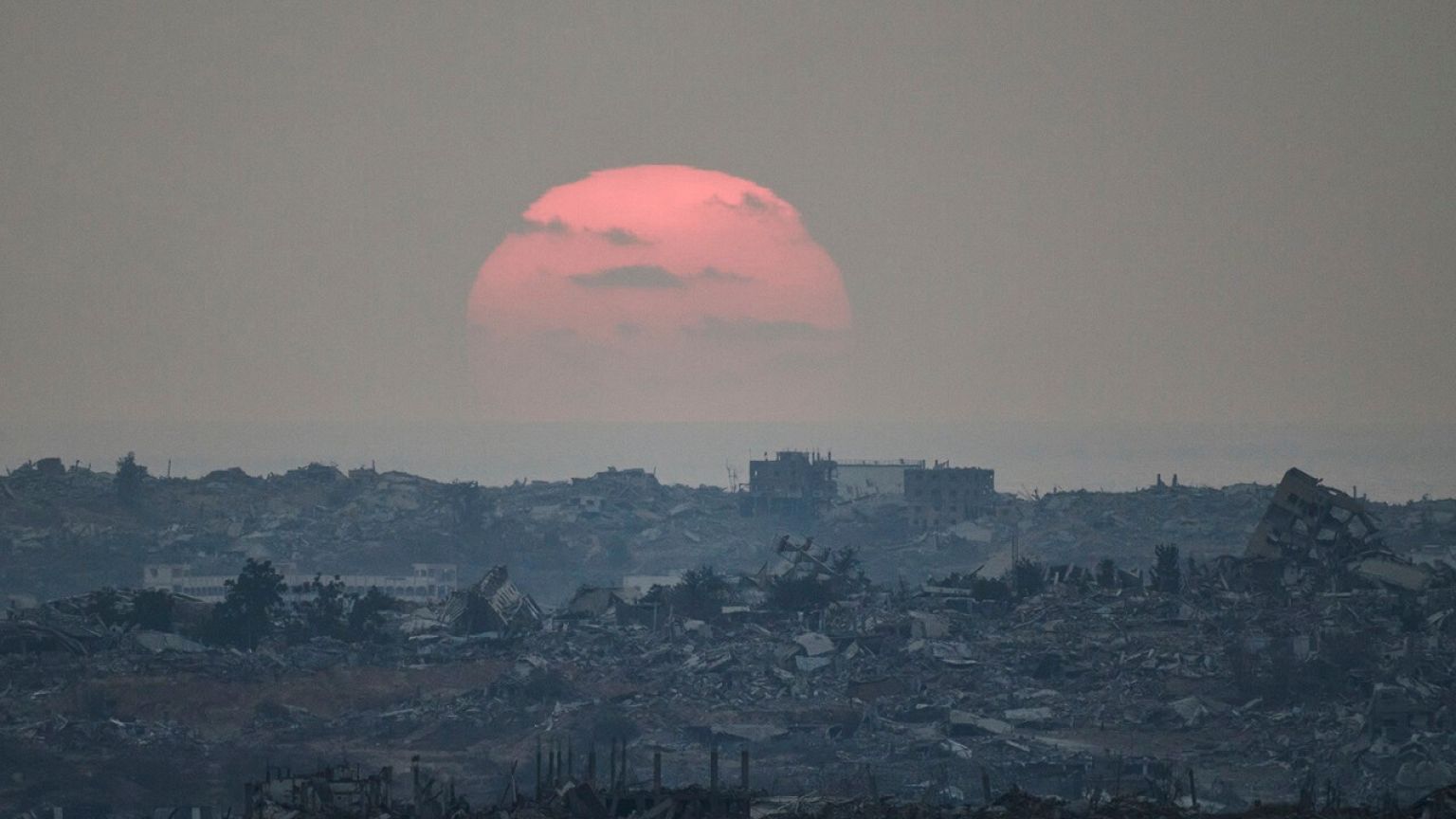
Copyright AP Photo/Leo Correa
By Emma De Ruiter
Published on 09/08/2025 -
The foreign ministers of Germany, Italy, the United Kingdom, New Zealand and Australia wrote that "any attempts at annexation or of settlement extension violate international law."
Five foreign ministers have issued a joint statement condemning Israel's plans to further escalate the ongoing war in Gaza and take control of Gaza City.
Germany, Italy, the United Kingdom, Australia and New Zealand said in the statement that the plan, announced by the Israeli Security Cabinet on Friday, "will aggravate the catastrophic humanitarian situation, endanger the lives of the hostages, and further risk the mass displacement of civilians."
"Any attempts at annexation or of settlement extension violate international law," the statement added.
The foreign ministers called for an immediate end to the war, emphasising that a "worst-case scenario of a famine is unfolding". They also called on Hamas to release the remaining hostages it holds "without precondition" and ensure they are "humanely treated and not subject to cruelty and humiliation."
Dissent in Israel has also steadily grown as hostages have languished in captivity. Some families of the hostages and their supporters have staged large protests calling for a ceasefire with Hamas that would bring their loved ones home.
“All of Israel wants a comprehensive deal and an end to the war,” Einav Zangauker, mother of hostage Matan Zangauker, said in a statement on Friday. “For the State of Israel to guarantee the security of its citizens, we must end this injustice that has been done to our loved ones for 22 months.”
Israeli Prime Minister Benjamin Netanyahu's Security Cabinet went forward with the plan against the advice of military leaders, including Chief of the General Staff Lieutenant General Eyal Zamir, who warned on Thursday that the plan would endanger the lives of the hostages and further stretch the military.
The announcement came after Netanyahu also suggested more sweeping plans on Thursday for Israel to take control of all of Gaza. Israel already controls around three-quarters of the territory.
Hamas rejected Israel’s plans. “Expanding of aggression against our Palestinian people will not be a walk in the park,” the group said in a statement.
Stephanie Tremblay, the associate spokesperson for the UN Secretary-General, told the press on Friday that "the Secretary General is gravely alarmed by the decision of the Israeli government to take control of Gaza City."
The UN Security Council announced an emergency meeting on Israel's plans was rescheduled to Sunday after originally being scheduled to take place on Saturday.
International aid drops continue
International powers, including Israeli allies France, Britain and Canada, have stepped up criticism of the war amid mounting shock over media reports showing starvation.
Germany said Friday it would not authorise the export of military equipment that could be used in Gaza until further notice.
Several countries have led coordinated efforts to carry out aid drops over Gaza, a last resort as Israel's blockade and military offensive have made it nearly impossible to safely deliver aid, contributing to the territory's slide toward famine.
A new load of air dropped aid sent by Italy landed in Gaza on Saturday.
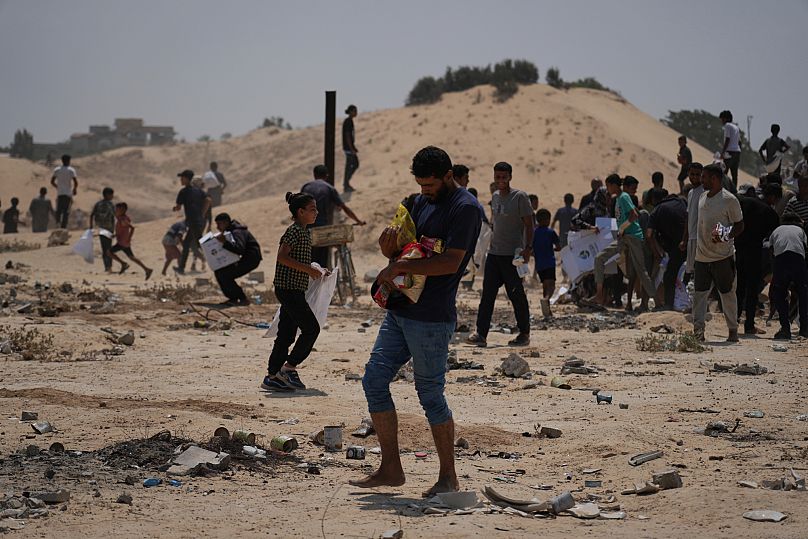
The UN and aid groups call such drops costly and dangerous for residents, and say they deliver far less aid than trucks.
Many food parcels dropped by air have splashed into the Mediterranean Sea or landed in so-called red zones from which Israel's military has ordered people to evacuate. In either case, Palestinians risk their lives to get flour and other basic goods.
Palestinians also continue to be killed while seeking aid at four locations run by the controversial Gaza Humanitarian Foundation.
Witnesses and UN agencies have called the sites "death traps", as hundreds of people have been reported killed while seeking aid, although the GHF continues to maintain that no violence has occurred.
GHF said a new UN route runs near two of its sites in the south and has drawn large crowds of people who unload the convoys.
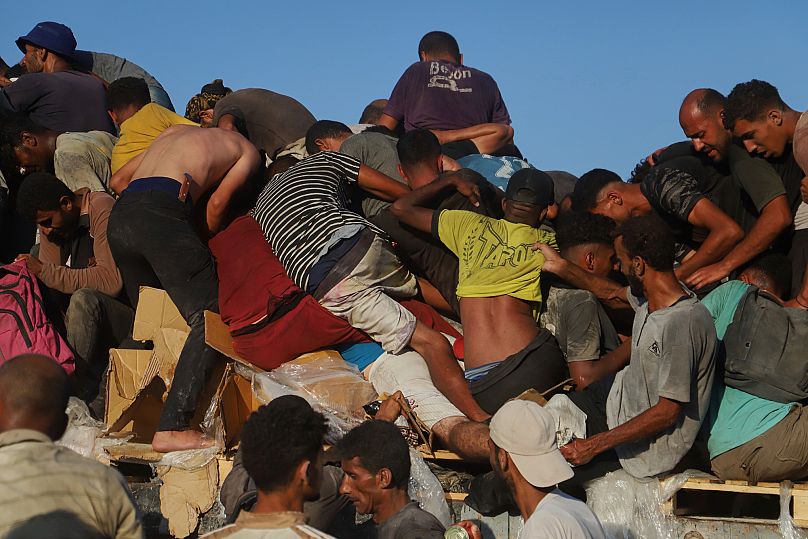
But the United Nations, partners, and Palestinians say far too little aid is coming in, with months of supplies piled up outside Gaza waiting for Israeli approval.
And although the UN estimates that 500 to 600 trucks of aid are needed daily, the trucks entering are mostly stripped of supplies by desperate people and criminal groups before reaching warehouses for distribution.
Additional sources
Issued on: 09/08/2025 - FRANCE24
International condemnation grew on Saturday over Israel’s decision to carry out a military takeover of Gaza City, while little appeared to change immediately on the ground in the territory shattered by 22 months of war. We discussed this with journalist Shrouq Al-Aila, who joined us from Gaza City.
The International Criminal Court has issued arrest warrants for Netanyahu and Israel’s former defence minister, Yoav Gallant, on charges of war crimes and crimes against humanity
PTI Published 10.08.25
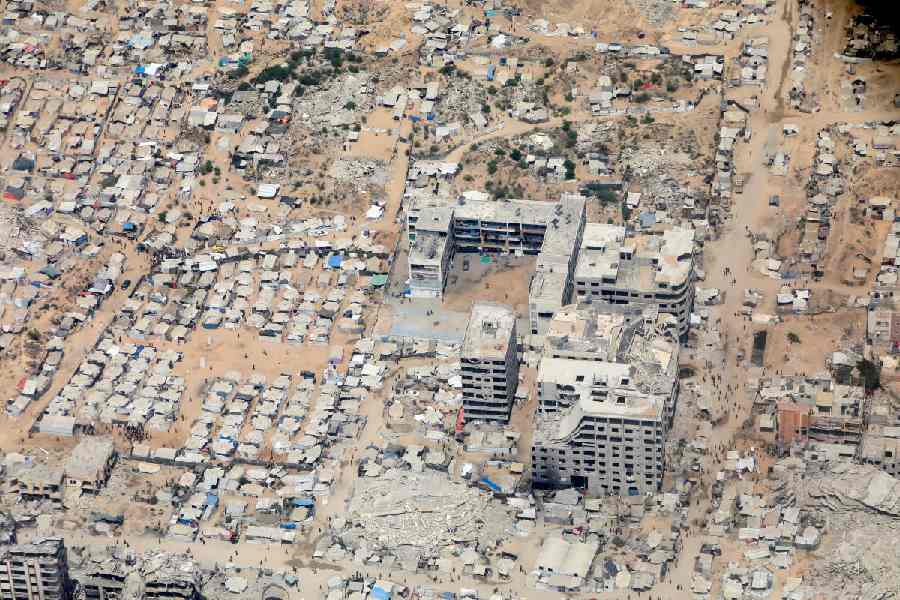
An aerial view from a Jordanian military aircraft shows the Gaza Strip, before humanitarian aid is airdropped over it, in Gaza, August 9, 2025.Reuters picture.
For all its claims of being a democracy that adheres to international law and the rules of war, Israel’s global reputation is in tatters.
Prime Minister Benjamin Netanyahu’s latest plan for a full military takeover of Gaza, along with the expanding starvation crisis in the strip and Israel’s repressive measures in the West Bank, underline the country’s predicament.
Notwithstanding US support, the Jewish state faces a crisis of international credibility, from which it may not be able to recover for a long time.
According to a recent Pew poll, the international view of Israel is now more negative than positive. The majority of those polled in early 2025 in countries such as the Netherlands (78 per cent), Japan (79 per cent), Spain (75 per cent), Australia (74 per cent), Turkiye (93 per cent) and Sweden (75 per cent) said they have an unfavourable view of Israel.
The International Criminal Court has issued arrest warrants for Netanyahu and Israel’s former defence minister, Yoav Gallant, on charges of war crimes and crimes against humanity. Many international law experts, genocide scholars and human rights groups have also accused Israel of committing genocide in Gaza.
Israel’s traditional supporters have also harshly criticised the Netanyahu government’s actions, from both inside and outside the country. These include former prime ministers Ehud Olmert and Ehud Barak, the Israeli literary giant David Grossman, and Masorti Judaism Rabbi Jonathan Wittenberg and Rabbi Delphine Horvilleur.
In addition, hundreds of retired Israeli security officials have appealed to US President Donald Trump to push Netanyahu to end the war.
Israel’s global partners distancing themselves With images of starving children in Gaza dominating the news in recent weeks, many of Israel’s friends in the Western alliance have similarly reached the point at which they can no longer tolerate its policy actions.
In a major shift in global opinion, France announced it would recognise Palestinian statehood in September. The United Kingdom and Canada vowed to follow suit. Even Germany has now begun the process for recognition. And Australian Prime Minister Anthony Albanese has indicated his country’s recognition of Palestine was only a matter of time.
Spain and Sweden have called for the suspension of the European Union’s trade agreement with Israel, while the Netherlands has officially labelled Israel a “security threat”, citing attempts to influence Dutch public opinion.
Israel and the US have rejected all these accusations and moves. The momentum against Israel in the international community, however, has left it with the US as its only major global supporter.
Israel’s sovereignty, security and prosperity now ride on the back of America’s continued support. Without US assistance, in particular its billions of dollars worth of arms exports, Israel would have struggled to maintain its devastating Gaza campaign or repressive occupation of the West Bank and East Jerusalem since the 1967 Arab-Israeli war.
Yet, despite Trump’s deep commitment to Israel, many in the US electorate are seriously questioning the depth of Netanyahu’s influence in Washington and the value of US aid to Israel.
According to a Gallup poll in March, fewer than half of Americans are sympathetic toward Israel.
This discontent has also been voiced by some of Trump’s MAGA ideologues and devotees, such as political strategist Steve Bannon and congressional hardliner Marjorie Taylor Greene. Even Trump publicly questioned Netanyahu on his claim there was no starvation in Gaza.
Israelis have dim view of two-state solution Many Israelis would like to see the back of Netanyahu and his extremist right-wing ruling cohort, especially given his failure to secure the release of all the hostages from Hamas.
Many want the war to end, too. Recent polling by Israel’s Channel 12 found that 74 per cent of Israelis back a deal to end the war in exchange for the release of the remaining hostages held by Hamas.
However, a majority of Israelis maintain a dim view of a future Palestinian state.
One poll commissioned by a US academic showed 82 per cent of Jewish Israeli respondents backed the expulsion of Palestinians from Gaza. And a Pew poll in early 2025 showed that just 16 per cent of Jewish Israelis believe peaceful coexistence with a Palestinian state is possible, the lowest percentage since the pollsters began asking the question in 2013.
This indicates that not only the Israeli state, but also its electorate, has moved to the extreme of the political spectrum in relation to acknowledging the right of the Palestinians to an independent state of their own.
Under international pressure, Netanyahu has expediently allowed a little more humanitarian aid to flow into Gaza. However, his new plan for a full military takeover of Gaza indicates he is not prepared to change course in the war, as long as US support remains steady.
His government is bent on eliminating Hamas and potentially depopulating and annexing Gaza, followed possibly by the West Bank. Such a move would render the idea of a two-state solution totally defunct.
To stop this happening, Washington needs to align with the rest of the global community. Otherwise, an unrestrained and isolated Israel will only widen the rift between the US and its traditional allies in a highly polarised world.
The Conversation
Except for the headline, this story has not been edited by The Telegraph Online staff and has been published from a syndicated feed.
Intergenerational Hunger: Effects of Israel’s Starvation of Gaza

Source: Medical Aid for Palestinians (MAP)
The extent of hunger and malnutrition in the Gaza Strip is worsening daily, with the United Nations warning that the entire under-five population – over 320,000 children – is now at risk of acute malnutrition due to Israel’s genocide. The hunger-related death toll continues to rise, as does the likelihood that famine is already present. “The fact that people continue to risk being shot or caught in stampedes at distribution sites indicates the extremely desperate level of hunger that the population is experiencing,” the Famine Review Committee stated in July.
Hunger is affecting all segments of the population: the Euro-Med Human Rights Monitor recently warned of at least 1,200 malnutrition-related deaths among the elderly. The most harrowing accounts, however, concern children. International NGOs like Save the Children have described this stage as the “starvation of children by design.” Gastrointestinal surgeon Nick Maynard stated: “I have had so many patients die because they can’t get enough food to recover. It’s distressing to see that and know that it’s preventable and treatable.”
“I saw a seven-month-old who looked like a newborn,” he added. “The expression ‘skin and bone’ doesn’t do it justice.”
The compounding effects of malnutrition in Gaza
The effects of hunger on children in Gaza are both immediate and long-lasting, says pediatrician Claudio Schuftan, a founding member of the People’s Health Movement (PHM). Different forms of malnutrition are widespread: chronic, acute, and micronutrient-related. Chronic malnutrition, especially among children under two, leads to stunted growth. “Because there aren’t enough calories, the body, being very wise, uses what little energy it has to maintain vital functions like breathing and regulating temperature. It diverts energy from growth, so children stop growing in length,” Schuftan explains.
If nutrition improves, the child resumes growing, but a permanent height deficit will likely persist. This form of malnutrition also impairs critical periods of brain development, meaning many children can miss key developmental milestones.
Acute malnutrition, another cause of the images of emaciated children circulating on social media, results in rapid weight loss or wasting. “You lose weight and become underweight for your age,” Schuftan says.
In Gaza, this is compounded by widespread micronutrient deficiencies. With shortages of fruits, vegetables, and supplements, iron deficiency is rampant, causing anemia and lethargy. “You see these children who are malnourished on TV, flies on their eyes and mouths,” he adds. “They don’t have the energy to brush them away.”
While many of these conditions can be treated if hunger is eliminated, others will persist throughout life. “A child malnourished and stunted at two years doesn’t remain that size forever. They will grow, but they will grow slower if the condition continues, or they will grow never making up for what they didn’t gain in that period,” Schuftan adds.
If, on the other hand, conditions continue to deteriorate, more children will die – not necessarily from hunger itself, but from its effects. “The episode that ultimately takes a child’s life is most often diarrhea, which is very difficult to treat unless there’s an opportunity to rehydrate the child urgently, or pneumonia, depending on the season,” Schuftan says. “In winter, it’s likely to be pneumonia, and given the lack of antibiotics in Gaza, we’re talking about pneumonia as it was before penicillin.”
A vicious cycle of intergenerational hunger
Malnutrition in Gaza begins before birth, as pregnant women themselves are undernourished. Unable to gain adequate weight during pregnancy, they give birth to underweight infants who cannot recover in famine conditions. “After delivery, the mother starts to produce milk. But no food means less milk,” Schuftan says. “The child begins to breastfeed, but very little comes out. Mothers would usually supplement with formula, but there is none. And when you mix formula with breastfeeding, it generally ends breastfeeding altogether.”
Israel’s blockade of Gaza thus creates a vicious cycle of intergenerational hunger. Even if food was made widely available overnight, recovery would have to be gradual. “If you suddenly feed a severely malnourished child, let’s say under two or three years old, they can get severe diarrhea and even die from it,” Schuftan warns. But convincing parents to go slowly when the child is crying and food is finally available is very hard, he points out.
Proper refeeding also requires functioning health facilities with staff who can rehydrate and monitor children over time. “These situations will happen, we will see these diarrhea cases,” Schuftan warns. “What that means is that at the same time that you bring food, you have to create health facilities with experienced staff.” Yet after nearly two years of Israeli attacks, Gaza’s health system lies in ruins. Hospitals have been bombarded, ambulances attacked, and health workers kidnapped, making it nearly impossible to guarantee even basic services.
“So many things have happened that you cannot separate nutrition from psychological damage or from the absence of schooling,” Schuftan says. “It’s a generation growing up with many injuries, including psychological ones. These children have been tremendously harmed.”
Still, PHM and other health organizations stress that they have the necessary expertise to rebuild if there is a ceasefire and justice for Palestine. “We will be dealing with the consequences of this catastrophe for a long time,” Schuftan says. “But we do have a chance, if this stops once and for all.”
People’s Health Dispatch is a fortnightly bulletin published by the People’s Health Movement and Peoples Dispatch. For more articles and to subscribe to People’s Health Dispatch, click here.
Courtesy: Peoples Dispatch
Alaska summit boon for Bibi?
US PRESIDENT Donald Trump’s announcement of a meeting with his Russian counterpart Vladimir Putin in Alaska on Friday may rekindle hopes of a possible peace deal over Ukraine, but at the same time it is stoking fears that as the world media focus shifts to the summit, an opportunity will be provided to Israel to start its military occupation of Gaza.
Simultaneously with Trump’s announcement of the summit came the approval of the Israeli security cabinet of war crimes-accused Prime Minister Benjamin (Bibi) Netanyahu’s plan to physically occupy Gaza. Netanyahu’s handpicked military chief earlier had reservations, but eventually consented and complied.
The military chief has been quoted as saying any expansion of the military operation would jeopardise the lives of the remaining 20 hostages held in captivity since being seized by Hamas on Oct 7, 2023. The group broke through the fence, walls and other obstacles around Gaza to attack Israel and kill some 1,200 Israelis, including nearly 400 civilians that day.
The Times of Israel quoted IDF chief of staff Lt-Gen Eyal Zamir’s assessment offered to his senior colleagues ahead of the security cabinet meeting. According to Hebrew media reports, he warned that “occupying the Strip would drag Israel into a black hole — taking responsibility for two million Palestinians, requiring a years-long clearing operation, exposing soldiers to guerrilla warfare and, most dangerously, jeopardising the hostages”.
Netanyahu’s plan looks like an attempt to grab all or most Palestinian land in Gaza
“We are not dealing with theory; we are dealing with matters of life and death, with the defence of the state, and we do so while looking directly into the eyes of our soldiers and the citizens of the country,” Zamir maintained during Thursday’s assessment, the army said. Then, under threat of a forced resignation, he said he’d comply.
It is clear that the starvation policy pursued by Israel for months, with the backing of the US through the murderous Gaza Humanitarian Foundation (GHF), which so far has killed hundreds of starving Palestinians queuing for food in Gaza, does not seem to have broken the Palestinians’ iron will.
In fact, the images of starving people being slaughtered by IDF and GHF contractors have evoked outrage around the globe, with even the duplicitous EU and UK making disapproving noises and some European nations, led by France, saying they might recognise the Palestinian state during the UN General Assembly session next month as a first step towards a two-state solution.
Netanyahu’s plan looks like an attempt to grab all or most Palestinian land in Gaza to mirror what has been happening in the West Bank, ahead of any recognition, so as to deny the creation or existence of a viable Palestinian state. The psychopathic Israeli leader has received US approval, with Trump saying: “It is pretty much up to Israel” to do what it wants in Gaza.
There have been laughable leaks in the US media, probably originating in the White House where spin doctors have sold stories like Trump shouted down Netanyahu when the latter was claiming that there was no starvation in Gaza and all such stories were Hamas propaganda.
Who does not know that it was Trump who first mentioned his planned Gaza Riviera that would follow the (forced) displacement, again, of Gaza’s 2m Palestinians whose earlier generations were first displaced to the Strip in the Nakba in 1948?
It would be important to see the Trump-Putin summit against this backdrop. It is unlikely Putin will have changed his stance on key issues to which he ties any ceasefire in Ukraine, after one visit to Moscow by US presidential envoy Steve Witkoff (he is a US presidential envoy, despite often sounding like an Israeli spokesman on Gaza).
Putin has clearly stated that he will offer no territorial concessions in eastern Ukraine where his military has slowly but surely started to make gains and wants recognition of his Crimean annexation of 2014 and Donetsk, Luhansk, Kherson and Zaporizhzhia oblasts in 2022.
He has sought explicit guarantees that the Nato alliance would not be expanded to Ukraine because that would be too close for comfort and take away the buffer Ukraine has provided between Russia and Nato since the collapse of the Soviet Union.
In the past, Trump has indicated that concessions (not by Russia) will have to be made in some of these areas for a peace deal to be realised. Ahead of the summit, it wasn’t clear if the Ukrainian President Volodymyr Zelensky’s government, or even the European members of Nato, was willing to make any such concessions.
And without such concessions, a peace deal cannot be realised. Perhaps, Putin agreed to the summit to give Trump a small win to boast about for weeks in the media and, at the same time, give himself more time and space to continue with his military campaign where he believes his forces are making good progress.
Inevitably now, the global media attention will shift from the Gaza forced starvation story to looking ahead at the Alaska summit. And this shift in focus will enable Israel to push ahead with the occupation of northern Gaza to start with, going on to the rest of the Strip, as only that will enable it to complete ethnic cleansing — even annexation — if that too is an unsaid part of the agenda.
All this is happening with the complicity of Western democracies, despite the unease of sections of their populations over the images of starving children and malnourished babies. It seems these images are more powerful or somehow affect the Western media sensibilities more than the slaughter of some 15,500 children and the amputation of the limbs of thousands more.
The less said the better about the Arab neighbours and the larger Muslim world, many of whose despotic rulers are too fearful of the consequences of defying the US to do anything other than being complicit in, or at least acquiescent to, genocide in Gaza. This is where we stand today in helpless despair and despondency.
The writer is a former editor of Dawn.
abbas.nasir@hotmail.com
Published in Dawn, August 10th, 2025

No comments:
Post a Comment