Russia performs a balancing act with Israel and Palestine
Since the war in Gaza erupted in 2023, governments around the world have been making their voices heard, whether they are staunch supporters of Israel or pleading the Palestinian cause. But Russia's position, which has received little media coverage, is harder to define.
Issued on: 25/09/2025 - RFI
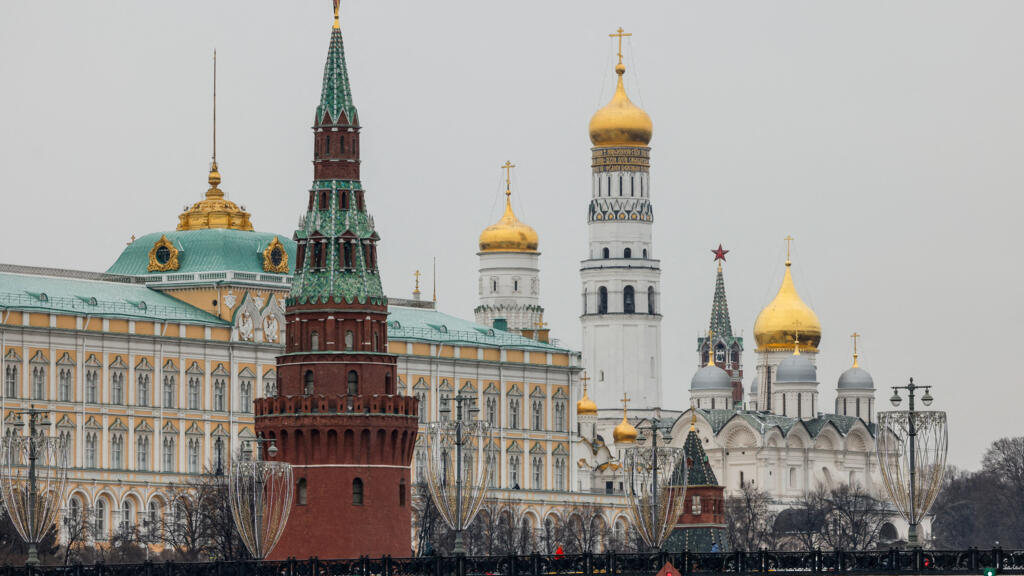
"I’m struck by the silence of the Russian press on the latest events in Gaza,” says Jean de Gliniasty, research director at the French Institute for International and Strategic Affairs (Iris) and a former ambassador to Moscow. “So far, there’s been no strong reaction.”
Yet Moscow’s involvement in the Middle East crisis goes back decades, and it has played a significant role.
In 1948, the Soviet Union became the first state to recognise Israel, which at the time appeared to have socialist leanings – partly in hopes of speeding up Britain’s withdrawal from Palestine.
However, as Israel grew closer to the West and with the rise of Arab nationalism, the Kremlin switched tack, forging close ties with Palestinian resistance groups.
By 1988, the USSR had become one of the earliest countries to recognise Palestine.
Russia's Putin searches for allies in meeting with Iranian and Turkish leaders
Russian diaspora
After the collapse of the Soviet Union, Russia tried to keep doors open on all sides – with Israel, the Palestinians and the wider Arab world.
The controls that had previously prevented Russian Jews from emigrating were lifted. And for more than 75 years, Russia has advocated a two-state solution and the implementation of United Nations resolutions on the Israeli-Palestinian issue.
When he was elected president in 2000, Vladimir Putin cultivated warm relations with Israel, which is home to 1.3 million Russian speakers – representing 15 percent of the population and making Russian the third most common native language in Israel after Hebrew and Arabic.
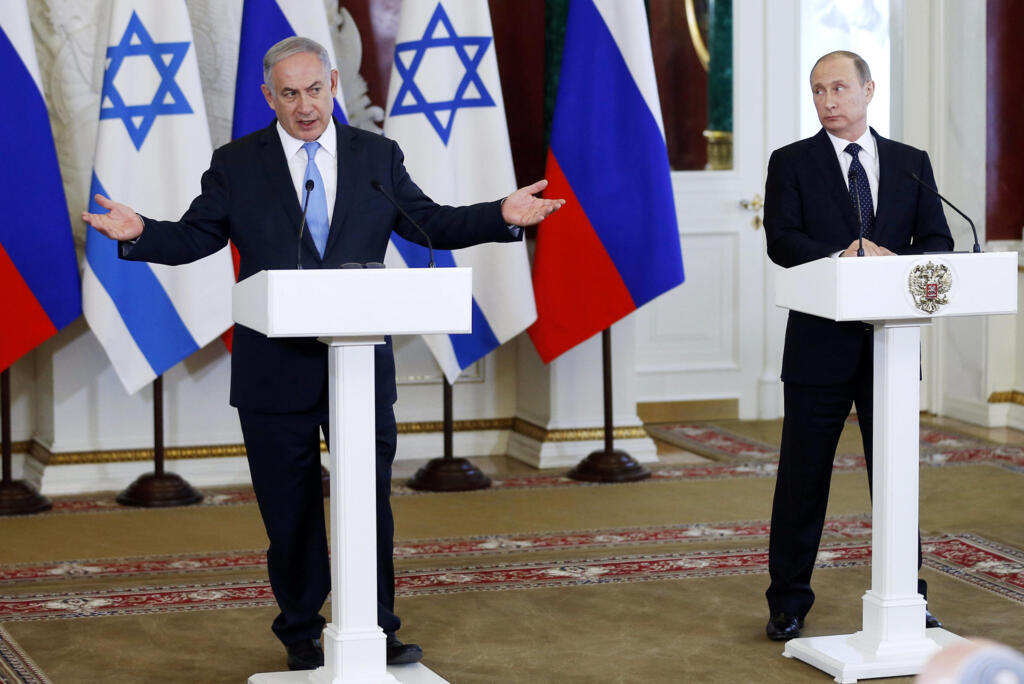
He struck up personal ties with prime ministers Ariel Sharon and, later, Benjamin Netanyahu.
"During his various terms as prime minister, Benyamin Netanyahu has visited Moscow no less than four times, more than any other capital city – except, of course, Washington," says David Rigoulet-Roze, a researcher at the French Institute for Strategic Analysis.
"Some of these meetings even took place during the civil war in Syria, when the Israeli army was regularly bombing pro-Iranian militias and Iran's Al-Quds force, despite the fact that Iran was Russia's ally in Syria. Moscow pretended not to know what was going on, much to Tehran's dismay."
At the same time, Putin has shown his support for the Palestinian cause. In 2022, his foreign minister welcomed former Hamas leader Ismail Haniyeh, in an attempt to capitalise on his role as mediator and on Russia's return as a new power in the Middle East.
'A turning point'
However, the Hamas attacks on Israel on 7 October 2023, followed by the devastating war in Gaza, have shifted the dynamics.
"This was a turning point," said Rigoulet-Roze. "The depth of the ties that had existed until then between Israel and Russia is beginning to be called into question due to Moscow's continued relations with Hamas."
The Kremlin received a delegation from the group on 26 October 2023, barely three weeks after the massacre, he noted. Israel denounced this as an “act of support for terrorism”, while the Kremlin insisted the visit was about securing the release of Russian-born hostages.
Putin waited several days before offering condolences to Israeli families, and the Kremlin criticised Israel’s “indiscriminate” bombing of Gaza, sparking the fury of Netanyahu – who had always treated Putin carefully due to the situation in Syria.
Moscow then called for a ceasefire, tabled a UN Security Council resolution – vetoed by Washington – and revived talk of the long-dormant Quartet, established in 2002 to facilitate the Middle-East Peace Process negotiations and involving the UN, the European Union, Russia and the United States.
For Rigoulet-Roze: "Russia has felt somewhat marginalised since the launch of its war in Ukraine. It would like to get back in the game. The Quartet was, in a way, the format of the great powers of the Cold War era, for which Vladimir Putin paradoxically feels a kind of nostalgia. It was a kind of consensus for a process that would lead to the implementation of the two-state solution."
Macron, Putin discuss Iran, Ukraine in first talks since 2022
Between Tel Aviv and Tehran
In February 2024, Moscow hosted numerous delegations from Palestinian organisations, including the Palestinian Authority, Islamic Jihad and Hamas – for whom the support of a member of the UN Security Council is essential.
In January 2024, the Russian deputy minister of foreign affairs also received a delegation of Houthis from Yemen.
At the same time, the Kremlin continued to forge closer ties with Iran, Hezbollah, the Emirates and Saudi Arabia – all hostile to Israel.
Yet links with Israel remain. Daily flights connect Moscow and Tel Aviv, and Russia sees its large diaspora there as an important lever of influence.
However, the collapse of Bashar al-Assad’s regime in Syria in December 2024 has weakened Moscow’s hand in this regard; without a reliable ally in Damascus, Russia has lost much of its regional leverage.
According to Rigoulet-Roze: "From that moment on, Moscow's geopolitical position weakened. On the Israeli side, Moscow also lost importance. From the moment Assad fell, in a way, the implicit deal with Putin on Syria was strategically devalued because Israel no longer needed Moscow's tacit agreement to carry out military strikes against anything that could be seen as maintaining a pro-Iranian presence."
Moscow's shift in its hitherto moderate approach to the Israeli-Palestinian conflict is motivated partly by the desire to divert attention from the war in Ukraine. Russia also wants to take a stand against the US, which unconditionally supports Israel – with Putin calling the 7 October attacks and their aftermath "a clear failure of US policy".
The Kremlin hopes to win favour in the Global South too, particularly in Africa, where rhetoric about ending Western colonialism – particularly French – plays well.
Flexing its muscles in the Middle East is a way for Moscow to remind the world that it’s still a global player. "All the skill of Russian diplomacy, which is real, which is very good, is not enough to compensate for the considerable weakening of the country," points out de Gliniasty.
"They are losing ground in Central Asia and the Caucasus, and the agreement signed in Washington between Azerbaijan and Armenia is a slap in the face for Russia. So they are seeking to remind the world, as much as possible, of the global nature of their power."
By maintaining good relations with Hamas, Moscow is also seeking to ensure it does not support Islamist groups within Russia – which is home to nearly 30 million Muslims.
Some made their voices heard at the end of October 2023 when they stormed the tarmac at the airport in Makhachkala, capital of the Muslim-majority Russian republic of Dagestan, after the arrival of a flight from Israel was announced.
Bridge builder?
Later this year, Putin plans to host the first Russian-Arab summit in Moscow, hoping to showcase Russia as a bridge builder and power broker, and inviting the leaders of all Arab League member states to participate.
“It remains to be seen which countries will actually attend and at what level of representation,” Rigoulet-Roze told RFI. "He wants to reposition himself in the Middle East and maintain a foothold in the region, because the fall of Bashar al-Assad’s regime has largely pushed him out of the game.”
In this regard, it is no coincidence that Syria's new president, Ahmed al-Sharaa, has been invited to the event.
However, according to de Gliniasty: "The problem is that Arabs are even less responsive than Westerners to what is happening in the Gaza Strip.
"If there were suddenly a chorus of protests from the Arab side, the Russians would probably raise their voices. They are very much aligned with Saudi Arabia because Riyadh controls the price of oil, which is vital for the Russians. So if Saudi Arabia raises its voice, the Russians will do the same."
This article was adapted from the original French version by RFI's Anne Bernas.
Slovenia bans Israeli PM Netanyahu
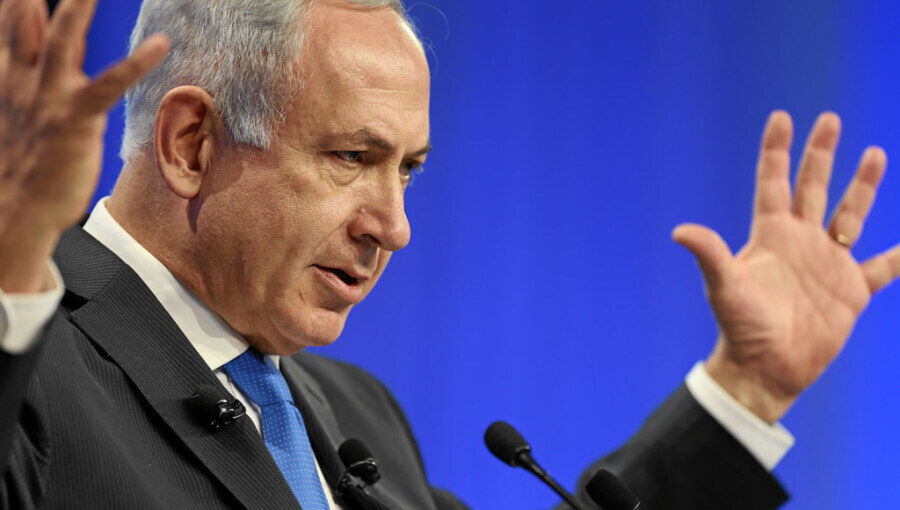
Slovenia on September 25 prohibited Israeli Prime Minister Benjamin Netanyahu from entering the country, deepening its diplomatic rift with Israel and reinforcing its support for Palestinian statehood.
The government said the travel ban was approved unanimously by the cabinet and follows measures already taken against two extremist Israeli ministers earlier this year.
“Proceedings are underway against the Israeli Prime Minister for committing war crimes and crimes against humanity,” a government statement said, citing a July 19, 2024 ruling by the International Court of Justice that “several Israeli policies and practices violate both international humanitarian law and human rights law.”
“With this move, the government sends a clear message to the State of Israel that Slovenia expects consistent respect for the decisions of international courts and international humanitarian law,” it added, calling the step evidence of Ljubljana’s “commitment to international law, universal human rights values, and a principled and consistent foreign policy.”
The new ban follows a series of actions by the EU member. In July, Slovenia previously declared two far-right Israeli cabinet ministers persona non grata, citing their rhetoric and policies toward Palestinians.
In August, it became the first European country to impose a comprehensive arms embargo on Israel, halting all exports, imports and transit of weapons and military equipment. Days later, the government announced a ban on imports of goods produced in Israeli settlements in the occupied Palestinian territories, saying the trade of such goods violated international law.
Prime Minister Robert Golob has said those steps reflect “Slovenia’s duty to act when international humanitarian law is breached,” while stressing that Ljubljana supports a negotiated two-state solution.
Alongside the Netanyahu ban, the government unveiled fresh financial assistance for the Palestinian Authority. “In 2025, the government of the Republic of Slovenia will allocate a contribution to the operation of the Palestinian Authority in the total amount of €1,200,000, which the Ministry of Foreign and European Affairs will implement through the EU PEGASE mechanism,” the statement said.
Officials described the funding as a means to help maintain Palestinian governance amid the conflict. “The continuous operation of the Palestinian Authority is essential for the establishment and preservation of Palestinian statehood,” the government said, noting that Slovenia recognised Palestine as a state on June 4, 2024.
Ljubljana also said it had been invited to join an Emergency Coalition for the Financial Sustainability of the Palestinian Authority launched in September by France, Spain, Norway and Saudi Arabia to provide $200mn per month over six months to bolster the Palestinian Authority. After the initial period, the coalition plans to evaluate the effectiveness of the aid.
Slovenia’s moves come as debate intensifies within the European Union over how to respond to Israel’s conduct in Gaza and the West Bank, where humanitarian conditions have deteriorated sharply. Several EU member states have expressed concern over Israeli settlement expansion, but few have gone as far as Ljubljana in imposing punitive measures.
Relations between Slovenia and Israel had already been tense. Slovenia and Palestine have established diplomatic relations, and Golob’s government has urged the EU to take a stronger stance on upholding international law in the region.
The dispute has spilled into cultural arenas. Slovenia’s public broadcaster said this month it may reconsider participation in the 2026 Eurovision Song Contest unless the European Broadcasting Union sets clearer rules on Israel’s involvement, citing “political and ethical concerns” voiced across several member states.

No comments:
Post a Comment