Second US Strike on Boat Attack Survivors Was Illegal—But Experts Stress That the Rest Were, Too
“It is blatantly illegal to order criminal suspects to be murdered rather than detained,” said one human rights leader.

US President Donald Trump and Secretary of Defense Pete Hegseth announced that they bombed another boat in the Caribbean on October 3, 2025.
(Photo: screenshot/Donald Trump/Truth Social
Jessica Corbett
Dec 02, 2025
COMMON DREAMS
As the White House claims that President Donald Trump “has the authority” to blow up anyone he dubs a “narco-terrorist” and Adm. Frank M. “Mitch” Bradley prepares for a classified congressional briefing amid outrage over a double-tap strike that kicked off the administration’s boat bombing spree, rights advocates and legal experts emphasize that all of the US attacks on alleged drug-running vessels have been illegal.
“Trump said he will look into reports that the US military (illegally) conducted a follow-up strike on a boat in the Caribbean that it believed to be ferrying drugs, killing survivors of an initial missile attack. But the initial attack was illegal too,” Kenneth Roth, the former longtime director of the advocacy group Human Rights Watch, said on social media Monday.
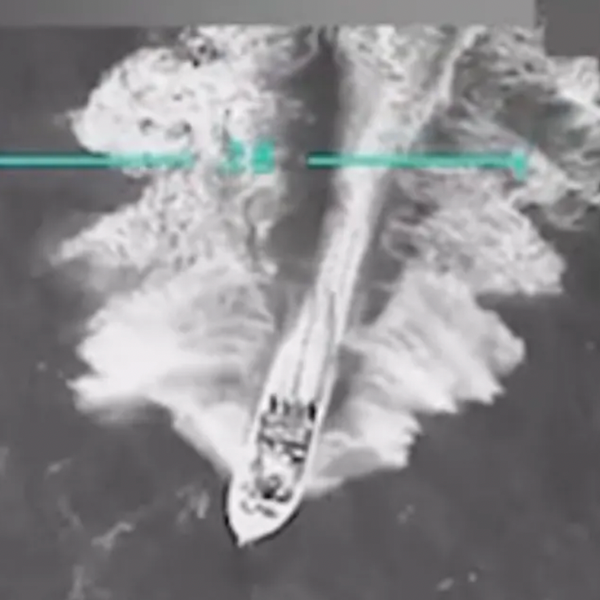
Roth and various others have called out the US military’s bombings of boats in the Caribbean and Pacific as unlawful since they began on September 2, when the two strikes killed 11 people. The Trump administration has confirmed its attacks on 22 vessels with a death toll of at least 83 people.
Shortly after the first bombing, the Intercept reported that some passengers initially survived but were killed in a follow-up attack. Then, the Washington Post and CNN reported Friday that Bradley ordered the second strike to comply with an alleged spoken directive from Defense Secretary Pete Hegseth to kill everyone on board.
The administration has not denied that the second strike killed survivors, but Hegseth and the White House press secretary, Karoline Leavitt, have insisted that the Pentagon chief never gave the spoken order.
However, the reporting has sparked reminders that all of the bombings are “war crimes, murder, or both,” as the Former Judge Advocates General (JAGs) Working Group put it on Saturday.
Following Leavitt’s remarks about the September 2 strikes during a Monday press briefing, Roth stressed Tuesday that “it is not ‘self-defense’ to return and kill two survivors of a first attack on a supposed drug boat as they clung to the wreckage. It is murder. No amount of Trump spin will change that.”
“Whether Hegseth ordered survivors killed after a US attack on a supposed drug boat is not the heart of the matter,” Roth said. “It is blatantly illegal to order criminal suspects to be murdered rather than detained. There is no ‘armed conflict’ despite Trump’s claim.”
The Trump administration has argued to Congress that the strikes on boats supposedly smuggling narcotics are justified because the United States is in an “armed conflict” with drug cartels that the president has labeled terrorist organizations.
During a Sunday appearance on ABC News’ “This Week,” US Sen. Chris Van Hollen (D-Md.) said that “I think it’s very possible there was a war crime committed. Of course, for it to be a war crime, you have to accept the Trump administration’s whole construct here... which is we’re in armed conflict, at war... with the drug gangs.”
“Of course, they’ve never presented the public with the information they’ve got here,” added Van Hollen, a member of the Senate Foreign Relations Committee. “But it could be worse than that. If that theory is wrong, then it’s plain murder.”
Michael Schmitt, a former Air Force lawyer and professor emeritus at the US Naval War College, rejects the Trump administration’s argument that it is at war with cartels. Under international human rights law, he told the Associated Press on Monday, “you can only use lethal force in circumstances where there is an imminent threat,” and with the first attack, “that wasn’t the case.”
“I can’t imagine anyone, no matter what the circumstance, believing it is appropriate to kill people who are clinging to a boat in the water... That is clearly unlawful,” Schmitt said. Even if the US were in an actual armed conflict, he explained, “it has been clear for well over a century that you may not declare what’s called ‘no quarter’—take no survivors, kill everyone.”
According to the AP:
Brian Finucane, a senior adviser with the International Crisis Group and a former State Department lawyer, agreed that the US is not in an armed conflict with drug cartels.
“The term for a premeditated killing outside of armed conflict is murder,” Finucane said, adding that US military personnel could be prosecuted in American courts.
“Murder on the high seas is a crime,” he said. “Conspiracy to commit murder outside of the United States is a crime. And under the Uniform Code of Military Justice, Article 118 makes murder an offense.”
Finucane also participated in a related podcast discussion released in October by Just Security, which on Monday published an analysis by three experts who examined “the law that applies to the alleged facts of the operation and Hegseth’s reported order.”
Michael Schmitt, Ryan Goodman, and Tess Bridgeman emphasized in Just Security that the law of armed conflict (LOAC) did not apply to the September 2 strikes because “the United States is not in an armed conflict with any drug trafficking cartel or criminal gang anywhere in the Western Hemisphere... For the same reason, the individuals involved have not committed war crimes.”
“However, the duty to refuse clearly unlawful orders—such as an order to commit a crime—is not limited to armed conflict situations to which LOAC applies,” they noted. “The alleged Hegseth order and special forces’ lethal operation amounted to unlawful ‘extrajudicial killing’ under human rights law... The federal murder statute would also apply, whether or not there is an armed conflict.”
Goodman added on social media Monday that the 11 people killed on September 2 “would be civilians even if this were an armed conflict... It’s not even an armed conflict. It’s extrajudicial killing.”
“It is blatantly illegal to order criminal suspects to be murdered rather than detained,” said one human rights leader.
US President Donald Trump and Secretary of Defense Pete Hegseth announced that they bombed another boat in the Caribbean on October 3, 2025.
(Photo: screenshot/Donald Trump/Truth Social
Jessica Corbett
Dec 02, 2025
COMMON DREAMS
As the White House claims that President Donald Trump “has the authority” to blow up anyone he dubs a “narco-terrorist” and Adm. Frank M. “Mitch” Bradley prepares for a classified congressional briefing amid outrage over a double-tap strike that kicked off the administration’s boat bombing spree, rights advocates and legal experts emphasize that all of the US attacks on alleged drug-running vessels have been illegal.
“Trump said he will look into reports that the US military (illegally) conducted a follow-up strike on a boat in the Caribbean that it believed to be ferrying drugs, killing survivors of an initial missile attack. But the initial attack was illegal too,” Kenneth Roth, the former longtime director of the advocacy group Human Rights Watch, said on social media Monday.
Roth and various others have called out the US military’s bombings of boats in the Caribbean and Pacific as unlawful since they began on September 2, when the two strikes killed 11 people. The Trump administration has confirmed its attacks on 22 vessels with a death toll of at least 83 people.
Shortly after the first bombing, the Intercept reported that some passengers initially survived but were killed in a follow-up attack. Then, the Washington Post and CNN reported Friday that Bradley ordered the second strike to comply with an alleged spoken directive from Defense Secretary Pete Hegseth to kill everyone on board.
The administration has not denied that the second strike killed survivors, but Hegseth and the White House press secretary, Karoline Leavitt, have insisted that the Pentagon chief never gave the spoken order.
However, the reporting has sparked reminders that all of the bombings are “war crimes, murder, or both,” as the Former Judge Advocates General (JAGs) Working Group put it on Saturday.
Following Leavitt’s remarks about the September 2 strikes during a Monday press briefing, Roth stressed Tuesday that “it is not ‘self-defense’ to return and kill two survivors of a first attack on a supposed drug boat as they clung to the wreckage. It is murder. No amount of Trump spin will change that.”
“Whether Hegseth ordered survivors killed after a US attack on a supposed drug boat is not the heart of the matter,” Roth said. “It is blatantly illegal to order criminal suspects to be murdered rather than detained. There is no ‘armed conflict’ despite Trump’s claim.”
The Trump administration has argued to Congress that the strikes on boats supposedly smuggling narcotics are justified because the United States is in an “armed conflict” with drug cartels that the president has labeled terrorist organizations.
During a Sunday appearance on ABC News’ “This Week,” US Sen. Chris Van Hollen (D-Md.) said that “I think it’s very possible there was a war crime committed. Of course, for it to be a war crime, you have to accept the Trump administration’s whole construct here... which is we’re in armed conflict, at war... with the drug gangs.”
“Of course, they’ve never presented the public with the information they’ve got here,” added Van Hollen, a member of the Senate Foreign Relations Committee. “But it could be worse than that. If that theory is wrong, then it’s plain murder.”
Michael Schmitt, a former Air Force lawyer and professor emeritus at the US Naval War College, rejects the Trump administration’s argument that it is at war with cartels. Under international human rights law, he told the Associated Press on Monday, “you can only use lethal force in circumstances where there is an imminent threat,” and with the first attack, “that wasn’t the case.”
“I can’t imagine anyone, no matter what the circumstance, believing it is appropriate to kill people who are clinging to a boat in the water... That is clearly unlawful,” Schmitt said. Even if the US were in an actual armed conflict, he explained, “it has been clear for well over a century that you may not declare what’s called ‘no quarter’—take no survivors, kill everyone.”
According to the AP:
Brian Finucane, a senior adviser with the International Crisis Group and a former State Department lawyer, agreed that the US is not in an armed conflict with drug cartels.
“The term for a premeditated killing outside of armed conflict is murder,” Finucane said, adding that US military personnel could be prosecuted in American courts.
“Murder on the high seas is a crime,” he said. “Conspiracy to commit murder outside of the United States is a crime. And under the Uniform Code of Military Justice, Article 118 makes murder an offense.”
Finucane also participated in a related podcast discussion released in October by Just Security, which on Monday published an analysis by three experts who examined “the law that applies to the alleged facts of the operation and Hegseth’s reported order.”
Michael Schmitt, Ryan Goodman, and Tess Bridgeman emphasized in Just Security that the law of armed conflict (LOAC) did not apply to the September 2 strikes because “the United States is not in an armed conflict with any drug trafficking cartel or criminal gang anywhere in the Western Hemisphere... For the same reason, the individuals involved have not committed war crimes.”
“However, the duty to refuse clearly unlawful orders—such as an order to commit a crime—is not limited to armed conflict situations to which LOAC applies,” they noted. “The alleged Hegseth order and special forces’ lethal operation amounted to unlawful ‘extrajudicial killing’ under human rights law... The federal murder statute would also apply, whether or not there is an armed conflict.”
Goodman added on social media Monday that the 11 people killed on September 2 “would be civilians even if this were an armed conflict... It’s not even an armed conflict. It’s extrajudicial killing.”
The bravest act is sometimes the one that defies orders, safeguards the innocent, and enforces the law.

President Donald Trump announced a US military strike on a fifth boat
in the Caribbean on October 14, 2025.
(Image: screenshot/Donald Trump/Truth Social)
George Cassidy Payne
Dec 02, 2025
(Image: screenshot/Donald Trump/Truth Social)
George Cassidy Payne
Dec 02, 2025
Common Dreams
Courage is rarely convenient. Sometimes it is condemned. Ask Hugh Clowers Thompson Jr.
On March 16, 1968, Thompson, a young Army helicopter pilot in the 123rd Aviation Battalion of the 23rd Infantry Division, flew over the South Vietnamese village of Sơn Mỹ and witnessed something unimaginable. American soldiers were systematically killing unarmed civilians—women, children, and the elderly. There were no enemy combatants. This was not war. This was a massacre.
Most soldiers either did not see or refused to confront the truth. Thompson did. He acted decisively: He hovered his helicopter between the troops and the villagers; ordered his crew, Glenn Andreotta and Lawrence Colburn, to fire on American soldiers if the killing continued; and personally escorted terrified civilians to safety. He radioed repeated warnings to Task Force Barker headquarters. Eventually, his actions forced command to halt the massacre.
For Thompson, the cost of moral courage was immense. He endured ostracism, post-traumatic stress disorder, alcoholism, and personal strife for years. In 1970, he testified in a closed congressional hearing about what he had seen, facing hostility from some quarters of government and military leadership. Congressman Mendel Rivers (D-SC) even declared that Thompson was the only soldier at Mỹ Lai who should be punished, attempting to have him court-martialed for turning his weapons on fellow troops. As the US government tried to cover up the massacre, Thompson was vilified and received death threats. Recognition came decades later when the Army awarded him the Soldier’s Medal, a belated acknowledgment of moral courage under fire.
When the chain of command conflicts with the Constitution or the law, the obligation to act ethically supersedes the obligation to obey.
Decades later, Thompson’s example has returned to the national conversation. Recently, a group of Democratic lawmakers, including Sens. Mark Kelly (D-Ariz.) and Elissa Slotkin (D-Mich.) and Reps. Jason Crow (D-Colo.), Chrissy Houlahan (D-Penn.), Chris Deluzio (D-Penn.), and Maggie Goodlander (D-NH), released a video urging active-duty military and intelligence personnel to refuse illegal orders. “You can refuse illegal orders…you must refuse illegal orders,” the lawmakers said. “No one has to carry out orders that violate the law or our Constitution.” They framed their guidance as a duty to uphold the oath to the Constitution, not to any individual leader.
The reaction was swift and incendiary. President Donald Trump called the statement “seditious behavior at the highest level,” while Pentagon officials warned it could undermine “good order and discipline.” Some lawmakers were reportedly notified of an FBI inquiry. Social media amplified threats, escalating beyond rhetoric into menace. On Truth Social, a user openly called for the lawmakers to be hanged—a post the president reposted. Senate Minority Leader Chuck Schumer (D-NY) denounced the act, stating from the Senate floor that Trump was “calling for the execution of elected officials” and emphasizing, “This is an outright threat, and it’s deadly serious.” When questioned in an interview, Trump insisted he was “not threatening” the lawmakers, but added, “I think they’re in serious trouble. In the old days, they would have [been] dead.”
Yet legal experts insist the lawmakers’ message was not only lawful—it was accurate. “They did not encourage unlawful action,” explained Brenner Fissell, professor of law at Villanova University and vice president of the National Institute of Military Justice. “They were not encouraging the disobedience of lawful orders; they were encouraging the disobedience of unlawful orders. And that is a correct statement of the law.” Under the Uniform Code of Military Justice (UCMJ), service members must obey lawful orders, but there is a strong presumption that orders are lawful. At the same time, service members may refuse patently illegal commands, including those that constitute war crimes, and can even face prosecution for carrying them out.
The stakes of following orders have never been abstract. Recent reporting has raised alarms that American military officials may have been ordered to commit grave violations of the laws of war. A Washington Post report described a September strike in the Caribbean in which boats suspected of smuggling drugs were attacked, and survivors were allegedly targeted in a follow-up strike. According to the report, Defense Secretary Pete Hegseth had given a verbal order to “kill everyone aboard” the boats, prompting a military commander to carry out a second strike on those who initially survived.
Lawmakers across the aisle responded with alarm. Rep. Mike Turner, a Republican and former Intelligence Committee chair, called the act “very serious” and “an illegal act.” Sen. Tim Kaine, Democrat of Virginia, said the report—if accurate—“rises to the level of a war crime.” And Sen. Mark Kelly echoed the concern, stating plainly on CNN: “It seems to.”
The ethical unease is not just theoretical, it is coming from inside the chain of command. The Orders Project, founded five years ago to provide independent legal guidance to US service members, has seen a noticeable uptick in calls over the past three months. Staff officers involved in planning the Caribbean strikes have reached out seeking guidance, as have National Guard members concerned about potential domestic deployments. Some callers even express fear of legal complicity in what they describe as potential atrocities abroad, including US weapons being used in Gaza.
“These are people who are performing some sort of role in between,” explained retired Lieutenant Colonel Frank Rosenblatt, an Army lawyer and president of the National Institute of Military Justice, which runs The Orders Project. “They’re not the ones on the operations themselves, but they are concerned that the guidance they’re being asked to provide has been very disfavored. They’re feeling pressure from their higher-ups to convert a ‘nonconcur’ into a ‘concur.’”
From Sơn Mỹ to Capitol Hill, and now to the Caribbean, the principle is clear: Silence in the face of wrongdoing is complicity; conscience in the face of authority is courage. As historian Howard Zinn once observed, “There is no flag large enough to cover the shame of killing innocent people.” Thompson drew a line between duty and obedience, risking his career, reputation, and personal safety to protect the innocent. Today, lawmakers and service members alike are grappling with the same lesson: Patriotism is not measured by conformity—it is measured by integrity.
This is more than a legal debate; it is a moral one. History offers no ambiguity. When the chain of command conflicts with the Constitution or the law, the obligation to act ethically supersedes the obligation to obey. Thompson’s helicopter hovering over the bodies in Sơn Mỹ, the lawmakers’ warning to military personnel, the threats that followed, reports of potential unlawful strikes in the Caribbean, and internal military concerns about legal complicity are chapters of the same story: one of conscience, courage, and accountability.
In a time when authority can intimidate, mislead, or threaten the nation’s foundational laws, the lesson of Hugh Thompson Jr. endures. True service is not blind obedience. It is the willingness to say no, to defend the innocent, and to honor the Constitution, even when doing so invites condemnation, career jeopardy, or worse. Democracy is not measured by the strength of its institutions alone, but by the moral courage of those entrusted to uphold them.The challenge is timeless: The bravest act is sometimes the one that defies orders, safeguards the innocent, and enforces the law. From the rice paddies of Sơn Mỹ to the halls of Capitol Hill, and across oceans to the Caribbean, the measure of our nation, and its soldiers, is in the courage to act rightly, even when it costs everything. As General Omar N. Bradley once reminded the world, “Leadership is intangible, and no weapon ever designed can replace it.”
Our work is licensed under Creative Commons (CC BY-NC-ND 3.0). Feel free to republish and share widely.
George Cassidy Payne
George Cassidy Payne is a writer, educator, and social justice advocate. He lives in Irondequoit, New York.
Full Bio >
Courage is rarely convenient. Sometimes it is condemned. Ask Hugh Clowers Thompson Jr.
On March 16, 1968, Thompson, a young Army helicopter pilot in the 123rd Aviation Battalion of the 23rd Infantry Division, flew over the South Vietnamese village of Sơn Mỹ and witnessed something unimaginable. American soldiers were systematically killing unarmed civilians—women, children, and the elderly. There were no enemy combatants. This was not war. This was a massacre.
Most soldiers either did not see or refused to confront the truth. Thompson did. He acted decisively: He hovered his helicopter between the troops and the villagers; ordered his crew, Glenn Andreotta and Lawrence Colburn, to fire on American soldiers if the killing continued; and personally escorted terrified civilians to safety. He radioed repeated warnings to Task Force Barker headquarters. Eventually, his actions forced command to halt the massacre.
For Thompson, the cost of moral courage was immense. He endured ostracism, post-traumatic stress disorder, alcoholism, and personal strife for years. In 1970, he testified in a closed congressional hearing about what he had seen, facing hostility from some quarters of government and military leadership. Congressman Mendel Rivers (D-SC) even declared that Thompson was the only soldier at Mỹ Lai who should be punished, attempting to have him court-martialed for turning his weapons on fellow troops. As the US government tried to cover up the massacre, Thompson was vilified and received death threats. Recognition came decades later when the Army awarded him the Soldier’s Medal, a belated acknowledgment of moral courage under fire.
When the chain of command conflicts with the Constitution or the law, the obligation to act ethically supersedes the obligation to obey.
Decades later, Thompson’s example has returned to the national conversation. Recently, a group of Democratic lawmakers, including Sens. Mark Kelly (D-Ariz.) and Elissa Slotkin (D-Mich.) and Reps. Jason Crow (D-Colo.), Chrissy Houlahan (D-Penn.), Chris Deluzio (D-Penn.), and Maggie Goodlander (D-NH), released a video urging active-duty military and intelligence personnel to refuse illegal orders. “You can refuse illegal orders…you must refuse illegal orders,” the lawmakers said. “No one has to carry out orders that violate the law or our Constitution.” They framed their guidance as a duty to uphold the oath to the Constitution, not to any individual leader.
The reaction was swift and incendiary. President Donald Trump called the statement “seditious behavior at the highest level,” while Pentagon officials warned it could undermine “good order and discipline.” Some lawmakers were reportedly notified of an FBI inquiry. Social media amplified threats, escalating beyond rhetoric into menace. On Truth Social, a user openly called for the lawmakers to be hanged—a post the president reposted. Senate Minority Leader Chuck Schumer (D-NY) denounced the act, stating from the Senate floor that Trump was “calling for the execution of elected officials” and emphasizing, “This is an outright threat, and it’s deadly serious.” When questioned in an interview, Trump insisted he was “not threatening” the lawmakers, but added, “I think they’re in serious trouble. In the old days, they would have [been] dead.”
Yet legal experts insist the lawmakers’ message was not only lawful—it was accurate. “They did not encourage unlawful action,” explained Brenner Fissell, professor of law at Villanova University and vice president of the National Institute of Military Justice. “They were not encouraging the disobedience of lawful orders; they were encouraging the disobedience of unlawful orders. And that is a correct statement of the law.” Under the Uniform Code of Military Justice (UCMJ), service members must obey lawful orders, but there is a strong presumption that orders are lawful. At the same time, service members may refuse patently illegal commands, including those that constitute war crimes, and can even face prosecution for carrying them out.
The stakes of following orders have never been abstract. Recent reporting has raised alarms that American military officials may have been ordered to commit grave violations of the laws of war. A Washington Post report described a September strike in the Caribbean in which boats suspected of smuggling drugs were attacked, and survivors were allegedly targeted in a follow-up strike. According to the report, Defense Secretary Pete Hegseth had given a verbal order to “kill everyone aboard” the boats, prompting a military commander to carry out a second strike on those who initially survived.
Lawmakers across the aisle responded with alarm. Rep. Mike Turner, a Republican and former Intelligence Committee chair, called the act “very serious” and “an illegal act.” Sen. Tim Kaine, Democrat of Virginia, said the report—if accurate—“rises to the level of a war crime.” And Sen. Mark Kelly echoed the concern, stating plainly on CNN: “It seems to.”
The ethical unease is not just theoretical, it is coming from inside the chain of command. The Orders Project, founded five years ago to provide independent legal guidance to US service members, has seen a noticeable uptick in calls over the past three months. Staff officers involved in planning the Caribbean strikes have reached out seeking guidance, as have National Guard members concerned about potential domestic deployments. Some callers even express fear of legal complicity in what they describe as potential atrocities abroad, including US weapons being used in Gaza.
“These are people who are performing some sort of role in between,” explained retired Lieutenant Colonel Frank Rosenblatt, an Army lawyer and president of the National Institute of Military Justice, which runs The Orders Project. “They’re not the ones on the operations themselves, but they are concerned that the guidance they’re being asked to provide has been very disfavored. They’re feeling pressure from their higher-ups to convert a ‘nonconcur’ into a ‘concur.’”
From Sơn Mỹ to Capitol Hill, and now to the Caribbean, the principle is clear: Silence in the face of wrongdoing is complicity; conscience in the face of authority is courage. As historian Howard Zinn once observed, “There is no flag large enough to cover the shame of killing innocent people.” Thompson drew a line between duty and obedience, risking his career, reputation, and personal safety to protect the innocent. Today, lawmakers and service members alike are grappling with the same lesson: Patriotism is not measured by conformity—it is measured by integrity.
This is more than a legal debate; it is a moral one. History offers no ambiguity. When the chain of command conflicts with the Constitution or the law, the obligation to act ethically supersedes the obligation to obey. Thompson’s helicopter hovering over the bodies in Sơn Mỹ, the lawmakers’ warning to military personnel, the threats that followed, reports of potential unlawful strikes in the Caribbean, and internal military concerns about legal complicity are chapters of the same story: one of conscience, courage, and accountability.
In a time when authority can intimidate, mislead, or threaten the nation’s foundational laws, the lesson of Hugh Thompson Jr. endures. True service is not blind obedience. It is the willingness to say no, to defend the innocent, and to honor the Constitution, even when doing so invites condemnation, career jeopardy, or worse. Democracy is not measured by the strength of its institutions alone, but by the moral courage of those entrusted to uphold them.The challenge is timeless: The bravest act is sometimes the one that defies orders, safeguards the innocent, and enforces the law. From the rice paddies of Sơn Mỹ to the halls of Capitol Hill, and across oceans to the Caribbean, the measure of our nation, and its soldiers, is in the courage to act rightly, even when it costs everything. As General Omar N. Bradley once reminded the world, “Leadership is intangible, and no weapon ever designed can replace it.”
Our work is licensed under Creative Commons (CC BY-NC-ND 3.0). Feel free to republish and share widely.
George Cassidy Payne
George Cassidy Payne is a writer, educator, and social justice advocate. He lives in Irondequoit, New York.
Full Bio >

No comments:
Post a Comment