
Trump just sent a very dangerous message to Latin America
No one is safe from an immediate and violent US intervention.
By Raphael Tsavkko Garcia
Brazilian journalist and researcher.
Published On 4 Jan 2026

Within hours of a massive operation of regime change in Venezuela, United States President Donald Trump revelled in his “success”. He posted a photo of Venezuelan President Nicolas Maduro in handcuffs and then addressed the American public.
He praised the military for launching “one of the most stunning, effective and powerful displays of American military might” in US history, allegedly rendering Venezuelan forces “powerless”. He announced that Maduro and his wife would be indicted in New York for “narcoterrorism” and claimed – without evidence – that US operations have reduced maritime drug trafficking by 97 percent.
Trump went further, declaring that the US would “run the country” until an unspecified transition could be arranged, while openly threatening a “second and much larger attack”. Crucially, he framed these claims within a broader assertion of US “domination over the Western Hemisphere”, explicitly invoking the 1823 Monroe Doctrine.
The US military intervention in Venezuela represents something far more dangerous than a single act of aggression. It is the latest manifestation of a centuries-old pattern of US interference that has left Latin America scarred. The regime change operation in Caracas is a clear sign the Trump administration is embracing this old policy of interventionism with renewed fervour. And that bodes ill for the region.
That this attack targeted Maduro’s repressive and corrupt government, which was responsible for the immense suffering of many Venezuelans, makes the situation no less catastrophic. Washington’s long history of supporting brutal dictatorships across the region strips away any pretence of moral authority. Trump himself can hardly claim any moral high ground given that he is himself embroiled in a major political scandal due to his close ties with convicted paedophile Jeffrey Epstein and has maintained unconditional support for Israel’s genocide in Gaza.
The Trump administration’s attack on Venezuela solidifies a catastrophic pattern of violations of international law. If the US can unilaterally launch military strikes against sovereign nations at a whim, then the entire framework of international law becomes meaningless. This tells every nation that might and power trump legality and sovereignty.
For Latin America specifically, the implications are chilling. To understand why this attack reverberates so painfully across the region, one must take a quick look at its history. The US has orchestrated or supported coups and military dictatorships throughout the region with disturbing regularity.
In Guatemala in 1954, the CIA overthrew the democratically elected government of Jacobo Arbenz. In Chile in 1973, the US backed the coup that brought Augusto Pinochet to power and ushered in an era of unchecked political violence. In 1983, the US invaded and occupied the island of Grenada to overthrow its socialist government. In Argentina, Brazil, Uruguay, and throughout Central America, Washington provided training, funding and political cover for military regimes that tortured dissidents and murdered civilians.
The new question now is, if the US carried out regime change in Venezuela so easily, who is next? Colombia’s President Gustavo Petro, who has been at odds with the Trump administration, was quick to react – and is right to be concerned, as in December, Trump threatened an intervention, saying “he’ll be next“. Others in the region are also nervous.
Beyond the looming threat of US intervention, Latin America now also faces the potential regional instability that a regime change in Caracas is likely to create. The political crisis under Maduro had already spilled beyond its borders into neighbouring Colombia and Brazil, where Venezuelans fled poverty and repression. One can only imagine the ripple effect the US-enacted regime change will have.
Want to come back to this article? Save it for later.
Save
There are probably many Venezuelans who are celebrating Maduro’s ouster. However, the US intervention directly undermines the political opposition in Venezuela. It would allow the regime, which appears to retain power, to paint all opposition as foreign agents, eroding its legitimacy.
The Venezuelan people deserve democracy, but they have to achieve it themselves with international support, not to have it imposed at gunpoint by a foreign power with a documented history of caring more about resources and geopolitical dominance than human rights.
Latin Americans deserve better than to choose between homegrown authoritarianism and imported violence. What they need is not American bombs but genuine respect for self-determination.
Advertisement
The US has no moral authority to attack Venezuela, regardless of Maduro’s authoritarian nature. Both can be true: Maduro is a dictator who caused immense harm to his people, and US military intervention is an illegal act of aggression that will not resolve the crisis of democracy in Venezuela.
The region’s future must be determined by people themselves, free from the shadow of empire.
The views expressed in this article are the author’s own and do not necessarily reflect Al Jazeera’s editorial stance

Raphael Tsavkko Garcia
Brazilian journalist and researcher
Garcia holds a PhD in Human Rights from the University of Deusto.
Trump is making America a rogue state
January 4, 2026

US President Donald Trump watches Venezuelan President Nicolas Maduro’s capture unfold in Washington, United States on January 3, 2026. [Donald Trump’s Truth Social Account – Anadolu Agency]
by Professor Kamel Hawwash
kamelhawwash

We woke up to the news that America, under instruction from Trump had attacked Venezuela and abducted its President and his wife. Venezuela is a sovereign state and a full member of the United Nations. America’s action is illegal. This breach of Article 2 of the Charter of the United Nations was confirmed in a tweet by the President of Mexico Claudia Sheinbaum Pardo.
Donald Trump was not apologetic for this breach or fearful of potential consequences. In ‘Operation Absolute Resolve’ American forces carried out several explosions and also tracked the whereabouts of Nicolás Maduro and were able to abduct him with little resistance. He is on his way to detention in New York where he will face charges of drug trafficking and money laundering. “This was one of the most stunning, effective and powerful displays of American military might and competence in American history,” Trump declared at a news conference at his Mar-a-Lago resort in Florida.
However, did the real reasons for this action become clearer during the press conference? “We’re going to have our very large United States oil companies, the biggest anywhere in the world, go in, spend billions of dollars, fix the badly broken infrastructure, the oil infrastructure, and start making money for the country,” Trump said. He declared this prior to any discussion with Venezuelans at any level.
However, it is not clear what happens now in terms of the day after the removal of Maduro from Venezuela. The United States will run Venezuela until a “safe transition”, says President Donald Trump, adding that the US will be “very strongly involved” in Venezuela’s oil industry. Again, Trump has no right to decide who runs another Sovereign UN state or to interfere in its Governance. His possible assumption that the Vice President of Venezuela will simply accept American rule of her country was quickly dispelled. Referring to abducted Maduro as President and calling for his immediate release. Calling the situation a “truly shameful” ideological attack, she added: “The governments of the world are simply shocked that Venezuela is the victim and target of an attack of this nature, which undoubtedly has Zionist overtones.”
After the Second World War states came together to create many elements of international law and international humanitarian and to set up the UN to ensure many of the reasons that led to the war and infringements of human rights during the war would not be possible in the future, insuring peace. Two states currently believe that this does not apply to them. They happen to be the partners in the genocide against the Palestinian people, Israel and America.
America in particular has dealt very differently and in contravention of international law when it has suited it. Apart from Venezuela, the last 2 years of the genocide in Gaza showed blatant and apologetic participation of the genocide in Gaza. American and Israeli military and security personnel have worked hand in hand to enable the destruction and death in Gaza. Much of the killing and destruction was carried out by Israeli hands but the bombs they were dropping or firing have been made and funded by America. The vetoes in the Security Council in favour of Israel were from a raised American hand. Add to that the attack on the judges of the International Criminal Court for issuing arrest warrants for Israeli prime minister Netanyahu, for his committal of war crimes. While America is not a member of the ICC, it has worked overtime to shield Israeli leaders from justice at the ICC. Trump himself recently hosted Netanyahu in Florida, aided and abetted by France, Italy and Greece who allowed Netanyahu’s plane to fly over their airspace, which is not permissible because unlike America, they are members of the ICC. Would they have allowed this if the passenger wanted by the ICC was an African or Arab leader? Though it has to be said that true to form, not only has Trump met Netanyahu in America, he has also hosted the President of Russia who is also wanted by the ICC.
Consider also that Netanyahu is the leader of an occupier nation as is Vladamir Putin. Russia has been sanctioned and isolated for its 4-year occupation of parts of the Ukraine. Israel has not been sanctioned for its oppression and occupation of the Palestinian people which has lasted decades.
If International law as applied equally to all then I contend that the world would be a fairer and safer place, because that would be the norm. However, America and Israel have taken its power to do so away from it through their abuses. In the case of Israel it is difficult to recall any part of international law and international humanitarian law that it has not breached. It is easy to recall that it has faced no accountability for its breaches, since its creation.
Israel has acted as a rogue state for decades for its belief it can operate above the law. Trump is making the most powerful country on earth a rogue state. That is extremely dangerous when it could be the great driver for and enforcer of international law. Trump claims actions like the attack on Venezuela and abduction and abduction of its president makes it more respected around the world than under his predecessors. However, I contend that it faces increasing disrespect not only for its abuses of international law but also of its own internal laws that have raised concern about the direction of travel. Take his comments about Somalians and congresswoman Ilhan Omar as an example. Instead of celebrating Somalians contribution to America, he effectively wants them expelled on mass.
We even see the spectre of a British prime minister, who is a human rights lawyer, refuse to condemn Israel’s siege on Gaza in October 2023 and continue to collaborate in her war crimes, but also refuse to condemn Trump’s illegal action in Venezuela.
International law and international humanitarian law have in the last three years been emptied of any effectiveness because of the actions of many of the states who set them up. The message to other potential rogue states is if America and Israel can operate under the law of the jungle then why do they have to follow international law? And if Trump can ’give’ the Golan Heights to Israel and attack a sovereign country and abduct its President rather than refer concerns to the United Nations, then why not disband the UN? After all when it comes to peace and security, can it really bring these about? Its total revenue is around $70 billion dollars, while its effectiveness is limited. It can start by sanctioning rogue states.
The views expressed in this article belong to the author and do not necessarily reflect the editorial policy of Middle East Monitor.
by Bobby Ghosh
Ghosh, a former TIME foreign correspondent and International Editor, is a commentator on geopolitics.

The last time an American president ordered troops to snatch a Latin American strongman, I was a young journalist half a world away, watching grainy footage of Operation Just Cause on a bulky television set. The 1989 invasion of Panama, which resulted in the capture and eventual trial of Manuel Noriega on drug trafficking charges, is remembered in Washington as a model intervention: quick, decisive, and blessedly free of the quagmire that would come to define American military adventures in the decades that followed.
It’s no surprise, then, that the architects of President Trump’s “large-scale strike” on Venezuela are inviting comparisons to Panama. The framing is almost identical: a corrupt narco-dictator, a surgical operation, an extraction to face American justice. On Saturday morning, as smoke rose over Caracas and Venezuelans ran through darkened streets, Trump hailed what he called a “brilliant operation” with “great, great troops.” Nicolás Maduro and his wife, he announced, had been captured and flown out of the country.
But Venezuela is not Panama. And if the Trump Administration believes it can replicate the success of Just Cause, it is setting itself up for a rude awakening.
Start with the most obvious difference: geography and American presence. When George H.W. Bush ordered the invasion of Panama, the United States had more than 10,000 troops already stationed there. The headquarters of Southern Command sat on Panamanian soil. American forces didn’t need to project power across the Caribbean; they were already in place, ready to guarantee a transition of government and install Guillermo Endara as president. They could—and did—dismantle the Panama Defense Forces entirely.
Venezuela presents an entirely different challenge. The USS Gerald R. Ford and the Iwo Jima Amphibious Ready Group may be imposing vessels, but they are floating offshore, not embedded in the country. A smash-and-grab operation can remove a head of state. It cannot, by itself, govern a nation of some 28 million people.
Then there is the matter of what, exactly, replaces Maduro. Panama was a small country that had been, since its founding, effectively under American tutelage. Venezuela has its own complex political ecosystem, one that does not simply default to the opposition the moment the strongman is removed. The Bolivarian Armed Forces—the FANB—remain intact. Defense Minister Vladimir Padrino López has already called for a "massive deployment" of military forces to resist foreign troops. Vice President Delcy Rodríguez is demanding proof of life and insisting the government will not yield.
The FANB is not the Panama Defense Forces. It has been systematically restructured under both Chávez and Maduro to "coup-proof" it—fragmenting command and control, fomenting internal competition based on political loyalty, and purging any officers who seemed to pose a threat to the political status quo. Those who weren’t dismissed were jailed or forced into exile. The bonds between civilian authorities and the military are cemented by the profits of illicit economies that enrich both corrupt government officials and senior officers. They are complicit together, and they know it.
We have seen this movie before. In 2019, the Trump Administration threw its weight behind Juan Guaidó, expecting that a display of American resolve would fracture the regime. It didn’t. The military held. Officers understood that a move against Maduro without clear guarantees of immunity meant risking imprisonment, torture, confiscation of assets, and the ill-treatment of their families. Nothing about Saturday’s operation changes that calculus. The U.S. raid may have removed a head of state, but it cannot offer the FANB’s senior leadership a credible path to safety—and without that, it’s hard to see why they would cooperate with a transition rather than fight to prevent one.
There is also the matter of oil. Panama had the canal; Venezuela has the largest proven oil reserves in the world. Maduro’s government was quick to accuse Washington of seeking to seize these resources—a charge that will resonate across Latin America and beyond, regardless of its accuracy. Cuba’s Miguel Díaz-Canel has denounced the attack as “criminal.” Colombia’s Gustavo Petro is deploying forces to the border in anticipation of refugees. China, which has invested billions in Venezuela and counts Caracas as a strategic partner, will not view American intervention with equanimity.
None of this is to say that Maduro deserved to remain in power. He almost certainly did not win the July 2024 election, and his government’s human rights record is abysmal. The question is not whether he was a legitimate leader—it’s whether this operation will produce a better outcome for Venezuelans, or merely a more chaotic one.
The Trump Administration has pointedly avoided saying whether it sought congressional authorization for the strike. That silence speaks volumes. So does the absence of any articulated plan for what comes next. Maria Corina Machado, the opposition leader in exile, has vocally supported the American pressure campaign. But supporting airstrikes from abroad is rather different from governing a fractured country from Caracas.
I covered Iraq for years, and I learned this lesson there: removing a dictator is the simple part. The hard work—the work that determines whether an intervention succeeds or fails—comes afterward. It requires not just military force but diplomatic engagement, regional buy-in, and a plan for political transition that accounts for the interests of those who held power under the old regime. Operation Iraqi Freedom, despite its name, delivered precious little freedom to Iraqis precisely because the Bush Administration believed that toppling Saddam Hussein was the main event rather than the opening act.
The early hours after Maduro’s capture suggest the Trump Administration has not absorbed this lesson. There are airstrikes and declarations of victory, but no evident plan for the day after. The FANB remains in place. The government is calling for resistance. Regional allies are divided or hostile. Mexico’s left-wing government has condemned the operation, saying any form of military action “seriously jeopardizes regional stability.”
Argentina’s Javier Milei may have posted “Freedom lives” on social media, but freedom in Venezuela will require more than a catchy slogan. It will require the painstaking, unglamorous work of building a legitimate government in a country whose institutions have been hollowed out by decades of authoritarianism.
That work cannot be accomplished from the deck of an aircraft carrier. And it certainly cannot be accomplished by an Administration that believes removing one man from power is the same as changing a nation’s fate.
Will Russia and China now assume they can do the same in Europe and Asia?

Michael Hirsh
04 Jan 2026
By attacking Venezuela, seizing its president, and promising to “run” the country indefinitely—all without any congressional or United Nations authorisation—US President Donald Trump may well have shredded what little is left of international norms and opened the way to new acts of aggression from US rivals China and Russia on the world stage, some experts say.
In return, Trump probably achieved little in the way of stopping narcotics flows into the United States, even as he asserts what he calls the “Trump corollary” to the Monroe Doctrine in his new National Security Strategy, which aims “to restore American preeminence in the Western Hemisphere.”
While it’s true that much of the world and, by most accounts, a majority of Venezuelans did not see President Nicolás Maduro as legitimate—and Maduro has been indicted in the United States on charges of being a drug trafficker—Trump has now set a potentially devastating precedent, some critics and experts say. Beijing and Moscow could decide to act in similar fashion against regional leaders whom they deem to be threats—especially in Ukraine and Taiwan—all without worrying about the legitimacy of such actions.
“If the United States asserts the right to use military force to invade and capture foreign leaders it accuses of criminal conduct, what prevents China from claiming the same authority over Taiwan’s leadership?” Democratic US Sen. Mark Warner, the vice chairman of the Senate Select Committee on Intelligence, said in a statement. “What stops Russian President Vladimir Putin from asserting a similar justification to abduct Ukraine’s president? Once this line is crossed, the rules that restrain global chaos begin to collapse, and authoritarian regimes will be the first to exploit it.”
At a news conference on Saturday announcing what he called “one of the most stunning, effective, and powerful displays of American military might and competence in American history,” Trump made clear that his goal was regime change—and even long-term US occupation. This in spite of the administration’s repeated denials that this was his goal; Trump ran for president in 2024 on a platform of avoiding such interventions.
“We’re going to run the country until such time as we can do a safe, proper, and judicious transition,” Trump said, and he did not deny suggestions from reporters that this could require years. In a haunting echo of similar claims made more than two decades ago before the US invasion of another oil-rich nation, Iraq, Trump said that any US costs would be reimbursed by “money coming out of the ground”—in other words, Venezuelan oil. “We’re going to be taking a tremendous amount of wealth out of the ground,” Trump added.
“We can’t take a chance that somebody else takes over Venezuela,” the US president said. He said that US oil companies would now be sent in to fix things and restore “American property” that he contends was confiscated, as well as “make the people of Venezuela rich, independent and safe.”
Asked if the occupation would involve US troops, Trump said, “we’re not afraid of boots on the ground if we have to.” In other remarks Saturday, the president also suggested that he could soon move militarily against Mexico and Colombia—telling reporters that Colombian President Gustavo Petro has to “watch his ass.”
Speaking to Fox News, Trump said that despite his good relations with Mexican President Claudia Sheinbaum, “She’s not running Mexico. The cartels are running Mexico,” adding that “something’s gonna have to be done with Mexico.”
It is noteworthy that more than two decades ago, President George W. Bush’s invasion and occupation of Iraq was seen as a huge blow to the legitimacy of international law; indeed, Putin has cited it as a justification for Russia’s invasion of Ukraine. Yet even in that case, the Bush administration sought UN Security Council authorisation, while Trump and his team have not bothered to do so.
If the US uses military force to invade and capture foreign leaders it accuses of criminal conduct, what prevents China from doing the same in Taiwan?
US Senator Mark Warner
Thus, combined with Trump's military strike against Iran last summer—also done without UN or congressional authorisation—this latest action could be seen as a Trumpian hammer blow to the frail husk of international law that remains.
"I think Trump is really serious about extending US dominion over the Western Hemisphere," said Ryan Berg, the head of the Americas programme at the Centre for Strategic and International Studies. "Their argument is this regime has no legitimacy, and the only legitimisation they need is the Southern District of New York," he said, referring to the district court where Maduro was indicted.
Trump's action "weakens the already compromised US ability to credibly make arguments about rules concerning use of force in international politics—which is zero cost to this administration since it does not care about such things," said William Wohlforth, an international relations expert at Dartmouth University.
"A lawless administration has reached a new low," said Harold Koh, an expert in international law at Yale and former legal advisor to the State Department. "Trump has baldly violated the UN Charter, with no valid claim of self-defence, and engaged in an illegal extraterritorial arrest that will be vigorously contested in a US court."
In a statement, French Foreign Minister Jean-Noël Barrot said the US operation "contravenes the principle of non-use of force that underpins international law." Other responses from US allies were more muted: European Union foreign-policy chief Kaja Kallas wrote on X that the EU views Maduro as "lacking legitimacy" and called for "restraint" while saying "the principles of international law and the UN Charter must be respected."
Shortly after Trump announced the attack in a post on Truth Social, US Attorney General Pam Bondi wrote on X that Maduro and his wife, Cilia Flores, would now "face the full wrath of American justice on American soil in American courts" after being indicted in the Southern District of New York. Maduro was charged with "Narco-Terrorism Conspiracy, Cocaine Importation Conspiracy, Possession of Machineguns and Destructive Devices, and Conspiracy to Possess Machineguns and Destructive Devices against the United States," Bondi wrote.
It is noteworthy that only hours before US special operations forces descended on his home in Caracas "in the dead of night," as Trump described it, Maduro met with Qiu Xiaoqi, the Chinese government's special representative for Latin American affairs, at the Miraflores presidential palace.
China fiercely condemned the attack, saying, "Such hegemonic behavior by the US seriously violates international law," according to a statement from Beijing's Foreign Ministry.
"I'm told Chinese diplomats were still in Caracas when the attack happened," Berg said.
What has Trump possibly gained in return? The ostensible reason for the Maduro operation—that he is an indicted drug trafficker responsible for pouring "gigantic amounts" of narcotics into the US mainland, as Trump described it Saturday—doesn't hold up very well against the facts.
"Most of those drugs come from a place called Venezuela," Trump said. But based on US drug enforcement data compiled by the Congressional Research Service, Venezuela is responsible for only a tiny amount of the heroin, cocaine, methamphetamine, and fentanyl imported into the United States. (For example, more than 85% of heroin analysed by US agencies originates from Mexico, and only about 4% is from South America, while most of the cocaine still comes from Colombia.)
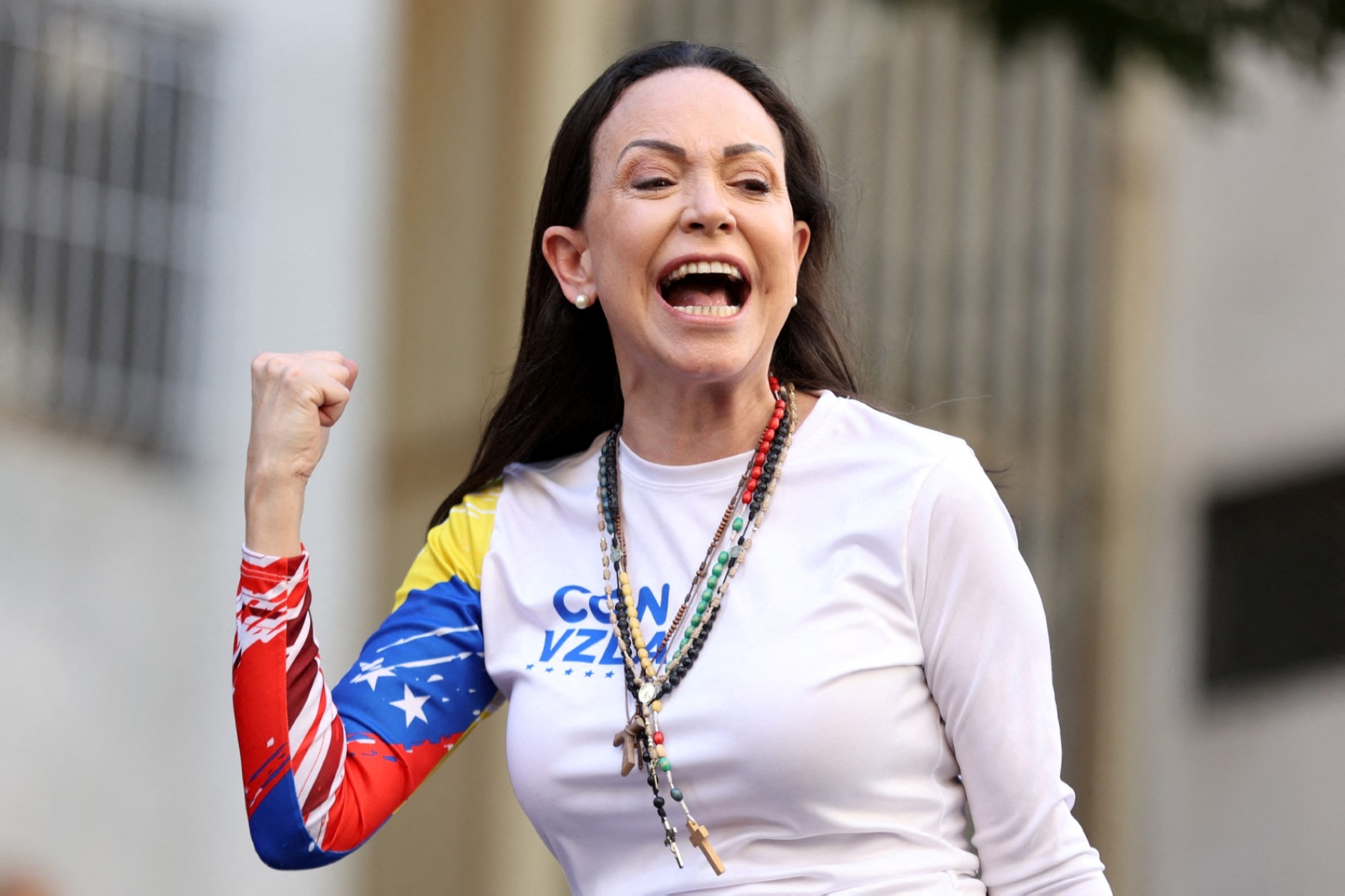
It's possible, of course, that a US-orchestrated transition in Venezuela could benefit the country, especially if opposition leaders María Corina Machado, the winner of the 2025 Nobel Peace Prize, and her designated candidate Edmundo González—who is believed to have soundly beaten Maduro in the 2024 presidential election—are able to take power.
Even so, on Saturday, Trump appeared to dampen expectations of such an outcome, saying, "I think it would be very tough for her to be the leader. She doesn't have the support within—or the respect within—the country."
The closest precedent to Trump's action may well have been former President George H.W. Bush's decision to send US troops in to capture dictator Manuel Noriega in Panama in 1989, which later helped promote stability in that country, though it did not really alter the stakes of the United States' drug crisis.
But history suggests more pitfalls than promising outcomes may ensue. Nearly every US military intervention in Latin America, going back at least to the Bay of Pigs in 1961, has ended in fiasco—with no real benefit to Washington. And it hasn't really mattered whether the issue was Cold War communism or post-Cold War narcotics. Indeed, the last clear, if ugly, US success in the region may have been the Spanish-American War of the late 19th century.
Nearly every US military intervention in Latin America, going back to the Bay of Pigs in 1961, has ended in fiasco—with no real benefit to Washington
In 1954, the CIA-backed overthrow of Guatemala's elected government created decades of civil war and instability. The Bay of Pigs disaster—President John F. Kennedy's failed coup against Cuban leader Fidel Castro—helped lead to the Cuban Missile Crisis. In 1973, a US-supported coup against President Salvador Allende in Chile opened the way to Augusto Pinochet's brutal 17-year dictatorship—and did permanent damage to the reputation of then-Secretary of State Henry Kissinger. President Ronald Reagan's 1980s intervention against the Sandinistas ended in the Iran-Contra scandal and another civil war.
Beyond that, repeated interventions in Haiti going back to President Woodrow Wilson in 1915, then Presidents Bill Clinton in 1994 ("Operation Uphold Democracy") and George W. Bush 10 years later, have only produced more instability, leading to such vicious gang violence that Haitians can't hold elections. And Washington spent billions on Plan Colombia, including a large amount of military assistance, only to decertify Bogotá in September for "failed" and "ineffective counternarcotics policies."
As for Venezuela itself, an allegedly US-supported coup backfired against then-President Hugo Chávez in 2002. His hand-picked successor was Maduro.
Foreign Policy
Published under licence.
© 2024 Foreign Policy . All rights reserved
If corruption, repression or even crimes against humanity justify external military action, no leader is safe and no border is meaningful.
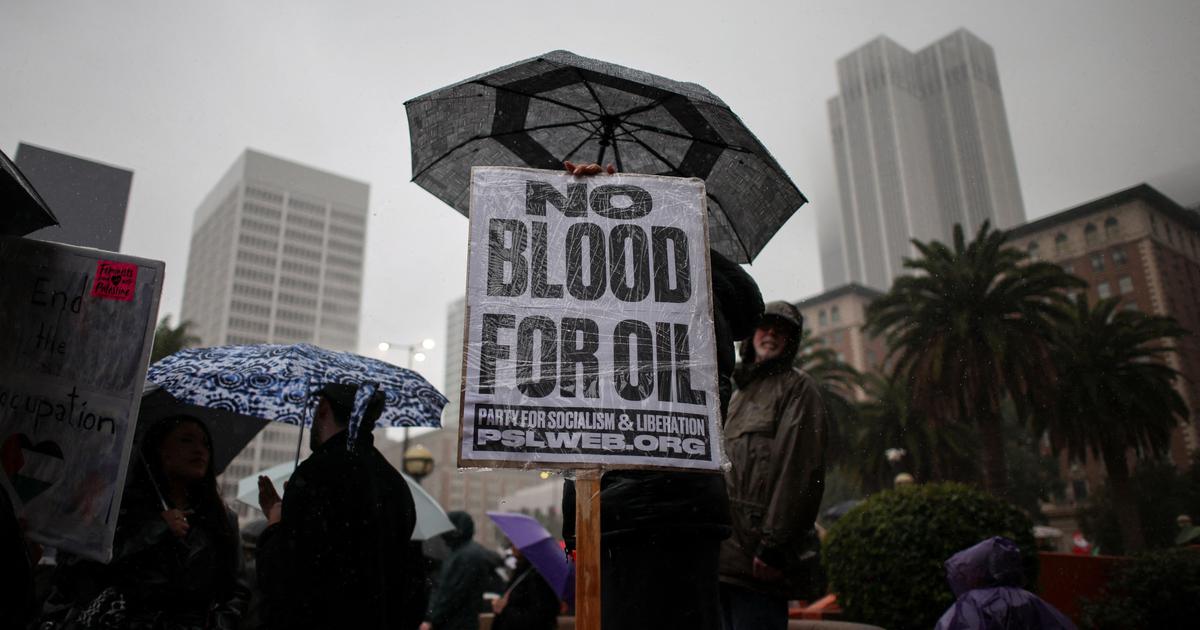
The United States sent elite forces into a sovereign capital on Saturday, seized the President Nicolás Maduro and the First Lady Cilia Flores, and kidnapped them by force. Any other phrasing is a political indulgence.
When Russia crossed into Ukraine, Western capitals did not tolerate euphemism. Vladimir Putin’s insistence on calling it a “special military operation” was rejected immediately and collectively. British politician Boris Johnson has called the Russian action “hideous and barbaric.”
No European leader asked whether Russia’s grievances deserved to be heard first. France’s Emmanuel Macron did not suggest that Moscow might oversee a “peaceful, democratic transition” in Kyiv. Keir Starmer, the UK prime minister, did not caution, “we need to establish all of the facts.” No German chancellor hinted that Ukrainian president had “led his country into ruin” and therefore forfeited its protection by misgoverning under international law.
Governments, media houses, civil society groups and international institutions named it what it was: an invasion. Words mattered then, because words locate responsibility and international order. They still do.
That order rested on one unglamorous but foundational idea that sovereignty is not conditional on virtue, ideological alignment or Western approval. Small states do not exist at the mercy of larger ones. Power does not confer moral exemption.
However now, faced with an unprovoked assault by the United States on a sovereign country in the Global South, the same political class that rehearsed international law with priestly seriousness reaches instinctively for laundering language. “Operation.” “Strike.” “Capture.” Even “extraction”, a term better suited to hostages or minerals, is deployed to soften what has occurred
The justification now being floated is illegitimacy. Nicolás Maduro does not govern by democratic consent. By this logic, the whole world becomes a target list. Fewer than 7% of the global population lives under what is classified as a full democracy, according to the Economist Intelligence Unit’s Democracy Index 2024. Vast stretches of the world are ruled by monarchies, military juntas, family dynasties, or hollowed-out electoral systems. Many of these regimes are long-standing Western allies. None are subjected to kidnapping raids.
If illegitimacy is the threshold for invasion, then international order collapses into selective enforcement. If corruption, repression, or even crimes against humanity justify external military abduction, then no leader is safe and no border is meaningful. Illegitimacy has never been the problem. Disobedience has.
When Western leaders claim the right to remove governments they do not recognise, they resurrect the logic of empire with modern logistics. Colonial imperialist states spoke of civilising missions. Today the language is democracy promotion. The presentation remains the same, delegitimise the native authority, claim moral urgency, insist that intervention is temporary, and promise prosperity once control has been secured. And the de-facto structure is – power decides, law follows, and violence is recast as responsibility.
Whether Nicolás Maduro is competent, corrupt, authoritarian, or disastrous is irrelevant to the principle at stake.
According to the United Nations Charter, that judgement belongs to the people of Venezuela, not to Washington, London, Berlin or Brussels. And definitely, not to a president for whom defiling international law as he says (referring to kidnapping of President Maduro by US military), “I’ve never seen anything like this. I was able to watch it in real time…I watched it, literally, like I was watching a television show.”
Donald Trump removed any remaining ambiguity himself. Asked who would govern Venezuela now, he gestured his hands towards himself and US Secretary of State Marco Rubio, and said it would be, “for a period of time, the people that are standing right behind me”.
He went further. The United States, he said, is “going to run” Venezuela until a “safe, proper and judicious transition”. US companies will enter the country to repair oil infrastructure and “start making money for the country”. This is not even concealed extraction anymore; it is spoken distinctly. The colonial economy always announced itself as development. Railways, refineries, roads – all built to move wealth outward while asserting the natives were being helped.
When asked how occupying and administering another country fits into “America First”, Trump was explicit. Venezuela’s energy resources are “tremendous”. They are “very important that we protect”. Protection, here, means possession. Venezuelan lives are rendered collateral to American stability. Other people’s sovereignty becomes disposable the moment it interferes with Western comfort.
There is also the question that Western capitals refuse to ask aloud: who governs the morning after? What legitimacy would a US-installed Venezuelan leadership command among a population already shaped by decades of sanctions, economic warfare and external interference?
History offers no comfort here. The United States and the United Kingdom overthrew Iran’s elected prime minister and replaced him with a pliant monarch. The result was a revolutionary reckoning whose consequences still convulse the region. Regime change has a memory, and it rarely flatters its authors.
Those celebrating the kidnapping of Maduro should pause. If one is capable today of cheering the abduction of the head of a sovereign nation, and one were alive during the run-up to the Iraq war that started in 2003, then history has taught us nothing. The arguments and consent manufacturing reporting are identical. The confidence is the same. The outcome will not be kinder.
The operation also sits uncomfortably with the mythology cultivated by the American president himself. A man who boasts of ending wars and desperately seeks a Nobel Peace Prize has, within a single presidency, bombed Iran on suspicion, devastated Yemen in the name of security, conducted military operations in Nigeria under the banner of religious protection, and now assaulted Venezuela outright.
At home, he has normalised the use of troops in civilian spaces, overseen mass deportations carried out in shackles, and turned immigration enforcement into a theatre of humiliation, complete with flights to an infamous Salvadoran prison.
The promise of “no regime change and no nation building” has aged badly. The circle closed faster than expected.
Even the threat horizon is expanding. When a reporter asked a question at the same press conference, Trump replied, “Cuba is going to be something we’ll end up talking about.” Marco Rubio then intervened, “If I lived in Havana and I was in the government, I’d be concerned at least.”
There is no semblance of diplomatic morality, but a naked warning of heedless administration.
Western media, once again, plays its part. The BBC’s framing – “Trump ordered strikes on Venezuelan military sites” – asks how rattled Venezuelans might be, not whether their country has been violated. The violence is framed as technical, efficient, almost surgical. When Russian missiles fell on Kyiv, journalists asked how civilians were surviving invasion. When US forces storm Caracas, Venezuelans are described as “rattled”, not terrorised. Journalism in the Western media is a masterclass on aiding and abetting the death of international rule of law.
European leaders often express bewilderment at why much of Asia, Africa, and Latin America refused to condemn Russia’s invasion of Ukraine with the fervour Brussels expected. The answer is not an enigma. These regions have lived through Iraq, Vietnam, Panama, Iran and Gaza. They have seen how international law is invoked when useful and discarded when inconvenient. They recognise patterns even when Europe pretends, they are anomalies. The rules have always bent towards Western interest. The only novelty is how openly this is now embraced.
By tearing holes in the very order, it claims to defend, Europe and the United States are corroding their own arguments. They are arming its rivals rhetorically and strategically. Ukraine’s appeal to international law will ring hollow when the same law is treated as optional elsewhere. Russia will cite this precedent. China already does, watching carefully as sovereignty becomes conditional and force regains legitimacy.
What has been invaded in Venezuela is the idea that decolonisation ever truly ended. Power still practises the habits of empire. And this time, it is not even pretending to look away from the oil.
Pius Fozan is a photojournalist and an international media studies scholar at the Deutsche Welle Akademie.

No comments:
Post a Comment