
Opinion
Trump’s diversion: Why Venezuela’s oil is the ultimate goal

The Petroleos de Venezuela SA (PDVSA) El Palito refinery in El Palito, Venezuela on 9 March 2022. [Manaure Quintero/Bloomberg via Getty Images]
by Jasim Al-Azzawi
January 4, 2026
Chevron pledges to work with Trump as it cheers 'peaceful' power transition in Venezuela
Trump’s diversion: Why Venezuela’s oil is the ultimate goal
The Petroleos de Venezuela SA (PDVSA) El Palito refinery in El Palito, Venezuela on 9 March 2022. [Manaure Quintero/Bloomberg via Getty Images]
by Jasim Al-Azzawi
January 4, 2026
MEMO

Washington didn’t abruptly discover Nicolás Maduro on 3 January. It didn’t suddenly open its eyes to Venezuela’s narcotics and corruption. It chose this opportunity to apprehend Maduro because of the nexus of four compelling forces: a reborn Monroe Doctrine mentality, the lust to control Venezuela’s oil, Trump’s plummeting approval rating, and the US Supreme Court’s decision ordering Trump’s accounting firm to disclose the required financial records.
Hours after the operation, President Trump announced that the US would be “very strongly involved” in Venezuela’s oil sector. “Narco-terrorism” is such an effective way of validating the use of brute force. The bigger question is what exactly America will do with a country that sits atop the world’s largest known oil reserves.
The Monroe Doctrine is not some antique curio in the national closet. It is the ideological bedrock of US power in the southern hemisphere: Latin America as “our” neighborhood, “our” sphere, “our” right to reorder. In 2019, the national security adviser of President Donald Trump, John Bolton, publicly stated the quiet part: “Today, we proudly proclaim for all to hear: the Monroe Doctrine is alive and well.”
There is a reason for that history that explains the choreography: the buildup, strikes, capture, and then the oil’s involvement. In a series of stories carried through March, Reuters has documented “months of mounting pressure,” including a Venezuelan oil blockade and seizures that have led to a sharp cutback in exports.
And then there is timing. The Trump administration needed to focus the eyes and minds of the American people on blowing up cocaine boats. The kidnapping operation comes at a time when Trump’s popularity has been sliding rapidly downward in polls. A big overseas “triumph” is the oldest trick in the imperial book: creating clarity overseas while wiping out discontent at home. The raid has a satisfying finale. But governance has none. It is about images of strong leadership, flags, and TV victory, rather than inflation, courts, Congressional battles, and that terrible, torturous question voters inevitably pose: What about me?
Which brings us to the most uncomfortable motive: money, records, and exposure.
Trump has been resisting transparency and refusing to release his financial records for years. The Supreme Court of the United States, ruling on Trump v. Vance, overturned Trump’s contention of absolute immunity from state criminal process, granting instead that as far as any request for personal papers is concerned, “a President’s task is ‘nearly the same situation’ as any other person.” This particular ruling concerned papers requested from his accounting firm related to a grand jury investigation in New York. The message is clear: nobody is above the law. In 2019, the Attorney General of the state of New York reported that the courts ordered President Trump to pay compensation for his charitable abuse. The case reveals that President Trump resists transparency until compelled to do so.
Such a Venezuela “caper” helps. It also serves a second role for a Venezuelan issue: it provides a prop for a tale of immigration. Reuters highlighted Trump’s moves to effectively nullify the legal status of a massive number of Venezuelan immigrants while advocating a hard line on this issue. A captured Maduro could shore up a claim to act against “chaos.”
But what about the drug rationale itself?
The problem is not that there is no truth to the Venezuelan trafficking allegations. The problem is that there is not enough. If this were a law enforcement matter, we would be discussing multi-national extradition agreements, Interpol routes, and cooperation among regional courts. However, there was a military action in Caracas, and military special forces extricated the country’s president. When you are using a hammer as a tool, every problem looks like a nail. When you are using a special operations Extraction tool, you are not using it for justice. You are using it for power.
The keener lens is this: Venezuela is where Trump can reclaim hegemony in the Americas, take down his enemies, redirect the flow of oil, and provide him with a television-ready win. The ‘drugs’ narrative provides cover; the promise of oil is the giveaway.
There is one other telling detail in the media reporting. Reuters reported that the Venezuelan oil infrastructure was remarkably untouched during the strike. This implies planning and intention. You do not go to war to destroy the thing that you actually get to control, influence, and be “strongly involved in.”
Maduro’s arrest is less about the war on drugs and has much more to do with the Monroe Doctrine, with an oil undertone. Of course, this is a reminder to Latin America that Washington still has the backbone to decide who rules the region. It is also a reminder to the energy market that Washington can shift the pipeline. Moreover, it is a reminder to Trump to give thanks because Trump operates not on paper trails or ledgers but on blockbuster moments.
The tragedy is not Venezuelan sovereignty, or South American stability, or the precedent that is being set. The tragedy is the cynicism. If the United States is serious about ending the suffering of the Venezuelan people, it has had years to promote institutions, not stunts. But institutions don’t go viral. Stunts do.
Washington didn’t abruptly discover Nicolás Maduro on 3 January. It didn’t suddenly open its eyes to Venezuela’s narcotics and corruption. It chose this opportunity to apprehend Maduro because of the nexus of four compelling forces: a reborn Monroe Doctrine mentality, the lust to control Venezuela’s oil, Trump’s plummeting approval rating, and the US Supreme Court’s decision ordering Trump’s accounting firm to disclose the required financial records.
Hours after the operation, President Trump announced that the US would be “very strongly involved” in Venezuela’s oil sector. “Narco-terrorism” is such an effective way of validating the use of brute force. The bigger question is what exactly America will do with a country that sits atop the world’s largest known oil reserves.
The Monroe Doctrine is not some antique curio in the national closet. It is the ideological bedrock of US power in the southern hemisphere: Latin America as “our” neighborhood, “our” sphere, “our” right to reorder. In 2019, the national security adviser of President Donald Trump, John Bolton, publicly stated the quiet part: “Today, we proudly proclaim for all to hear: the Monroe Doctrine is alive and well.”
There is a reason for that history that explains the choreography: the buildup, strikes, capture, and then the oil’s involvement. In a series of stories carried through March, Reuters has documented “months of mounting pressure,” including a Venezuelan oil blockade and seizures that have led to a sharp cutback in exports.
And then there is timing. The Trump administration needed to focus the eyes and minds of the American people on blowing up cocaine boats. The kidnapping operation comes at a time when Trump’s popularity has been sliding rapidly downward in polls. A big overseas “triumph” is the oldest trick in the imperial book: creating clarity overseas while wiping out discontent at home. The raid has a satisfying finale. But governance has none. It is about images of strong leadership, flags, and TV victory, rather than inflation, courts, Congressional battles, and that terrible, torturous question voters inevitably pose: What about me?
Which brings us to the most uncomfortable motive: money, records, and exposure.
Trump has been resisting transparency and refusing to release his financial records for years. The Supreme Court of the United States, ruling on Trump v. Vance, overturned Trump’s contention of absolute immunity from state criminal process, granting instead that as far as any request for personal papers is concerned, “a President’s task is ‘nearly the same situation’ as any other person.” This particular ruling concerned papers requested from his accounting firm related to a grand jury investigation in New York. The message is clear: nobody is above the law. In 2019, the Attorney General of the state of New York reported that the courts ordered President Trump to pay compensation for his charitable abuse. The case reveals that President Trump resists transparency until compelled to do so.
Such a Venezuela “caper” helps. It also serves a second role for a Venezuelan issue: it provides a prop for a tale of immigration. Reuters highlighted Trump’s moves to effectively nullify the legal status of a massive number of Venezuelan immigrants while advocating a hard line on this issue. A captured Maduro could shore up a claim to act against “chaos.”
But what about the drug rationale itself?
The problem is not that there is no truth to the Venezuelan trafficking allegations. The problem is that there is not enough. If this were a law enforcement matter, we would be discussing multi-national extradition agreements, Interpol routes, and cooperation among regional courts. However, there was a military action in Caracas, and military special forces extricated the country’s president. When you are using a hammer as a tool, every problem looks like a nail. When you are using a special operations Extraction tool, you are not using it for justice. You are using it for power.
The keener lens is this: Venezuela is where Trump can reclaim hegemony in the Americas, take down his enemies, redirect the flow of oil, and provide him with a television-ready win. The ‘drugs’ narrative provides cover; the promise of oil is the giveaway.
There is one other telling detail in the media reporting. Reuters reported that the Venezuelan oil infrastructure was remarkably untouched during the strike. This implies planning and intention. You do not go to war to destroy the thing that you actually get to control, influence, and be “strongly involved in.”
Maduro’s arrest is less about the war on drugs and has much more to do with the Monroe Doctrine, with an oil undertone. Of course, this is a reminder to Latin America that Washington still has the backbone to decide who rules the region. It is also a reminder to the energy market that Washington can shift the pipeline. Moreover, it is a reminder to Trump to give thanks because Trump operates not on paper trails or ledgers but on blockbuster moments.
The tragedy is not Venezuelan sovereignty, or South American stability, or the precedent that is being set. The tragedy is the cynicism. If the United States is serious about ending the suffering of the Venezuelan people, it has had years to promote institutions, not stunts. But institutions don’t go viral. Stunts do.
'Trump's admitting it': Resurfaced video reveals president's pre-election Venezuela goal
David McAfee
January 4, 2026
RAW STORY

Donald Trump (Reuters)
Before the 2024 election, Donald Trump made comments about Venezuela that are now being resurfaced after the president announced a successful mission to "capture" the nation's leader and his wife.
Ret. Lt. Gen. Mark Hertling is among those who have been critical of the Trump administration's decisions surrounding Venezuela. Trump declared he plans to have the U.S. take control over the country, as opposed to letting the nation's constitution do its job, and didn't rule out having U.S. boots on the ground.
Trump's reasoning for the mission has publicly been connected to drug trafficking allegations, but a video being shared from a GOP convention in North Carolina shows Trump previously had other motives on mind.
"How about we're buying oil from Venezuela? When I left, Venezuela was ready to collapse," Trump said in 2023 at the North Carolina Republican Convention. "We would have taken it over. We would have gotten all that oil. It would have been right next door. But now, we're buying oil from Venezuela. So, we're making a dictator very rich. Can you believe this? Nobody can believe it."
A popular influencer known as Not The Torygraph posted the video, and wrote that, "Trump’s admitting that it’s all about capturing Venezuelan oil."
A "radical centrist" known as Maine actually flagged the pre-election comments in October, when there was a buildup of naval units.
"REMINDER: During the 2024 campaign, Trump told audience in North Carolina that he wants Venezuela to collapse so he can take all of the oil. Now: Trump amassing naval assets and 10,000 troops in Caribbean and recently admitted CIA has been operating on ground in Venezuela."
Matthew Capon, formerly a senior video journalist at the Daily Mirror, also flagged the 2023 video this weekend.
"Donald Trump speaking at the North Carolina Republican State Convention 10th June 2023 remarks on Venezuela," he wrote, quoting Trump as saying, "We would have taken it over, we would have gotten all that oil, it would have been right next door..."
David McAfee
January 4, 2026
RAW STORY
Donald Trump (Reuters)
Before the 2024 election, Donald Trump made comments about Venezuela that are now being resurfaced after the president announced a successful mission to "capture" the nation's leader and his wife.
Ret. Lt. Gen. Mark Hertling is among those who have been critical of the Trump administration's decisions surrounding Venezuela. Trump declared he plans to have the U.S. take control over the country, as opposed to letting the nation's constitution do its job, and didn't rule out having U.S. boots on the ground.
Trump's reasoning for the mission has publicly been connected to drug trafficking allegations, but a video being shared from a GOP convention in North Carolina shows Trump previously had other motives on mind.
"How about we're buying oil from Venezuela? When I left, Venezuela was ready to collapse," Trump said in 2023 at the North Carolina Republican Convention. "We would have taken it over. We would have gotten all that oil. It would have been right next door. But now, we're buying oil from Venezuela. So, we're making a dictator very rich. Can you believe this? Nobody can believe it."
A popular influencer known as Not The Torygraph posted the video, and wrote that, "Trump’s admitting that it’s all about capturing Venezuelan oil."
A "radical centrist" known as Maine actually flagged the pre-election comments in October, when there was a buildup of naval units.
"REMINDER: During the 2024 campaign, Trump told audience in North Carolina that he wants Venezuela to collapse so he can take all of the oil. Now: Trump amassing naval assets and 10,000 troops in Caribbean and recently admitted CIA has been operating on ground in Venezuela."
Matthew Capon, formerly a senior video journalist at the Daily Mirror, also flagged the 2023 video this weekend.
"Donald Trump speaking at the North Carolina Republican State Convention 10th June 2023 remarks on Venezuela," he wrote, quoting Trump as saying, "We would have taken it over, we would have gotten all that oil, it would have been right next door..."
Chevron pledges to work with Trump as it cheers 'peaceful' power transition in Venezuela
Alexander Willis
January 3, 2026 RAW STORY
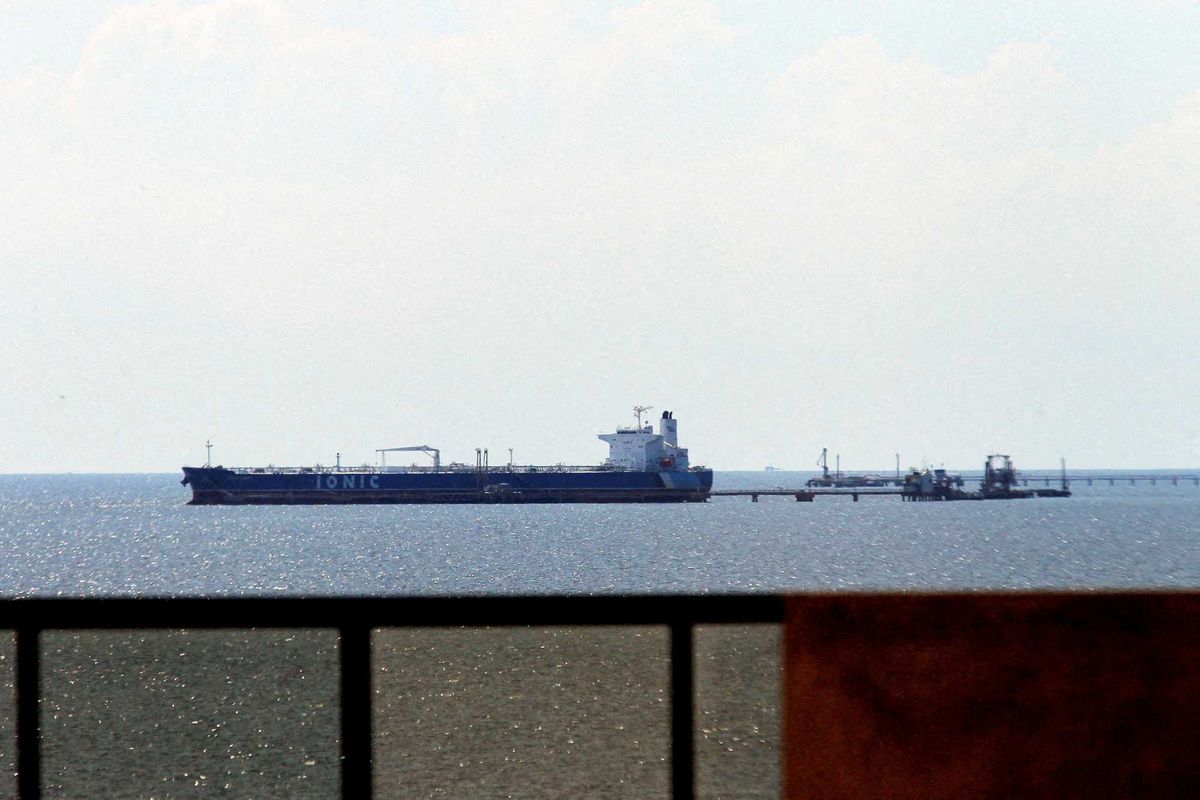 FILE PHOTO: Chevron-chartered oil tanker Ionic Anax is seen near the Bajo Grande port in Venezuela's lake Maracaibo after loading for export, in San Francisco, Zulia State, Venezuela December 13, 2025. REUTERS/Isaac Urrutia/File Photo
The Texas-based oil giant Chevron issued a statement Saturday vowing to work "constructively" with the Trump administration to support a "peaceful" transition of power following the U.S. attack on the South American nation and capturing of its president.
Chevron has maintained a presence in Venezuela for more than 100 years, and according to its statement, signaled a readiness to work in tandem with the Trump administration, which is set to run the government of Venezuela until a transition of power can be facilitated.
“With more than a century in Venezuela, we support a peaceful, lawful transition that promotes stability and economic recovery,” reads the statement from Chevron, the Houston Chronicle reported Saturday. “We’re prepared to work constructively with the U.S. Government during this period, leveraging our experience and presence to strengthen U.S. energy security."
Chevron first established its presence in Venezuela in 1923 under the rulership of dictator Juan Vicente Gomez, who opened up Venezuela to foreign oil companies and subsequently secured strong support from the United States.
Chevron and other oil giants’ had largely unchallenged control over Venezuela’s oil reserves until the early 1940s after the government, under the leadership of Venezuelan President Eleazar Lopez Contreras, enacted the Hydrocarbons Law, which required oil companies to split their profits with the Venezuelan government.
Today, Venezuela has the single-largest proven oil reserves on earth, and a number of Republican figures, lawmakers, and even President Donald Trump himself have acknowledged that U.S. military threats against the country were motivated – at least in part – by its vast natural resources, and despite the Trump administration’s stated justification of combating drug trafficking.
The United States has enacted or sought to enact regime change countless times in South America over natural resources, perhaps most famously in 1973 when a U.S.-backed coup overthrew its democratically elected leader at the behest of American mining and communication companies that had been stripped of their control of Chile’s resources.
Alexander Willis
January 3, 2026
RAW STORY
FILE PHOTO: Chevron-chartered oil tanker Ionic Anax is seen near the Bajo Grande port in Venezuela's lake Maracaibo after loading for export, in San Francisco, Zulia State, Venezuela December 13, 2025. REUTERS/Isaac Urrutia/File Photo
The Texas-based oil giant Chevron issued a statement Saturday vowing to work "constructively" with the Trump administration to support a "peaceful" transition of power following the U.S. attack on the South American nation and capturing of its president.
Chevron has maintained a presence in Venezuela for more than 100 years, and according to its statement, signaled a readiness to work in tandem with the Trump administration, which is set to run the government of Venezuela until a transition of power can be facilitated.
“With more than a century in Venezuela, we support a peaceful, lawful transition that promotes stability and economic recovery,” reads the statement from Chevron, the Houston Chronicle reported Saturday. “We’re prepared to work constructively with the U.S. Government during this period, leveraging our experience and presence to strengthen U.S. energy security."
Chevron first established its presence in Venezuela in 1923 under the rulership of dictator Juan Vicente Gomez, who opened up Venezuela to foreign oil companies and subsequently secured strong support from the United States.
Chevron and other oil giants’ had largely unchallenged control over Venezuela’s oil reserves until the early 1940s after the government, under the leadership of Venezuelan President Eleazar Lopez Contreras, enacted the Hydrocarbons Law, which required oil companies to split their profits with the Venezuelan government.
Today, Venezuela has the single-largest proven oil reserves on earth, and a number of Republican figures, lawmakers, and even President Donald Trump himself have acknowledged that U.S. military threats against the country were motivated – at least in part – by its vast natural resources, and despite the Trump administration’s stated justification of combating drug trafficking.
The United States has enacted or sought to enact regime change countless times in South America over natural resources, perhaps most famously in 1973 when a U.S.-backed coup overthrew its democratically elected leader at the behest of American mining and communication companies that had been stripped of their control of Chile’s resources.
The Texas-based oil giant Chevron issued a statement Saturday vowing to work "constructively" with the Trump administration to support a "peaceful" transition of power following the U.S. attack on the South American nation and capturing of its president.
Chevron has maintained a presence in Venezuela for more than 100 years, and according to its statement, signaled a readiness to work in tandem with the Trump administration, which is set to run the government of Venezuela until a transition of power can be facilitated.
“With more than a century in Venezuela, we support a peaceful, lawful transition that promotes stability and economic recovery,” reads the statement from Chevron, the Houston Chronicle reported Saturday. “We’re prepared to work constructively with the U.S. Government during this period, leveraging our experience and presence to strengthen U.S. energy security."
Chevron first established its presence in Venezuela in 1923 under the rulership of dictator Juan Vicente Gomez, who opened up Venezuela to foreign oil companies and subsequently secured strong support from the United States.
Chevron and other oil giants’ had largely unchallenged control over Venezuela’s oil reserves until the early 1940s after the government, under the leadership of Venezuelan President Eleazar Lopez Contreras, enacted the Hydrocarbons Law, which required oil companies to split their profits with the Venezuelan government.
Today, Venezuela has the single-largest proven oil reserves on earth, and a number of Republican figures, lawmakers, and even President Donald Trump himself have acknowledged that U.S. military threats against the country were motivated – at least in part – by its vast natural resources, and despite the Trump administration’s stated justification of combating drug trafficking.
The United States has enacted or sought to enact regime change countless times in South America over natural resources, perhaps most famously in 1973 when a U.S.-backed coup overthrew its democratically elected leader at the behest of American mining and communication companies that had been stripped of their control of Chile’s resources.

No comments:
Post a Comment