
US news outlets knew in advance of Trump's Venezuela raid, stayed quiet: Report
The New York Times and The Washington Post chose not to publish details of a secret US raid on Venezuela, despite having prior information, to avoid endangering American troops.
Advertisement
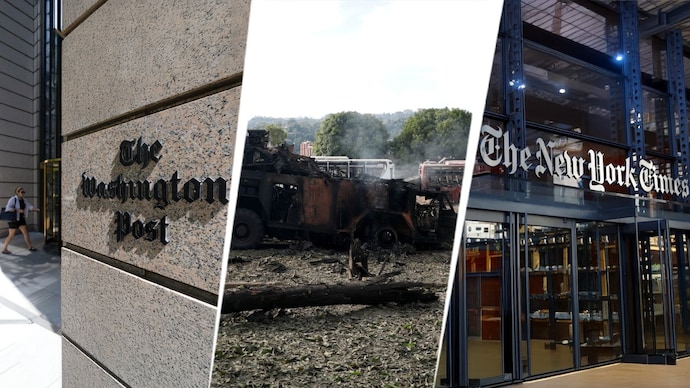
A report claimed that US media had prior information about the Venezuela attack.
India Today News Desk
New DelhiJan 4, 2026 11:26 IST
Written By: Ajmal Abbas
The New York Times and The Washington Post were aware of a secret US raid on Venezuela shortly before it was scheduled to begin, but chose not to publish the information to avoid endangering American troops, according to reports.
American news website Semafor, citing people familiar with communications between the administration and the news organisations, reported that senior editors at both newspapers were briefed on sensitive operational details ahead of the mission. After internal deliberations, the newsrooms decided to temporarily withhold publication, citing concerns over the safety of US personnel involved in the operation.
The decision, according to the report, reflects a longstanding tradition in American journalism of exercising restraint on matters of national security, particularly when lives may be at risk. The move assumes greater significance as it comes at a time of deep hostility between the US president and legacy media outlets in the recent past.
In a dramatic and unprecedented escalation on Saturday, the United States launched military strikes on Venezuela’s capital, Caracas, and captured the country’s sitting President, Nicolas Maduro, along with his wife Cilia Flores, triggering shockwaves across the world. US President Donald Trump said the action was aimed at dismantling an alleged narco-terror network, while Caracas denounced the operation as an illegal act of war and a blatant violation of international law.
For months, the US administration had criticised Nicols Maduro over what it alleged was his role in trafficking drugs to the United States to “destroy American lives.” Pressure was steadily intensified through a major military build-up in the Caribbean and a series of deadly missile strikes on vessels accused of drug smuggling.
Following the military operation and the capture of Maduro, President Donald Trump announced that the 63-year-old leader had been removed from power, declaring, “We will run the country until such time as we can carry out a safe, proper and judicious transition”.
According to an indictment made public Saturday, Maduro is charged alongside his wife, his son and three others. Maduro is indicted on four counts: narco-terrorism conspiracy, cocaine importation conspiracy, possession of machine guns and destructive devices and conspiracy to possess machine guns and destructive devices.
Venezuela condemned the move as a violation of international law, alleging that the real motive behind President Donald Trump’s action was to seize control of the Latin American country’s vast oil reserves and other natural resources.
- Ends
'What's even the point?' New York Times hammered for 'burying story' of Venezuela attack
Alexander Willis
January 4, 2026 RAW STORY
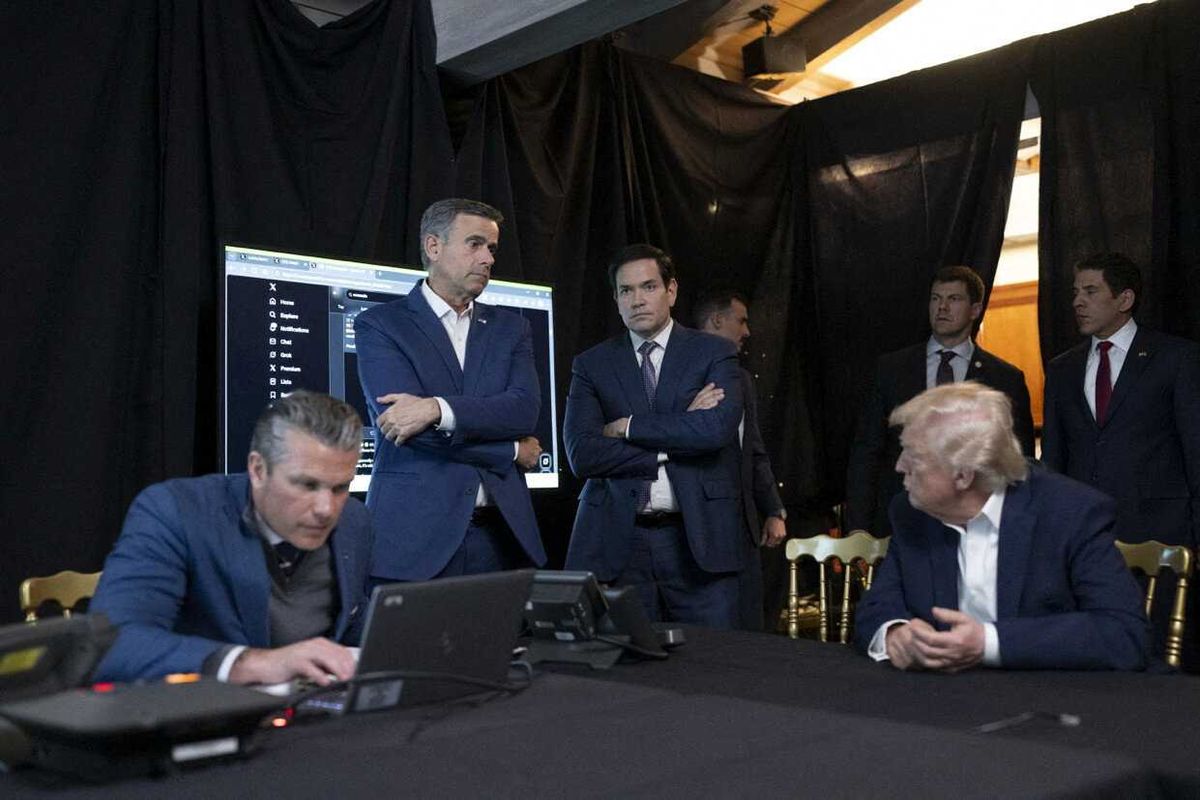
A photograph posted by U.S. President Donald Trump on his Truth Social account shows him sitting near U.S. Secretary of Defense Pete Hegseth as CIA Director John Ratcliffe and Secretary of State Marco Rubio stand in front of a screen showing posts on the X.com website, as they watch the U.S. military operation in Venezuela from Trump's Mar a Lago resort, in Palm Beach, Florida, U.S., January 3, 2026. @realDonaldTrump/Handout via REUTERS
Two legacy media outlets were tipped off about the Trump administration’s unprecedented attack on Venezuela but chose not to report on to “avoid endangering US troops,” according to a report Saturday night from Semafor, sparking a social media frenzy of outrage.
“Absolutely f------ despicable,” wrote X user “KareBearScare,” a frequent political commentator who’s amassed more than 2,600 followers. “What’s even the point of the media besides to help this lawless administration undemocratically lie to the American people.”
Semafor learned that the Washington Post and the New York Times both had both been tipped off about the Trump administration’s operation to kidnap Venezuelan President Nicolas Maduro and his wife after speaking with two people the outlet said were “familiar with the communications between the administration and the news organizations,” both of whom spoke with the outlet on the condition of anonymity.
“So they knew the Trump administration was about to carry out an illegal invasion of a sovereign nation and the abduction of its leader and stayed silent?” asked independent journalist Jasper Nathaniel in a social media post on X. “Where exactly is the line here?”
Legacy media outlets have a history of holding onto reporting under the justification of protecting American soldiers. The U.S.-backed Bay of Pigs Invasion of Cuba in 1961, for instance, saw the New York Times withhold key information in its reporting, and the outlet also withheld information regarding warrantless wiretapping during the Bush administration.
“If a media outlet has information about political leaders on the verge of committing an international crime of aggression, the job requires reporting about it,” wrote journalist Rishika Pardikar in a social media post on X. “Not burying the story to shield the perpetrators - this would qualify as complicity and be called state-controlled media.”
'Not the way most think': GOP pollster shows surprising way Venezuela move may hurt Trump
Written By: Ajmal Abbas
The New York Times and The Washington Post were aware of a secret US raid on Venezuela shortly before it was scheduled to begin, but chose not to publish the information to avoid endangering American troops, according to reports.
American news website Semafor, citing people familiar with communications between the administration and the news organisations, reported that senior editors at both newspapers were briefed on sensitive operational details ahead of the mission. After internal deliberations, the newsrooms decided to temporarily withhold publication, citing concerns over the safety of US personnel involved in the operation.
The decision, according to the report, reflects a longstanding tradition in American journalism of exercising restraint on matters of national security, particularly when lives may be at risk. The move assumes greater significance as it comes at a time of deep hostility between the US president and legacy media outlets in the recent past.
In a dramatic and unprecedented escalation on Saturday, the United States launched military strikes on Venezuela’s capital, Caracas, and captured the country’s sitting President, Nicolas Maduro, along with his wife Cilia Flores, triggering shockwaves across the world. US President Donald Trump said the action was aimed at dismantling an alleged narco-terror network, while Caracas denounced the operation as an illegal act of war and a blatant violation of international law.
For months, the US administration had criticised Nicols Maduro over what it alleged was his role in trafficking drugs to the United States to “destroy American lives.” Pressure was steadily intensified through a major military build-up in the Caribbean and a series of deadly missile strikes on vessels accused of drug smuggling.
Following the military operation and the capture of Maduro, President Donald Trump announced that the 63-year-old leader had been removed from power, declaring, “We will run the country until such time as we can carry out a safe, proper and judicious transition”.
According to an indictment made public Saturday, Maduro is charged alongside his wife, his son and three others. Maduro is indicted on four counts: narco-terrorism conspiracy, cocaine importation conspiracy, possession of machine guns and destructive devices and conspiracy to possess machine guns and destructive devices.
Venezuela condemned the move as a violation of international law, alleging that the real motive behind President Donald Trump’s action was to seize control of the Latin American country’s vast oil reserves and other natural resources.
- Ends
Alexander Willis
January 4, 2026
RAW STORY
A photograph posted by U.S. President Donald Trump on his Truth Social account shows him sitting near U.S. Secretary of Defense Pete Hegseth as CIA Director John Ratcliffe and Secretary of State Marco Rubio stand in front of a screen showing posts on the X.com website, as they watch the U.S. military operation in Venezuela from Trump's Mar a Lago resort, in Palm Beach, Florida, U.S., January 3, 2026.
@realDonaldTrump/Handout via REUTERS
Two legacy media outlets were tipped off about the Trump administration’s unprecedented attack on Venezuela but chose not to report on to “avoid endangering US troops,” according to a report Saturday night from Semafor, sparking a social media frenzy of outrage.
“Absolutely f------ despicable,” wrote X user “KareBearScare,” a frequent political commentator who’s amassed more than 2,600 followers. “What’s even the point of the media besides to help this lawless administration undemocratically lie to the American people.”
Semafor learned that the Washington Post and the New York Times both had both been tipped off about the Trump administration’s operation to kidnap Venezuelan President Nicolas Maduro and his wife after speaking with two people the outlet said were “familiar with the communications between the administration and the news organizations,” both of whom spoke with the outlet on the condition of anonymity.
“So they knew the Trump administration was about to carry out an illegal invasion of a sovereign nation and the abduction of its leader and stayed silent?” asked independent journalist Jasper Nathaniel in a social media post on X. “Where exactly is the line here?”
Legacy media outlets have a history of holding onto reporting under the justification of protecting American soldiers. The U.S.-backed Bay of Pigs Invasion of Cuba in 1961, for instance, saw the New York Times withhold key information in its reporting, and the outlet also withheld information regarding warrantless wiretapping during the Bush administration.
“If a media outlet has information about political leaders on the verge of committing an international crime of aggression, the job requires reporting about it,” wrote journalist Rishika Pardikar in a social media post on X. “Not burying the story to shield the perpetrators - this would qualify as complicity and be called state-controlled media.”
'Not the way most think': GOP pollster shows surprising way Venezuela move may hurt Trump
David McAfee
January 4, 2026
David McAfee
January 4, 2026
Jeffrey Sachs: U.S. Attacks Venezuela and Kidnaps President Maduro
by Glenn Diesen / January 4th, 2026
Prof. Jeffrey Sachs discusses the US invasion of Venezuela and the kidnapping of President Maduro.
Prof. Jeffrey Sachs discusses the US invasion of Venezuela and the kidnapping of President Maduro.

No comments:
Post a Comment