
Cuba denounces 'state terrorism' against Venezuela as US warns Havana could be next
Cuban President Miguel Diaz-Canel denounced the US capture of Venezuela’s Nicolas Maduro as "state terrorism" on Saturday, warning the loss of Venezuelan oil would hit Cuba’s fragile economy. Meanwhile, Secretary of State Marco Rubio implied that Havana could be the Trump administration's next target.
Issued on: 04/01/2026
By: FRANCE 24
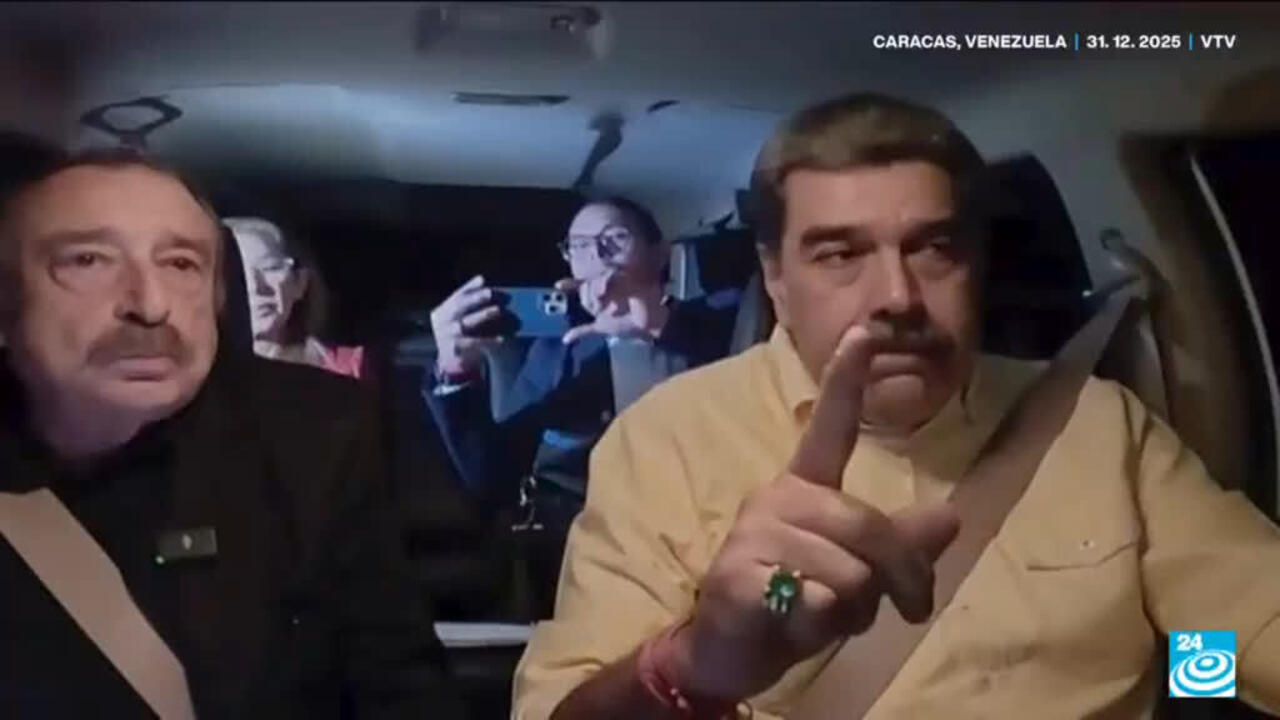
Secretary of State Marco Rubio hinted that Cuba could be the next target of the Trump administration’s push to restore American dominance in the Western Hemisphere.
Rubio said he would be a bit concerned if he were a Cuban government official following the overnight US military operation in Venezuela. “If I lived in Havana and I was in the government, I’d be concerned at least a little bit,” said Rubio, who has had a long preoccupation with both Venezuela and Cuba.
The US has had a long history of military interventions in Latin America, including its tacit support for the unsuccessful 1961 Bay of Pigs invasion led by Cuban exiles aimed at toppling Fidel Castro.
Meanwhile, thousands of Cubans are worried over the fate of relatives and friends working in Venezuela. Cuba's health ministry tweeted on Saturday they were "well protected".
In an interview US President Donald Trump gave to the New York Post on Saturday, he said he is not considering additional military action against Cuba.
“No, Cuba is going to fall of its own volition. Cuba is doing very poorly,” Trump said.
“Cuba was always very reliant on Venezuela. That’s where they got their money, and they protected Venezuela, but that didn’t work out too well in this case,” the president said.
Cuba is suffering through a six-year crisis which has seen economic growth fall at least 15%, according to the government, causing shortages of basic goods, soaring inflation, crumbling services and widespread power outages.
The government largely blames tougher US sanctions imposed during the first Trump administration, on top of the decades-old trade embargo, for the crisis.
(FRANCE 24 with Reuters, AP)

Cuban President Miguel Diaz-Canel denounced the US capture of Venezuela’s Nicolas Maduro as "state terrorism" on Saturday, warning the loss of Venezuelan oil would hit Cuba’s fragile economy. Meanwhile, Secretary of State Marco Rubio implied that Havana could be the Trump administration's next target.
Issued on: 04/01/2026
By: FRANCE 24
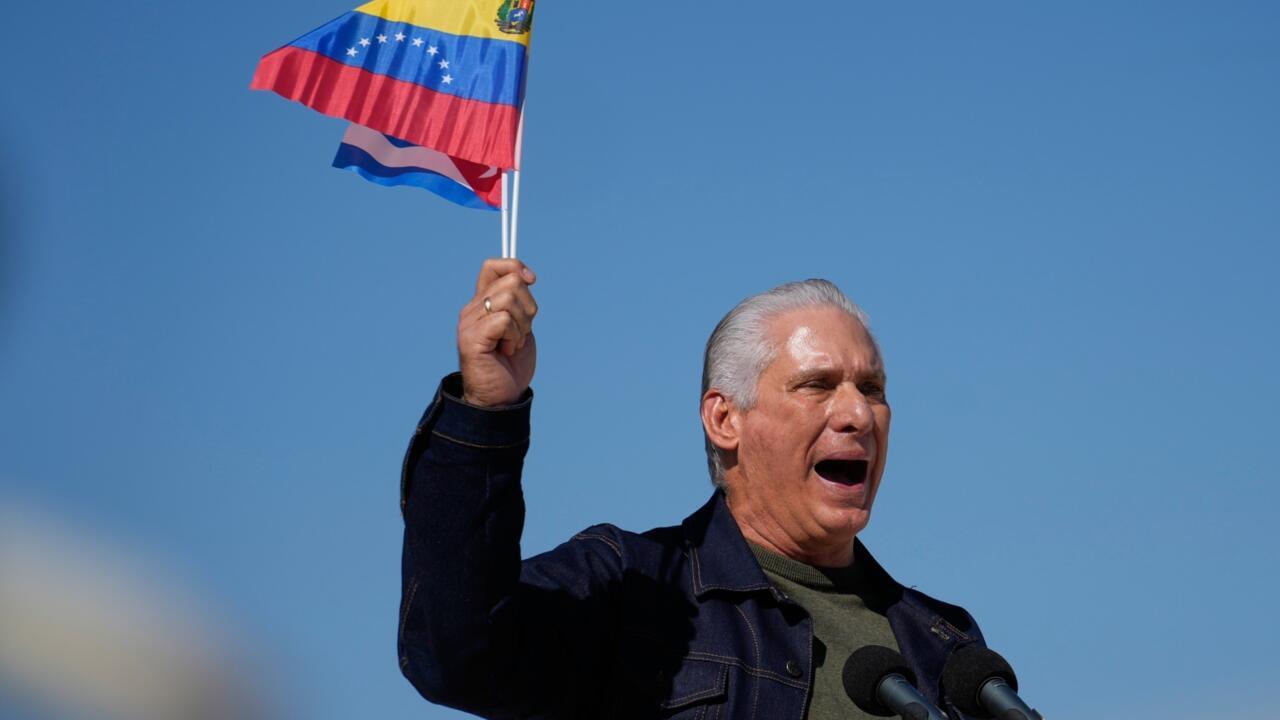
Cuban President Miguel Diaz-Canel attends a rally in Havana, Cuba, on January 3, 2026, in solidarity with Venezuela after the US captured President Nicolas Maduro.
© Ramon Espinosa, AP
Cuban President Miguel Diaz-Canel on Saturday condemned the United States for attacking Venezuela and capturing its president Nicolas Maduro at a rally of thousands of Havana residents in front of the US Embassy in the Cuban capital.
"Cuba condemns and denounces these actions as an act of state terrorism," Diaz-Canel said.
"It is a shocking violation of the norms of international law – the military aggression against a peaceful nation that poses no threat to the United States," he added.
Venezuela supplies around 30% of Cuba's already scarce oil imports in exchange for thousands of medical personnel who work in the South American country.
Analysts agree the loss of the oil would be a devastating blow to Cuba's already shaky power grid and energy supplies.
Cuban President Miguel Diaz-Canel on Saturday condemned the United States for attacking Venezuela and capturing its president Nicolas Maduro at a rally of thousands of Havana residents in front of the US Embassy in the Cuban capital.
"Cuba condemns and denounces these actions as an act of state terrorism," Diaz-Canel said.
"It is a shocking violation of the norms of international law – the military aggression against a peaceful nation that poses no threat to the United States," he added.
Venezuela supplies around 30% of Cuba's already scarce oil imports in exchange for thousands of medical personnel who work in the South American country.
Analysts agree the loss of the oil would be a devastating blow to Cuba's already shaky power grid and energy supplies.
© France 24
01:47
01:47
Secretary of State Marco Rubio hinted that Cuba could be the next target of the Trump administration’s push to restore American dominance in the Western Hemisphere.
Rubio said he would be a bit concerned if he were a Cuban government official following the overnight US military operation in Venezuela. “If I lived in Havana and I was in the government, I’d be concerned at least a little bit,” said Rubio, who has had a long preoccupation with both Venezuela and Cuba.
The US has had a long history of military interventions in Latin America, including its tacit support for the unsuccessful 1961 Bay of Pigs invasion led by Cuban exiles aimed at toppling Fidel Castro.
Meanwhile, thousands of Cubans are worried over the fate of relatives and friends working in Venezuela. Cuba's health ministry tweeted on Saturday they were "well protected".
In an interview US President Donald Trump gave to the New York Post on Saturday, he said he is not considering additional military action against Cuba.
“No, Cuba is going to fall of its own volition. Cuba is doing very poorly,” Trump said.
“Cuba was always very reliant on Venezuela. That’s where they got their money, and they protected Venezuela, but that didn’t work out too well in this case,” the president said.
Cuba is suffering through a six-year crisis which has seen economic growth fall at least 15%, according to the government, causing shortages of basic goods, soaring inflation, crumbling services and widespread power outages.
The government largely blames tougher US sanctions imposed during the first Trump administration, on top of the decades-old trade embargo, for the crisis.
(FRANCE 24 with Reuters, AP)

Venezuela’s neighbour Colombia could face spillover turmoil from the stunning turn of events both in violence and a mass influx of refugees.

Venezuelans leaving their country arrive at the border crossing in Cucuta, Colombia, after US forces had captured Venezuelan leader Nicolas Maduro after launching a 'large scale strike' on the South American country on January 3, 2026 [Schneyder Mendoza/AFP]
By Alfie PannellandJim Glade
Published On 3 Jan 2026
AL JAZEERA
Medellin, Colombia – The shock removal of Venezuelan leader Nicolas Maduro by the United States military has triggered alarm in bordering Colombia, where analysts warn of the possibility of far-reaching repercussions.
The Colombian government condemned Washington’s early Saturday morning attacks on Venezuela – which included strikes on military targets and Maduro’s capture – and announced plans to fortify its 2,219-kilometre (1,378-mile) eastern land border, a historic hotbed of rebellion and cocaine production.
Security analysts also say Maduro’s deposition could aggravate an already deteriorating security situation in Colombia, while refugee advocacy groups warn the country would bear the brunt of possible migration waves triggered by the fallout from the intervention.
The Colombian government held an emergency national security meeting at 3am (09:00GMT), according to President Gustavo Petro.
“The Colombian government condemns the attack on the sovereignty of Venezuela and Latin America,” wrote the president in an X post, announcing the mobilisation of state forces to secure the border.
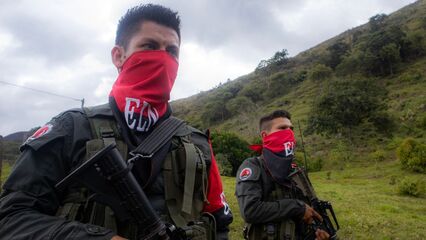
Inside Colombia’s ELN: Rebels face US threats amid push for peace talks
The ELN factor
The National Liberation Army (ELN), a left-wing group and the largest remaining rebel force in the country, have been vocal as recently as December in its preparations to defend the country against “imperialist intervention”.
Security analysts say the primary national security risk to Colombia following the attacks stems from ELN, which controls nearly the entire border with Venezuela.
“I think there is a high risk now that the ELN will consider retaliation, including here in Colombia, against Western targets,” said Elizabeth Dickinson, deputy director for Latin America at Crisis Group International.
The rebel group is heavily involved in cocaine trafficking and operates on both sides of the border; it has benefited from ties with the Maduro government, and US intervention threatens the group’s transnational operations, according to analysts.
The ELN, which positions itself as a bastion against US imperialism in the region, had already stepped up violence in response to the White House’s threats against Colombia and Venezuela. In December, it ordered Colombians to stay home and bombed state installations across the country, an action it described as a response to US aggression.
The Colombian government has ramped up security measures in anticipation of possible retaliatory action by the ELN following Maduro’s removal.
“All capabilities of the security forces have been activated to protect the population, strategic assets, embassies, military and police units, among others, as well as to prevent any attempted terrorist action by transnational criminal organisations, such as the ELN cartel,” read a statement on Saturday morning issued by Colombia’s Ministry of Defence.
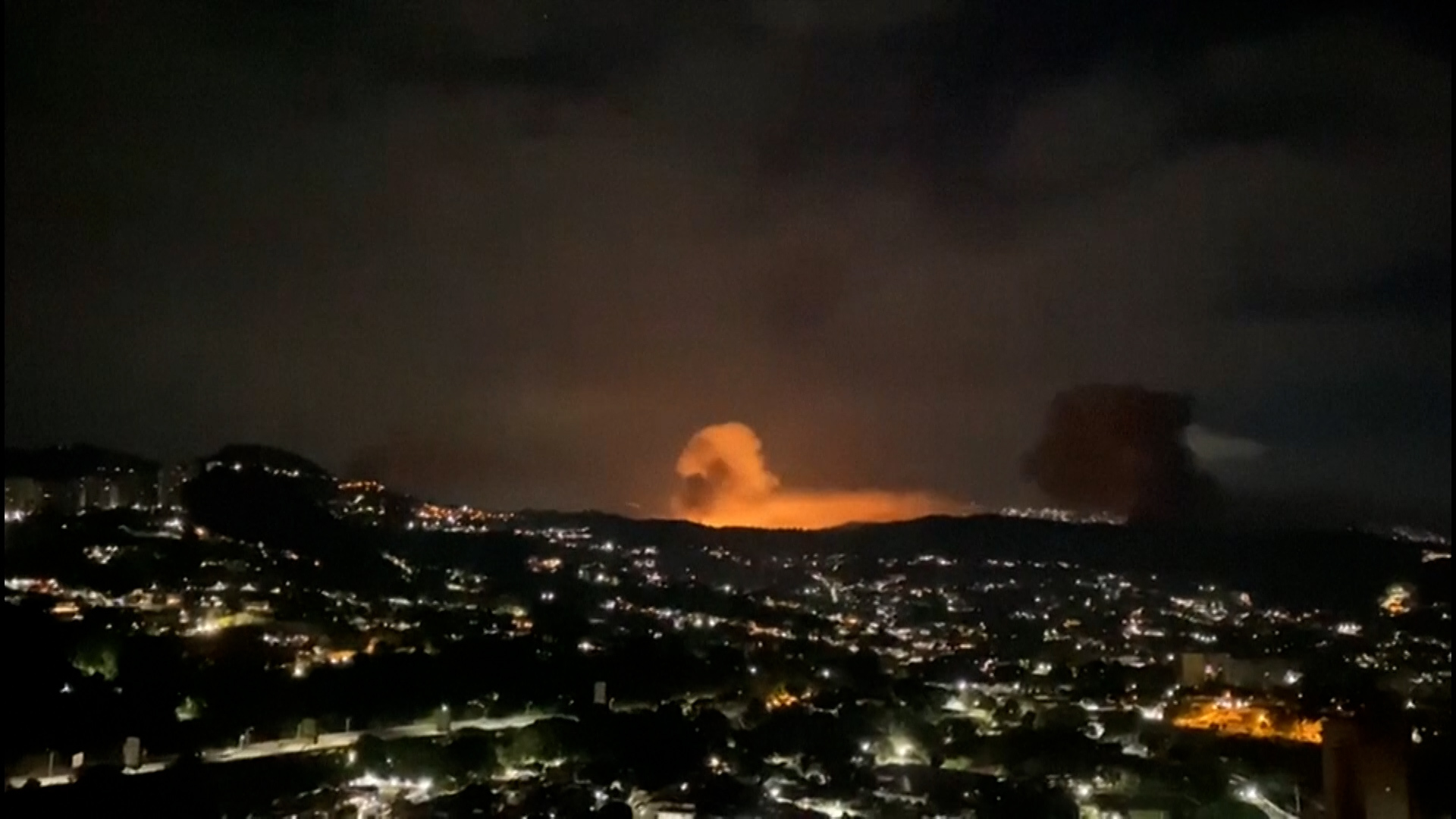
Venezuelan journalist describes moment of 'targeted airstrikes'
‘Mass influx of refugees’
In addition to fears of increased violence, Colombia also stands to bear the brunt of any migration crisis initiated by a conflict in Venezuela.
In an X post on Saturday morning, Petro said the government had bolstered humanitarian provisions on its eastern border, writing, “all the assistance resources at our disposal have been deployed in case of a mass influx of refugees.”
To date, Colombia has received the highest number of Venezuelan refugees worldwide, with nearly 3 million of the approximately 8 million people who have left the country settling in Colombia.
The previous wave of mass migration in 2019 – which followed opposition leader Juan Guaido’s failed attempt to overthrow Maduro – required a massive humanitarian operation to house, feed, and provide medical attention to refugees.
Such an operation is likely to prove even more challenging now, with Colombia losing roughly 70 percent of all humanitarian funds after the Trump administration shuttered its USAID programmes in the country last year.
“There is a real possibility of short-term population movement, both precautionary and forced, especially if instability, reprisals, or power vacuums emerge,” said Juan Carlos Viloria, a leader of the Venezuelan diaspora in Colombia.
“Colombia must prepare proactively by activating protection mechanisms, humanitarian corridors, and asylum systems, not only to respond to potential arrivals, but to prevent chaos and human rights violations at the border,” added Viloria.
A further collapse in US-Colombia relations
Analysts say Maduro’s removal raises difficult questions for Petro, who has been engaged in a war of words with Trump since the US president assumed office last year.
The Colombian leader drew Trump’s ire in recent months when he condemned Washington’s military buildup in the Caribbean and alleged a Colombian fisherman had been killed in territorial waters. In response, the White House sanctioned Petro, with Trump calling him a “thug” and “an illegal drug dealer”.
“Petro is irascible at the moment because he sees Trump and his threats no longer as empty, but as real possibilities,” said Sergio Guzman, Director at Colombia Risk Analysis, a Bogota-based security consultancy.
Indeed, Trump has on multiple occasions floated military strikes against drug production sites in Colombia. However, experts say it is unlikely the White House would take unilateral action given their historic cooperation with Colombian security forces.
Despite Petro condemning Washington’s intervention in Venezuela, he previously called Maduro a “dictator” and joined the US and other nations in refusing to recognise the strongman’s fraudulent re-election as president in 2024.
Rather than supporting Maduro, the Colombian leader has positioned himself as a defender of national sovereignty and international law.
On Saturday, Petro called for an emergency meeting of the United Nations Security Council, which Colombia joined as a temporary member just days ago.
“Colombia reaffirms its unconditional commitment to the principles enshrined in the Charter of the United Nations,” wrote the president in an X post.
Is Colombian President Gustavo Pedro next? Trump’s warning stokes fears of a US military intervention in Bogota
The Trump-Petro conflict has reached a critical point following a direct warning from the US leader to his Colombian counterpart
As the US capture of Venezuelan head of state Nicolás Maduro and his wife Cilia Flores continues to send shockwaves across the world, US President Donald Trump has sent Colombian President Gustavo Petro a sharp warning, saying he should “watch his ass”.
Trump’s words have brought the spotlight to Colombia as Petro, a prominent Latin American leader who aligns with the Left ideology and maintains an openly critical stance toward Washington. Petro famously launched an attack on Trump on US soil last September when he openly called on US soldiers to disobey President Donald Trump. “Disobey Trump’s orders. Obey the order of humanity,” he proclaimed during a demonstration in the streets of New York, linked to protests over the war in Gaza and held in the context of the UN General Assembly.
This strained relations between Washington and Bogota as the United States announced it would cancel the visa of Colombia’s President Gustavo Petro.
Petro’s statement was also considered by many in the US as a comeback to conservative US Senator Lindsay Graham’s statement that Trump was planning attacks on Colombia and Venezuela. “Trump sees Venezuela and Colombia as direct threats to our country because they house narco-terrorists,” Lindsay told CBS News.
In response, President Gustavo Petro warned the United States not to attack Colombia, stating that the Colombians won’t take it well. In a post on social media platform X, Petro said that “the Colombian people, every time they are attacked anywhere, en masse head to the mountains and arm themselves” to become “invisible like the jaguar with passionate stealth.”
“Don’t try it, that’s the only advice I give,” said the president, “because I know the history of my people and I am… the legitimate son of my people.”
Trump, too, issued a direct warning to Petro. On October 19, he called Petro “a leader with low approval ratings and very unpopular” and issued a warning: “He'd better close these 'killing camps' immediately, or the United States will close them for him .” In early December, he doubled down on the message: “He’s producing cocaine… so he needs to watch his ass .”
Why Colombia is not an easy target
Colombia is experiencing a period of high political volatility, with criticism of economic reforms, accusations of corruption and insecurity, and a tense social climate. For Washington, the country is also strategic: it possesses energy and mineral resources, a key geographic position between the Caribbean and the Amazon, and plays a central role in regional stability.
Despite the heated atmosphere, the likelihood of a direct US military intervention in Colombia is low. The White House seems to favor gradual political and institutional pressure: economic conditions, media strategies, and—according to analysts— indirect interference in the upcoming electoral cycle.
on is much less costly than deploying military machinery in a country with decades of experience in internal armed conflict. Trump also acts as both a politician and a businessman. From this perspective, the cost-benefit analysis favors electoral and economic influence over overt intervention.
There are other reasons too. In the new political landscape, Colombia is a point of equilibrium between Washington's interests and the resistance of the Latin American progressive bloc. The last thing Washington wants now is a wave in favour of the left and wouldn’t risk acts that could help the political pendulum swing to the left.
The Trump-Petro conflict has reached a critical point following a direct warning from the US leader to his Colombian counterpart
Updated: January 04, 2026
As the US capture of Venezuelan head of state Nicolás Maduro and his wife Cilia Flores continues to send shockwaves across the world, US President Donald Trump has sent Colombian President Gustavo Petro a sharp warning, saying he should “watch his ass”.
Trump’s words have brought the spotlight to Colombia as Petro, a prominent Latin American leader who aligns with the Left ideology and maintains an openly critical stance toward Washington. Petro famously launched an attack on Trump on US soil last September when he openly called on US soldiers to disobey President Donald Trump. “Disobey Trump’s orders. Obey the order of humanity,” he proclaimed during a demonstration in the streets of New York, linked to protests over the war in Gaza and held in the context of the UN General Assembly.
This strained relations between Washington and Bogota as the United States announced it would cancel the visa of Colombia’s President Gustavo Petro.
Petro’s statement was also considered by many in the US as a comeback to conservative US Senator Lindsay Graham’s statement that Trump was planning attacks on Colombia and Venezuela. “Trump sees Venezuela and Colombia as direct threats to our country because they house narco-terrorists,” Lindsay told CBS News.
In response, President Gustavo Petro warned the United States not to attack Colombia, stating that the Colombians won’t take it well. In a post on social media platform X, Petro said that “the Colombian people, every time they are attacked anywhere, en masse head to the mountains and arm themselves” to become “invisible like the jaguar with passionate stealth.”
“Don’t try it, that’s the only advice I give,” said the president, “because I know the history of my people and I am… the legitimate son of my people.”
Trump, too, issued a direct warning to Petro. On October 19, he called Petro “a leader with low approval ratings and very unpopular” and issued a warning: “He'd better close these 'killing camps' immediately, or the United States will close them for him .” In early December, he doubled down on the message: “He’s producing cocaine… so he needs to watch his ass .”
Why Colombia is not an easy target
Colombia is experiencing a period of high political volatility, with criticism of economic reforms, accusations of corruption and insecurity, and a tense social climate. For Washington, the country is also strategic: it possesses energy and mineral resources, a key geographic position between the Caribbean and the Amazon, and plays a central role in regional stability.
Despite the heated atmosphere, the likelihood of a direct US military intervention in Colombia is low. The White House seems to favor gradual political and institutional pressure: economic conditions, media strategies, and—according to analysts— indirect interference in the upcoming electoral cycle.
on is much less costly than deploying military machinery in a country with decades of experience in internal armed conflict. Trump also acts as both a politician and a businessman. From this perspective, the cost-benefit analysis favors electoral and economic influence over overt intervention.
There are other reasons too. In the new political landscape, Colombia is a point of equilibrium between Washington's interests and the resistance of the Latin American progressive bloc. The last thing Washington wants now is a wave in favour of the left and wouldn’t risk acts that could help the political pendulum swing to the left.
US allies, foes alarmed by capture of Venezuela’s Maduro
By AFP
January 3, 2026

Maduro's capture sparked concern across the world
By AFP
January 3, 2026
Maduro's capture sparked concern across the world
- Copyright AFP/File Federico PARRA, SAUL LOEB
Stuart WILLIAMS
The US military operation that led to the capture of Venezuelan President Nicolas Madruo on Saturday sparked alarm across the international community, with allies and foes of Washington and Caracas expressing disquiet.
US President Donald Trump said Nicolas Maduro and his wife would be taken to New York to face federal charges after military strikes and an operation which he described as looking like a “television show”.
The Venezuelan government decried what it termed a “extremely serious military aggression” by Washington and declared a state of emergency.
Countries such as Russia and Iran, which had longstanding ties with Maduro’s government, were quick to condemn the operation but their alarm was also shared by Washington’s allies including France and the EU.
Here is a rundown of the main reaction.
– Russia –
Russia demanded the US leadership “reconsider its position and release the legally elected president of the sovereign country and his wife”.
– China –
Beijing said “China is deeply shocked and strongly condemns the US’s blatant use of force against a sovereign state and its action against its president”.
– Iran –
Iran, which Trump bombed last year, said it “strongly condemns the US military attack on Venezuela and a flagrant violation of the country’s national sovereignty and territorial integrity”.
– Mexico –
Mexico, which Trump has also threatened with military force over drug trafficking, strongly condemned the US military action in Venezuela, saying it “seriously jeopardises regional stability.”
– Colombia –
Colombian President Gustavo Petro — whose country neighbours Venezuela — called the US action an “assault on the sovereignty” of Latin America which would lead to a humanitarian crisis.
– Brazil –
Brazilian President Luiz Inacio Lula da Silva slammed the US attacks as a “serious affront” to Venezuela’s sovereignty.
– Cuba –
Cuba, a strong ally of Venezuela’s, denounced “state terrorism against the brave Venezuelan people”.
– Spain –
Spain offered to mediate in the crisis to find a way to a peaceful solution, while calling for “de-escalation and restraint”.
– France –
France condemned the US operation, saying it undermined international law and no solution to Venezuela’s crisis can be imposed from the outside.
– EU –
The EU more generally expressed concern at the developments and urged respect for international law, even as it noted that Maduro “lacks legitimacy”.
-UK –
British Prime Minister Keir Starmer said all countries should “uphold international law” and added that “the UK was not involved in any way in this operation” as he urged patience in order to “establish the facts”.
– Italy –
In a rare expression of support for the US operation by a major European country, far-right Italian Prime Minister Giorgia Meloni — a Trump ally — argued the US military action in Venezuela was “legitimate” and “defensive”.
– UN –
UN Secretary-General Antonio Guterres was “deeply alarmed” by the US strikes, with his spokesman quoting him as saying it could “constitute a dangerous precedent”.
The US military operation that led to the capture of Venezuelan President Nicolas Madruo on Saturday sparked alarm across the international community, with allies and foes of Washington and Caracas expressing disquiet.
US President Donald Trump said Nicolas Maduro and his wife would be taken to New York to face federal charges after military strikes and an operation which he described as looking like a “television show”.
The Venezuelan government decried what it termed a “extremely serious military aggression” by Washington and declared a state of emergency.
Countries such as Russia and Iran, which had longstanding ties with Maduro’s government, were quick to condemn the operation but their alarm was also shared by Washington’s allies including France and the EU.
Here is a rundown of the main reaction.
– Russia –
Russia demanded the US leadership “reconsider its position and release the legally elected president of the sovereign country and his wife”.
– China –
Beijing said “China is deeply shocked and strongly condemns the US’s blatant use of force against a sovereign state and its action against its president”.
– Iran –
Iran, which Trump bombed last year, said it “strongly condemns the US military attack on Venezuela and a flagrant violation of the country’s national sovereignty and territorial integrity”.
– Mexico –
Mexico, which Trump has also threatened with military force over drug trafficking, strongly condemned the US military action in Venezuela, saying it “seriously jeopardises regional stability.”
– Colombia –
Colombian President Gustavo Petro — whose country neighbours Venezuela — called the US action an “assault on the sovereignty” of Latin America which would lead to a humanitarian crisis.
– Brazil –
Brazilian President Luiz Inacio Lula da Silva slammed the US attacks as a “serious affront” to Venezuela’s sovereignty.
– Cuba –
Cuba, a strong ally of Venezuela’s, denounced “state terrorism against the brave Venezuelan people”.
– Spain –
Spain offered to mediate in the crisis to find a way to a peaceful solution, while calling for “de-escalation and restraint”.
– France –
France condemned the US operation, saying it undermined international law and no solution to Venezuela’s crisis can be imposed from the outside.
– EU –
The EU more generally expressed concern at the developments and urged respect for international law, even as it noted that Maduro “lacks legitimacy”.
-UK –
British Prime Minister Keir Starmer said all countries should “uphold international law” and added that “the UK was not involved in any way in this operation” as he urged patience in order to “establish the facts”.
– Italy –
In a rare expression of support for the US operation by a major European country, far-right Italian Prime Minister Giorgia Meloni — a Trump ally — argued the US military action in Venezuela was “legitimate” and “defensive”.
– UN –
UN Secretary-General Antonio Guterres was “deeply alarmed” by the US strikes, with his spokesman quoting him as saying it could “constitute a dangerous precedent”.

No comments:
Post a Comment