ZIONIST IMPERIALISM
Frustration, anger as residents rush to flee Beirut's southern suburbs
01.06.2026,

Lebanese Army troops were deployed on Monday at the entrances to Beirut's southern suburbs to organize traffic as residents rushed to leave the area amid fears of possible Israeli strikes.
Earlier Israeli Prime Minister Benjamin Netanyahu announced a decision to strike Beirut's southern suburbs, widely known as Dahiyeh, prompting anxiety among residents and disruptions to daily life.
"We are rushing and bringing kids from schools at the outskirts to leave immediately," Imad, a resident of the Bir al-Abed neighbourhood, told dpa. He expressed frustration at the situation, saying residents could no longer endure repeated escalations. He also lashed out at Hezbollah Secretary General Naeem Qassem.
"The leaders of Hezbollah are hiding, but the people are paying the price."
Several schools in Beirut reportedly asked parents to collect their children following reports that Israel could target the capital.
"The school sent me a message to come and take my children after the Israeli decision," said Hiba, a mother of two children who attend a private school in Beirut.
The municipality of Haret Hreik, one of the main districts in Beirut's southern suburbs, called on public and private schools to close until further notice as a precautionary measure.
Residents also reported drones flying at low altitude over Beirut's southern suburbs, further heightening tensions as many families left the area.
The developments came as military analysts discussed the implications of Israel's reported capture of the Beaufort Castle in southern Lebanon.
Israeli media quoted military officials as saying control of the strategic hilltop provides observation and fire-control advantages but is unlikely on its own to alter the course of the conflict.
Israel urges south Beirut residents to leave as strikes intensify
01.06.2026, DPA

The Israeli military has called on residents of the southern suburbs of the Lebanese capital Beirut to flee.
In a message in Arabic on X, a military spokesman said that people should leave their homes for their own safety.
If the Hezbollah militia continues its attacks on Israeli cities and towns, the Israeli army will respond with attacks on targets in Beirut's southern suburbs, the message said.
This is the first such evacuation call for this area since a ceasefire came into effect in mid-April.
Israel had already announced new attacks on Hezbollah targets in the Dahiyeh suburbs, prompting many residents to flee the area from the morning.
The suburbs are an important Hezbollah stronghold as well as being a densely populated residential area. Many buildings in the area have already been destroyed in the current conflict.
Lebanese President Joseph Aoun said earlier on Monday he intends to continue talks with the Israeli government despite the escalating tensions between Israel and the Shiite militia Hezbollah.
Israeli and Lebanese representatives are set to meet on Tuesday in Washington for direct talks to end the fighting. However, Hezbollah is not a party to the talks, and the conditions for an effective ceasefire are not promising.
Israel has expanded its ongoing offensive in the south and is advancing further north, while Hezbollah has stepped up its attacks on northern Israel.
UN Security Council to hold emergency meeting on Lebanon
01.06.2026, DPA

The UN Security Council is set to hold an emergency meeting later on Monday to discuss the escalating conflict in Lebanon, diplomats in New York said.
The session was scheduled at the request of France and is due to begin at 3 pm (1900 GMT), according to diplomatic sources.
The conflict between Israel and the Iran-backed Hezbollah militia has intensified in recent days with the advance of Israeli ground forces and the prospect of further attacks in the Beirut area, despite a ceasefire that was announced in mid-April.
No further details about the meeting were immediately available.
Beirut (Lebanon) (AFP) – Israel said Monday it would once again target Beirut's southern suburbs, a Hezbollah stronghold mostly spared heavy attacks since April, as it stages its deepest incursion into Lebanon in two decades.
Issued on: 01/06/2026 - RFI

The UN Security Council is expected to hold an emergency meeting later Monday on Israel's expansion of its operations in Lebanon, and the European Union called on Israel to "stop its military escalation".
Iran, in stalled negotiations on an end to its wider war with the United States, said a Lebanon ceasefire remains a key condition for any deal.
Israel's Prime Minister Benjamin Netanyahu and Defence Minister Israel Katz said they had ordered strikes on Beirut's southern suburbs, a densely-populated area where Hezbollah holds sway.
"In light of the repeated violations of the ceasefire in Lebanon by the terrorist organisation Hezbollah and the attacks on our cities and citizens, Prime Minister Benjamin Netanyahu and Defence Minister Israel Katz have instructed the IDF to strike terror targets in the Dahiyeh district of Beirut," a joint statement said.
In a separate statement, Katz said there would be "no calm in Beirut" if Hezbollah attacks continued, and vowed to establish a military-controlled zone in the area of south Lebanon's Litani River.
Lebanon was dragged into the Middle East war on March 2 when Hezbollah fired rockets towards Israel in retaliation for the US-Israeli killing of Iran's supreme leader.
A truce to halt the fighting in Lebanon began on April 17, but has never been observed. Both Israel and Hezbollah accuse each other daily of violating the ceasefire, justifying their attacks by the other's alleged breaches.
'Vicious aggression'
Iranian foreign ministry spokesman Esmaeil Baqaei told a weekly press briefing Monday that "a ceasefire in Lebanon is an essential condition for any deal aimed at ending the war" with the US.
Lebanese President Joseph Aoun meanwhile said his country was facing "a vicious and reprehensible Israeli aggression", with the two nations set to hold a fourth round of US-hosted talks on Tuesday.
An AFP correspondent saw families with small children packed onto scooters with just a bag or two leaving the southern suburbs Monday, as others fled in cars full of belongings.
Hadi, a 24-year-old, said he had hoped for some stability during the truce.
"That feeling did not last long... Our fears intensified this morning after I received a series of messages about orders to bomb the southern suburbs, which caused widespread panic, and we immediately left the area," he told AFP by phone.
Beirut's southern suburbs and their surroundings have been struck twice since April 8, when a series of Israeli attacks across Lebanon killed hundreds in minutes.
"The Dahiyeh in Beirut is no different from the communities in northern Israel -- if there is no calm in the north, there will be no calm in Beirut," Katz's statement said.
Monday's Israeli order comes a day after its troops seized Beaufort castle, which commands sweeping views of south Lebanon, as the military expands its ground operations.
Israeli forces used the castle, also known as Qalaat al-Chakif, as a base during their previous two-decade occupation of southern Lebanon that ended in 2000.
Evacuation orders
"The capture of Beaufort is a dramatic stage and a dramatic shift in the policy we are leading," Netanyahu said in a video statement.
Katz said Israel planned to "to turn the Litani area into a zone under IDF security control, free of weapons and terrorists".
French President Emmanuel Macron, whose country requested the UN Security Council meeting, said Sunday that "nothing justifies the major escalation under way in south Lebanon".
On Monday, Israel's military issued evacuation orders for nine towns and villages in southern Lebanon's Sidon and Jezzine districts, far from the border with Israel, Lebanon's state-run National News Agency reported.
Hezbollah meanwhile claimed responsibility for a missile fired on Tiberias, around 30 kilometres (19 miles) inside Israel. The Iran-backed group also said it attacked Israeli forces inside Lebanon.
A senior US official told AFP on Sunday that US Secretary of State Marco Rubio had spoken with Aoun and Netanyahu about the ongoing diplomatic negotiations and had said that Hezbollah must be the first to cease attacks.
Military delegations from Lebanon and Israel held security talks in Washington on Friday and more US-brokered negotiations are planned for Tuesday and Wednesday.
"To advance those talks, the United States proposed a clear sequence: Hezbollah must stop all attacks on Israel. In return, Israel would refrain from escalation in Beirut," said the official, who spoke on condition of anonymity.
Lebanon's health ministry says Israeli attacks have killed more than 3,412 people in the country since March 2.
Twenty-six Israelis have been killed, 25 soldiers and one civilian contractor, over the same period.
© 2026 AFP
Lebanon's Prime Minister Nawaf Salam accused Israel in a televised address on Saturday of pursuing a “scorched-earth policy” following new Israeli strikes in the south of the country. A ceasefire between Israel and Tehran-backed Hezbollah officially took effect on April 17 but has not been observed.
Issued on: 31/05/2026 -
By: FRANCE 24

Lebanon's prime minister accused Israel on Saturday of pursuing a "scorched-earth policy" in his country's south, urging a halt to the fighting as Israel carried out fresh air strikes and issued evacuation warnings for more than a dozen locations.
A day after Israeli Prime Minister Benjamin Netanyahu said his forces had advanced deeper into Lebanon, his counterpart Nawaf Salam warned the country was facing a "dangerous" escalation, and called for "a swift and real ceasefire".
In a televised address, Salam accused Israel of "pursuing a scorched-earth policy and collective punishment" by "destroying towns and villages, and forcing their inhabitants into exile".
This will bring "neither security nor stability" to Israel, he said.
Still, he defended his government's engagement with its southern neighbour, after military delegations from both countries held security talks in Washington on Friday, with more US-brokered negotiations planned next week.
Salam said the outcome of the negotiations was "not guaranteed", but called them "the least costly path for our country and our people".
Israel crosses the Litani River in Lebanon: What it means and why it matters

01:54
A truce to halt the fighting between Israel and Tehran-backed Hezbollah officially took effect on April 17, but has never been observed. Both Israel and Hezbollah accuse each other of violating the ceasefire and justify their attacks by the other's alleged breaches.
A US statement issued after Friday's Israel-Lebanon talks made no mention of the truce, but said the "productive military-to-military discussions" would inform next week's political meeting.
Hezbollah vehemently opposes the direct talks.
Fresh attacks
Lebanon's state-run National News Agency (NNA) reported several Israeli attacks in the south Saturday, and the Lebanese military said two of its soldiers "were seriously wounded ... by a hostile Israeli drone" near the southern city of Nabatieh.
The Israeli military issued fresh evacuation warnings covering villages near Nabatieh and others in the east of the country.
WATCH MORE War in Lebanon: Cultural heritage at risk
Hezbollah said it launched multiple attacks targeting northern Israel Saturday, and had also clashed with Israeli soldiers in southern Lebanon.
In a statement, the group said it was confronting Israeli forces around the outskirts of the towns of Zawtar al-Sharqiyah, Yohmor al-Shaqif and Dibbine, adding the troops "had not yet succeeded in taking control of the towns".
The Israeli military told AFP that more than 20 rockets and drones were launched from Lebanon on Saturday.
Netanyahu announced on Friday that Israeli forces had advanced beyond the Litani River, which runs around 30 kilometres (20 miles) north of the Lebanon-Israel frontier, and were "hitting Hezbollah head on".
The Lebanese health ministry says that Israeli attacks have killed more than 3,371 people since March 2, when Hezbollah drew Lebanon into the Middle East war in support of its backer Iran.
Hezbollah said it attacked Israel in retaliation for the death of Iran's supreme leader in US-Israeli strikes when the war erupted on February 28.
Iran has insisted that any agreement to end the wider Middle East war also cover Lebanon.
(FRANCE 24 with AFP)
France has requested an emergency meeting of the United Nations Security Council after Israeli forces seized the medieval Beaufort castle in Lebanon, the French foreign minister said Sunday.
Issued on: 31/05/2026 - RFI

"I have requested an emergency meeting of the United Nations Security Council because, while we recognise Israel's right, like that of all countries, to self-defence... nothing can justify the continuation of Israeli military operations in Lebanon and its ever-deeper occupation of Lebanese territory," French Foreign Minister Jean-Noël Barrot told BFMTV channel on Sunday.
French President Emmanuel Macron also called for an end to fighting and said "nothing justifies the major escalation under way in south Lebanon."
In a message on social media platform X after speaking with regional leaders, he said it was "essential" for an agreement to be reached quickly between the United States and Iran.
Israeli Prime Minister Benjamin Netanyahu vowed to push deeper into Lebanon after his military took over the medieval castle of Beaufort on Sunday, calling it a "dramatic shift" in the campaign against Hezbollah.
The Iran-backed militant group said on Sunday it targeted Israeli army positions and infrastructure in Shlomi and Nahariya in northern Israel, while air raid sirens blared in the Acre area.
Lebanon was dragged into the Middle East war on 2 March when Hezbollah fired rockets towards Israel in retaliation for the US-Israeli killing of Iran's supreme leader.
A truce to halt the fighting between Israel and Hezbollah began on 17 April, but has never been observed. Both sides accuse each other daily of violating the ceasefire and justify their attacks by the other's alleged breaches.
As fighting escalated in Lebanon, France said on Sunday it requested an emergency meeting of the United Nations Security Council.
Macron urges Israel to withdraw from Lebanon as Salam calls for €500m in aid
Israeli forces used the Beaufort castle, also known as Qalaat al-Chakif, as a base during their previous two-decade occupation of southern Lebanon that ended in 2000.
In a video statement released hours after the military took Beaufort, Netanyahu said "we have returned united, determined and stronger than ever".
"Now my directive is to deepen and expand our hold in places that were under Hezbollah's control. The capture of Beaufort is a dramatic stage and a dramatic shift in the policy we are leading."
Historic strongpoint
Israeli Defence Minister Israel Katz said troops had captured the historic strongpoint, which commands sweeping views of south Lebanon, as they expanded their ground operations.
"Forty-four years after the heroic Battle of Beaufort, and on this day commemorating the soldiers who fell in the First Lebanon War (1982), our troops have returned to the summit of Beaufort and once again raised the Israeli flag there," Katz said in a social media post.
In a shelter for the displaced in Sidon, southern Lebanon's largest city, Zeinab Fakih, from Nabatieh, told French news agency AFP they were very afraid.
"It is impossible for us to return to our home, because the city is in great destruction," she said, adding that the arrival of Israeli forces at the castle was "tragic".
The push to Beaufort came as the Israeli military issued a sweeping evacuation order to areas south of the Zahrani River, north of the Litani and around 40 kilometres from the border.
It said it was targeting "Hezbollah infrastructure in Tyre and several additional areas in southern Lebanon" as Lebanon's state-run National News Agency reported a series of strikes on the area.
Lebanese Prime Minister Nawaf Salam had accused Israel on Saturday of pursuing a "scorched-earth policy and collective punishment" in the south, urging a halt to the fighting.
Military delegations from Lebanon and Israel held security talks in Washington on Friday, with more US-brokered negotiations planned next week.
The Israeli army said Sunday that one of its soldiers had been killed a day earlier by a Hezbollah explosive drone, bringing to 25 the number of Israeli military deaths in Lebanon since early March.
The Lebanese health ministry says Israeli attacks have killed more than 3,371 people in the same period.
(with AFP)
Israel seizes Beaufort Castle in deepest Lebanon advance in 26 years
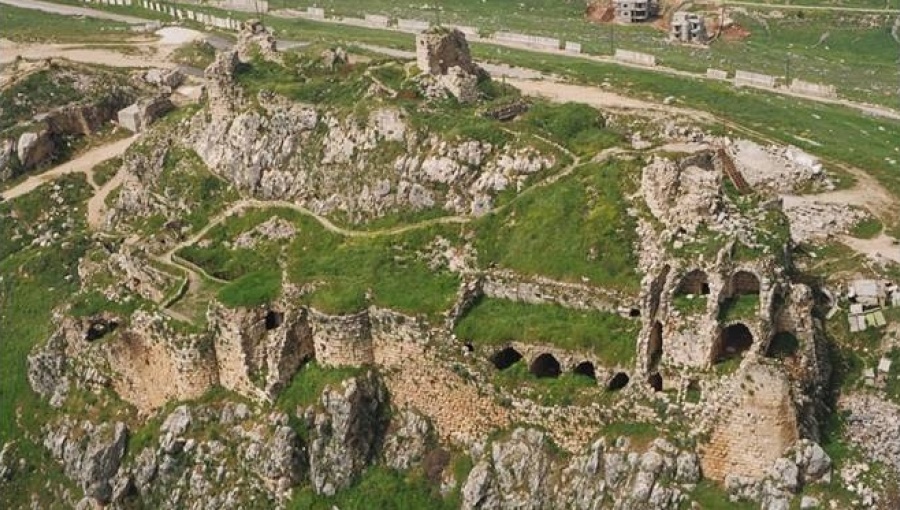
Israeli forces have captured Beaufort Castle, the ancient Crusader fortress that dominates the ridge above the Litani River in southern Lebanon, as Israeli Prime Minister Benjamin Netanyahu orders IDF troops to expand operations into northern Lebanon.
Taking Beaufort Castle is Israel's deepest ground incursion into Lebanese territory in 26 years. Netanyahu immediately ordered troops to push further north and declared it "a dramatic change in the policy we are leading."
Israel has widened its Lebanon combat zone, ignoring a ceasefire deal and ordered residents to evacuate if it tries to set up a buffer zone on its northern border.
The IDF said it launched a ground operation in the Beaufort Ridge and Wadi al-Saluki stream area to destroy Hezbollah infrastructure and eliminate fighters, "as part of strengthening operational control in southern Lebanon and removing the direct threat to the Galilee Panhandle and Metula," as well as to "expand the forward defence line." One Israeli soldier was killed during the operation.
Defence Minister Israel Katz announced the capture of Beaufort on social media, posting a photograph of Israeli and Golani Brigade flags flying over the ruined medieval battlements.
"Under the guidance of Prime Minister Netanyahu and my direction, the IDF expanded its manoeuvre in Lebanon, crossed the Litani River and captured the Beaufort Ridge, one of the most important strategic points for the protection of our settlements in Galilee and the safety of our troops," he wrote.
He noted that the operation came 44 years after Israel first seized Beaufort during Operation Peace for Galilee in 1982.
"This is a clear message to our enemies: those who threaten Israeli citizens will lose their strategic assets one by one," he added. "The campaign is not yet over. The IDF is strong, and we are all determined to crush Hezbollah's power and complete the mission."
Netanyahu, releasing a video statement in front of an IDF photograph of the castle, said: "The capture of Beaufort is a dramatic stage and a dramatic shift in the policy we are leading. Now my directive is to deepen and expand our hold on areas that had been under Hezbollah's control." He added: "We returned to Beaufort stronger than ever."
Historically strategic castle
Beaufort Castle, described by UNESCO as one of the best-preserved examples of medieval castles in the Near East, sits on a steep cliff overlooking southern Lebanon and northern Israel, giving it long-standing strategic value for observation and control of surrounding valleys and movement routes.
Built by Crusaders around 1139, the fortress passed through many hands over nine centuries before the Palestine Liberation Organisation established a presence there in the 1970s and used it to shell northern Israel. Israel seized it in 1982, held it as a forward operating base for 18 years, and withdrew in 2000 under sustained Hezbollah pressure — a retreat that became one of the most contested episodes in Israeli military history.
Hezbollah established the ridge as a significant military asset after Israel's 2000 withdrawal, with the IDF saying "hundreds of projectiles were launched toward Israeli civilians and IDF soldiers" from the Beaufort area. The operation was focused on dismantling that infrastructure, established under Iranian direction.
"Our soldiers are writing a new chapter... by planting their flag at Beaufort Castle," the Israeli military's Arabic-language spokesman said.
Israeli military analysts were careful to separate the symbolic from the operational significance of the capture. Commentators assessing the move praised the achievement but added the caveat that it was a tactical rather than strategic advance. That reservation reflects Hezbollah's doctrine — articulated by its current leader Naim Qassem even before the October 7 terror attacks on Israel — that the organisation relies on diverse fire capabilities at every range and from deep inside Lebanon, meaning that even if the IDF reached Beirut, Hezbollah could continue firing at the Israeli home front. Under that doctrine, the loss of a strategic ridge does not end the group's capacity to fight or its willingness to retaliate.
The wider operation
The Beaufort capture is part of a broader Israeli advance north of the Litani River that began earlier this week. Soldiers crossed the Litani River's 90-degree bend, just across from the border community of Metula, and advanced toward the castle. Israeli troops were also operating near Nabatieh, a major Hezbollah stronghold in southern Lebanon. The operations come despite the ceasefire formally announced on April 17 — which has been repeatedly violated by both sides — and despite a 45-day ceasefire extension agreed on May 17.
Hezbollah responded to the May 30 advance with one of its heaviest barrages on Israel since the April ceasefire, prompting school closures across northern Israel and driving the Galilee Medical Center in Nahariya to move operations underground. Lebanese Prime Minister Nawaf Salam condemned the escalation as "dangerous and unprecedented," calling for an immediate ceasefire and accusing Israel of a scorched-earth policy.
The next round of US-mediated Pentagon talks between Israeli and Lebanese military delegations is scheduled for June 2-3 — a diplomatic track that is now operating in the shadow of Israeli forces planting flags on a medieval hilltop fortress for the second time in four decades.

No comments:
Post a Comment