Wednesday, August 27, 2025


NATO Patrol Aircraft Chase Russian Sub as U.S. Carrier Operates off Norway
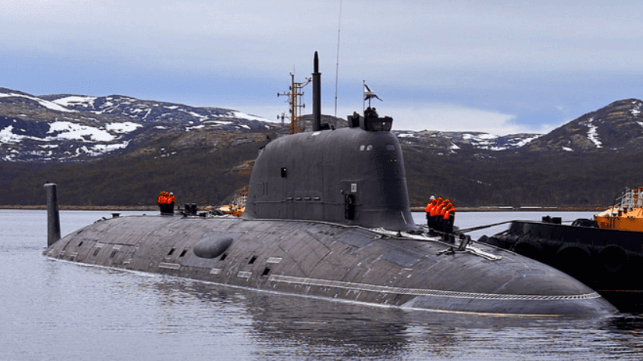
A Yasen-class sub assigned to Russia's Northern Fleet, 2021 (Russian MOD)

Published Aug 27, 2025 7:11 PM by The Maritime Executive


A substantial share of the NATO maritime surveillance aircraft fleet has been engaged in tracking a Russian submarine off the coast of Norway. The movements of Russia's attack subs are of interest every day, but this one has attracted extra attention because it is in the same region as the carrier USS Gerald R. Ford, which is currently operating alongside Norwegian allied forces in the North Sea. 

According to the UK's Daily Express, P-8 surveillance aircraft from the UK, the U.S. and Norway have saturated a search area near the Ford Carrier Strike Group since last week. 

More than two dozen sorties have been flown so far, including at least eight flown by the UK's Royal Air Force. Some of the capacity originated from an airbase in Sicily, on the other side of Europe, suggesting a high priority for diverting assets to this mission. A UK defense source told The Sun that the operation was "highly unusual," and several British sources called it a show of force from NATO. “It is telling Russia: ‘We see you,'” former Royal Navy Commander Tom Sharpe told the outlet. 

The Barents Observer has reported that three Yasen-class Russian attack subs departed the pens at Severomorsk earlier this week, based on satellite imagery.

USS Gerald R. Ford and her escorts departed the Mediterranean earlier this month and transited through the English Channel to reach the North Sea. On arrival, the Ford strike group met up with Norwegian units to conduct joint drills. The exercise is part of Ford's deployment to the U.S. 6th Fleet area of operations, and is intended to demonstrate the "U.S. Navy's ironclad commitment to the stability and security of the European theater." 

Separately, Russian fighters intercepted a U.S. Navy P-8A over the Black Sea on Wednesday, and the pilots filmed an interaction with the U.S. Navy plane. This particular P-8 had extended its rarely-spotted AESA radar, the Advanced Airborne Sensor pod - a powerful air and surface search device. The P-8 was on a mission to patrol the waters off Novorossiysk, the Russian Navy's bastion in the northeastern corner of the Black Sea. 


NATO says all countries to finally hit 2-percent spending goal


Brussels (Belgium) (AFP) – NATO on Thursday said all its members were finally set this year to hit the alliance's previous defence spending target of two percent of GDP -- as they gear up for a far more ambitious goal.


Issued on: 28/08/2025 - 

OTAN IS NATO SPELLED BACKWARDS
The 32-nation North Atlantic Treaty Organization (NATO) agreed at a June 2024 summit to massively hike defence spending over the next decade © JOHN THYS / AFP/File

The 32-nation military alliance agreed at a June summit in the Hague to massively hike defence spending over the next decade under pressure from US President Donald Trump.

The mercurial US leader rammed through a commitment from allies to cough up five percent of their GDPs on security-related spending in a move seen as key to keeping him engaged with NATO.

That headline figure breaks down as 3.5 percent on core defence spending and 1.5 percent on a looser range of areas such as infrastructure and cyber security.

The new target replaces the alliance's former military spending goal of two percent that was first set back in 2014.

NATO said in a statement that all allies were now expected to reach that goal in 2025 and that overall defence spending across the alliance would top $1.5 trillion for the year.

That comes after a group of stragglers -- including Spain, Belgium and Italy -- hastily announced plans to reach two percent ahead of the Hague gathering.

The struggle to reach that figure highlights how difficult it will be for NATO countries in Europe to achieve Trump's far higher new target set this year.

But officials insist European countries must make good on their pledge if they are to have the capabilities needed to ward off Russia.

Numerous Western militaries and intelligence services have warned that Moscow could be ready to attack a NATO country within three to five years if the war in Ukraine ends.

Washington -- which has underpinned European security since World War II -- meanwhile insists it wants to shift more of the responsibility for the continent's defences onto European countries.

The Pentagon is currently conducting a review of its worldwide deployments and has warned it could look to scale back its footstep in Europe to focus more on China.

While some European countries have lagged behind on defence spending, NATO members close to Russia such as Poland and the Baltic states are already set to reach five percent of GDP in the next few years.

Poland was projected to be the highest spending NATO country in 2025 at 4.48 percent.

The United States currently spends 3.22 percent of its GDP on defence, but makes up the lion's share of the alliance's total expenditure in dollar terms.

© 2025 AFP
Senegal passes law to protect whistleblowers in 'historic moment for democracy'

Senegalese parliamentarians have adopted a law to protect whistleblowers, in order to strengthen transparency in the country – a promise made by the government that came to power in April 2024.


Issued on: 27/08/2025 -

A plenary session at the Senegalese National Assembly in Dakar, February 2025. AFP - SEYLLOU

By:Melissa Chemam with RFI


Senegal has become the first French-speaking sub-Saharan country to adopt such a law, according to the Platform for the Protection of Whistleblowers in Africa (PPLAAF).

The text, adopted on Tuesday by members of parliament, aims to protect individuals who, in the course of their professional activity, report or disclose information relating to a crime, financial offence or harm to the public interest.

Whistleblowers can report their information anonymously if they wish, through internal channels within government departments or externally to the relevant authorities, the parliamentary report states.

Those who report information that leads to the recovery of illicit funds or assets will receive a reward of 10 percent of the amount recovered, or an amount determined by the relevant authorities.


Senegal calls on US to withdraw sanctions against ICC magistrates

Jimmy Kande, PPLAAF's West Africa director, called it "a historic moment for Senegalese democracy and for the entire continent" – although he said that he regretted the bill's limited scope.

"Whistleblowers seem to be limited to matters of corruption and economic crimes, whereas the scope would usually be much broader, covering environmental, health or human rights issues," he told RFI.

PPLAAF has published a critical analysis of the bill, highlighting key areas for improvement – including broadening the scope of protection, clarifying the notion of “Good Faith”, distinguishing whistleblowers from nominees, protection against retaliation and the creation of a special fund for whistleblowers.

The organisation also wants the new law to distinguish between whistleblowers and "nominees", who are fronts or proxies used by corrupt individuals to hide stolen assets, launder money or evade legal scrutiny.

A corrupt official might place assets in the name of a nominee to disguise their ownership, making them someone acting s a cover for illicit interests rather than exposing them.

France and Senegal look to reset ties as Macron hosts Faye in Paris

However, PPLAAF remains optimistic and hopes the move will inspire other African countries to do the same.

"Adopting a whistleblower protection law is a strong signal," Kande said. "It's there to encourage other countries in the region and other French-speaking countries to adopt laws that protect whistleblowers."

The National Assembly of Senegal also adopted three other laws aimed at strengthening transparency in the country: one on access to information, another on the creation of a body to combat fraud and corruption, and a third that extends asset declarations to magistrates and investigating judges.

(with newswires)


France and Senegal look to reset ties as Macron hosts Faye in Paris


Historical wounds, economic tensions and new areas of partnership topped the agenda on Wednesday as French President Emmanuel Macron sat down with his Senegalese counterpart, Bassirou Diomaye Faye, at the Élysée Palace.


Issued on: 27/08/2025 - RFI

Frencg President Emmanuel Macron hugs Senegalese President Bassirou Diomaye Faye as they arrive for a meeting at the Elysée Palace in Paris on 27 August 2025. 
AFP - THIBAUD MORITZ

No subject was taboo for the meeting, which came just weeks after France closed its last military bases in Senegal, ending more than six decades of permanent presence.

One of the most delicate questions on the agenda is Thiaroye – the 1944 massacre of Senegalese soldiers by French forces.

Dakar has long called for the full release of military and judicial archives and for recognition of the scale of the killings. Progress here would be seen in Senegal as a sign of greater balance and transparency in relations.
Mural in Dakar, Senegal, commemorating the Thiaroye massacre in 1944. © Erica Kowal/Flickr/wikemédia.org


Economic ties


Economic disputes are also on the table, including a row over the Dakar-Diamniadio express project. French construction company Eiffage is seeking about €150 million in unpaid bills.

At the same time, both governments want to highlight common goals in sustainable development, education and healthcare.

Beyond bilateral matters, Macron and Faye were expected to exchange views on regional crises and global challenges, from instability in the Sahel to international trade.

Later in the day Faye was due to take part as guest of honour at a major gathering of French business leaders hosted by Medef, the country’s largest employers’ organisation, in a sign of France’s push to position Senegal as a key partner for investment in Africa.

French military to leave Senegal amid ongoing withdrawal from Africa
French military withdrawal

The meeting takes place against the backdrop of France’s military departure from Senegal.

In July, the final French installations in Dakar – the Geille camp and a base at the capital’s airport – were handed over to Senegalese command.

Marked by flag-raisings and a symbolic exchange of keys, the ceremony closed a chapter that dated back to the colonial era.

The withdrawal followed negotiations launched in 2022 and sped up after Faye’s election, with his Pastef party promising to end foreign military bases on Senegalese soil.

It also fits into France’s wider reshaping of its military footprint in Africa, with troop withdrawals this year from Chad and Côte d’Ivoire.

Both governments insist this does not mean an end to security ties. Training missions and cooperation in fields such as maritime surveillance and cybercrime will continue, though without French troops permanently based in Dakar.

“We must reinvent our partnerships in response to the aspirations of a young generation – we no longer need bases to do that,” General Pascal Ianni, France’s commander for Africa, said at the July handover.

EU urged to uphold human rights, as Mauritania accused of abuse of migrants

Mauritania’s role as a key transit hub for African migrants seeking passage to Europe has come into sharp focus, following renewed claims by the NGO Human Rights Watch of abuse by its security forces.


Issued on: 27/08/2025 - RFI

The bodies of migrants who perished in a shipwreck off the coast of Mauritania lie covered on a beach near Nouakchott on 24 July, 2024. © AFP

In a new report, Human Rights Watch (HRW) reveals that Mauritanian security forces have carried out "serious human rights violations" against migrants and asylum seekers – ranging from torture to rape – over the past five years.

Mauritania has become a key staging post for undocumented migrants from across Africa who risk the perilous Atlantic crossing from West Africa to Europe, with many aiming to reach Spain.

The NGO added that these abuses had been “exacerbated” by the European Union and by Spain, which continue to outsource elements of their migration management to Mauritania, including support for its border and migration control authorities.

The 142-page report documented violations committed between 2020 and early 2025 by Mauritania’s police, coastguard, navy, gendarmerie and army during border and migration operations.

The victims were largely migrants and asylum seekers from West and Central Africa "seeking to leave or transit the country".

Worst year for migrant deaths on Spanish maritime routes, NGO warns


'Catalogue of abuses'


"For years, Mauritanian authorities followed an abusive migration control playbook – sadly common across North Africa – by violating the rights of African migrants from other regions," said Lauren Seibert, an HRW researcher on refugee and migrant rights.

The report cites a catalogue of abuse including torture, rape, beatings, sexual harassment, arbitrary arrest and detention, theft and collective expulsions.

HRW did, however, note that Mauritania’s government has recently taken steps that "may improve protection for migrants and their rights".

It has urged the EU and Spain to put human rights and saving lives at the forefront of their cooperation with Mauritania.

Spain faces record surge in migrants reaching Canary Islands


Influx to Canary Islands

Thousands of people have died in recent years attempting the dangerous journey from North Africa to Spain, particularly when aiming for the Canary Islands off Africa’s northwest coast.

For its report, HRW interviewed 223 people, including more than 100 migrants and asylum seekers, and examined documentary evidence as well as visiting detention centres.

In total, it documented abuses against 77 migrants and asylum seekers – men, women and children – along with one Mauritanian national.

According to Spanish government figures, a record 46,843 people reached the Canary Islands by boat in 2024.

Arrivals slowed in 2025, with around 11,500 arrivals recorded between January and July.

Mauritania’s government has rejected many of the report’s findings, while the EU insists its partnership with the country is “solidly anchored” in respect for human rights.

(with newswires)


EU's and Spanish migration policies ‘exacerbate’ rights abuses in Mauritania - HRW report

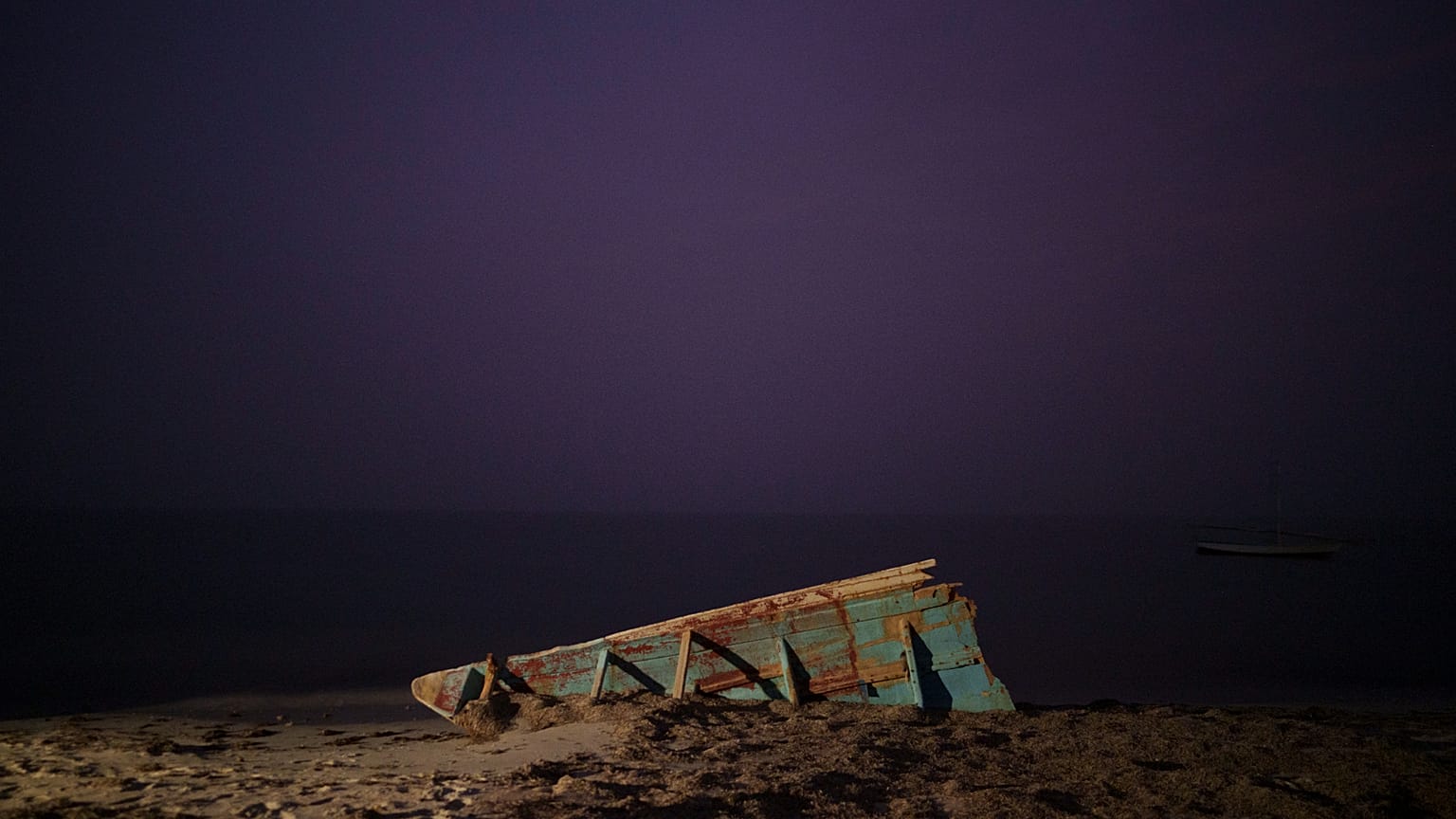
wreck of a traditional Mauritanian fishing boat known as a pirogue, also used by migrants to reach Spain's Canary Islands, sits on a beach near Nouadhibou, Mauritania (2021)
Copyright AP Photo/Felipe Dana

By Eleonora Vasques
Published on 

Human Rights Watch says EU's and Spain’s outsourcing of migration control to Mauritania has worsened abuses against asylum seekers, including torture, rape and mass expulsions. The report links these violations to a €210 million 2024 migration deal aimed at curbing departures to the Canary Islands.

Human rights abuses of asylum seekers in Mauritania have been exacerbated by the European Union and Spain, which are “continuing to outsource migration management” to the West African country, a report by Human Rights Watch published on Wednesday claimed.

The 142-page report documented violations to migrants and asylum seekers in Mauritania, including torture, rape, sexual harassment, arbitrary arrests, inhumane detention, extortion, theft, and mass expulsions, carried out mainly by Mauritania’s police, coast guard, army and navy.

“Dozens of people who had been held in Mauritania’s police-run migrant detention centres described inhumane conditions and treatment, including lack of food, poor sanitation, adolescent children at times detained with unrelated adults, and some beatings by guards,” the rights group said.

In March 2024, the EU and Spain signed a €210 million migration management agreement with Mauritania, to reduce departures from the West African coast, usually towards the Canary Islands. 

Even though arrivals via the West African route decreased by 46% between January and July 2025 compared to the same period in 2024, according to EU border agency Frontex, Mauritania remains a major transit country for Africans trying to reach Europe.

But the investment by the EU and Spain to halt arrivals at the EU coasts is having a negative impact on the human rights of asylum seekers and migrants, Human Rights Watch claimed.

“The report also highlights the negative impacts of Mauritania’s interceptions and forced returns of migrant boats, supported by the EU and Spain, while search-and-rescue in the Atlantic remains insufficient, contributing to ongoing deaths,” the rights group alleged.

Euronews has approached the European Commission, the Spanish and Mauritanian government for comment. 

The EU executive and Mauritania authorities did not respond at the time of publication, however, the Spanish ministry of interior told Euronews it “fully respects the work of Human Rights Watch, but it will not make any comment about the content of its report”.

“For years, Mauritanian authorities followed an abusive migration control playbook – sadly common across North Africa – by violating the rights of African migrants from other regions,” said Lauren Seibert, refugee and migrant rights researcher at Human Rights Watch. 

However, the rights group acknowledged that a recent reform approved by the Mauritanian government represents a step in the right direction. 

“Mauritania’s recent reforms show that a new approach is possible. The government should build on these efforts, scale up monitoring of security forces, and halt collective expulsions,” the expert said.

ENFORCEMENT AND POLICING NEEDED

Conservationists call for more data to help protect pangolins

Pangolins are the world's only scaly mammals 


Geneva (AFP) – All eight known pangolin species remain at high risk of extinction due to over-exploitation and loss of habitat, conservationists warned Wednesday, warning knowledge gaps were hampering protection efforts.


Issued on: 28/08/2025 - RFI

A white-bellied pangolin rescued from local animal traffickers in Uganda. All eight known pangolin species remain at high risk of extinction © Isaac Kasamani / AFP

The scale of the threat faced by the world's most heavily-trafficked mammals is not yet fully understood, said the International Union for Conservation of Nature (IUCN) and the Convention on International Trade in Endangered Species of Wild Fauna and Flora (CITES).

Found in the forests, woodlands, and savannas of Africa and Asia, pangolins are small, nocturnal creatures known for their distinctive appearance, slow and peaceful demeanour, and habit of curling into a ball when threatened.

The world's only scaly mammals, often likened to walking pinecones, have keratin scales that are coveted in traditional medicine, while their meat is also considered a delicacy in some regions.

"Today, they are under immense pressure due to exploitation and habitat loss," warned IUCN director general Grethel Aguliar.

A baby Chinese pangolin on a weighing scale at Prague Zoo. 
Pangolins are the world's only scaly mammals © Michal Cizek / AFP

Pangolins, which use their long, sticky tongues to feast on ants and termites, "are one of the most distinctive mammals on Earth and are among the planet's most extraordinary creatures: ancient, gentle, and irreplaceable," Aguliar said in a statement.

"Protecting them is not just about saving a species, but about safeguarding the balance of our ecosystems and the wonder of nature itself."
'Highly organised' trafficking

A report prepared for CITES by IUCN experts called for more robust and targeted conservation measures, particularly involving local and indigenous communities as the first line of defence.

Pangolins use long, sticky tongues to feast on ants and termites
 © Isaac Kasamani / AFP


Under CITES, international commercial trade in wild pangolins has been banned since 2017.

Despite a sharp decline in legal trade since then, trafficking remains "extensive and highly organised", IUCN said.

Between 2016 to 2024, seizures of pangolin products involved more than an estimated half a million pangolins across 75 countries and 178 trade routes, it said, with scales accounting for 99 percent of confiscated parts.

"However, while seizure records provide useful indicators, they capture only a fraction of the overall trade as not all illicit consignments are detected or seized by law enforcement," said IUCN.
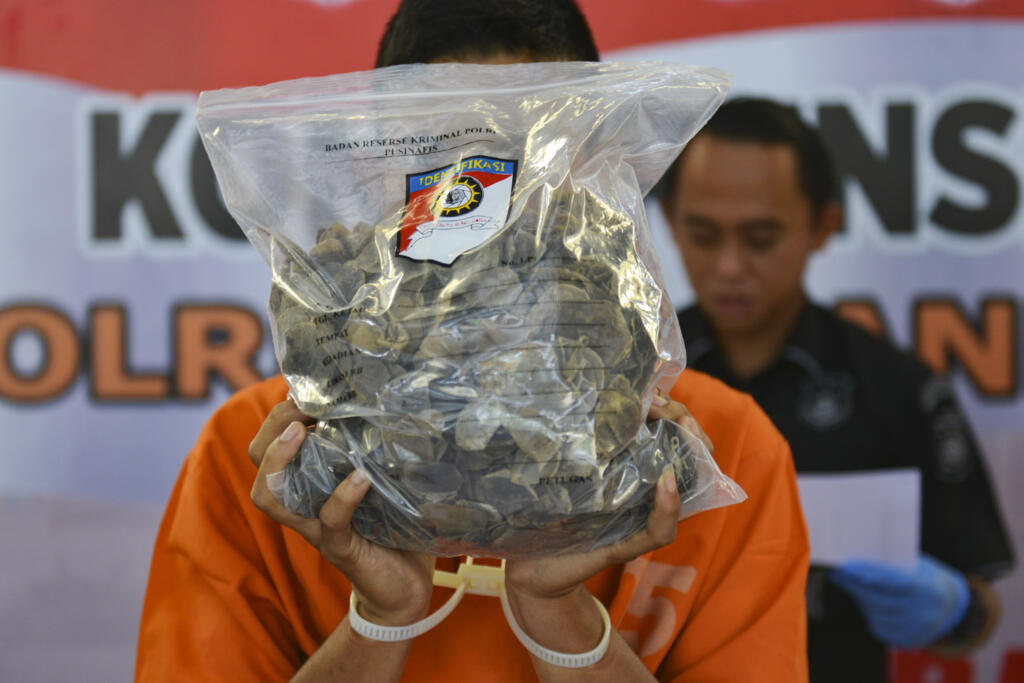
Pangolin scales are coveted in traditional medicine 
© CHAIDEER MAHYUDDIN / AFP

Besides international trafficking, demand for pangolin meat and other products persists.

Matthew Shirley, who co-chairs the IUCN Species Survival Commission's pangolin specialist group, suggested "even pangolin consumers" and those in the supply chain should be brought onboard to help devise conservation solutions.

"Ongoing pangolin trafficking and population declines underscore that trade bans and policy changes alone are not enough," he said.

© 2025 AFP
Pipeline dispute shows Central Europe’s struggle to cut ties with Russian oil

Central Europe has been plunged into fresh energy anxiety after a series of Ukrainian drone strikes disrupted the flow of Russian oil through the Druzhba pipeline, igniting a war of words between Kyiv, Budapest and Bratislava.


The refinery plant at the receiving station of the oil pipeline Druzhba in Szazhalombatta, 30km south of Budapest. AFP - ATTILA KISBENEDEK

Jan van der Made
Issued on: 27/08/2025 - RFI

In 2022, after Russia invaded Ukraine, the European Union imposed a ban on most oil imports from Russia.

But the Druzhba pipeline was temporarily exempted from this, in order to give landlocked Hungary and Slovakia time to diversify their supply.

But when Ukrainian drone strikes hit a "fuel infrastructure facility" in Russia's Unechsky district in mid-August, according to Aleksandr Bogomaz, the governor of the country's western Bryansk region where the district is located, this forced temporary shutdowns of pumping stations, bringing crude deliveries to Hungary and Slovakia to a halt.

Hungarian Foreign Minister Péter Szijjártó responded by accusing Ukraine of using an "attack on [Hungary's] energy security" as a threat to sovereignty.

"The war, to which we have no connection, is not a legitimate justification for violating our sovereignty," Szijjártó posted online.

Hungary's Prime Minister Viktor Orban said on Friday that he had complained to United States President Donald Trump after Ukraine's military actions against Russia's invasion disrupted oil supplies.

He did not directly name the pipeline, but an important pumping station for Druzhba -- Russian for "friendship" -- is in the district and has been targeted many times.

"I asked for the help of the American president. The Ukrainians keep shelling the Friendship oil pipeline," Orban said, according to a Facebook post by his Fidesz party on Friday. He added that Trump had replied, expressing support.

Slovak Foreign Minister Juraj Blanar called on Brussels to intervene and guarantee stable energy supplies, saying: "The attacks by the Ukrainian army on the Druzhba oil pipeline not only contradict the national interests of Slovakia, but they do not benefit Ukraine itself."
Soviet symbol

The Druzhba pipeline was completed in 1964 as a symbol of Soviet bloc unity and strategic control, and is one of the world's longest oil pipelines and one of its largest oil pipeline networks.

Stretching more than 5,500 kilometres from Russia to Central Europe, it has survived the Cold War, the collapse of the USSR and decades of shifting energy policy to remain an energy backbone for Hungary and Slovakia.

Construction of the Friendship II Oil Pipeline © wikimedia commons


Yet the reliability of Druzhba is increasingly called into question – most recently by Ukrainian President Volodymyr Zelensky, who suggested on Sunday that the pipeline’s future depends on Hungary’s position regarding Ukraine’s EU accession.

“We always supported the friendship between Ukraine and Hungary. And now the existence of the friendship depends on what Hungary’s position is,” Zelensky said — in a possible indication that pipeline attacks may serve as leverage in the increasingly complex diplomacy surrounding Ukraine’s place in Europe.
Volodymyr Zelensky and Viktor Orban hold a meeting in Kyiv on 2 July, 2024. © Ukrainian Presidential Press Office via AP


Analysts see Ukraine’s strikes as part of a wider campaign to dent Russia’s war chest.

“Every disruption is not just about shortages, but about leverage, in Brussels and Moscow alike,” said Radovan Potocar, a Slovak energy analyst in an interview with Radio Slovakia International.

Hungary and Slovakia, for now, continue to insist that Russian energy is crucial and resist broader EU moves to phase out Moscow’s oil and gas by 2027.
Nord Stream II

The attacks on the Druzhba are not the first time during the Russia-Ukraine conflict that crucial Russian energy infrastructure has been targeted.

In 2022, the explosion of the Nord Stream II gas pipeline under the Baltic Sea reverberated across Europe. An investigation by German weekly Der Spiegel pointed at Ukrainian involvement, which was supported by German and Swedish intelligence services.


Gas bubbles from the Nord Stream 2 leak surface on the Baltic Sea near Bornholm, Denmark, 27 September, 2022. via REUTERS - DANISH DEFENCE COMMAND


American journalist accuses US Navy of Nord Stream pipeline attack

While the investigation implicated Ukrainian special forces, the Ukrainian government denied involvement, and the report noted the attack was allegedly conducted without the knowledge of President Zelensky

That attack, like the recent Druzhba strikes, highlighted the vulnerability of cross-border energy networks, and the ability of energy warfare to reshape Europe’s strategic landscape.

(with newswires)
Argentina's Milei pelted with stones on campaign trail amid corruption protests

Argentine President Javier Milei was pelted with stones by protesters near Buenos Aires on Wednesday while campaigning amid a corruption scandal, AFP reported. His motorcade was attacked but Milei was unhurt and swiftly evacuated by security, presidential spokesman Manuel Adorni said on X.


Issued on: 28/08/2025 
By:FRANCE 24


Argentine President Javier Milei (2nd left) shortly before being targeted by projectiles, in Lomas de Zamora, Argentina, on August 27, 2025 © Juan Mabromata, AFP

Argentine President Javier Milei was pelted with stones while campaigning near the capital Buenos Aires on Wednesday by demonstrators protesting a corruption scandal, AFP reporters said.

Milei, who was whisked from the scene by his security detail, sustained no injuries after his motorcade was attacked, presidential spokesman Manuel Adorni wrote on X.

Milei, who is campaigning for October mid-term elections, was riding in the back of a pickup truck and greeting his supporters in the city of Lomas de Zamora, 20 kilometers (12 miles) south of Buenos Aires, when protesters began throwing plants, rocks and bottles at his vehicle, AFP journalists at the scene confirmed.

The vehicle carrying the president and his sister, Karina Milei, along with other officials, hastily left the scene.
© France 24
01:32


Afterwards, scuffles broke out between supporters and opponents of the libertarian leader.

A female Milei supporter suffered rib injuries and was taken away by ambulance.

The skirmishes arose amid a scandal in Argentina over alleged corruption at the public disability agency involving Karina Milei, her brother's right-hand woman and presidential secretary.

Minutes beforehand, the president had addressed the scandal that erupted following the leak of audio recordings by the the former head of the disability agency, Diego Spagnuolo.

In the recordings, Spagnuolo claimed that Karina Milei pocketed funds destined for people with disabilities.

"Everything (the agency head) says is a lie," President Milei said.

(FRANCE 24 with AFP)
Argentina hunts Nazi-looted painting revealed in property ad

Buenos Aires (Argentina) (AFP) – Argentine police hunted Wednesday for a 17th century painting which was allegedly stolen by the Nazis from a Dutch Jewish art collector and resurfaced this week in a property ad, only to disappear again.


Issued on: 28/08/2025 - 

Argentine police raided a house in Mar del Plata for a suspected Nazi-looted artwork seen in a for-sale ad © Mara Sosti / AFP

The painting, believed to be "Portrait of a Lady" by Italian baroque portraitist Giuseppe Ghislandi (1655-1743) was identified by the Dutch newspaper AD on Monday in a picture of a house for sale in the seaside resort of Mar del Plata.

The authenticity of the artwork cannot be proven until it is recovered but it is believed to have been stolen from Amsterdam art dealer Jacques Goudstikker during World War II.

In the for-sale notice of the house in Mar del Plata, published by Robles Casas & Campos realtors, the painting of a noblewoman in a gilded frame was seen hanging in the living room, above a green sofa.

After AD journalists spotted it, Argentine prosecutor Carlos Martinez ordered a search of the residence.

But while firearms were seized during Tuesday's raid, the painting had disappeared.

"The painting is gone. Only a carbine and a .32-caliber revolver were seized," the prosecutor told reporters.

The property has also been removed from the website of Robles Casas & Campos, who did not respond to AFP's request for comment.

The international police agency Interpol is assisting in the investigation.

The Mar del Plata house is believed to belong to Patricia Kadgien, daughter of the late Friedrich Kadgien, a senior SS officer who fled to Argentina after the war.

Kadgien has not been charged in the affair.

Her lawyer, Carlos Murias, told La Capital, a local newspaper in Mar del Plata, that she and her husband would cooperate with the authorities.

Goudstikker's heirs are determined to recover the painting, which appears on an international list of missing artworks.

"My search for the artwork of my father-in-law, Jacques Goudstikker, began in the late 1990s and I have not abandoned it to this day," Goudstikker's daughter-in-law, Marei von Saher, 81, told AD.

The Netherlands' cultural heritage agency, dedicated to the identification, tracking, and restitution of cultural objects stolen by the Nazis, also lists the painting as missing on its website.

Jacques Goudstikker, a leading dealer of Italian and Dutch 16th- and 17th-century masters during the wars, fled the Netherlands days after the Nazi invasion in 1940.
Hundreds of missing paintings

He died while escaping on board a ship to Britain after falling through a hatch.

His wife and son traveled on to the United States.

Goudstikker left behind an extensive art collection of over 1,000 paintings.

Top German officials, led by Gestapo founder Hermann Goering, divvied up the collection.

After the war the Dutch state retrieved some 300 works from the collection, most of which it later returned to Goudstikker's heirs.

In 2011, the Getty Museum in Los Angeles returned a 17th century Dutch painting from Goudstikker's collection.

Many other works remain scattered around the globe.

© 2025 AFP
The Bright Side: Smiling figurine thought to be first 'portrait' of a Viking

Denmark's National Museum has unveiled what it calls the first true "portrait" of a Viking. The remarkably detailed 10th-century figurine challenges popular notions of the Norse as wild, unkempt warriors, instead revealing a figure of refinement and style – and with a smile.

Issued on: 27/08/2025 
By: FRANCE 24

Denmark's national museum curator Peter Pentz shows a gaming piece which is believed to be the first portrait of a Viking, on August 26, 2025 in Copenhagen. © Camille Bas-Wohlert, AFP

Denmark's National Museum unveiled Wednesday what it described as the first "portrait" of a Viking: a miniature 10th-century figurine depicting a man with an imperial moustache, braided beard and neatly-groomed hairstyle.

Carved out of ivory walrus tusk, the partially damaged representation of a head and torso measures just three centimetres (1.2 inches).

"If you think of Vikings as savage or wild, this figure is proving the opposite, actually. He is very well-groomed," curator Peter Pentz told AFP, holding up the piece with white-gloved hands.

"He has a centre parting up to the top of his head, and then in the neck his hair is cut," Pentz said.


He has a side wave that leaves the ear visible, and, in addition to a large moustache and a long, braided goatee, he also has sideburns.

During the Viking era, beautiful hair was a sign of wealth and status, Pentz explained.

"A hair design like his, which is very neat -- you can see a little curl or tuft of hair running over the ears -- (suggests) this guy is at the top."

"He could be the king himself, King Harald Bluetooth."

The artwork, which is believed to be an ancient board game piece representing a king, was originally found in the Oslo fjord in Norway in 1796.

It has been tucked away and forgotten in the archives of Denmark's National Museum ever since.

When Pentz stumbled upon the figurine in the museum's large collections a few years ago, he said it felt like the Viking was looking right at him.

Its detailed carvings contrast with other existing depictions of Vikings -- on things like coins -- that feature little or no individual details or facial expressions.

Viking Age art is known for its characteristic animal motifs, but rarely portrays humans.

"This is the first thing that comes close to a portrait from the Viking period that I've seen," Pentz said.

"The most surprising thing for me is his expression. Most Viking renderings of human figures are quite simple, and they are not really human-like," he said.

But this one is unique with its attention to detail.

"He looks devilish, some people say. But I think he looks more like he's just been telling a joke or something like that. He's smiling."

(FRANCE 24 with AFP)


Moroccan feminist accused of 'offending Islam' denied medical release despite health concerns


Moroccan feminist Ibtissame Lachgar was denied bail Wednesday despite being treated for cancer, her lawyer said. Lachgar was arrested earlier August after she posted a picture of herself in a t-shirt that read "Allah is lesbian".


Issued on: 27/08/2025 - 
By: FRANCE 24

A Moroccan National Security force awaits in front of the Court of First Instance in Rabat where feminist activist Ibtissame Lachgar was brought on August 12, 2025. © Abdel Majid Bziouat, AFP archives


A Moroccan court rejected on Wednesday a request to release on bail activist Ibtissame Lachgar, who faces trial over "offending Islam", despite concerns about her health, a defence lawyer said.

Lachgar, a 50-year-old clinical psychologist, was arrested earlier this month after posting online in late July a picture of herself wearing a T-shirt with the word "Allah" in Arabic followed by "is lesbian".

Appearing on Wednesday before a judge for the first time, Lachgar seemed tired, wearing a medical brace on her left arm and smiling as she greeted supporters before the proceedings began at the courtroom in the capital Rabat, an AFP journalist said.

"She is being treated for cancer and is due to undergo critical surgery on her left arm in September," Lachgar's lawyer Naima El Guellaf said.

Read more Moroccan feminist activist accused of 'offending Islam' has trial postponed

Guellaf said her client's doctors have "warned of amputation if the surgery is not carried out".

Mohamed Khattab, another lawyer in her defence team, also said his client's health was "critical".

The defence team said they provided the court with medical documents and guaranteed that Lachgar would "not run away from trial", but the court rejected the request, Guellaf said.

A similar request was rejected last week.

The trial was adjourned until September 3 after two more lawyers joined the defence team.

Guellaf said her client was being kept in isolation and was "forbidden from speaking to other inmates".

Lachgar's social media post drew sharp backlash, with many calling for her arrest under a provision of the penal code that carries a sentence of up to two years in prison for "anyone who offends the Islamic religion".

That sentence can be raised to five years if the offence is committed in public, "including by electronic means".

In 2009, Lachgar founded the Alternative Movement for Individual Liberties (MALI), known for holding a picnic during Ramadan that year to challenge a law criminalising breaking the fast in public without a valid religious reason.

MALI has led several other campaigns protesting violence against women and child sexual abuse.

Lachgar has had previous run-ins with the authorities, having been arrested in 2016 for disturbing public order and in 2018 amid a campaign in support of abortion rights, though she was not prosecuted in those cases.

(FRANCE 24 with AFP)