Wednesday, May 27, 2026

Towards A BRICS Urban Audit Compact – Analysis

May 27, 2026 
Observer Research Foundation
By Dhaval Desai

Addressing the recent BRICS Supreme Audit Institutions (SAI) Summit in Bengaluru, the Comptroller and Auditor General (CAG) of India emphasised that accountability must be at the heart of India’s urban transformation. The CAG’s perspective highlights a reform agenda that goes well beyond bureaucratic reform. It recognises a newer understanding that cities in the Global South require governance approaches that assess whether public expenditure actually improves citizens’ lives rather than focusing solely on whether funds were spent in compliance with the regulations and legal norms.

This distinction is significant for the BRICS, which together represent nearly half the world’s population and some of the world’s fastest-expanding urban regions. While their cities drive economic growth, they also confront congestion, housing shortages and informal settlements, flooding and extreme heat, poor mobility, pollution, environmental degradation, and inadequate public services—issues which impact both economic productivity and social cohesion.

The Limitations of Compliance Audits

Public-sector audits in most developing countries remain confined to a procedural silo, prioritising compliance to curb malpractices and irregularities rather than emphasising outcome-based evaluation of public programmes. For example, a metro rail project may comply with procurement norms and still fail to reduce a city’s travel times. A smart city dashboard may be technically operational but grossly underutilised. Investments in sanitation programmes may not resolve waste disposal challenges and poor access to sanitation. Although critical, such oversight, therefore, may not be sufficient for developing economies, where cities are at the forefront of economic growth and climate action. The question thus is no longer whether funds were spent correctly but whether expenditure improved citizens’ daily lives.

The International Organization of Supreme Audit Institutions’ (INTOSAI) International Standards of Supreme Audit Institutions (ISSAI) clearly distinguish compliance audits from performance audits focused on effectiveness and public value. This is precisely where the CAG’s emphasis on “ease of living” and outcome-oriented auditing becomes pertinent. India is conducting an audit of 101 cities from the citizens’ perspective, examining quality of life, sustainability, and access. This perception audit, the CAG said, attempts to place citizens, rather than files, at the centre of accountability.
A Reality Check for India’s Audits

Such a transition is an urgent imperative for India, where performance audits of urban missions, while exposing procedural irregularities, also signify that governments consider infrastructure creation as an end in itself. For example, the audit of the Smart Cities Mission in Dehradun revealed several “irregularities” in the implementation of expensive “smart solutions.” But more than procedural and financial irregularities, such audits also reveal a disconnect between spending on mega infrastructure and actual urban outcomes. Similarly, a CAG audit of the Atal Mission for Rejuvenation and Urban Transformation (AMRUT) in Kerala has pointed to weaknesses in planning, monitoring, and evaluation. Several cities reported project delays, underutilised assets, and inadequate assessment of service improvements.

In this scenario, outcome-based auditing can fundamentally transform public policy. If audits begin measuring reductions in commute times rather than only expenditure on road length added and metro lines installed, or improvements in water availability rather than kilometres of pipelines laid, governments can implement policies that are citizen-centric rather than contractor- or department-focused.

Such an approach would alter the incentives of urban bureaucracies. Today, municipal and state agencies are mainly rewarded for financial discipline and project completion, rather than being rigorously assessed on long-term operational sustainability or measured on outcomes that improve the quality of life. Outcome-oriented audits can thus become crucial instruments of governance reform rather than merely post-facto investigations.

Global Lessons in Outcome-Oriented Public Auditing

International experience demonstrates the value of such transitions. For example, the United Kingdom’s National Audit Office’s 2025-30 strategy, “Trust-Value-Impact,” moves beyond the traditional accounting compliance and reporting to an outcomes-based approach, evaluating public programmes based on value-for-money outcomes and service effectiveness. Similarly, Brazil’s Tribunal de Contas da União (TCU) has pioneered an innovative public expenditure assessment tool by using the multidimensional poverty index, integrating social outcomes into public policies, and measuring the impact of these policies on the living conditions of vulnerable and low-income groups. China, too, has also increasingly tied local administrative evaluation to measurable urban indicators such as pollution reduction, urban transport efficiency, and public service delivery.

For BRICS, this convergence around outcome-oriented auditing presents an opportunity for a broader urban governance compact. Mumbai, São Paulo, Johannesburg, Shanghai, Cairo, and Jakarta face similar challenges. Informal housing, environmental degradation, transport congestion, climate vulnerability, and infrastructure financing deficits cut across national boundaries.

Such shared challenges create space for a more ambitious city-to-city cooperation within BRICS, which goes beyond ceremonial exchanges. For example, the 2014 Mumbai-Shanghai Sister City Agreementsought to create a framework for cooperation between two of Asia’s biggest financial and port cities, including dialogues on urban development, transportation, fintech, and enhanced economic exchanges. Durban and Rio de Janeiro have engaged through global climate and coastal governance forums of the United Nations Framework Convention on Climate Change (UNFCCC), the Rio+20 process, and several other urban climate networks. Johannesburg and Indian metropolitan agencies have similarly discussed sustainable urban mobility, climate adaptation, and metropolitan governance at multilateral city networks, such as ICLEI and C40 Cities. Yet most of these arrangements remain episodic.

Most sister-city agreements, too, have limited policy relevance. They facilitate cultural festivals, travel for delegations, and ceremonial signing of memoranda. However, these symbolic exchanges fail to foster meaningful cooperation. In this scenario, BRICS cities must create operational partnerships tied to measurable urban outcomes. For example, a coastal resilience partnership between Mumbai and Rio de Janeiro, both port cities, could examine flood adaptation, hillside settlement management, and climate vulnerabilities. Bengaluru and Shenzhen could likewise collaborate on urban digital governance and the integration of municipal technologies. Delhi and São Paulo could jointly study bus electrification and multimodal public transport integration, while Johannesburg and Ahmedabad could exchange heat mitigation strategies.

A BRICS Urban Accountability Framework


Such partnerships can become far more meaningful if linked to audit-backed accountability frameworks. Establishing a BRICS Urban Audit Platform can lay the foundation for participating cities to periodically benchmark their outcomes in climate adaptation and public service delivery. Instead of competing through conceptual rankings, cities could learn from each other’s evidence-based experiences. SAIs of BRICS countries could then evolve into facilitators of urban policy learning rather than merely auditors of financial accounts and procedural compliance.

Visible improvements in daily life justify policy decisions. For citizens, it is not about the legitimacy of projects; rather, it is about buses arriving on time, the efficacy of stormwater drains during monsoons, affordable housing, and accessible healthcare. While the objectives of traditional auditing systems to curb corruption and ensure procedural integrity are vital, urban governance today requires an additional layer of accountability: accountability for outcomes.
From Auditing to Urban Reform

The recent BRICS SAI Summit recognises this vacuum. If institutionalised and implemented with intent, outcome-oriented auditing could help not just the BRICS grouping but all developing economies of the Global South instil accountability for public capital expenditure and also improve urban liveability.

For India, this transition is especially critical. Indian cities already contribute over 60 percent of the country’s GDP and will become even more critical to national growth as India strives to fulfil its Viksit Bharat 2047 agenda. Yet the legacy urban governance architecture of fragmented decision-making, weak municipal capacity, inadequate data systems, and poor inter-agency coordination continues to undermine urban outcomes. While citizen-centric auditing alone cannot solve these structural weaknesses, it can fundamentally change what governments prioritise from “How much was spent?” to “What changed for citizens?”. More than an accounting reform, this is a democratic mandate.

About the author: Dhaval Desai is a Senior Fellow and Vice President at the Observer Research Foundation.

Source: This article was published at the Observer Research Foundation.

WAR IS ECOCIDE

SO₂ Emissions Quantified Following March 2026 Refinery Fires In Tehran, Iran


Blasts shake an oil depot near Tehran on March 7 following an Israeli air strike. Photo Credit: RFE/RL, Social Media


May 27, 2026 
By Eurasia Review


On the evening of March 7, 2026, a series of explosions and fires occurred at multiple oil storage and refining facilities in Tehran, Iran. A research team has utilized a constellation of satellites to investigate and quantify this sulfur dioxide (SO₂) pollution event.

The results of their study are published in the journal Advances in Atmospheric Sciences.

There is a lack of high quality, real-time ground-based atmospheric monitoring in the Middle East. This leaves a “data vacuum” when industrial disasters occur. “We aimed to demonstrate that satellite remote sensing can fill this gap by providing wide spatial coverage and frequent observations to monitor atmospheric pollutants over large areas,” said Professor Peng Zhang, Meteorological Observation Centre, China Meteorological Administration.

When the March 7 explosions and fires occurred, the Fardis, Shahran, and Aghdasieh depots, as well as the Tehran Oil Refinery were devastated. The Shahran Oil Depot was particularly hard-hit, with burning oil entering the city’s sewer system and igniting urban green belts, creating a major source of toxic smoke. Local residents reported immediate health impacts, such as respiratory distress, skin irritation, and a “bitter taste” in the mouth. Scientists are particularly concerned with SO₂ pollution because of its strong irritant and corrosive properties. The combustion of petroleum products mixed with local rainfall also produced “black rain,” a corrosive mixture of oil droplets and soot. As a major precursor of acid rain, it poses a substantial threat to the regional atmospheric environment and public health.

A constellation of satellites, including the Chinese FengYun-3 (FY-3F and FY-3E) and the European Sentinel-5P quantified the sulfur dioxide (SO2) pollutant released from refinery fires on March 7. The study confirmed that SO2 concentrations rose from a regional mean of 0.8 DU to 2.0 DU during the event, with total emissions estimated at 2.98×10⁴ tons. CREDIT: Peng Zhang

To assess the environmental damage, the researchers used satellites, including the Chinese Fengyun-3 (FY-3F and FY-3E) and the European Sentinel-5P. These tools allowed them to rapidly quantify SO2, a primary pollutant from refinery fires. Their study confirmed that SO2 concentrations rose from a regional mean of 0.8 DU to 2.0 DU during the event, with total emissions estimated at 2.98×10⁴ tons. The Dobson unit (DU) is the basic measure of the amount of a trace gas in a vertical column of air from Earth’s surface to space.

The team was able to quantify emissions, determining the total mass of SO2 released and its peak concentrations. They also mapped the plume dynamics to better understand how the SO2 moved. Their observations showed the plume was transported northeastward and reaching East Asian after two-day transport, which is consistent with forward trajectories by model. A significant part of the study involved comparing the Ozone Monitoring Suite-Nadir on FY=3F with the TROMPOMI instrument on the Sentinel-5P. They established that these different sensors show consistent spatial patterns, which is crucial for global environmental monitoring.

Even a short-lived fire of one to two days can release a massive volume of pollutants that affects an area of approximately 3.0×10⁵ km². This highlights the necessity of satellite-based tracking to inform public health warnings and environmental mitigation strategies in real-time.

The FY-3 satellite series proved their operational readiness for rapid environmental emergency assessment. While individual satellites have limitations, their combined use provides researchers with a comprehensive “time-lapse” of a disaster.


“The immediate next step is the operationalization of the Hyperspectral Infrared Atmospheric Sounder (HIRAS-II) SO2 index,” said Zhang. Currently, HIRAS-II provides a qualitative Hyperspectral Range Index, but it is not yet an official operational product. “We aim to refine these algorithms to provide precise, quantitative mass concentrations of various trace gases under diverse atmospheric conditions,” said Zhang.

“Our ultimate goal is to build a fully integrated global monitoring system using dawn-dusk, mid-morning, and afternoon sun-synchronous orbits,” said Zhang. This would ensure that no matter when a “sudden pollution event” occurs, a satellite is overhead to record the data, allowing for a seamless transition from disaster detection to environmental impact recovery.
Why Taiwan Wants U.S. Weapons And Why Washington Keeps Supplying Them – Analysis


File photo of Taiwan’s Patriot PAC-2 and PAC-3 systems. Photo Credit: ROC MND

May 27, 2026
RFA
By Taejun Kang

With Taiwan hoping for swift delivery of a US$14 billion weapons sale approved by the U.S. Congress in January, a U.S. official said last week in a Senate hearing that foreign military sales are on pause to protect munitions stockpiles as conflict in Iran continues.

U.S. weapons sales have been an integral part of Taiwan’s security since Washington ended diplomatic recognition of Taipei in favor of Beijing in 1979.

Despite the loss of recognition, through arms sales and other agreements, Washington is still a de-facto military protector of the democratic island, an arrangement that remains one of the most unusual in international relations.

How did the U.S. become Taiwan’s main arms supplier?

The relationship dates back to the Chinese Civil War.

After communist forces established the People’s Republic of China in 1949, the government of the Republic of China retreated to Taiwan. For many years afterwards, Washington recognized Taipei rather than Beijing as China’s legitimate government.

During the Cold War, Taiwan became an important U.S. partner in Asia.

The two sides signed a mutual defence treaty in the 1950s, and the United States maintained military support and stationed forces on the island.

The relationship changed dramatically in the 1970s as Washington sought closer ties with Beijing. In 1979, the United States recognized the People’s Republic of China as the sole legal government of China and ended official diplomatic relations with Taiwan.

But it did not cut ties completely.

Instead, the U.S. Congress passed the Taiwan Relations Act, creating a framework that allowed Washington to maintain unofficial relations and continue providing defensive support to Taiwan.

The law remains the main legal basis for U.S.-Taiwan security relations today. It says the United States will provide Taiwan with weapons of a defensive character and maintain the capacity to resist force or coercion against the island, but also does not explicitly guarantee that American troops would defend Taiwan during a conflict.
What is the current framework?

China’s official policy on Taiwan is called the One China Principle, which says that the People’s Republic of China is the sole legal government of China, and that Taiwan is an inalienable part of Chinese territory.

Beijing has said that the island must eventually be reunified with the mainland, by force if necessary. Taiwan rejects Beijing’s claims and operates as a self-governed democracy with its own government, military and economy.

Current U.S. policy toward Taiwan is often described as resting on three pillars.

The first is the Taiwan Relations Act, which governs unofficial relations and arms sales.

The second is the Three U.S.-China Joint Communiqués, a series of agreements through which Washington recognized Beijing diplomatically and acknowledged the Chinese position that there is one China.

The third is the Six Assurances, introduced during the Reagan administration in the 1980s. Among them was a pledge that Washington would not consult Beijing before approving arms sales to Taiwan.


Together these policies created what many people refer to as the “status quo.”

In practical terms, Taiwan governs itself and maintains its own political system, military and economy. The United States maintains unofficial ties with Taiwan while recognising Beijing diplomatically and following its own One China Policy, which “acknowledges” but falls short of accepting Beijing’s stance on Taiwan.
What major weapons has Taiwan bought?

U.S. arms sales to Taiwan have continued under both Democratic and Republican administrations.

Major deals over the years have included fighter aircraft, missile defence systems, anti-ship missiles, tanks, surveillance equipment and naval systems.

One of the most significant sales came in 1992, when the George H.W.

Bush administration approved the sale of 150 F-16 fighter jets to Taiwan.

In 2010, the Obama administration approved a package worth about US$6.4 billion that included Patriot missile defence systems, Black Hawk helicopters and other equipment.

In 2019, the Trump administration approved a proposed US$8 billion sale of 66 F-16V fighter jets. The following year, Washington approved several packages including Harpoon coastal defence systems, rocket artillery and sensors.

More recent approvals have included spare parts, munitions and mobile weapons systems intended to improve Taiwan’s ability to survive and respond during a crisis.
What is the situation today?

As tensions across the Taiwan Strait have increased, Taipei has sought to strengthen its ability to defend itself and deter conflict.

Taiwan has not only asked for more weapons. Officials have also pushed for faster delivery of systems already approved by Washington, arguing that delays could affect the island’s defence preparedness.

Taiwan has also increasingly prioritised smaller and more mobile systems that are harder to destroy, a strategy often described as “asymmetric warfare.” Rather than matching China weapon-for-weapon, the idea is to make any potential military operation more difficult and costly.

Meanwhile, Beijing strongly opposes U.S. arms sales to Taiwan, arguing that they violate China’s sovereignty and encourage separatism.

China regularly protests such sales and has at times announced sanctions against U.S. defence companies involved in Taiwan-related transactions.

It has also responded to some Taiwan-related developments with military drills around the island, which Beijing describes as warnings against “separatist” activity and foreign interference.


For Washington and Taipei, the argument is different. They say arms sales are intended to help Taiwan defend itself and preserve stability by reducing the risk that Beijing might believe it could use force successfully.
Why does this matter for regional security?

The Taiwan Strait is one of Asia’s most sensitive security flashpoints.

A conflict there could draw in the United States, affect Japan and other U.S. allies, disrupt major sea lanes and shake global technology supply chains, particularly because Taiwan plays a central role in advanced semiconductor production.

For Southeast Asia and the wider Indo-Pacific, the concern is not only whether Taiwan can defend itself, but whether tensions could escalate into a broader regional crisis.

That is why even individual arms packages receive close attention. They may not change the overall relationship, but they can signal how Washington, Taipei and Beijing are positioning themselves.
Why are people talking about this now?

Questions about U.S. support for Taiwan resurfaced after reports suggested that the weapons package that Congress agreed to in January could face delays.

The reports emerged as Washington was reviewing military requirements elsewhere, raising questions about whether broader geopolitical priorities could affect support for Taiwan.


U.S. President Donald Trump also said after talks with Chinese President Xi Jinping that he had not decided whether to approve the package. He later said he expected to speak with Taiwanese President Lai Ching-te, but media reports said no concrete plans had yet been made for a call between the two leaders.

U.S. officials also said the reports should not be interpreted as a shift in long-standing policy and stressed that decisions on future sales remained under review.


LA REVUE GAUCHE - Left Comment: Search results for PERMANENT ARMS ECONOMY
Romania’s Hire Of Lobby Firm To Strengthen US Ties Draws Criticism


Romania's border.

May 27, 2026 
Balkan Insight
By Marian Chiriac

Romania will pay about $3.3 million US over the next six months to US law firm Eversheds Sutherland for consultancy and representation services aimed at boosting relations with the White House and the US Congress, sparking criticism about the cost.

“The contract aims to achieve objectives of strategic importance for Romania: increasing defence and deterrence capacity, attracting investments with significant impact, integration into important international structures, free movement of citizens, combating human trafficking and transnational crime, and others,” a Romanian Presidency press release issued on Monday said.

While there is broad agreement on the need to reinforce strategic ties with the US, there are concerns over the contract’s unusually high cost. The decision comes at a politically sensitive moment, following the recent ousting of former PM Ilie Bolojan’s pro-European government amid a backlash against austerity measures aimed at reducing the EU’s largest budget deficit.

Data from the Foreign Lobby Watch database show that Romania spent only £100,000 on lobbying in the United States last year, broadly consistent with levels reported by other EU member states.

“Now, Romania will spend in one month what other European Union countries typically spend in a year on lobbying in the US. Let’s hope this will also bring results,” public policy analyst Ovidiu Voicu, who reviewed the data, said.

He questioned why Romania’s existing diplomatic and institutional channels are not considered sufficient to maintain relations with Washington without resorting to external lobbying and advisory services.

President Nicusor Dan’s decision to deepen engagement with the US comes amid criticism that he has adopted an increasingly conservative and populist posture.

Critics said his message on Europe Day sounded eurosceptic and he remained silent during the no-confidence vote that brought down the Bolojan government, triggered by an unusual alliance between the centre-left Social Democratic Party, PSD, and the far-right Alliance for the Union of Romanians, AUR.

At the same time, Dan has maintained visible ties with the Trump administration. He was the only EU leader to attend Donald Trump’s “Board of Peace” meeting in February, held amid heightened tensions between Washington and Brussels.

Sociologist Remus Stefureac, however, argued that Romania’s lobbying arrangement is necessary in the current context. “The insecurity caused by a potential sharp cooling of relations with the US during this critical period would be far too costly for our freedom, prosperity, and security – for all of us,” he wrote in a social media post.


Tatarstan Brings Its Nationality Policy Strategy Document Closely Into Line With Russia’s – OpEd

Location of Tatarstan in Russia. Credit: VOA

May 27, 2026 

By Paul Goble


From the end of Gorbachev’s time until now, Tatarstan invariably adopted nationality strategy documents that focused on the republic and its titular nationality and were to a greater or lesser extent at odds with Moscow’s. Now that has changed, and Kazan has promulgated one that is now tightly aligned with Moscow’s.

The republic’s new nationality policy strategy, which was signed off on by republic head Rustam Minnikhanov on May 16, was drafted by scholars and officials in Kazan; but there can be little doubt that they were under orders to come up with a new document echoing on all key issues the November 2025 all-Russian document of the same kind.

On the one hand, it seems clear as well that many in Kazan will be unhappy with the new provisions and will work to oppose the policy implications of the new declaration; but on the other, these declarations common to the Moscow and Kazan documents likely point to some of the directions the Putin regime is likely to pursue in the coming months and years.

That makes a new article in Kazan’s Business-Gazeta by two Tatarstan journalists, Anna Skryp and Ivan Skryabin, who compare the language of the republic and all-Russian strategy documents, important not only for their republic but for other republics and nationalities and also for Moscow as well (business-gazeta.ru/article/702544).

They lead off with the following conclusion: “the republic’s strategy has been brought into alignment with the federal strategy adopted in November 2025, especially with regard to the equalization of Russian and Tatar languages as native, the challenges identified – neo-Nazism rather than religious extremism – and the creation of adaptation centers for migrants.

Even more, the two write, “the primary objective of the strategy” Tatarstan has signed off on “is the preservation of the state unity and territorial integrity of the Russian Federation, the bolstering of internal stability, and the formation of a pan-Russian civic identity” rather than any ethno-national one.

Among the other changes the new coordinated Tatarstan nationality policy strategy document makes from its predecessors are the following:

The new document makes no reference to the task of safeguarding the constitutional rights and freedoms of citizens whereas the previous Tatarstan one did.

The new document specifies that it is a priority to strengthen the unity and territorial integrity of the Russian Federation, something the previous strategy document did not.

The new document makes no reference to a central plank of the earlier one, “strengthening Tatarstan as the historically established form of the Tatar people’s statehood.”

The new document refers to both Russian and Tatar as native languages, something the earlier version did not.

The new document specifies that Kazan must seek to “ensure the use” of Russian but makes no similar demand as far as Tatar is concerned. The earlier version spoke only of Tatar in this regard.

Throughout, the new program speaks about “risks” rather than “problems” and specifies that these come from abroad. The older program did not do either.


And the new version speaks of the ethnic Russians as “a state-forming people,” something the earlier Tatarstan version did not.
How The Russian Orthodox Church Targets Anti-War Priests – Analysis


Father Aleksei Uminsky. Photo Credit: RFE/RL

May 27, 2026 
RFE RL
By Valery Panyushkin and Systema

(RFE/RL) — For more than 20 years, Father Aleksei Uminsky served as the rector of a church in a quiet corner of central Moscow. His dismissal and defrocking took about 10 days.

On January 4, 2024, three days before Russian Orthodox Christmas, the archpriest responsible for the area phoned Uminsky and told him to appear before him the following day. When he did so, the archpriest handed him a decree suspending him from the ministry — revoking his authority to preach to his flock.

Less than an hour later, Uminsky stood before a disciplinary committee whose four members did not identify themselves but asked him several questions about why he was not reading a payer in support of Russia’s war on Ukraine in his services, then confirmed his suspension and ordered him to remove the cross from around his neck immediately.


In the days after Christmas, Uminsky was repeatedly summoned by e-mail and phone to appear before a church court for a hearing on his potential defrocking. He did not show up instead leaving Russia after a fellow priest told him he was to be arrested after the ecclesiastical trial.

He soon received an e-mail notification that the head of the Russian Orthodox Church, Moscow Patriarch Kirill, had approved the January 13 diocese court decision to defrock him for “refusing…to read the prayer for Holy Rus during the Divine Liturgy,” Uminsky told Systema, RFE/RL’s Russian investigative unit.

Uminsky, 65, is one of about 50 Russian Orthodox priests who have been persecuted by the church for opposition to Russia’s war against Ukraine or support for Ukraine in its defense against the invasion, according to Christians Against War, an international monitoring group.

Several of them, like Uminsky, were punished for declining to read the Prayer for Holy Rus, which the Moscow Patriarchate has used to make explicit support for the war against Ukraine part of services nationwide.

Kirill, a vocal backer of President Vladimir Putin and the full-scale invasion he launched in February 2022, invented the prayer and read it in a service that September. Now mandatory, it says that “those who wish to wage war have risen up against Holy Rus” and asks God to “grant us victory by Your power.”

When the disciplinary committee asked him why he wasn’t reading the prayer, Uminsky replied, “I don’t know what Holy Rus is,” he told Systema. He said he frequently receives letters from former colleagues struggling with a dilemma: they find it impossible to pray for the war, but fear denunciations and ecclesiastical judgment.

The church crackdown on critics of the war has affected clerics and parishioners from Khabarovsk in the Russian Far East to Vilnius, where several clerics from the Lithuanian diocese of the Russian Orthodox Church have been punished for opposing the war.
‘This Is A Closed Hearing’

They include Vladimir Selyavko, who was defrocked in 2022 along with a handful of colleagues at the main Russian Orthodox cathedral in the capital of the NATO and EU nation – including its senior cleric — who made no secret of their anti-war stance.

Selyavko suspects that the church’s prosecution of him and the others was initiated by the same cleric who then decided their fate as the judge in their church trials, a newly installed bishop who saw printouts of their antiwar statements on his desk when he took up the post.

The Russian state has ramped up its persistent clampdown on dissent since the start of the full-scale invasion, seeking to silence all criticism of the war against Ukraine — like Russia, a mostly Orthodox Christian country.


In some ways, defrocked priests say, the disciplinary system in the Russian Orthodox Church echoes the temporal Russian justice system — particularly in politically motivated cases, the outcome is often predetermined and acquittals are vanishingly rare.

But some aspects of the church system seem even less transparent than Russia’s temporal courts, where the judicial branch is formally separate from the executive and a show of playing by rules is part of the pantomime.

Accounts from clerics like Uminsky and Selyavko point to an opaque series of developments in which a priest facing discipline or defrocking has little recourse to lawyers or other forms of protection.

“There is no procedural code at all. The requirements for the court are not described anywhere,” Andrei Kurayev, a priest who was fined in 2022 for criticizing the war and fled Russia the following year, told Systema. Patriarch Kirill had barred Kurayev from conducting services in 2020, and a church court ordered him defrocked the same year.

“If, for example, witnesses may be called in a case, no one knows how to call them, who will pay for their travel, and so on. The prosecutor and the judge are one and the same. The indictment is brought by the same person who delivers the verdict,” he said. “A person summoned to court is not informed of the subject of the charge.”

Diocesan court judges are appointed by the bishop, receive no salary, and continue to serve in ordinary parishes, meaning they are entirely dependent on the bishop, he said.

“When you ask, ‘Can I bring a lawyer?’ they answer, ‘No, this is a closed hearing.’ This is contrary to tradition; in the Byzantine Empire, such lawyers were provided, and an entire staff was supported by the Patriarchate,” said Kurayev, the author of an 800-page book about church courts.

“Before the 1917 Revolution, Russia had ecclesiastical courts, and there were very serious ecclesiastical lawyers…. Nothing like this existed in Soviet Russia, nor does it exist in post-Soviet Russia,” Sergei Chapnin, director of communications at the Orthodox Christian Studies Center of Fordham University in New York, told Systema.

Russian Orthodox Church courts “functioned normally” before the Bolshevik Revolution, Kurayev said, but “the Soviet regime destroyed this tradition.” It was restored in 2004, he said, but “only began to function” under Kirill, who “drafted church court rules on the fly because he doesn’t always find it convenient to deal with undesirable priests himself.”
Sadness But No Regret

Formally, defrocked priests can appeal rulings handed down by a diocesan court to the Supreme Ecclesiastical Court, Chapnin said.

But with little hope of a successful appeal inside the system, defrocked priests have shunned that option. Some have turned instead turned an approach that “had not been used for centuries in relation to the Russian Orthodox Church,” Chapnin said: appealing to the Ecumenical Court under Ecumenical Patriarch Bartholomew of Constantinople.


Moscow’s war against Ukraine has badly damaged already tense ties between the Russian Orthodox Church and Bartholomew, the spiritual head of all Orthodox Christians.

Kurayev, Uminsky, and Selyavko have had their ecclesiastical ranks reinstated by Bartholomew, following lengthy and painstaking efforts. All three speak with sadness over the separation from their flocks at the hands of a church whose support for Russia’s war against Ukraine they could not accept.

The Constantinople Patriarchate assigned Uminsky to a small church in Paris and provided him with a small apartment above the church but no salary; he makes a living by giving lectures and sermons on social media. He likened his separation from the parishioners at his former church in Moscow to separation from his family.

Selyavko remains in Lithuania, where he now serves at a church that was converted into a concert hall in the Soviet era. It has a stage but no iconostasis, and his services are attended by two dozen people instead of thousands.

Every Sunday morning, Selyavko takes a folding lectern, a couple of icon stands, and candle holders from a storeroom, conducts a service — and puts it all back in the storeroom afterwards.

He does not regret opposing the war, but laments what he has lost.

“My conscience forced me to do it,” he said. “But it feels like you’re walking, on your own two feet, into an operating room where they’re going to amputate something…. I dreamed of being a priest since I was six. There are hundreds of people I baptized, married, and performed funeral services for their parents, and now they don’t greet me, they cross to the other side of the street…. My uncle, a priest, no longer speaks to me, [and neither do] one of my brothers and my father-in-law, who’s a priest. I can’t calmly visit my father’s grave, because I’ll end up on the grounds of a community that no longer accepts me.”


Adapted from the Russian-language Systema report by Steve Gutterman


Ukraine shifts from wartime survival to long-term economic planning

Ukraine shifts from wartime survival to long-term economic planning
/ IntelliNewsFacebook
By IntelliNews May 27, 2026

Ukraine’s economic debate is increasingly shifting from short-term wartime survival toward the question of how to sustain development during a prolonged conflict, as economists warn that modest growth forecasts underline the scale of the country’s structural challenges, reported Ukraine Business News.

The IMF forecast in April that Ukraine’s real GDP would grow by just 2% in 2026, reflecting slowing momentum after several years of wartime disruption and dependence on external financing.

Former central bank chairman Bohdan Danylyshyn said the figures showed Ukraine remained trapped in what he described as “low-growth war conditions”, where the economy is no longer collapsing but is still far from entering a phase of rapid recovery.

“For a country that has lost part of its industrial base, suffered demographic decline and widespread infrastructure destruction, 2% growth means survival rather than development,” Danylyshyn argued in recent commentary on Ukraine’s economic outlook.

Ukraine’s economy shrank sharply following the start of the war in 2022, with industrial facilities, energy infrastructure and logistics networks repeatedly targeted by missile and drone strikes. While international financial assistance has helped stabilise public finances and the banking system, economists increasingly warn that the country risks stagnation unless wartime spending is transformed into a broader industrial strategy.

The IMF has argued that defence expenditure can stimulate economic activity if a significant share of spending remains inside Ukraine through domestic production, employment, research institutions and local supply chains.

Analysts say this could accelerate the development of sectors such as defence manufacturing, engineering, electronics, materials science and energy technology, while also reducing Ukraine’s dependence on imports.

Danylyshyn said Ukraine’s defence policy should become the foundation of a new industrial model centred on technology, innovative manufacturing and applied science. Public spending, he added, should increasingly be evaluated according to its internal multiplier effect, particularly in sectors including defence, energy, transport, housing and infrastructure.

Foreign aid also needs to be tied more closely to domestic economic capacity-building, economists say. If external financing stimulates local production, localisation, lending, exports and employment, it can function not only as emergency assistance but as a long-term development mechanism.

At the same time, investor sentiment towards Ukraine has improved in recent weeks, helping drive a rally in Ukrainian Eurobonds.

According to analysts at Ukrainian investment group ICU, international investors were encouraged by a series of Western media reports suggesting Russia’s military campaign may be losing momentum.

The Financial Times reported earlier this month that Chinese leader Xi Jinping had privately indicated Russian President Vladimir Putin may regret launching the invasion, although Beijing later denied the report.

German newspaper Bild subsequently highlighted what it described as mounting Russian battlefield difficulties, including heavy losses, stalled territorial gains and Ukrainian strikes deep behind Russian lines. Bloomberg later reported that Ukraine and its allies were increasingly confident Russia’s offensive operations were slowing.

Against that backdrop, Ukrainian Eurobonds rose by around 3% last week alone and have gained nearly 25% since late March, when global market volatility triggered a sharp sell-off.

Eurobonds maturing in 2029 climbed to around 84 cents on the dollar, their highest level since Ukraine’s 2024 debt restructuring. Series C bonds due in 2032 rose to approximately 82 cents, while longer-dated securities linked to future GDP performance also advanced, though they remained below earlier highs.


Ukraine's ammunition lifeline frays as US scales back Nato commitments

Ukraine's ammunition lifeline frays as US scales back Nato commitments
The Czech-led shell initiative has lost half its members while Washington tells European allies to expect fewer bombers, fighters and destroyers — a double blow that could leave Kyiv dangerously exposed by summer / bne IntelliNews
By bne IntelliNews May 26, 2026

Half of the members' ammunition alliance to supply Ukraine with shells have withdrawn from the Czech-led initiative that has kept the Armed Forces of Ukraine (AFU) supplied with crucial munitions in its war with Russia in the last two years.

According to Czech President Petr Pavel, the number of participating countries dropped from 18 to 9 after Andrej Babiš returned to power in Czechia, the FT reports. The shrinking of the members of the ammo coalition will come as a cruel blow to Kyiv which is already running low on air defence munitions and other key equipment.

The report comes on top of more bad news. A US decision to nearly halve supplies of fighter jets, warships and mid-air refuelling aircraft and other equipment to European Nato members at a meeting last week will only increase the shortage of weapons in Europe, German news outlet ​Spiegel reported on May 26 , as the US continues it pull back from providing European security.

A collapse of the ammunition alliance could hit Ukraine’s battlefield effectiveness by this summer, experts say. Since 2024, the initiative has delivered more than 4mn large-calibre shells to Ukraine. Pavel admitted the project is still functioning, but replacing it if it ultimately collapses would be extremely difficult.

The initiative was launched in early 2024 by Czechia after European arsenals were depleted and EU production targets were repeatedly missed. Rather than relying only on western factories, Prague organised a global search for available Soviet-standard and Nato-standard shells from third countries around the world. The scheme became crucial because Ukraine was suffering severe ammunition shortages while Russia dramatically out-produced the West in artillery shells.

According to Czech President Petr Pavel, the programme has supplied more than 4mn artillery shells to Ukraine since 2024 and at times accounted for roughly half of Ukraine’s large-calibre ammunition supply.

The initiative was strongly backed by Prague’s previous pro-EU and pro-Ukraine government. However, after the return to power of populist Prime Minister Andrej Babiš, Prague shifted position. Babiš campaigned against extensive military support for Ukraine and argued Czech taxpayers should focus on domestic economic pressures instead.

The Czech government has not formally ended the programme, but it has stopped contributing Czech state money directly and now mainly acts as coordinator.

US Nato pull back

US Secretary of War Hegseth met with NATO Secretary General Rutte at the Pentagon in Washington where the US informed its European allies it would start scaling back supplies to assist European allies in a crisis.

The announcement will affect Ukraine which is now entirely dependent on Europe to buy all its advanced US weaponry under the PURL programme. Since taking office over a year ago, US president Donald Trump has halted almost all direct supplies of weapons to Ukraine in its war with Russia.

The new US policy to Europe was outlined in the new National Security Strategy released in December by the White House that was especially critical of Europe. While the downgrade does not mean the end of the Nato alliance or withdrawal from the US commitments to collective security deal, it does mean that Europeans cannot depend on US forces automatically coming to its defence should a major war with Russia break out.

In response Europe launched the €800bn ReArm programme last year to modernise its military and more recently has been exploring building a Euro Nato without the US participation.

US President Donald Trump has slammed European allies for not spending enough on their militaries and pledged to withdraw thousands of troops from Germany. A contingent of 4,000 troops that were due to arrive in Poland recently has also been cancelled this month. His ambition to take ​control of Greenland, a Danish overseas territory, has further undermined transatlantic relations.

Trump was infuriated by European allies when they refused to commit their navies to help reopening the Strait ⁠of Hormuz for shipping, saying he was considering withdrawing from ​the NATO alliance and questioning whether Washington was bound to honour the mutual defence pact.

Sources familiar with the US Nato talks last week say The US aims to ‌provide ⁠only half the previous number of strategic bombers and , the number of US fighter jets is set to fall by a third, Spiegel cited US envoy Alexander Velez-Green as saying during the closed-door meeting.

The US Navy is also set to make fewer ​destroyers available to NATO, ​and the US ⁠no longer intends to provide any submarines to the alliance.

Under the changes, Europe would be forced to provide its own reconnaissance drones, ​while the US plans to significantly scale back the provision of ​armed models.

Europe should prepare to talk to Russia but 'priority' is supporting Ukraine, French minister says

 By Mared Gwyn Jones

Published on


France's EU Affairs Minister Benjamin Haddad tells Euronews that Europe should not let others negotiate its security architecture on its behalf, but warns that Moscow is "not interested in a ceasefire or peace".

Europeans should be "ready to have their own diplomatic track" to Moscow, but the "priority" should be supporting Ukraine and increasing pressure on Russia, France's EU Affairs Minister Benjamin Haddad has told Euronews as the European Union mulls naming an envoy to talk to the Kremlin.

Speaking in an interview on Tuesday, Haddad said Russia is "not engaging seriously in diplomacy" and "not interested in a ceasefire or peace", adding that Moscow is also "losing ground" both on the battlefield and diplomatically.

"It (Russia) was hoping for a long time to divide Europeans, that we would weaken our resolve. We've seen exactly the opposite," Haddad said.

"What we've seen is Europeans stepping up and providing the bulk of the support to Ukraine. And we see Russia losing ground everywhere diplomatically," he added, citing Armenia as one of the countries traditionally in Moscow's orbit which has shifted towards Europe in the wake of the 2022 full-scale invasion of Ukraine.

On Thursday, EU foreign ministers are expected to raise the question of whether the bloc should break the diplomatic isolation imposed on Russia in early 2022 and engage in direct peace talks.

The French President Emmanuel Macron, along with Italian Prime Minister Giorgia Meloni, had initially endorsed direct European involvement in the talks, saying dialogue with Russian President Vladimir Putin would be "useful".

Europeans had been excluded from US-brokered talks, which have stalled in recent months, raising concerns that Europe's future security was being negotiated by the US on its behalf.

Macron also sent his diplomatic advisor, Emmanuel Bonne, to the Kremlin in February for negotiations, only to be rebuffed by Russia's Foreign Minister Sergei Lavrov.

Yet Haddad's comments suggest a more cautious approach from Paris, which aligns more closely with that of eastern nations more sceptical of sitting around the table with Putin.

On Tuesday, Estonian Foreign Minister Margus Tsahkna pointedly warnedthat direct talks would turn the EU into a “neutral mediator” expected to provide sanctions relief to Moscow. Meanwhile, Latvian President Edgars Rinkēvičs said that Russia would try to turn any outreach into a “PR game” and the EU would “end up more or less with nothing”.

Haddad also voiced support for Ukraine's EU membership bid, which President Zelenskyy has framed as a key component of the country's future security guarantees.

A proposal by German Chancellor Friedrich Merz to provide Kyiv with "associate" status - such as a seat at the table during Council discussions without full voting rights - has been met with scepticism, as officials in Brussels continue to try to square the circle of offering swift integration without reneging on the strict accession criteria that has long been championed by France.

"I understand the need to send a message, to send a signal to the Ukrainian population that we want Ukraine down the road to be a member, a full member of the European Union," Haddad said.

"So we're ready to work also on how to (...) perfect that gradual integration. And I think opening the debate, and opening the conversation on this is positive."


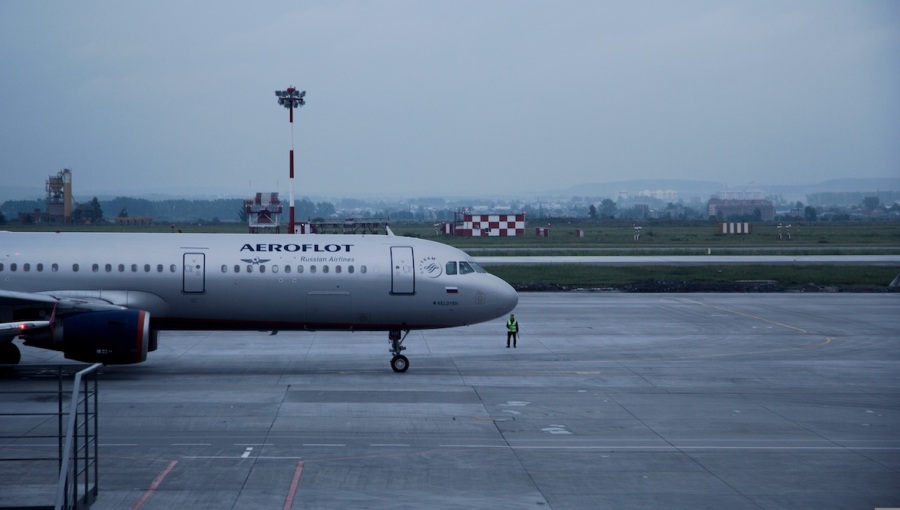
Russia seeks partial privatisation of state carrier Aeroflot

Russia seeks partial privatisation of state carrier Aeroflot
Russia's national air carrier plans to privatise a 23.76% stake, while the state would remain the controlling shareholder. / Image by Khusen Rustamov from Pixabay


By bne IntelliNews May 26, 2026

Russian national air carrier Aeroflot (AFLT) plans to privatise a 23.76% stake worth approximately RUB45.6bn ($634mn) as part of the government’s broader financial market development programme, according to RBC business portal citing Rosimushchestvo state property agency.

Rosimushchestvo announced on May 22 that it had launched the process of selecting an organiser for the sale of 944.6mn Aeroflot shares, equivalent to 23.76% of the company’s capital. 

The Finance Ministry commented that the transaction forms part of the federal project Development of the Financial Market, which aims to expand the use of IPOs and secondary placements involving state-owned companies. 

The Finance Minister Anton Siluanov previously claimed that proceeds from the sale of stakes in seven companies scheduled for privatisation in 2026 could total RUB100bn–RUB300bn

As covered by IntelliNews, the largest IPO of 2025 was that of a state-controlled mortgage and housing agency DOM.RF.

However, the government has also been struggling to sell off some of the recently nationalised assets, such as Domodedovo airport or YuzhUralZoloto gold major.

The state currently owns 73.77% of Aeroflot, while the free float stands at 25.03%. Following the transaction, the free float could reportedly increase to 48.79%, while the state would retain a controlling stake of 50% plus one share. 

Applications for participation in organiser selection will be accepted until June 8, while the placement itself is scheduled for 2026 and will depend on market conditions.

Aeroflot shares declined following the announcement. The stock fell 0.99% during the main Moscow Exchange (MOEX) trading session on May 22 to RUB47.55, while losses deepened in evening trading with shares briefly declining 2.36% to RUB46.9, according to RBC.

Despite continuous sanctions, in 2024 the company posted its first profit since 2019 and adopted a dividend policy. In the case of any sanction relief, the carrier is seen as one of the main gainers among Russian corporate majors.

The state has supported Aeroflot since 2020,  purchased newly issued shares at RUB34.29 per share in 2022, increasing its stake to 73.77%.

Notably, the 2025 passenger turnover was in line with the guidance of Aeroflot. Aeroflot management previously aimed for 5% turnover growth in 2025. Last year, the key challenges for the state carrier were continued maintenance of foreign aircraft and delays in deliveries of domestic jets.

However, Aeroflot was expected to further consolidate its market share due to disproportionate state support and lower exposure to reportedly malfunctioning foreign jets locked inside Russia.

Aeroflot reported revenue for 2025 rose 6.7% year-on-year (y/y) to RUB760.4bn, while net profit increased 5.6-fold to RUB123.04bn. Adjusted profit declined to RUB11.85bn from RUB58.99bn a year earlier.

Analysts broadly expect the placement to be conducted at a discount to market prices with the SPO discount possibly reaching 10-15%. They warned that Aeroflot’s business remains highly exposed to fuel prices, ruble volatility, sanctions, aircraft maintenance costs and geopolitical risks.

Tuesday, May 26, 2026


India as a rising pharmaceutical power

India as a rising pharmaceutical power
/ Roberto Sorin - UnsplashFacebook
By IntelliNews May 25, 2026

The international pharmaceutical industry relies on a model of globalised production and value chains to achieve its main efficiencies and optimisations. Under this model, medicines and chemical compounds discovered in Western laboratories rely on either precursor chemicals supplied by, or synthesised in large batches by qualified personnel using the Intellectual Property (IP) holder’s recipe.

India has particularly fit this mold in recent years, and has quietly gained its position as the third largest pharmaceutical producer by volume in the world. Although its exports are still ranked 11 in terms of value, its healthcare sector boasts over 3,000 companies and 10,500 manufacturing facilities according to a report by India’s Press Information Bureau.

New Delhi has increased its focus on concluding a flurry of trade deals with its major trade partners in the Western world including the US, UK, EU as a whole bloc as well as with major countries in the EU such as France and Germany.

These trade deals take special care in addressing the sector, as India’s precursor inputs and manufacturing capability makes it highly competitive, especially for countries trying to diversify away from China. India is home to over 500 Active Pharmaceutical Ingredient (API) manufacturers, a number that accounts for around 8% of the global API industry.

However, learning from global policy practice India has stepped up the industrial subsidy programme, and a government-backed push into biologics. This series of stimuli has advantageously placed India’s pharmaceutical sector not only in competition with, but also in complementary form with its peers.

India’s ace in the hole, is primarily generic drug manufacturing, a sub-sector of pharmaceutical manufacturing in which it holds over 20% of the market by volume. This translates into manufacturing for over 60,000 brands in 60 distinct categories.

Domestically too India’s pharmaceutical manufacturing market is valued at around $60bn and could reach upwards of $130bn by 2030, which represents compounding growth that will more than double its reach in only five years.

Purportedly in FY2024-2025 India's pharmaceutical shipments across 191 countries reached $30.5bn which represents a 16-fold increase from FY2000-2021’s $1.9bn.

These exports are not only to jurisdictions where similar regulatory environments to India’s own operates, but over half of it is actually meant for Western markets where the EU and the US testing and additive guidelines are much stricter than India’s own. Reportedly India boasts the highest number of US Food and Drug Administration (FDA) authorised pharmaceutical manufacturing plants which are not on US soil.

However this feat is not because of the Indian government’s policy and fiscal stimulus moves alone. Private firms which are pharmaceutical and healthcare conglomerates in their own right include Sun Pharmaceutical Industries (NSE:SUNPHARMA), Cipla (NSE:CIPLA), Dr Reddy's Laboratories (NSE:DRREDDY), and Divi's Laboratories (NSE:DIVISLAB).

According to figures cited by the Government of India, total sector turnover reached approximately $55.5bn in FY2025-2026, while exports for the sector grew at a 7% compound annual rate over the decade to FY2025-2026, according to India's Economic Survey 2025-26.

One of the most price sensitive pharmaceutical manufacturing subsectors happens to be vaccines, which are highly subsidised internationally because of their outsized impact on all cause mortality across age groups, but especially among children.

Purportedly India supplies around 60% of UNICEF's total vaccine requirements, including 40%-70% of global demand for diphtheria, tetanus, and pertussis vaccines, as well as over 90% of the World Health Organisation's global measles vaccine requirements.

As most countries with a pharmaceutical and biochemical industry rushed to manufacture vaccines for the COVID19 pandemic, India too threw in its stock with multiple ventures, with Bharat Biotech’s Covaxin and the Serum Institute of India’s Covishield either beating or matching their global peers in their short development and roll out timeline.

However, the Indian pharmaceutical giants’s footprint is also felt in their global acquisitions - the most recent of which has been Sun Pharmaceutical Industries’s takeover of US based Checkpoint Therapeutics. Similarly Zydus Lifesciences (NSE:ZYDUSLIFE) took over France’s Amplitude Surgical, and Dr. Reddy’s Laboratories took over the portfolios of Eton Pharmaceuticals.

While India’s policy measures to attract even more foreign IP and associated manufacturing has been championed by the Production Linked Incentive (PLI) scheme in the pharmaceutical sector, it remains to be seen if the upward trajectory will continue to grow, especially as India’s API and precursor trade as well as finished product shipments rely on maritime transport routes, which are now - globally - under severe stress as the conflict in the Red Sea and the Strait of Hormuz region has made transit a risky undertaking.