Why is Europe heating up faster than the rest of the world?
Europe is in the grip of an early-season heatwave, with record May temperatures driven by a “heat dome” of hot air over the western part of the continent. Scientists point to human-caused emissions, shifting atmospheric patterns and rapid Arctic warming as key factors amplifying extreme heat across the region.
Issued on: 27/05/2026 -
By: FRANCE 24

Europe, which is in the throes of a record-smashing heatwave this week, is the world's fastest-warming continent and stretches into an even more rapidly heating Arctic.
After record high temperatures for May were broken in Britain, Ireland and France on Monday and Tuesday, the continent still faces more brutal heat in the coming days.
A so-called "heat dome" of warm air from northern Africa trapped under a high-pressure system over western Europe is behind the sort of heat not usually seen until high summer.
Here is a look at why Europe is warming faster than elsewhere:
A higher degree
The planet is around 1.4C warmer than in preindustrial times, defined as 1850-1900.
By comparison, Europe is around 2.4 hotter than the preindustrial era, according to the EU's Copernicus Climate Change Service.
"Almost all of this heat is driven by the human-induced greenhouse effect from fossil fuel emissions, with the actual distribution of this excess heat determined by (several) factors," Ben Clarke, researcher in extreme weather and climate change at Imperial College London, told AFP.
Changing weather patterns
Shifts in atmospheric circulation have driven more frequent and more intense heatwaves in the European summer, according to Copernicus.
High-pressure systems, which bring settled weather and higher temperatures, have become more common in Europe, Copernicus Director Carlo Buontempo said.
"If you look over the last 20, 30 years, there has been a prevalence, especially in summer, of those sort of anticyclonic conditions that are making heatwaves more likely," Copernicus Director Carlo Buontempo told AFP.
Whether the increased frequency of that specific type of high-pressure system is due to climate change or is just a "statistical fluctuation" is still a scientific debate, Buontempo said.
Such high-pressure systems are also known as "blocking highs" as they can remain stationary and stop other weather systems from moving into a region.
Explaining how they work, Mary Bourke, geography professor at Trinity College Dublin, told AFP: "The sky is exposed to us, there are no clouds. It's a stable mass of air that is bringing warm air down to the surface and taking away moist air, so the air is not only warm, but it's also dry."
Rapidly warming Arctic
Another major reason is geography.
"Europe is connected to the Arctic, which is warming much faster than the rest of the planet," Clarke said.
The Arctic is 3.2C warmer than in preindustrial times, according to Copernicus.
The region's rising temperatures are partly due to a process known as the albedo feedback.
Bright snow and ice reflect much of the sun's heat back into space, but as they melt they reveal darker, heat-absorbing surfaces such as land and the ocean.
"So as sea ice melts it leads to greater absorption of heat, which in turn further warms waters and melts more ice," Clarke said.
Melting snow
In other parts of Europe, the area where snow was very frequent in winter has shrunk, Buontempo said.
"We have many of the historical regions that had a week or more of freezing condition now, not having that. And this means exposing dark land rather than white snow," he said.
Falling air pollution
Stricter air quality regulations have reduced aerosol emissions since the 1980s.
But tackling the pollutant had the side effect of contributing to global warming, as these tiny airborne particles have a cooling effect by reflecting sunlight and making clouds more reflective.
"While a reduction in air pollution is hugely important for respiratory health, it also increases the solar radiation at the surface, as many types of particulate matter deflect sunlight," Clarke said.
Varying degrees
The rate of temperature change varies across Europe.
Eastern and southeastern Europe, and parts of central Europe including the Alps, have warmed by 0.5C-1C per decade over the last 30 years, according to Copernicus.
Western and southwestern Europe, and sub-Arctic Finland, Norway and Sweden, warmed by 0.2C-0.5C per decade.
Svalbard, a Norwegian Arctic archipelago that is home to polar bears, has reached warming of 1.5C-2C per decade.
One of the fastest-warming places on Earth, Svalbard had record high summer temperatures from 2022 to 2024. Last year it saw its fourth warmest summer on record.
(FRANCE 24 with AFP)
Record heat has ‘fingerprints of climate change all over it’. What can Europe expect this summer?
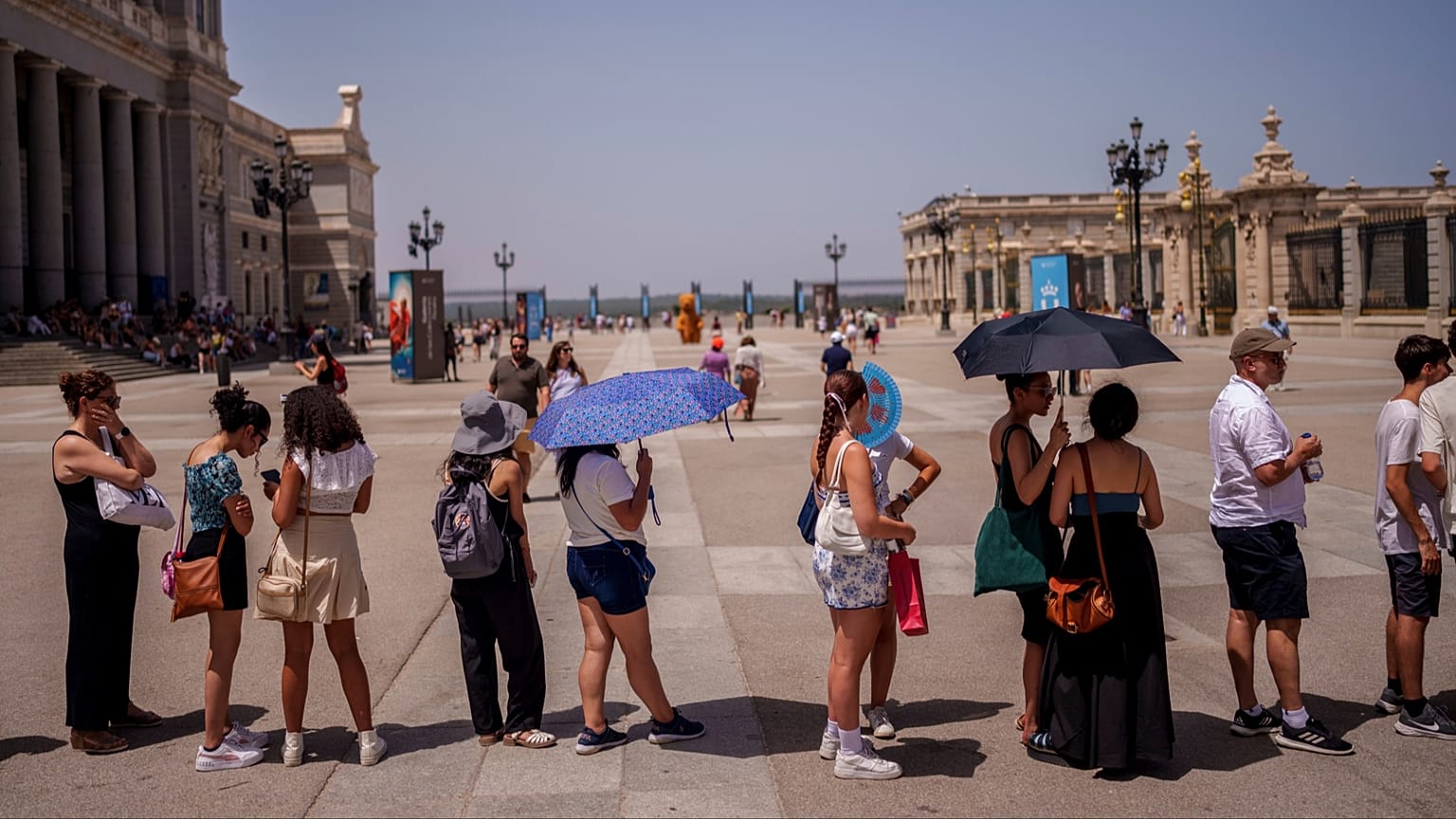
"The climate we are living in today is simply not the one we grew up with, and our buildings and infrastructure are woefully unprepared for what's next.”
Record May temperatures have sweltered huge parts of Europe, as countries remain trapped under a “powerful” heat dome – but experts warn the worst is yet to come.
France’s weather agency Météo France declared on Monday (25 May) that new monthly highs had been logged at more than 350 weather stations, with the highest temperature of 37.1°C registered near Hossegor, close to Biarritz. The intense heat has been linked to multiple deaths, and shows no signs of shifting.
The UK record for the hottest May day was also broken for a second consecutive day yesterday, as temperatures in parts of London surpassed a scorching 35°C.
According to weather forecaster WFY24, dozens of European capitals witnessed temperatures far above the climatological normal high for this time of year.
London faced the biggest anomaly, with temperatures exceeding 16°C above average May conditions, while Paris (+14°C), Berlin (+11°C), Lisbon (+10°C) and Madrid (+10°C) also faced exceptionally high temperatures. Even cooler regions like Oslo experienced balmy temperatures of 18°C, an additional 3°C from average temperatures for late May.
Is climate change behind Europe’s sweltering May temperatures?
While forecasters have blamed the sustained intense temperatures on a heat dome, which locks in extreme heat, the phenomenon itself is becoming more common due to human-caused global warming.
“This record-breaking heat has the fingerprints of climate change all over it,” says Friederike Otto, a professor of Climate Science at Imperial College London.
“Temperatures on this scale were once exceptional even at the height of summer. Seeing 35°C in the UK during spring is absolutely astonishing, but the science is very clear – climate change makes these heatwaves hotter, longer and far more frequent.”
Otto warns that temperature records will continue until global emissions are cut and countries reach net zero.
“The climate we are living in today is simply not the one we grew up with, and our buildings and infrastructure are woefully unprepared for what's next,” she adds.“While we have made some progress in cutting emissions, it is not fast enough.”
Which countries will be hit hardest by rising temperatures in 2026?
The EU’s Copernicus Climate Change Service (C3S) and the European Centre for Medium-Range Weather Forecasts (ECMWF) predict that summer 2026 will likely be influenced by a “relatively weak atmospheric pressure pattern”.
This can heavily impact temperature by limiting winds, which often leads to stagnant, hot days.
Seasonal temperature is likely to be above average in all regions this summer, with the most confident signal over southeastern parts of the continent – while C3S also points to below-average rainfall in eastern parts of Europe.
Ioanna Vergini, founder of world weather forecast WFY24, tells Euronews Earth that Europe should brace for “compound heat-and-drought in the south, a wildfire arc from Portugal to Greece, followed by flash-floods in autumn.”
For every 1℃ rise in air temperature, the atmosphere can hold around seven per cent more moisture, which can lead to more intense and heavy rainfall.
“Southern Europe remains the most vulnerable hotspot, but central and eastern Europe are warming the fastest and they’re the least adapted to 35°C+ days they now face routinely,” Vergini says. “Cities are where people die.”
Infrastructure such as concrete and asphalt absorbs heat, which keeps outdoor temperatures high, especially in cities. This is known as the urban heat island effect.
How can Europeans deal with extreme heat this summer?
European cities are quickly addressing the need to protect citizens from heat stress. Spain, for example, is home to the world’s most extensive network of climate shelters – providing access to public buildings that have free seating, water and air conditioning.
In Barcelona alone, there are already 400 climate shelters in public buildings such as libraries, museums, sports centres and shopping malls. Other cities are catching onto the incentive, with the General Council of Bucharest approving the establishment of climate shelters earlier this month.
Cities like Paris have also been preparing for rising temperatures for decades, making efforts to turn heat-trapping streets into a “green oasis”. Since 2020, more than 6,000 parking spaces and 1.3 hectares of asphalt have been removed to enable the streets to be greened.
By 2024, there were almost 100 Parisian streets with planters, allowing nature to thrive alongside urban life. Trees and plants improve air quality, creating an added benefit for polluted cities.
More than 100,000 trees have been planted in Paris since 2020 to provide more shade for residents and increase the absorption of heat-trapping gases.
“Know your country’s heat warnings, check on elderly neighbours and don’t trust the night to cool off,” Vergini adds.
“Tropical nights (where the temperature never drops below 25°C) are now routine in southern Europe and compound the daytime stress on the body.”
The expert urges authorities to stop treating heat planning as “reactive” and make sure measurements are scheduled. “Seasonal forecasts give multi-month lead time, what’s missing is the operational use of it,” she says.
Temperatures soar across Europe as 'heat dome' drives May records
A “heat dome” is driving unusually high temperatures across Europe, pushing readings well above seasonal norms. The UK and France have already set May records while Spain and Italy are facing heat alerts and limits on outdoor work. Scientists say climate change is making these kinds of extreme heat events more common.
Issued on: 27/05/2026 -
By: FRANCE 24

Forecasters in Europe warned Tuesday of exceptional heat as record temperatures driven by a "heat dome" push temperatures well above seasonal norms across the continent.
The surge follows a record-breaking Monday, with France logging its hottest day in the month of May on record, according to its weather agency, and the United Kingdom also posting unprecedented highs.
A so-called "heat dome" of warm air from northern Africa trapped under a high-pressure system over western Europe is behind the high temperatures not usually seen until high summer.
Restrictions on outdoor work were imposed in parts of Italy, beaches in southwest France filled earlier than usual and farmers reported accelerated harvests as temperatures went beyond 30C across the region.
Scientists say human-driven climate change is amplifying such extremes, with Europe warming faster than the global average and heatwaves growing more frequent and severe.
Temperatures in Spain were expected to peak later this week at 38C, while parts of Italy imposed restrictions on working outdoors.
In the United Kingdom, the Met Office weather agency said Monday was the hottest May day on record, with temperatures hitting 34.8C at Kew Gardens, southwest London, a full two degrees above the previous high.
"This heat would be exceptional in the UK even in mid-summer, let alone May," it said on X.
"The weather here, it's like a mini version of hell. It's boiling. It's like really hot," said 10-year-old Liza Nizari on a visit to London, where temperatures normally average about 17C or 18C at this time of year.
The Met Office forecast a drop later in the week.
Lindy Brand-Daloze, a 66-year-old Australian living in London for 12 years, said: "It's warm, but it's climate change, isn't it? So, you know, (we have) probably got to get used to this."
Scientists say human-induced climate change is making extreme weather events like heatwaves, droughts and floods more intense, resulting in temperature records being broken more frequently.
Met Office meteorologist Greg Dewhurst told AFP the increase in extreme temperatures was "a good indication of climate change in action" and more likely to become "the new norm".
Climate advisers last week warned the UK government that the country was "built for a climate that no longer exists" and urged it to adapt infrastructure like schools and hospitals for a warming planet.
In 2022, temperatures in the UK soared above 40C for the first time since records began.
A record May temperature of 28.8C was recorded at two weather stations in Ireland: Killarney in the southwest and Clonmel in the south, Met Eireann data showed.
A grass fire broke out near Arthur's Seat hill near Edinburgh, sending smoke over the Scottish city that saw temperatures climb to 25C, according to fire fighters and the BBC.
Across the Channel, weather agency Meteo-France said that for France as a whole, "Monday was the hottest day recorded for the month of May since measurements began".
It said highs of 33C to 36C in regions were expected, adding that the spell was likely to last at least until the end of the week.
French Prime Minister Sebastien Lecornu was to hold a meeting Thursday with key ministers to go over government preparations for the heatwave.
The capital, Paris, on Saturday notched up its first temperature above 30C of the year, hitting 31.9C.
On Sunday, a man died during a 10-kilometre running race in Paris, civil defence services said, while 10 more had to be taken to hospital in critical condition after a race in the capital's suburb of Maisons-Alfort, the authorities said.
The sweltering heat on Monday melted tennis fans at Roland-Garros in Paris.
Outdoor work restricted
In Spain, the State Meteorological Agency (Aemet) warned the "extraordinarily high temperatures for this time of year" will continue across the country all week, except in the Canary Islands, in the Atlantic Ocean, off the northwest coast of Africa.
"Widespread tropical nights" are also forecast in southwestern Spain from Wednesday, with temperatures peaking from Wednesday to Friday at between 36C and 38C, it wrote on X.
Farther east, Italy's Lazio region, which includes Rome, on Monday approved rules limiting work in conditions "with prolonged exposure in the sun" between 12:30pm and 4pm.
The measures apply, for example, to farms, construction sites and in the logistics sector and apply until September 15.
Similar rules had been put in place last year but only from May 30.
(FRANCE 24 with AFP)

No comments:
Post a Comment