Wednesday, June 10, 2026


EU's Kaja Kallas urges Ireland to clarify alumina sales to Russia

High Representative Kaja Kallas.
Copyright Petros Karadjias/Copyright 2026 The AP. All rights reserved

By Jorge Liboreiro
Published on

Ireland has launched an investigation into allegations that exports from Aughinish Alumina have contributed to Russia's military complex.

High Representative Kaja Kallas has urged Ireland to clarify whether its continued sales of alumina to Russia help build the missiles and drones that strike Ukraine.

Sold as white powder, alumina is the key raw material used to make aluminium, a lightweight metal commonly found in weapons on the battlefield.

Kallas discussed the issue during a meeting on Tuesday with Irish Foreign Minister Helen McEntee in Dublin. Kallas also met with Irish Prime Minister Micheál Martin.

"Europe must close all loopholes, tighten sanctions enforcement and ensure our commitments are backed by deeds," Kallas said after the talks.

"No European products should end up in drones and missiles that kill Ukrainian civilians."

The timing of the allegations is particularly sensitive for Ireland, which is less than one month away from taking the reins of the EU Council's six-month presidency.

Standing by her side, McEntee said an investigation has been launched into Aughinish Alumina, the plant at the centre of the scandal, and promised to share the findings with the European Commission once the probe concludes.

"I've made it very clear that our support remains firmly with Ukraine," McEntee said.

"We will ensure that any decisions that need to be taken to put pressure on Russia will have the full support of Ireland," she added.

Kallas expressed confidence in the Irish goverment's investigation.

"It's important that we get the facts straight," she said.

PR crisis

The remarks in Dublin were delivered just a few hours after the Commission presented a new proposal for economic sanctions against Russia, targeting oil sales, banks, crypto firms, fisheries and soldiers, among other elements.

Alumina was not included in the package, even though sales of primary aluminium and refined aluminium goods to Russia were previously banned.

Asked to explain the decision, Kallas admitted that some member states were in favour of an EU ban on alumina exports but hinted that unanimity was still not there. Ukraine has also called on the bloc to take swift action on the raw material.

"I think this case shows that we should also look into this," Kallas said. "We have to be creative in coming up with the next sanctions because our aim is that this war will end, and it will also end if the aggressor runs out of either money or material to continue."

Ireland has been battling damaging headlines since the Organised Crime and Corruption Reporting Project (OCCRP) published an investigation in March about the business ties between Aughinish Alumina, Europe's largest alumina refinery, and the Russian economy.

According to the findings, the sprawling plant, based in western Ireland, sells alumina to Russian smelters owned by its parent company, United Company Rusal, which in turn sells the metal to a trader that supplies aluminium to sanctioned defence manufacturers.

The weapons made by these manufacturers have been deployed to kill Ukrainian civilians and bombard civilian infrastructure, the OCCRP said. (The investigation traced Irish alumina to the Russian trader, but not to a specific product.)

Aughinish insists its activities are entirely legal because alumina has been spared from EU sanctions. The company saysalumina exports to Russia represented about 45% of all sales in 2025 and expects the share to be similar at the end of 2026.

The Irish government has described Aughinish as a critical actor in a wider supply chain and warned that sanctions would threaten local jobs and drive up inflation.

EU targets Russia's Patriarch Kirill in new sanctions proposal

Patriarch Kirill, the head of Russia's Orthodox Church.
Copyright Igor Palkin/Russian Orthodox Church Press Service


By Luca Bertuzzi & Jorge Liboreiro
Published on

Patriarch Kirill, the head of Russia's Orthodox Church, is among the many names included in the latest proposal of EU sanctions against Russia.

The European Union will try again to sanction Patriarch Kirill, the head of Russia's Orthodox Church, after Hungary vetoed the decision in 2022

His name has been added to a wider package of sanctions presented on Tuesday, three diplomats confirmed to Euronews.

Brussels does not reveal the identity of the blacklisted individuals until member states reach a final decision. Individual sanctions entail an asset freeze and a travel ban.

Kirill, a highly controversial figure with both religious and political influence, has been accused of spreading revisionist propaganda to justify the war in Ukraine.

Under his leadership, the Russian Orthodox Church approved a document that called for the annihilation of Ukrainian independence and described the invasion as a "Holy War".

The EU first tried to blacklist Kirill in 2022. But Hungary, under then-prime minister Viktor Orbán, blocked the move, calling it an issue of religious freedom.

The veto made headlines and caused outrage among other countries.

The matter lay dormant until last month, when the new Hungarian government of Péter Magyar voiced readiness to go ahead with the move, as Euronews reported.

EU officials seized the U-turn and added the name to the latest proposal.

However, due to Kirill’s unique position as the head of the Russian Orthodox Church, it remains uncertain whether all 27 member states will support adding him to the blacklist. In negotiations requiring unanimous approval, it is not unusual for certain names to be removed to secure consensus.

Brussels aims to secure agreement on the 21st package of sanctions by 15 July to avoid an automatic revision of the price cap on Russian oil.

Sándor Zsiros contributed reporting.


Moscow Tells Baltics NATO Will Not Come To Their Rescue – Analysis


By

Whether Russian President Vladimir Putin will launch an attack on the Baltic countries, as many now fear is possible, remains uncertain (seeStrategic Snapshot, June 8, 2025; see EDM, September 4, 2025, May 8;Novaya Gazeta Evropa, June 5). Moscow is pushing a propaganda line that has consequences not only for the Baltics but for all members of the North Atlantic Treaty Organization (NATO).

Senior Russian officials are now very publicly declaring that the three Baltic countries, all members of NATO, cannot count on the alliance to come to their aid if Moscow attacks them, as Article 5 of the treaty requires, because they, not Russia, are the aggressor (Re:Baltica, June 4). Such a claim—one arising from Putin’s assessment of NATO’s current state amid changes in U.S. policy and divisions in Europe—will intimidate some alliance members and pave the way for further Russian aggression unless NATO unequivocally rejects it (see EDM, February 2).

As Russia’s war against Ukraine grinds on in its fifth year with no path to a Russian triumph clear, many are speculating that Putin will try to get a victory elsewhere to recover his image as a strongman who always wins. Among the places where experts have most often suggested he might attack are islands in the North Atlantic and Baltic Seas with complicated legal regimes (see EDM, June 11, August 15, September 24, 2024,September 16, 2025).

In recent months, however, speculation about a new vector of Russian aggression has focused increasingly often on the possibility of a Russian move against one or more of the Baltic countries, given their former status as Russian possessions. Their current membership in the Western alliance is especially irritating to Putin and is something he would very much like to change (Novaya Gazeta Evropa, June 5). Such suggestions have become increasingly frequent given Russian provocations such as the recent redirection of Ukrainian drones onto Latvian territory by Russian forces (Window on Eurasia, June 1).

The Baltic countries have responded in three ways. They have taken the lead among Western countries in supporting Ukraine, have sought new security relations with their immediate neighbors, such as Poland, and with the new NATO members Finland and Sweden, and have built up their own defense capabilities (see EDM, February 2). They have done so, however, in every case with confidence that Article 5 of the NATO Charter remains in place. This article specifies that an attack on any NATO country will be treated as an attack on all and that NATO’s leaders will consult with one another on how to respond. Until recently, most Baltic leaders and many observers in the West have stressed the first part of that arrangement and assumed that the alliance would respond vigorously and militarily to any Russian move against a NATO member state. Now, however, given changes in U.S. policy and divisions among some European NATO members, there is an increasing tendency to question the open-ended nature of Article 5, which promised to consult on what to do in the event of an attack rather than to respond immediately and forcefully, as many had assumed.

Unsurprisingly, Moscow has sought to exploit these divisions. That approach reached a new high on May 19 when Vasiliy Nebenza, Russia’s permanent representative to the United Nations, pointedly told the Latvians that their support for Ukraine and opposition to Russian actions there meant that “NATO membership will not protect you” in the event of a Russian action against the Baltics because the Baltics themselves will have provoked it. The U.S. representative at the UN Security Council, Tammy Bruce, responded by criticizing Nebenza for his attack on another UN member state and insisted that Washington would continue to fulfill its responsibilities as a NATO member (Facebook/dw.russian, May 19). Whether that will be enough to stop this Russian campaign and the actions it appears to be pointing toward remains to be seen.

Anastasija Tetarenko-Supe, a Latvian foreign policy expert and journalist, points out that Nebenza’s words are especially troubling. They were not an isolated move but part of what she calls “a perfect storm” of Russian actions against the Baltic countries (Re:Baltica, June 4). On the same day the Russian diplomat made his remarks at the UN Security Council, Russia’s Foreign Intelligence Service (SVR) released a report saying that Ukrainian military personnel were already in Latvia to prepare drone strikes against Russia and that Moscow “knew the coordinates of the relevant ‘decision-making’ centers” (SVR, May 19). This is something Russian Telegram channels had earlier claimed, but it now has the imprimatur of the Russian government, even though it is quite clear that, similar to many other Russian statements on such subjects, it is itself a provocation and untrue.

Titarenko-Supe says major Russian propaganda channels and state-affiliated news wires amplified support for the Nebenza–SVR version of events. These outlets particularly included  “TASS, Readovka, Voekony Russkoy Vesny, Solovoyev, Skabeyeva, [and] ANNA,” among others. Channels targeting Baltic audiences then picked it up, including “Baltnews, Sputnik Lithuania, Sprats in Exile, The Latvian Bump, Shadows of the Baltics, Baltic Anti-Fascists and The Baltic Bridge.” She explained, “Some of these are linked to former RT (formerly Russia Today) contributors who once lived in the Baltics, as well as local activists who fled to Russia” (Re:Baltica, June 4).

Some channels went even further, portraying denials by Latvian officials not as rebuttals but as “proof” that the SVR had struck a nerve. Titarenko-Supe says, citing Latvian disinformation researcher Mārtiņš Hiršs’s conclusions, that what Moscow is doing is consistent with its past actions on other issues. The Kremlin floods the media with its version in the hopes that volume will outweigh the facts and that journalists seeking to be balanced will report its version of events, one that makes Latvia the aggressor and Russia the defender of international law, alongside more accurate reporting that shows just the reverse is true. (For Hiršs’s study on such patterns, see Echoes from Kremlin: New Platforms, Old Narratives, July 2025.)  

Echoing Hiršs, Titarenko-Supe argues that Moscow’s “objective” has been to spread fear while recasting the Baltics from bystanders to participants. This makes Russian threats appear less like aggression and more like a response” and “to weaken support for Ukraine and erode trust in Latvian democratic institutions by suggesting that governments conceal the truth, the media lies and the truth is told by Russia—or [a] Tiktoker broadcasting from Belarus” (Re:Baltica, June 4). One could add to this list of Russia’s goals the reduction in trust in NATO and its Article 5 guarantees, a development that would threaten far more than Latvia and the other Baltic countries and make Europe an even more unstable place unless and until NATO makes it crystal clear that it will not be deterred from fulfilling its Article 5 guarantees by Russian threats and propaganda campaigns.


French NATO jets destroy mystery drone over Latvia as Ukraine war intensifies

French NATO fighter jets stationed in the Baltic region shot down a drone that had entered Latvian airspace on Monday, marking a rare interception under the alliance’s Baltic Air Policing mission. It follows a series of similar incidents linked to the war in Ukraine as Moscow and Kyiv step up drone strikes on each other.


Issued on: 08/06/2026 - RFI

A French Rafale fighter jet flying a NATO mission shot down a “foreign” drone over Latvia on 8 June 2026 (illustration) AFP - CHRISTOPHE ARCHAMBAULT

Latvia’s military said in a statement that the unmanned aerial vehicle had crossed into its territory "as a result of Russian electronic warfare", without specifying its origin.

Officials suggested the drone may have been diverted from its intended course amid ongoing interference linked to the war in Ukraine.

Latvian Foreign Minister Baiba Braze praised the operation, writing on social media platform X: "Thank you, our French Allies, for taking down the drone that flew into Latvian airspace!"

According to Lithuanian military spokesperson Gintautas Ciunis, two French jets deployed at the Siauliai airbase in northern Lithuania were scrambled and neutralised the drone at around 10:00 local time.

Drone incident near French carrier in Sweden points to possible Russian link

The incident is the first confirmed case of NATO aircraft intercepting and destroying a drone over Latvia as part of the Baltic Air Policing mission, which has operated since 2004 to safeguard the airspace of Estonia, Latvia, and Lithuania.

Since Russia’s full-scale invasion of Ukraine in February 2022, both Russian and Ukrainian drones have crashed in the Baltic states and beyond, raising concerns over airspace security and the risk of escalation.

FILE - A Romanian Air Force F- 16s military fighter jet, left, and a Portuguese Air Force F- 16s military fighter jets participating in NATO's Baltic Air Policing Mission operate over the Baltic Sea, Lithuanian airspace, on May 22, 2023. The United States has given its approval for the Netherlands to deliver F-16s to Ukraine, the Dutch defense minister said Friday, Aug. 18, 2023 in a major gain for Kyiv even though the fighter jets won’t have an immediate impact on the almost 18-month war. (AP Photo/Mindaugas Kulbis, File) AP - Mindaugas Kulbis


On 19 May, a Romanian jet stationed in Lithuania shot down a Ukrainian drone over Estonia after it strayed off course, while a day later Lithuania issued its first public air alert when another drone approached Vilnius.
Escalation

Elsewhere, Moldova reported on Monday that a drone had crashed and exploded on agricultural land near the eastern village of Lopatna after entering its airspace overnight.

Authorities said no injuries were reported and suggested the drone was most likely of Ukrainian origin, though officials in Chisinau stressed that Russia ultimately bears responsibility for such incidents.

Moldova has had its airspace breached dozens of times since the start of the war in Ukraine in 2022.

Zelensky to urge EU leaders to speed up Europe’s drone shield plan

Moldovan President Maia Sandu said the country needs to strengthen its anti-drone and jamming systems.

"We must begin producing drones capable of intercepting and shooting down other drones," she said in an interview over the weekend.

Romania, an EU and NATO member bordering both Moldova and Ukraine, has also seen two drones explode on its territory in recent weeks.

Officials across the region warn that Russian electronic warfare systems are increasingly disrupting navigation, causing drones to veer into neighbouring countries.
Nuclear storage unit hit

Moscow and Kyiv have intensified drone strikes on each other in recent months, as US-led diplomatic efforts to end the war – now in its fifth year – remain stalled and sidetracked by the conflict in the Middle East.

On Monday, a Ukrainian drone strike on a passenger train killed one of its drivers and wounded the other, Sergey Aksyonov, the Moscow-installed head of the Crimea region wrote on Telegram.

France, UK, Germany back face-to-face Ukraine-Russia ceasefire talks

The attack came hours after Russia fired waves of drones and other munitions at Ukraine, with one of the attacks damaging a nuclear storage facility near the Chernobyl disaster site, Ukrainian officials said.

The International Atomic Energy Agency (IAEA) said it was dispatching a team to inspect the damage, calling the incident "deeply concerning".
WAR IS ECOCIDE

Ukrainian strikes start fires at oil facilities in Russia and Crimea, officials say

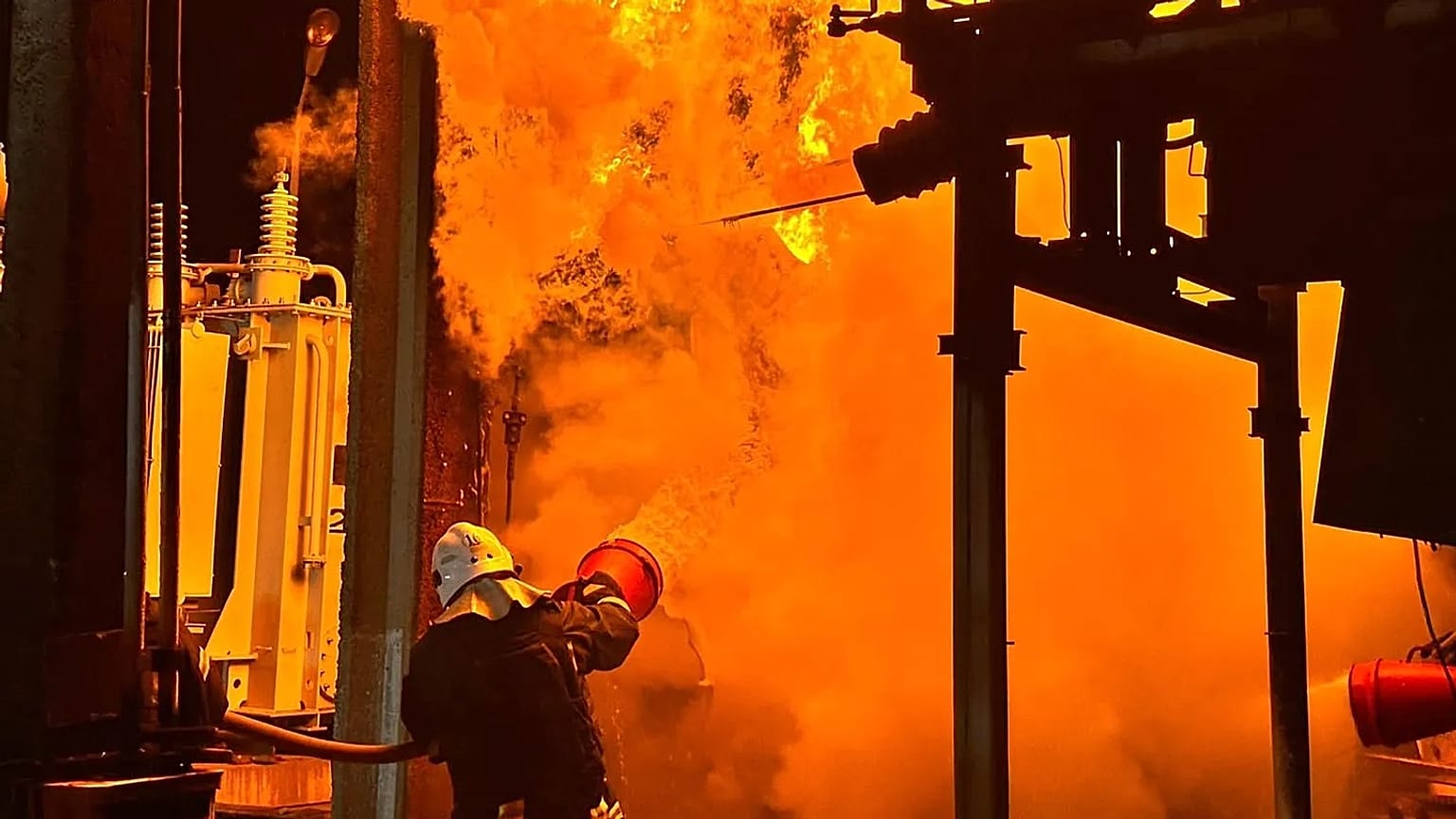
Rescue workers extinguish a fire of an energy facility after a Russian strike in Odesa, 8 June, 2026
Copyright AP Photo


By Gavin Blackburn
Published on

Daily Russian attacks have intensified in recent months and Ukraine has hit back with its own drone strikes further into Russian territory, saying these are mainly against military and energy facilities.

Ukrainian forces struck oil facilities in Russia and occupied Crimea, Ukrainian and Russian officials said, as part of Kyiv’s campaign to make Moscow pay an economic price for the full-scale invasion

Ukraine’s General Staff said forces had struck Russia’s Krasnodar Krai region overnight, hitting the Grushovaya oil transshipment base near Novorossiysk.

The complex is one of the largest transshipment hubs in southern Russia for oil and petroleum products.

Russian regional authorities confirmed a Ukrainian drone sparked a fire at the facility, adding that there were no casualties.

While they did not comment on the extent of damage, they said 130 rescue workers were involved in putting out the blaze.

Asked whether the Kremlin is worried about the fuel crisis in occupied Crimea, Kremlin spokesperson Dmitry Peskov said the Energy Ministry and other agencies are working on a set of measures to respond to the situation.

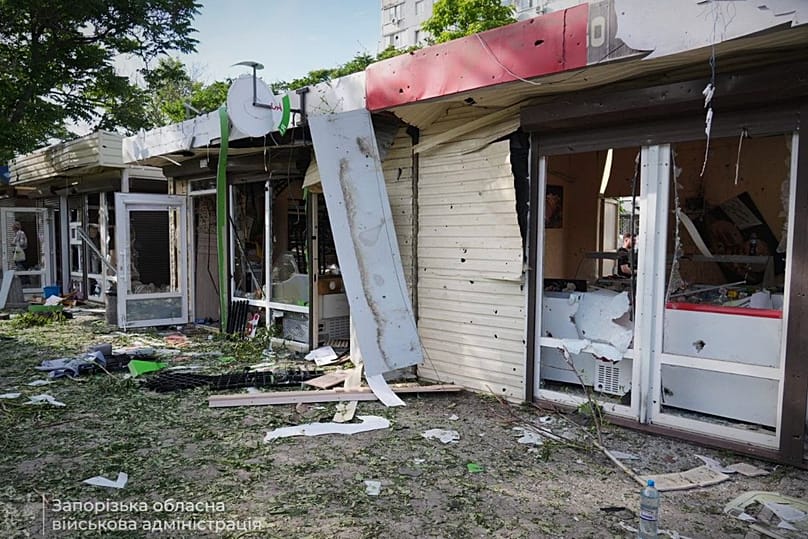
Destroyed shops are seen after a Russian strike in Zaporizhzhia, 8 June, 2026
Destroyed shops are seen after a Russian strike in Zaporizhzhia, 8 June, 2026 AP Photo

“There are indeed certain problems at the moment,” Peskov said. “Measures are being taken.”

The Krasny Yar “linear production and dispatching station” in the Volgograd region was also hit, the General Staff said.

A fire broke out at the site, according to the statement. Russian Governor Andrei Bocharov didn’t specify what the facility produces, but said there were no injuries.

Ukraine also carried out strikes overnight in the Semykolodezkaya oil base in the Russian-occupied Crimean Peninsula on Sunday night, sparking a fire at the facility.

The base is used to store fuel reserves supplying the Russian military, according to the statement posted on Telegram.

Ukrainian forces also struck an oil depot near Feodosia in Crimea, the General Staff said.

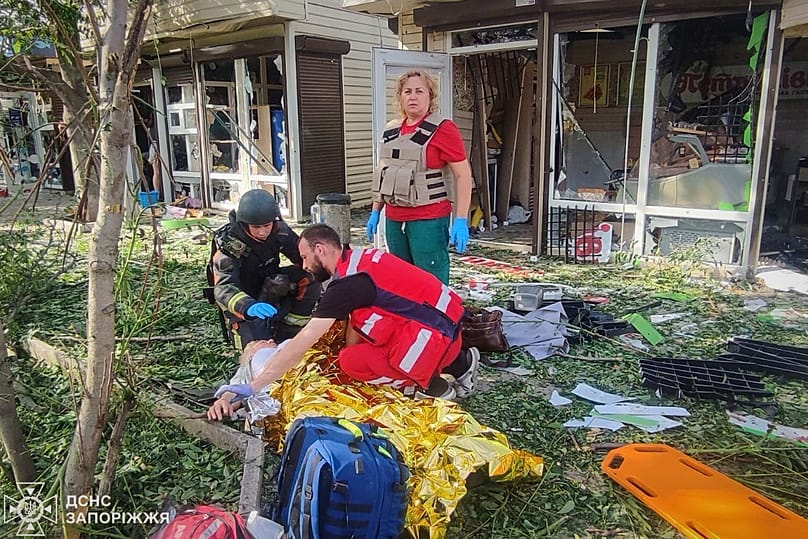
Paramedics provide medical help to an injured person after a Russian strike in Zaporizhzhia, 8 June, 2026
Paramedics provide medical help to an injured person after a Russian strike in Zaporizhzhia, 8 June, 2026 AP Photo

Strikes near Kharkiv

Russian strikes killed three people and wounded 10 others in Ukraine's northeastern Kharkiv region, its governor said early on Tuesday.

"The enemy has hit the city of Chuguiv," Kharkiv regional governor Oleg Synegubov wrote on Telegram, adding that three people had been killed.

"The strikes caused fires and damaged at least 18 vehicles; windows were blown out and building facades damaged in residential multi-storey buildings," Synegubov said.

Separately, Kharkiv mayor Igor Terekhov reported 10 people were wounded in his city.

Daily Russian attacks that claim civilian lives have intensified in recent months and Ukraine has hit back with its own drone strikes further into Russian territory, saying these are mainly against military and energy facilities.

According to a UN estimate published in April, at least 15,850 civilians have been killed in Ukrainian zones since Russia launched its full-scale invasion in February 2022.

More than 2,800 civilians have died in Russian-controlled zones, according to the UN toll, which added that more than 44,800 have been wounded in Ukrainian and Russian-occupied zones.

Sanctions on Russia

Meanwhile, the European Union’s foreign policy chief said a new proposed round of sanctions against Russia includes 80 listings targeting Russia’s “military industrial complex, human rights violators and propagandists.”

Kaja Kallas told a news conference after a meeting of EU defence ministers on Monday that Western sanctions have already cost Moscow an estimated $1.2-1.5 trillion (€1.04-1.3).


Kyiv hit Russian military plant using Ukrainian-made Flamingo missile, Zelenskyy says

Screenshot of a video posted to X by Ukraine's President Volodymyr Zelenskyy, 10 June, 2026
Copyright @ZelenskyyUa

By Sasha Vakulina
Published on


Volodymyr Zelenskyy vowed to continue Kyiv’s strikes deep inside Russia in response to attacks on Ukraine, but also a way of forcing the Kremlin into direct talks.

Kyiv used Ukrainian-made Flamingo missiles to strike a Russian military facility which supplies Moscow forces with components for drones and missiles, President Volodymyr Zelenskyy confirmed on Wednesday.

“We continue to apply Ukrainian long-range sanctions against Russian military facilities and the oil industry,” Zelenskyy said on X as he shared the video purporting to show a missile flying toward its target and plumes of smoke rising over Russian facilities.

“In particular, last night Ukrainian FP-5 Flamingos struck a military plant in Cheboksary that supplies the occupier’s army with components for drones and missiles.”

Cheboksary is the main city in Russia's central Chuvashia region, located around 1,000 kilometres away from the Ukrainian border.

The regional governor, Oleg Nikolayev, confirmed the city had been hit.

"Early this morning, Cheboksary came under rocket attack. We are working to determine the number of casualties and the extent of damage to infrastructure," Nikolayev said on Telegram without providing more details.

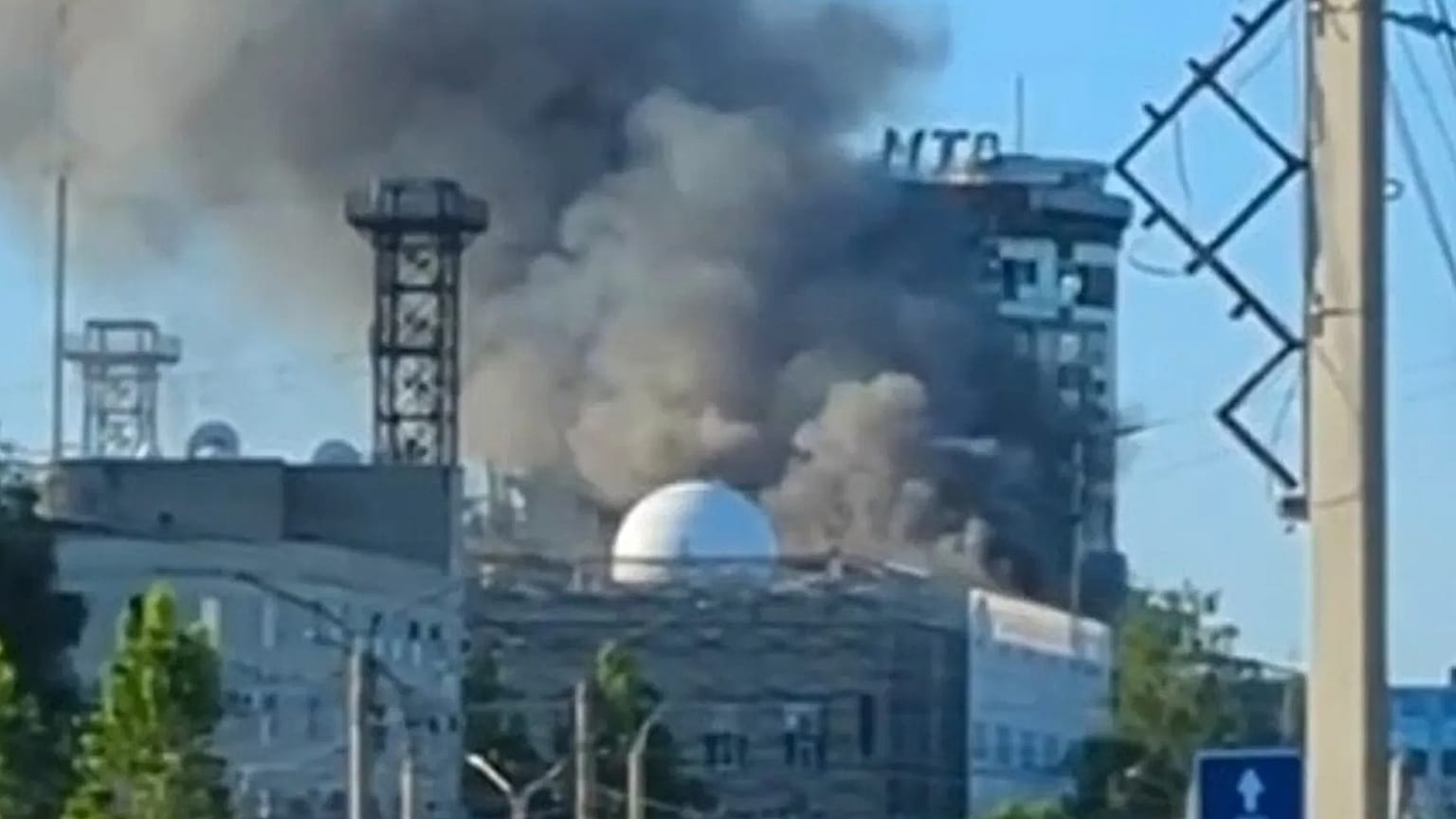
Local media outlets reported that the Ukrainian strike hit the VNIIR-Progress plant that produces antennas for drones. Ukraine's General Staff also confirmed this target.

Sanctioned by Ukraine, the US and the European Union the VNIIR-Progress plant produces satellite navigation receivers and Kometa antennas used in Shahed-type attack drones, Kalibr cruise missiles, Iskander-M ballistic missiles, and guided aerial bombs.

The attack on Cheboksary was part of a broader Ukrainian attack that also struck the Kuibyshev oil refinery in Russia's Samara region, more than 900 km from the front line, as well as two oil infrastructure facilities in Russia's Vladimir region, 700 km away.

The Kuibyshev oil refinery processes around 3.7 million tonnes of oil annually and supplies fuel products used by Russia's military-industrial sector and armed forces.

Flamingo missile made in Ukraine

Ukraine has developed its own missile called Flamingo but its use remains relatively rare.

First shown to the world in August 2025, the FP-5 Flamingo cruise missile is reported to have a strike range of up to 3,000 km and a warhead weight of up to 1,100 kg

Flamingo's parent company Fire Point said earlier in June that it has conducted a test flight of a ballistic missile that will serve as ​the foundation of a project to create a missile air ‌defence system.

The FP7.X is the interceptor variant of ⁠Fire Point's FP7 ballistic missile, which is currently in development and which ​the company says will also be able to attack ground targets.

Workers and military inspect Ukrainian Fire Point's Flamingo missiles during handover to the military in an undisclosed location in Ukraine Thursday, Dec. 4, 2025
Workers and military inspect Ukrainian Fire Point's Flamingo missiles during handover to the military in an undisclosed location in Ukraine Thursday, Dec. 4, 2025 AP Photo

The missile itself is only one component of an air defence ‌system. ⁠Analysts say its most complex parts are the ground radar network and the targeting system in the missile.

But Fire Point management said the project’s goal is to create a unified pan-European secure air and missile defence system.

Fire Point's ​co-owner Denys Shtilierman said few week ago that the company was in talks with unnamed European companies to launch a new air defence system capable of downing supersonic ballistic ​missiles by the end of next year, creating a low-cost alternative ​to the US-made Patriot.


'Operation Pushkin': six Georgians on trial in France over theft of rare Russian books

The trial is the latest case aimed at delivering justice after a series of similar thefts in libraries across Europe, allegedly by an organised network.


Copyright PublicDomainPictures.Net

By Serge Duchêne with AFP
Published on 09/06/2026  
EURONEWS

Who says a love of reading doesn’t pay? Sometimes, though, the payoff can translate into years in prison.

Six Georgian nationals appeared before a Paris court on Tuesday for stealing rare editions of classics of Russian literature from prestigious French libraries, including works by Alexander Pushkin whose name in Russia is often accompanied (albeit with a hint of irony) by the phrase “Pushkin is everything to us”, a measure of his importance to Russian culture.

This trial is the latest in a string of similar thefts carried out in recent years in libraries across Europe, suspected of being the work of an organised network.

The thefts targeted rare Russian classics worth a total of several million euros, including works by leading 19th‑century authors such as Pushkin, the father of “Eugene Onegin”, and Nikolai Gogol, the author of the immortal “Dead Souls”.

The defendants, tried in France, are being prosecuted for criminal conspiracy and attempted theft. Some of them also face charges of stealing cultural works on display.

They face up to 10 years in prison.

Seven people were initially due to stand trial, but at the opening of the hearings on Tuesday afternoon it was announced that one woman would be tried separately, on 2 December 2026, for procedural reasons.

Of the six remaining, two are being tried in absentia, with arrest warrants issued for them.

The hearing is scheduled to run until Friday.

Two other people, identified only as Mikheil Z. and Beqa T., have already been convicted and imprisoned in other countries for similar crimes and have been provisionally surrendered to the French authorities.

Mikheil Z., aged 50, was sentenced last year in Lithuania to three years and four months in prison for the organised theft of 19th‑century publications worth 606,000 euros (698,000 dollars).

Beqa T., aged 49, was sentenced to three years and six months in prison in Estonia.

Another man in pre‑trial detention and a woman who has not been remanded in custody were also among the defendants present in court.

According to investigation documents seen by AFP, French investigating judges suspect the defendants of belonging to an organised criminal network.

These thefts, which have also affected Germany, Switzerland and the Czech Republic, led to the creation of a joint investigation team under the aegis of Europol and Eurojust, the European Union’s police and judicial coordination agencies. The team has already led to several arrests in 2024.

All in all, around ten European countries have seen manuscripts disappear from their libraries. European investigators estimate that nearly 170 rare Russian works are thought to have been stolen in several countries.


“Strengthening its protection”


The thefts committed in France took place in 2023 at the Diderot library of the École Normale Supérieure (ENS) in Lyon, as well as at the National Library of France (BnF) and the University Library of Languages and Civilisations (BULAC) in Paris.


According to investigators, the thieves went to the libraries to consult rare, valuable works, photographed and measured them, then returned to replace them with near‑undetectable copies.

Between March and October 2023, Mikheil Z. went to the National Library of France (BnF) on forty occasions to request access to manuscripts, mainly by Pushkin, claiming to be conducting research into democracy in 19th‑century Russian literature.

In November, the library discovered that nine works had been replaced by copies, for an estimated loss of 650,000 euros: eight by Alexander Pushkin (1799–1837) and one by Mikhail Lermontov (1814–1841), leading figures of Russian Romanticism who both, as it happens, died in duels.

Another literary twist is that Lermontov is the author of “The Death of the Poet”, devoted to the death of Pushkin, killed by Georges Charles de Heeckeren d’Anthès, a French soldier and politician who later became a senator under the Second Empire.

All of which was no doubt lost on the perpetrators: Mikheil Z. admitted to investigators that he had stolen the works, but denied any complicity with the other defendants, saying he had acted out of greed and had sold the books in Russia to a certain “Maxim”.

In June 2024, the Russian auction house Litfond listed in its catalogue a second edition of Pushkin’s “The Prisoner of the Caucasus”, a copy matching the one stolen from the BnF.

The auction house told the French authorities it had documents proving that the book had been acquired from its owner in Russia in 2014 or 2015.

In the investigating judges’ view, these thefts may be linked to a desire to repatriate Russian cultural heritage, at a time when relations between Moscow and Europe are increasingly strained following Russia’s invasion of Ukraine.

None of the stolen works has been recovered, but the lawyer for the National Library of France, Alexandre de Konn, said the institution “has not given up hope of getting them back”.

“The Library remains true to its mission: to keep making heritage accessible to the public while constantly strengthening its protection,” he told AFP.