Western support for Israel’s right to strike Iran backs up a pattern of “pre-emptive” violence that critics say is further eroding international law and the rules-based order put in place in the wake of World War II, ushering in a “law of the jungle” in which might takes precedence over right – with dire consequences for global stability and co-operation.
Issued on: 19/06/2025 -FRANCE24
By: Benjamin DODMAN

The attack on Iran is the latest in a series of “pre-emptive” military operations undertaken by Israel, shielded from accountability for its actions by the US and other Western powers. © AP file photo
On October 12, 2023, as Israel and its allies reeled from the carnage wrought just days earlier by Hamas militants in southern Israel, the then Pentagon chief was asked whether Washington would place any conditions on its hugely expanded security assistance to its Middle East ally.
Lloyd Austin’s answer to reporters was a straightforward “no”, based on the assumption that Israel’s military would “do the right things” in its war against the Tehran-backed militia.
Twenty months on, Israel has flattened Gaza, bombed swathes of Lebanon, seized further territory in Syria, and now launched a direct attack on Iran as it pursues what it describes as an “existential” fight against the Islamic Republic and its allies in the region.
Throughout the fighting, its ultra-nationalist leaders have dismissed the mounting evidence of war crimes committed in Gaza, which led the International Criminal Court to issue an arrest warrant for Prime Minister Benjamin Netanyahu in November 2024.
Senior cabinet members have openly advocated the forced removal of Gaza’s population, which would amount to a genocidal crime, and the dismemberment of Syria. Netanyahu himself has discussed the possibility of assassinating Iran’s head of state and precipitating “regime change” in the Islamic Republic in interviews with US media.
Ironically, such rhetoric brings Israel closer in line with the inflammatory bluster typical of its arch-foe Iran – with the important difference that Israel does possess nuclear weapons and a military capable of backing up its increasingly provocative statements.
The extraordinary escalation is a “natural consequence of the impunity that has prevailed in the region over the past two years", says H. A. Hellyer, a senior research fellow at the Royal United Services Institute for Defence and Security Studies (RUSI) in London.
“The fact that Israel has faced no consequence for repeatedly infringing international law sends a very clear signal: that if it chooses to do more, it can,” he explains. “And it can count on the most powerful actors in the international community simply not doing very much or actually empowering and emboldening it.”
On October 12, 2023, as Israel and its allies reeled from the carnage wrought just days earlier by Hamas militants in southern Israel, the then Pentagon chief was asked whether Washington would place any conditions on its hugely expanded security assistance to its Middle East ally.
Lloyd Austin’s answer to reporters was a straightforward “no”, based on the assumption that Israel’s military would “do the right things” in its war against the Tehran-backed militia.
Twenty months on, Israel has flattened Gaza, bombed swathes of Lebanon, seized further territory in Syria, and now launched a direct attack on Iran as it pursues what it describes as an “existential” fight against the Islamic Republic and its allies in the region.
Throughout the fighting, its ultra-nationalist leaders have dismissed the mounting evidence of war crimes committed in Gaza, which led the International Criminal Court to issue an arrest warrant for Prime Minister Benjamin Netanyahu in November 2024.
Senior cabinet members have openly advocated the forced removal of Gaza’s population, which would amount to a genocidal crime, and the dismemberment of Syria. Netanyahu himself has discussed the possibility of assassinating Iran’s head of state and precipitating “regime change” in the Islamic Republic in interviews with US media.
Ironically, such rhetoric brings Israel closer in line with the inflammatory bluster typical of its arch-foe Iran – with the important difference that Israel does possess nuclear weapons and a military capable of backing up its increasingly provocative statements.
The extraordinary escalation is a “natural consequence of the impunity that has prevailed in the region over the past two years", says H. A. Hellyer, a senior research fellow at the Royal United Services Institute for Defence and Security Studies (RUSI) in London.
“The fact that Israel has faced no consequence for repeatedly infringing international law sends a very clear signal: that if it chooses to do more, it can,” he explains. “And it can count on the most powerful actors in the international community simply not doing very much or actually empowering and emboldening it.”
Read more

‘It's the civilians who will pay the price’: Iranians prepare for the worst after Israeli strikes
The most immediate consequence of Israeli impunity in the Middle East is the immense suffering inflicted on civilian populations, nowhere more so than in Gaza, where Israel’s ongoing military campaign has killed more 55,000 people, according to local health officials, and rendered the narrow strip of land largely uninhabitable.
Another consequence, with more far-reaching implications, is the further erosion of the rules-based order in place since World War II, says Karim Emile Bitar, a Middle East expert at Beirut’s Saint-Joseph University and visiting professor at Sciences-Po Paris.
“Recent events have driven the final nail into the coffin of international law and of what has been referred to as the liberal international order,” he says. “The message to the world is that if might is on your side, you can break all the rules, trample on international law and all the standards that have been in place since 1945, and there will be absolutely no accountability.”
The most immediate consequence of Israeli impunity in the Middle East is the immense suffering inflicted on civilian populations, nowhere more so than in Gaza, where Israel’s ongoing military campaign has killed more 55,000 people, according to local health officials, and rendered the narrow strip of land largely uninhabitable.
Another consequence, with more far-reaching implications, is the further erosion of the rules-based order in place since World War II, says Karim Emile Bitar, a Middle East expert at Beirut’s Saint-Joseph University and visiting professor at Sciences-Po Paris.
“Recent events have driven the final nail into the coffin of international law and of what has been referred to as the liberal international order,” he says. “The message to the world is that if might is on your side, you can break all the rules, trample on international law and all the standards that have been in place since 1945, and there will be absolutely no accountability.”
‘A new Middle East’
Netanyahu has described Israel’s actions as ushering in a “new Middle East”, a phrase that has haunted the region at least since the 2003 Iraq War, when the US and its allies sought to remodel it – with catastrophic consequences.
“There has been a lot of jubilation (among critics of Iran), imagining that these are the ‘birth pangs’ of some sort of new Middle East. On the contrary, this is a spiral of violence, fostered by an environment of impunity that allows for vigilante action to take place without repercussions,” says Hellyer.
“Nobody needs to be a fan of the Iranian regime, or Hezbollah or Hamas, to see that this activity is incredibly destabilising for regional order and security,” he adds. “It also has massive repercussions for international order and international security, because it means that there isn't a rules-based order at all. It becomes the law of the jungle. And that should be quite concerning to all of us.”

12:50© France 24
Bitar notes that few people in the Sunni Arab world will be “shedding a tear” for the Iranian regime – “and for good reason, given the disruption and suffering caused by Tehran’s regional proxies".
However, he adds, “they are also alarmed by an increasingly unbridled Israel, which – unlike Iran – has the means to wipe out entire cities, and whose senior ministers now openly advocate ethnic cleansing in Gaza".
An immediate consequence is likely to be a regional arms race to try to narrow the gap with Israel. In Iran’s case, analysts point to the likelihood of a fresh push to go nuclear, thereby achieving the exact opposite of the stated goal of Israel’s military operation.
“Israel's attack is making Iran feel very vulnerable. Their conventional deterrence has failed, and I think we’re going to see more and more calls from within the country to pursue nuclear weapons,” says Daryl Kimball of the US-based Arms Control Association, noting that contrary to Israeli claims, Western intelligence assessments have so far concluded that Tehran is not currently pushing to militarise its nuclear programme.
Kimball says there are already voices in Iran calling for the country to withdraw from the Nuclear Non-Proliferation Treaty, which prohibits states that don’t have nuclear weapons from pursuing them.
“Bombing (Iran) simply makes sure they will try a hundred times more because they will assess there is no rules-based order, there is simply the threat of force and mutually assured destruction,” adds Hellyer.
‘Anticipatory’ self-defence
The phrase “birth pangs of a new Middle East” was famously used by former US secretary of state Condoleeza Rice to refer to the 2006 Israel-Hezbollah war, one of many conflicts with roots in the regional upheaval caused by the US invasion of Iraq.
“Back then, there was at least a stated aim to promote democracy and human rights in the region, even if it was largely a smokescreen,” says Bitar. “Now there is no such pretence. We’re back to Bismarckian power politics, in which might precedes right, and a world governed by nationalist authoritarian leaders in the mould of Putin and Trump.”
In the present climate, he adds, “the dwindling number of people who talk about respect for international law are regarded as hopeless idealists disconnected from reality".
While Israel’s attack on Iran has drawn condemnation around the world, the messaging from Western leaders has been far more mixed, with talk of Israel’s “right to defend itself” often taking precedence over references to international law.
Hours after Israel launched the first wave of attacks, French President Emmanuel Macron, whose planned summit on a two-state solution to the Israeli-Palestinian conflict was scuttled by the outbreak of war, put the blame squarely on Iran and said France stood ready to defend Israel if necessary.
Germany’s Chancellor Friedrich Merz went a step further, arguing that Israel was “doing the dirty job for all of us” by taking on in the Iranian regime – prompting outcry in a country where the emphasis is normally on de-escalation.

Read more What does Israel really want in Iran?
In an op-ed published by the Guardian, Sydney-based international law professor Ben Saul argued that support for Israel’s “right to self-defence" had no legal grounding in the present conflict and set a dangerous precedent.
He described Israel’s attack on Iran as “part of a pattern of unlawful ‘anticipatory’ violence against other countries”, along with its recent destruction of Syrian military bases and equipment, despite “the absence of any attack by the new Syrian authorities on Israel”.
“The risk of abuse of ‘anticipatory’ self-defence is simply too great, and too dangerous, for the world to tolerate,” Saul wrote, noting that Russia claimed to invade Ukraine “in part because it speculatively feared NATO expansion”. He added: “Many countries have hostile relations with other countries. Allowing each country to unilaterally decide when they wish to degrade another country’s military, even when they have not been attacked, is a recipe for global chaos – and for the unjustified deaths of many innocent people.”
‘One pillar of the post-war order is attacking another’
In an interview with Middle East Eye, Sir Richard Dalton, a former British ambassador to Tehran, noted that past US administrations had refused to countenance a large-scale Israeli attack on Iran, but that Netanyahu “has obtained more leverage over the US (since Donald Trump’s return to power) and Israel is more of a law unto itself”.
Dalton said other Western countries had been “incredibly limp in not holding Israel to account” for its conduct over the past 20 months, a stance he attributed in part to their growing disregard for international law.
“They don’t look at the legal issue. They won’t look at the circumstances in international law when a pre-emptive strike against a potential enemy is lawful and when it is not,” he said. “Israel’s strike was an illegal aggression. But we’re prepared to talk frankly in those terms about Russia but not about Israel.”

While Western powers have failed to rein in the violence, the institutions they helped found decades ago to uphold the rules-based order have not sat idle.
Since the start of the Gaza war, both the ICC and the International Court of Justice (ICJ) have moved with urgency, the latter issuing successive rulings last year to warn of the risk of genocide in Gaza and order an end to Israel’s military operations in the south of the enclave. Neither court, however, has the capacity to enforce international law if world powers refuse to comply.
When the ICC issued its arrest warrant for Netanyahu, former US president Joe Biden described the move as “outrageous”. His successor at the White House has gone a step further, issuing an executive order in January to authorise sanctions on the court over its “illegitimate” actions against the US and its “close ally Israel”.
The Trump administration has also withdrawn the US from several UN bodies and slashed the organisation’s funding, creating a situation in which “one pillar of the post-war order is attacking another”, according to Brian Brivati, visiting professor of contemporary history and human rights at Kingston University.
“The leading founder of the UN is now undermining the institution from within, wielding its security council veto to block action while simultaneously starving the organisation of resources,” Brivati wrote on The Conversation earlier this week.
“The combination of a powerful state acting with impunity and a superpower disabling the mechanisms of accountability marks a global inflection point,” he added. “Other global powers, including Russia and China, are taking this opportunity to move beyond the Western rules-based system.”
The breakdown of the system could have catastrophic consequences for global stability, warns RUSI’s Hellyer, pointing to the need for international rules and co-operation to tackle a host of global challenges.
“There will always be new crises and conflicts, not least of which dealing with the climate emergency,” he says. “And we need international law and the rules-based order to at least mitigate their consequences.”
In an op-ed published by the Guardian, Sydney-based international law professor Ben Saul argued that support for Israel’s “right to self-defence" had no legal grounding in the present conflict and set a dangerous precedent.
He described Israel’s attack on Iran as “part of a pattern of unlawful ‘anticipatory’ violence against other countries”, along with its recent destruction of Syrian military bases and equipment, despite “the absence of any attack by the new Syrian authorities on Israel”.
“The risk of abuse of ‘anticipatory’ self-defence is simply too great, and too dangerous, for the world to tolerate,” Saul wrote, noting that Russia claimed to invade Ukraine “in part because it speculatively feared NATO expansion”. He added: “Many countries have hostile relations with other countries. Allowing each country to unilaterally decide when they wish to degrade another country’s military, even when they have not been attacked, is a recipe for global chaos – and for the unjustified deaths of many innocent people.”
‘One pillar of the post-war order is attacking another’
In an interview with Middle East Eye, Sir Richard Dalton, a former British ambassador to Tehran, noted that past US administrations had refused to countenance a large-scale Israeli attack on Iran, but that Netanyahu “has obtained more leverage over the US (since Donald Trump’s return to power) and Israel is more of a law unto itself”.
Dalton said other Western countries had been “incredibly limp in not holding Israel to account” for its conduct over the past 20 months, a stance he attributed in part to their growing disregard for international law.
“They don’t look at the legal issue. They won’t look at the circumstances in international law when a pre-emptive strike against a potential enemy is lawful and when it is not,” he said. “Israel’s strike was an illegal aggression. But we’re prepared to talk frankly in those terms about Russia but not about Israel.”
11:50© France 24
While Western powers have failed to rein in the violence, the institutions they helped found decades ago to uphold the rules-based order have not sat idle.
Since the start of the Gaza war, both the ICC and the International Court of Justice (ICJ) have moved with urgency, the latter issuing successive rulings last year to warn of the risk of genocide in Gaza and order an end to Israel’s military operations in the south of the enclave. Neither court, however, has the capacity to enforce international law if world powers refuse to comply.
When the ICC issued its arrest warrant for Netanyahu, former US president Joe Biden described the move as “outrageous”. His successor at the White House has gone a step further, issuing an executive order in January to authorise sanctions on the court over its “illegitimate” actions against the US and its “close ally Israel”.
The Trump administration has also withdrawn the US from several UN bodies and slashed the organisation’s funding, creating a situation in which “one pillar of the post-war order is attacking another”, according to Brian Brivati, visiting professor of contemporary history and human rights at Kingston University.
“The leading founder of the UN is now undermining the institution from within, wielding its security council veto to block action while simultaneously starving the organisation of resources,” Brivati wrote on The Conversation earlier this week.
“The combination of a powerful state acting with impunity and a superpower disabling the mechanisms of accountability marks a global inflection point,” he added. “Other global powers, including Russia and China, are taking this opportunity to move beyond the Western rules-based system.”
The breakdown of the system could have catastrophic consequences for global stability, warns RUSI’s Hellyer, pointing to the need for international rules and co-operation to tackle a host of global challenges.
“There will always be new crises and conflicts, not least of which dealing with the climate emergency,” he says. “And we need international law and the rules-based order to at least mitigate their consequences.”
What does Israel really want in Iran?
Prime Minister Benjamin Netanyahu has maintained that preventing Iran from developing a nuclear weapon is the main goal of Israel’s military offensive. But Israeli defence forces have also carried out strikes on Iranian energy infrastructure and military sites, raising questions about Netanyahu’s real end game: Is regime change in Iran a realistic goal for Israel?
Issued on: 17/06/2025 -
Prime Minister Benjamin Netanyahu has maintained that preventing Iran from developing a nuclear weapon is the main goal of Israel’s military offensive. But Israeli defence forces have also carried out strikes on Iranian energy infrastructure and military sites, raising questions about Netanyahu’s real end game: Is regime change in Iran a realistic goal for Israel?
Issued on: 17/06/2025 -
FRANCE24
By: Sébastian SEIBT
The Octopus Doctrine
Israel’s multi-pronged strategy is also known as the “Octopus Doctrine”, which was first established by former prime minister Naftali Bennett in 2021, said Veronika Poniscjakova, an expert on conflicts in the Middle East at Portsmouth University.
“Iran is the octopus with tentacles all around the Middle East,” Poniscjakova said, with proxies like Hezbollah in Lebanon or Hamas in Gaza.
Its new approach means that Israel will “no longer go after the tentacles of the octopus, [targeting these groups] or carrying out covert attacks on Iran’s nuclear facilities [as with] the Stuxnet computer virus, but go for the octopus’s head directly … striking at the source of the threat – the regime itself”.

By: Sébastian SEIBT
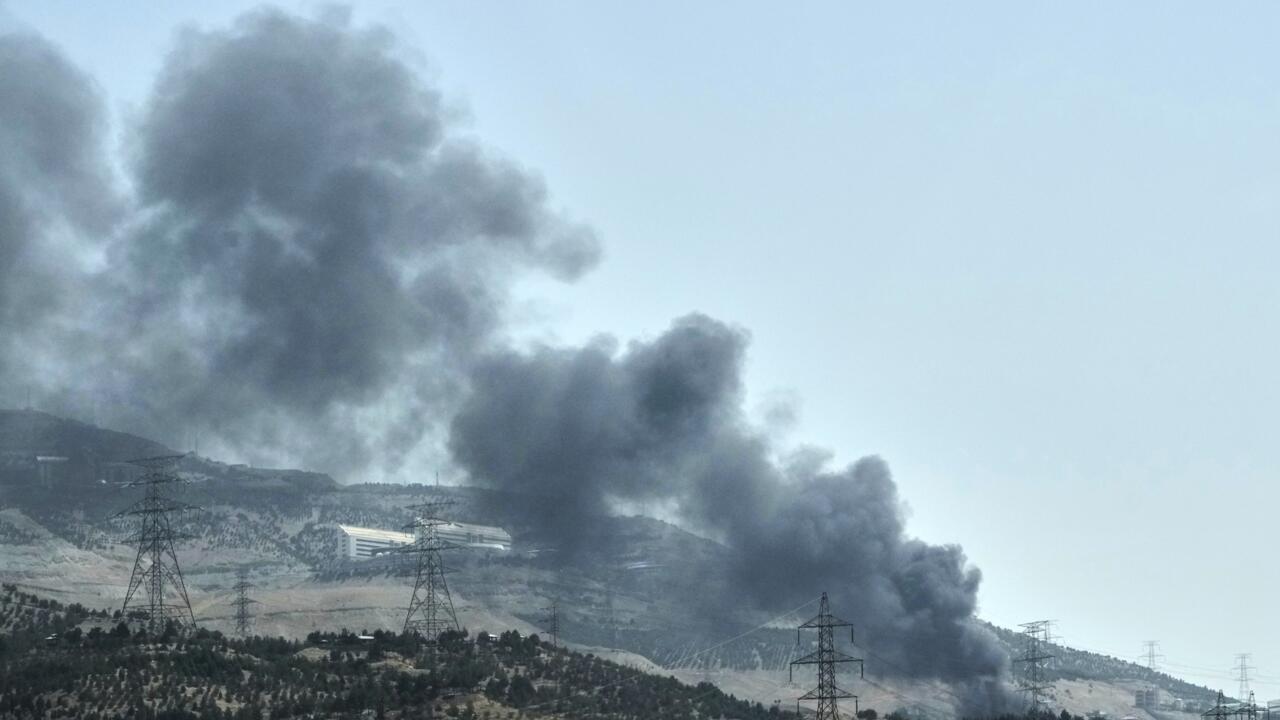
Smoke rises from an oil storage facility after it appeared to have been struck by an Israeli strike on June 16, 2025. © Vahid Salemi, AP
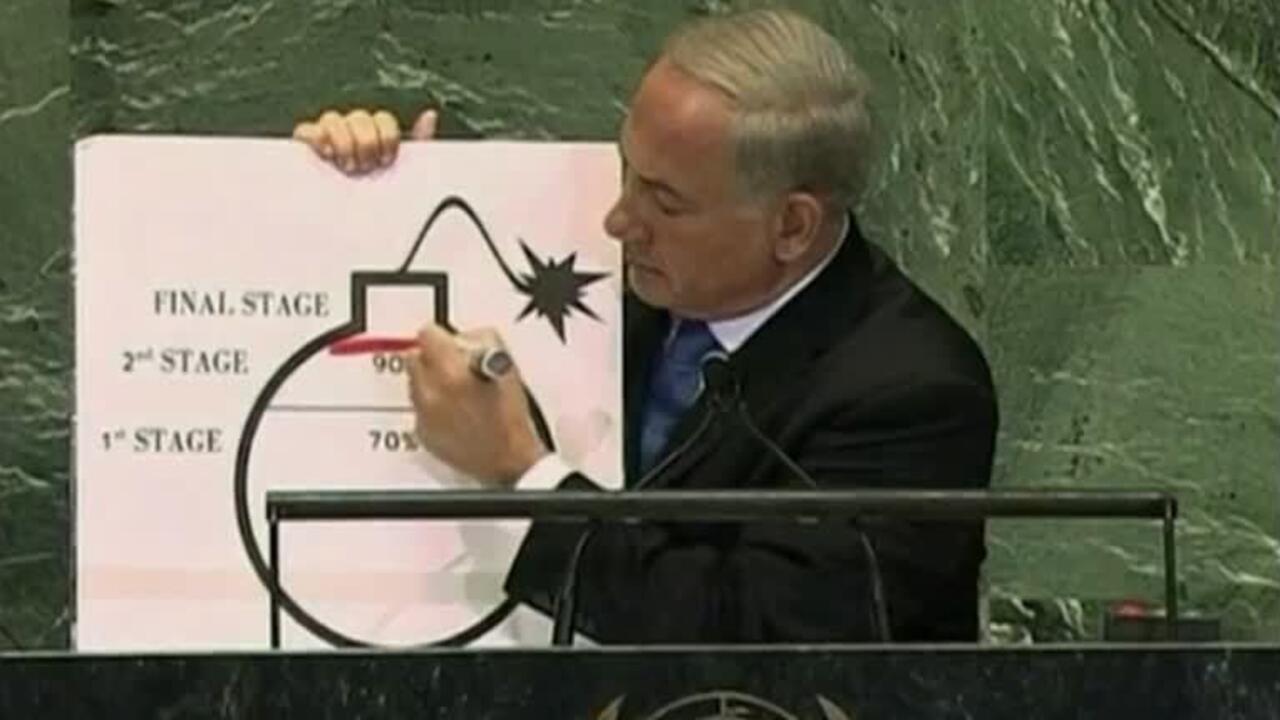
When Prime Minister Benjamin Netanyahu laid out his goals after launching strikes on Iran on Friday last week, he said that the Islamic Republic's nuclear weapons and existing ballistic missiles were the primary targets of the Israeli operation. The goal was to end the “existential threat” Israel says it faces from Iran, which has long denied Israel’s right to exist. But the latest air strikes seem to tell a different story.
Israeli attacks targeted an Iranian foreign ministry building and the defence ministry in Tehran on Sunday. Police headquarters in the city centre were also hit by Israeli jets that same day.
On Monday, Israel said it had struck the command centre of Iran’s Quds Force, the branch of the elite Revolutionary Guards that coordinates operations outside the country and reports directly to Supreme Leader Ayatollah Ali Khamenei.
These new targets are much more closely tied to the heart of the Iranian regime’s military and political decision-making fulcrum than to its nuclear programme.
Priorities
Israel on Saturday also targeted the massive South Pars gas field, which is the world’s largest reservoir of natural gas.
“The logic [for the Israeli government] is incremental. There is a priority of targets,” explained Clive Jones, professor of regional security at Durham University's School of Government and International Affairs.
The first is to significantly slow down – or potentially end – Iran’s nuclear programme. “The second is to target military delivery systems and the leadership that controls them,” Jones said.
Jones believes the second priority was the reasoning behind Israel’s attacks on the gas field.
“If you look at the strikes Israel has conducted, what they’ve tried to do is hit fuel plants that supply the Iranian military – those associated with their rockets programmes, for example, or refuelling tankers,” Jones said.
“They’ve not yet really hit civilian energy infrastructure. That may be something that comes later, depending on what happens next.”
Other targets might be chosen for shock value, according to Middle East expert Filippo Dionigi of the University of Bristol.
Attacks on buildings linked to the regime or the targeted assassinations of officials can be seen as an attempt by Israel to “shock the enemy and try to subvert its chain of command and create chaos, so that it slows down its capacity to react”, Dionigi said.
When Prime Minister Benjamin Netanyahu laid out his goals after launching strikes on Iran on Friday last week, he said that the Islamic Republic's nuclear weapons and existing ballistic missiles were the primary targets of the Israeli operation. The goal was to end the “existential threat” Israel says it faces from Iran, which has long denied Israel’s right to exist. But the latest air strikes seem to tell a different story.
Israeli attacks targeted an Iranian foreign ministry building and the defence ministry in Tehran on Sunday. Police headquarters in the city centre were also hit by Israeli jets that same day.
On Monday, Israel said it had struck the command centre of Iran’s Quds Force, the branch of the elite Revolutionary Guards that coordinates operations outside the country and reports directly to Supreme Leader Ayatollah Ali Khamenei.
These new targets are much more closely tied to the heart of the Iranian regime’s military and political decision-making fulcrum than to its nuclear programme.
Priorities
Israel on Saturday also targeted the massive South Pars gas field, which is the world’s largest reservoir of natural gas.
“The logic [for the Israeli government] is incremental. There is a priority of targets,” explained Clive Jones, professor of regional security at Durham University's School of Government and International Affairs.
The first is to significantly slow down – or potentially end – Iran’s nuclear programme. “The second is to target military delivery systems and the leadership that controls them,” Jones said.
Jones believes the second priority was the reasoning behind Israel’s attacks on the gas field.
“If you look at the strikes Israel has conducted, what they’ve tried to do is hit fuel plants that supply the Iranian military – those associated with their rockets programmes, for example, or refuelling tankers,” Jones said.
“They’ve not yet really hit civilian energy infrastructure. That may be something that comes later, depending on what happens next.”
Other targets might be chosen for shock value, according to Middle East expert Filippo Dionigi of the University of Bristol.
Attacks on buildings linked to the regime or the targeted assassinations of officials can be seen as an attempt by Israel to “shock the enemy and try to subvert its chain of command and create chaos, so that it slows down its capacity to react”, Dionigi said.
01:33© France 24
The Octopus Doctrine
Israel’s multi-pronged strategy is also known as the “Octopus Doctrine”, which was first established by former prime minister Naftali Bennett in 2021, said Veronika Poniscjakova, an expert on conflicts in the Middle East at Portsmouth University.
“Iran is the octopus with tentacles all around the Middle East,” Poniscjakova said, with proxies like Hezbollah in Lebanon or Hamas in Gaza.
Its new approach means that Israel will “no longer go after the tentacles of the octopus, [targeting these groups] or carrying out covert attacks on Iran’s nuclear facilities [as with] the Stuxnet computer virus, but go for the octopus’s head directly … striking at the source of the threat – the regime itself”.
Iranian nuclear sites in Israel's crosshairs © FRANCE 24 graphic design studio
But the scope of Israel’s strikes on Iran could suggest the country has broader geopolitical goals, some analysts believe.
“Israel is aiming for a regime collapse in Iran. That is the only reason they would attack energy infrastructures, to increase social unrest against the Islamic Republic by the Iranian people,” said Shahin Modarres, director of the Iran Desk at the International Team for the Study of Security Verona.
And if Israel decides to target civilian energy infrastructure exclusively, power cuts across the country could become more frequent, widespread, and eventually “undermine the trust the population has in its leaders”, Dionigi said.
The Iranian health ministry has said that 90 percent of casualties so far are civilians.
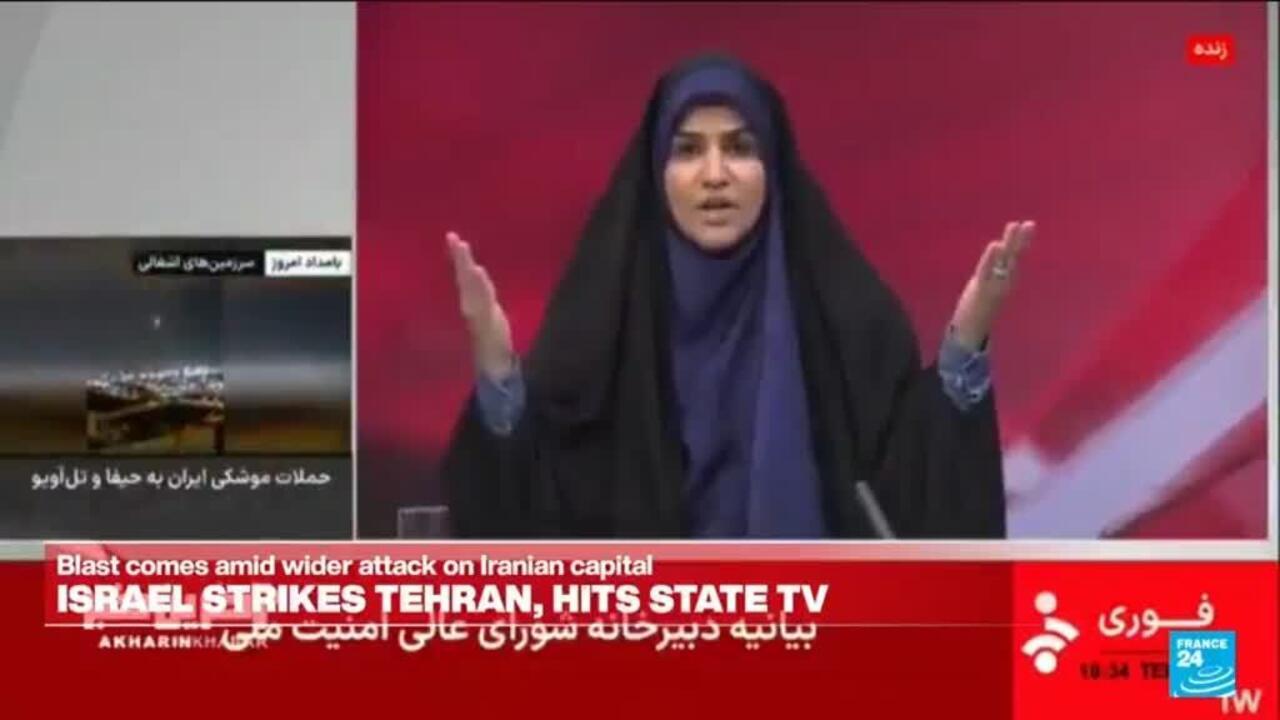
Strikes on political buildings and the targeting of the state-run TV during a live broadcast could be seen as a way to signal to the Iranian opposition that “[they] can exploit the opportunity to stand up against the regime”, Poniscjakova explained.
But the scope of Israel’s strikes on Iran could suggest the country has broader geopolitical goals, some analysts believe.
“Israel is aiming for a regime collapse in Iran. That is the only reason they would attack energy infrastructures, to increase social unrest against the Islamic Republic by the Iranian people,” said Shahin Modarres, director of the Iran Desk at the International Team for the Study of Security Verona.
And if Israel decides to target civilian energy infrastructure exclusively, power cuts across the country could become more frequent, widespread, and eventually “undermine the trust the population has in its leaders”, Dionigi said.
The Iranian health ministry has said that 90 percent of casualties so far are civilians.
Strikes on political buildings and the targeting of the state-run TV during a live broadcast could be seen as a way to signal to the Iranian opposition that “[they] can exploit the opportunity to stand up against the regime”, Poniscjakova explained.
09:40© France 24
Most tellingly, Netanyahu issued a direct appeal to Iranians as the Israeli offensive began on Friday, saying he hoped the military operation will “clear the path for you to achieve your freedom”.
"This is your opportunity to stand up [to the regime]," he added.
Netanyahu’s “social media post aimed at the Iranian people, in which he effectively says Israel is paving the way and targeting a regime that has kept you repressed”, Jones said, adding that the post made it pretty clear the Israeli premier is hoping for regime change.
But whether an internal revolt is something that can be encouraged by a competing regional power that has long been at odds with Iran is far from certain.
An 'existential war' for Iran
Israel’s bombing of Iranian police headquarters in Tehran and its subsequent attacks on the ministry of intelligence and security “could degrade the regime’s ability to maintain internal security and social control” on a practical level, according to a report published by the Institute for the Study of War on Monday.
But it remains to be seen whether Iranian leadership can be weakened to the point where it is no longer capable of halting an uprising.
“That’s the ultimate question that nobody can really answer, at least for now,” Jones said.
Any interference from abroad could also backfire.
“External interference in the political affairs of a country rarely has the effect of simply provoking a reaction against the leadership,” Dionigi said. “Interference could have the opposite outcome and awaken a sense of national awareness, national pride and regrouping.”
In other words, in positioning himself as a supporter of the Iranian opposition, Netanyahu could actually strengthen the regime – at least for the duration of the war.
The Israeli prime minister is taking a “huge risk” by going beyond his initial aim of dismantling Iran’s nuclear programme.
“When countries are under attack, there is a tendency for people to rally around the flag, even if they dislike the regime,” Jones said.
“For the Iranian regime, this is an existential war,” Dionigi added. “They will use all of their military capacity for as long as necessary to guarantee their existence.”
For Netanyahu there is also the looming threat of greater escalation that could lead to “a higher number of civilian fatalities [in Israel], which could put more political pressure on the government”, Modarres said.
“It all depends on how [Netanyahu] ends this war. Either he dismantles the Islamic Republic’s nuclear programme and manages to conduct a regime change, or it backfires and his political career ends,” he added.
This article was translated from the original in French by Lara Bullens.
"This is your opportunity to stand up [to the regime]," he added.
Netanyahu’s “social media post aimed at the Iranian people, in which he effectively says Israel is paving the way and targeting a regime that has kept you repressed”, Jones said, adding that the post made it pretty clear the Israeli premier is hoping for regime change.
But whether an internal revolt is something that can be encouraged by a competing regional power that has long been at odds with Iran is far from certain.
An 'existential war' for Iran
Israel’s bombing of Iranian police headquarters in Tehran and its subsequent attacks on the ministry of intelligence and security “could degrade the regime’s ability to maintain internal security and social control” on a practical level, according to a report published by the Institute for the Study of War on Monday.
But it remains to be seen whether Iranian leadership can be weakened to the point where it is no longer capable of halting an uprising.
“That’s the ultimate question that nobody can really answer, at least for now,” Jones said.
Any interference from abroad could also backfire.
“External interference in the political affairs of a country rarely has the effect of simply provoking a reaction against the leadership,” Dionigi said. “Interference could have the opposite outcome and awaken a sense of national awareness, national pride and regrouping.”
In other words, in positioning himself as a supporter of the Iranian opposition, Netanyahu could actually strengthen the regime – at least for the duration of the war.
The Israeli prime minister is taking a “huge risk” by going beyond his initial aim of dismantling Iran’s nuclear programme.
“When countries are under attack, there is a tendency for people to rally around the flag, even if they dislike the regime,” Jones said.
“For the Iranian regime, this is an existential war,” Dionigi added. “They will use all of their military capacity for as long as necessary to guarantee their existence.”
For Netanyahu there is also the looming threat of greater escalation that could lead to “a higher number of civilian fatalities [in Israel], which could put more political pressure on the government”, Modarres said.
“It all depends on how [Netanyahu] ends this war. Either he dismantles the Islamic Republic’s nuclear programme and manages to conduct a regime change, or it backfires and his political career ends,” he added.
This article was translated from the original in French by Lara Bullens.


No comments:
Post a Comment