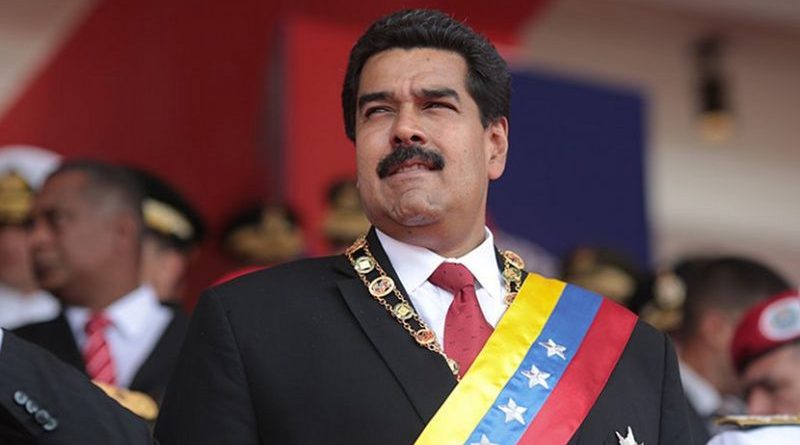
Venezuela's Nicolas Maduro. Photo by Hugoshi, Wikimedia Commons.
September 23, 2025
By Observer Research Foundation
By Vivek Mishra and Prakreeti Chaudhary
The Caribbean, at present, stands barely one mistake away from a catastrophe. In an unprecedented move, the United States (US) has directly attacked a vessel linked to Venezuelan drug networks in international waters, killing 11 people. Trump invoked imminent threats to American security to take the action and linked it to Venezuela’s Tren de Aragua gang, involved in narcotics trafficking.
Caracas dismissed the incident as a fabrication and denounced it as an imperialist aggression. The Departments of State and Justice have raised the reward under the Narcotics Rewards Program (NRP) to as much as US$50 million for information that leads to the arrest or conviction of Nicolás Maduro on US narcotics law violations.
The situation has rapidly escalated as the Pentagon has since expanded its F-35 fleet in Puerto Rico and strengthened naval patrols. Over 4,500 Marines are on alert, underscoring the seriousness of the escalation. Venezuela has responded in kind, announcing that its coastal defence forces will increase from 10,000 to 25,000 personnel. Drones, naval patrols, and semi-submersible detection systems have been activated, especially in the country’s northwest states—Zulia and Falcón. The Venezuelan Air Force has also flown their F-16 fighters dangerously close to USS Jason Dunham, drawing Trump’s ire.
The US-Venezuela tension in the Caribbean now mirrors a Cold War-style standoff, walking a tightrope between a classic political and ideological divide. Critics argue that Washington’s one-sided strike lacks both congressional approval and international legal cover. If such operations become normalised, it could set an example for other powers to justify military action under the banner of counter-narcotics, undermining global norms. The confrontation now demands resolution frameworks that privilege stability over escalation.
Structural Roots of Venezuela’s Drug Nexus
Venezuela’s entanglement in the global drug problem—particularly its pronounced impact on the US—has consistently remained a contentious issue. Neighbouring the world’s largest cocaine supplier—Colombia—Venezuela’s topography and location make it a suitable transit hub instead of becoming a significant cocaine producer itself. Venezuelan officials, including the military-linked Cartel de los Soles, have been accused by US agencies of making profits through drug trafficking over the past two decades. Even President Nicolás Maduro and several of his top right-hand men have been charged with narco-terrorism by the US prosecutors. Not long ago, Venezuela’s former intelligence chief, Hugo Carvajal, pleaded guilty to drug trafficking charges in a US court, reinforcing the latter’s claims of systemic complicity.
Nonetheless, Caracas has dismissed these allegations, denouncing them as politically motivated attempts to invalidate its government. Venezuela has argued that the US particularly picks on it and ignores the involvement of its allies in Central and Latin America. However, evidence suggests that Venezuela may not be the largest but a significant transit corridor for drugs in the region. In fact, US Drug Enforcement Administration (DEA) data indicate that far greater volumes of cocaine travel through Guatemala or Honduras. Often, this has led Venezuela to accuse the US of disguising the geopolitics of oil as its war on drugs.
The Sanction-Security Spiral
The escalation between Washington and Caracas is not unfolding in isolation. The Caribbean may be the theatre, but the script is familiar. When security threats are countered solely through force or punitive measures, it is unlikely to yield the desired outcome and often results in prolonged insecurity. Over two decades, the US has imposed several sanctions ranging from visa restrictions, terrorism-related sanctions, sanctions related to anti-democratic actions, human rights violations, and corruption, drug-trafficking-related sanctions, export controls, and sanctions on the Maduro government, among others. This has led to the collapse of the Venezuelan economy.
In March 2025, Washington ordered Chevron to wind down Venezuelan oil exports within 30 days, cutting a lifeline for Caracas at a moment of fiscal strain. Additional sanctions block access to the US capital markets, freeze assets, and penalise firms that transact with Petróleos de Venezuela (PDVSA) – the state-owned oil and gas company.
European countries have also imposed restrictions, though more selectively, focusing on travel bans and asset freezes for Venezuelan officials who are implicated in corruption or human rights abuses. Financial pressure is compounded by ongoing litigation against Citgo, PDVSA’s US-based subsidiary, which risks dismantling one of Caracas’s last major overseas assets.
The impact of sanctions on the Venezuelan economy has been devastating. Oil production has plummeted, falling below one million barrels per day, while hyperinflation and shortages of food, fuel, and medicine persist. Ordinary Venezuelans bear the brunt even as remittance dependence has grown, public services have collapsed, and millions have fled the country, exacerbating regional migration crises. Contrary to intended results, sanctions have hardened Maduro’s inner circle in their collective stance against the US.
Restricted from Western financial systems, Caracas has turned more decisively toward Russia, China, and Iran for loans, oil swaps, military supplies, and political support. In effect, sanctions risk accelerating geopolitical polarisation in the Caribbean while failing to deliver regime change. Even though sanctions have been the mainstay of American political pressure against Venezuela for a long time, the second Trump administration is bent on testing the possibility of military force as well.
History is replete with instances highlighting Washington’s limits of a militarised approach in its backyard. In the past, the US has also signed joint initiatives such as Plan Colombia and Mexico’s Mérida Initiative, which have failed to yield desired results. Perhaps this suggests that the Trump administration must look for solutions beyond military means or coercion. Stability requires a combination of security cooperation, institutional reform, and humanitarian support. Without this, the Caribbean risks becoming the next Cold War frontier.
Internal Faultlines and Systemic Weaknesses
The challenges in Venezuela are entrenched and layered. Corruption within the judiciary, collusion by security forces, and weak state capacity, resulting from power consolidation and opaque democratic processes, make enforcement inconsistent. Traffickers exploit porous borders with Colombia and use clandestine airstrips, semi-submersibles, and fishing fleets to move narcotics.
On the US side, the elephant in the room is growing demand for drugs. The opioid crisis has revealed that without serious investment in treatment, rehabilitation, and education, supply-side crackdowns will achieve little. According to the US Department of Health and Human Services (HHS) data, millions of Americans with substance use disorders go untreated each year, widening the gap between public health needs and law enforcement-led strategies.
Furthermore, the absence of a robust legal mechanism on the international front to govern such disputes further aggravates the issue. The United Nations Office on Drugs and Crime (UNODC) provides technical assistance but lacks enforcement power. Moreover, the Organization of American States (OAS) initiatives are chronically underfunded. A regional response is the need of the hour and could prove to be the more effective approach. A Caribbean Counter-Narcotics Task Force, monitored by neutral countries such as Brazil or Chile, could share intelligence, coordinate patrols, and give smaller Caribbean nations a voice, while reducing their dependence on unilateral US action.
Additionally, targeting the finances of drug networks is more effective than intercepting shipments, as cartels use cryptocurrencies, offshore accounts, and shell companies. Stronger regional anti-moneylaundering standards and coordinated judicial frameworks for extradition and asset freezes would increase the costs of trafficking. Reducing demand is equally important. Portugal’s experience shows that decriminalisation, along with treatment and harm reduction, can address addiction as a health issue. Similar reforms in the US would lower demand for Venezuelan and Colombian cocaine and demonstrate Washington’s willingness to face its own responsibility. Confidence-building measures such as joint patrols under the UN or regional oversight could ease mistrust and prevent clashes, giving both sides a dignified way out. Finally, giving the UNODC more resources would strengthen multinational enforcement, capacity building, and data-sharing.
Shifting from a fragmented ‘war on drugs’ to a united framework could help the US balance enforcement, development, and public health. This will require treating narcotics as primarily governance and human-related security issues instead of treating them as a militarised conflict. For greater acceptability of his war against drugs, the Trump administration will have to avoid double standards in condemning Venezuela while tolerating drug entries from other neighbouring countries. Meanwhile, as the US has struck a second vessel in international waters, resulting in three Venezuelans being killed, and Secretary Rubio has affirmedthe US’s stance against drugs, the Caribbean seems to be inching towards a flagration which could engulf the larger region.
About the authors:
Prakreeti Chaudhary is a Research Intern at the Observer Research Foundation.
Source: This article was published by the Observer Research Foundation.
Observer Research Foundation
ORF was established on 5 September 1990 as a private, not for profit, ’think tank’ to influence public policy formulation. The Foundation brought together, for the first time, leading Indian economists and policymakers to present An Agenda for Economic Reforms in India. The idea was to help develop a consensus in favour of economic reforms.
White House rejects Maduro's call for talks as US naval buildup stirs tensions
The White House on Monday dismissed Venezuelan President Nicolas Maduro's appeal for direct talks with Donald Trump, as Washington's show of force in the Caribbean drew both warnings of 'undeclared war' from Caracas and support from key opposition leaders hoping to hasten Maduro's fall.
Issued on: 23/09/2025 -
By: FRANCE 24
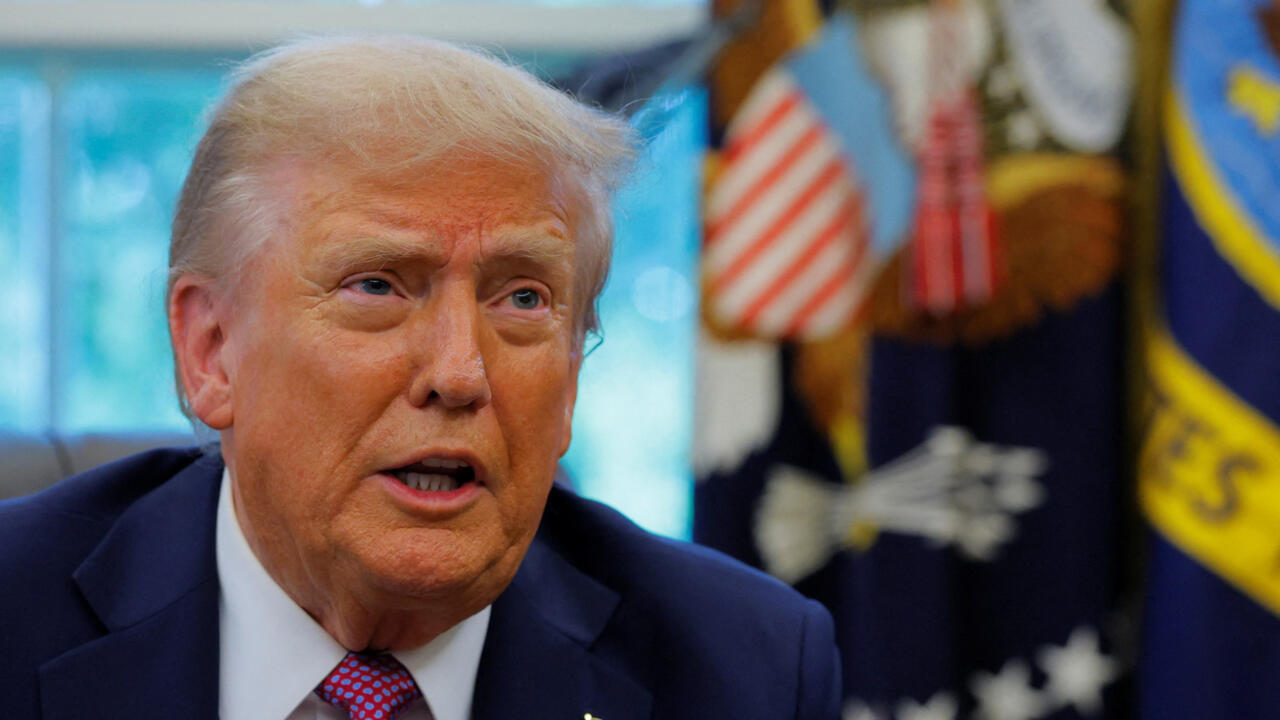
The White House on Monday dismissed a request by Venezuelan President Nicolas Maduro for talks with counterpart Donald Trump to de-escalate tensions between the two arch-foes.
The brush-off came as two Venezuelan opposition leaders backed a US naval build-up near the South American country, calling it critical for the restoration of democracy.
Trump has dispatched eight warships and a submarine to the southern Caribbean in an anti-drug operation Venezuela fears could be the preamble to an invasion.
US forces have destroyed at least three suspected Venezuelan drug boats in recent weeks, killing over a dozen people.
On Sunday, the Venezuelan government released a letter that leftist Maduro had sent to Trump.
In the missive, Maduro -- whose July 2024 reelection was rejected as fraudulent by Venezuela's opposition and much of the international community -- rejected as "absolutely false" US allegations that he leads a drug cartel and urged Trump to "keep the peace."
Reacting on Monday, White House Press Secretary Karoline Leavitt said Maduro's letter contained "a lot of lies."
She added the Trump administration's position on Venezuela "has not changed" and it viewed the regime as "illegitimate."
The US deployment is the biggest in the Caribbean in years.
Maduro has accused Trump -- who during his first term tried unsuccessfully to expedite the Venezuelan president's ouster -- of trying to affect regime change.
His defense minister, Vladimir Padrino Lopez, last week accused the United States of waging "an undeclared war" in the Caribbean, underlining that occupants of alleged drug boats were "executed without the right to a defense."
Thousands of Venezuelans have joined a civilian militia in response to Maduro's call for bolstering the cash-strapped country's defenses.
Some Venezuelans have welcomed the US actions, however, hoping they hasten Maduro's downfall.
'Real and growing threat'
Exiled presidential candidate Edmundo Gonzalez Urrutia, who the United States views as Venezuela's democratically-elected leader, said the military deployment was "a necessary measure to dismantle the criminal structure" he said Maduro leads.
Opposition figurehead Maria Corina Machado agreed, and said Venezuelan crime gangs were "a real and growing threat to the security and stability" of the Americas.
Maduro's claim to election victory last year sparked violent protests that were harshly repressed, leaving more than two dozen dead and hundreds behind bars.
The opposition said its own tally of results showed Gonzalez Urrutia, who stood in after the regime barred Machado from running, had defeated Maduro hands down.
Threatened with arrest, Gonzalez Urrutia fled to Spain. Machado remains in Venezuela, in hiding.
Another opposition figure, Henrique Capriles, last week came out against any US invasion.
"I continue to believe that the solution is not military, but political," the two-time presidential candidate said, adding Trump's actions were counterproductive and "entrenching those in power."
(FRANCE 24 with AFP)
War Signals, Quiet Channels, and Venezuela’s Discounted Barrels
- Trump threatened Venezuela and sent Navy, Air Force, and special forces to the Caribbean.
- Despite the hard line, both sides appear open to talks.
- Chevron’s waiver keeps some U.S. barrels flowing, but sanctions push ~85% of Venezuela’s oil to China at a discount.
In a recent post on Truth Social, U.S. President Donald Trump threatened Venezuela to take back ‘prisoners and people from mental institutions,’ or else ‘the price you will pay will be incalculable.’ This was announced right when the U.S. military was deploying an array of Navy and Air Force units in the Eastern Caribbean, and even elite Special Operations forces, making the threat real.
The deployment is accompanied by a key narrative element. Since late July, administration officials have been promoting the idea that Venezuela is ruled by a ‘criminal organisation’ known as the ‘Cartel de los Soles’, with Nicolás Maduro at its head. Many analysts are thus seeing through the ‘counter-narcotics’ rhetoric, concluding that this is a campaign to drive Maduro out of power.
The U.S. military has since bombed and destroyed three boats, alleged to be carrying drugs from Venezuela—although the statement on the third strike shied away from mentioning the country, given rising questions over the legality of such actions. In any case, while the Navy surrounds Venezuela’s coasts, destroying speedboats could be equivalent to shooting in the air during a heist.
At Guacamaya we recently published articles finding that the ‘Cartel de los Soles’ story is no more than a political narrative, ignoring the realities of drug trafficking, and that it is being promoted by certain political and economic interests to push for regime change in Venezuela. Others have also analysed how the use of the terms ‘Tren de Aragua’ and ‘Cartel de los Soles’ has risen and fallen based on their political convenience.
Related: Eni Seals Billion-Dollar Fusion Energy Deal with U.S. Partner
President Trump’s messaging has consistently focused on fentanyl—which causes 70% of overdose deaths in the United States—instead of Colombian cocaine. And in any case, just 5% of the latter transits through Venezuela, according to none other than the DEA. What Venezuela does indeed have is 300 billion barrels of oil, 220 trillion cubic feet of gas, and significant deposits of gold, iron, tin, bauxite, coltan, and rare minerals. Meanwhile, Caracas has been a close ally of Havana, meaning it is in the sights of South Florida’s Cuban-American political community, with Secretary of State and National Security Advisor Marco Rubio at its head.
Are we then to expect a further escalation of conflict between the United States and Venezuela? How likely is it that there will be an all-out war? Or are the two sides ready to negotiate? Then, what would either of these options mean for energy markets?
Actually, there are some signals that both the White House and the Palace of Miraflores are open to talk. The Truth Social post creates a doubt. One can understand that it refers to President Trump’s claim that Maduro purposefully sent thousands of criminals into the United States. But if Venezuela accepts all deportees, would regime change plans be shelved?
Soon after the publication, on the very same day, Reuters said that it had seen a letter in which Maduro offered Trump to engage in direct talks via Presidential Envoy for Special Missions Richard Grenell. The letter’s date was September 6, probably reflecting that some officials tried to hide it.
A key question remains. The United States is already sending two flights full of Venezuelan migrants home every week. By mid-September, this means 54 flights and 10,000 deportees, according to a source in the State Department with information on the matter. So, is the solution as simple as ramping up the pace of deportation flights?
Likewise, regarding drug trafficking, would it be enough for Maduro to commit to combating the transit of cocaine? If Trump only worries about fentanyl, eradicating it will be all the easier.
Besides immigration and drug trafficking—real and alleged—energy is the key topic in discussions between Washington, DC and Caracas. If they go back to the negotiation table, one can be sure that oil and gas will be on the agenda.
The sanctions waiver for Chevron to continue operating in Venezuela is still active. Local sources estimate that it is shipping an average of 80,000 barrels per day to the United States, well below a high of 300,000 bpd last year, under the previous license.
The main argument behind the special authorisation is that the corporation needs to recoup its debts. But this results in an awkward favouritism. On one hand, other oil firms in the U.S. and Europe are wondering what the argument is for leaving them out. Simultaneously, there are various types of creditors of Venezuela, including bondholders and arbitration award claimants. The first group are owed $70 billion—not including bonds held by Venezuelan entities—while the second are requesting at least $23 billion. Both are mostly comprised of U.S. and European companies and financial institutions.
Another argument is that the Chevron license will allow the United States to keep a foothold in Venezuela and combat Beijing’s influence in the region. But the current sanctions framework is resulting in China taking 85% of oil exports, at a discount. We are also seeing private Chinese companies sign contracts to extract crude, including China Concord Petroleum, Anhui Guangda Mining Investment, and Kerui Petroleum; all while North American and European investors are barred by the Department of the Treasury’s sanctions.
Iran’s dark fleet is also back, providing much-needed diluents, after having stayed out of the picture while Chevron and other Western companies had licenses until late May this year. Historically, the U.S. and Venezuela had a symbiotic relationship; the first sold light petroleum products to make the second’s extra-heavy crude exportable, which then ended up in the Gulf Coast refineries.
The still active Chevron license leaves an open question mark. Is the White House gearing up to escalate tensions, and risk losing its last foothold in Venezuela? Or, perhaps, will it use negotiations to expand its economic beachhead and demand better conditions for American businesses? President Trump has already sought to extract deals for critical minerals and energy with countries like Ukraine, the Democratic Republic of Congo, Syria, and Saudi Arabia.
By Elias Ferrer for Oilprice.com

No comments:
Post a Comment