“We are joining Make Amazon Pay to demand the most basic rights: safety, dignity, and the chance to go home alive,” said one Amazon worker from India.
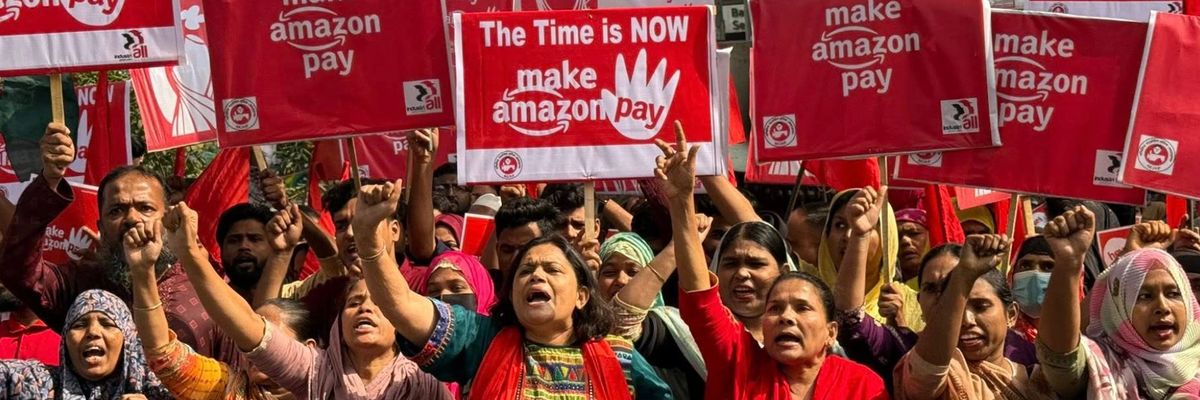 Workers with the Sommilito Garments Sramik Federation march against Amazon on November 28, 2025.
(Photo: Progressive International)
Jake Johnson
Nov 28, 2025
COMMON DREAMS
Amazon workers and their allies worldwide took to the streets on Black Friday, the busiest shopping day of the year, to protest the e-commerce behemoth’s exploitation of workers, relentless union-busting, contributions to the worsening climate emergency, and plans to replace employees en masse with robots.
“Amazon, Jeff Bezos, and their political allies are betting on a techno-authoritarian future, but this Make Amazon Pay Day, workers everywhere are saying: enough,” said Christy Hoffman, general secretary of UNI Global Union. “For years, Amazon has squashed workers’ right to democracy on the job through a union and the backing of authoritarian political figures. Its model is deepening inequality and undermining the fundamental rights of workers to organize, bargain collectively, and demand safe, fair workplaces.”
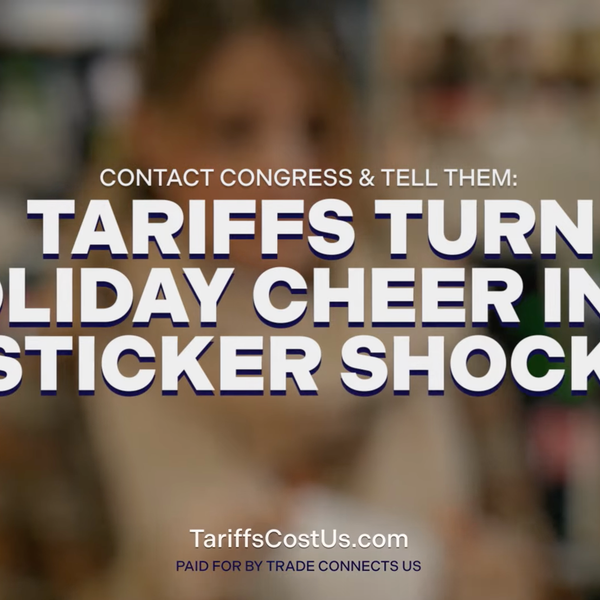
New Ad Campaign Targets Holiday Price Spike From Trump Tariffs
From Germany to Bangladesh, thousands of workers walked off the job on Friday and marched against Amazon’s labor practices to push for better wages, working conditions, and union protections. Last month, Amazon reported over $21 billion in profits for the third quarter of 2025—a 38% increase compared to the same time last year.
“During the heatwaves, the warehouse feels like a furnace—people faint, but the targets never stop,” said Neha Singh, an Amazon worker in Manesar, India, referring to the company’s productivity quotas. “Even if we fainted, we couldn’t take a day off and go home. If we took that day off, our pay would be cut, and if we took three days off, they would fire us. Amazon treats us as expendable.”
“We are joining Make Amazon Pay,” said Singh, “to demand the most basic rights: safety, dignity, and the chance to go home alive.”
Amazon workers and their allies worldwide took to the streets on Black Friday, the busiest shopping day of the year, to protest the e-commerce behemoth’s exploitation of workers, relentless union-busting, contributions to the worsening climate emergency, and plans to replace employees en masse with robots.
“Amazon, Jeff Bezos, and their political allies are betting on a techno-authoritarian future, but this Make Amazon Pay Day, workers everywhere are saying: enough,” said Christy Hoffman, general secretary of UNI Global Union. “For years, Amazon has squashed workers’ right to democracy on the job through a union and the backing of authoritarian political figures. Its model is deepening inequality and undermining the fundamental rights of workers to organize, bargain collectively, and demand safe, fair workplaces.”
New Ad Campaign Targets Holiday Price Spike From Trump Tariffs
From Germany to Bangladesh, thousands of workers walked off the job on Friday and marched against Amazon’s labor practices to push for better wages, working conditions, and union protections. Last month, Amazon reported over $21 billion in profits for the third quarter of 2025—a 38% increase compared to the same time last year.
“During the heatwaves, the warehouse feels like a furnace—people faint, but the targets never stop,” said Neha Singh, an Amazon worker in Manesar, India, referring to the company’s productivity quotas. “Even if we fainted, we couldn’t take a day off and go home. If we took that day off, our pay would be cut, and if we took three days off, they would fire us. Amazon treats us as expendable.”
“We are joining Make Amazon Pay,” said Singh, “to demand the most basic rights: safety, dignity, and the chance to go home alive.”
Make Amazon Pay is an alliance of labor unions and advocacy groups organizing to stop Amazon from “squeezing workers, communities and the planet.”
The 2025 strikes and protests, which organizers described as the largest mobilization against Amazon to date, mark the sixth consecutive year of global actions organized by the coalition.
The strike in Germany was characterized as the largest in Amazon’s history, with around 3,000 workers expected to join picket lines across the country. The union representing Amazon workers in the United States voiced solidarity with striking German workers in a social media post on Friday, crediting them with “inspiring the global Amazon worker movement for over a decade.”
“Across the world, Amazon workers are walking off the job, marching through their cities, and standing shoulder-to-shoulder with communities to demand what every worker deserves: fair wages, safe conditions, the right to organize—and a future not dictated by algorithms and billionaires,” Progressive International, a member of the alliance, said Friday.
“But the target is not only a company. It is the emerging system that Amazon now anchors: a techno-authoritarian order that fuses the power of Big Tech with the prerogatives of the far right—from Trump’s ICE raids to Israel’s genocide in Gaza,” the group added. “This week’s actions point toward another horizon. One in which supply chains become sites of struggle, not submission; where warehouse workers link arms with tech workers, garment workers, Indigenous communities, and migrants; where a global labor movement is capable of confronting a global system of power.”
'Enough': Coordinated strikes accuse US giant of shocking labor violations
Common Dreams
November 28, 2025
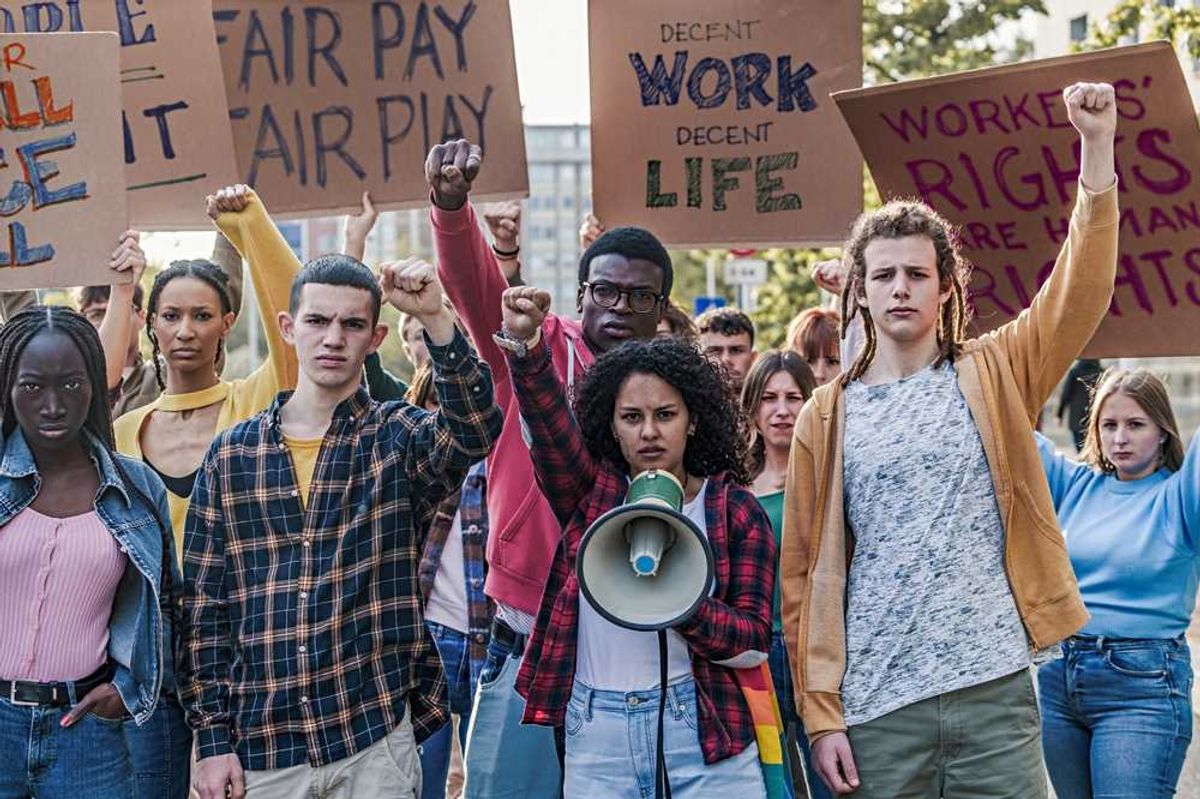
Protest. (Photo credit: Lomb / Shutterstock)
Amazon workers and their allies worldwide took to the streets on Black Friday, the busiest shopping day of the year, to protest the e-commerce behemoth’s exploitation of workers, relentless union-busting, contributions to the worsening climate emergency, and plans to replace employees en masse with robots.
“Amazon, Jeff Bezos, and their political allies are betting on a techno-authoritarian future, but this Make Amazon Pay Day, workers everywhere are saying: enough,” said Christy Hoffman, general secretary of UNI Global Union. “For years, Amazon has squashed workers’ right to democracy on the job through a union and the backing of authoritarian political figures. Its model is deepening inequality and undermining the fundamental rights of workers to organize, bargain collectively, and demand safe, fair workplaces.”
From Germany to Bangladesh, thousands of workers walked off the job on Friday and marched against Amazon’s labor practices to push for better wages, working conditions, and union protections. Last month, Amazon reported over $21 billion in profits for the third quarter of 2025—a 38% increase compared to the same time last year.
“During the heatwaves, the warehouse feels like a furnace—people faint, but the targets never stop,” said Neha Singh, an Amazon worker in Manesar, India, referring to the company’s productivity quotas. “Even if we fainted, we couldn’t take a day off and go home. If we took that day off, our pay would be cut, and if we took three days off, they would fire us. Amazon treats us as expendable.”
“We are joining Make Amazon Pay,” said Singh, “to demand the most basic rights: safety, dignity, and the chance to go home alive.”
Make Amazon Pay is an alliance of labor unions and advocacy groups organizing to stop Amazon from “squeezing workers, communities and the planet.”
The 2025 strikes and protests, which organizers described as the largest mobilization against Amazon to date, mark the sixth consecutive year of global actions organized by the coalition.
The strike in Germany was characterized as the largest in Amazon’s history, with around 3,000 workers expected to join picket lines across the country. The union representing Amazon workers in the United States voiced solidarity with striking German workers in a social media post on Friday, crediting them with “inspiring the global Amazon worker movement for over a decade.”
“Across the world, Amazon workers are walking off the job, marching through their cities, and standing shoulder-to-shoulder with communities to demand what every worker deserves: fair wages, safe conditions, the right to organize—and a future not dictated by algorithms and billionaires,” Progressive International, a member of the alliance, said Friday.
“But the target is not only a company. It is the emerging system that Amazon now anchors: a techno-authoritarian order that fuses the power of Big Tech with the prerogatives of the far right—from Trump’s ICE raids to Israel’s genocide in Gaza,” the group added. “This week’s actions point toward another horizon. One in which supply chains become sites of struggle, not submission; where warehouse workers link arms with tech workers, garment workers, Indigenous communities, and migrants; where a global labor movement is capable of confronting a global system of power.”
November 28, 2025
Protest. (Photo credit: Lomb / Shutterstock)
Amazon workers and their allies worldwide took to the streets on Black Friday, the busiest shopping day of the year, to protest the e-commerce behemoth’s exploitation of workers, relentless union-busting, contributions to the worsening climate emergency, and plans to replace employees en masse with robots.
“Amazon, Jeff Bezos, and their political allies are betting on a techno-authoritarian future, but this Make Amazon Pay Day, workers everywhere are saying: enough,” said Christy Hoffman, general secretary of UNI Global Union. “For years, Amazon has squashed workers’ right to democracy on the job through a union and the backing of authoritarian political figures. Its model is deepening inequality and undermining the fundamental rights of workers to organize, bargain collectively, and demand safe, fair workplaces.”
From Germany to Bangladesh, thousands of workers walked off the job on Friday and marched against Amazon’s labor practices to push for better wages, working conditions, and union protections. Last month, Amazon reported over $21 billion in profits for the third quarter of 2025—a 38% increase compared to the same time last year.
“During the heatwaves, the warehouse feels like a furnace—people faint, but the targets never stop,” said Neha Singh, an Amazon worker in Manesar, India, referring to the company’s productivity quotas. “Even if we fainted, we couldn’t take a day off and go home. If we took that day off, our pay would be cut, and if we took three days off, they would fire us. Amazon treats us as expendable.”
“We are joining Make Amazon Pay,” said Singh, “to demand the most basic rights: safety, dignity, and the chance to go home alive.”
Make Amazon Pay is an alliance of labor unions and advocacy groups organizing to stop Amazon from “squeezing workers, communities and the planet.”
The 2025 strikes and protests, which organizers described as the largest mobilization against Amazon to date, mark the sixth consecutive year of global actions organized by the coalition.
The strike in Germany was characterized as the largest in Amazon’s history, with around 3,000 workers expected to join picket lines across the country. The union representing Amazon workers in the United States voiced solidarity with striking German workers in a social media post on Friday, crediting them with “inspiring the global Amazon worker movement for over a decade.”
“Across the world, Amazon workers are walking off the job, marching through their cities, and standing shoulder-to-shoulder with communities to demand what every worker deserves: fair wages, safe conditions, the right to organize—and a future not dictated by algorithms and billionaires,” Progressive International, a member of the alliance, said Friday.
“But the target is not only a company. It is the emerging system that Amazon now anchors: a techno-authoritarian order that fuses the power of Big Tech with the prerogatives of the far right—from Trump’s ICE raids to Israel’s genocide in Gaza,” the group added. “This week’s actions point toward another horizon. One in which supply chains become sites of struggle, not submission; where warehouse workers link arms with tech workers, garment workers, Indigenous communities, and migrants; where a global labor movement is capable of confronting a global system of power.”
Op-Ed
Amazon Drivers Take 45 Days to Earn What the Company’s Union Buster Earned in 1
Union-busting consultants thrive on secrecy, but they can’t hide their obscene pay rates for long.
By Bob Funk ,
Amazon Drivers Take 45 Days to Earn What the Company’s Union Buster Earned in 1
Union-busting consultants thrive on secrecy, but they can’t hide their obscene pay rates for long.
By Bob Funk ,
November 28, 2025
If the average wage of an Amazon driver is $20 an hour, as Salary.com reports, and a driver’s average shift is 10 hours, as Amazon’s hiring site suggests, the drivers Guillaume was targeting would earn $200 a day on average.
Do the math: If her disclosure is accurate, union buster Guillaume may have bagged in a single day what the average Amazon driver takes 45 days to earn.
Related Story
Italian Amazon Workers Strike and Win. Will Unions Elsewhere Follow Suit?
Unions in the US and elsewhere must make huge resource investments to build up the working-class strike muscle. By Laura Montanari & Jonathan Rosenblum , Truthout August 14, 2025
While Guillaume may have set a new record for the highest daily union-busting rate, the prize for the new highest hourly rate goes to The AZ Alignment Group Association. This case is worth looking at more closely: It reveals some reporting tricks that consultants use to undermine the purpose of mandatory union-busting disclosures, while also pointing toward some of the creepier aspects of their jobs.
The AZ Alignment Group Association — a consultancy based in Scottsdale, Arizona, that also uses a number of alternate names including The Alignment Group, TAG, and The Alignment Group Association — recently reported charging $625 an hour to Chico Heights Rehab and Wellness Center, a rehab center in Chico, California, that also does business as Autumn Creek Post Acute.
That’s equivalent to what a typical laundry worker — one of the types of workers that had been organizing — earns on average in about six days ($625 divided by an average daily wage of $112 equals 5.6 days) and what another — a certified nursing assistant — earns on average in about four days ($625 divided by average daily wage of $158.40 equals 3.9 days)
In true union buster fashion, Gabrielle Shores — the AZ Alignment consultant who union busted at Chico — failed to observe the 30-day filing deadline mandated by the agreement, disclosing her pay rate and a specific description of services a month late. She therefore denied these workers their legal right to grapple with her shockingly high compensation — and to fully consider why their employer felt the need to pay an outside “persuader,” rather than spending the money on its own workers or on equipment that might have benefited the patients they care for.
If workers at Chico Heights had known their employer was paying the highest rate ever documented as having been paid to a union buster, equivalent to about a week’s pay, might the organizing campaign have panned out differently? (The organizers withdrew their petition for an election — typically a sign that an organizing campaign has encountered difficulties.)
Shores’ filing also illustrates some of the tricks that union busters will use to undermine the purpose of the disclosure requirement. She filed an initial LM-20 just before the 30-day time window elapsed. But she didn’t disclose her pay rate in the initial version, and she offered only a vague description of her activities, reporting that she had merely “provided information to leaders and employees” about union representation and workers’ rights. She also neglected to attach the written agreement she had made with Chico Heights when agreeing to help with union busting. These omissions and obfuscations all violate the LM-20 reporting requirements.
Only about two months after workers withdrew their petition for an election did Shores finally file an amended version of the form that included her pay rate and written agreement and that came closer to describing the true nature of her activities: to union bust. (Unlike her first form, Shores’ amended form openly noted that the “employer preferred that the employees vote no and reject union representation.”)
It’s worth flagging the “Confidential Information” provision in the agreement that Shores submitted. The provision notes that The Alignment Group Association (TAG) would have access to confidential information, including “employee salaries, benefits and other private employee information” and that TAG may “participate in the development of the Confidential Information.”
This highlights the hypocrisy of one common tactic used by consultants. Even as they often frame union organizing tactics as an invasion of privacy, union busters not only gain access to and carefully analyze “private employee information” for union-busting purposes. They often collect additional sensitive information on employees that add to “the development of the Confidential Information.”
This genuine invasion of privacy occasionally bursts into the open. In October 2023, a document with “intimate details” on nurses compiled by a consultant was leaked to the media. And in 2019, a polling sheet on workers compiled by IRI Consultants — which famously union busted for Google and has since changed its name to People Results — found its way into the hands of VICE. The sheet included descriptions of employees’ union involvement, ethnicity, personality, motivations, and spouse’s employment. And it described some workers in crude and patronizing terms, such as “lazy,” “impressionable,” “single mother, “very full of herself, “dingy but good at her job,” or “angry about everything.”
“IRI is very good at charting, looking for clusters of employees,” a consultant who had done work with IRI Consultants told VICE. “For example, they’ll note that a small group of Haitians are pro-company, while the Cubans are pro-union. You definitely utilize big data because it helps make decisions.”
This is what workers mean when they say “union busting is disgusting,” and it’s why the trade should be illegal.
This article is licensed under Creative Commons (CC BY-NC-ND 4.0), and you are free to share and republish under the terms of the license.

Bob Funk
Bob Funk is the executive director and founder of LaborLab, established in 2021 with the mission of empowering workers to organize, win strong contracts, and build lasting collective power through education, strategic research, and mobilizing public support in the face of union busting. Prior to founding LaborLab, Funk amassed nearly two decades of experience as a strategist for labor unions, federations, and advocacy organizations throughout the United States.
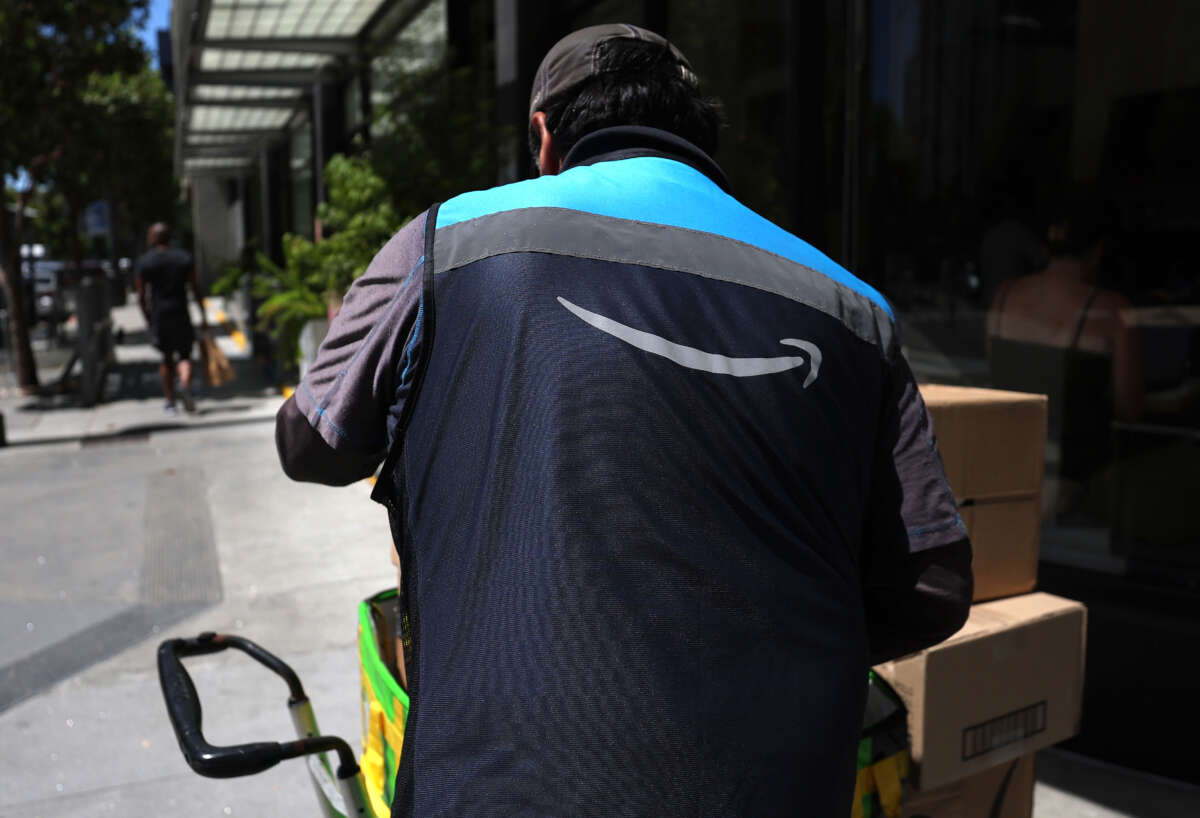
An Amazon delivery driver loads a cart with packages on July 16, 2024, in San Francisco, California.Justin Sullivan / Getty Images
Union busters have often earned 20 times more than the workers they seek to “persuade” not to unionize. Operating largely in the shadows with minimal regulatory oversight, these so-called “persuaders” face little accountability for their tactics.
The union-busting industry thrives on secrecy, with consultants exploiting loopholes in disclosure requirements and filing mandatory reports months late — if they file accurate information at all. But recently, the upper limits of what they charge have evidently exploded far beyond long-outrageous multiples. Disclosures show that two union busters, including one hired by Amazon, recently set new records for the highest hourly and daily rates. The disclosures also provide a stark illustration of common tactics used by union busters to neutralize the intended educational benefit of their reporting requirements to workers.
A union buster for Amazon recently reported billing the highest daily rate ever observed by LaborLab, the workers’ rights watchdog organization that I lead. Anite Guillaume — working for one of Amazon’s favorite anti-union consultancies, Road Warrior Productions (RWP) — reported earning $9,000 a day for collecting information on drivers through one-on-one conversations. That’s roughly double the highest daily rate previously recorded by LaborLab.
Union busters have often earned 20 times more than the workers they seek to “persuade” not to unionize. Operating largely in the shadows with minimal regulatory oversight, these so-called “persuaders” face little accountability for their tactics.
The union-busting industry thrives on secrecy, with consultants exploiting loopholes in disclosure requirements and filing mandatory reports months late — if they file accurate information at all. But recently, the upper limits of what they charge have evidently exploded far beyond long-outrageous multiples. Disclosures show that two union busters, including one hired by Amazon, recently set new records for the highest hourly and daily rates. The disclosures also provide a stark illustration of common tactics used by union busters to neutralize the intended educational benefit of their reporting requirements to workers.
A union buster for Amazon recently reported billing the highest daily rate ever observed by LaborLab, the workers’ rights watchdog organization that I lead. Anite Guillaume — working for one of Amazon’s favorite anti-union consultancies, Road Warrior Productions (RWP) — reported earning $9,000 a day for collecting information on drivers through one-on-one conversations. That’s roughly double the highest daily rate previously recorded by LaborLab.
If the average wage of an Amazon driver is $20 an hour, as Salary.com reports, and a driver’s average shift is 10 hours, as Amazon’s hiring site suggests, the drivers Guillaume was targeting would earn $200 a day on average.
Do the math: If her disclosure is accurate, union buster Guillaume may have bagged in a single day what the average Amazon driver takes 45 days to earn.
Related Story
Italian Amazon Workers Strike and Win. Will Unions Elsewhere Follow Suit?
Unions in the US and elsewhere must make huge resource investments to build up the working-class strike muscle. By Laura Montanari & Jonathan Rosenblum , Truthout August 14, 2025
While Guillaume may have set a new record for the highest daily union-busting rate, the prize for the new highest hourly rate goes to The AZ Alignment Group Association. This case is worth looking at more closely: It reveals some reporting tricks that consultants use to undermine the purpose of mandatory union-busting disclosures, while also pointing toward some of the creepier aspects of their jobs.
The AZ Alignment Group Association — a consultancy based in Scottsdale, Arizona, that also uses a number of alternate names including The Alignment Group, TAG, and The Alignment Group Association — recently reported charging $625 an hour to Chico Heights Rehab and Wellness Center, a rehab center in Chico, California, that also does business as Autumn Creek Post Acute.
That’s equivalent to what a typical laundry worker — one of the types of workers that had been organizing — earns on average in about six days ($625 divided by an average daily wage of $112 equals 5.6 days) and what another — a certified nursing assistant — earns on average in about four days ($625 divided by average daily wage of $158.40 equals 3.9 days)
In true union buster fashion, Gabrielle Shores — the AZ Alignment consultant who union busted at Chico — failed to observe the 30-day filing deadline mandated by the agreement, disclosing her pay rate and a specific description of services a month late. She therefore denied these workers their legal right to grapple with her shockingly high compensation — and to fully consider why their employer felt the need to pay an outside “persuader,” rather than spending the money on its own workers or on equipment that might have benefited the patients they care for.
If workers at Chico Heights had known their employer was paying the highest rate ever documented as having been paid to a union buster, equivalent to about a week’s pay, might the organizing campaign have panned out differently? (The organizers withdrew their petition for an election — typically a sign that an organizing campaign has encountered difficulties.)
Shores’ filing also illustrates some of the tricks that union busters will use to undermine the purpose of the disclosure requirement. She filed an initial LM-20 just before the 30-day time window elapsed. But she didn’t disclose her pay rate in the initial version, and she offered only a vague description of her activities, reporting that she had merely “provided information to leaders and employees” about union representation and workers’ rights. She also neglected to attach the written agreement she had made with Chico Heights when agreeing to help with union busting. These omissions and obfuscations all violate the LM-20 reporting requirements.
Only about two months after workers withdrew their petition for an election did Shores finally file an amended version of the form that included her pay rate and written agreement and that came closer to describing the true nature of her activities: to union bust. (Unlike her first form, Shores’ amended form openly noted that the “employer preferred that the employees vote no and reject union representation.”)
It’s worth flagging the “Confidential Information” provision in the agreement that Shores submitted. The provision notes that The Alignment Group Association (TAG) would have access to confidential information, including “employee salaries, benefits and other private employee information” and that TAG may “participate in the development of the Confidential Information.”
This highlights the hypocrisy of one common tactic used by consultants. Even as they often frame union organizing tactics as an invasion of privacy, union busters not only gain access to and carefully analyze “private employee information” for union-busting purposes. They often collect additional sensitive information on employees that add to “the development of the Confidential Information.”
This genuine invasion of privacy occasionally bursts into the open. In October 2023, a document with “intimate details” on nurses compiled by a consultant was leaked to the media. And in 2019, a polling sheet on workers compiled by IRI Consultants — which famously union busted for Google and has since changed its name to People Results — found its way into the hands of VICE. The sheet included descriptions of employees’ union involvement, ethnicity, personality, motivations, and spouse’s employment. And it described some workers in crude and patronizing terms, such as “lazy,” “impressionable,” “single mother, “very full of herself, “dingy but good at her job,” or “angry about everything.”
“IRI is very good at charting, looking for clusters of employees,” a consultant who had done work with IRI Consultants told VICE. “For example, they’ll note that a small group of Haitians are pro-company, while the Cubans are pro-union. You definitely utilize big data because it helps make decisions.”
This is what workers mean when they say “union busting is disgusting,” and it’s why the trade should be illegal.
This article is licensed under Creative Commons (CC BY-NC-ND 4.0), and you are free to share and republish under the terms of the license.
Bob Funk
Bob Funk is the executive director and founder of LaborLab, established in 2021 with the mission of empowering workers to organize, win strong contracts, and build lasting collective power through education, strategic research, and mobilizing public support in the face of union busting. Prior to founding LaborLab, Funk amassed nearly two decades of experience as a strategist for labor unions, federations, and advocacy organizations throughout the United States.

No comments:
Post a Comment