Nuclear Arms Control Disappearing Before Our Eyes
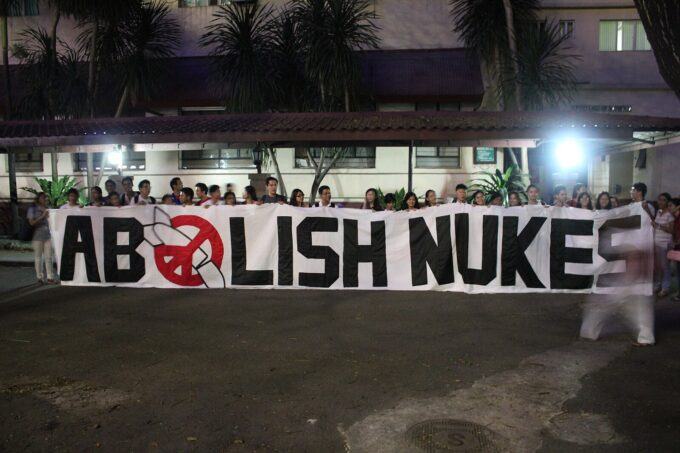
Photograph Source: TimMilesWright – Public Domain
When NewSTART (Strategic Arms Reduction Treaty, 2010) expires on February 5, 2026, Russia and the U.S. will face the prospect of a new nuclear arms race unconstrained by bilateral agreements.
Since coming into force during the Obama Administration, ratified by the Senate 71-26, NewSTART has reduced the number of nuclear weapons deployed by Russia and the U.S. to 1,500 warheads for each side, the lowest level since 1960.
Nuclear weapons treaties require years of painstaking negotiation. Negotiating an immediate replacement for NewSTART is out of the question. Adhering to NewSTART weapons levels for one or two years, as proposed on numerous occasions by Russian President Vladimir Putin, could provide enough time to initiate a fresh round of arms control talks. President Trump has responded that it “sounds like a good idea”.
Included in a temporary NewSTART agreement should be the resumption of in-person verification inspections. These invasive inspections are the hallmark of NewSTART and were cancelled by Russia after it invasion of Ukraine in 2022.
Without a bi-lateral agreement adhering to NewSTART parameters, the U.S. and Russia face severe handicaps in monitoring the others’ strategic arsenals. Revival of exorbitant nuclear weapons production could soon result.
NewSTART superseded the START treaty, initiated by Ronald Reagan and signed by George H.W. Bush and Mikhail Gorbachev in 1991. The START treaty lowered the total number of nuclear warheads possessed by each side to 6,000, down from a total of 70,000 warheads at the height of the Cold War, 1989.
NewSTART also installed an unprecedented verification regime, unimaginable during the previous four decades of nuclear arms control negotiations. Verification has been the major impediment to arms control since the Eisenhower Administration. Russia and the U.S. under NewSTART agreed to 18 annual in-person inspections, including snap inspections of the other’s nuclear arsenals, unfettered telemetry surveillance of each other’s weapons systems, a qualitative and quantitative list of each other’s nuclear warheads and their disposition. Each nuclear warhead in the U.S. and Russian arsenal is identified with a unique marker that is tracked in real time. Movement of any nuclear weapon or missile test must be announced. A bilateral consultative commission was required to meet twice annually to discuss unforeseen developments or repair technical breaches of the treaty.
NewSTART builds on a succession of successful nuclear weapons control treaties, even treaties that have expired or have been scuttled for geo-political reasons dating from the presidency of Lyndon Johnson during the Viet Nam War. The two main nuclear adversaries have continued bi-lateral nuclear arms control despite their mutual antagonism. Failure to sustain NewSTART’s limits will break this decades’ long precedent.
The Strategic Arms Limitation Talks, SALT, 1972, sought to reduce the number of ground-based and submarine- based missiles and launchers. SALT also restricted the installation of anti-ballistic missile systems: ABM systems could protect Moscow and Washington D.C. and one additional site for each party.
SALT and successive nuclear arms control treaties, SALT II, and SORT, depended on “national technical means”, i.e. satellite surveillance, for verification. SALT II, 1979, restricted advances in nuclear-capable missile technology, and the number of MIRVs (Multiple Independent Re-entry Vehicles) allowed per side. At the time, ICBMs could launch as many as fifty independently targeted nuclear warheads and decoys, rendering anti-ballistic systems nearly useless. Presidents Ford and Brezhnev signed SALT II in 1974, but subsequent negotiations stalled until Presidents Carter and Brezhnev reaffirmed the treaty in 1979. Carter withdrew the SALT II treaty from Senate consideration after the Soviet invasion of Afghanistan late in 1979, though both sides adhered to the basic principles of SALT II.
When George Bush unilaterally withdrew from the Anti-Ballistic Missile Treaty (ABM), in 2001, he violated one of the precepts of SALT II; the ban on anti-ballistic missile advancement. Russia withdrew from SALT II the following day, though each adhered to the agreed limits on nuclear-capable launchers.
The Intermediate-Range Forces Treaty, INF, signed by Presidents Reagan and Gorbachev in 1987, successfully reduced the number of medium-range missiles targeting Europe and western Russia. The U.S. and Russia destroyed 2,700 intermediate-range missiles in their own arsenals and maintained a moratorium on replacing them until Trump’s unilateral withdrawal from the INF in 2019. Putin withdrew from the INF in 2025. Both Russia and the U.S. have manufactured a new generation of medium-range missiles since the demise of the INF. Russia has launched some of these new medium-range missiles at Ukraine during its ongoing invasion.
The Strategic Offensive Reductions Treaty, SORT, 2003, was signed by George W Bush and Vladimir Putin in 2002. It was the first nuclear weapons treaty to reduce the number of deployed nuclear warheads instead of limiting the number of nuclear-capable launchers. SORT reduced deployed nuclear weapons by fifty percent by the year 2007. However, the verification process depended on telemetry, not invasive in-person inspections. Nuclear warheads were not destroyed but moved into storage under SORT. The Russian Duma briefly delayed ratification of SORT because of the U.S. invasion of Iraq.
To come into force, treaties need ratification by two-thirds of the U.S. Senate. Presidents, remarkably Trump, have unilaterally withdrawn from ratified treaties without consultation nor the consent of the Senate. Congress has acquiesced. According the U.S. Constitution, treaties ratified by the Senate have the force of legislation, international law, and become “the supreme Law of the Land”. Withdrawing from a treaty, especially a nuclear weapons treaty, concluding five or ten years of negotiations, debate, and ratification, should be subject to more scrutiny than a sudden presidential proclamation.
Decades of nuclear arms control have developed a range of protocols to guarantee the adversaries’ adherence: increasingly aggressive verification regimes, mandatory consultative meetings scheduled throughout each year, and a legal framework to bring adversaries back into compliance when breaches occur. Both the U.S. and Russia have violated technical aspects of historic treaties, though each has adhered to the tenants of a treaty in question without abrogation in most instances.
After Trump withdrew from the INF in 2019, substantial doubt about the future of NewSTART immediately developed in Moscow and D.C. Putin offered to begin negotiating a new nuclear arms treaty. Russia has long sought to expand bilateral nuclear weapons agreements with the U.S. to include France, Britain and China, each possessing hundreds of nuclear weapons. Russian overtures made little impact at the end of the first Trump Administration.
President Biden agreed to extend NewSTART for five years, the maximum length of extension written into the original treaty. No replacement for NewSTART has been developed during Biden’s term due to the poisoned relationship between the U.S. and Russian leaders.
The COVID pandemic, 2020 disrupted regular in-person inspections of Russian and U.S. nuclear sites. Subsequently, Russia banned nuclear site inspections of its strategic installations after it invaded Ukraine in 2022. Russia canceled Bilateral Consultative Meetings, in violation of the Treaty and the U.S. retaliated by rejecting visa applications from Russian nuclear inspectors, seriously eroding a major accomplishment of NewSTART; in-person verification.
Decades of negotiations and debate over the scope of nuclear treaties and U.S. and Russian compliance have reduced the number of nuclear warheads by nearly eighty percent since the Cold War. The rate of nuclear weapons decline has slowed decidedly in recent years, however. While previous nuclear weapons treaties have expired, replacement treaties have been negotiated three to five years in advance before coming into force. When NewSTART expires in two months, on February 5, 2026, the historic momentum toward greater nuclear arms control appears in jeopardy
Giving context to the present failure of nuclear weapons negotiations: the launch of a single nuclear weapon, regardless of circumstance, in declassified simulation models, provokes a retaliatory exchange of hundreds of nuclear weapons, causing 90 million deaths within hours and potentially billions of deaths during the following decade.
Nothing is more consequential than containing the nuclear weapons arsenals of the U.S. and Russia within the framework of a signed and ratified nuclear weapons treaty. Are we watching nuclear arms control disappear before our eyes?
Harry Truman, Hiroshima and the Necessity Defense
 Image by Truman Library, in public domain
“How sharper than a serpents tooth it is to have a thankless child.”
So King Lear teaches parents. I, unlike Lear, have been blessed with thankful children. One of my daughters rented for her mother’s birthday a “place” (so she said) in Key West, Florida, also known as the “Conch Republic” for its aspirational secession from the USA. Her mom had been caring for her 97-year-old mother for several years and really needed a rest and recuperation break.
We arrived late on Saturday night and I had not checked the place out so I was in for a shock when I woke up Sunday Morning for my daily Constitutional hike. I exited the gate and directly across the street was the “Harry Truman Key West White House.” I had been reading about recent state court cases (in Chicago) where peaceable protesters against the genocide in Gaza had raised the necessity defense. Because I had spent decades trying to raise the necessity defense in US Federal Courts on behalf of peaceable prayers against nuclear bombs on US military arsenals carrying overkill capacity of exterminating the humans on earth more than 30 times, I of course started thinking: “Would Harry Truman be able to raise the necessity defense before the Throne Of Judgment for his Hiroshima or Nagasaki A-bombing in support of his petition to enter the Kingdom of Heaven?” And so my morning walk turned into a thought experiment.
Now I am not a christian because “loving your enemies” is way too tough a call for a weak reed such as me. But Harry T claimed he was a dyed-in-the-wool believer who had taken Jesus as his savior. So, given what Jesus Christ preached in Galilee I wondered—how did Harry expect to “enter the kingdom of Heaven” after nuking Hiroshima and following it up with Nagasaki, neither city being military targets but civilian cities mostly occupied by children, women and the elderly, as most military-age men were already in the Japanese Imperial Army on the verge of defeat?
The necessity defense is recognized in American law. In sum the argument is: one has the privilege to commit a lesser, or minor crime, in order to prevent a greater crime. There are other technicalities bolted on by various courts over time, but that is the key question. For example, a sailor, such as me, with a boat full of landlubbers gets hit by an unpredicted gale out on the open sea. Desperately seeking safety for my passengers, I head to shore. I see a dock plastered with “Do Not Trespass” signs and skulls and crossbones threatening “violators will be persecuted” er, prosecuted.
Fearing the hurricane like wind and waves are going to sink my boat and drown the little children on board, I decide I have no choice but to commit trespass in order to avoid the greater crime of drowning children. So I dock. The kids live and everything is copacetic til the dock owner calls the cops and maybe ICE (on the black and brown kids on board).
In such a case I can argue (in state courts) the “defense of necessity” made me do it. And often juries acquit if such prosecutions get so far. Most necessity defenses even in state court fail because juries often do not like it when somebody “takes the law into their own hands.” Of course all human laws were made by someone taking the law into their own hands way back in the dawn of civilization, when human law emerged from the law of the jungle. But modern people have learned to bow to the law made by legislatures and enforced by police to the point of absurdity and often abandon their own judgment, deferring to their “betters” who got elected to legislatures.
So, back to Harry. He is charged with mass murder of kids, women and old people, and seeks to defend his petition to enter the Kingdom of Heaven. Can he successfully argue “necessity” (assuming arguendo god rejects the idea that “just war” justifies any crimes committed during war; not even human law does that). Will Harry win his case before the “Throne of Judgment?” On my walk I imagined Harry was prosecuted by Lucifer and was rejected by every major law firm who refused to take up his defense. Finally, out of desperation to give Harry a fair trial, god appointed Jesus as “attorney for the damned.”
I don’t know how such a case would turn out, though much recent evidence suggests the A-bombings were not justified by “military necessity,” and Harry actually used the A-bombings to scare off the USSR from expansionist planning because only the US of A had the A-bomb. If the latter is correct, I suspect god would not buy the argument the necessity defense was successful because USSR’s expansionist plans versus USA’s similar hopes seems merely an argument about which robber should control a territory. It reminds me of the Dylan tune “Masters of War” which concludes even “Jesus would never forgive what you do,” concerning the builders of weapons of mass destruction.
Anyway, I do not have an answer for you; you have to decide whether Harry Truman has god on his side. (Thanks Bob) As for me, I am grateful to have thankful children. And I am writing a play: Harry Truman, Hiroshima and the Necessity Defense” to more fully explore the question.

Kary Love, syndicated by PeaceVoice, is a Michigan attorney who has defended nuclear resisters and many others in court for decades.

“How sharper than a serpents tooth it is to have a thankless child.”
So King Lear teaches parents. I, unlike Lear, have been blessed with thankful children. One of my daughters rented for her mother’s birthday a “place” (so she said) in Key West, Florida, also known as the “Conch Republic” for its aspirational secession from the USA. Her mom had been caring for her 97-year-old mother for several years and really needed a rest and recuperation break.
We arrived late on Saturday night and I had not checked the place out so I was in for a shock when I woke up Sunday Morning for my daily Constitutional hike. I exited the gate and directly across the street was the “Harry Truman Key West White House.” I had been reading about recent state court cases (in Chicago) where peaceable protesters against the genocide in Gaza had raised the necessity defense. Because I had spent decades trying to raise the necessity defense in US Federal Courts on behalf of peaceable prayers against nuclear bombs on US military arsenals carrying overkill capacity of exterminating the humans on earth more than 30 times, I of course started thinking: “Would Harry Truman be able to raise the necessity defense before the Throne Of Judgment for his Hiroshima or Nagasaki A-bombing in support of his petition to enter the Kingdom of Heaven?” And so my morning walk turned into a thought experiment.
Now I am not a christian because “loving your enemies” is way too tough a call for a weak reed such as me. But Harry T claimed he was a dyed-in-the-wool believer who had taken Jesus as his savior. So, given what Jesus Christ preached in Galilee I wondered—how did Harry expect to “enter the kingdom of Heaven” after nuking Hiroshima and following it up with Nagasaki, neither city being military targets but civilian cities mostly occupied by children, women and the elderly, as most military-age men were already in the Japanese Imperial Army on the verge of defeat?
The necessity defense is recognized in American law. In sum the argument is: one has the privilege to commit a lesser, or minor crime, in order to prevent a greater crime. There are other technicalities bolted on by various courts over time, but that is the key question. For example, a sailor, such as me, with a boat full of landlubbers gets hit by an unpredicted gale out on the open sea. Desperately seeking safety for my passengers, I head to shore. I see a dock plastered with “Do Not Trespass” signs and skulls and crossbones threatening “violators will be persecuted” er, prosecuted.
Fearing the hurricane like wind and waves are going to sink my boat and drown the little children on board, I decide I have no choice but to commit trespass in order to avoid the greater crime of drowning children. So I dock. The kids live and everything is copacetic til the dock owner calls the cops and maybe ICE (on the black and brown kids on board).
In such a case I can argue (in state courts) the “defense of necessity” made me do it. And often juries acquit if such prosecutions get so far. Most necessity defenses even in state court fail because juries often do not like it when somebody “takes the law into their own hands.” Of course all human laws were made by someone taking the law into their own hands way back in the dawn of civilization, when human law emerged from the law of the jungle. But modern people have learned to bow to the law made by legislatures and enforced by police to the point of absurdity and often abandon their own judgment, deferring to their “betters” who got elected to legislatures.
So, back to Harry. He is charged with mass murder of kids, women and old people, and seeks to defend his petition to enter the Kingdom of Heaven. Can he successfully argue “necessity” (assuming arguendo god rejects the idea that “just war” justifies any crimes committed during war; not even human law does that). Will Harry win his case before the “Throne of Judgment?” On my walk I imagined Harry was prosecuted by Lucifer and was rejected by every major law firm who refused to take up his defense. Finally, out of desperation to give Harry a fair trial, god appointed Jesus as “attorney for the damned.”
I don’t know how such a case would turn out, though much recent evidence suggests the A-bombings were not justified by “military necessity,” and Harry actually used the A-bombings to scare off the USSR from expansionist planning because only the US of A had the A-bomb. If the latter is correct, I suspect god would not buy the argument the necessity defense was successful because USSR’s expansionist plans versus USA’s similar hopes seems merely an argument about which robber should control a territory. It reminds me of the Dylan tune “Masters of War” which concludes even “Jesus would never forgive what you do,” concerning the builders of weapons of mass destruction.
Anyway, I do not have an answer for you; you have to decide whether Harry Truman has god on his side. (Thanks Bob) As for me, I am grateful to have thankful children. And I am writing a play: Harry Truman, Hiroshima and the Necessity Defense” to more fully explore the question.

Kary Love, syndicated by PeaceVoice, is a Michigan attorney who has defended nuclear resisters and many others in court for decades.

No comments:
Post a Comment