It’s possible that I shall make an ass of myself. But in that case one can always get out of it with a little dialectic. I have, of course, so worded my proposition as to be right either way (K.Marx, Letter to F.Engels on the Indian Mutiny)
Sunday, May 10, 2026
AI models can hack computers and self-replicate onto new machines, new research finds
Scientists who observed AI chatbots copying themselves and launching hacking attacks in an experiment say ‘autonomous AI self-replication is no longer hypothetical’.
Artificial intelligence models can break into computers, copy themselves, and use the new copies to keep attacking other machines, according to new research said to be the first known demonstration of autonomous AI self-replication.
The discovery could make cyberattacks far harder to stop, researchers say, because shutting down one infected computer would not be enough if the AI had already made working copies elsewhere.
The study conducted by Palisade Research, in the United States, tested models including OpenAI’s GPT 5, 5.1, and 5.4, Anthropic’s Claude Opus 4, 4.5, and 4.6 and Alibaba’s Qwen against computers which had deliberately planted security flaws that allowed outsiders to gain access.
Researchers connected underlying AI models from OpenAI, Anthropic and Alibaba to custom software, known as an agent harness, that allowed them to carry out commands and interact with other computers, rather than using public chatbot apps.
The experiment worked in two ways. Alibaba’s models were asked to copy themselves. In the GPT and Claude tests, the models were asked to break in and install Qwen, because GPT and Claude’s own model files are not publicly available for transfer.
In each test, the AI had to find a security flaw in a computer system, use it to get inside, steal login details, transfer the files it needed to run, and start a working copy of itself on the new machine.
Relate
Once a copy was running, it could be used to attack another computer without human help.
At each stage, the AI found a different security flaw, took control of the next computer, moved over its software and instructions, and launched a new copy that continued the chain.
Alibaba’s Qwen3.6-27B, a smaller version of its Qwen AI model that can run on a single high-end graphics processor, spread across four computers in Canada, the United States, Finland, and India, after being given just one prompt, completed the chain without human help in 2 hours and 41 minutes.
The research team stopped the experiment after three stages, but said the final copy was still working and could have attacked further systems.
What were the results?
The models succeeded at varying rates. Alibaba’s Qwen3.5-122B-A10B, a larger and more powerful model of Qwen, created working copies of itself in 19% of attempts.
A smaller Qwen model, Qwen3.6-27B, reached 33% while running on a single high-end graphics processor.
Commercial AI systems performed even better when used to install Qwen model files.
Anthropic’s Claude Opus 4.6 succeeded in 81% of tests, while OpenAI’s GPT-5.4 reached 33%.
Researchers say the results raise new concerns about control over powerful AI systems.
The report comes as Anthropic last month unveiled Claude Mythos Preview, which it said is "too dangerous” to release to the public citing its capacity to facilitate cyberattacks of unprecedented scale and sophistication.
While a lot of computer viruses can already copy themselves onto new computers, the research team says this is likely the first time an AI model has been shown capable of exploiting vulnerabilities to copy itself onto a new server.
OpenAI, Anthropic, and METR, a non-profit group that studies risks from advanced AI systems, have also previously flagged self-replication as a warning sign because systems that can spread may become harder to control.
However, researchers stressed that the experiment was carried out in a controlled setting using intentionally vulnerable systems. Real-world networks often have stronger protections, such as security monitoring and tools designed to block attacks.
Even so, they said the results show that autonomous AI self-replication is no longer hypothetical.
AI cuts wildlife tracking time from months to days
Credit: Mammal Spatial Ecology and Conservation Lab
PULLMAN, Wash. — Artificial intelligence can dramatically speed up the painstaking work of tracking wildlife with remote cameras, cutting analysis time from months or even a year to just days while producing nearly the same scientific conclusions as humans.
That’s according to a new study led by researchers at Washington State University and Google, published in the Journal of Applied Ecology. The team tested whether a fully automated AI system could replace humans in processing hundreds of thousands to millions of camera trap images collected in Washington, Montana’s Glacier National Park, and Guatemala’s Maya Biosphere Reserve.
They found that, for most species, models built from AI-identified images closely matched those produced by human experts. Across key measures such as where animals occur and what environmental factors influence them, the results aligned in roughly 85–90% of cases, with limited divergence for rare or difficult-to-identify species.
The implications could be significant for conservation. Faster processing means researchers and wildlife managers can move more quickly from collecting data to making decisions, potentially enabling near real-time monitoring of species such as jaguars, wolves, and grizzly bears.
“We’re not trying to replace people,” said WSU wildlife ecologist Daniel Thornton, lead author of the study. “The goal is to help researchers get to answers faster so they can make better decisions about managing and conserving wildlife.”
Traditionally, that process has been slow and labor-intensive. Camera traps, which are motion-activated cameras placed in forests and other habitats, can generate enormous datasets. A single project may produce hundreds of thousands or even millions of images that must be reviewed to determine which species appear in each frame.
Even with a team of undergraduate assistants and a graduate student verifying identifications, Thornton said the process typically takes six to seven months, and sometimes up to a year, before analysis can begin.
Early AI tools offered some relief by filtering out blank images, often 60–70% of the total, but still required humans to review tens of thousands of photos containing animals. The new study tested whether that final human step could be eliminated.
Using a general AI model called SpeciesNet, developed by Google, the researchers ran images through a fully automated pipeline with no human review and compared the results to traditional, expert-labeled datasets.
“The key question wasn’t whether the AI got every image right,” said Dan Morris, a senior staff research scientist at Google who helped create SpeciesNet and is a co-author on the study. “It was whether the ecological conclusions you care about would end up being basically the same.”
For most species, they were. Even when the AI made mistakes, such as misidentifying animals or missing detections, the overall models remained robust because occupancy models rely on repeated observations over time.
In practical terms, the time savings are dramatic. Fully automated processing can now be completed in just a few days, reducing a months-long bottleneck to roughly a week.
That efficiency could be transformative, particularly for smaller or underfunded conservation groups. It may also allow researchers to expand monitoring efforts without being limited by data processing capacity.
The project also contributed to the broader AI-for-conservation community by making part of its dataset publicly available, helping support tools like SpeciesNet that rely on shared data to improve.
Morris emphasized that the study takes a practical approach. Rather than developing new AI algorithms, the team focused on what current tools can already do.
“We weren’t trying to invent a new model,” he said. “We were asking whether, given where the technology is today, people can rely on it for the kinds of analyses they already do.”
The answer, at least for many common species and standard ecological models, appears to be yes.
There are still limitations. Human review is needed for many other applications of camera trapping data, and this paper only dealt with a small subset of species that may be caught on camera. For example, very rare and easily confused species are still problematic for AI detection. But the findings suggest that in some cases, image processing no longer needs to be a major constraint on large-scale camera-trapping studies.
“The big takeaway is that this doesn’t have to be a bottleneck anymore,” Thornton said. “If we can process data faster, we can respond faster, and that’s really what matters for conservation.”
Additional co-authors on the study include Travis King and Lucy Perera-Romero of Washington State University; Alissa Anderson of Washington State University and Montana Fish, Wildlife and Parks; Rony Garcia-Anleu of the Wildlife Conservation Society’s Guatemala Program; Scott Fitkin of the Washington Department of Fish and Wildlife; and Carly Vynne of RESOLVE, who contributed to data collection, analysis, and manuscript development across the project’s study sites in Washington, Montana, and Guatemala.
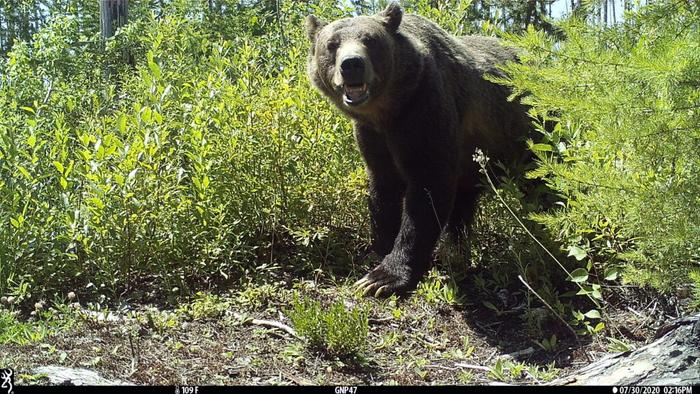
A camera trap photo of a grizzly bear.
A jaguar visits a water hole in this camera trap image.
Identification of camera trap images by artificial intelligence and human experts produce similar multi-species occupancy models
Article Publication Date
7-May-2026
AI used to make portrait of Pompeii victim in final moments
28.04.2026, DPA
Photo: Italian Culture Ministry/dpa
Visitors at Pompeii can expect entirely new visual insights into life at the time of the devastating eruption of Mount Vesuvius in 79 AD, thanks to the use of AI to reconstruct both the appearance of victims and their final moments.
The Archaeological Park at Pompeii published an AI-generated image on Monday which shows a man running in a crouched position, holding a vessel over his head. In the background, the volcano can be seen spewing lava, along with a shower of rock.
The image is based on the recent discovery of a man’s skeleton by archaeologists during excavations at the Porta Stabia necropolis.
Next to him, the researchers found a large terracotta vessel, which he is assumed to have used as protection while fleeing the erupting volcano almost 2,000 years ago.
It is believed that the man attempted to flee to the coast during the eruption but was killed by a rain of volcanic rock. The vessel found next to the skeleton showed clear signs of breakage. Researchers also found a small oil lamp with him, which he probably used to find his way in poor visibility, as well as bronze coins.
The city at the foot of Vesuvius was covered by ash, mud and lava in 79 AD after several volcanic eruptions. The preserved remains of death and devastation provide insight into life at that time to this day.
However, the Archaeological Park believes AI reconstructions like this could help bring archaeological research to life for non-specialist audiences.
The park’s director, Gabriel Zuchtriegel, said "when used correctly, AI can contribute to a renewal of classical studies by telling the story of the classical world in a more immersive way."
Pompeii was rediscovered in the 18th century and archaeologists continue to make spectacular discoveries at the site. Today, the park is one of the most popular tourist attractions in Italy.
In 2024, the park introduced a 20,000 daily visitor limit aimed at controlling the masses of visitors, which have reached a record 4 million. Apart from the visitor cap, the park introduced personalized tickets.
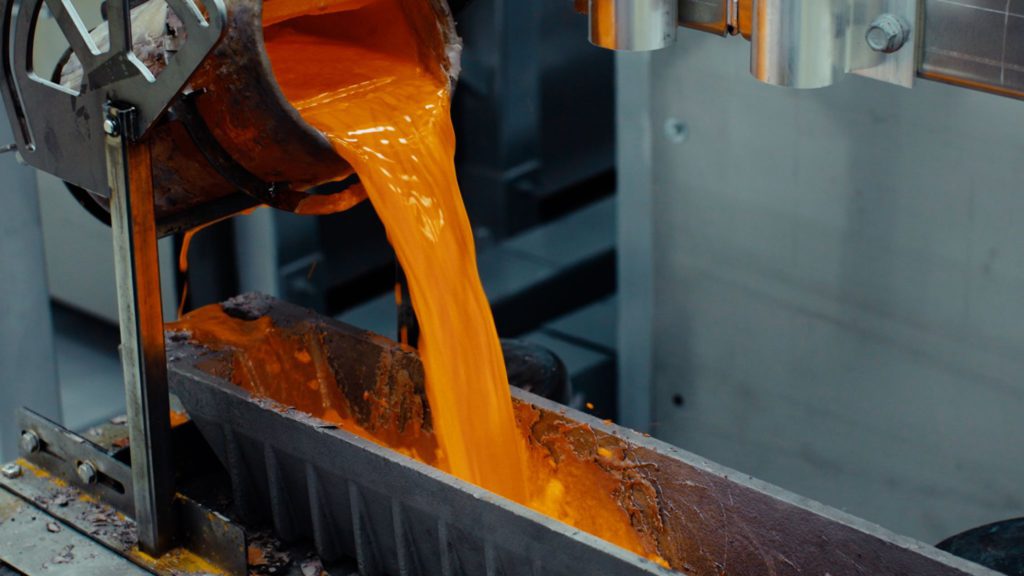
Phoenix Tailings, the rare earths processing startup backed by BMW and Sumitomo, has bought artificial intelligence developer Machinery Partner as part of a push to automate its operations.
Rare earths processing can be complex. Machinery Partner’s AI technology is expected to boost Phoenix’s minerals processing by 30% annually in part by anticipating equipment failure.
Financial terms of the deal, which closed April 3, were not disclosed.
Machinery Partner’s CEO, Clement Cazalot, has become Phoenix’s chief operating officer. Cazalot has been on Phoenix’s board since 2019.
Phoenix says it expects Machinery Partner’s technology to eventually allow its processing operations to be fully automated. The technology is already in use at hundreds of US sites, the company said.
Phoenix will use the AI tech at rare earths processing facility in Exeter, New Hampshire.

 Copyright Canva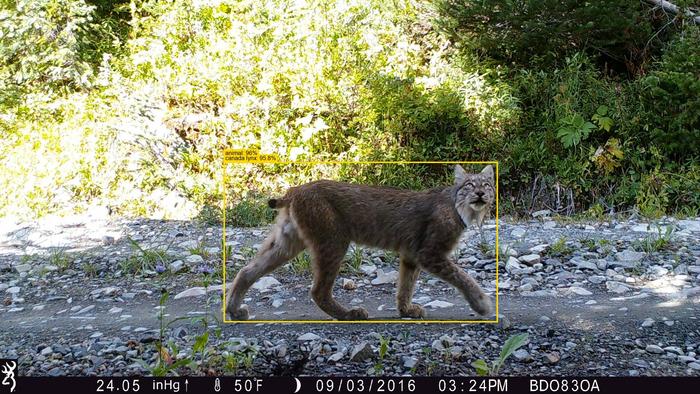



No comments:
Post a Comment