China’s grip on lithium to hit 39% by 2030: WoodMac
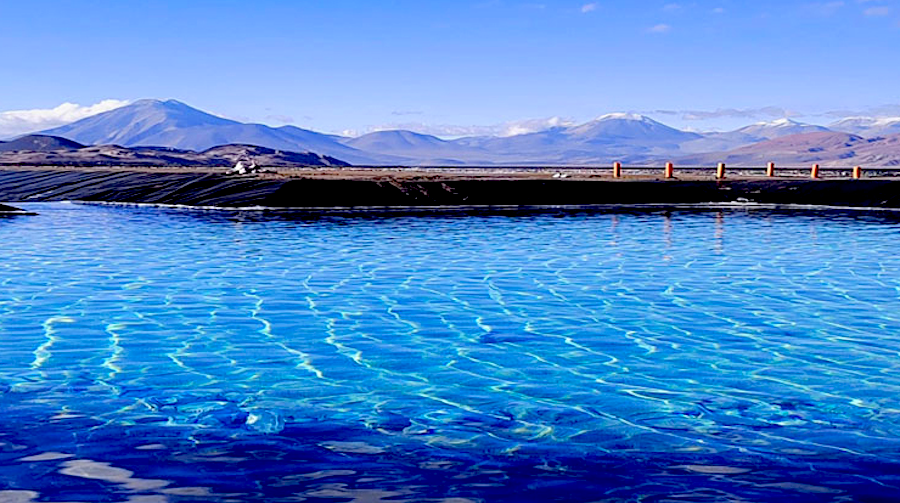
Chinese companies are on track to control 39% of global lithium production by 2030 as they deepen investments across Africa, Australia and South America, tightening Beijing’s influence over battery supply chains despite broader geographic diversification of mining output.

Chinese ownership of lithium extraction assets has risen steadily from about one-third in 2020, according to Wood Mackenzie’s Lens Metals & Mining platform, while production itself is spreading into new regions.
Australia, the world’s largest lithium producer, is forecast to see its share of global extraction fall from the 43% it had in 2020 to 25% by 2030 as African supply ramps up. Africa’s share is expected to rise from almost nothing to 13% over the same period.
“Lithium production and lithium ownership are increasingly diverging, and it is reshaping the global critical mineral supply chains,” Allan Pedersen, Wood Mackenzie’s research director for energy transition and battery materials, said. “While production growth is becoming more geographically diverse, ownership remains concentrated among a relatively small group of companies, mostly led by China.”
Chinese groups have expanded far beyond domestic production, building stakes in Australian and Argentinean assets while financing much of Africa’s emerging lithium industry.
Recent deals include Huayou Cobalt’s proposed acquisition of Atlantic Lithium (ASX: A11) and co-investment in Ghana’s Ewoyaa project, alongside Hainan Mining’s investment in Kodal Minerals’s (LON: KOD) Bougouni project in Mali.
“With few exceptions, Africa’s lithium growth has been financed by Chinese capital,” Pedersen said. “That raises important questions around ownership, value capture and long-term supply chain influence as production continues to scale.”
South America’s share of global lithium supply is forecast to slip below 25% by 2030 despite continued investment, Wood Mackenzie said.
Europe catching up
Europe’s ownership position is strengthening after Rio Tinto’s (ASX, LON: RIO) acquisition of Arcadium Lithium and Equinor’s (NYSE: EQNR) expansion into battery materials.
WoodMac said Europe’s gains stem less from mine ownership and more from increasing control over the broader battery supply chain through refining, manufacturing and recycling investments. Companies including Rio Tinto, Stellantis and Renault are securing stakes and supply agreements tied to lithium projects in Argentina, Germany and other jurisdictions, while Europe expands refining capacity through projects such as Vulcan Energy in Germany and Sibanye-Stillwater’s (JSE: SSW, NYSE: SBSW) Keliber in Finland.
The region is also building electric vehicle battery plants through companies including Northvolt and ACC, backed by the European Union’s Critical Raw Materials Act aimed at reducing dependence on China and creating a more self-sufficient battery ecosystem.
North America’s share has weakened as lithium projects face delays, cost pressures and slower ramp-ups. Several major North American assets are owned, financed or partnered with foreign groups, particularly Australian and Chinese companies, Wood Mackenzie said.
The ownership shift comes as governments race to secure critical mineral supply chains needed for electric vehicles and energy storage. China’s growing control over lithium assets across multiple producing regions could intensify geopolitical competition over battery materials and complicate Western efforts to reduce dependence on Chinese supply chains.
Australian lithium mine cleared to double output as prices soar
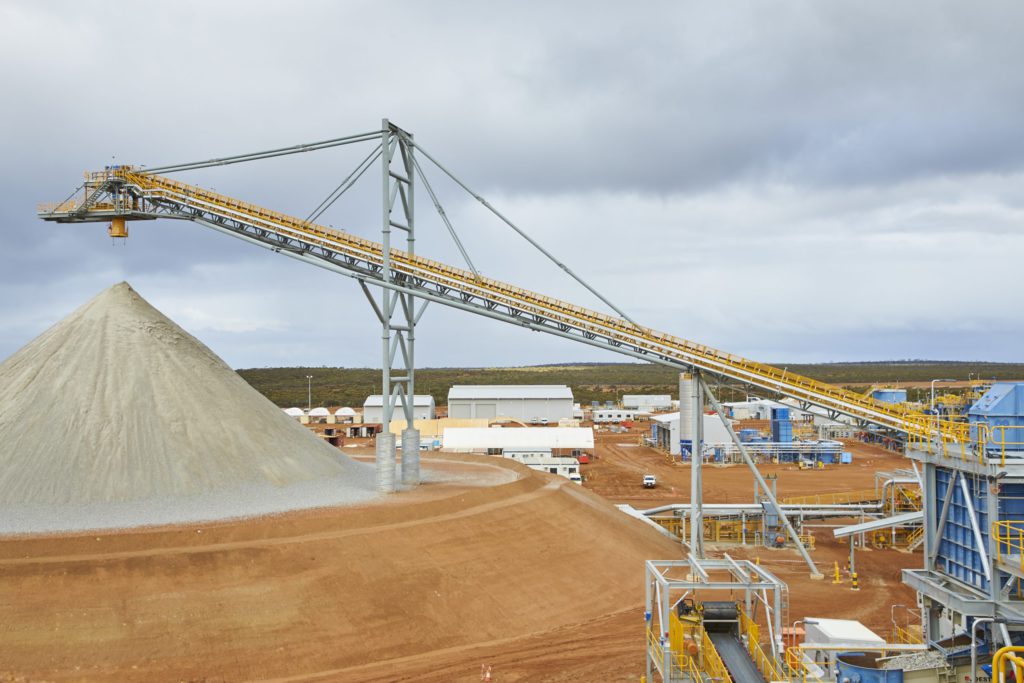
The massive Mount Holland lithium mine in Western Australia has received approval for a significant expansion that will see production double, according to a regulatory filing.
The expanded mine will include new deposits and a duplication of the current processing operations, pushing capacity to 4.4 million tons of spodumene per annum, according to application documents.
Mt Holland is owned by Sociedad Química y Minera de Chile, known as SQM, and Wesfarmers Ltd. in a 50:50 joint venture and produces spodumene concentrate for export, as well as around 50,000 tons per annum of battery-grade lithium hydroxide.
A spokesperson for the venture was not immediately available for comment.
Lithium supply from Australia has seen several major boosts in recent months as prices of spodumene and lithium chemicals soar after a years-long lull.
Spodumene concentrate prices have rallied since mid-December and hit a more than 2-year high at $2,890 a ton on May 12, although they still remain significantly lower than the record $6,110 reached on Nov. 8, 2022.
The volume of new and returning supply may put pressure on recovering prices, according to Cameron Perks, lithium product director at Benchmark Mineral Intelligence ltd., which forecasts a surplus next year.
“The restarts factor in; it’s also new greenfield projects in places like Africa, Mongolia and Russia,” Perks said in an interview by telephone Friday. “We’ve seen projects pop up that we didn’t have in the pipeline 12 months ago. There’s probably more out there that we don’t know about as well.”
Benchmark is closely watching a potential restart of Contemporary Amperex Technology Co. Ltd.’s Jiangxi operation in China, a massive mine that could immediately place downward pressure on lithium prices.
Earlier this month, Core Lithium Ltd. restarted its Finniss project in Australia’s Northern Territory, while Mineral Resources Ltd. announced it would resume mining at its Bald Hill project east of Mt Holland in Western Australia after an 18-month hiatus. It is also considering an expansion of its Mt Marion mine.
In addition, PLS Group Ltd. is ramping up its mining and processing operations in Australia in response to higher prices, while Australia’s richest person Gina Rinehart and SQM are seeking to build a new mine in Australia’s north called Andover.
(By Paul-Alain Hunt)

No comments:
Post a Comment