“Unless the Trump administration has redefined ‘the American dream’ to mean ‘losing the help your family needs to afford groceries because of federal cuts,’ I have some bad news for Secretary Rollins,” said one expert.
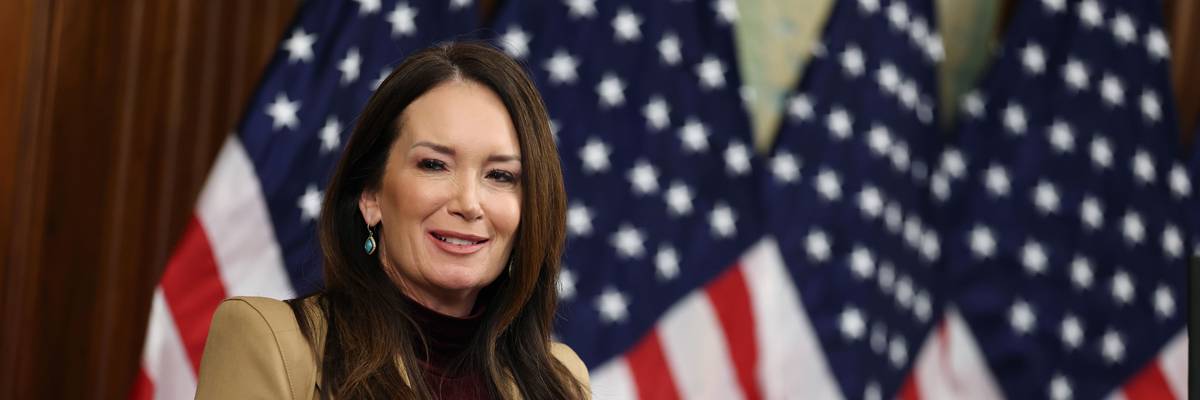
US Agriculture Secretary Brooke Rollins speaks at a news conference on Capitol Hill on October 31, 2025 in Washington, DC.
(Photo by Anna Moneymaker/Getty Images)
Jake Johnson
May 29, 2026
COMMON DREAMS
The head of the US Agriculture Department on Thursday celebrated that millions of people have lost federal nutrition assistance under the second Trump administration, declaring that families who have seen their modest aid disappear are closer to realizing “the American dream.”
Speaking at an event in Arizona, USDA Secretary Brooke Rollins—who has an estimated net worth of around $15 million—said that the Trump administration has “moved about 4 million off of SNAP,” referring to the Supplemental Nutrition Assistance Program. Rollins suggested, without evidence, that some of those who have lost SNAP benefits were receiving them fraudulently.
But others, claimed Rollins, are “moving into the American dream and off of welfare.”
Katie Bergh, a senior policy analyst at the Center on Budget and Policy Priorities (CBPP), wrote in response that “unless the Trump administration has redefined ‘the American dream’ to mean ‘losing the help your family needs to afford groceries because of federal cuts,’ I have some bad news for Secretary Rollins.”
Watch Rollins’ remarks:
Trump administration officials, including President Donald Trump himself, have repeatedly used euphemistic language to describe the large-scale loss of food aid following passage of the Republican budget reconciliation package last summer. That measure contains $186 billion in SNAP cuts over the next decade—the largest in the program’s history.
During his State of the Union address in February, Trump boasted that his administration has “lifted” millions of Americans off SNAP, falsely suggesting that the mass loss of benefits was attributable to stronger economic conditions rather than deliberate policy changes designed to boot people from the program.
“Economic conditions haven’t been improving as the number of people receiving SNAP has plummeted in recent months, representing the sharpest decline in decades,” CBPP noted in a recent analysis. “The last time there was such a steep decrease in participation in such a short period of time (other than temporary spikes following natural disasters) was nearly three decades ago, after Congress enacted very deep cuts to SNAP (then the Food Stamp Program) in 1996.”
“SNAP participation has fallen in every state,” the think tank added, “and in some, the drop is particularly alarming.”
“The government hasn’t ‘lifted’ Americans facing food insecurity; it’s simply decided to kick them down the elevator shaft.”
Arizona, the state Rollins visited on Thursday, saw a roughly 50% decline in the number of people receiving SNAP benefits between January 2025 and February of this year, with hundreds of thousands of people losing benefits.
“We certainly are not seeing a drop in the number of folks that are participating because we’ve solved hunger,” Adrienne Udarbe, executive director of the nonprofit group Pinnacle Prevention, told AZFamily earlier this week.
One Tucson, Arizona resident, a single mother of three, told the Unrig Our Economy coalition on Friday that “even working full-time, I’ve been unable to access SNAP benefits since March thanks to Republicans’ cuts.”
“Costs are already rising everywhere because of Republicans’ tariffs and their war in Iran, and cutting food assistance is pushing families like mine over the edge,” said the mother, identified as Angelica G. “It’s difficult to work so hard to make ends meet just to watch Republicans in Congress give even more tax breaks to billionaires while cutting food services that families like mine rely on.”
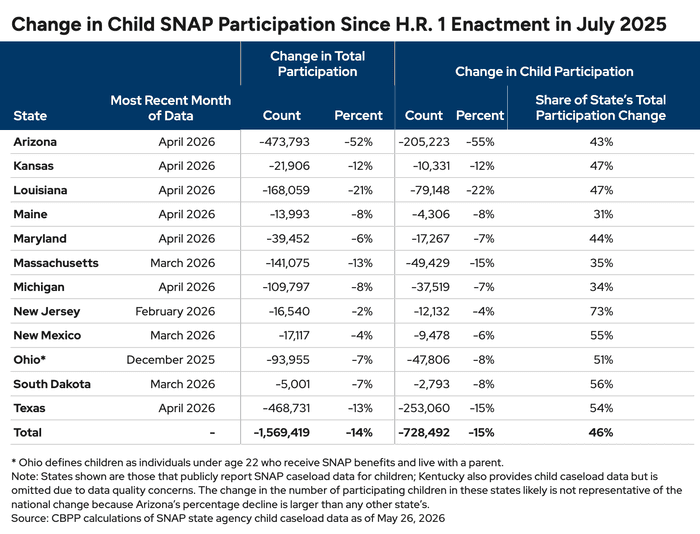
In Kansas, more than 21,000 people have lost SNAP benefits since July. Haley Kottler, senior campaign director at the advocacy group Kansas Appleseed, said in a statement Thursday that “these are not just abstract numbers.”
“These are Kansas kids losing access to food,” said Kottler. “This has real implications for Kansas children to access the nutrition they need to learn, grow, and thrive.”
Rollins’ comments Thursday came amid a flurry of data showing the weakness of the US economy and the struggles of working-class families under Trump’s leadership, from rising inflation to falling personal savings rates.
Earlier this week, as Common Dreams reported, the Federal Reserve Bank of New York released an analysis showing that the US has seen “a remarkable increase in food insecurity” in recent months, “particularly among lower-educated and lower-income households and households with young children.”
Political analyst Steve Benen wrote in a column for MS NOW on Tuesday that “Republicans seem to think this is worth bragging about.”
“Trump’s routine use of the word ‘lift’ makes it sound as if struggling families were put onto an elevator that carried them to a stronger and more secure position,” wrote Benen. “That turns reality on its head: Thanks to the inaptly named One Big Beautiful Bill Act, the government hasn’t ‘lifted’ Americans facing food insecurity; it’s simply decided to kick them down the elevator shaft, depriving much of the public of food aid.”
Report Finds ‘Remarkable Increase in Food Insecurity’ Across US Under Trump
“More people are going hungry now than at the height of the pandemic. Families are skipping meals, relying on food banks, and turning to SNAP to get by.”

A young girl holds a box of food on her head during a food giveaway on November 24, 2025 in Oakland, California.
(Photo by Justin Sullivan/Getty Images)
Jake Johnson
May 29, 2026
COMMON DREAMS
An analysis released this week by the Federal Reserve Bank of New York shows that food insecurity in the US has reached levels not seen since the height of the coronavirus pandemic, underscoring the devastating impact of Republican cuts to federal nutrition assistance and President Donald Trump’s inflationary economic and foreign policy decisions.
In a blog post, New York Fed researchers detailed their findings of “a remarkable increase in food insecurity, particularly among lower-educated and lower-income households and households with young children,” as well as “a contemporaneous increase in pessimism among the same groups, along with a sharp decline in job-finding expectations.”
The researchers cited new data showing increases in the percentage of Americans who reported receiving food donations and skipping meals in recent months, as prices for basic necessities rose. Cuts to the Supplemental Nutrition Assistance Program (SNAP) that Trump and congressional Republicans enacted last summer are also having an impact, stripping food aid from hundreds of thousands of low-income children and millions of people overall.
Among those who reported skipping meals and relying on food banks, “there is a lower, and more rapidly declining, net share of respondents expecting to be better versus worse off financially a year from now,” despite some topline figures indicating a relatively strong economy (such as a low unemployment rate), the researchers observed.
“This means that an increase in the incidence of food insecurity is associated with a deterioration in consumer sentiment,” they added.
More people are going hungry now than at the height of the pandemic. Families are skipping meals, relying on food banks, and turning to SNAP to get by. Hunger is rising and Congress cannot look away. https://t.co/ImAFSuTJSg
— Food Research & Action Center (@fractweets) May 28, 2026
The New York Fed’s analysis came amid a flurry of new data showing that rising inflation—now at a three-year high—is eroding Americans’ paychecks and causing personal savings rates to plummet as households are forced to spend more on gas, food, and other basics.
Following the release of new federal data on Thursday, the nonprofit research group Equitable Growth pointed to “an important milestone: Household incomes are now down year-over-year. American households had more money to spend in April of 2025.”
“Although income is down for all households this month, it is falling faster for the bottom 50% households, who have seen their income fall by 1.6% compared to April of last year,” noted Equitable Growth visiting fellow Austin Clemens. “This group’s income has fallen in five of the last six months.”
“More people are going hungry now than at the height of the pandemic. Families are skipping meals, relying on food banks, and turning to SNAP to get by.”
A young girl holds a box of food on her head during a food giveaway on November 24, 2025 in Oakland, California.
(Photo by Justin Sullivan/Getty Images)
Jake Johnson
May 29, 2026
COMMON DREAMS
An analysis released this week by the Federal Reserve Bank of New York shows that food insecurity in the US has reached levels not seen since the height of the coronavirus pandemic, underscoring the devastating impact of Republican cuts to federal nutrition assistance and President Donald Trump’s inflationary economic and foreign policy decisions.
In a blog post, New York Fed researchers detailed their findings of “a remarkable increase in food insecurity, particularly among lower-educated and lower-income households and households with young children,” as well as “a contemporaneous increase in pessimism among the same groups, along with a sharp decline in job-finding expectations.”
The researchers cited new data showing increases in the percentage of Americans who reported receiving food donations and skipping meals in recent months, as prices for basic necessities rose. Cuts to the Supplemental Nutrition Assistance Program (SNAP) that Trump and congressional Republicans enacted last summer are also having an impact, stripping food aid from hundreds of thousands of low-income children and millions of people overall.
Among those who reported skipping meals and relying on food banks, “there is a lower, and more rapidly declining, net share of respondents expecting to be better versus worse off financially a year from now,” despite some topline figures indicating a relatively strong economy (such as a low unemployment rate), the researchers observed.
“This means that an increase in the incidence of food insecurity is associated with a deterioration in consumer sentiment,” they added.
More people are going hungry now than at the height of the pandemic. Families are skipping meals, relying on food banks, and turning to SNAP to get by. Hunger is rising and Congress cannot look away. https://t.co/ImAFSuTJSg
— Food Research & Action Center (@fractweets) May 28, 2026
The New York Fed’s analysis came amid a flurry of new data showing that rising inflation—now at a three-year high—is eroding Americans’ paychecks and causing personal savings rates to plummet as households are forced to spend more on gas, food, and other basics.
Following the release of new federal data on Thursday, the nonprofit research group Equitable Growth pointed to “an important milestone: Household incomes are now down year-over-year. American households had more money to spend in April of 2025.”
“Although income is down for all households this month, it is falling faster for the bottom 50% households, who have seen their income fall by 1.6% compared to April of last year,” noted Equitable Growth visiting fellow Austin Clemens. “This group’s income has fallen in five of the last six months.”
Over 700,000 Poor Kids Across 12 States Have Lost Food Aid Under Trump-GOP Budget Law
A new analysis warns that large-scale loss of food assistance is “jeopardizing the short- and long-term health, education, and economic benefits of nutrition programs for our children and society.”
A new analysis warns that large-scale loss of food assistance is “jeopardizing the short- and long-term health, education, and economic benefits of nutrition programs for our children and society.”
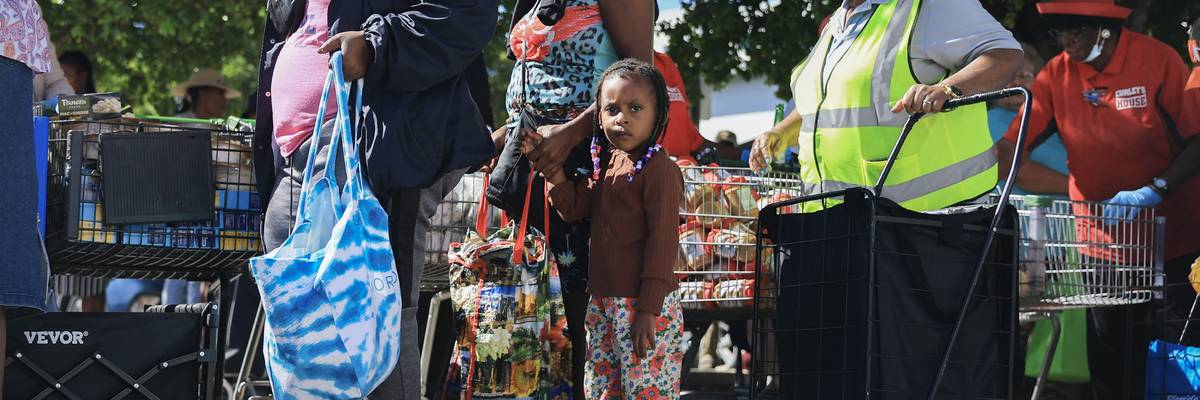
People receive groceries from a food bank on October 30, 2025 in Miami, Florida.
(Photo by Joe Raedle/Getty Images)
Jake Johnson
May 27, 2026
COMMON DREAMS
The budget package that US President Donald Trump and congressional Republicans rammed through last summer has already spurred large-scale loss of nutrition assistance among low-income children, with an analysis released Wednesday estimating that more than 700,000 kids across a dozen states have lost federal food aid since the GOP law took effect.
The Center on Budget and Policy Priorities (CBPP), a liberal think tank, found that the “sharp participation declines” among children likely stem from provisions of the Republican law that—for the first time in the program’s history—shift large Supplemental Nutrition Assistance Program (SNAP) benefit costs onto states. The law also expands punitive SNAP work requirements.
The new analysis notes that children account for “nearly half of the 1.6-million-person decline” in SNAP enrollment since last July among people of all ages in the 12 states with data available.
“The new law’s cost shift has led states to take steps that are making it harder for eligible people to receive SNAP, including families with children,” CBPP explained. “Losing SNAP also makes it harder for low-income children to qualify for other food assistance, such as WIC and free school meals—jeopardizing the short- and long-term health, education, and economic benefits of nutrition programs for our children and society.”
Republican lawmakers repeatedly denied that their legislation would strip food aid from needy children, with House Speaker Mike Johnson (R-La.) saying the package was laser-focused on “fraud, waste, and abuse.”
“We are not cutting SNAP,” Johnson falsely claimed in May 2025, just over a month before Trump signed the Republican legislation into law. The package will cut $186 billion from SNAP over the next decade and strip food aid from millions of low-income people, according to the nonpartisan Congressional Budget Office.
Katie Bergh, a senior policy analyst at CBPP, emphasized that the SNAP cuts triggered by the Republican law have not “fully taken effect,” meaning recent benefit losses among families across the country are just the start unless Congress moves quickly to avert disaster.
“Congress must act before even more eligible low-income families—including families with children—lose the food assistance they need to afford groceries, starting by delaying this SNAP cost shift for all states,” Bergh wrote on social media.
The Trump-GOP cuts to SNAP, combined with rising grocery costs stemming in large part from the president’s tariffs and war of choice against Iran, have resulted in surging food bank demand across the country.
“We’ve been going to food banks every week,” a single mom in Arizona whose SNAP benefits were recently cut off told NBC News. “We’re eating less, we’re eating more frozen stuff.”
Far from reversing course on their assault on federal nutrition assistance, Republicans and the Trump administration are doubling down, pursuing massive cuts to fruit and vegetable benefits for low-income mothers. CBPP has projected that roughly 5.4 million people would lose fruit and vegetable aid if Republicans’ newly proposed cuts become law.
The Farm Bill Feeds Corporations, Not Communities
America prides itself on supporting small and local businesses, yet decades of agricultural policy decisions signal nothing but disdain for our small and local farms.
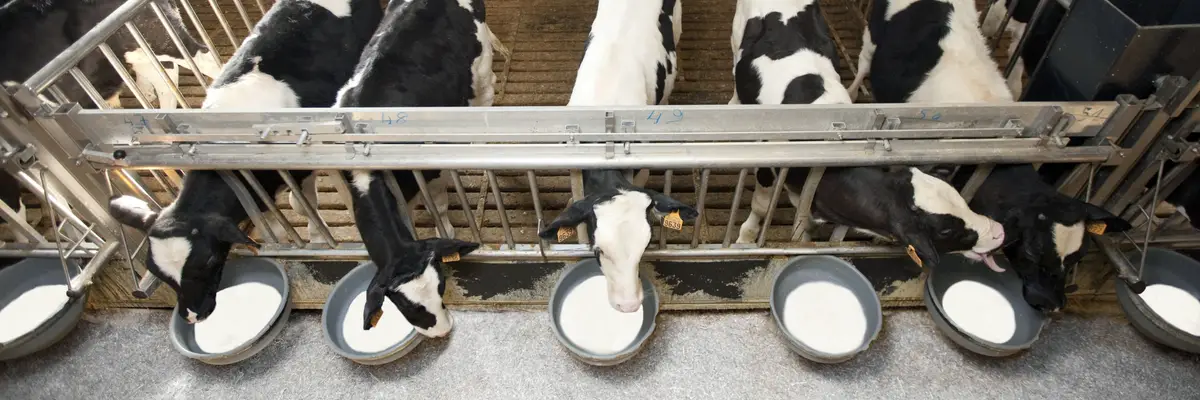
Calves drinking milk in a factory farm.
(Photo by Andia/Universal Images Group via Getty Images)
America prides itself on supporting small and local businesses, yet decades of agricultural policy decisions signal nothing but disdain for our small and local farms.
Calves drinking milk in a factory farm.
(Photo by Andia/Universal Images Group via Getty Images)
Chris Muse
May 29, 2026
May 29, 2026
Common Dreams
Three years behind schedule, the US House of Representatives passed a Farm Bill last month. Despite thousands of independent, humane farmers sounding the alarm that American livestock production is hurtling toward a breaking point, Congress chose to ignore those voices in favor of propping up corporate profits with more handouts to industrial agriculture.
America prides itself on supporting small and local businesses, yet decades of agricultural policy decisions signal nothing but disdain for our small and local farms. The overwhelming majority of taxpayer dollars in the House Farm Bill will funnel directly into the hands of the largest farms and agricultural corporations, while neglecting the needs of the small, independent producers who make up over 85% of all farms in our country. As a result, since the most recent Farm Bill in 2018, over 158,000 farms have had to close their gates, while shareholder value has skyrocketed for the few meatpacking monopolies that maintain a vertically-integrated vice grip on our nation’s meat supply.
Here’s the real kicker—even with access to the endless handouts industrial agriculture has received for decades, we have an increasingly fragile food system. Far from the safe, abundant, and affordable food supply their taglines promise, the factory farming of animals in confinement systems is responsible for major public health threats, the degradation of our soil and waterways, and the hollowing out of our rural communities. Cancer rates in industrial ag-heavy states are rising at alarming rates, and once-thriving small towns are falling victim to corporate capture.
The House Farm Bill includes a provision that independent farmers have made clear drives meat-packer consolidation and robs us of markets that voters in several states demanded: the “Save Our Bacon” (SOB) Act, which, far from saving any bacon, would further entrench a fragile system that profits from cruel confinement and extreme overcrowding of pigs. When our current food system faces extreme stressors like the pandemic or bird flu, these supply chains break down and supermarket shelves quickly empty of meat, eggs, and dairy products. Meanwhile smaller independent farmers like us who use more humane, resilient practices that prioritize the welfare of animals, people, and the environment are able to continue feeding our communities without disruptions.
The Senate now has the opportunity to right the House’s Farm Bill wrongs, restoring and expanding funding for local and regional food systems, and removing favors to industry lobby groups like the Save Our Bacon Act.
What we know is that consumers are fed up, and no longer buy the tired argument that more humane and healthy farming methods are unrealistic, or that smaller farms can’t feed America. Consumers know that pasture-raised animals are healthier for both themselves and the environment, and that resilient local farms are critical for their communities.
Government policy chooses what food gets to be accessible and which types of farms survive, and we must start making better choices. Expanding investment into independent, local meat processing; ensuring the regulation of dubious and misleading label claims; and increasing fair funding opportunities and access to capital for pasture-based farms are just a handful of commonsense reforms that would help level the playing field. The Senate now has the opportunity to right the House’s Farm Bill wrongs, restoring and expanding funding for local and regional food systems, and removing favors to industry lobby groups like the Save Our Bacon Act.
We already know how to raise healthy animals in more humane, pasture-based systems. That these farms are better for all involved than factory farms is clear to anyone on the ground in farming communities across America. And we believe it would be obvious to legislators in Congress if they took the time to come see them, which is why we have joined with other pasture-based farmers across the country to form the FACE Ag Network (Farmers for Animals, Communities, and the Environment).
We may not have the deep pockets of industrial agriculture interests, but we have power in the real stories of how our farms in Delaware County, Iowa, and St. Helena Parish, Louisiana are feeding our communities and revitalizing our local economies. In a recent letter to House and Senate leadership, we outlined a Farm Bill policy platform that would help uplift thousands of farmers, inviting lawmakers to visit our farms and witness firsthand how pasture-based farming systems are building a more resilient food system. And we have a message for the lawmakers about to decide our future in the Farm Bill:
Agribusiness interests have had their chance to design farm policy, and it isn’t working. It’s time to listen to independent farmers who know what their communities, animals, and land need. It’s time to rethink the way we invest federal dollars, and finally support farms producing the kind of food Americans want and deserve, rather than subsidizing products that actively harm our communities.
We invite you to come stand in our pastures and learn first-hand why backing the farms that produce the most humane, healthy, and high-quality food is the soundest investment you could make in our nation’s food system.
Three years behind schedule, the US House of Representatives passed a Farm Bill last month. Despite thousands of independent, humane farmers sounding the alarm that American livestock production is hurtling toward a breaking point, Congress chose to ignore those voices in favor of propping up corporate profits with more handouts to industrial agriculture.
America prides itself on supporting small and local businesses, yet decades of agricultural policy decisions signal nothing but disdain for our small and local farms. The overwhelming majority of taxpayer dollars in the House Farm Bill will funnel directly into the hands of the largest farms and agricultural corporations, while neglecting the needs of the small, independent producers who make up over 85% of all farms in our country. As a result, since the most recent Farm Bill in 2018, over 158,000 farms have had to close their gates, while shareholder value has skyrocketed for the few meatpacking monopolies that maintain a vertically-integrated vice grip on our nation’s meat supply.
Here’s the real kicker—even with access to the endless handouts industrial agriculture has received for decades, we have an increasingly fragile food system. Far from the safe, abundant, and affordable food supply their taglines promise, the factory farming of animals in confinement systems is responsible for major public health threats, the degradation of our soil and waterways, and the hollowing out of our rural communities. Cancer rates in industrial ag-heavy states are rising at alarming rates, and once-thriving small towns are falling victim to corporate capture.
The House Farm Bill includes a provision that independent farmers have made clear drives meat-packer consolidation and robs us of markets that voters in several states demanded: the “Save Our Bacon” (SOB) Act, which, far from saving any bacon, would further entrench a fragile system that profits from cruel confinement and extreme overcrowding of pigs. When our current food system faces extreme stressors like the pandemic or bird flu, these supply chains break down and supermarket shelves quickly empty of meat, eggs, and dairy products. Meanwhile smaller independent farmers like us who use more humane, resilient practices that prioritize the welfare of animals, people, and the environment are able to continue feeding our communities without disruptions.
The Senate now has the opportunity to right the House’s Farm Bill wrongs, restoring and expanding funding for local and regional food systems, and removing favors to industry lobby groups like the Save Our Bacon Act.
What we know is that consumers are fed up, and no longer buy the tired argument that more humane and healthy farming methods are unrealistic, or that smaller farms can’t feed America. Consumers know that pasture-raised animals are healthier for both themselves and the environment, and that resilient local farms are critical for their communities.
Government policy chooses what food gets to be accessible and which types of farms survive, and we must start making better choices. Expanding investment into independent, local meat processing; ensuring the regulation of dubious and misleading label claims; and increasing fair funding opportunities and access to capital for pasture-based farms are just a handful of commonsense reforms that would help level the playing field. The Senate now has the opportunity to right the House’s Farm Bill wrongs, restoring and expanding funding for local and regional food systems, and removing favors to industry lobby groups like the Save Our Bacon Act.
We already know how to raise healthy animals in more humane, pasture-based systems. That these farms are better for all involved than factory farms is clear to anyone on the ground in farming communities across America. And we believe it would be obvious to legislators in Congress if they took the time to come see them, which is why we have joined with other pasture-based farmers across the country to form the FACE Ag Network (Farmers for Animals, Communities, and the Environment).
We may not have the deep pockets of industrial agriculture interests, but we have power in the real stories of how our farms in Delaware County, Iowa, and St. Helena Parish, Louisiana are feeding our communities and revitalizing our local economies. In a recent letter to House and Senate leadership, we outlined a Farm Bill policy platform that would help uplift thousands of farmers, inviting lawmakers to visit our farms and witness firsthand how pasture-based farming systems are building a more resilient food system. And we have a message for the lawmakers about to decide our future in the Farm Bill:
Agribusiness interests have had their chance to design farm policy, and it isn’t working. It’s time to listen to independent farmers who know what their communities, animals, and land need. It’s time to rethink the way we invest federal dollars, and finally support farms producing the kind of food Americans want and deserve, rather than subsidizing products that actively harm our communities.
We invite you to come stand in our pastures and learn first-hand why backing the farms that produce the most humane, healthy, and high-quality food is the soundest investment you could make in our nation’s food system.

No comments:
Post a Comment