House Passes Trump’s ‘Big Beautiful Bill’ That Will Bring the 2026 Military Budget Over $1 Trillion
The House on Thursday passed a massive piece of legislation, dubbed the “Big Beautiful Bill” by President Trump, that includes extra military spending to bring the 2026 military budget over $1 trillion.
The bill passed in a vote of 218-214, with only two Republicans — Reps. Thomas Massie (KY) and Brian Fitzpatrick (PA) — and every Democrat voting against it. The legislation has already passed the Senate and now heads to President Trump’s desk for his signature.
The legislation includes $150 billion in additional military spending, and the White House plans to use $113 billion of it to supplement the 2026 military budget, bringing it to approximately $1.006 trillion, representing a 13% increase from 2025.
The $150 billion will go toward several military priorities of the Trump administration, including the so-called “Golden Dome,” a plan for a sprawling missile defense system in the United States that’s sure to kick off a new arms race and will be a boondoggle for weapons makers.
According to Breaking Defense, the $150 billion includes:
- $29 billion for shipbuilding
- $25 billion for Golden Dome
- $25 billion for munitions
- $16 billion for innovative technologies such as drones, AI, and low-cost weapons
- $15 billion for nuclear “modernization”
- $12 billion for the US military’s buildup in the Asia Pacific
- $9 billion for air superiority
While the US has never officially had a $1 trillion military budget, the actual cost of US military spending has exceeded $1 trillion for years. According to veteran defense analyst Winslow Wheeler, based on the $895 billion National Defense Authorization Act, US national security spending for 2025 was expected to reach about $1.77 trillion.
Wheeler’s estimate accounts for military-related spending from other government agencies not funded by the NDAA, such as the Department of Veterans Affairs and Homeland Security. It also includes the national security share of the interest accrued on the US debt, as well as other factors.

Report Estimates US Used $1.25 Billion Worth of THAAD Interceptors To Defend Israel From Iranian Missiles
A report from the Israeli newspaper Haaretz estimates that the US used 93 interceptors from its THAAD missile defense system to defend Israel from Iranian missiles during the 12-day US-Israeli war against Iran.
At $13 million per interceptor, that means the US launched an estimated $1.25 billion worth of THAAD munitions during the war. The Israeli military also used its Arrow 2 and Arrow 3 interceptors, which are jointly produced with the US. The Haaretz report said that the total cost of the Arrow and THAAD interceptors used was about $1.5 billion.
Haaretz reached its figures using open-source videos that showed 84 interceptors being launched from Israel during eight Iranian missile salvos. Extrapolating from there, the paper estimated that the US and Israel launched an estimated 195 interceptors, including the 93 THAADs, 80 Arrow 3s, and 22 Arrow 2s.
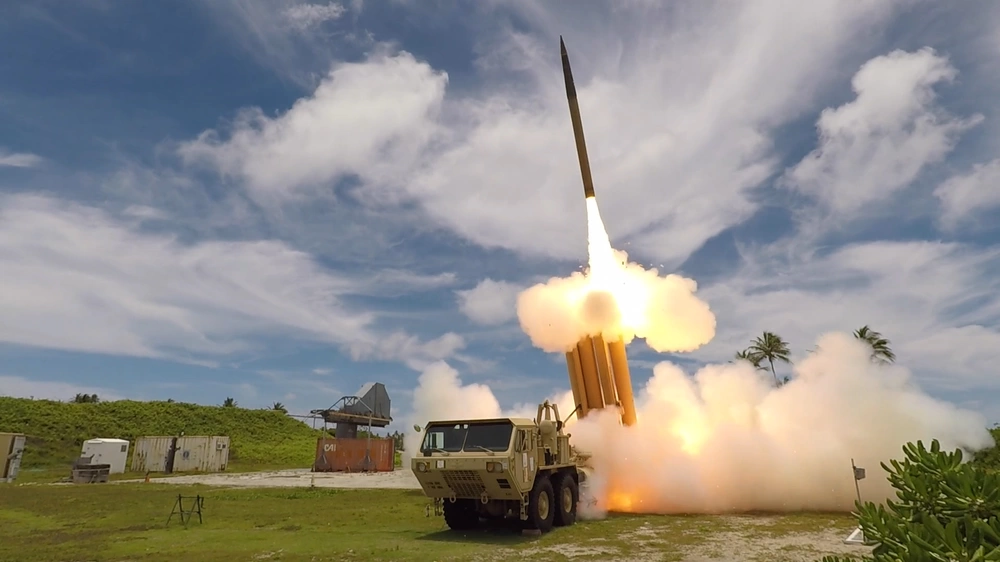
A report from Military Watch Magazine came up with similar numbers, estimating the US used 60 to 80 THAAD interceptors during the war, accounting for 15% to 20% of its global THAAD arsenal. The Biden administration first sent a THAAD system to Israel and about 100 troops to operate it in October 2024, ahead of an Israeli attack on Iran.
In April of this year, reports said the US sent a second THAAD battery to Israel, which would mean that the US has two of its seven THAAD missile defense systems stationed in Israel.
The US also intercepted Iranian missiles using US warships that were firing SM-3 interceptors, which cost between $10 million and $30 million per missile. It’s unclear how many SM-3 interceptors were fired, but the top officer in the US Navy said they were used at an “alarming rate” during the 12-day war.
The Haaretz report said that Iran fired over 500 missiles at Israel during the war, including 272 that were likely allowed to fall in open areas, and 258 that Israeli and US air defenses attempted to intercept. The Israeli military has said 36 missiles struck built environments, but the number is likely higher since it issued censorship orders during the war and hasn’t shared information about strikes on military targets.

Dave DeCamp is the news editor of Antiwar.com, follow him on Twitter @decampdave
LA REVUE GAUCHE - Left Comment: Search results for PERMANENT ARMS ECONOMY
The Military-Industrial Complex Is Riding High

Photo by Michael Afonso
The Senate is on the verge of passing the distinctly misnamed “big beautiful bill.” It is, in fact, one of the ugliest pieces of legislation to come out of Congress in living memory. The version that passed the House recently would cut $1.7 trillion, mostly in domestic spending, while providing the top 5% of taxpayers with roughly $1.5 trillion in tax breaks.
Over the next few years, the same bill will add another $150 billion to a Pentagon budget already soaring towards a record $1 trillion. In short, as of now, in the battle between welfare and warfare, the militarists are carrying the day.
Pentagon Pork and the People It Harms
The bill, passed by the House of Representatives and at present under consideration in the Senate, would allocate tens of billions of dollars to pursue President Trump’s cherished but hopeless Golden Dome project, which Laura Grego of the Union of Concerned Scientists has described as “a fantasy.” She explained exactly why the Golden Dome, which would supposedly protect the United States against nuclear attack, is a pipe dream:
“Over the last 60 years, the United States has spent more than $350 billion on efforts to develop a defense against nuclear-armed ICBMs [intercontinental ballistic missiles]. This effort has been plagued by false starts and failures, and none have yet been demonstrated to be effective against a real-world threat… Missile defenses are not a useful or long-term strategy for keeping the U.S. safe from nuclear weapons.”
The bill also includes billions more for shipbuilding, heavy new investments in artillery and ammunition, and funding for next-generation combat aircraft like the F-47.
Oh, and after all of those weapons programs get their staggering cut of that future Pentagon budget, somewhere way down at the bottom of that list is a line item for improving the quality of life for active-duty military personnel. But the share aimed at the well-being of soldiers, sailors, and airmen (and women) is less than 6% of the $150 billion that Congress is now poised to add to that department’s already humongous budget. And that’s true despite the way Pentagon budget hawks invariably claim that the enormous sums they routinely plan on shoveling into it — and the overflowing coffers of the contractors it funds — are “for the troops.”
Much of the funding in the bill will flow into the districts of key members of Congress (to their considerable political benefit). For example, the Golden Dome project will send billions of dollars to companies based in Huntsville, Alabama, which calls itself “Rocket City” because of the dense network of outfits there working on both offensive missiles and missile defense systems. And that, of course, is music to the ears of Representative Mike Rogers (R-AL), the current chair of the House Armed Services Committee, who just happens to come from Alabama.
The shipbuilding funds will help prop up arms makers like HII Corporation (formerly Huntington Ingalls), which runs a shipyard in Pascagoula, Mississippi, the home state of Senate Armed Services Committee chair Roger Wicker (R-Miss). The funds will also find their way to shipyards in Maine, Connecticut, and Virginia.
Those funds will benefit the co-chairs of the House Shipbuilding Caucus, Representative Joe Courtney (D-CT) and Representative Rob Wittman (R-VA). Connecticut hosts General Dynamics’ Electric Boat plant, which makes submarines that carry ballistic missiles, while Virginia is home to HII Corporation’s Newport News Shipbuilding facility, which makes both aircraft carriers and attack submarines.
The Golden Dome missile defense project, on which President Trump has promised to spend $175 billion over the next three years, will benefit contractors big and small. Those include companies like Boeing, Lockheed Martin, and Raytheon (now RTX) that build current generation missile defense systems, as well as emerging military tech firms like Elon Musk’s Space X and Palmer Luckey’s Anduril, both of which are rumored to have a shot at playing a leading role in the development of the new anti-missile system.
And just in case you thought this country was only planning to invest in defense against a nuclear strike, a sharp upsurge in spending on new nuclear warheads under the auspices of the Department of Energy’s National Nuclear Security Agency (NNSA) has been proposed for fiscal year 2026. Thirty billion dollars, to be exact, which would represent a 58% hike from the prior year’s budget. Meanwhile, within that agency, nonproliferation, cleanup, and renewable energy programs are set to face significant cuts, leaving 80% of NNSA’s proposed funding to be spent on — yes! — nuclear weapons alone. Those funds will flow to companies like Honeywell, Bechtel, Jacobs Engineering, and Fluor that help run nuclear labs and nuclear production sites, as well as educational institutions like the University of Tennessee, Texas A&M, and the University of California at Berkeley, which help manage nuclear weapons labs or nuclear production sites.
Weakening the Social Safety Net — and America
And while weapons contractors will gorge on a huge new infusion of cash, military personnel, past and present, are clearly going to be neglected. As a start, the Veterans Administration is on the block for deep cuts, including possible layoffs of up to 80,000 employees — a move that would undoubtedly slow down the processing of benefits for those who have served in America’s past wars. Research on ailments that disproportionately impact veterans will also be cut, which should be considered an outrage.
Meanwhile, hundreds of thousands of veterans from this country’s disastrous wars in Afghanistan and Iraq will continue to suffer from physical and psychological wounds, including traumatic brain injuries (TBI) and post-traumatic stress disorder (PTSD). Cutting research that might find more effective solutions to such problems should be considered a national disgrace. In the meantime, active-duty personnel who are getting a tiny fraction of the potential Pentagon add-on of $150 billion are similarly in need.
Worse yet, turn away from the Pentagon for a moment, and the cuts in the rest of that “big beautiful bill” will likely have an impact on a majority of Americans — Democrats, independents, and MAGA Republicans alike. Their full effects may not be felt for months until the spending reductions contained in it start hitting home. However, enacting policies that take food off people’s tables and deny them medical care will not only cause unnecessary suffering but cost lives.
As President (and former general) Dwight D. Eisenhower, a very different kind of Republican, said more than 70 years ago, the ultimate security of a nation lies not in how many weapons it can pile up, but in the health, education, and resilience of its people. The big beautiful bill and the divisive politics surrounding it threaten those foundations of our national strength.
Clash of the Contractors?
As budget cuts threaten to make the population weaker, distorted spending priorities are making arms producers stronger. The Big Five — Lockheed Martin, RTX, Boeing, General Dynamics, and Northrop Grumman — produce most of the current big-ticket weapon systems, from submarines and intercontinental ballistic missiles to tanks, combat aircraft, and missile-defense systems. Meanwhile, emerging tech firms like Palantir, Anduril, and Space X are cashing in on contracts for unpiloted vehicles, advanced communications systems, new-age goggles for the Army, anti-drone systems, and so much more.
But even as weapons spending hits near-record or record levels, there may still be a fight between the Big Five and the emerging tech firms over who gets the biggest share of that budget. One front in the coming battle between the Big Five and the Silicon Valley militarists could be the Army Transformation Initiative (ATI). According to Secretary of the Army Dan Driscoll, one of the goals of ATI is to “eliminate obsolete systems.”
Driscoll is a harsh critic of the way members of Congress put money in the budget — a process known as “pork barrel politics” — for items the military services haven’t even asked for (and they ask for plenty), simply because those systems might bring more jobs and revenue to their states or districts. He has, in fact, committed himself to an approach that’s incompatible with the current, parochial process of putting together the Pentagon budget. “Lobbyists and bureaucrats have overtaken the army’s ability to prioritize soldiers and war fighting,” he insisted.
Driscoll is talking a tough game when it comes to taking on the existing big contractors. He’s evidently ready to push for “reform,” even if it means that some of them go out of business. In fact, he seems to welcome it: “I will measure it as success if, in the next two years, one of the primes is no longer in business.” (“Primes” are the big contractors like Lockheed Martin and General Dynamics that take the lead on major programs and get the bulk of the funding, a significant portion of which they dole out to subcontractors all over the country and the world.)
Ending pork-barrel politics in favor of an approach in which the Pentagon only buys systems that align with the country’s actual defense strategy, as Driscoll is suggesting, might seem like a significant step forward. But be careful what you wish for. Any funds freed up by stopping congressional representatives from treating the Pentagon budget as a piggy bank to buy loyalty from their constituents will almost certainly go to emerging tech firms ready to build next-generation systems like swarms of drones, weapons that can take out a hypersonic missile, or pilotless land vehicles, aircraft, and ships. Driscoll is a major tech enthusiast, as is his friend and Yale law school classmate J.D. Vance, who was first employed by Palantir co-founder Peter Thiel, who then backed his successful run for the Senate from Ohio.
Since the tech firms don’t have the equivalent of the Big Five’s extensive production networks in key congressional districts, they need to find other ways to persuade Congress to fund their weapons programs. Fortunately, the Silicon Valley militarists have a significant number of former employees or financial backers in the Trump administration who can plead their case.
In addition, military-tech-focused venture capital firms have hired at least 50 former Pentagon and military officials, all of whom can help them exert influence over both the Trump administration and Congress. The biggest “catch” was Palantir’s hiring of former Wisconsin Congressman Mike Gallagher, who had run the hawkish Congressional special committee on Communist China.
Some journalists and policy analysts have wondered whether the feud between Donald Trump and Elon Musk will hurt the military tech sector. Well, stop fretting. Even if Trump were to follow through on his threat to cut the government funding of Musk’s firms, the tasks they’re carrying out — from launching military satellites to developing more secure Internet access for deployed military personnel — would still proceed, just under the auspices of different companies. There would be some friction involved, simply because it’s hard to shift suppliers on a dime without slowing down production. And the transition, should it occur, would also add cost to already exceedingly expensive programs.
But Trump’s threat to cancel Space X’s contracts may just be more grist for his verbal combat with Musk rather than anything his administration plans to follow through on. Even if Musk and his president never reconcile, the DOGE cuts to international diplomacy and domestic social services that Musk spearheaded will still do serious damage for years to come.
Money Can’t Buy Security
A shift toward emerging military tech firms and away from the Big Five will be about more than money and technology. Key figures among the growing cohort of Silicon Valley militarists like Alex Karp, the CEO of Palantir, see building weapons as more than just a necessary pillar of national defense. They see it as a measure of national character.
Karp’s new book, The Technological Republic: Hard Power, Soft Belief, and the Future of the West, mixes the Cold War ideology of the 1950s with the emerging technology of the twenty-first century. He decries the lack of unifying concepts like “the West” and sees too many Americans as slackers with no sense of national pride or patriotism. His solution, a supposedly unifying national mission, is — wait for it! — a modern Manhattan project for the development of the military applications of artificial intelligence. To say that this is an impoverished version of what this country’s mission should be is putting it mildly. Many other possibilities come to mind, from addressing climate change to preventing pandemics to upgrading our educational system to building a society where everyone’s basic needs are met, leaving room for creative pursuits of all kinds.
The techno-optimists are also obsessed with preparing for a war with China, which Palmer Luckey, the 32-year-old founder of the military tech firm Anduril, believes will happen by 2027. And many in his circle, including Marc Andreessen of the venture capital firm Andreessen Horowitz, are convinced that any potential risks from the development of AI pale in comparison to the need to “beat China,” not just in getting to sophisticated military applications first, but in winning a future war with Beijing, if it comes to that. Talk of diplomacy to head off a war over Taiwan or cooperation on global issues like climate change, outbreaks of disease, and building a more inclusive, less unequal global economy rarely come up in discussions among the hardcore militarist faction in Silicon Valley. Instead, that group is spending inordinate amounts of time and money seeking to influence the future of U.S. foreign and military policy, a dangerous development indeed.
Whether the emerging tech firms can build cheaper weapons with superior capabilities will be irrelevant if such developments are tied to an aggressive strategy that makes a devastating conflict with China more likely. While the fight between the Big Five and the tech leaders may prove interesting to observe, it is also ominous in terms of this country’s future economic and foreign policies, not to speak of the shape and size of our national budget.
The rest of us, who aren’t billionaires and don’t draw $20 million in annual compensation packages like the CEOs of the big weapons firms (directly or indirectly funded by our tax dollars), should play a leading role in rethinking and revising this country’s global role and our policies at home. If we don’t rise to that challenge, this country could end up swapping one form of militarism, led by the Big Five, for another, spearheaded by hawkish, self-important tech leaders who care more about making money and spawning devastating new technologies than they do about democracy or the quality of life of the average American.
This article first appeared in TomDispatch.

No comments:
Post a Comment