Shock, chaos and a hollow win: Chasing a tariff deal with Trump
Jonathan Head
Jonathan Head
BBC
South East Asia correspondent in Bangkok
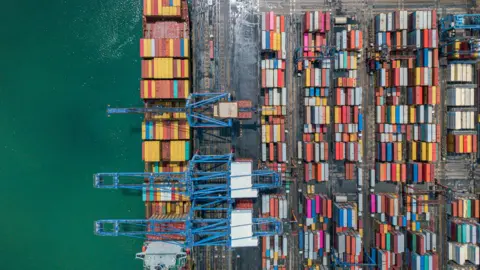
Export-driven economies like Thailand have been scrambling for a trade deal to avoid President Trump's steep tariffs
When US President Donald Trump made his dramatic tariff announcement on 2 April, nowhere was the shock greater than in South East Asia, a region whose entire world view and economic model is built on exports.
The levies went as high as 49% on some countries, hitting a range of industries from electronics exporters in Thailand and Vietnam to chip makers in Malaysia and clothing factories in Cambodia.
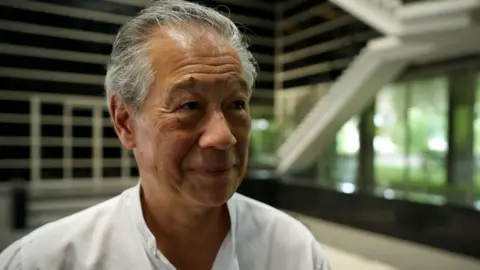
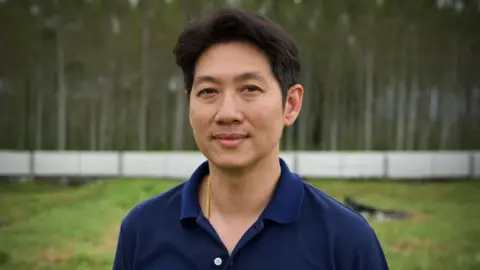
"I remember waking up in the morning. It was quite early, and seeing him standing there on the White House lawn with his board. I thought: 'Did I see that right? 36%? How could it be?" says Richard Han, whose father founded Hana Microelectronics, one of Thailand's biggest contract manufacturers.
Thailand, which was facing a 36% levy, now has a deal, like most of its neighbours, to reduce the tariffs to 19%.
The negotiations went down to the wire, finalised just two days before the deadline Trump had set - 1 August. It has been a fraught process getting there, and there is still very little detail about exactly what has been agreed.
Live Updates:
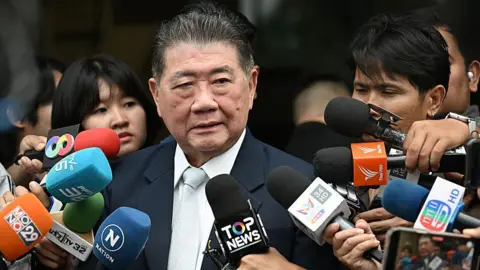
Thailand's acting Prime Minister Phumtham Wechayachai took office after the last PM stepped down over a political scandal
But Thailand is not Vietnam, a one-party communist state where critical decisions can be made quickly by a few leaders, with little need to worry about the opinions of businesses or the public.
Rather, like South Korea and Japan, whose deals came after much wrangling despite them being staunch American allies, Thailand too has to contend with domestic politics and public opinion. Thailand also has a weak and fractious coalition government, beholden to a range of vested interests.
Worse still, decisions it took which were entirely unrelated to trade angered the US side.
In February it sent 40 Uyghur asylum-seekers who had been stuck in Thailand for more than a decade back to China, defying warnings by the US Secretary of State Marco Rubio. One Thai trade official told the BBC the US negotiators were still bringing up the Uyghurs as a grievance at tariff talks in May.
Then a regional army commander filed a lèse-majesté complaint against a US academic, resulting in him being jailed and then forced to leave Thailand. So, far from being at the front, Thailand found itself at the back of the queue.
The other difficulty facing the Thai trade team was what the US was asking for in return for cutting the tariff rate, in particular access to Thailand's agricultural market, which is heavily protected.
Food is big business in Thailand. CP Group, one of the world's agribusiness giants, is the biggest company in the country. This US demand was painful for Thailand.
"Vietnam opened a Pandora's box," says another Thai trade official. "By offering zero percent tariffs on all US imports, they make it hard for those of us who can't easily open up all sectors to US competition."
South East Asia correspondent in Bangkok
JULY 31, 2025
Export-driven economies like Thailand have been scrambling for a trade deal to avoid President Trump's steep tariffs
When US President Donald Trump made his dramatic tariff announcement on 2 April, nowhere was the shock greater than in South East Asia, a region whose entire world view and economic model is built on exports.
The levies went as high as 49% on some countries, hitting a range of industries from electronics exporters in Thailand and Vietnam to chip makers in Malaysia and clothing factories in Cambodia.
"I remember waking up in the morning. It was quite early, and seeing him standing there on the White House lawn with his board. I thought: 'Did I see that right? 36%? How could it be?" says Richard Han, whose father founded Hana Microelectronics, one of Thailand's biggest contract manufacturers.
Thailand, which was facing a 36% levy, now has a deal, like most of its neighbours, to reduce the tariffs to 19%.
The negotiations went down to the wire, finalised just two days before the deadline Trump had set - 1 August. It has been a fraught process getting there, and there is still very little detail about exactly what has been agreed.
Live Updates:
Trump raises Canada tariff to 35% as US announces new levies for dozens of countries
What tariffs has Trump announced and why?
What tariffs has Trump announced and why?
Richard Han says the 36% levy on Thailand was a "shock"
The 10 countries in Asean, as the South East Asian regional bloc is known, exported $477bn (£360bn) worth of goods to the United States in 2024. Vietnam is by far the most exposed economy, its exports to the US totalling $137bn, making up about 30% of its GDP.
No surprise then that the Vietnamese government was first off the block to negotiate with the US, and the first in the region to do a deal to cut the punishing 46% rate Trump had imposed on them.
According to the US president, the deal cuts the tariffs to 20%, while he claims Vietnam will now impose no tariffs at all on any imports from the US. Tellingly, the Vietnamese leadership has said nothing about the deal.
There are no details, no written or signed documents, and some reports suggest Vietnam does not agree with Trump's numbers. But they set the bar for other countries in the region.
Indonesia and the Philippines followed with deals reducing their tariffs to 19%, although neither country depends much on exports to the US.
Thailand does export a lot to the US. Last year they earned it more than $63bn, about one-fifth of its total exports. Thailand too should have been at the head of the queue in Washington, pleading for a reduction in the 36% tariff Trump had designated for it.
The 10 countries in Asean, as the South East Asian regional bloc is known, exported $477bn (£360bn) worth of goods to the United States in 2024. Vietnam is by far the most exposed economy, its exports to the US totalling $137bn, making up about 30% of its GDP.
No surprise then that the Vietnamese government was first off the block to negotiate with the US, and the first in the region to do a deal to cut the punishing 46% rate Trump had imposed on them.
According to the US president, the deal cuts the tariffs to 20%, while he claims Vietnam will now impose no tariffs at all on any imports from the US. Tellingly, the Vietnamese leadership has said nothing about the deal.
There are no details, no written or signed documents, and some reports suggest Vietnam does not agree with Trump's numbers. But they set the bar for other countries in the region.
Indonesia and the Philippines followed with deals reducing their tariffs to 19%, although neither country depends much on exports to the US.
Thailand does export a lot to the US. Last year they earned it more than $63bn, about one-fifth of its total exports. Thailand too should have been at the head of the queue in Washington, pleading for a reduction in the 36% tariff Trump had designated for it.
Thailand's acting Prime Minister Phumtham Wechayachai took office after the last PM stepped down over a political scandal
But Thailand is not Vietnam, a one-party communist state where critical decisions can be made quickly by a few leaders, with little need to worry about the opinions of businesses or the public.
Rather, like South Korea and Japan, whose deals came after much wrangling despite them being staunch American allies, Thailand too has to contend with domestic politics and public opinion. Thailand also has a weak and fractious coalition government, beholden to a range of vested interests.
Worse still, decisions it took which were entirely unrelated to trade angered the US side.
In February it sent 40 Uyghur asylum-seekers who had been stuck in Thailand for more than a decade back to China, defying warnings by the US Secretary of State Marco Rubio. One Thai trade official told the BBC the US negotiators were still bringing up the Uyghurs as a grievance at tariff talks in May.
Then a regional army commander filed a lèse-majesté complaint against a US academic, resulting in him being jailed and then forced to leave Thailand. So, far from being at the front, Thailand found itself at the back of the queue.
The other difficulty facing the Thai trade team was what the US was asking for in return for cutting the tariff rate, in particular access to Thailand's agricultural market, which is heavily protected.
Food is big business in Thailand. CP Group, one of the world's agribusiness giants, is the biggest company in the country. This US demand was painful for Thailand.
"Vietnam opened a Pandora's box," says another Thai trade official. "By offering zero percent tariffs on all US imports, they make it hard for those of us who can't easily open up all sectors to US competition."
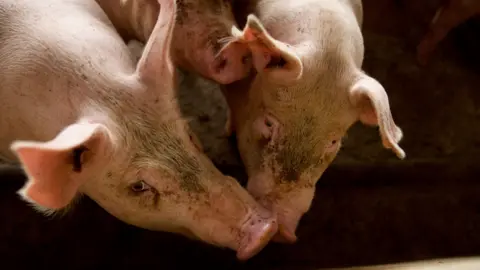
Zero tariffs on US pork imports would be a blow for Thailand's pig farms
Three hours' drive from Bangkok, in Nakhon Nayok, Worawut Siripun keeps 12,000 pigs – an important business in Thailand; Thais eat a lot of pork. He is active in the Thai Swine Raisers Association, and has been lobbying against eliminating tariffs on US pork.
"US farmers produce on a much bigger scale than us, and their costs are lower. So, the price of their pork will be lower, and domestic farmers won't be able to survive."
Access to the agricultural market was also a sticking point in negotiations with Japan, which sought to protect its rice farmers, and continues to be one of the main hurdles with India.
In Thailand, it is presumed that agribusiness giants like CP have also been lobbying against US demands to open up other sectors like poultry and corn. There have been fractious meetings between the trade team and cabinet ministers after every round of tariff talks in Washington, the BBC understands.
Three hours' drive from Bangkok, in Nakhon Nayok, Worawut Siripun keeps 12,000 pigs – an important business in Thailand; Thais eat a lot of pork. He is active in the Thai Swine Raisers Association, and has been lobbying against eliminating tariffs on US pork.
"US farmers produce on a much bigger scale than us, and their costs are lower. So, the price of their pork will be lower, and domestic farmers won't be able to survive."
Access to the agricultural market was also a sticking point in negotiations with Japan, which sought to protect its rice farmers, and continues to be one of the main hurdles with India.
In Thailand, it is presumed that agribusiness giants like CP have also been lobbying against US demands to open up other sectors like poultry and corn. There have been fractious meetings between the trade team and cabinet ministers after every round of tariff talks in Washington, the BBC understands.
Worawut Siripun says he cannot compete with US farmers who produce a lot more
But on the other side are Thailand's manufacturers, who represent a much larger contribution to GDP than agriculture. They badly needed a deal.
"If we get 36% then it's going to be terrible for us," said Suparp Suwanpimolkul, deputy managing director of SK Polymer, before the deal was announced. The company makes a bewildering array of components from rubber and synthetic materials, for washing machines, fridges, air conditioners.
"I guarantee you would find at least one of our products in your home," he said.
SK Polymer was founded by Suparp and his two brothers in 1991. Its story is the story of modern Thailand, originating from their father's small family business, but riding the explosive growth of global trade which has been the foundation of Thailand's economy.
They are an integral part of a complex supply chain, where their products join other components from multiple countries to make consumer, industrial or medical goods for export. About 20% of the company's income comes from the US, but the number is much higher when products which contain its components are included. The Trump tariffs have thrown a spanner in the works.
"We have small margins," said Suparp. He said they could still manage with tariffs up to 20% or even 25% by cutting costs. When he spoke to the BBC, before the deal was announced, he said the uncertainty was the biggest challenge: "Please - to our government, just get the deal, so we can plan our business."
But on the other side are Thailand's manufacturers, who represent a much larger contribution to GDP than agriculture. They badly needed a deal.
"If we get 36% then it's going to be terrible for us," said Suparp Suwanpimolkul, deputy managing director of SK Polymer, before the deal was announced. The company makes a bewildering array of components from rubber and synthetic materials, for washing machines, fridges, air conditioners.
"I guarantee you would find at least one of our products in your home," he said.
SK Polymer was founded by Suparp and his two brothers in 1991. Its story is the story of modern Thailand, originating from their father's small family business, but riding the explosive growth of global trade which has been the foundation of Thailand's economy.
They are an integral part of a complex supply chain, where their products join other components from multiple countries to make consumer, industrial or medical goods for export. About 20% of the company's income comes from the US, but the number is much higher when products which contain its components are included. The Trump tariffs have thrown a spanner in the works.
"We have small margins," said Suparp. He said they could still manage with tariffs up to 20% or even 25% by cutting costs. When he spoke to the BBC, before the deal was announced, he said the uncertainty was the biggest challenge: "Please - to our government, just get the deal, so we can plan our business."
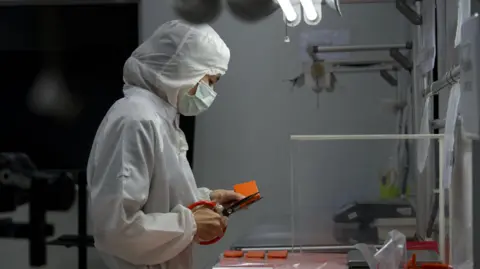
A worker at SK Polymer, which makes rubber products for export to the US
A 20% levy is also palatable for electronics manufacturers, a big industry in Thailand.
"If all of us in this region end up with around 20% our buyers won't seek alternative suppliers – it will just be a tax, like VAT, for US consumers," says Richard Han, CEO of Hana Microelectronics. The company makes the basic components that go into everything in our digital lives: printed circuit boards, integrated circuits, RFID tags for pricing.
Mr Han says only about 12% of his products go to the US directly, but like SK Polymer the proportion that goes indirectly, as part of other manufactured goods, is much higher. But it is not just the tariff number that worries him.
His concern is trans-shipment, the US charge that China is avoiding tariffs by routing its production through South East Asia. Already Vietnam, according to President Trump, will pay 40% - double the new tariff rate - on goods the US judges to be trans-shipped.
Both Thailand and Vietnam saw foreign investment increase significantly after tariffs were imposed on China in the first Trump term, and their exports to the US rose as well. Some of that was Chinese companies moving production; some was products using a lot more Chinese-made components. And they are not just from China.
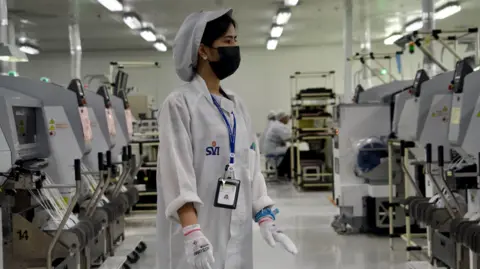
At another electronics manufacturer, SVI, robots glided up and down the assembly line bringing hundreds of tiny components to assemble circuit boards in machines that cost hundreds of thousands of dollars. A quick look at the labels showed the components came from Malaysia, the Philippines, Taiwan and China.
SVI makes security cameras, bespoke amplifiers, medical equipment, to whatever specification their customers, who are mainly in Scandinavia, want. Thailand's vital manufacturing sector is part of an immensely complex global supply chain which is almost impossible to rearrange to meet the US president's demands.
Under WTO rules a product is considered local if at least 40% of its value is added in the local manufacturing process, or if it has been "substantially transformed" into a new product, the way an iPhone becomes something different once it has been assembled.
A 20% levy is also palatable for electronics manufacturers, a big industry in Thailand.
"If all of us in this region end up with around 20% our buyers won't seek alternative suppliers – it will just be a tax, like VAT, for US consumers," says Richard Han, CEO of Hana Microelectronics. The company makes the basic components that go into everything in our digital lives: printed circuit boards, integrated circuits, RFID tags for pricing.
Mr Han says only about 12% of his products go to the US directly, but like SK Polymer the proportion that goes indirectly, as part of other manufactured goods, is much higher. But it is not just the tariff number that worries him.
His concern is trans-shipment, the US charge that China is avoiding tariffs by routing its production through South East Asia. Already Vietnam, according to President Trump, will pay 40% - double the new tariff rate - on goods the US judges to be trans-shipped.
Both Thailand and Vietnam saw foreign investment increase significantly after tariffs were imposed on China in the first Trump term, and their exports to the US rose as well. Some of that was Chinese companies moving production; some was products using a lot more Chinese-made components. And they are not just from China.
At another electronics manufacturer, SVI, robots glided up and down the assembly line bringing hundreds of tiny components to assemble circuit boards in machines that cost hundreds of thousands of dollars. A quick look at the labels showed the components came from Malaysia, the Philippines, Taiwan and China.
SVI makes security cameras, bespoke amplifiers, medical equipment, to whatever specification their customers, who are mainly in Scandinavia, want. Thailand's vital manufacturing sector is part of an immensely complex global supply chain which is almost impossible to rearrange to meet the US president's demands.
Under WTO rules a product is considered local if at least 40% of its value is added in the local manufacturing process, or if it has been "substantially transformed" into a new product, the way an iPhone becomes something different once it has been assembled.
Electronics manufacturer SVI is one of many Thai companies that sits at the heart of a complex global supply chain
The Trump administration pays no heed to WTO rules, and it is not clear what will be counted as trans-shipped, but Mr Han fears this could prove a bigger problem for Thai companies than the standard tariff rate if the US insists on more local components, or fewer from China.
"South East Asia relies very heavily on China," he explains. "China, by far, has the largest supply chain for electronics and many other industries, and they are the cheapest.
"We could buy materials from another part of the world. It would be a lot more expensive. But it would be virtually impossible for Thailand or Vietnam or the Philippines or Malaysia to get a very high threshold, say 50-60%, made within that country. And if that is the condition to get the US certificate of origin, then nobody's going to get the certificate of origin."
For the moment very few of these details have been revealed. Despite President Trump claiming he has got zero percent tariffs for US goods coming into the Philippines and Indonesia, both those countries have said this is not correct, and that much still needs to be negotiated.
For the Thai government, having started so late, and struggled to meet US demands, just getting a deal will have been a relief.
They will worry about how to make the deal work later, as the details are worked out, which typically takes years. And in that, they are far from alone – rich and developing economies alike are scrambling to keep up with Trump's mercurial tariff policy.
"At some point this has to stop. Surely it has to stop?" Mr Han says. "The trouble is, we don't know what the rules of the game are going to be, so we're all milling around, just waiting to find out how to play the new game."
The Trump administration pays no heed to WTO rules, and it is not clear what will be counted as trans-shipped, but Mr Han fears this could prove a bigger problem for Thai companies than the standard tariff rate if the US insists on more local components, or fewer from China.
"South East Asia relies very heavily on China," he explains. "China, by far, has the largest supply chain for electronics and many other industries, and they are the cheapest.
"We could buy materials from another part of the world. It would be a lot more expensive. But it would be virtually impossible for Thailand or Vietnam or the Philippines or Malaysia to get a very high threshold, say 50-60%, made within that country. And if that is the condition to get the US certificate of origin, then nobody's going to get the certificate of origin."
For the moment very few of these details have been revealed. Despite President Trump claiming he has got zero percent tariffs for US goods coming into the Philippines and Indonesia, both those countries have said this is not correct, and that much still needs to be negotiated.
For the Thai government, having started so late, and struggled to meet US demands, just getting a deal will have been a relief.
They will worry about how to make the deal work later, as the details are worked out, which typically takes years. And in that, they are far from alone – rich and developing economies alike are scrambling to keep up with Trump's mercurial tariff policy.
"At some point this has to stop. Surely it has to stop?" Mr Han says. "The trouble is, we don't know what the rules of the game are going to be, so we're all milling around, just waiting to find out how to play the new game."
PHOTOS BBC/ Lulu Luo

A drone view shows a vessel docked during a day of commercial activity at the port of Manzanillo, in Manzanillo, Mexico, Dec 14, 2023.
PHOTO: Reuters file
REUTERS
PUBLISHED ON July 31, 2025
US President Donald Trump slapped dozens of trading partners with steep tariffs ahead of a Friday (Aug 1) trade deal deadline, including a 35 per cent duty on many goods from Canada, 50 per cent for Brazil, 25 per cent for India, 20 per cent for Taiwan and 39 per cent for Switzerland.
Trump released an executive order listing higher import duty rates of 10 per cent to 41 per cent starting in seven days for 69 trading partners as the 12.01am EDT (12.01pm in Singapore Time) deadline approached. Some of them had reached tariff-reducing deals and some had no opportunity to negotiate with his administration.
The order said that goods from all other countries not listed in an annex would be subject to a 10 per cent US tariff rate.
Trump's order said that some trading partners, "despite having engaged in negotiations, have offered terms that, in my judgement, do not sufficiently address imbalances in our trading relationship or have failed to align sufficiently with the United States on economic and national-security matters."
Trump issued a separate order for Canada that raises the rate on Canadian goods subject to fentanyl-related tariffs to 35 per cent from 25 per cent previously, saying Canada had "failed to co-operate" in curbing fentanyl flows into the US.
The higher tariffs on Canadian goods contrasted sharply with Trump's decision to grant Mexico a 90-day reprieve from higher tariffs of 30 per cent on many goods to provide more time to negotiate a broader trade pact.
A US official told reporters that more trade deals were yet to be announced as Trump's higher "reciprocal" tariff rates were set to take effect.
"We have some deals," the official said. "And I don't want to get ahead of the President of the United States in announcing those deals."
Regarding the steep tariffs on goods from Canada, the second largest US trading partner after Mexico, the official said that Canadian officials "haven't shown the same level of constructiveness that we've seen from the Mexican side."
The extension for Mexico avoids a 30 per cent tariff on most Mexican non-automotive and non-metal goods compliant with the US-Mexico-Canada Agreement on trade and came after a Thursday morning call between Trump and Mexican President Claudia Sheinbaum.
Trump hits Brazil with tariffs, sanctions but key sectors excluded
"We avoided the tariff increase announced for tomorrow," Sheinbaum wrote in an X social media post, adding that the Trump call was "very good."
Approximately 85 per cent of US imports from Mexico comply with the rules of origin outlined in the USMCA, shielding them from 25 per cent tariffs related to fentanyl, according to Mexico's economy ministry.
Trump said the US would continue to levy a 50 per cent tariff on Mexican steel, aluminium and copper and a 25 per cent tariff on Mexican autos and on non-USMCA-compliant goods subject to tariffs related to the US fentanyl crisis.
"Additionally, Mexico has agreed to immediately terminate its Non Tariff Trade Barriers, of which there were many," Trump said in a Truth Social post without providing details.
Korea deal, India discord
South Korea agreed on Wednesday to accept a 15 per cent tariff on its exports to the US, including autos, down from a threatened 25 per cent, as part of a deal that includes a pledge to invest US$350 billion (S$453 billion) in US projects to be chosen by Trump.
But goods from India appeared to be headed for a 25 per cent tariff after talks bogged down over access to India's agriculture sector, drawing a higher-rate threat from Trump that also included an unspecified penalty for India's purchases of Russian oil.
Although negotiations with India were continuing, New Delhi vowed to protect the country's labour-intensive farm sector, triggering outrage from the opposition party and a slump in the rupee.
Trump's rollout of higher import taxes on Friday comes amid more evidence they have begun driving up consumer goods prices.
Commerce Department data released Thursday showed prices for home furnishings and durable household equipment jumped 1.3 per cent in June, the biggest gain since March 2022, after increasing 0.6 per cent in May. Recreational goods and vehicles prices shot up 0.9 per cent, the most since February 2024, after being unchanged in May. Prices for clothing and footwear rose 0.4 per cent.
Tough questions from judges
Trump hit Brazil on Wednesday with a steep 50 per cent tariff as he escalated his fight with Latin America's largest economy over its prosecution of his friend and former President Jair Bolsonaro, but softened the blow by excluding sectors such as aircraft, energy and orange juice from heavier levies.
Read Also

Pakistan says deal concluded with US on tariffs, Trump cites oil reserves agreement
The run-up to Trump's tariff deadline was unfolding as federal appeals court judges sharply questioned Trump's use of a sweeping emergency powers law to justify his sweeping tariffs of up to 50 per cent on nearly all trading partners.
Trump invoked the 1977 International Emergency Economic Powers Act to declare an emergency over the growing US trade deficit and impose his "reciprocal" tariffs and a separate fentanyl emergency.
The Court of International Trade ruled in May that the actions exceeded his executive authority, and questions from judges during oral arguments before the US Appeals Court for the Federal Circuit in Washington indicated further scepticism.
US Treasury Secretary Scott Bessent said earlier that the United States believes it has the makings of a trade deal with China, but it is "not 100 per cent done," and still needs Trump's approval.
US negotiators "pushed back quite a bit" over two days of trade talks with the Chinese in Stockholm this week, Bessent said in an interview with CNBC.
China is facing an August 12 deadline to reach a durable tariff agreement with Trump's administration, after Beijing and Washington reached preliminary deals in May and June to end escalating tit-for-tat tariffs and a cut-off of rare earth minerals.
Read Also

Trump says US, India still negotiating after 25% US tariff threat
Source: Reuters
PUBLISHED ON July 31, 2025
US President Donald Trump slapped dozens of trading partners with steep tariffs ahead of a Friday (Aug 1) trade deal deadline, including a 35 per cent duty on many goods from Canada, 50 per cent for Brazil, 25 per cent for India, 20 per cent for Taiwan and 39 per cent for Switzerland.
Trump released an executive order listing higher import duty rates of 10 per cent to 41 per cent starting in seven days for 69 trading partners as the 12.01am EDT (12.01pm in Singapore Time) deadline approached. Some of them had reached tariff-reducing deals and some had no opportunity to negotiate with his administration.
The order said that goods from all other countries not listed in an annex would be subject to a 10 per cent US tariff rate.
Trump's order said that some trading partners, "despite having engaged in negotiations, have offered terms that, in my judgement, do not sufficiently address imbalances in our trading relationship or have failed to align sufficiently with the United States on economic and national-security matters."
Trump issued a separate order for Canada that raises the rate on Canadian goods subject to fentanyl-related tariffs to 35 per cent from 25 per cent previously, saying Canada had "failed to co-operate" in curbing fentanyl flows into the US.
The higher tariffs on Canadian goods contrasted sharply with Trump's decision to grant Mexico a 90-day reprieve from higher tariffs of 30 per cent on many goods to provide more time to negotiate a broader trade pact.
A US official told reporters that more trade deals were yet to be announced as Trump's higher "reciprocal" tariff rates were set to take effect.
"We have some deals," the official said. "And I don't want to get ahead of the President of the United States in announcing those deals."
Regarding the steep tariffs on goods from Canada, the second largest US trading partner after Mexico, the official said that Canadian officials "haven't shown the same level of constructiveness that we've seen from the Mexican side."
The extension for Mexico avoids a 30 per cent tariff on most Mexican non-automotive and non-metal goods compliant with the US-Mexico-Canada Agreement on trade and came after a Thursday morning call between Trump and Mexican President Claudia Sheinbaum.
Trump hits Brazil with tariffs, sanctions but key sectors excluded
"We avoided the tariff increase announced for tomorrow," Sheinbaum wrote in an X social media post, adding that the Trump call was "very good."
Approximately 85 per cent of US imports from Mexico comply with the rules of origin outlined in the USMCA, shielding them from 25 per cent tariffs related to fentanyl, according to Mexico's economy ministry.
Trump said the US would continue to levy a 50 per cent tariff on Mexican steel, aluminium and copper and a 25 per cent tariff on Mexican autos and on non-USMCA-compliant goods subject to tariffs related to the US fentanyl crisis.
"Additionally, Mexico has agreed to immediately terminate its Non Tariff Trade Barriers, of which there were many," Trump said in a Truth Social post without providing details.
Korea deal, India discord
South Korea agreed on Wednesday to accept a 15 per cent tariff on its exports to the US, including autos, down from a threatened 25 per cent, as part of a deal that includes a pledge to invest US$350 billion (S$453 billion) in US projects to be chosen by Trump.
But goods from India appeared to be headed for a 25 per cent tariff after talks bogged down over access to India's agriculture sector, drawing a higher-rate threat from Trump that also included an unspecified penalty for India's purchases of Russian oil.
Although negotiations with India were continuing, New Delhi vowed to protect the country's labour-intensive farm sector, triggering outrage from the opposition party and a slump in the rupee.
Trump's rollout of higher import taxes on Friday comes amid more evidence they have begun driving up consumer goods prices.
Commerce Department data released Thursday showed prices for home furnishings and durable household equipment jumped 1.3 per cent in June, the biggest gain since March 2022, after increasing 0.6 per cent in May. Recreational goods and vehicles prices shot up 0.9 per cent, the most since February 2024, after being unchanged in May. Prices for clothing and footwear rose 0.4 per cent.
Tough questions from judges
Trump hit Brazil on Wednesday with a steep 50 per cent tariff as he escalated his fight with Latin America's largest economy over its prosecution of his friend and former President Jair Bolsonaro, but softened the blow by excluding sectors such as aircraft, energy and orange juice from heavier levies.
Read Also
Pakistan says deal concluded with US on tariffs, Trump cites oil reserves agreement
The run-up to Trump's tariff deadline was unfolding as federal appeals court judges sharply questioned Trump's use of a sweeping emergency powers law to justify his sweeping tariffs of up to 50 per cent on nearly all trading partners.
Trump invoked the 1977 International Emergency Economic Powers Act to declare an emergency over the growing US trade deficit and impose his "reciprocal" tariffs and a separate fentanyl emergency.
The Court of International Trade ruled in May that the actions exceeded his executive authority, and questions from judges during oral arguments before the US Appeals Court for the Federal Circuit in Washington indicated further scepticism.
US Treasury Secretary Scott Bessent said earlier that the United States believes it has the makings of a trade deal with China, but it is "not 100 per cent done," and still needs Trump's approval.
US negotiators "pushed back quite a bit" over two days of trade talks with the Chinese in Stockholm this week, Bessent said in an interview with CNBC.
China is facing an August 12 deadline to reach a durable tariff agreement with Trump's administration, after Beijing and Washington reached preliminary deals in May and June to end escalating tit-for-tat tariffs and a cut-off of rare earth minerals.
Read Also
Trump says US, India still negotiating after 25% US tariff threat
Source: Reuters

Workers execute their duties at the Afri-Expo Textile Factory, which makes clothing for the US market, on the outskirts of Maseru, the capital of Lesotho, July 9, 2025.
PHOTO: Reuters file
PUBLISHED ONJuly 31, 2025
The small African country Lesotho received a modified tariff rate of 15 per cent Thursday (July 31) from US President Donald Trump as the nation continued to reel from high tariffs the administration had threatened to implement earlier this year.
In an executive order, Trump modified reciprocal tariff rates for dozens of countries, including Lesotho, which had been under threat of a 50 per cent rate since April, the highest of any US trading partner.
The Trump administration defended its tariff rate on the mountain kingdom in Southern Africa as reciprocal, stating that Lesotho charged 99 per cent tariffs on US goods.
Lesotho officials have said they do not know how the White House arrived at that figure.
After announcing the barrage of reciprocal tariffs in April, the administration paused implementation to give countries time to negotiate.
Under the tariff threat and uncertainty, many US importers cancelled orders of Lesotho-produced textiles, leading to mass layoffs.
"If we still have these high tariffs, it means we must forget about producing for the US and go as fast as we can... (looking for) other available markets," Teboho Kobeli, owner of Afri-Expo, which makes jeans for export, told Reuters earlier this year.
DURING THE 1990'S LESOTHO WAS COLONIZED BY CHINESE CLOTHING MANUFACTURERS WHO BUILT THE COUNTRIES INDUSTRIALIZED INFRASTRUCTURE
ON JAN 1, 2000 THE WTO ALLOWED CHINA TO JOIN THUS AVOIDING THE PREVIOUS DECADES OF TARIFFS THAT WERE AVOIDED BY COLONIZING LESOTHO
THE MORNING OF JAN 1 LESOTHOIANS AWOKE TO A COUNTRY DESTITUTE OF CHINESE AND THEIR FACTORIES!!!

No comments:
Post a Comment