Challenging the EU’s deadly partnership with Israel
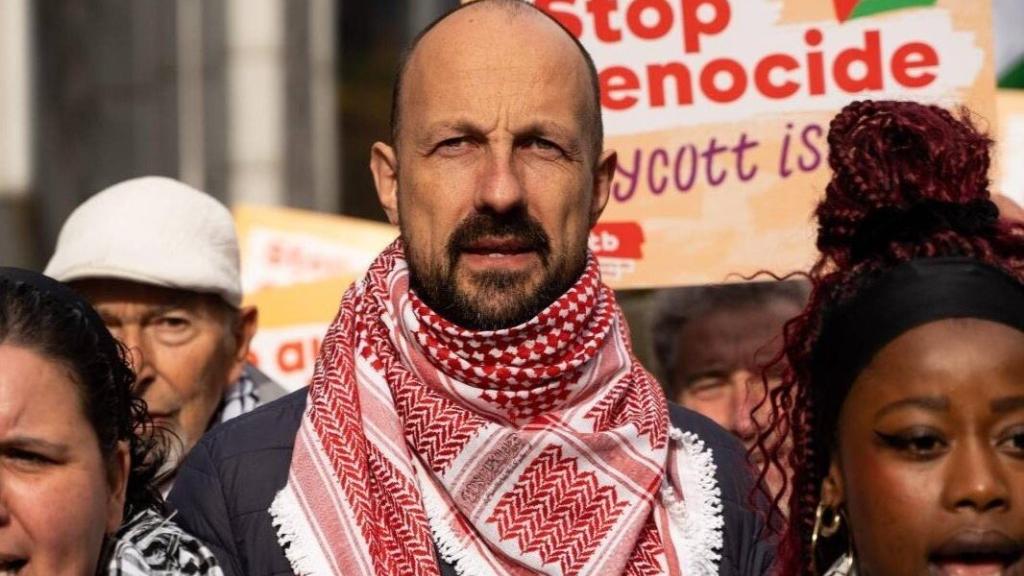
First published at Rosa-Luxemburg-Stiftung.
In the nearly two years since Israel’s assault on Gaza began, at least initially in response to the Hamas attack on 7 October, over 60,000 Palestinians have been killed. Entire cities lie in ruins, starvation is widespread, and a growing chorus of international legal experts warn of a looming genocide. Despite this, the European Union continues its preferential trade and research partnership with Israel under the EU–Israel Association Agreement — an agreement that is conditional on respect for human rights. Calls to suspend it are growing across Europe, yet EU institutions have so far declined to act.
Marc Botenga, Member of the European Parliament (MEP) from the Workers’ Party of Belgium (PTB/PVDA) and Vice-Chair of the Left group in the European Parliament, has been a leading critic of the EU’s response to Israel’s actions in Gaza and the occupation of Palestinian territory. In April 2025, he proposed a resolution on the immediate suspension of the EU-Israel Association Agreement with a group of fifteen MEPs. Recently, he spoke with Alexandra Gerasimcikova from the Rosa Luxemburg Foundation about his views and the next political steps the Left in Europe can take.
It took reaching a death toll in Gaza of nearly 60,000, UN warnings of ‘catastrophic hunger’ and the ICJ’s interim ruling of a plausible genocide for the Foreign Affairs Council to arrive at a point of reviewing Israel’s compliance with the obligations under its Association Agreement. What was the outcome of this discussion?
It is difficult to fathom. All of us have been seeing the most horrible crimes live on our screens every single day for almost two years. Palestinians shot dead while lining up for food aid. Children being starved. Humanitarian workers executed at point blank range. The International Court of Justice, but also United Nations’ agencies and experts, and humanitarian organizations speak of genocide, ethnic cleansing, and man-made famine. Israeli organizations, like B’Tselem or Physicians for Human Rights, also concluded that Israel is committing genocide. The world speaks of genocide, yet the EU still needed a lengthy review to check if perhaps Israel might have violated human rights.
The conclusion of the review itself was self-evident. Yes, Israel violates human rights in Gaza, in the West Bank and Jerusalem, and is therefore in breach of Article 2 of the EU-Israel Association Agreement. The logical consequence should therefore be to suspend or cancel the Agreement with Israel. Yet, neither the Foreign Affairs Council of 23 June or 15 July, nor the EU Summit in between adopted even the slightest sanction against Israel. They postponed everything until the next Council meeting, which would normally only take place in October. No other country could get away with this.
Under pressure, the Commission now proposed a very limited suspension of the participation of certain Israeli start-ups participation in the Horizon Europe program. Once again, countries like Germany or Italy blocked this. The refusal to act confirms the EU and Member States’ complicity in genocide, not just morally, but also legally. According to the Genocide Convention, states have to do all they can to prevent genocide. In regard to the Bosnian case, the ICJ specified that various parameters operate when assessing whether a State fulfills its duty. The first of these is the capacity to influence effectively the action of those likely to commit, or already committing, genocide. This capacity itself depends on several factors, from the geographical distance to the strength of the political links. Clearly, Europe and its Member States have massive leverage over Israel. Europe guarantees Israel weapons, money, and privileged access to the European market. We know Israel could not behave the way it does without the active support of the European Union and its Member States, meaning inaction by Europe amounts to complicity. This is a genocide committed by Israel but openly sponsored by Europe in different ways. There are the weapons that go from and through Europe towards Israel, but also the public funds and subsidies from European programs that directly sponsor the Israeli military-industrial complex.
The Association Agreement sets the framework for the EU’s cooperation programmes with Israel such as in research and science, and preferential trade rules. Israel sells around €16bn a year of goods to Europe, and Europe’s exports reach up to €27bn. This begs a question: would the suspension have an economic or political significance, in Israel, or at the European — and national — levels?
The main political message would clearly be that the decades of absolute impunity for Israel are over. Israel has been violating international law for decades. The ICJ, but also the UN General Assembly have confirmed this time and again. Today, as the ICJ clarified in July 2024, it is a legal duty for UN Member States not to render aid or assistance in maintaining this illegal occupation. Therefore, by revoking Israel’s privileged partnership with the EU, European countries would be doing the bare minimum to comply with their own obligations under international law.
However, the measure would also be relevant economically. Ending the duty- and tariff benefits for Israeli goods exported to the EU would cost the Israeli war machine dearly. It would also open the way to suspend EU funding for Israeli programmes and entities. The latest report of UN Special Rapporteur Francesca Albanese highlights that the European Commission has granted over €2.12 billion to Israeli entities under the Horizon programme. This programme for research and development funds Israeli public military corporations like Rafael Advanced Defence Systems or Israel Aerospace Industries, and even the Israeli Ministry of Defence directly. Some Israeli-owned military companies are even getting funding from the European Defence Fund.
Ending the privileged partnership with Israel also requires a military embargo. Not only is Europe still selling and transferring weapons to Israel, in 2024, the continent also massively increased its military imports from Israel. All this is feeding the Israeli genocide machine. That needs to stop.
Did the conflict with Iran provide a reason for postponing action on suspension of the Agreement? Or do you think that there could have been a different outcome were it not for the latest escalation?
Let us be clear: European leaders have guaranteed absolute impunity to Israel for decades and will use any excuse not to act. However, they are now feeling the pressure to do something. There is the international pressure on the one hand. Josep Borrell, the previous High Representative for Foreign Affairs of the European Union told me even before the current genocide that countries all over the world asked him all the time why the EU defends the territorial integrity of Ukraine, but not the territorial integrity of the Palestinian territory. While Russia faces its eighteenth package of EU sanctions for its invasion of Ukraine, Israel continues its two-year assault on Palestine with complete impunity, despite overwhelming evidence of war crimes and genocide.
Countries from the Global South see these double standards. South Africa has launched the case in front of the International Court of Justice. A group of countries from the Global South has launched The Hague Group to coordinate measures and sanctions against Israel. And European leaders might well eventually be judged themselves for complicity. So the EU establishment is under pressure to act in order to save some semblance of diplomatic credibility globally. On the other hand, there have been growing demonstrations and actions inside the EU putting pressure on governments. Hundreds of thousands have marched throughout Europe, over and over again, in support of Palestine. There has been a legal action introduced for failure to act at the European Court. People are mobilizing. Even Kaja Kallas, the current High Representative, has had to tone down her support of the Association Agreement.
In this context, yes, the EU establishment also used the illegal Israeli attack on Iran as a welcome diversion. Remarkably, the EU reaction to these attacks merely confirmed its disdain for international law. While Israel clearly was the aggressor, European leaders turned things around and started invoking Israel’s right to self-defence. Ridiculous. An aggressor state cannot invoke the right to self-defence.
The German Chancellor Friedrich Merz escalated the rhetoric claiming Israel is doing “our dirty work.” This was arguably the closest any European state came to openly calling Israel a European proxy. Considering that the Israeli attack on Iran violated not only the UN Charter, but also the Additional Protocol of the Geneva Convention protecting nuclear power plants from attacks, and killed many innocent civilians, and children in Iran, Merz’ support for this full-fledged attack on international law shows the raw face of an EU imperialism ready to infringe all rules. European leaders are ready to even justify the killing of entire families. We saw this duplicity as well after the beeper attack in Lebanon. The booby-trapping of civilian devices by Israel was a clear violation of international humanitarian law. The attack left many civilians wounded or blinded, some children killed, others lost their eyesight. Volker Türk, the UN High Commissioner for Human Rights spoke of a war crime intended to spread terror among civilians, yet some mainstream European politicians called it “genius”.
Belgium was one of the countries initially supporting the review, despite the new government dominated by nationalist and right-wing political parties. Belgium also took the initiative supported by a number of other countries to demand the list of possible measures from HR/VP Kaja Kallas. Can you explain how political forces united behind this call, and what role has the Left and its public mobilization tactics played so far in steering Belgian positions?
Belgium is a great case in point of how important mobilization is. The Belgian government is very right-wing and composed of some of the most pro-Israel parties in Belgium. This is why in the end the Belgian government did not push for real sanctions at the Foreign Affairs Council. Yet, the Belgian government initially formally supported the review of the Association Agreement. The decisive factor was the strong, well-organized Palestine solidarity movement that has been growing and organizing for many years. This movement puts constant pressure on all levels of government in Belgium, from local to national. They regularly organize demonstrations mobilizing 50,000 to 120,000 people, run campaigns for Belgian cities to cut ties with Israel, conduct direct actions, and more. The fact that the latest demonstration was the biggest of them all shows how the movement is broadening, and this is very important.
With the PTB, of course, we are part of the movement. We mobilize for the demonstrations, expose the government’s hypocrisy, or highlight concrete examples of EU complicity. The speeches, resolutions and legislative work of our representatives from the city councils to the European parliament always focus on how to serve and reinforce the struggle, because in the end, the balance of power remains the decisive factor. We call it street-council-street. We want to put the movements’ demands on the agenda within the institutions, but always with the objective to reinforce the movement in the streets.
Going back to the EU, what structural and political problems do you see on the side of these European institutions like the Commission and European External Action Service as relates to the Association Agreement discussions and beyond?
The EU has proposed and imposed sanctions on a large number of countries throughout the world. There are 18 sanctions packages against Russia. Evidently, it is not a lack of capacity. The problem is a lack of political will, sometimes hidden behind fake technicalities. Kaja Kallas hid behind a supposed need for unanimity among member states to impose measures. That was misleading at best. Unanimity is not needed for measures related to trade, research, intellectual property and foreign direct investment. By just stating there would not be unanimity if she proposed sanctions, Kallas was also trying to hide her own responsibility. She was always in a position to act herself. Yes, certain countries, such as Italy and Germany, oppose sanctions. However, the position of High Representative is not that of a secretary passively taking note of the positions of 27 Foreign Ministries. She should act as a coordinator, pushing in certain directions. As a case in point: some countries also opposed sanctioning Russia and in that case Kallas played an active role in pushing them so that the sanctions could be adopted.
Last year already, I asked the Commission whether it intended to exclude Israeli participants from the Horizon Europe program in light of the decisions of the International Court of Justice and the International Criminal Court. The Commission responded that excluding participants on the basis of nationality would amount to discrimination. When Russia violated international law by invading Ukraine, however, the Commission did suspend cooperation with Russian entities in the areas of research, science and innovation, as well as all payments to such entities even under existing contracts. The European Union in the past also suspended projects or cooperation with Belarus, Switzerland, the United Kingdom or Hungary. So why would it not be able to do the same thing for Israel? And indeed, by now proposing a, albeit very partial and limited, suspension, the Commission frontally contradicts its own claim.
The suspension should have happened ages ago. Just check the long list of resolutions by the UN General Assembly: Israel has been violating international law and basic human rights for decades.
If we want to zoom out a little bit, the EU position on Israel has much to do with Europe’s subservience to the United States. From Trump to Merz, Western leaders see Israel as a useful military outpost – utterly dependent on their support — to destabilize and control the Middle East — a crucial region for energy resources like oil or gas and strategic trade routes.
After years of efforts on the side of left-wing forces and civil society, the Irish government approved drafting of a bill to ban imports from the illegal Israeli settlements in the occupied Palestinian territory. This makes Ireland the first EU country to do so. Belgium has also worked on proposals for similar legislation. Do you see such a bill passing in Belgium, and is it something you would support at this moment as a meaningful step?
Things are moving throughout Europe thankfully, and indeed in Belgium as well similar proposals circulate. We as a party have our own of course. Unfortunately, the Gaza resolution proposed a few months ago by the federal government falls far short of what is needed — both in framing and in substance.
First, the resolution presented a distorted narrative. . It all but completely erased the historical reality of 70 years of Israeli occupation and colonization of Palestine. This way the text deliberately omitted key facts: Israel’s responsibility for the escalating violence, the documented war crimes, and the clear evidence of genocide. More importantly still, the resolution proposed hardly any concrete actions against Israel: no arms embargo, no state sanctions, no meaningful consequences whatsoever.
We are pushing for meaningful measures to sanction Israel and stop this genocide. However, when we proposed a text including concrete measures like an arms embargo, the majority opposed it. We do not need a resolution that serves as political cover — allowing Belgium to appear concerned while continuing business as usual with a regime committing genocide. Therefore, there is still work to be done. I hope the Irish initiative can inspire. It would not be the first time Ireland plays this role. Let’s remember how in 1984 the refusal of an Irish cashier, Mary Manning, to handle South African grapefruit not only led to the creation of a national boycott of South African goods in Ireland, but also reinforced the international anti-apartheid movement.
Looking at examples of local politics in absence of national action, the Brussels parliament in Belgium passed a resolution in February 2025 that imposed sanctions on Israel. Can you say what the sanctions — and possible impacts — are, and how was the process to get there?
Our party managed to get a resolution approved at the Brussels-Capital Region that implemented a series of sanctions against Israel, primarily targeting arms transfers and trade with settlements. Brussels-based companies are now prohibited from selling or transporting any military or dual-use materials to Israel. The region has also withdrawn subsidies from Israeli companies and ceased funding for any entities linked to the military or colonization activities. Diplomatically, Brussels has suspended its economic missions to Israel and will no longer send official delegations as long as violations continue. These measures come with the promise of advocacy, with the Brussels government pushing these demands at both the Belgian federal level and with European Union institutions. The impact of these measures is significant, both economically and symbolically. It sends a clear message: states and regions can and must end their complicity with Israel. The Brussels Region is sending out a strong message: genocide, war crimes and violations of international law cannot go unanswered.
This milestone was the direct result of months of mobilization by civil society and solidarity organizations, with demonstrations. Truth be said, in Brussels, this mobilization has roots that go way back. We called for the cancellation of a Brussels Region economic mission to Israel following Israel’s 2014 war on Gaza already. A petition we launched gathered over 11,000 signatures, putting pressure on the regional authorities. In response, the Brussels government decided to postpone the economic mission scheduled at the time. In 2019, we again introduced a resolution in the Brussels parliament to cancel an economic mission planned between December 8 and 12 of that year. The initiative was broadly supported by civil society organizations and led to the cancellation of the mission by the Brussels government. So we had previous victories on which to build. In 2021, we tabled a resolution calling for the cancellation of future economic missions to Israel and the closure of the Brussels trade office in Tel Aviv. A majority in parliament rejected this proposal, but we did not give up.
Thanks to the mobilization, some things have been moving also recently. Civil society organizations managed to get a court order ruling that Flanders should stop transferring all goods that can be used in military equipment. And two Israeli soldiers that attended the music festival Tomorrowland were briefly arrested by Belgian police, before the Belgian authorities transferred their case to the International Criminal Court.
What does European failure to agree on a joint response to the events in Gaza in line with the rulings of the ICC and the ICJ tell us about the state of European democracy?
I think it shows the raw face of EU imperialism behind the rhetoric of human rights and international law. European leaders like to pretend their policy is embedded in universal values, moral imperatives or international legality. In reality, they only invoke these so-called values when it serves their geopolitical or the economic interests of its multinational corporations. Countries that align with or submit to Western corporate interests will get a free pass. Now that push comes to shove, we see that European countries do not accept the UN-based system and are not willing to comply with their international legal obligations. I don’t think anyone can credibly speak about “EU values” any longer, unless you consider supporting genocide part of it. All of this also shows how little they care about how their people feel.
More worryingly, the leaders of European imperialism clearly consider even the worst violations of basic human rights as acceptable as long as these violations serve their perceived interest. Crimes of genocide, crimes against humanity and war crimes are the most heinous crimes, but none of these blocked Kaja Kallas from calling Israel “very good partners”. I want to go beyond mere legalistic considerations. The total dehumanization of Palestinians, but also of Lebanese, Iranian, or Syrian civilians killed by Israel sends a chilling message to humanity: your lives do not matter when European, or Western, economic and geopolitical interests are at stake. The colonial and fascist dehumanization of peoples endangers all humanity. The deconstruction of an international order based on common rules pushes towards a world of chaos and anarchy where only the law of the strongest prevails. At the meeting of the Hague Group, Colombian president Gustavo Petro warned how Gaza is an experiment: “They plan to bomb us all, at least those of us in the south, but they will [also] end up like Guernica, bombing themselves with foreign weapons. And that barbaric prospect obviously kills multilateralism, which allows nations to come together, kills the idea of global democracy, and kills all international institutions.”
In Germany, anti-fascism is often shaped by the country’s historical responsibility, especially in relation to Nazism and the Holocaust. This perspective emphasizes the dangers of authoritarianism, state violence, and racism — forces central to both fascist and colonial regimes. At the same time, many movements in solidarity with Palestine see themselves as part of a broader anti-fascist and anti-racist struggle. They connect their cause to global efforts against systemic racism and authoritarian politics today. What is your view on this connection?
I am not surprised to see that today many far-right forces are among the most enthusiastic supporters of Israeli policies and the Netanyahu government, just as many of them supported the South African apartheid regime and are still today denying the crimes of European colonialism. The fight against imperialism and colonialism and the fight against fascism and racism have always been intrinsically linked.
Historically, colonialism provided an ideological and material antecedent and sometimes blueprint for fascism. Fascist or similar regimes imported the racial hierarchies, the dehumanization, the indiscriminate mass violence, and authoritarian governance perfected in colonies to Europe, applying similar brutality domestically to maintain total control and oppress the working class. We do not speak about this enough, as European colonial history and crimes are routinely downplayed in the public debate, but colonial suppression methods inspired and molded fascist terror tactics. Think of the debate on how techniques and ideologies, such as the use of concentration camps and racial science, developed by German colonialism in Namibia subsequently influenced Nazi policies. Recently a French political journalist also launched a fiery debate on parallels between Nazi crimes against villages in France on the one hand and those the French committed in Algeria on the other.
But it is not only about fascist or far-right regimes. Even within the current political systems, dehumanizing rhetoric has made it to mainstream European political parties. European governments or local authorities import Israeli techniques of crowd control and digital surveillance into Europe. Israeli forces train their European counterparts. Weapons and military technology are sold to European countries with the Israeli stamp of “battle-tested” or “combat-proven”. In other words, we are importing technology and equipment used for illegal mass repression and surveillance, ethnic cleansing and apartheid. Sooner rather than later, these techniques will be used against workers, trade unions and social movements.
The repression of Palestinian solidarity movements in Europe is huge. I have just seen images of German police violently assaulting protesters opposing genocide. This is not unique to Germany. People are being arrested, and losing their jobs for speaking out for basic human rights. Fundamental freedoms, like the freedom to demonstrate or the freedom of expression are under fire once you criticize the crimes of Western governments. This is not new. Look at the police repression, harassment and censorship movements against the Vietnam War or in favour of Algerian independence faced in the West. Neither is this repression limited to the movement against genocide.
Unions are a core part of the broader fight against occupation, discrimination, and economic oppression. Let us not forget how in the past as well trade unions played a big part in global campaigns supporting self-determination, anti-colonialism, and anti-apartheid struggles. In several European countries, port or airport workers have refused to be complicit in arms exports to Israel. Trade unions have set up important international solidarity campaigns with Palestine. This has gone from public action to the funding of solar panels for hospitals in Gaza. The most recent Congress of IndustriAll Europe, the European federation of industrial trade unions, called for the suspension of arms deliveries and the EU-Israel Association Agreement.
In contrast, the UN Report “From economy of occupation to economy of genocide” published in June shows how the corporations are benefiting today from Israel’s genocidal war on Gaza. From Google to BP, Microsoft, Amazon, Alphabet to Caterpillar. These are the same ones exploiting workers in the so-called North. It shows how workers in the Global South killed and oppressed by colonialism and imperialism, and those in the so-called North fighting for decent living conditions are facing the same enemy, the same governments, the same corporations looking to maximize their profits by obtaining cheap resources and labor. Europe should be at the forefront of the battle against genocide. There is the living memory of the Holocaust of course, and this year we also commemorate thirty years of the 1995 genocide in Srebrenica, where the role of Dutch peacekeepers was widely condemned. And it does not stop there. From Namibia to Rwanda, European countries bear blame in several genocides. Every single time, the people said never again. And yet, despite this, our ruling classes are once again actively sponsoring a genocide.
Marc Botenga is a member of the Workers’ Party of Belgium, which he represents in the European Parliament as a member of the Left group.
First published at Rosa-Luxemburg-Stiftung.
In the nearly two years since Israel’s assault on Gaza began, at least initially in response to the Hamas attack on 7 October, over 60,000 Palestinians have been killed. Entire cities lie in ruins, starvation is widespread, and a growing chorus of international legal experts warn of a looming genocide. Despite this, the European Union continues its preferential trade and research partnership with Israel under the EU–Israel Association Agreement — an agreement that is conditional on respect for human rights. Calls to suspend it are growing across Europe, yet EU institutions have so far declined to act.
Marc Botenga, Member of the European Parliament (MEP) from the Workers’ Party of Belgium (PTB/PVDA) and Vice-Chair of the Left group in the European Parliament, has been a leading critic of the EU’s response to Israel’s actions in Gaza and the occupation of Palestinian territory. In April 2025, he proposed a resolution on the immediate suspension of the EU-Israel Association Agreement with a group of fifteen MEPs. Recently, he spoke with Alexandra Gerasimcikova from the Rosa Luxemburg Foundation about his views and the next political steps the Left in Europe can take.
It took reaching a death toll in Gaza of nearly 60,000, UN warnings of ‘catastrophic hunger’ and the ICJ’s interim ruling of a plausible genocide for the Foreign Affairs Council to arrive at a point of reviewing Israel’s compliance with the obligations under its Association Agreement. What was the outcome of this discussion?
It is difficult to fathom. All of us have been seeing the most horrible crimes live on our screens every single day for almost two years. Palestinians shot dead while lining up for food aid. Children being starved. Humanitarian workers executed at point blank range. The International Court of Justice, but also United Nations’ agencies and experts, and humanitarian organizations speak of genocide, ethnic cleansing, and man-made famine. Israeli organizations, like B’Tselem or Physicians for Human Rights, also concluded that Israel is committing genocide. The world speaks of genocide, yet the EU still needed a lengthy review to check if perhaps Israel might have violated human rights.
The conclusion of the review itself was self-evident. Yes, Israel violates human rights in Gaza, in the West Bank and Jerusalem, and is therefore in breach of Article 2 of the EU-Israel Association Agreement. The logical consequence should therefore be to suspend or cancel the Agreement with Israel. Yet, neither the Foreign Affairs Council of 23 June or 15 July, nor the EU Summit in between adopted even the slightest sanction against Israel. They postponed everything until the next Council meeting, which would normally only take place in October. No other country could get away with this.
Under pressure, the Commission now proposed a very limited suspension of the participation of certain Israeli start-ups participation in the Horizon Europe program. Once again, countries like Germany or Italy blocked this. The refusal to act confirms the EU and Member States’ complicity in genocide, not just morally, but also legally. According to the Genocide Convention, states have to do all they can to prevent genocide. In regard to the Bosnian case, the ICJ specified that various parameters operate when assessing whether a State fulfills its duty. The first of these is the capacity to influence effectively the action of those likely to commit, or already committing, genocide. This capacity itself depends on several factors, from the geographical distance to the strength of the political links. Clearly, Europe and its Member States have massive leverage over Israel. Europe guarantees Israel weapons, money, and privileged access to the European market. We know Israel could not behave the way it does without the active support of the European Union and its Member States, meaning inaction by Europe amounts to complicity. This is a genocide committed by Israel but openly sponsored by Europe in different ways. There are the weapons that go from and through Europe towards Israel, but also the public funds and subsidies from European programs that directly sponsor the Israeli military-industrial complex.
The Association Agreement sets the framework for the EU’s cooperation programmes with Israel such as in research and science, and preferential trade rules. Israel sells around €16bn a year of goods to Europe, and Europe’s exports reach up to €27bn. This begs a question: would the suspension have an economic or political significance, in Israel, or at the European — and national — levels?
The main political message would clearly be that the decades of absolute impunity for Israel are over. Israel has been violating international law for decades. The ICJ, but also the UN General Assembly have confirmed this time and again. Today, as the ICJ clarified in July 2024, it is a legal duty for UN Member States not to render aid or assistance in maintaining this illegal occupation. Therefore, by revoking Israel’s privileged partnership with the EU, European countries would be doing the bare minimum to comply with their own obligations under international law.
However, the measure would also be relevant economically. Ending the duty- and tariff benefits for Israeli goods exported to the EU would cost the Israeli war machine dearly. It would also open the way to suspend EU funding for Israeli programmes and entities. The latest report of UN Special Rapporteur Francesca Albanese highlights that the European Commission has granted over €2.12 billion to Israeli entities under the Horizon programme. This programme for research and development funds Israeli public military corporations like Rafael Advanced Defence Systems or Israel Aerospace Industries, and even the Israeli Ministry of Defence directly. Some Israeli-owned military companies are even getting funding from the European Defence Fund.
Ending the privileged partnership with Israel also requires a military embargo. Not only is Europe still selling and transferring weapons to Israel, in 2024, the continent also massively increased its military imports from Israel. All this is feeding the Israeli genocide machine. That needs to stop.
Did the conflict with Iran provide a reason for postponing action on suspension of the Agreement? Or do you think that there could have been a different outcome were it not for the latest escalation?
Let us be clear: European leaders have guaranteed absolute impunity to Israel for decades and will use any excuse not to act. However, they are now feeling the pressure to do something. There is the international pressure on the one hand. Josep Borrell, the previous High Representative for Foreign Affairs of the European Union told me even before the current genocide that countries all over the world asked him all the time why the EU defends the territorial integrity of Ukraine, but not the territorial integrity of the Palestinian territory. While Russia faces its eighteenth package of EU sanctions for its invasion of Ukraine, Israel continues its two-year assault on Palestine with complete impunity, despite overwhelming evidence of war crimes and genocide.
Countries from the Global South see these double standards. South Africa has launched the case in front of the International Court of Justice. A group of countries from the Global South has launched The Hague Group to coordinate measures and sanctions against Israel. And European leaders might well eventually be judged themselves for complicity. So the EU establishment is under pressure to act in order to save some semblance of diplomatic credibility globally. On the other hand, there have been growing demonstrations and actions inside the EU putting pressure on governments. Hundreds of thousands have marched throughout Europe, over and over again, in support of Palestine. There has been a legal action introduced for failure to act at the European Court. People are mobilizing. Even Kaja Kallas, the current High Representative, has had to tone down her support of the Association Agreement.
In this context, yes, the EU establishment also used the illegal Israeli attack on Iran as a welcome diversion. Remarkably, the EU reaction to these attacks merely confirmed its disdain for international law. While Israel clearly was the aggressor, European leaders turned things around and started invoking Israel’s right to self-defence. Ridiculous. An aggressor state cannot invoke the right to self-defence.
The German Chancellor Friedrich Merz escalated the rhetoric claiming Israel is doing “our dirty work.” This was arguably the closest any European state came to openly calling Israel a European proxy. Considering that the Israeli attack on Iran violated not only the UN Charter, but also the Additional Protocol of the Geneva Convention protecting nuclear power plants from attacks, and killed many innocent civilians, and children in Iran, Merz’ support for this full-fledged attack on international law shows the raw face of an EU imperialism ready to infringe all rules. European leaders are ready to even justify the killing of entire families. We saw this duplicity as well after the beeper attack in Lebanon. The booby-trapping of civilian devices by Israel was a clear violation of international humanitarian law. The attack left many civilians wounded or blinded, some children killed, others lost their eyesight. Volker Türk, the UN High Commissioner for Human Rights spoke of a war crime intended to spread terror among civilians, yet some mainstream European politicians called it “genius”.
Belgium was one of the countries initially supporting the review, despite the new government dominated by nationalist and right-wing political parties. Belgium also took the initiative supported by a number of other countries to demand the list of possible measures from HR/VP Kaja Kallas. Can you explain how political forces united behind this call, and what role has the Left and its public mobilization tactics played so far in steering Belgian positions?
Belgium is a great case in point of how important mobilization is. The Belgian government is very right-wing and composed of some of the most pro-Israel parties in Belgium. This is why in the end the Belgian government did not push for real sanctions at the Foreign Affairs Council. Yet, the Belgian government initially formally supported the review of the Association Agreement. The decisive factor was the strong, well-organized Palestine solidarity movement that has been growing and organizing for many years. This movement puts constant pressure on all levels of government in Belgium, from local to national. They regularly organize demonstrations mobilizing 50,000 to 120,000 people, run campaigns for Belgian cities to cut ties with Israel, conduct direct actions, and more. The fact that the latest demonstration was the biggest of them all shows how the movement is broadening, and this is very important.
With the PTB, of course, we are part of the movement. We mobilize for the demonstrations, expose the government’s hypocrisy, or highlight concrete examples of EU complicity. The speeches, resolutions and legislative work of our representatives from the city councils to the European parliament always focus on how to serve and reinforce the struggle, because in the end, the balance of power remains the decisive factor. We call it street-council-street. We want to put the movements’ demands on the agenda within the institutions, but always with the objective to reinforce the movement in the streets.
Going back to the EU, what structural and political problems do you see on the side of these European institutions like the Commission and European External Action Service as relates to the Association Agreement discussions and beyond?
The EU has proposed and imposed sanctions on a large number of countries throughout the world. There are 18 sanctions packages against Russia. Evidently, it is not a lack of capacity. The problem is a lack of political will, sometimes hidden behind fake technicalities. Kaja Kallas hid behind a supposed need for unanimity among member states to impose measures. That was misleading at best. Unanimity is not needed for measures related to trade, research, intellectual property and foreign direct investment. By just stating there would not be unanimity if she proposed sanctions, Kallas was also trying to hide her own responsibility. She was always in a position to act herself. Yes, certain countries, such as Italy and Germany, oppose sanctions. However, the position of High Representative is not that of a secretary passively taking note of the positions of 27 Foreign Ministries. She should act as a coordinator, pushing in certain directions. As a case in point: some countries also opposed sanctioning Russia and in that case Kallas played an active role in pushing them so that the sanctions could be adopted.
Last year already, I asked the Commission whether it intended to exclude Israeli participants from the Horizon Europe program in light of the decisions of the International Court of Justice and the International Criminal Court. The Commission responded that excluding participants on the basis of nationality would amount to discrimination. When Russia violated international law by invading Ukraine, however, the Commission did suspend cooperation with Russian entities in the areas of research, science and innovation, as well as all payments to such entities even under existing contracts. The European Union in the past also suspended projects or cooperation with Belarus, Switzerland, the United Kingdom or Hungary. So why would it not be able to do the same thing for Israel? And indeed, by now proposing a, albeit very partial and limited, suspension, the Commission frontally contradicts its own claim.
The suspension should have happened ages ago. Just check the long list of resolutions by the UN General Assembly: Israel has been violating international law and basic human rights for decades.
If we want to zoom out a little bit, the EU position on Israel has much to do with Europe’s subservience to the United States. From Trump to Merz, Western leaders see Israel as a useful military outpost – utterly dependent on their support — to destabilize and control the Middle East — a crucial region for energy resources like oil or gas and strategic trade routes.
After years of efforts on the side of left-wing forces and civil society, the Irish government approved drafting of a bill to ban imports from the illegal Israeli settlements in the occupied Palestinian territory. This makes Ireland the first EU country to do so. Belgium has also worked on proposals for similar legislation. Do you see such a bill passing in Belgium, and is it something you would support at this moment as a meaningful step?
Things are moving throughout Europe thankfully, and indeed in Belgium as well similar proposals circulate. We as a party have our own of course. Unfortunately, the Gaza resolution proposed a few months ago by the federal government falls far short of what is needed — both in framing and in substance.
First, the resolution presented a distorted narrative. . It all but completely erased the historical reality of 70 years of Israeli occupation and colonization of Palestine. This way the text deliberately omitted key facts: Israel’s responsibility for the escalating violence, the documented war crimes, and the clear evidence of genocide. More importantly still, the resolution proposed hardly any concrete actions against Israel: no arms embargo, no state sanctions, no meaningful consequences whatsoever.
We are pushing for meaningful measures to sanction Israel and stop this genocide. However, when we proposed a text including concrete measures like an arms embargo, the majority opposed it. We do not need a resolution that serves as political cover — allowing Belgium to appear concerned while continuing business as usual with a regime committing genocide. Therefore, there is still work to be done. I hope the Irish initiative can inspire. It would not be the first time Ireland plays this role. Let’s remember how in 1984 the refusal of an Irish cashier, Mary Manning, to handle South African grapefruit not only led to the creation of a national boycott of South African goods in Ireland, but also reinforced the international anti-apartheid movement.
Looking at examples of local politics in absence of national action, the Brussels parliament in Belgium passed a resolution in February 2025 that imposed sanctions on Israel. Can you say what the sanctions — and possible impacts — are, and how was the process to get there?
Our party managed to get a resolution approved at the Brussels-Capital Region that implemented a series of sanctions against Israel, primarily targeting arms transfers and trade with settlements. Brussels-based companies are now prohibited from selling or transporting any military or dual-use materials to Israel. The region has also withdrawn subsidies from Israeli companies and ceased funding for any entities linked to the military or colonization activities. Diplomatically, Brussels has suspended its economic missions to Israel and will no longer send official delegations as long as violations continue. These measures come with the promise of advocacy, with the Brussels government pushing these demands at both the Belgian federal level and with European Union institutions. The impact of these measures is significant, both economically and symbolically. It sends a clear message: states and regions can and must end their complicity with Israel. The Brussels Region is sending out a strong message: genocide, war crimes and violations of international law cannot go unanswered.
This milestone was the direct result of months of mobilization by civil society and solidarity organizations, with demonstrations. Truth be said, in Brussels, this mobilization has roots that go way back. We called for the cancellation of a Brussels Region economic mission to Israel following Israel’s 2014 war on Gaza already. A petition we launched gathered over 11,000 signatures, putting pressure on the regional authorities. In response, the Brussels government decided to postpone the economic mission scheduled at the time. In 2019, we again introduced a resolution in the Brussels parliament to cancel an economic mission planned between December 8 and 12 of that year. The initiative was broadly supported by civil society organizations and led to the cancellation of the mission by the Brussels government. So we had previous victories on which to build. In 2021, we tabled a resolution calling for the cancellation of future economic missions to Israel and the closure of the Brussels trade office in Tel Aviv. A majority in parliament rejected this proposal, but we did not give up.
Thanks to the mobilization, some things have been moving also recently. Civil society organizations managed to get a court order ruling that Flanders should stop transferring all goods that can be used in military equipment. And two Israeli soldiers that attended the music festival Tomorrowland were briefly arrested by Belgian police, before the Belgian authorities transferred their case to the International Criminal Court.
What does European failure to agree on a joint response to the events in Gaza in line with the rulings of the ICC and the ICJ tell us about the state of European democracy?
I think it shows the raw face of EU imperialism behind the rhetoric of human rights and international law. European leaders like to pretend their policy is embedded in universal values, moral imperatives or international legality. In reality, they only invoke these so-called values when it serves their geopolitical or the economic interests of its multinational corporations. Countries that align with or submit to Western corporate interests will get a free pass. Now that push comes to shove, we see that European countries do not accept the UN-based system and are not willing to comply with their international legal obligations. I don’t think anyone can credibly speak about “EU values” any longer, unless you consider supporting genocide part of it. All of this also shows how little they care about how their people feel.
More worryingly, the leaders of European imperialism clearly consider even the worst violations of basic human rights as acceptable as long as these violations serve their perceived interest. Crimes of genocide, crimes against humanity and war crimes are the most heinous crimes, but none of these blocked Kaja Kallas from calling Israel “very good partners”. I want to go beyond mere legalistic considerations. The total dehumanization of Palestinians, but also of Lebanese, Iranian, or Syrian civilians killed by Israel sends a chilling message to humanity: your lives do not matter when European, or Western, economic and geopolitical interests are at stake. The colonial and fascist dehumanization of peoples endangers all humanity. The deconstruction of an international order based on common rules pushes towards a world of chaos and anarchy where only the law of the strongest prevails. At the meeting of the Hague Group, Colombian president Gustavo Petro warned how Gaza is an experiment: “They plan to bomb us all, at least those of us in the south, but they will [also] end up like Guernica, bombing themselves with foreign weapons. And that barbaric prospect obviously kills multilateralism, which allows nations to come together, kills the idea of global democracy, and kills all international institutions.”
In Germany, anti-fascism is often shaped by the country’s historical responsibility, especially in relation to Nazism and the Holocaust. This perspective emphasizes the dangers of authoritarianism, state violence, and racism — forces central to both fascist and colonial regimes. At the same time, many movements in solidarity with Palestine see themselves as part of a broader anti-fascist and anti-racist struggle. They connect their cause to global efforts against systemic racism and authoritarian politics today. What is your view on this connection?
I am not surprised to see that today many far-right forces are among the most enthusiastic supporters of Israeli policies and the Netanyahu government, just as many of them supported the South African apartheid regime and are still today denying the crimes of European colonialism. The fight against imperialism and colonialism and the fight against fascism and racism have always been intrinsically linked.
Historically, colonialism provided an ideological and material antecedent and sometimes blueprint for fascism. Fascist or similar regimes imported the racial hierarchies, the dehumanization, the indiscriminate mass violence, and authoritarian governance perfected in colonies to Europe, applying similar brutality domestically to maintain total control and oppress the working class. We do not speak about this enough, as European colonial history and crimes are routinely downplayed in the public debate, but colonial suppression methods inspired and molded fascist terror tactics. Think of the debate on how techniques and ideologies, such as the use of concentration camps and racial science, developed by German colonialism in Namibia subsequently influenced Nazi policies. Recently a French political journalist also launched a fiery debate on parallels between Nazi crimes against villages in France on the one hand and those the French committed in Algeria on the other.
But it is not only about fascist or far-right regimes. Even within the current political systems, dehumanizing rhetoric has made it to mainstream European political parties. European governments or local authorities import Israeli techniques of crowd control and digital surveillance into Europe. Israeli forces train their European counterparts. Weapons and military technology are sold to European countries with the Israeli stamp of “battle-tested” or “combat-proven”. In other words, we are importing technology and equipment used for illegal mass repression and surveillance, ethnic cleansing and apartheid. Sooner rather than later, these techniques will be used against workers, trade unions and social movements.
The repression of Palestinian solidarity movements in Europe is huge. I have just seen images of German police violently assaulting protesters opposing genocide. This is not unique to Germany. People are being arrested, and losing their jobs for speaking out for basic human rights. Fundamental freedoms, like the freedom to demonstrate or the freedom of expression are under fire once you criticize the crimes of Western governments. This is not new. Look at the police repression, harassment and censorship movements against the Vietnam War or in favour of Algerian independence faced in the West. Neither is this repression limited to the movement against genocide.
Unions are a core part of the broader fight against occupation, discrimination, and economic oppression. Let us not forget how in the past as well trade unions played a big part in global campaigns supporting self-determination, anti-colonialism, and anti-apartheid struggles. In several European countries, port or airport workers have refused to be complicit in arms exports to Israel. Trade unions have set up important international solidarity campaigns with Palestine. This has gone from public action to the funding of solar panels for hospitals in Gaza. The most recent Congress of IndustriAll Europe, the European federation of industrial trade unions, called for the suspension of arms deliveries and the EU-Israel Association Agreement.
In contrast, the UN Report “From economy of occupation to economy of genocide” published in June shows how the corporations are benefiting today from Israel’s genocidal war on Gaza. From Google to BP, Microsoft, Amazon, Alphabet to Caterpillar. These are the same ones exploiting workers in the so-called North. It shows how workers in the Global South killed and oppressed by colonialism and imperialism, and those in the so-called North fighting for decent living conditions are facing the same enemy, the same governments, the same corporations looking to maximize their profits by obtaining cheap resources and labor. Europe should be at the forefront of the battle against genocide. There is the living memory of the Holocaust of course, and this year we also commemorate thirty years of the 1995 genocide in Srebrenica, where the role of Dutch peacekeepers was widely condemned. And it does not stop there. From Namibia to Rwanda, European countries bear blame in several genocides. Every single time, the people said never again. And yet, despite this, our ruling classes are once again actively sponsoring a genocide.
Marc Botenga is a member of the Workers’ Party of Belgium, which he represents in the European Parliament as a member of the Left group.
Why are the BRICS countries not condemning the ongoing genocide in Gaza?
First published at CADTM. Slightly edited.
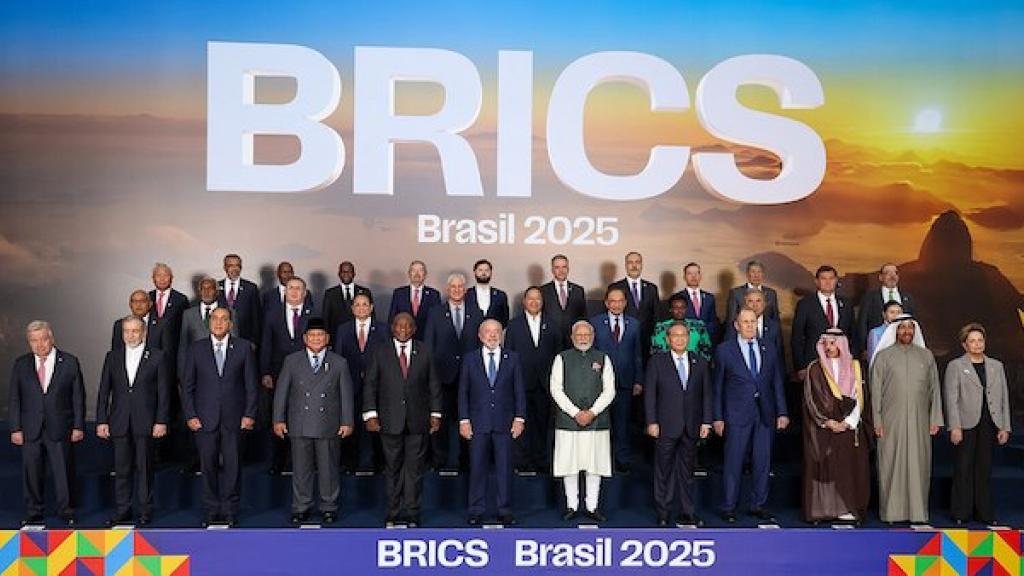
The BRICS countries (Brazil, Russia, India, China and South Africa), which have admitted five more states (Egypt, the United Arab Emirates, Ethiopia, Indonesia and Iran), met in Rio de Janeiro on 6 and 7 July 2025. Saudi Arabia was present but did not officially join as a member country. Representatives from 20 other states considered partners were also present.
While the President of the United States is stepping up unilateral actions on both the military and commercial fronts, the BRICS countries are defending multilateralism and the United Nations system, which are in crisis. They are also defending the capitalist, productivist-extractivist mode of production that exploits human labour and destroys nature.
The BRICS countries represent half the world’s population, 40% of fossil energy resources, 30% of global GDP and 50% of growth. They have the resources to change their export-oriented capitalist development model, but they don’t want to.
It is necessary to express a clearly critical view of the BRICS. This stance in no way prevents us from denouncing, first and foremost and with the utmost firmness, the government of the United States, as well as its European and Indo-Pacific allies (Japan, Australia, etc.), for their imperialist policies.
This policy is blatantly expressed through their support for the State of Israel, which is responsible for the ongoing genocide in Gaza and military aggression against neighbouring countries. Israel is the armed wing of the United States in the region. Without Washington’s unwavering support and the complicity of Western Europe, the neo-fascist Israeli government would not be able to continue the genocide.
For their part, the BRICS countries are not taking any concrete measures as a group to effectively prevent the continuation of the massacres and genocide.
In this series of questions and answers, Eric Toussaint analyses the final declaration of the BRICS summit released on 6 July 2025, as well as the practical policies of the BRICS and the institutions they have established.
Is it true that the BRICS countries are not condemning the ongoing genocide in Gaza?
Yes. In the final declaration of the BRICS summit published on 6 July 2025, the BRICS countries do not use the term genocide to describe what is happening in Gaza. The BRICS countries criticise Israel’s use of force in points 24 to 27 of their statement, but nowhere do they use the terms “genocide”, “ethnic cleansing” or “massacre”.
What is also striking is that the part of the 6 July 2025 statement concerning Gaza is almost identical to what is found in the final statement of the previous BRICS summit held in Kazan, Russia, in October 2024 (point 30 of the final statement).
It is as if the evidence of genocide, which is mounting every day, still does not justify the clear use of this term.
Is it true that the BRICS countries are not proposing sanctions against Israel?
Yes, it is true: in their final statement, the BRICS countries did not propose sanctions against Israel. They did not propose to break the various agreements that bind them to the State of Israel. Yet the ongoing genocide and massacres of Gazans in search of food justify and demand action that goes beyond protests by the BRICS and other states.
The protests expressed by the BRICS countries were totally insufficient in October 2024 at the Kazan summit and are even more so in 2025. Only governments and multilateral bodies can take the required concrete and strong action. Of course, street demonstrations, occupations of public spaces and universities, and legal initiatives by citizens’ organisations are fundamental, but they cannot replace action by states and international institutions.
Are the BRICS countries taking concrete measures against the Israeli government?
The BRICS countries as a group are not implementing any concrete measures against the Israeli government, such as boycotts or embargoes. Admittedly, South Africa has taken the initiative of filing a complaint against Israel before the International Court of Justice in The Hague, which is positive, but its practices are at odds with this legal action. Indeed, South Africa maintains trade relations with Israel, notably by allowing South African companies to regularly export coal to Israel by ship.
Since the genocide began, it is reliably estimated that 17 shipments have taken 1.6 million tonnes of coal to fuel the Israeli grid. There have been protests attended by hundreds, called by the Palestine Solidarity Campaign, community groups in coal-mining areas, and climate activists against Glencore on 22 August 2024 and 28 May 2025 (a global day of action) and at its local partner African Rainbow Minerals on 5 April 2025; that company is run by Patrice Motsepe who is South African president Cyril Ramaphosa’s brother in law.
Do the BRICS countries maintain trade relations with Israel?
Apart from Iran, the BRICS member countries maintain trade relations with Israel. In addition to South Africa, Russia, Brazil, the United Arab Emirates, Egypt and China continue to sell fuel (oil, gas, coal, etc.) to Israel. This is significant assistance to the Israeli government, which needs to diversify its energy sources to continue its war effort and normal functioning and to prevent the discontent of the Israeli population from growing to uncontrollable proportions.
What is China’s place in Israel’s trade relations?
China is Israel’s largest source of imports. China makes significant investments in Israel. China exported $13 billion worth of goods to Israel in 2022, $16 billion in 2023 and $19 billion in 2024. Growth is set to continue in 2025. The volume could easily exceed $20 billion if no restrictions or boycotts are imposed. The figures quoted are from Israel Imports from China and the Chinese state news agency Xinhua, China remains Israel’s largest source of imports in 2023. Chinese sources report that in 2023, China was Israel’s largest source of imports for the fourth consecutive year. The United States came in second place. In 2024, China’s dominant position was confirmed.
High-tech products dominate the goods traded between Israel and China: electrical/electronic equipment (imports and exports), industrial machinery, and optical and medical products are among the major categories traded.
Israel’s trade deficit with China is very significant. Israel imports much more from China than it exports to China. Israel’s trade deficit with China has increased sharply in recent years, exceeding $10 billion in 2024.
It should be noted that if we take the EU countries as a whole, the EU is Israel’s main supplier, with approximately $26 billion exported to Israel in 2024. In reality, each EU country supplies Israel separately, with Germany leading the way in terms of exports to Israel with approximately $6 billion. This is why China can be considered the leading supplier (with $19 billion in exports from China to Israel in 2024), and the United States the second largest supplier (with just over 9 billion dollars in exports to Israel in 2024).
Among the manufactured goods sold by China to Israel are drones that were not originally intended for military use but are converted into weapons by the Israeli military to kill Palestinian civilians. This is evidenced by an investigation carried out by the independent Israeli media outlet +972 Magazine, which indicates that these drones are produced by the private Chinese company Autel Robotics (based in Shenzhen), which produces EVO drones. Here is an excerpt from what was revealed:
“The Israeli military has weaponized a fleet of Chinese-manufactured commercial drones to attack Palestinians in parts of Gaza that it seeks to depopulate, an investigation by +972 Magazine and Local Call can reveal. According to interviews with seven soldiers and officers who served in the Strip, these drones are operated manually by troops on the ground, and are frequently used to bomb Palestinian civilians — including children — in an effort to force them to leave their homes or prevent them from returning to evacuated areas. Soldiers most commonly use EVO drones, produced by the Chinese company Autel, which are primarily intended for photography and cost around NIS 10,000 (approximately £2,500) on Amazon. However, with a military-issued attachment known internally as an “iron ball,” a hand grenade can be affixed to the drone and dropped with the push of a button to detonate on the ground. Today, the majority of Israeli military companies in Gaza use these drones. S., an Israeli soldier who served in the Rafah area this year, coordinated drone attacks in a neighbourhood of the city that the army had ordered to be evacuated. During the nearly 100 days that his battalion operated there, soldiers conducted dozens of drone strikes, according to daily reports from his battalion commander that +972 and Local Call reviewed. In the reports, all Palestinians killed were listed as “terrorists.” However, S. testified that aside from one person found with a knife and a single encounter with armed fighters, the scores of others killed — an average of one per day in his battalion’s combat zone — were unarmed. According to him, the drone strikes were carried out with the intent to kill, despite the majority of victims being located at such a distance from the soldiers that they could not have posed any threat.” +972 Magazine, ‘Like a video game’: Israel enforcing Gaza evacuations with grenade-firing drones, 10 July 2025.
In an article published in Euro-Med Monitor, an independent NGO based in Geneva (Switzerland), in February 2024, the Israeli military’s use of drones produced by AUTEL Robotics was already denounced. This NGO, which is dedicated to the documentation of human rights violations in the Middle East, North Africa (MENA) and Europe, had called on Chinese companies, including AUTEL, to comply with international law:
“In regions affected by armed conflicts, companies face an increased risk of becoming complicit in serious violations of international humanitarian and human rights laws. Consequently, businesses operating in such environments must exercise enhanced due diligence to mitigate these heightened risks effectively. More specifically, when a product is misused in ways that contradict the company’s international obligations and non-violent values, particularly for military purposes leading to the commission of international crimes and grave human rights violations, the company must act decisively. It should take immediate steps to cease or prevent its contribution and use leverage to mitigate the remaining impact to the greatest extent possible. Euro-Med Human Rights Monitor emphasises that companies, including Autel Robotics—a Chinese electronics and drone manufacturer—must comply with international law.” Euro-Med Monitor, Chinese companies must prevent their arms, drones from being used in Israeli international crimes, 1 July 2024.
The Israeli army is also using civilian drones from another Chinese company in its war against the Palestinian population in Gaza. These drones are manufactured by DJI (Da-Jiang Innovations), a private Chinese company based in Shenzhen (China) and the world leader in the manufacture of civilian and professional drones.
As Francesca Albanese, UN Special Rapporteur on the situation of human rights in the occupied Palestinian territories, wrote in her report entitled From the economy of occupation to the economy of genocide published in June 2025:
20. Where corporate entities continue their activities and relationships with Israel — with its economy, military, public and private sectors connected to the occupied Palestinian territory — they may be found to have knowingly contributed to: violation of the Palestinian right to self-determination; annexation of Palestinian territory, maintenance of an unlawful occupation and therefore the crime of aggression and associated human rights violations; crimes of apartheid and genocide, and other ancillary crimes and violations. Both criminal and civil laws in various jurisdictions can be invoked to hold corporate entities or their executives accountable for violations of human rights and/or crimes under international law.21. It is therefore incumbent upon the authorities of the country where these companies are based and upon the companies themselves to avoid any form of complicity with the Israeli authorities. This applies to China as it does to the rest of the world.”
It is therefore incumbent upon the authorities of the countries where these companies are based, and upon the companies themselves, to avoid any form of complicity with the Israeli authorities. This obligation applies to China as well as to the rest of the world.
Is China investing in Israel?
China has made significant investments in two strategically important Israeli ports, the Port of Haifa and the Port of Ashdod, both located on the Mediterranean Sea. The Chinese company China Harbour Engineering Company, a subsidiary of China Communications Construction Company, has modernised and developed the port terminal in Ashdod. This project has increased the capacity of the port facilities and improved infrastructure to meet the growth in international trade. The port of Ashdod is one of Israel’s main commercial hubs. Its modernisation has strengthened its strategic position in the region, facilitating trade between China and Israel, particularly in the context of the Belt and Road Initiative (BRI).
China National Offshore Oil Corporation (CNOOC), another major Chinese company, has acquired a significant stake in the Haifa container terminal as part of a partnership with the Israeli government. This project, like the one in Ashdod, has enabled Israel to attract investment in improving its port infrastructure. In the case of the Port of Haifa facilities, Chinese investment is partly being made through collaboration with Indian companies. Beyond ports, Chinese companies are also investing in other infrastructure sectors, such as transport, energy and high technology. For example, projects in the fields of intelligent transport technologies, artificial intelligence, cybersecurity and telecommunications are currently being developed with the participation of major Chinese companies such as Huawei and ZTE.
What are the relations between the Russian and Israeli governments?
It is well known that Vladimir Putin and Netanyahu have a good opinion of each other, even though Russia publicly criticises Israel’s policies in the Middle East. So far, Putin has not denounced the ongoing genocide in Gaza in any of his statements. However, he has used the term genocide very often to justify the invasion of Ukraine and the annexation of part of its territory. In his speech on 24 February 2022 justifying the “special military operation” in Ukraine, Putin stated:
“Our goal is to protect people who have been subjected to genocide by the Kiev regime for eight years. We will strive to demilitarize and denazify Ukraine.” ( Address by the President of the Russian Federation).1
It should also be noted that on 1 July 2025, Sergey Lavrov, Russia’s Minister of Foreign Affairs, a few days before travelling to the BRICS summit in Rio, stated:
“We are pleased to note that the leader of the new Israeli government, Prime Minister Benjamin Netanyahu, expressed support for a two-state solution to the Palestinian problem twice in the past month. We hope that this position will be backed by practical steps. For our part, we will continue facilitating the resumption of talks — both via bilateral channels and at different international venues, first and foremost, in the format of the Middle East Quartet of international mediators.It is necessary to monitor the situation in the Gaza Strip where the population continues to experience serious humanitarian difficulties. There is considerable demand for steps aimed at lifting or at least easing the blockade.” (See the full statement on the official website of the Ministry of Foreign Affairs of the Russian Federation, Foreign Minister Sergey Lavrov’s message welcoming participants in the international seminar on peace between Palestinians and Israelis.2
As can be seen from this statement, Sergey Lavrov does not condemn the ongoing genocide, and his attitude towards the fascist Prime Minister Benjamin Netanyahu is positive, which is totally unacceptable.
Israel still depends partially on Russia for food (cereals) and energy (oil, gas, coal), despite geopolitical tensions. Israel exports high value-added products to Russia: agricultural products, medical equipment, chemicals and electronics. Israel has a significant trade deficit with Russia. In 2023, trade volume declined following sanctions imposed on Russia after its invasion of Ukraine but rebounded in 2024. Trade volume reached 3.5 billion in 2022, fell to 2.6 billion in 2023, and rebounded to 3.9 billion in 2024.
In summary, Israel does not, in practice, apply Western sanctions against Russia following the invasion of Ukraine, and Russia does not apply sanctions against Israel despite the ongoing genocide.
It should be noted that since the invasion of Ukraine in 2022, hundreds of millions of dollars (approximately $300 million per quarter) have been transferred to Israel via the accounts of oligarchs or new migrants. It should also be noted that around 500 Israeli soldiers with Russian passports took part in operations in the Gaza Strip between October 2023 and March 2024, nine of whom were killed. The Israeli authorities provided this information.
For the year 2025, we do not have precise information on the numbers, but it is known that Israeli soldiers participating in the genocide have dual Russian and Israeli nationality. The Russian authorities do not criticise Russians mobilised in the Israeli army, including those engaged in Gaza.
What is the state of trade between India and Israel?
Trade between India and Israel is growing and stands at around $10 billion. India supplies Israel with petroleum products, diamonds and other precious stones, chemicals and pharmaceuticals, as well as arms (including drones).
Israel supplies arms (missiles), ammunition and defence systems to India. According to Moneycontrol.com, one of India’s leading financial websites, arms trade between Israel and India has increased 33-fold in 10 years, between 2015 and 2024, reaching US$185 million in 2024. The magazine New Internationalist writes in its January 2025 issue:
“Indian companies like Adani-Elbit Advanced Systems India, Premier Explosives, and the state-owned Munitions India are actively supplying drones and weapons to Israel as it continues its genocidal war against the people of Gaza. In April, careful not to jeopardize these arrangements, India abstained from a UN ceasefire resolution that included calls for an arms embargo on Israel. Israel, in turn, has continued its uninterrupted supply of military equipment to India — a significant commitment as Israel has delayed over $1.5 billion in arms exports to other countries since October 2023. Since Prime Minister Narendra Modi’s rise to power in 2014 India has become a key player in Israel’s arms trade. As the world’s largest arms importer, the South-Asian country has become Israel’s most reliable buyer, accounting for 37 per cent of its total arms exports.” Mohammad Asif Khan, Partners in power: Israel, India and the arms trade, 1 January 2025, New Internationalist.Regarding the supply of arms to Israel by Adani-Elbit Advanced Systems India, read: India: Report alleges Adani-Elbit Advanced Systems India Ltd. & Munitions India Ltd. were authorised to continue to send arms products to Israel amid continued war on Gaza.Also read, Adani’s weapons business with Israel. For more information on new collaborations between Adani, Elbit and a US arms company, visit the Adani group website.
There is no indication of any desire to change the Indian Prime Minister’s pro-Israeli stance (he was present in person at the BRICS summit in Rio in July 2025). India and Israel hope to conclude a free trade agreement before the end of 2025. According to the Times of Israel on 18 February 2025:
“Israel and India are seeking to sign a long-awaited free trade agreement this year, following US President Donald Trump’s decision to reorganize plans for a trade route between the United States and India that would pass through Israel”.
With regard to India’s position on Palestine, there has been a significant shift in favour of Israel, especially since the election of Narendra Modi. He broke with tradition in 2017 by becoming the first Indian prime minister to visit Israel without also visiting Palestine. The Modi government has avoided directly criticising Israel, particularly during the bombings of Gaza (2014, 2021, 2023, 2024 and 2025) and the violence committed by settlers in the West Bank. Within the country, solidarity with Palestine is increasingly attacked, denigrated or delegitimised by the Hindu right, particularly in the political and ideological climate shaped by Modi’s Bharatiya Janata Party (BJP).
What are South Africa’s relations with Israel?
There is no doubt that it is very positive that the South African government filed a complaint against Israel on 29 December 2023 before the International Court of Justice (ICJ), the United Nations tribunal responsible for settling disputes between states. Pretoria accuses Israel of violating the Convention on the Prevention and Punishment of the Crime of Genocide in its military assault on Gaza.
South Africa’s application sets out its allegations in what it denounces as the broader context of Israel’s conduct towards the Palestinians during its 75 years of apartheid, its 56 years of belligerent occupation of Palestinian territory and its 16 years of blockade of the Gaza Strip. In its decision of January 26, 2024 the Court ordered Israel to take measures to prevent acts of genocide in the Gaza Strip, although it did not grant South Africa’s request to require Israel to suspend its military operations in Gaza. Since then, Israel has nevertheless continued the genocide of the Palestinian people in Gaza and has tightened its blockade of humanitarian aid.
In January 2025, South Africa helped to establish the Hague Group to coordinate legal and diplomatic measures against Israel’s policy in Gaza. According to the inaugural statement, the main commitments are to demand compliance with the orders of the International Court of Justice and the arrest warrants of the International Criminal Court (ICC) against Israeli leaders, to prohibit the transfer of arms or fuel (for military purposes) that could be used in the conflict, and to block access to ports for ships carrying military equipment to Israel. The founding countries of the group are: South Africa, Colombia, Belize, Bolivia, Cuba, Honduras, Malaysia, Namibia and Senegal. An emergency meeting was held in mid-July 2025 in Bogota.
On the BRICS side, none of the four founding states (Brazil, Russia, India and China) has so far joined South Africa’s complaint, while 15 states have joined in one way or another. Of the five BRICS countries, only Brazil, very late in the day, i.e., in July 2025, announced its intention to join the complaint against Israel in the future. If we take into account the ten countries that constitute the BRICS in 2025, only Egypt has joined the complaint so far.
On the part of South Africa, the most deplorable relationship, one very seriously inconsistent with its just complaint against Israel, is that it continues to trade with that country, notably by supplying coal. According to some sources, 15% of the coal consumed by Israel comes from South Africa. Patrick Bond, a university professor in South Africa, has regularly denounced South African coal deliveries to Israel.
According to Bond, the main argument put forward by the Pretoria authorities to justify continuing to supply coal to Israel is that doing so would violate WTO rules. Bond responds that this argument is completely unserious, given that in recent years a considerable number of states have violated WTO rules without any repercussions. Furthermore, ending trade with Israel would undoubtedly be a legitimate action for South Africa.
Indeed, as Francesca Albanese, Special Rapporteur on the situation of human rights in the occupied Palestinian territories, writes in paragraph 89 of her report entitled “From the economy of occupation to the economy of genocide”:
“Extractive energy and mining conglomerates, while providing sources of civilian energy, have fuelled Israel’s military and energy infrastructures — both used to create conditions of life calculated to destroy the Palestinian people.”3
It should be noted that this fundamental report was made public at the end of June 2025, before the BRICS summit. However, the final declaration of the BRICS summit, made public on 6 July 2025, makes no mention of it.
Bond has compiled a substantial dossier on the South African arms group Paramount Group, headed by Ivor Ichikowitz, denouncing the close collaboration between this company, Israel and the United Arab Emirates (UAE). Bond particularly condemns the Paramount Group’s collaboration with the Israeli arms company Elbit. His dossier entitled Does SA-Israel trade include armaments? was published on 21 December 2024.
It should be noted that the head of the Paramount Group, Ivor Ichikowitz, denounced South Africa’s complaint against Israel. He wrote in Fortune magazine:
“South Africa’s most recent position, outrightly hostile to Israel and very sympathetic to Hamas, culminating in dragging the State of Israel to the International Court of Justice (ICJ), could well have led to South Africa being punished and excluded from AGOA — a prospect that still looms over U.S.-South Africa relations.”4 Source: Ivor Ichikowitz, “South Africa should be truly non-aligned — and stop risking its vital trade ties with the West,” Fortune, 26 January 2024,
Bond, various South African movements and numerous activists are calling on the Pretoria authorities to impose sanctions on Israel by banning coal exports to that country and ending all trade relations.
What are Brazil’s trade relations with Israel?
The volume of trade between Brazil and Israel amounts to just under $2 billion. Brazil imports more from Israel than it exports there. Brazil exports crude oil to Israel, which accounts for a quarter of its exports to that country. It also exports meat, which accounts for around 20% of its exports, and genetically modified soybeans, which also account for 20%. The rest includes kosher chicken, weapons, etc.
Does this imply that there is an arms trade between Brazil and Israel?
Yes. In 2024, for example, Brazil exported arms to Israel for a limited amount (just under $2 million), but these were war munitions. In 2024, Brazil imported war weapons from Israel for just under $9 million. Brazil, therefore, maintains an arms trade despite the genocide and, above all, continues to cooperate significantly in the field of defence technology, mainly with the Israeli company Elbit Systems and its Brazilian subsidiary Ares Aeroespacial e Defesa.
It should be noted that Elbit System is explicitly mentioned in the report and appears on the list of arms companies directly collaborating in the genocide, according to Francesca Albanese, Special Rapporteur on the situation of human rights in the occupied Palestinian territories.Francesca Albanese makes the following statement in point 31 of her report:
“The military-industrial complex has become the economic backbone of the State. Between 2020 and 2024, Israel was the eighth largest arms exporter worldwide. The two most prominent Israeli weapons companies — Elbit Systems, established as a public-private partnership and later privatised, and state-owned Israel Aerospace Industries (IAI) — are among the top 50 arms manufacturers globally. Since 2023, Elbit has cooperated closely on Israeli military operations, embedding key staff in the Ministry of Defence, and was awarded the 2024 Israeli Defence Prize. Elbit and IAI provide a critical domestic supply of weaponry and reinforce Israel’s military alliances through arms exports and joint development of military technology.
She adds in point 33:
“Drones, hexacopters and quadcopters have also been omnipresent killing machines in the skies of Gaza. Drones largely developed and supplied by Elbit Systems and IAI have long flown alongside these fighter jets, surveilling Palestinians and delivering target intelligence. In the last two decades, with support from these companies and collaborations with institutions like the Massachusetts Institute of Technology (MIT), Israel’s drones acquired automated weapons systems and the ability to fly in swarm formation.”
Military collaboration between Brazil and Israel through Elbit and its subsidiary ARES is well established. For example, Ares has supplied remote-controlled weapon stations (RCWS, REMAX) to Brazil under a contract worth approximately $100 million. The cooperation goes beyond physical exchanges, with technology transfers, co-production and training via Elbit/Ares.
Furthermore, in April 2024, under pressure from the Ministry of Defence, Brazil’s VBCOAP (armoured self-propelled howitzer) programme selected the ATMOS-2000 155 mm truck-mounted system (Tatra T-815 6×6) developed by Elbit Systems as the winner of a tender also involving the Caesar (France), the SH-15 (China) and the Zuzana 2 (Slovakia/CZ). The initial contract provides for the acquisition of 36 howitzers: two units were to be delivered within 12 months for technical and operational evaluation in Brazil. The remaining 34 systems will be delivered annually until 2034. The total value of the contract is estimated at $150-200 million, or even $210 million according to some sources.
At the time of writing, the project has been “frozen” since October 2024 due to criticism from President Lula da Silva against Israel and the war in Gaza. However, no executive decree cancelling the project has been signed. Since the announcement of the contract freeze, the Brazilian Ministry of Defence and the army chief have been trying to unblock the file and persuade the president to proceed with deliveries, in particular the two prototype units for operational testing. At the end of July 2025, Brazilian Foreign Minister Mauro Vieira announced a hardening of Brazil’s position towards Israel and a halt to arms trade with Israel.
How is Egypt, a full member of the BRICS, behaving with regard to solidarity with the Palestinian people?
Firstly, it should be emphasised that in June 2025, the Egyptian authorities cracked down on and prevented thousands of people from dozens of different countries from travelling within the country to reach the Rafah border crossing to express their solidarity with the Palestinian people, demand an end to the genocide and support the need for a ceasefire. On 10 June 2025, activists from more than 50 countries launched the Global March for Gaza, a civil initiative supported by a broad international coalition to denounce the Israeli blockade and demand the opening of a humanitarian corridor to Gaza via the Rafah border crossing.
However, the Egyptian authorities prevented the march from taking place, mobilising a media smear campaign against the organisers from the outset. The repression intensified with arrests (in the streets, hotels and restaurants), passport confiscations and the destruction of phones, and convoys were prevented from leaving Cairo. Violence and detentions were also reported in Ismailia, where 200 activists were arrested. Several expulsions and refoulements at the airport were also reported.
This repression reflects the growing collaboration between Egypt, Israel and the United States, to the detriment of solidarity with Palestine. Indeed, during the era of Gamal Abdel Nasser, Egypt refused any normalisation with Israel and continued to severely criticise Israeli abuses against Palestinians. But his successor, Anwar Sadat, signed a peace treaty with Israel in 1979, under the auspices of the United States. Considered a betrayal by Palestinians and the peoples of the region, including the Egyptians, this treaty paved the way for growing military, security and economic cooperation.
Under the presidency of Abdel Fattah al-Sisi, this normalisation has intensified to unprecedented levels, with security cooperation, increased economic dependence on Israeli gas, implicit support for the blockade of Gaza, tight control of the Rafah crossing point and the dismantling of trade tunnels to Gaza. The regime continues torepress pro-Palestinian demonstrations systematically, and even symbolic gestures such as waving a Palestinian flag can lead to accusations of terrorism.
What is the current status of trade between Egypt and Israel?
In 2022, trade between Egypt and Israel was estimated at around $300 million, compared to around $330 million according to a 2021 report. In 2023, trade increased by 56% compared to 2022, for an estimated total of approximately $468 million. In 2024, growth accelerated at the end of the year, with a 168% jump in the fourth quarter, but the exact annual total is not specified. The main product purchased by Egypt from Israel is natural gas. Israeli gas accounted for 15-20% of Egyptian consumption in early 2025.
Is there military collaboration between Egypt and Israel?
Yes, there is secret but substantial military collaboration between Egypt and Israel, despite their conflictual history (wars of 1948, 1967 and 1973). Since 2007, Egypt and Israel have effectively organised a blockade of Gaza (restrictions on the movement of goods and people, surveillance of tunnels). Egypt and Israel conduct joint operations to destroy tunnels between Gaza and Egypt (with Israeli technological assistance). Egypt has acquired Israeli surveillance systems (including Elbit radars) via European intermediaries. According to the Wall Street Journal on 7 March 2024, Israel has carried out secret strikes against weapons transiting through Egypt to Gaza with the tacit agreement of the Egyptian authorities. The US grants $1.3 billion in military aid to Egypt, contingent on Cairo’s cooperation with Israel. The United States is ensuring that this condition is met.
What relations does the United Arab Emirates have with Israel?
In 2020, under the auspices of President Donald Trump, the Abraham Accords5 led to the normalisation of relations between Israel and the United Arab Emirates. On 29 August 2020, a few weeks after the announcement of the Abraham Accords, the Emirates repealed the 1972 federal law prohibiting economic relations with Israel. This decision legalised bilateral trade and investment, the import and sale of Israeli products, scientific, cultural and technological cooperation, etc. Prior to this repeal, increasingly close relations had gradually been established.
Following the Abraham Accords, the Comprehensive Economic Partnership Agreement (CEPA) was signed on 31 May 2022 and entered into force on 1 April 2023, with the elimination or significant reduction of customs duties on approximately 96% of tariff lines and 99% of the value of trade. This treaty aims to increase bilateral trade to more than $10 billion within five years of its conclusion. The conflict in Gaza reduced the visibility of trade in 2024, but it remained active and grew. As evidence, the volume of trade, which reached $2.5 billion in 2022, is expected to reach $5 billion in 2025.
According to Bloomberg, there are around 600 Israeli companies operating in the UAE in 2025, and according to a report by the Dubai Chamber (2023), more than 200 Emirati companies have established partnerships or opened operations in Israel since the normalization of relations.
Is there an arms trade between Israel and the United Arab Emirates?
Yes, there has been a very real arms trade between Israel and the Emirates since normalisation in 2020. It mainly concerns anti-aircraft systems (SPYDER, Barak 8, Iron Dome), drones and electronic technologies and is also based on industrial cooperation. Although specific contracts remain sensitive, trade has accelerated since 2022, with increasing public visibility since 2024–2025 through arms fairs such as the IDEX, which takes place every two years. At the IDEX exhibition held in February 2025, 34 Israeli arms companies were present. The Emirati company EDGE, which specialises in armaments, actively collaborates with Israeli companies in the armaments sector, such as Elbit, Rafael, IAI, RT and Thirdeye.
Is there direct collaboration between the Emirati armed forces and the Israeli army?
Indeed, the Emirati armed forces and the Israeli army engage in military collaboration, despite neither party officially acknowledging it. The hostility of both countries towards Iran and its influence in the region partially explains this collaboration. The same applies to their common interests against the Houthis in Yemen.
Since the start of the war in Yemen in 2015, the United Arab Emirates has increased its military presence in the region, particularly on the main island of Socotra, which is officially part of Yemen. The UAE has occupied the island, set up a military base there and cooperates with the Israeli army on the ground. The Socotra archipelago, located off the coast of Yemen in the Indian Ocean, controls crucial shipping lanes between the Red Sea and the Gulf of Aden. Approximately 20,000 transport ships pass near the Socotra archipelago each year, 9% of which are involved in the global oil supply.
The UAE is also collaborating with Israel, India and several EU countries (Italy, Germany, France, Greece) on a project to build a land route linking the Gulf of Dubai to the port of Haifa across the Arabian Peninsula via Riyadh in Saudi Arabia in order to avoid passing through the Suez Canal for trade between Asia and Europe. In a way, this is also a means of developing an alternative to the new Silk Roads developed by China.
What does the UAE’s military collaboration with the United States consist of?
It is important to note that the UAE is the only BRICS member country to have a permanent US military base on its territory, which is obviously linked to its policy of collaboration with Israel. The US military presence in the United Arab Emirates (UAE) is significant, strategic and long-standing, forming part of bilateral defence cooperation that has been strengthened since the Gulf War in 1991. Close to the UAE capital, the United States has a military base hosting fighter jet (F-22, occasionally F-35), surveillance aircraft (AWACS, JSTARS), armed drones (MQ-9 Reaper), refueling aircraft, etc. This base is a key logistics hub for US operations in the Persian Gulf, Iraq and Syria, for CENTCOM (Middle East/Central Asia) command, and for surveillance of Iran. There are approximately 2,000 to 3,000 US military personnel stationed there on a permanent or rotational basis.
The United States has deployed missile defence systems, such as Patriot PAC-3s in the UAE. The UAE cooperates with the US Fifth Fleet, based in Bahrain. The UAE participates in joint naval exercises and initiatives such as the International Maritime Security Cooperation in the Strait of Hormuz. The UAE guarantees access to Emirati ports for the US fleet and its allies.
How does Ethiopia act towards Israel? Is there military cooperation between Israel and Ethiopia?
Despite the ongoing genocide in Gaza, military cooperation between Israel and Ethiopia, a full member of the BRICS, continues.
According to several sources, Israel remains one of Ethiopia’s main military suppliers, notably through the sale of air defence systems, such as the Spyder-MR, designed to protect the Grand Ethiopian Renaissance Dam against air attacks.
Military cooperation has been ongoing despite regime changes in Addis Ababa. It dates back to the 1960s–1990s: Israel trained paratrooper units and counterinsurgency forces for the Ethiopian army (Nebelbal Division), supplied 150,000 rifles and cluster bombs, and sent military advisers to train the Presidential Guard. Since November 2020, there has also been a cooperation agreement between Mossad and the Ethiopian security service (NISS), covering the exchange of expertise and counterinsurgency.
Due to the ongoing genocide in Gaza, the military partnership between Ethiopia and Israel is relatively low-key, but it contributes significantly to Ethiopia’s security strategy and Israeli influence in East Africa. This includes intelligence sharing, strategic coordination and capacity building in Ethiopia.
It should be noted that Israel has excellent relations in this region with the Museveni regime in Uganda (which was represented at the BRICS summit in Rio by the vice-president).
Trade between Israel and Ethiopia is low, at around $100 million per year. However, Israeli companies are increasingly interested in investing in agriculture in Ethiopia.
What relations does Indonesia have with Israel?
Indonesia has imported espionage and surveillance technology from Israel
Indonesia, the world’s most populous Muslim country and a full member of the BRICS, does not have official diplomatic relations with Israel, but the reality is quite different. In May 2024, a joint investigation by the Israeli daily Haaretz, Amnesty International and Tempo revealed that Indonesia had imported espionage and surveillance technology from Israel.
The investigation reveals that between 2017 and 2023, Indonesia imported and deployed a wide range of highly intrusive spyware and other sophisticated surveillance technologies. Several Israeli companies have been identified as indirect suppliers: NSO Group (via Q Cyber Technologies SARL, Luxembourg), which produced the Pegasus spyware; Intellexa Consortium, known for its Predator software; Candiru/Saito Tech; and Wintego Systems Ltd. The spyware acquired by Indonesia, such as Pegasus, Predator, etc., is designed to be ultra-stealthy, infect without explicit interaction, and enable the management of images, messages, calls, location, etc. Among those who have acquired these technologies are the Indonesian National Police (Polri), the National Cybersecurity and Cryptography Agency (BSSN), and, according to some media reports, the Ministry of Defence. Amnesty has warned that these devices pose a major risk to civil rights, including freedom of expression and privacy.
In mid-July 2025, Indonesia officially joined “The Hague Group” at the emergency summit in Bogotá on 15 and 16 July 2025. It is now one of 13 countries that have committed to taking concrete and coordinated measures to enforce international law in response to the ongoing genocide in Gaza.
Apart from this, trade between Israel and Indonesia is low, at less than $200 million per year.
Conclusion on Gaza and the BRICS: Refusal to condemn genocide and impose sanctions
A detailed analysis of the positions and practices of BRICS member countries in response to the ongoing genocide in Gaza reveals a flagrant contradiction between their official rhetoric — often focused on international law, multilateralism and the sovereignty of peoples — and their concrete actions, as in the case of Russia’s invasion of Ukraine or the actions of the UAE. As BRICS+, the ten member states refuse to designate as such the crime of genocide being perpetrated in Gaza, despite it being widely documented and denounced by international bodies and by Francesca Albanese, the United Nations Special Rapporteur.
In fact, the BRICS have not taken any strong joint measures: no sanctions, no severance of diplomatic or economic relations, no embargo, not even a symbolic suspension of cooperation with Israel. On the contrary, for most of them, trade relations — particularly in the strategic areas of energy, surveillance technologies, infrastructure and armaments — continued and even intensified in 2024 and 2025. South Africa is certainly an exception with its complaint to the ICJ, but this very positive action is undermined by the continuation of coal exports to Israel and other trade relations.
This diplomatic double-speak highlights a fundamental truth: despite their rhetoric about a “more just world order”, the BRICS countries are primarily defending their geopolitical, economic and security interests, often at the expense of the principles of international justice. This reality dashes the hopes of some progressive sectors for the possibility of an “alternative” pole embodied by this bloc.
For those on the left who harbour illusions about the BRICS’ willingness to take clear initiatives in favour of the people, the latest summit and their attitude as a bloc towards the genocide in Gaza and their relations with Israel should help to open their eyes.
The author would like to thank Gilbert Achcar, Omar Aziki, Patrick Bond, Joseph Daher, Sushovan Dhar, Fernanda Gadea, Gabriella Lima, Jawad Moustakbal, Maxime Perriot and Claude Quemar for their proofreading and advice. The author is solely responsible for the opinions expressed in this text and for any errors it may contain.
- 1
In an interview with Tucker Carlson on 9 February 2024, Putin claimed that “Ukraine, under Western control, has waged a war against its own people in the Donbass. Children, women, elderly people have been killed every day. Isn’t that genocide?” https://www.youtube.com/watch?v=hYfByTcY49k
- 2
It should be noted that during 2024 and 2025, Lavrov began to use the term genocide in relation to Israel’s actions in Gaza. There is clearly a division of roles between Putin, who avoids denouncing Israel’s genocidal actions, and his foreign minister. It should also be noted that Lavrov represented Russia at the BRICS summit in Rio in July and did not use the term genocide in his public statements during the summit. As indicated at the beginning of this article, the term genocide does not appear in the final declaration of the Rio summit, which he helped draft.
- 3
“Extractive energy and mining conglomerates, while providing sources of civilian energy, have fuelled Israel’s military and energy infrastructures – both used to create conditions of life calculated to destroy the Palestinian people.” [Read, Agenda item 7: Human rights situation in Palestine and other occupied Arab territories,FROM ECONOMY OF OCCUPATION TO ECONOMY OF GENOCIDE and From economy of occupation to economy of genocide - Report of the Special Rapporteur on the situation of human rights in the Palestinian territories occupied since 1967 (Advance edited version).
- 4
“South Africa’s most recent position, outrightly hostile to Israel and very sympathetic to Hamas, culminating in dragging the State of Israel to the International Court of Justice (ICJ), could well have led to South Africa being punished and excluded from AGOA–a prospect that still looms over U.S.-South Africa relations.” Source: Ivor Ichikowitz, South Africa should be truly non-aligned–and stop risking its vital trade ties with the West”, Fortune, 26 January 2024, https://fortune.com/2024/01/26/south-africa-non-aligned-risk-vital-trade-ties-west-us-biden-israel-politics/
- 5
The Abraham Accords are two peace treaties between Israel and the United Arab Emirates on the one hand, and between Israel and Bahrain on the other. The first, between Israel and the United Arab Emirates, was announced on 13 August 2020 by US President Donald Trump. They were signed on 15 September 2020 at the White House in Washington, accompanied by a tripartite declaration also signed by the US president as a witness. These agreements were extended by agreements with Sudan and Morocco. Source:https://en.wikipedia.org/wiki/Abraham_Accords

No comments:
Post a Comment