Global warming brought on by humans was responsible for around 16,500 deaths across European cities this summer, according to a preliminary study released by climate scientists and health researchers, who say the death toll could be even higher. This year was the continent’s fourth hottest summer on record.
Issued on: 17/09/2025 - By: FRANCE 24
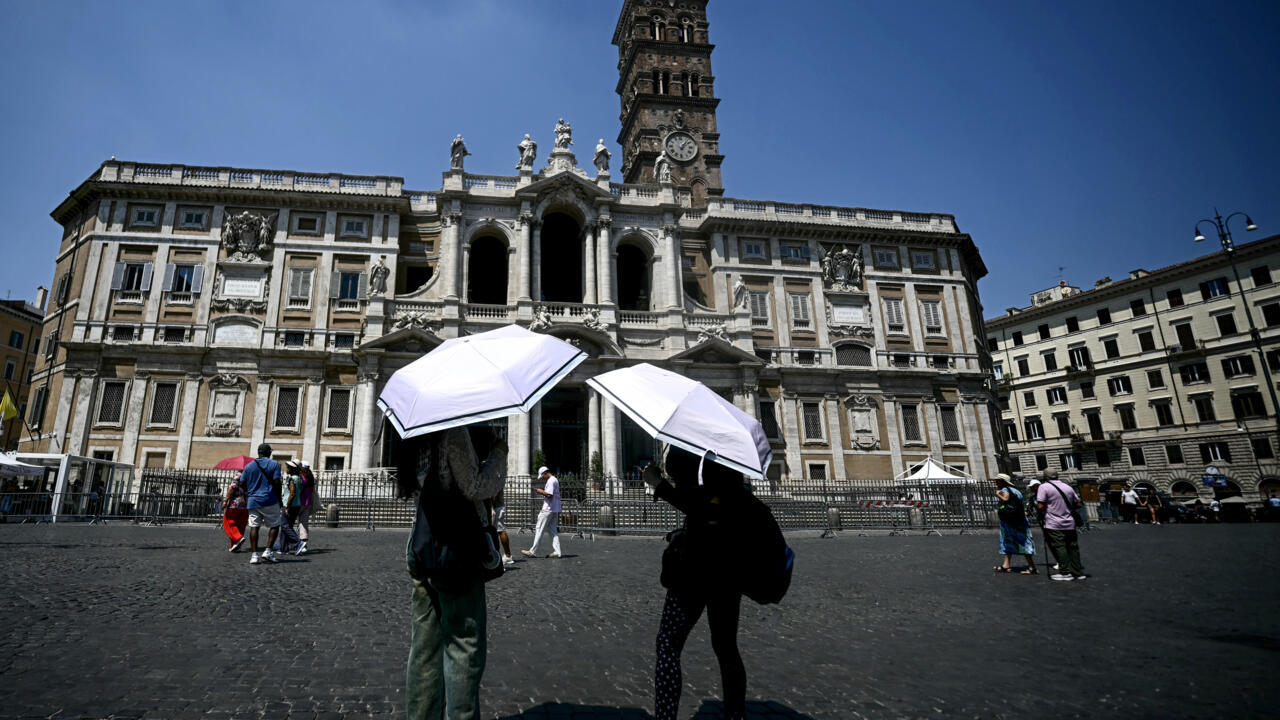 Rome had the highest number of deaths linked to climate change this summer, according a new rapid study. © Filippo Monteforte, AFP
Scientists estimated Wednesday that rising temperatures from human-caused climate change were responsible for roughly 16,500 deaths in European cities this summer, using modelling to project the toll before official data is released.
The rapidly-produced study is the latest effort by climate and health researchers to quickly link the death toll during heatwaves to global warming – without waiting months or years to be published in a peer-reviewed journal.
The estimated deaths were not actually recorded in the European cities, but instead were a projection based on methods such as modelling used in previously peer-reviewed studies.
Death tolls during heatwaves are thought to be vastly underestimated because the causes of death recorded in hospitals are normally heart, breathing or other health problems that particularly affect the elderly when the mercury soars.
The economic cost of heatwaves in Europe

Business © france24
05:29
05:29
To get a snapshot of this summer, a UK-based team of researchers used climate modelling to estimate that global warming made temperatures an average of 2.2 degrees Celsius hotter in 854 European cities between June and August.
Using historical data indicating how such soaring temperatures drive up mortality rates, the team estimated there were around 24,400 excess deaths in those cities during that time.
They then compared this number to how many people would have died in a world that was not 1.3C warmer due to climate change caused by humans burning fossil fuels.
Nearly 70 percent – 16,500 – of the estimated excess deaths were due to global warming, according to the rapid attribution study.
This means climate change could have tripled the number of heat deaths this summer, said the study from scientists at Imperial College London and epidemiologists at the London School of Hygiene & Tropical Medicine.

Athens had the second-highest death toll from climate change-driven heat, the study said. © Aris Oikonomo, AFP file photo
The team had previously used similar methods to find a similar result for a single European heatwave that started in late June.
The researchers said they were not able to compare their estimates to actual excess deaths recorded in European cities this summer because most countries take a long time to publish that data.
"It's impossible to get real-time statistics right now," however the estimates are "in the right ballpark," study co-author Friederike Otto told a press conference.
'Even more alarming'
The estimates did reflect previous peer-reviewed research, such as a Nature Medicine study which determined there were more than 47,000 heat-related deaths during the European summer of 2023.
Numerous prominent climate and health researchers also backed the study.
"What makes this finding even more alarming is that the methods used in these attribution studies are scientifically robust, yet conservative," said atmospheric science researcher Akshay Deoras at the UK's University of Reading.
"The actual death toll could be even higher."
The study said that Rome had the most estimated deaths attributed to climate change with 835, followed by Athens with 630 and Paris with 409.
More than 85 percent of the estimated excess deaths were among people aged 65 or over.
The researchers emphasised the study did not represent Europe as a whole because some areas – such as the Balkans – were not included.
"An increase in heatwave temperature of just 2-4C can be the difference between life and death for thousands of people – this is why heatwaves are known as silent killers," study co-author Garyfallos Konstantinoudis said.
This year was Europe's fourth-hottest summer on record.
(FRANCE 24 with AFP)
The team had previously used similar methods to find a similar result for a single European heatwave that started in late June.
The researchers said they were not able to compare their estimates to actual excess deaths recorded in European cities this summer because most countries take a long time to publish that data.
"It's impossible to get real-time statistics right now," however the estimates are "in the right ballpark," study co-author Friederike Otto told a press conference.
'Even more alarming'
The estimates did reflect previous peer-reviewed research, such as a Nature Medicine study which determined there were more than 47,000 heat-related deaths during the European summer of 2023.
Numerous prominent climate and health researchers also backed the study.
"What makes this finding even more alarming is that the methods used in these attribution studies are scientifically robust, yet conservative," said atmospheric science researcher Akshay Deoras at the UK's University of Reading.
"The actual death toll could be even higher."
The study said that Rome had the most estimated deaths attributed to climate change with 835, followed by Athens with 630 and Paris with 409.
More than 85 percent of the estimated excess deaths were among people aged 65 or over.
The researchers emphasised the study did not represent Europe as a whole because some areas – such as the Balkans – were not included.
"An increase in heatwave temperature of just 2-4C can be the difference between life and death for thousands of people – this is why heatwaves are known as silent killers," study co-author Garyfallos Konstantinoudis said.
This year was Europe's fourth-hottest summer on record.
(FRANCE 24 with AFP)
Spain sees hottest summer on record in 2025
Hauwau Samaila Mohammed

Hauwau Samaila Mohammed Nigerian writer and journalist
Hauwau Samaila Mohammed
DW with AFP, Reuters
17/09/2025
Meteorologists say climate change means extreme heatwaves during summer will become more common. Spain recorded a heatwave on one-third of days in summer 2025.

Spain recorded its hottest summer in 2025, according to data released the national meteorological agency AEMET on Tuesday.
The average temperature was 24.2 Celsius (75.56 Fahrenheit), going beyond the previous record of 24.1C set in 2022, and the highest figure since records began in 1961, AEMET spokesperson Ruben del Campo said at a news conference.
"We really are on this trend toward much hotter summers," Del Campo added. The last Spanish summer without a heatwave was in 2014, according to the spokesperson.
Heat waves becoming the new normal
Scientists warn that manmade climate change is causing extreme weather events. Already in June, heat records were being set in Spain, with the mercury rising to 46C in parts of the country's southwest.
Spain endured a 16-day heatwave in August, which sparked wildfires that killed four people. With temperatures of 45C in the south of the country, it was the most intense on record, according to AEMET.
The combination of extreme temperatures with low rainfall created the perfect conditions for wildfires, Del Campo said.
The Carlos III Health Institute estimates the heatwave caused more than 1,100 deaths in mostly people older than 65.
Spain experienced three heatwaves spanning 36 days during the summer.

August in Spain saw a 16 day heatwave, which resulted in wildfires that killed at least four
Image: Miguel Riopa/AFP/Getty Images
Spain recorded its hottest summer in 2025, according to data released the national meteorological agency AEMET on Tuesday.
The average temperature was 24.2 Celsius (75.56 Fahrenheit), going beyond the previous record of 24.1C set in 2022, and the highest figure since records began in 1961, AEMET spokesperson Ruben del Campo said at a news conference.
"We really are on this trend toward much hotter summers," Del Campo added. The last Spanish summer without a heatwave was in 2014, according to the spokesperson.
Heat waves becoming the new normal
Scientists warn that manmade climate change is causing extreme weather events. Already in June, heat records were being set in Spain, with the mercury rising to 46C in parts of the country's southwest.
Spain endured a 16-day heatwave in August, which sparked wildfires that killed four people. With temperatures of 45C in the south of the country, it was the most intense on record, according to AEMET.
The combination of extreme temperatures with low rainfall created the perfect conditions for wildfires, Del Campo said.
The Carlos III Health Institute estimates the heatwave caused more than 1,100 deaths in mostly people older than 65.
Spain experienced three heatwaves spanning 36 days during the summer.
Scientists sound climate change alarm 01:13
Hauwau Samaila Mohammed Nigerian writer and journalist

No comments:
Post a Comment