Pakistan’s India-shaped chip on the shoulder, and why a peaceful coexistence is as elusive as ever
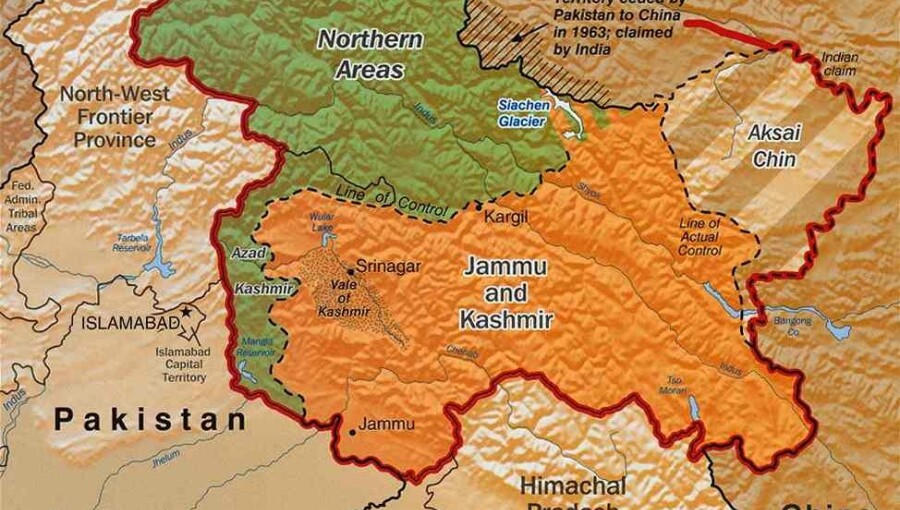
For Islamabad, India is more than a regional rival across the border. It is the defining political, military and psychological axis around which much of Pakistan’s identity, policy and most importantly, day-to-day insecurity revolves.
The “India-shaped chip” on its shoulder is not a relic of history; it is an active force, perpetuated by repeated crises, as well as mutual misgivings and shifting regional dynamics. As tensions rise and fall over Kashmir, water supplies, and more often than not Pakistan initiated nuclear posturing and cross-border violence, the prospect of durable peace in the coming years, even decades, appears increasingly remote.
Since Partition in 1947, Pakistan’s security raison d'être has been almost entirely India-centric. Little if any real attention is paid to their eastern border with Iran or their 2,600km border with Afghanistan to the north and northwest. All eyes are on India.
The wars of 1947, 1965 and 1971 in addition to the Kargil conflict of 1999, entrenched the notion that India must be kept in check. Over time, this has become a permanent fixture of the country’s institutions and political culture. As a result, the Pakistani military, more than any other organ of the state, has little incentive to downplay the Indian threat. The narrative of an ever-looming adversary to the East justifies vast defence spending, extensive surveillance and an outsized role in domestic governance under the pretext of protecting the nation.
Political leaders, whether in uniform or in suits, long ago learnt that any demonstration of softening toward New Delhi is a fast route to accusations of betrayal, possible prison sentences, and being ousted.
And the weight of that chip on the shoulder has been more evident in recent years.
Islamabad has repeatedly warned of “full-spectrum retaliation,” including nuclear strikes, should India attack. The suspension of the Indus Waters Treaty by New Delhi in April 2025, justified on national security grounds following a terror incident from within Pakistan provoked alarm in Islamabad with the control of river flows viewed as a question of survival.
A few weeks later the 2025 India–Pakistan conflict saw a brief four day cross-border exchange of missiles, shelling and drone attacks by both sides. Air strikes by India followed until a ceasefire was agreed on May 10 and still holds. But each episode – large and small - reinforces the conviction in both capitals that the other cannot be trusted, and that hostility towards the neighbour is the natural order of things.
Diplomatic mistrust between the two is now institutionalised and each gesture is met with suspicion.
India doubts Pakistan’s willingness or ability to reign in non-state militants operating inside or near its borders. Pakistan meanwhile fears India will use counterterrorism or water security as cover for aggression.
Even ceasefires in Kashmir are interpreted not as signs of progress but as tactical pauses before the next escalation. What might once have been pathways to negotiation are now regarded as traps.
The nuclear factor
The nuclear dimension only deepens the instability. Pakistan continues to modernise its arsenal, guided by the view that India poses an existential threat. Its leaders speak openly of using “the full spectrum of power” if provoked and have never ruled out a first strike.
Every military manoeuvre, and every political speech made in both Islamabad and New Delhi is filtered through layers of fear and worst-case assumptions by the other side. Small misjudgments could easily ignite a larger conflagration. To date, fortunately, this has not happened.
Compounding all this is the collapse of meaningful diplomacy.
Since 2016, high-level dialogue has withered. In both countries, nationalism rewards confrontation. Indian politicians win votes by promising to stand firm against terrorism and Pakistani provocations while Pakistani leaders survive by vowing to resist Indian “aggression” and defend Kashmir.
Any civilian government in Islamabad that dares to pursue rapprochement risks being undermined by the military and often public opinion – stoked by a largely anti-India media.
China
Regional alignments harden this impasse. Pakistan’s increased reliance on China to the northeast, through the China-Pakistan Economic Corridor as well as defence partnerships emboldens its stance against India. But with India-China relations thawing over territorial claims in the Himalayas, just how China plays New Delhi and Islamabad off against each other is a question many are already asking.
Ties to Pakistan mean little to Beijing in the larger scheme of things and Islamabad pretending they do would be naive.
Conversely, India’s strengthening ties with the United States, Japan and Australia under the Quad framework reinforce its sense of strategic superiority and its suspicion that Pakistan remains a regional proxy for Beijing.
Yet while both sides may yet stumble into a period of temporary calm, and ceasefires, crisis hotlines, and perhaps even a revival of “track-two” diplomacy championed by civil society or business groups may make headlines for brief periods, suspicion will remain.
Even as external powers in Europe and the US, fearful of nuclear escalation or regional instability push for restraint, such periods of quiet are likely to be very brittle. As such ,without fundamental shifts in doctrine, perception of the other side, and politics, India and Pakistan are destined to collapse back into confrontation sooner or later.
For peace to become more than a fleeting truce between New Delhi and Islamabad, both nations would have to undertake transformations that seem almost impossible today.
They would need formal risk-reduction measures and transparent communication about nuclear postures. But who will propose such?
Both India and Pakistan would have to separate domestic politics from regional diplomacy and confront hard questions about Kashmir’s future that neither is ready to answer as of Autumn 2025.
Pakistan would need to dismantle or permanently neutralise militant networks that operate across borders – a move that would almost certainly cost the careers and possibly lives of political leaders in the years ahead, while India would have to temper its rising nationalism and ease restrictions in disputed territories.
Both would need to revisit crucial water-sharing frameworks and invest jointly in climate adaptation. None of these steps are likely any time soon given current political realities.
The Pakistan chip
Because of this, the “chip” on Pakistan’s shoulder is not just an emotional burden or a product of historical grievance. It is the architecture of its state and the foundation of its national narrative. It is a persistent belief – as wrong as that may be - that survival depends on opposition to India.
Even a recent international cricket match – won by India – saw behaviour that would not be tolerated in other sports around the world. The Indian team refused to take the trophy from Pakistani national and Asian Cricket Council president Mohsin Naqvi; also Pakistan’s Interior Minister and Pakistani cricket chairman. At the same ceremony, Pakistan captain Salman Ali Agha threw the runners-up cheque to the ground.
To this end, unless a major external shock forces both countries to rethink their assumptions - an economic crisis, a climate disaster or a transformative third-party initiative by US President Donald Trump or similar perhaps - the next decade will look very much like the last: uneasy ceasefires punctuated by confrontation, then rhetorical wars followed by real conflicts.
For Pakistan, however, the deeper challenge is existential. To make peace, it must first redefine how it sees India - not solely as a threat to be contained but as a neighbour with whom coexistence is unavoidable. That psychological leap has eluded generations of Pakistani leaders, constrained by ideology, the military’s dominance over politics, and the weight of national myth.
Until it happens, the India-shaped chip will remain firmly lodged on Pakistan’s shoulder, and South Asia’s uneasy peace will stay as fragile as ever.
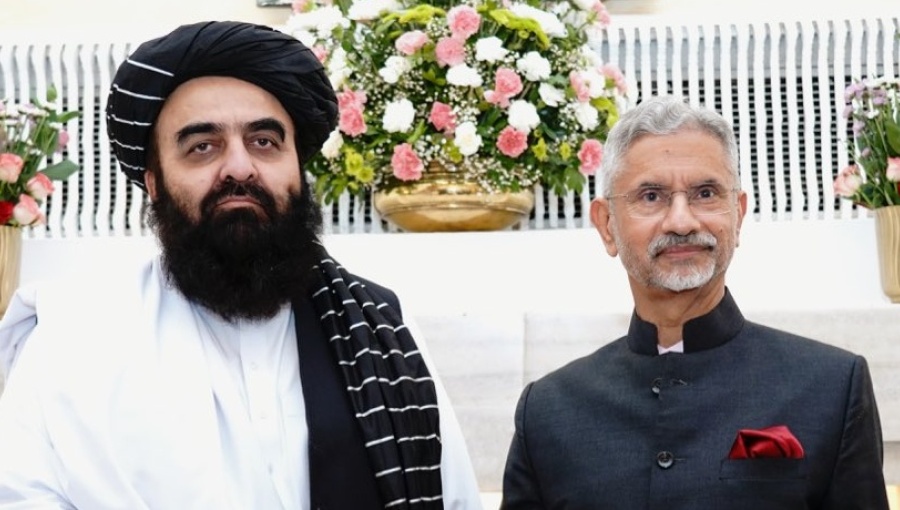
Pakistan has formally lodged a diplomatic protest with Afghanistan over the recent India-Afghanistan joint statement, expressing strong objections to references concerning Jammu and Kashmir and remarks about terrorism, The Times of India reports.
The Pakistani Ministry of Foreign Affairs summoned Afghanistan’s Ambassador in Islamabad to convey its concerns. A statement issued by the ministry highlighted two primary issues according to the report: the characterisation of Jammu and Kashmir as an integral part of India, and Afghan Foreign Minister Muttaqi’s comment on terrorism being “an internal problem of Pakistan.”
Pakistan contends that the joint statement's reference to Jammu and Kashmir contradicts United Nations Security Council resolutions and undermines the region's disputed status. The foreign office emphasised that such language is deeply insensitive to locals in the region deemed illegally occupied by India in Islamabad.
On the terrorism issue, Islamabad rejected Minister Muttaqi’s comments, asserting that Pakistan has consistently shared information about terrorist elements operating from Afghan soil against Pakistan, allegedly with support from elements within Afghanistan. The statement further noted that dismissing terrorism as an "internal matter" does not absolve Afghanistan of its responsibility to ensure regional peace and secu
Dozens killed in Pakistan-Afghanistan border clashes
Issued on: 12/10/2025 - FRANCE24
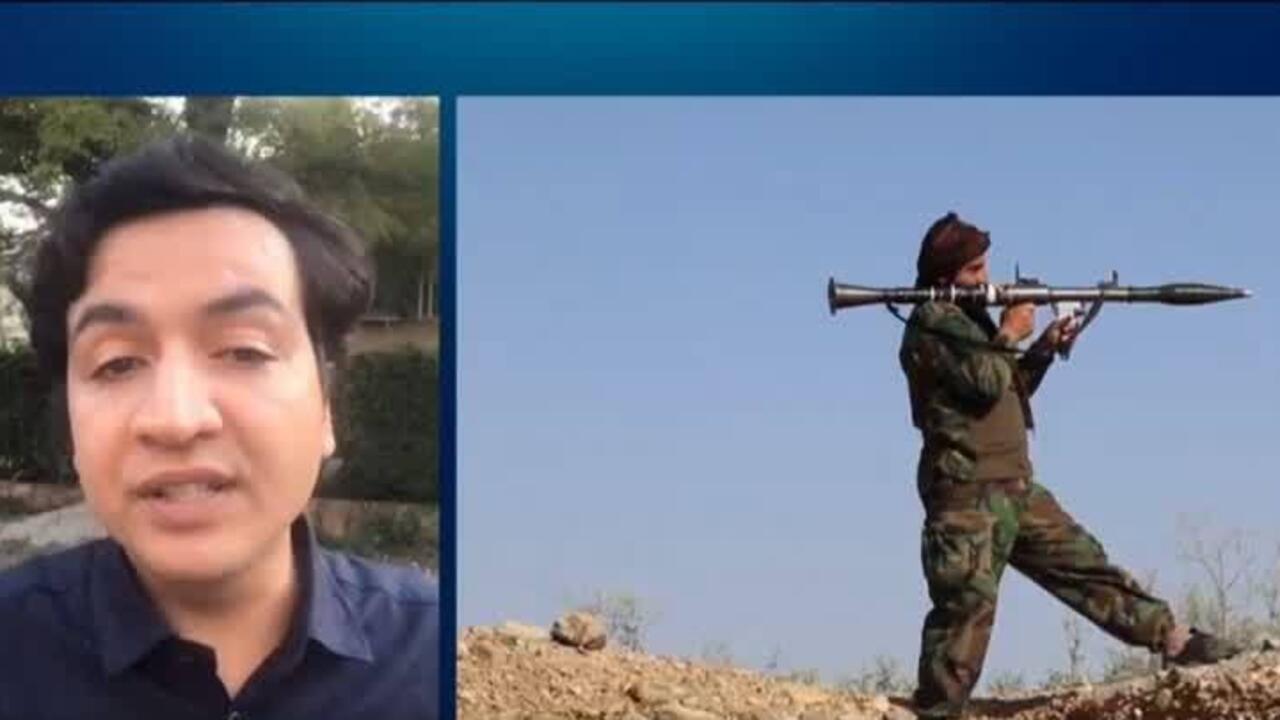
Dozens of fighters were killed in overnight border clashes between Pakistan and Afghanistan, both sides said on Sunday, in the most serious fighting between the neighbours since the Taliban came to power in Kabul. FRANCE 24's Shahzaib Wahlah reports from Islamabad.
Video by: Shahzaib WAHLAH
Pakistan closes border with Afghanistan after dozens killed in overnight clashes
Pakistan closed all border crossings with Afghanistan on Sunday after deadly overnight clashes in which both sides claimed to have killed dozens of troops. Islamabad regularly accuses the Taliban administration in Kabul of harbouring militants who attack Pakistan, a charge Afghan officials deny.
Issued on: 12/10/2025 -
By: FRANCE 24
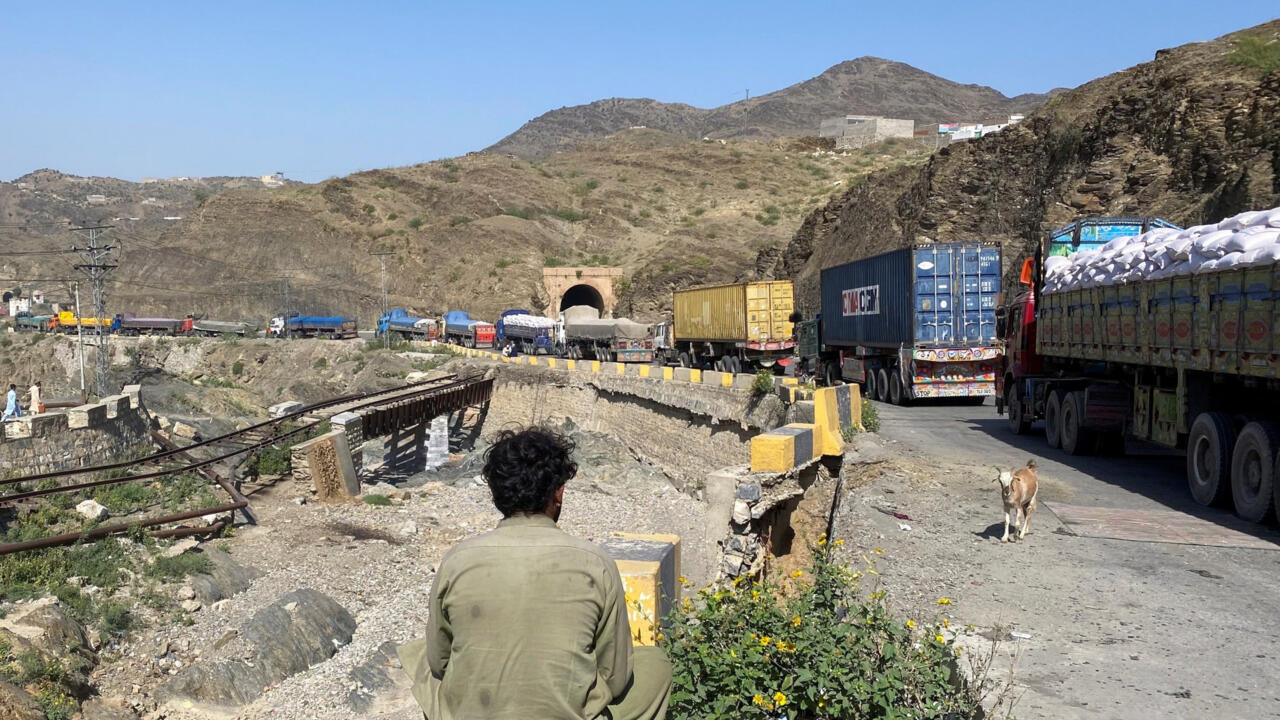
Afghanistan and Pakistan said on Sunday they killed dozens of each other's troops during a night of heavy border clashes between the two countries.
Afghanistan's Taliban forces launched attacks on Pakistani troops along their shared border late on Saturday, in what it called "retaliation for air strikes carried out by the Pakistani army on Kabul" on Thursday.
Islamabad has not directly claimed responsibility for the strikes, but has repeatedly stated the right to defend itself against surging militancy that it says is planned from Afghan soil.
The two sides have repeatedly clashed in border regions since the Taliban seized control of Afghanistan in 2021, but airspace violations deep into Afghan territory would mark a significant escalation.
‘Pakistan has been accusing Kabul of harbouring Pakistani Taliban’
02:30
The Pakistani military, meanwhile, said 23 of its soldiers and more than 200 Taliban and affiliated troops were killed.
The casualty figures could not be independently verified.
Afghan Foreign Minister Amir Khan Muttaqi said on Sunday the "situation is under control".
"Our operation last night achieved its objectives. And then our friends like Qatar and Saudi Arabia appealed that war must stop now, and the war is ceased right now," he said during a visit to India.
An Afghan military unit described Thursday's blasts in the capital as "air strikes", but Mujahid instead said the incident was an "airspace violation", adding that no damage had been found.
'Strong' response
Pakistan Prime Minister Shehbaz Sharif said on Sunday he "strongly condemns provocations" by Afghanistan.
"There will be no compromise on Pakistan's defence, and every provocation will be met with a strong and effective response," Sharif said in a statement, accusing Taliban authorities in Afghanistan of allowing their land to be used by "terrorist elements".
The Afghan military said on Saturday night that Taliban forces were engaged "in heavy clashes against Pakistani security forces in various areas".
Several border security officials told AFP that no further clashes had been reported at major crossings on Sunday morning.
Key border crossings between the countries were closed on Sunday, officials said.
Extra troops have been sent to the major border crossing at Torkham, which sits on the frontier between Kabul and Islamabad.
Pakistani officials at Torkham, who requested anonymity, told AFP there had been no casualties on their side of the border crossing and that no further clashes had been reported in the area on Sunday morning.
The violence came while India hosted Afghanistan's foreign minister for the first time since the Taliban returned to power.
Wahid Faqiri, an Afghan international relations expert, said those warming relations have "angered Pakistan and pushed Islamabad towards aggression".
Militancy increased in northwestern Khyber Pakhtunkhwa since the withdrawal of US-led troops from neighbouring Afghanistan in 2021 and the return of the Taliban government.
The vast majority of attacks are claimed by the Pakistani Taliban (TTP), whose campaign against Pakistan security forces has intensified this year – set to be the deadliest in more than a decade.
Read morePakistani Taliban attacks on security forces kill more than 20 in restive northwest
Violence in the border region has "plunged relations between the neighbours to an all-time low", said Maleeha Lodhi, a former senior Pakistani diplomat.
"But there will have to be a return to diplomacy to find a resolution to the confrontation," she told AFP.
The TTP is a separate but closely linked group to the Afghan Taliban, which Islamabad says operates from Afghan soil with impunity.
A UN report this year said the TTP "receive substantial logistical and operational support from the de facto authorities", referring to the Taliban government in Kabul.
More than 500 people, including 311 troops and 73 policemen, have been killed in attacks between January and September 15, a Pakistan military spokesman said on Friday.
Pakistani Defence Minister Khawaja Muhammad Asif told parliament on Thursday that several efforts to convince the Afghan Taliban to stop backing the TTP had failed.
"Enough is enough," he said. "The Pakistani government and army's patience has run out."
(FRANCE 24 with AFP)
Pakistan And Kazakhstan Look To Hit $1 Billion In Trade And Build Stronger Ties – OpEd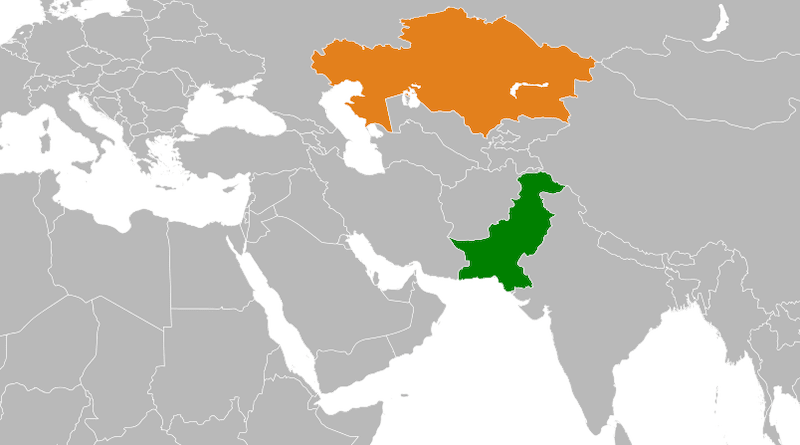
Locations of Pakistan (green) and Kazakhstan. Credit: Wikipedia Commons
By Professor Naila
Pakistan and Kazakhstan are trying to turn a long, friendly relationship into something more tangible: real business. Both countries want to take their connection beyond talk of brotherhood and history, toward a partnership that delivers jobs, exports, and investment.
The goal they’ve set is ambitious but clear $1 billion in annual trade and the plan is to get there by linking Central Asia to South Asia through Pakistan’s ports and roads.
From history to opportunity
Pakistan and Kazakhstan have always had cordial ties, going back to the early years after the Soviet breakup. But despite that goodwill, trade between them has barely scratched the surface. Most of their potential has been stuck behind geography, poor logistics, and limited awareness of what each side needs.
That’s why the new Transit Trade Agreement matters. It would give Kazakhstan and other Central Asian countries a direct route to the Arabian Sea through Karachi and Gwadar. For Kazakhstan, a landlocked country, this could be a game changer and cheaper transport, faster access to markets, and less dependence on northern routes through Russia.
For Pakistan, it’s a chance to become the main gateway between Central Asia, the Middle East, and South Asia. It fits neatly with Islamabad’s larger strategy of turning the China-Pakistan Economic Corridor (CPEC) into a broader regional trade network.
The business side of things
The two governments are making a big push for their private sectors to get involved. Instead of relying on state-to-state deals alone, they’re encouraging business forums, exhibitions, and direct networking between entrepreneurs.
Kazakh delegations are expected to visit cities like Karachi and Faisalabad to check out Pakistan’s textile and leather industries. Meanwhile, Pakistani exporters are eyeing Almaty and Astana to explore partnerships in agriculture, logistics, and IT.
There’s also talk of setting up a Pakistan–Kazakhstan Business Council to help companies cut through red tape, sort out customs issues, and figure out payments and the usual headaches that come with cross-border trade.
A few areas stand out:Agriculture: Kazakhstan is rich in grain and livestock, while Pakistan has experience in food processing and irrigation. There’s a lot they can learn from each other.
Energy: Kazakhstan has oil, gas, and minerals; Pakistan needs all three. Joint projects in exploration or refining could make sense.
Technology: Pakistan’s IT industry is growing fast, and Kazakhstan has been investing in digital governance and cybersecurity. The two could easily find overlaps.
Leather and manufacturing: Pakistan’s leather sector could use Kazakhstan’s raw materials and investment to modernize and expand exports.
None of this will happen overnight, but the mix of skills and resources is promising.
The logistics backbone
Trade doesn’t work without roads and ports, and both sides seem to understand that. The new transit system would plug Kazakhstan into Pakistan’s motorway and railway networks, letting goods flow down to Karachi and Gwadar.
Once it’s fully functional, the route could cut the distance between Almaty and Karachi to around 3,000 kilometers, which is roughly half of what current trade routes require. There are even talks about direct flights between Islamabad and Almaty to make business and tourism easier.
Visa facilitation is also on the table, something that can make or break these kinds of efforts. Business travel needs to be simple if the two sides want to build trust.
Chasing the $1 billion goal
Right now, Pakistan–Kazakhstan trade is small less than $100 million a year by most estimates. But both sides think that once the transit system is up and running, hitting $1 billion isn’t out of reach.
To make sure the plan doesn’t lose steam, they’re setting up a Joint Intergovernmental Commission to monitor progress and push new initiatives. Regular meetings will help keep the focus on results instead of letting the momentum fade.
If things go well, Kazakhstan could also serve as a doorway for Pakistan into the broader Central Asian market like Uzbekistan, Kyrgyzstan, and Tajikistan included and a region that’s hungry for goods. Pakistan already produces, like textiles, pharmaceuticals, and consumer goods.
A bigger regional picture
This growing partnership isn’t just about trade. It fits into a larger shift happening across Eurasia. Central Asian countries are looking for more southern access, while Pakistan wants to expand its economic footprint beyond South Asia. Both are trying to balance their foreign policies by working with multiple partners like China, Russia, Turkey, and now each other.
In a way, it’s a modern take on the old Silk Road idea and not just trading goods but creating connections. For Pakistan, it’s a chance to prove that geography can be an asset, not a limitation. For Kazakhstan, it’s a way to diversify routes and strengthen its independence in global trade.
Looking ahead
There’s still a lot of work to be done infrastructure, banking channels, visa policies, and plain old trust between businesses. But if both sides stay serious about implementation, this could become one of the more meaningful partnerships in the region.
It’s easy to make declarations at summits; the hard part is turning them into trade deals, investment flows, and jobs on the ground. Pakistan and Kazakhstan seem to know that which is why they’re focusing more on business-to-business engagement instead of just political speeches.
If the $1 billion goal is reached, it won’t just be a number on paper. It’ll mark the start of a more connected Central and South Asia where countries trade because it makes sense, not just because they’ve always said they’re friends.
Professor Naila
Professor Naila, PhD in Defense and Strategic Studies (Turkey), specializes in security policy, strategic affairs, and defense analysis, contributing expertise in regional stability, national security, and global strategic discourse.

October 12, 2025
By Rashid Siddiqui
When Prime Minister Shehbaz Sharif announced the formation of a high-level Artificial Intelligence Steering Committee this weekend, it marked more than a bureaucratic reshuffling—it signaled Pakistan’s intent to finally join the global race toward an AI-driven economy. For a country long constrained by slow bureaucracy, corruption, and outdated infrastructure, this pivot toward digital governance could be transformative.
Pakistan’s first major foray into state-backed AI—an AI-based Customs Clearance and Risk Management System (RMS)—is already showing the potential of technology to cut inefficiency and improve transparency. By automating tax assessments, reducing human discretion, and identifying risk patterns in trade documentation, the RMS directly tackles two of Pakistan’s chronic economic ailments: corruption and leakage. It is a small but significant example of how digital intelligence can bring discipline to systems long captured by inefficiency and patronage.
But Prime Minister Sharif’s announcement goes beyond one application. His vision—backed by the creation of an AI Steering Committee and a panel of experts—suggests a strategic attempt to embed AI into the heart of Pakistan’s economic modernization. The move to integrate AI at southern ports, for instance, where congestion and delays often stifle exports, shows a recognition that technology is no longer a luxury but an imperative. Digital upgrades that automate cargo handling and predict shipping bottlenecks could help Pakistan’s ports move from being choke points to competitive hubs in global trade routes.
The implications for economic digitization are profound. Pakistan’s economy remains overwhelmingly informal—an estimated 60 percent of transactions occur outside the documented sector. AI, combined with data integration, offers a tool to formalize this vast shadow economy. Predictive analytics can help detect tax evasion, track trade anomalies, and better plan infrastructure spending. In effect, AI could become the backbone of a smarter state—one that relies on data, not discretion.
Yet, the success of this ambition will depend on more than just announcements. Pakistan’s digital ecosystem faces structural weaknesses: patchy internet access, low data literacy, inadequate privacy safeguards, and a persistent brain drain of tech talent. If the government is serious about using AI to drive growth, it must address these gaps head-on. Investing in local AI research centers, incentivizing startups, and building partnerships with universities will be essential to avoid dependence on imported technologies and foreign consultants.
Moreover, the question of regulation cannot be ignored. The government’s commitment to “responsible use and data protection” is welcome, but it must be backed by robust legislation that safeguards citizens’ privacy, prevents algorithmic bias, and ensures transparency in state-led AI deployments. Without such protections, the same tools that promise efficiency could easily enable surveillance and discrimination.
What makes this moment particularly critical is that Pakistan is arriving late—but not too late—to the digital revolution. Countries across Asia, from Singapore to the UAE, are already embedding AI into their governance and economic planning. Closer to home, India has made strides in using AI for agricultural monitoring, digital health, and fintech expansion. Pakistan’s advantage lies in learning from these models and avoiding their pitfalls.
The stakes are high. AI adoption is not just about modernizing customs operations or speeding up ports; it is about transforming the logic of governance itself. A government guided by real-time data can allocate resources more efficiently, combat corruption more effectively, and anticipate crises before they escalate. For a developing economy struggling with fiscal deficits and low productivity, that kind of foresight could be revolutionary.
Prime Minister Sharif’s emphasis on AI as a driver of economic growth reflects a broader realization: that Pakistan’s future competitiveness will depend on its ability to harness technology intelligently, not just rhetorically. The Steering Committee, if it works with genuine autonomy and expertise, could lay the foundation for a national AI strategy that aligns innovation with inclusion—one that creates jobs rather than displacing them, and builds trust rather than eroding it.
For too long, Pakistan’s development model has been reactive—responding to crises rather than anticipating them. Artificial intelligence offers a chance to change that paradigm, to move from a state of managing decline to one of designing progress. But for that to happen, the government must ensure that its newfound enthusiasm for AI translates into sustained investment, institutional reform, and above all, accountability.
If done right, Pakistan’s embrace of artificial intelligence could mark the beginning of a new chapter: a shift from analog politics to digital governance, from manual inefficiency to algorithmic precision, and from economic uncertainty to data-driven growth. The future, as Sharif’s initiative suggests, may finally be intelligent.

Rashid Siddiqui
Rashid Siddiqui is a student of MPhil at University of the Punjab.

No comments:
Post a Comment