COP30 UPDATED
Búzios Scientific Statement: Providing evidence-based insights for COP30
International Institute for Applied Systems Analysis
Against the backdrop of negotiations at COP30 in Belém, a group of leading climate scientists has released the Búzios Scientific Statement, offering a clear assessment of the world’s remaining options to return to 1.5°C of warming by the end of the century. The statement reflects growing recognition that a temporary overshoot of 1.5°C is now unavoidable, while also showing that pathways back to safer temperature levels remain open if action accelerates quickly.
The statement was developed by participants of last week’s annual meeting of the Integrated Assessment Modelling Consortium (IAMC), which took place in parallel with the COP30 negotiations and brought together more than 250 leading climate researchers in Armação dos Búzios, Brazil, to discuss the latest evidence on mitigation and adaptation pathways.
The scientists involved in preparing the statement describe the next decade as decisive. Their work provides guidance at a moment when countries are still debating how to close the ambition gap at COP30, and as small island states call on parties to honor the 1.5°C goal.
“Overshooting 1.5°C is no longer a hypothetical scenario – it is something the world must now navigate,” notes IIASA Energy, Climate, and Environment Program Director, Keywan Riahi, who was a coordinator of the statement. “Our research shows that limiting overshoot and returning below 1.5°C is still possible, but only if emissions fall quickly and clean-energy deployment accelerates. With every delay, the challenge grows and the reliance on carbon removal increases.”
Insights from a novel set of scenarios that will be part of the forthcoming Scenario Compass Initiative database provide a sense of the transformation required by 2035, with global greenhouse gas emissions needing to fall sharply and renewable energy deployment increasing significantly.
The statement highlights five main insights from the latest scenario work:
- Overshoot of 1.5°C is unavoidable, but returning below it is still possible.
Accelerated emissions reductions and sustainable carbon removal can bring temperatures back down by the end of the century. Each five-year delay in reducing CO₂ emissions adds around 0.1°C of warming and requires an additional 200 GtCO₂ of negative emissions later. - Closing the emissions gap this decade remains achievable.
Immediate and comprehensive policy shifts, supported by adequate finance, can build on rapid advances already underway in renewables, batteries, and electrification. - Global benchmarks for 2035 can guide the transformation
Novel scenario insights suggest that achieving the following benchmarks would be consistent with limiting overshoot: 1) reducing global greenhouse gas emissions by about half compared to 2024, 2) increasing the contribution of solar and wind five- to six-fold, and 3) cutting fossil fuel production and use by 25–50%. - Every country has the potential to raise ambition.
Nationally determined contributions should reflect each country’s highest possible ambition while considering national development priorities, capacities, and the need for fair international cooperation, including finance. - Adaptation planning and implementation are essential.
Climate impacts are already affecting communities worldwide, and adaptation must be a central part of every country’s response. Measures that combine adaptation and mitigation offer important opportunities to save time and resources.
“The choices made this decade will determine whether overshoot remains manageable,” says IIASA Integrated Climate Impacts Research Group Leader, Carl Schleussner, one of the statement’s coauthors. “Communities around the world are already experiencing serious climate impacts, and only by decisive action on mitigation and adaptation can we get back on track.”
About IIASA:
The International Institute for Applied Systems Analysis (IIASA) is an international scientific institute that conducts research into the critical issues of global environmental, economic, technological, and social change that we face in the twenty-first century. Our findings provide valuable options to policymakers to shape the future of our changing world. IIASA is independent and funded by prestigious research funding agencies in Africa, the Americas, Asia, and Europe. www.iiasa.ac.at
“The world doesn’t need fossil-fueled tech fantasies justifying business as usual for big polluters and Silicon Valley billionaires.”
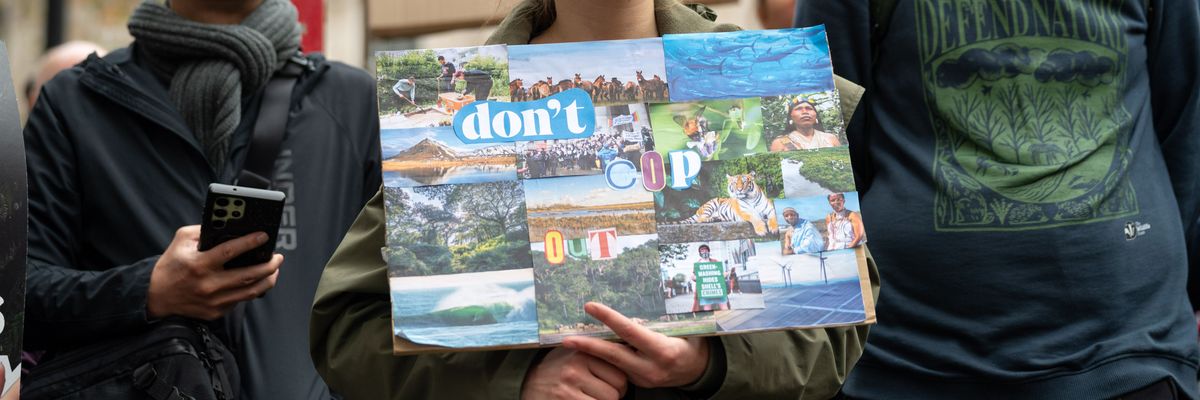
A protester holds a placard saying “Don’t COP out” at a demonstration in Whitehall, London, England on November 15, 2025, during the United Nations climate summit in Brazil.
(Photo by Andrea Domeniconi/SOPA Images/LightRocket via Getty Images)
Jessica Corbett
Nov 17, 2025
COMMON DREAMS
After critics of big polluters warned of “corporate capture” in the lead-up to the United Nations Climate Change Conference based on previous summits, one advocacy group announced Monday that more than 500 carbon capture and storage lobbyists have gained access to COP30 in Belém, Brazil.
CCS—also called carbon capture, use, and storage—involves capturing carbon dioxide, generally from industrial or power generation facilities, and then either finding a use for it or storing it underground. Opponents and skeptics have long called it a risky “false solution” that extends reliance on planet-heating fossil fuels and distracts from a global shift to renewables.
The Center for International Environmental Law identified 531 CCS lobbyists attending this year’s ongoing summit—the largest number since CIEL started analyzing registrations for the annual conference. The group explained that the oil and gas industry and other CCS advocates are highlighting the massive energy needs of booming artificial intelligence “to cement further fossil fuel expansion, using carbon capture promises to mask the devastating climate impact.”
CIEL fossil economy director Lili Fuhr said in a statement that “the fossil fuel industry has found in AI’s energy demand a new narrative to justify its survival—and in carbon capture, the perfect illusion. CCS cannot make fossil fuels ‘clean’; it just keeps them burning. It doesn’t curb emissions; it locks them in.”
“The world... needs a future rooted in renewable energy, accountability, and justice, and a climate process with a robust conflict of interest policy.”
“When governments fall for the AI and carbon capture fairytale of the CCS lobbyists, they open a new escape hatch for the fossil fuel industry, undermine global climate efforts, and delay the urgently needed phaseout of coal, oil, and gas,” she argued. “The world doesn’t need fossil-fueled tech fantasies justifying business as usual for big polluters and Silicon Valley billionaires. It needs a future rooted in renewable energy, accountability, and justice, and a climate process with a robust conflict of interest policy.”
Her group found that CCS lobbyists have received more conference passes than not only “any other single nation registered at COP30, except the host country, Brazil (899 delegates),” but also 62 national delegations combined (526 delegates), including 14 from European Union countries, and the total for national delegations from the Group of Seven nations (481 delegates).
While some lobbyists came from CCS-promoting trade associations and companies driving the climate emergency, such as CNPC, ExxonMobil, Oxy, Petrobras, and TotalEnergies, 44 of them are part of national delegations, including Algeria, Azerbaijan, Bahrain, Brazil, Georgia, Honduras, Japan, Kuwait, Libya, Oman, Qatar, Russia, and the United Arab Emirates.
“What’s even more shocking than the fact that hundreds of CCS lobbyists and fossil fuel industry representatives are roaming COP’s halls is the fact that governments still invite them in,” said CIEL climate and energy director Nikki Reisch. “The continued presence of those who profit from the products heating the planet and making us sick is a reminder that reform of the UN climate talks is long overdue.”
“It’s past time to show big polluters the door, to put conflict-of-interest rules in place, and to allow voting when consensus is blocked,” she declared. “The #COPWeNeed puts people, science, and the law at the center, not profits.”
The group’s analysis comes after the Kick Big Polluters Out coalition announced Friday that it counted the “largest ever attendance share” for fossil fuel lobbyists, with 1,602 at this year’s summit. In addition to CIEL, KBPO’s members include the Center for Biological Diversity, Friends of the Earth International, Greenpeace International, Oil Change International, and more.
“The influx of CCS lobbyists at COP30 shows how the AI industry is using the false promise of carbon capture as a lifeline for fossil fuels,” Center for Biological Diversity Energy Justice program director and senior attorney Jean Su said Monday. “AI is the love child of Big Tech and the fossil fuel industry. It’s critical that COP30 recognizes how the AI boom is threatening our global climate goals and acts swiftly to rein in this dirty industry.”
Carbon capture promoters turn up in numbers at COP30: NGO
By AFP
November 17, 2025
CCS equipment captures CO2 at its source -- such as power plants or industrial facilities -- before it is stored in deep underground rock formations - Copyright AFP/File Jonathan KLEIN
Benjamin Legendre in Belem and Laurent Thomet in Paris
Companies and groups backing carbon-capture technology, which critics slam as an excuse to keep burning fossil fuels, have deployed more than 500 participants to the COP30 climate talks, according to a list compiled by an NGO and shared exclusively with AFP.
The list, assembled by the Center for International Environmental Law (CIEL), names oil and gas giants such as ExxonMobil, Shell and BP, along with Brazil’s state-owned Petrobras and China National Petroleum Corp.
CIEL’s inventory is broad, with the likes of US tech giant Amazon, the Port of Antwerp-Bruges and Canadian company West Fraser Timber joining more obvious groups such as the Global CCS Institute.
CIEL classified a total of 531 attendees at the UN talks in Belem, Brazil, as “lobbyists” for firms or groups that promote carbon capture and storage (CCS).
Their number “highlights the large amounts of energy and power the fossil fuel industry is investing to secure its future by selling the idea that governments and companies can ‘clean’ their use of coal, oil, and gas by capturing and ‘managing’ emissions,” CIEL said.
The NGO said there were 475 CCS lobbyists registered at COP28 in Dubai and 480 at COP29 in Baku — both of which had more total participants than the conference in Belem.
CCS is a controversial technology.
The IPCC, the UN’s expert scientific panel on climate change, says carbon capture is one option for reducing emissions, including in heavy polluting sectors like cement and steel.
CCS equipment captures CO2 at its source — such as power plants or industrial facilities — or pulls it directly from the air before it is stored in deep underground rock formations.
But it remains expensive and technically complex to deploy at scale, giving it a tiny part in addressing the climate crisis for now.
“We need carbon capture because we will overshoot (the goal of limiting warming to 1.5C),” US Senator Sheldon Whitehouse, a Democrat and advocate for strong climate action in Congress, told AFP in Belem.
“It just can’t be the excuse for polluting more,” Whitehouse said.
CIEL said oil companies are using the energy demand from the booming AI sector as justification to keep drilling.
“CCS cannot make fossil fuels ‘clean’ — it just keeps them burning,” said CIEL fossil economy director Lili Fuhr.
“The world doesn’t need fossil-fueled tech-fantasies justifying business as usual for big polluters and Silicon Valley billionaires,” Fuhr said.
A separate analysis by Kick Big Polluters Out found that more than 1,600 attendees were part of companies or groups with ties to the fossil fuel industry.
– ‘Problematic’ –
CIEL said that to be classified as a carbon capture lobbyist, a company or organization has to be involved in a CCS project, have a track record of lobbying for the technology or state that its purpose includes promoting CCS.
The NGO verified the information on company websites, the International Energy Agency’s CCS project database, news sources or lobbying registers, among other sources.
More than 40 “CCS lobbyists” are part of national delegations at COP30, including Russia, Gulf countries and Brazil, according to CIEL.
Barnaby Pace, senior researcher at CIEL, acknowledged that the NGO cannot be certain if a company was sending someone to talk about CCS at COP30.
“We can’t quite predict that, but it is going to be part of their agenda if they are going down this line and we think that’s problematic,” he told AFP.
.jpg)
UN climate talks have entered their second week with battle lines drawn over fossil fuels, as dozens of countries demanded a roadmap to phase out oil, coal and gas in the face of fierce resistance from producers and a record number of industry lobbyists.
The confrontation has become the defining issue at COP30 in Belém, where global emissions from fossil fuels hit record levels in 2025 even as climate scientists warn the world is on track for 2.6 °C of warming by 2100.
Amid growing calls for action from the scientific community, a coalition of approximately 60 countries from across Europe, Africa, Latin America, and Small Island Developing States is pushing to add a fossil fuels roadmap to the official agenda.
France, Colombia, Germany, and Kenya are leading the diplomatic effort, with supporters aiming to reach 100 nations.
"Our priority for the coming days is to broaden this coalition, to speak to all the countries that believe we need to move forward and accelerate on this issue," a source from the French delegation told DW.
The push builds on COP28's historic call to "transition away from fossil fuels," which offered few details on implementation.
"We need an actionable outcome, not another roadmap to nowhere," Jasper Inventor, deputy programme director at Greenpeace International, said in a statement.
Brazilian Environment Minister Marina Silva expressed support for a roadmap "because it lays the foundation for a fair and planned transition" away from polluting fuels, while Jochen Flasbarth, German state-secretary for climate action, said his country would support any roadmap decision.
Colombia has reportedly drafted a declaration on phasing out fossil fuels that a handful of states have signed.
Record lobbyist presence fuels concerns
Opposition to the roadmap, however, has been bolstered by an unprecedented concentration of fossil fuel industry representatives at the summit.
One in every 25 participants at COP30 is tied to the oil and gas sector, the highest concentration ever at UN climate talks, according to Radio France Internationale (RFI), citing analysis from Kick Big Polluters Out, a coalition of 450 organisations.
An estimated 1,602 delegates with links to oil, coal, and gas are in Belem, including representatives of energy giants ExxonMobil, Shell, and TotalEnergies, as well as state-owned oil firms.
They outnumber the delegations of every country except Brazil and have two-thirds more conference passes than the 10 most climate-vulnerable countries combined.
"It is clear we cannot solve a problem by giving power to those who caused it," Jax Bongon from IBON International in the Philippines told RFI.
"Yet 30 years and 30 COP summits later, more than 1,500 fossil fuel lobbyists walk through the climate negotiations as if nothing had happened."
The coalition stated that, although the absolute number of lobbyists is lower than at some past summits, the concentration within the talks is at its highest point. This figure has risen sharply from 500 attendees with fossil fuel ties at the Glasgow summit five years ago.
At least 600 lobbyists hold special party overflow badges, allowing them to remain in closed negotiation rooms without speaking rights. France's delegation of 449 includes at least 22 people linked to the sector, including five TotalEnergies executives, amongst them CEO Patrick Pouyanné.
TotalEnergies was found guilty two weeks ago by a French court of misleading commercial practices over claims it could reach carbon neutrality by 2050 while increasing oil and gas production.
Brazil's contradictory position
The host nation's position reflects the summit's central tensions. Brazilian President Luiz Inácio Lula da Silva, who has positioned himself as a climate advocate, has urged world leaders to end fossil fuel dependence even as his government recently approved oil exploration at the mouth of the Amazon River.
Brazil's first lady, Janja Lula da Silva, articulated the government's pragmatic stance during a panel in the federal government pavilion.
"We can't believe that next week, as soon as COP ends, we're going to stop using fossil fuels. That's not a reality yet," she said, cited by Click Petróleo e Gás (CPG).
"We need to build a roadmap. And the Brazilian government, President Lula, is making this proposal, and we have been talking about it very intensely," Janja added.
The first lady's speech reflected an attempt to balance Brazilian climate discourse with national economic reality.
To this end, Lula stated at the end of October that Brazil "will not throw away" the wealth generated by oil and announced during the COP30 Leaders' Summit the creation of a specific fund to allocate part of oil exploration profits to renewable energy investment.
Fierce opposition expected
Most oil-producing states, particularly Saudi Arabia, have unequivocally rejected the roadmap idea and are pushing back against diplomatic efforts. One negotiator estimated that around 70 countries would oppose any new COP30 decision addressing fossil fuels, DW reported.
At COP28 in Dubai, major oil-producing nations resisted transition calls, proposing instead to phase out fossil fuel emissions using unproven technology such as carbon capture and storage.
"The challenge will be to present a big enough bloc of support to force the roadmap onto the conference agenda," said Romain Ioualalen, global policy campaign manager at US-based advocacy organisation Oil Change International. "It's a diplomatic puzzle that's taking shape."
TotalEnergies’ CEO Pouyanné expressed scepticism about a roadmap, calling it a "European vision" and suggesting more government regulation was not the answer. He said to DW he was not a lobbyist and had been invited to COP30.
Johan Rockström, director of the Potsdam Institute for Climate Impact Research in Germany, told DW ahead of COP30 that the summit includes "so many strong voices that want to avoid the elephant in the room" – fossil fuels.
Advances on other major COP30 issues such as forest protection or adaptation finance "can only be celebrated if we also see progress” on the phase-out of fossil fuels, Rockström stated.
In a letter dated October 1, 225 environmental organisations urged the COP30 presidency to stop inviting major polluters into the talks.
They argued that "big polluters should not have access to climate policy making" and that allowing industry representatives lets them "continue to influence and undermine the international response."
US absence and hostility
Meanwhile, the US withdrawal from climate negotiations under President Donald Trump has further hindered efforts to hash out actionable strategies to promote a transition to clean energy sources. US Energy Secretary Chris Wright went as far as condemning COP30 as "harmful and misguided," The Associated Press (AP) reported.
“It's essentially a hoax. It's not an honest organisation looking to better human lives," Wright said, defying global scientific consensus on climate change. He added he might attend next year's summit "just to try to deliver some common sense."
Wright's comments echoed the Trump administration's rejection of global climate agreements and prioritisation of fossil fuels. President Trump, a long-time climate sceptic, pulled out of the Paris Agreement for the second time upon returning to office and declined to send high-level negotiators to Belem.
Competing for Emissions: The COP Candidate Contest
It’s so silly as to be depraved. Two countries, hardly exemplary when it comes to their environmental credentials, vying for hosting rights to an event that does more to emit greenhouse gases than it resolves to limiting them. But this is exactly what Australia and Türkiye are doing regarding the Conference of Parties (COP) for 2026, school louts seeking to make themselves the most noticed in the playground of climate change politics.
The scale in terms of hosting these gatherings of anthropomorphic crowding is decidedly onerous and horrendously costly. The 30th UN climate conference being held in Belém, Brazil has 56,118 registered delegates. Those held in the United Arab Emirates (2023) and Azerbaijan were bloated occasions of 100,000 and 70,000 delegates respectively. Babbling, lobbying, debating and disagreeing, these occasions only to end up with a stripped communique where the elect can backslap in self-congratulation. It follows that running them is a theatre of utter indulgence, something to rattle off for other potential hosts under the climate change tent. The earth may burn or flood, but pride is imperishable.
That Canberra and Ankara have thrown their hats in the ring to host COP31 demonstrates that if you desire something so much, you should be disqualified from getting it. It was charming of both countries to do so, seeing as neither leader felt inclined to attend turn up in Belém. Initially, such interest manifested in a co-chairmanship model, one hard to envisage in any practical, logistical sense. This idea had tickled conversation between the countries during the UN General Assembly meeting in September. In addition to hosting duties for high-level meetings the countries would also steer negotiations.
This was something the Australian Prime Minister Anthony Albanese also thought noteworthy in a missive to his counterpart Recep Tayyip Erdoğan, who was similarly inclined. The Turkish response was one of teasing solidarity, a pitch for multilateralism. Hürriyet Daily News noted certain “diplomatic sources” pointing to the country’s priorities for COP31, which included “not a single region but all regions that will be impacted most by the climate changes and to this end special sessions to focus on [the] Pacific would be held.”
While ecological degradation and disruptions take place, the grand pantomime must go on. “There was a fair bit of complacency early on in the process,” Gavan McFadzean of the Australian Conservation Foundation told the BBC. There had been “an assumption that an Australian/Pacific joint presidential bid would just sail through.” Australia’s Energy Minister Chris Bowen who, unlike his boss, is attending COP30, remains convinced of Australia’s “overwhelming support” among the states for its candidacy. Never mind the substance of the talks; what was important was winning the bid.
As with many matters proclaimed as high principle, politics will leach out. The Pacific Islands, some of whom will disappear in the forthcoming decades, see their chance to promote their cause and entangle their larger neighbour. The Pacific Islands Forum, for that reason, is openly barracking for Australia, a country that continues to subsidise and coddle the fossil fuel industry. Such subsidies, the Australia Institute estimates, amounted to A$14.9 billion in 2024-5, an increase of 3% from the previous year’s total of A$14.5 billion.
Türkiye, on the other hand, has its own arguments as to why the event should take place at Antalya. According to a report by Reuters, Ankara claims its “candidacy emphasises cooperation and inclusiveness and aims to put greater focus on financing for developing countries while showcasing its progress towards a 2053 net-zero emissions goal.” Who could argue with such glowing promises? Add duplicity to the list and the country looks even more eligible. Like Australia, Türkiye is a consistent supporter of the fossil fuel industry, largely through its power plants. The 2025 OECD Economic Survey notes that coal fuels 30% of the country’s total energy supply, and over a third of electricity while a promised Emissions Trading Scheme remains unimplemented.
The impracticalities of running such a show should be an impediment. But this fails to blemish the mind of South Australian Premier Peter Malinauskas, who has offered up Adelaide as a capable city of events. Much as he has with sporting tournaments, the Premier can always be trusted to place the chance of making dollars before anything else. As a press release from his office states, “the event would deliver a quantified potential benefit to South Australia of [A]$511.6 million, including economic activity generated by tourism, trade and investment as well as improvement to the brand of Adelaide and South Australia worldwide.”
Nothing official has been mentioned regarding the cost, and when asked about it, Foreign Minister Penny Wong was cool. “I’m not going to comment on the costs of a conference that we haven’t won the bid for yet,” she told ABC’s Insiders on November 16. Estimates are, however, in supply, ranging between A$1 billion and $A1.5 billion. Given such figures, the South Australian projection of returns would be convincingly eclipsed.
There has been some talk that the Albanese government will thin the numbers of those turning up, should Canberra’s bid prove successful. From a number over 50,000, a proposed figure of 30,000 delegates has been teased out. This suggestion has drawn the disapproval of former Australian diplomat David Dutton. “The host cannot control the size of government delegations,” he writes in the Lowy Interpreter, “and turning away business and civil society would defeat the purpose.”
If there is no resolution between Ankara and Canberra, the Germans have promised to step in, as reluctant as the German state secretary Jochen Flasbarth seems to be. Tens of thousands of emitting participants will be simply dying to know.
Innovation In Global Climate Governance Without The Big Players – Analysis

November 17, 2025
Anbound
By Yi Wang
The 30th Conference of the Parties (COP30) to the United Nations Framework Convention on Climate Change (UNFCCC) is currently being held in Belém, Brazil, from November 10 to 21. The summit coincides with the 10th anniversary of the Paris Agreement, yet growing signs of backsliding in global climate negotiations are cause for concern.
Major Emitters Absent
Worsening geopolitical tensions, economic slowdowns, and rising unemployment have led many governments to prioritize domestic issues, dampening enthusiasm for climate policymaking and international cooperation. According to media reports, fewer than 60 national leaders have confirmed attendance at COP30 this year. U.S. President Donald Trump has decided not to send any senior federal officials from Washington to the summit, with only representatives from the U.S. Embassy in Brazil expected to attend. Fortunately, delegations from 26 U.S. states will participate. China will be represented by Vice Premier Ding Xuexiang, while Japanese Prime Minister Sanae Takaichi will be absent. India will send a delegation led by Environment Minister Bhupender Yadav. By contrast, European participation is relatively strong: U.K. Prime Minister Keir Starmer, French President Emmanuel Macron, German Chancellor Friedrich Merz, and European Commission President Ursula von der Leyen are all expected to attend COP30.
At the Belém Summit, the reduced presence of top-level representatives from the world’s largest emitters is likely to hinder substantive progress on key issues such as climate finance and emissions reduction responsibilities. It may also lead to scaled-back or delayed implementation of climate pledges. Longstanding divergences between developed and developing countries, rooted in differing interests and priorities, continue to complicate global climate governance.
High Energy and Water Consumption in the “Smart Industry”
Digital technologies are empowering urban governance and driving low-carbon urban transitions. It is a shared frontier of innovation and experimentation worldwide, often considered to be one of the best practices for climate resilience. Yet, as global digital transformation accelerates, tensions between technological progress and sustainability are becoming increasingly visible. There is controversy over whether technological innovation comes at the expense of humanity’s basic conditions for survival and development.
Artificial intelligence (AI), semiconductor manufacturing, cloud data centers, and cryptocurrency mining have all driven energy and water consumption to unprecedented levels, placing immense strain on the environment’s carrying capacity. By 2030, global freshwater demand is expected to exceed supply by 40%, leaving an estimated 1.6 billion people without access to safe drinking water.
Training generative AI models, for instance, is a process that consumes vast amounts of electricity and water. As the global AI race intensifies, the demand for computing power continues to soar. Technology giants OpenAI, Oracle, and Related Digital plan to jointly build a data center complex exceeding one gigawatt in capacity in Saline Township, Michigan, by early 2026, to expand the United States’ AI infrastructure. The investment is projected to reach about USD 50 billion, a one-gigawatt computing facility where its electricity is capable of powering roughly 750,000 U.S. homes.
Collective Action in the Face of Disasters
What is particularly alarming is that climate change is causing extreme weather events to become more frequent and unpredictable, and even the most advanced technologies struggle to keep up with the pace of floods, storms, and droughts. In today’s highly digitized and interconnected urban environments, large-scale power outages can bring smart cities, reliant on communication technologies and the Internet of Things (IoT), to a halt almost instantly. Equally concerning is the social cost of climate change. This could very well add significant pressure to social systems, triggering widespread public dissatisfaction and potentially disrupting social order.
On April 28, 2025, the southern Iberian Peninsula experienced a massive power outage. Major cities in Spain and Portugalwere left without electricity, with parts of southern France also affected. The blackout impacted approximately 60 million people and caused disruptions to urban supply chain. In some areas, the power failure lasted for over ten hours. Mobile networks and internet services were completely disrupted, and underground transportation systems were thrown into chaos. Public sectors crucial to daily life, such as communications and healthcare, were severely impacted.
This summer, China faced the simultaneous challenges of extreme heat and flooding, with several cities plunged into chaos. The weather’s extremity surpassed previous records, leading to water and power shortages, along with breakdowns in communication and transportation systems. Emergency responses were delayed in some regions. On June 20, the looting of shops in Huaiji County of Guangdong Province in Southern China, triggered by floods, trended as the top news story. This is a clear example on how public disorder during a disaster often garners more media attention than the disaster itself.
Symbiosis Evolution
Climate change is no longer merely a matter of graphs on temperature and data predictions; it has evolved beyond a single environmental issue and is now viewed as a complex systemic problem intricately linked to energy transitions, technological advancement, employment growth, and the continuous improvement of living standards. Scientists point out that there are significant interactions between critical components of the Earth system, where one “tipping point” may trigger another, leading to a cascade effect and further destabilization of the system as a whole. Clearly, countries’ climate governance capabilities are facing an unprecedented challenge.
Climate strategies are increasingly intertwined with national security, economic policies, industrial policies, and environmental agendas. Decision-makers must rethink their approach to climate governance, leveraging their unique strengths and fostering coordination among various stakeholders. Although the United States has become less proactive in multilateral climate negotiations, the global momentum for emissions reduction and decarbonization continues to build, becoming an unstoppable trend, one that developed nations cannot afford to ignore. Developing countries, on the other hand, are eager to play a more central role, actively participating in climate dialogues, expanding green supply chains, and strengthening collaboration in environmental science, global disaster relief, and public health. They are also exploring solutions based on self-organizing governance.
At its core, global climate governance must aim for a “minimum consensus” and rationally construct an order where different groups can coexist and develop together. Every single individual must make some form of change, in one way or another.
Anbound
Anbound Consulting (Anbound) is an independent Think Tank with the headquarter based in Beijing. Established in 1993, Anbound specializes in public policy research, and enjoys a professional reputation in the areas of strategic forecasting, policy solutions and risk analysis. Anbound's research findings are widely recognized and create a deep interest within public media, academics and experts who are also providing consulting service to the State Council of China.
The plight of Peru’s native bees shines a light on the interconnecting challenges in food production and nature, deforestation, monoculture, and agrochemicals.

The pale-orange stingless bee is photographed in Peru.
(Photo by Floro Ortiz Contreras/ iNaturalist)
Ysabel A. Calderón Carlos
Nov 17, 2025
When I travel to Belém for COP30, I won’t be following the intricacies of climate negotiations or tracking the high-level plenaries. I’m going to use my time there to talk about native bees. And how paying attention to them opens up a world of interconnections between our food, climate, and biodiversity, and why agrochemicals are at the heart of their decline.
I’m a Quechua-speaking descendant of InKawasi, a community in the northern Andes of Lambayeque, Peru. I am a chemical engineer, ecopreneur, keeper of native bees, and environmental activist, and over my lifetime, I’ve seen my mountain ecosystem collapse, and with it our native bees.
RECOMMENDED...

‘Against Humanity’: Leaders Denounce Fossil Fuel-Loving Trump as He Skips Out on Global Climate Summit
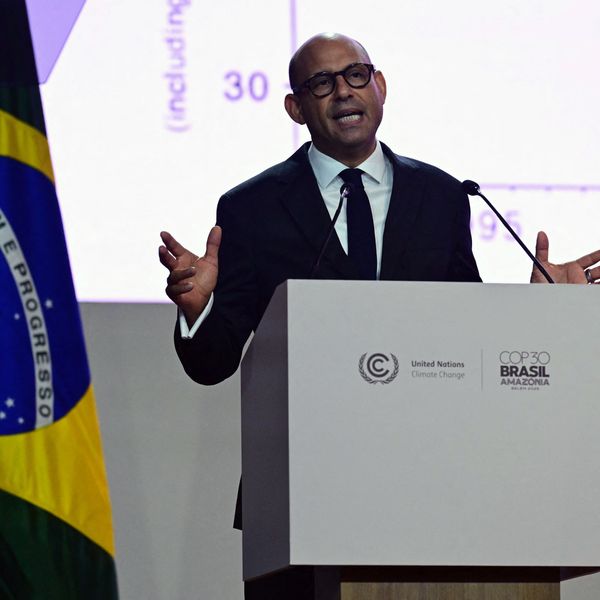
UN Climate Chief: Refusal to Halt Planetary Destruction Will ‘Never, Ever Be Forgiven’
Bees are far more than cute and charismatic; they are keystone species, pivotal in food production and ecology, especially as three-quarters of the world’s crops depend on pollinators like bees. When bees suffer, so do we. This sums up the importance of the Quechua saying, “Sumak Kawsay,” which means “a plentiful life, in harmony with nature,” and that’s why I’ve named my honey enterprise after it.
Where I live, our native bees are stingless and produce much smaller quantities of honey, which has been long used and valued by Indigenous communities for its medicinal properties.
As much as we need local, bottom-up initiatives, our governments and decision-makers must implement policies to address the negative impact of agrochemicals and their contribution to the climate crisis, loss of species and biodiversity, and adverse health effects.
This honey has been a powerful force in my own life. When I felt I had lost my path after studying engineering, an Indigenous healer fed me a spoonful of stingless bee honey at a ceremony. It was in that moment that I knew I had to work on restoring these bees and my mountain. I soon learned the fate of both is intrinsically connected.
Unlike the honeybees that came from Europe, these are especially adapted to pollinate endemic trees, plants, and crops. Without them, the extinction of our native species hangs in the balance—and farmers’ crops suffer.
But farming itself is driving their drastic decline: Forests have been cut down to make way for coffee, cassava, corn, and sugar monocultures—toppling the ancient, hollow grandfather trees in which they make their hives. Where there are fewer trees, there is less water, and my mountain has become desolate. As natural biodiversity that regulates pests disappears, farmers began to use pesticides to kill weeds and increase yields, damaging insect and plant life even more, including our native bees.
Research by the Center for Biological Diversity found that 40% of global pollinators are highly threatened due to intensive farming and pesticide use. In Latin America, 25% fewer bee species were reported in 2015 compared with 1990. This is a vicious cycle happening all over the world, especially in the Amazon, where COP30 is taking place.
Seven years since my realization, my enterprise works to protect native bees, restore their habitats, protect forests, and empower women. We’ve set up a honey social enterprise and pollination school, the “Women Guardians of the Native Bees” program, launched this year to empower 60 Quechua and peasant women through stingless beekeeping, encouraging local farmers and women to protect bees, collect their honey, and recognize the crucial role of pollinators in food production and nature restoration. The focus on bees is about much more than just the honey; it’s a gateway to a wider understanding of the natural world and the cycle of restoration, renewal, and preservation.
I run workshops with local farmers and communities to raise awareness about the dangers of pesticides and encourage learning of agroecological approaches to tackle pests instead of toxic chemicals. This is ancestral knowledge; our parents and grandparents have it, but we’ve lost it with the introduction of industrially produced agrochemicals. Instead, it’s about observing nature and re-instilling a curiosity about how beings interact—what pesticides do to habitats and ecology, and how introducing native species can have domino effects.
We teach them how to create habitats and nests for bees and how to collect their honey, treasured for its lower sugar content and medicinal properties. This bit is crucial. We buy their honey at a fair price if they commit to agroecological practices. These producers and farms now form the “La Ruta de la Miel de Abeja” (The Bee Honey Route) that we’ve built with local women who take tourists to connect with bees, nature, and communities.
The snowball effect is immense; it encourages farmers to stop using pesticides and restore the habitat for bees, generates income for women, and funds our mountain restoration. We have now planted more than 2,000 native trees and are preserving three species of stingless bees. We have a long way to go, but it is the rebirth of our mountain ecosystem.
It also proves that Sumak Kawsay—living in harmony with nature—is possible.
So when I am at COP30 in Belém, this is the message I will carry. I’ll do what I know best: use bees as a way to shine a light on the interconnecting challenges in food production and nature, deforestation, monoculture, and agrochemicals. We have Indigenous solutions available, like our pollination schools and honey cooperatives, but we need more resources to scale them up and empower farmers.
But as much as we need local, bottom-up initiatives, our governments and decision-makers must implement policies to address the negative impact of agrochemicals and their contribution to the climate crisis, loss of species and biodiversity, and adverse health effects. We need resources and support for food producers, farm workers, and communities to break the stranglehold of agrochemicals and shift to agroecology. It must be a Just Transition that provides us with the social and economic mechanisms to adapt to this change.
While I am at COP30, I will say enough is enough. We need to phase out toxic agrochemicals and restore the balance between people, food, climate, and nature.
Our work is licensed under Creative Commons (CC BY-NC-ND 3.0). Feel free to republish and share widely.
Ysabel A. Calderón Carlos
Ysabel is the founder of Sumak Kawsay and comes from Lambayeque, Peru.
Full Bio >
The Fossil Fuel Lobby Is Under Scrutiny at COP30
- The number of fossil fuel lobbyists at COP summits has been climbing each year, raising concerns over industry influence on global climate policy.
- Major oil and gas companies continue expanding production while participating in negotiations, prompting activists to demand bans, accountability, and stricter transparency rules.
- With COP30 underway in Belém, Brazil faces scrutiny over both the environmental impact of the conference and its transparency.
In recent years, a growing number of fossil fuel lobbyists have attended the annual United Nations COP climate summits. Previously, host country leaders and event organisers have justified the attendance of these lobbyists by saying that they play an integral role in supporting the green transition, and that their cooperation is needed to meet climate goals. However, with studies showing that not enough change is being made by fossil fuel companies to support the global green transition, many are questioning their right to attend the climate summits.
In 2024, at least 1,773 coal, oil, and gas lobbyists were given access to the UN climate talks in Baku, Azerbaijan. This raised concerns about the influence of the fossil fuel industry on negotiations. The situation was made worse when Elnur Soltanov, Azerbaijan’s deputy energy minister and the chief executive of COP29, was caught on camera agreeing to facilitate oil deals at the negotiations.
In 2023, a record 2,456 fossil fuel lobbyists attended COP28 in Dubai, making up around 3 percent of the 85,000 total attendees. Many fossil fuel lobbyists attended COP29 as part of trade associations, mainly from the global north, while others came with national delegations that brought energy company representatives from their respective states.
The annual COP summits aim to collectively address the climate crisis by making decisions on international climate policy and cooperation, assessing progress under the United Nations Framework Convention on Climate Change (UNFCCC), and negotiating actions to limit global warming.
However, a minimum of 5,368 fossil fuel lobbyists attended the UN climate talks between 2021 and 2024, representing 859 different fossil fuel organisations, including 180 oil and gas corporations. Just 90 of these oil and gas corporations produced 33,699 million bpd of oil and gas in 2024 alone, according to analysis of data from GOGEL 2025. This represents nearly 60 percent of global oil and gas production for the year, according to the analysis by Kick Big Polluters Out (KBPO). The same 90 firms also account for 63 percent of all short-term upstream fossil fuel exploration and production expansion projects, according to the Global Oil and Gas Exit List.
“Over the last three years, oil and gas companies that lobbied at COP have spent more than $35 billion each year looking for new oil and gas fields, exacerbating the problem the nations of the world had gathered to solve,” said KBPO partner Fiona Hauke of Urgewald. “These companies have defended their fossil interests by watering down climate action for years. As we head towards COP30, we demand transparency and accountability: Keep polluters out of climate talks and make them pay for a just energy transition.”
The findings have intensified calls for fossil fuel companies and other big polluters to be banned from the UN climate negotiations to encourage attendees to strengthen efforts to tackle climate change.
“This information clearly exposes corporate capture of the global climate process … the space that should be about science and the people has been transformed into a large carbon business hall,” said Adilson Vieira, a spokesperson for the Amazonian Work Group. “While forest communities fight for survival, the same companies that cause climate collapse buy credentials and political influence to continue expanding their fossil empires.”
Between 2021 and 2024, 37 lobbyists from Shell attended the climate summits, BP sent 36, ExxonMobil 32, and Chevron 20. Meanwhile, in the past five years, the four oil majors have made over $420 billion in combined profits.
Many of the countries most affected by climate change are already frustrated by the lack of meaningful action by the world’s wealthiest, most polluting countries to tackle the issue and accelerate a green transition. This is further compounded by the widespread access of fossil fuel lobbyists to negotiations.
However, some progress has been seen, and greater transparency is expected at this year’s conference. COP delegates this year are required to publicly disclose who is funding their participation, as well as confirm that their objectives align with the UNFCCC. However, the new requirement excludes anyone in official government delegations.
In a statement, a spokesperson for the UNFCCC agency stated, “The secretariat has taken concrete steps forward in 2023 and again this year to enhance the transparency of COP participants. Just as no single COP can be expected to solve the climate crisis overnight, further improvements is an ongoing journey which we will keep supporting, noting that national governments have sole authority to decide who is in their delegations.”
With COP30 underway in Belém, a city in the Brazilian Amazon, there is also significant controversy over the widespread environmental destruction required to hold the climate summit in such a location. Now, all eyes will be on the Brazilian delegation to uphold new transparency standards and ensure negotiations promote just climate action.
How Labour Plans to Make the U.K. a Clean Energy Superpower
- Labour has rapidly shifted U.K. energy policy toward renewables, setting aggressive targets for wind, solar, hydrogen, and storage by 2030.
- Starmer and Miliband argue that climate action will cut bills, drive investment, and strengthen the economy, countering criticism from fossil fuel interests.
- Ahead of COP30, the U.K. positions itself as a global leader in the green transition and seeks expanded private investment in clean energy.
Since the Labour Party came into power in the United Kingdom in July 2024, there has been a major change in the government’s approach to energy. The U.K. is now rapidly transitioning away from fossil fuels towards green alternatives, with ambitious climate goals set for the end of the decade and mid-century. Ahead of the COP30 climate summit in Brazil this month, Prime Minister Kier Starmer reaffirmed his commitment to creating a green economy, while the U.K. energy minister Ed Miliband said we must not give up on tackling global warming.
In 2019, the U.K. announced the target of net-zero carbon emissions by 2050. The government later outlined how it plans to achieve this goal in its 2025 Carbon Budget and Growth Delivery Plan.
Energy-related emissions contributed 81 percent of all U.K. emissions in 2023, which came from burning fossil fuels to generate electricity and heat for industry and buildings, as well as for transport. While energy supply and industry-related emissions have fallen 76 percent and 60 percent, respectively, since the 1990s, emissions from buildings and transport decreased modestly, by 33 percent and 15 percent, respectively. However, the government has set ambitious targets for its renewable energy capacity over the coming decade.
Wind power is the dominant source of renewable energy in the U.K., contributing 30 percent of the electricity supply in 2023. There is currently 15 GW of offshore wind capacity, which the government aims to increase to between 43 and 50 GW by 2030. It also aims to raise onshore wind capacity from 15 GW to between 27 and 29 GW, and solar power from 16 GW to between 45 and 47 GW by 2030. There are also ambitious plans to expand the country’s battery storage capacity, as well as the green hydrogen and sustainable fuels industries.
The Labour government has backtracked on the former Conservative government’s commitments to oil and gas in favour of clean energy sources since 2024, including renewable energy and nuclear power. While this has pleased environmentalists, the fossil fuel industry and other critics have said this rapid shift away from fossil fuels could harm the economy.
Ahead of the COP30 climate summit this month, Starmer vowed to tackle the climate crisis, saying that transitioning to a low-carbon economy will cut bills, improve economic growth, and bring national renewal. Starmer said, “Britain isn’t waiting to act – we’re leading the way, as we promised. Clean energy doesn’t just mean energy security, so Putin can’t put his boot on our throat: it means lower bills for working families in every part of the UK.”
The U.K. Prime Minister is expected to announce new investments in the low-carbon economy, directed at improving economic growth, as well as encourage greater investment in the U.K. market at COP30. Much like was seen in the United States in the Biden era, the U.K. green economy has been growing three times faster than other sectors, thanks to the government’s commitment to a green transition.
“Critics who say climate action cannot boost the economy are completely wrong,” said Starmer. “This government has already brought in £50 billion of investment in clean energy since the election, with more to come – delivering jobs and opportunities now, and for generations to come. That is national renewal.”
Meanwhile, this month, energy minister Ed Miliband spoke of the importance of tackling climate change. “We’re not going to give up, and the progress that we’ve already made should give us heart,” he said. “Giving up would be a total betrayal. Defeatism never took a single of a fraction of a degree of global warming. It never created a single job. It never did anything.”
As the international community falls behind on its aims to limit global warming, Miliband provided words of encouragement to the community, as well as to members of his party. “We’ve got to be the bearers of hope,” said Miliband. “We can fight back. Climate is a strength [in the battle against hard-right populism], not a weakness. We’re about giving a better future for people’s kids and grandkids.”
This perspective is supported by the significant change in international energy trends, with renewable energy attracting around double the global investment of fossil fuels. In addition, some of the world’s biggest carbon emitters, such as China and India, are investing heavily in the expansion of their renewable energy capacity.
In the U.K., Miliband has been vocal about the need to support a green transition to ensure the future of the country’s energy security and tackle climate change. When Labour came into power in July 2024, Miliband responded to the opposition by stating, “We will make tough decisions with ambition and urgency - all part of our plan to make the U.K. a clean energy superpower.”
The energy minister has since doubled down on decisions to develop several wide-scale renewable energy projects across the U.K. after years of delays under the Conservative government, making his stance on the green transition crystal clear.
Having introduced ambitious climate targets for the next decade and developed a roadmap to accomplish these goals, the U.K. is stepping into COP30 as one of the world’s renewable energy leaders. Starmer will likely seek out higher levels of private investment in U.K. green energy and cleantech from other world powers. However, to demonstrate the country’s dedication to the global battle against climate change, he must commit to supporting an international, and not just a domestic, green transition.
By Felicity Bradstock for Oilprice.com

A Breakout Year for E-Methanol
- The first commercial-scale e-methanol plants launched in Denmark and China in 2025, signaling a major shift from pilot projects to industrial production.
- Demand is booming across hard-to-abate sectors, especially shipping, where methanol-capable vessels and bunkering are rapidly expanding.
- Despite remaining cost challenges, a global project pipeline of up to 14 million tonnes by 2030 shows strong confidence in e-methanol’s future growth.
With COP30 now underway in Belém, Brazil, it can feel as though the world is backsliding when it comes to curbing emissions. Since the last climate summit, major oil companies have scaled back their climate goals, the U.S. has cancelled billions in clean-energy grants, and even Bill Gates has called for a new approach to countering climate change. But those headlines don’t reflect the inexorable progress that is being made across a variety of clean energy sectors, even if the rate of growth in some areas may be slowing.
Some of the most striking developments underway at the moment are in the “hard-to-abate” sectors where governments, industry, and climate advocates appear to find common purpose. One notable example of this progress is the rise of e-methanol, a clean fuel designed to help decarbonize the transportation and chemicals sectors. While it has been around for decades, 2025 was a breakout year for the technology as it finally transitioned from pilot schemes and small-scale projects to the first commercial plants coming online.
What Is E-Methanol?
E-methanol, a type of renewable or green methanol, is a low-carbon alternative to conventional methanol, which is used as a chemical feedstock and fuel. Instead of being derived from fossil fuels, e-methanol is synthesized from captured or biogenic carbon dioxide and green hydrogen (hydrogen produced via electrolysis using renewable energy). With these inputs, e-methanol can achieve net-zero or, in some cases, net-negative carbon emissions over its lifecycle. E-methanol is distinct from but similar to biomethanol, which produces its hydrogen directly from biomass.
As it is liquid at ambient temperature and compatible with existing storage and transport infrastructure, green methanol is seen as a practical route to decarbonize both the chemicals industry and transport segments that are difficult to electrify.
The shipping industry, in particular, has emerged as an early adopter of green methanol, with over 60 methanol-capable vessels in operation, 300 more on order, and bunkering available at around 20 ports around the world.
The chemicals sector, which makes up roughly 70% of global methanol consumption, is a major demand source for green methanol. Roughly 35% of green methanol was consumed by the chemical and petrochemical industry in 2024, and major brand-name buyers include LEGO, Novo Nordisk, and SABIC. More than 70 of the world's top 100 chemicals producers have committed to carbon neutrality by 2050, highlighting the growth potential in the green methanol space.
In aviation, synthetic methanol can technically serve as a precursor for sustainable aviation fuels (SAF), with companies such as ExxonMobil working on the technology. While the space is largely dominated by biofuels, methanol-to-jet represents a promising future market for e-methanol once it scales up.
The E-Methanol Breakthrough
While e-methanol has been pursued as an alternative fuel since the 1970s energy crisis and saw several pilot projects in the early 2000s, it wasn’t until the 2020s that it began to be considered as a credible clean energy solution.
Perhaps the first major breakthrough for the fuel came in November 2021 when Maersk issued a 10-year, €500 million green bond to fund vessels capable of using methanol. This move came on the back of the IMO 2020 sulfur cap coming into effect, which limited the sulphur content in the fuel oil used on board ships.
Over the next couple of years, regulation and funding milestones helped to accelerate the rise of e-methanol. In 2022, the U.S. Inflation Reduction Act was passed and included credits for both green hydrogen production and carbon capture. In 2023, the IMO tightened carbon-intensity regulations and revised its net-zero goals to accelerate the adoption of low-carbon fuels. At the same time, the EU implemented major reforms to its Emissions Trading System under the Fit for 55 package, increasing the pressure on the chemicals sector to shift toward greener feedstocks such as green methanol. Then, in 2024 and 2025, the EU further tightened regulations on ships arriving at European ports and strengthened carbon-pricing rules.
In this period, the world’s first methanol-enabled container vessel was christened, and Maersk formally ordered six more mid-sized dual-fuel methanol vessels. The future for e-methanol was looking increasingly bright, but financing and bringing sufficient supply online remained a major limitation.
The World’s First Commercial-Scale E-Methanol Plants
On Tuesday, the 13th of May, 2025, the world’s first commercial-scale e-methanol site began operations in Kassø, Denmark. The plant has a capacity of 42,000 tonnes per year of e-methanol, and its off-takers include Maersk, LEGO, and pharmaceutical firm Novo Nordisk. The project uses solar power from a neighbouring solar park for electrolysis and sources biogenic CO? from a local biogas plant.
Just two months later, a second e-methanol plant came online, this time in China. The project at Taonan, Jilin Province, built by Shanghai Electric, uses wind power for electrolysis and biomass conversion to produce e-methanol. This first phase of the project has a capacity of 50,000 tonnes per year of e-methanol, but its second phase is expected to boost that capacity up to 250,000 tonnes annually.
And those two projects are only the beginning.
3 Green Methanol Projects to Watch
Going forward, the project pipeline in this space is remarkable, with the Methanol Institute projecting that the world’s total renewable methanol capacity will climb to between 7 and 14 million tonnes by 2030. Of the e-methanol projects the institute is tracking, 23 have now passed feasibility and are either in the engineering phase or are already under construction. Of those projects, five are in the Americas, eight are in Europe, one is in Saudi Arabia, and nine are in Asia.
In China, the Liaoyuan Tianying project, which is currently under construction and projected to come online in 2026, is set to be the world’s largest green methanol plant with a capacity of 170,000 tonnes per year. The project is being developed by CNTY with Iceland’s CRI as the tech provider. It will use a combination of wind and solar for electrolysis and then combine the resultant hydrogen with biogenic CO2 from the direct combustion of biomass.
In Spain, the La Robla Green project is set to come online in 2028 with a capacity of 140,000 tonnes. As well as claiming to be Europe’s largest e-methanol plant, La Robla is unique for its integrated design, which includes both a biomass plant and a green hydrogen unit on site. The biomass plant, which will be run by Tresca Ingeniería using DP Cleantech technology, is set to be the world’s first green biomass plant with a negative carbon footprint. Meanwhile, the green hydrogen unit is set to be operated by Siemens Energy, and the e-methanol technology will be supplied by Johnson Matthey.
In Canada, StormFisher’s recent acquisition of the Varennes Carbon Recycling plant has set the stage for North America’s first large-scale e-methanol plant. The company will capture carbon from local emitters and produce hydrogen from hydropower for a total capacity of 72,000 tonnes of methanol per year. The acquisition of a struggling waste-biofuels project and its pivot to producing e-methanol marks a strong signal of confidence in the space. The plant, which is currently under construction, is slated to come online in 2028.
Headwinds Remain
Despite the excitement and progress in the green methanol space, there is still a long way to go before the green methanol movement truly becomes mainstream. To begin with, green methanol is still far from cost-competitive compared to fossil-fuel-derived sources. While prices are dropping, e-methanol was still two to three times the price of its fossil counterpart as of 2024, although those prices are expected to tumble as the industry scales. Furthermore, regulations like those implemented by the EU are increasing the cost of burning oil-based fuels.
As well as overcoming difficult economics, the broader clean investment environment has seen energy majors pulling back or altering commitments in the sector. Most damningly, Orsted scrapped its FlagshipONE project in 2024 due to slower-than-expected demand growth. Its partner in that project, however, has since picked it back up and is also committed not only to a FlagshipTWO project but last month announced the commercialization of its FlagshipTHREE project.
Just as with the broader energy transition, there may be doubts regarding the pace of development, but it seems the e-methanol sector is only going to grow from here.
By Josh Owens for Oilprice.com

No comments:
Post a Comment