Ukrainian opposition party Holos calls for vote of no-confidence in the government over Energoatom corruption scandal
The leader of Ukraine’s Holos (Voice) liberal opposition party, Kira Rudik, has called for a vote of no-confidence in the government, as the Energoatom corruption scandal continues to gather momentum.
Holos is a pro-European, anti-corruption party established in 2019. In an interview with France24, Rudik expressed frustration with the government’s performance after Timur Mindich, a close associate of Ukrainian President Volodymyr Zelenskiy, was accused of stealing $100mn in a kickback scheme, by the National Anti-Corruption Bureau of Ukraine (NABU).
“It is unacceptable to have this kind of corruption in the government in the time of war,” she said. “It is impossible to have elections, but we are calling for a vote of no confidence in the government.”
Holos, once part of governing coalitions, finds itself in increasing opposition to what it describes as inertia and corruption at the heart of the state.
The push for a no-confidence vote comes amid mounting pressure on the Zelenskyy administration, and follows on from the first anti-government demonstrations after the government tried to gut the anti-corruption reforms with the controversial Law 12414 on July 22.
Zelenskiy’s ruling Servant of the People party continues to enjoy wartime dominance but faces growing internal dissent. Analysts say the demand for parliamentary scrutiny reflects deeper concerns about transparency, reform and accountability.
As bne IntelliNews reported, the press coverage of Ukraine has been turning increasingly negative in recent months as Ukraine fatigue continues to build. Zelenskiy’s image was badly tarnished by Law 12414, but it has taken a much bigger hit with the Energoatom scandal. Several international outlets have criticised Zelenskiy's growing authoritarian tendencies.
Rudik’s stance suggests Ukraine’s democratic institutions are undergoing their own stress test. Zelenskiy was already in damage control mode over the weekend, announcing a major reform and audit of the energy sector, but it remains to be seen if his initiatives will be about to placate public disillusionment with his performance.
Should a vote of no-confidence proceed, the outcome remains uncertain. With martial law still in place, fresh elections are not permitted so a successful vote will remain largely symbolic. However, it will further weigh on Ukraine’s fading drive to rally supporters to provide Kyiv with tens of billions of euros of additional aid and increase sanctions on Russia.
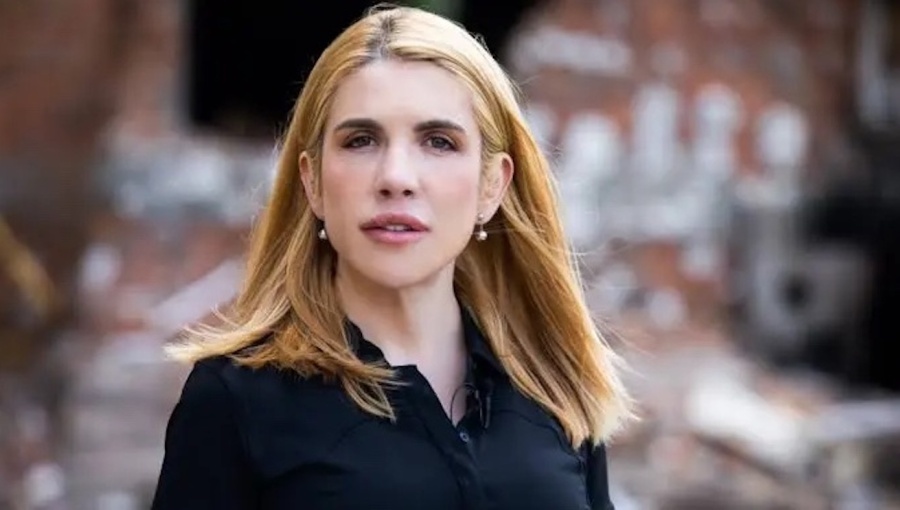
The leader of Ukraine’s Holos (Voice) liberal opposition party, Kira Rudik, has called for a vote of no-confidence in the government, as the Energoatom corruption scandal continues to gather momentum.
Holos is a pro-European, anti-corruption party established in 2019. In an interview with France24, Rudik expressed frustration with the government’s performance after Timur Mindich, a close associate of Ukrainian President Volodymyr Zelenskiy, was accused of stealing $100mn in a kickback scheme, by the National Anti-Corruption Bureau of Ukraine (NABU).
“It is unacceptable to have this kind of corruption in the government in the time of war,” she said. “It is impossible to have elections, but we are calling for a vote of no confidence in the government.”
Holos, once part of governing coalitions, finds itself in increasing opposition to what it describes as inertia and corruption at the heart of the state.
The push for a no-confidence vote comes amid mounting pressure on the Zelenskyy administration, and follows on from the first anti-government demonstrations after the government tried to gut the anti-corruption reforms with the controversial Law 12414 on July 22.
Zelenskiy’s ruling Servant of the People party continues to enjoy wartime dominance but faces growing internal dissent. Analysts say the demand for parliamentary scrutiny reflects deeper concerns about transparency, reform and accountability.
As bne IntelliNews reported, the press coverage of Ukraine has been turning increasingly negative in recent months as Ukraine fatigue continues to build. Zelenskiy’s image was badly tarnished by Law 12414, but it has taken a much bigger hit with the Energoatom scandal. Several international outlets have criticised Zelenskiy's growing authoritarian tendencies.
Rudik’s stance suggests Ukraine’s democratic institutions are undergoing their own stress test. Zelenskiy was already in damage control mode over the weekend, announcing a major reform and audit of the energy sector, but it remains to be seen if his initiatives will be about to placate public disillusionment with his performance.
Should a vote of no-confidence proceed, the outcome remains uncertain. With martial law still in place, fresh elections are not permitted so a successful vote will remain largely symbolic. However, it will further weigh on Ukraine’s fading drive to rally supporters to provide Kyiv with tens of billions of euros of additional aid and increase sanctions on Russia.
Ukraine’s Energoatom corruption stole money to protect Ukraine’s power stations, caused blackouts
A Russian missile barrage has plunged Ukraine into darkness as winter approaches but could have been avoided. Money earmarked to build effective defences against Russia’s sustained missile attacks was stolen, leaving them defenceless, Euromaidan Press reports.
Kyiv residents are facing 12-16 hour blackouts after some of the most massive drone and missile attacks of the war in the last week that are targeting the surviving non-nuclear power stations and distribution infrastructure.
However, Bankova (Ukraine’s equivalent of the Kremlin) launched a programme to protect its energy assets with defences that, where they were built, proved to be effective. However, after more than $100mn was siphoned off in the Energoatom kickback scheme exposed by National Anti-Corruption Bureau of Ukraine (NABU) on November 10, orchestrated by Ukrainian President Volodymyr Zelenskiy’s former business partner and good friend, Timur Mindich, money earmarked to build more defences was stolen and those defences at dozens of facilities were never built. That left power plants and infrastructure across the country vulnerable to the Russian attacks, which have now been put out of action just before the winter snows arrive.
The scandal will badly affect Western donor sentiment as following the start of the campaign to take out power plants started last year, Ukraine’s supporters have rushed hundreds of millions of dollars to Kyiv to rebuild or repair generation capacity. Now they are discovering that a large share of this money ended up in the pocket of powerful businessmen close to the president.
In summer 2023 after Russia launched its campaign to take out Ukraine’s power stations, authorities identified several hundred critical infrastructure objects requiring protection—not just those belonging to the state-owned utility company Ukrenergo substations, but power plants, gas infrastructure, and other essential facilities.
Under former Ukrenergo chief Volodymyr Kudrytskyi, the head of the state-owned power company secured €1.5bn in Western aid over 18 months to build concrete shelters to defend Ukrenergo’s critical transformers – the largest recipient of Western aid after the state itself.
“Under Kudrytskyi's leadership, Ukrenergo partnered with the government's Agency for Restoration and Development of Infrastructure to construct approximately 60 anti-drone shelters for critical transformers by September 2024. These massive concrete structures—up to 25 metres tall—were designed specifically to withstand mass Iranian Shahed drone strikes,” Euromaidan Press reports.
They were tested by Russian attacks and nearly all survived repeated Russian missile and drone strikes. According to the Verkhovna Rada's temporary investigative commission, of 74 protected objects built by Ukrenergo and the Agency, only one autotransformer was destroyed by a direct hit from a heavy missile.
The programme was supposed to be extended to cover more critical distribution infrastructure belonging to the state-owned nuclear power utility Energoatom, but the money to pay for the work disappeared, Euromaidan Press reports.
When Kudrytskyi pushed back against the corruption, publicly criticising then Energy Minister Herman Halushchenko for failing to implement the infrastructure protection plan, he found himself under investigation for fraud by the authorities for a fence project that never happened, according to Euromaidan Press. He was sacked in September 2024.
“The political prosecution triggered a predictable response: Western donors withdrew, international funding collapsed to 5-10% of previous levels, and critical infrastructure went unprotected,” the publication reports.
The end of the defence programme proved to be especially catastrophic for Energoatom, where defence works had yet to begin leaving substations and thermal plants unprotected, which became easy pretty for Russian missiles.
Oleksandr Kharchenko, director of the Energy Industry Research Center, told Suspilne that this loss of international backing is directly responsible for the severity of current blackouts that should have been largely avoidable.
“Current blackouts stem from this dual institutional failure: corruption preventing infrastructure protection, political vendetta destroying donor confidence. Ukraine built the solution, proved it worked, then officials chose kickbacks over replication—and prosecuted the executive who delivered results,” Euromaidan reports.
At a time when Western aid to fund the reconstruction of the battered power sector is crucial to get Ukraine through its freezing winters, international aid for Ukrenergo dropped to just 5-10% of previous levels after Kudrytskyi's dismissal.
Investigators identified businessman Mindich as the principal coordinator of the Energoatom kickback scheme, but now Justice Minister and then Energy Minister Halushchenko was also a central figure, appearing in NABU’s recordings under the codename "Professor."
Zelenskiy demanded Halushchenko's resignation days after the scandal broke, but he remains at liberty and no formal charges have been brought against him yet. Zelenskiy is already receiving flak from critics for protecting members of his inner circle in the face of overwhelming evidence of wrongdoing.
Kudrytskyi's dismissal from Ukrenergo triggered a financial crisis at the company. The company Ukrenergo failed to include its Eurobonds in a restructuring deal coordinated with Ukraine's sovereign debt restructuring, pushing the company into technical default. Now the company is cut off from the international capital markets and will be unable to raise fresh capital should access to those markets reopen

A Russian missile barrage has plunged Ukraine into darkness as winter approaches but could have been avoided. Money earmarked to build effective defences against Russia’s sustained missile attacks was stolen, leaving them defenceless, Euromaidan Press reports.
Kyiv residents are facing 12-16 hour blackouts after some of the most massive drone and missile attacks of the war in the last week that are targeting the surviving non-nuclear power stations and distribution infrastructure.
However, Bankova (Ukraine’s equivalent of the Kremlin) launched a programme to protect its energy assets with defences that, where they were built, proved to be effective. However, after more than $100mn was siphoned off in the Energoatom kickback scheme exposed by National Anti-Corruption Bureau of Ukraine (NABU) on November 10, orchestrated by Ukrainian President Volodymyr Zelenskiy’s former business partner and good friend, Timur Mindich, money earmarked to build more defences was stolen and those defences at dozens of facilities were never built. That left power plants and infrastructure across the country vulnerable to the Russian attacks, which have now been put out of action just before the winter snows arrive.
The scandal will badly affect Western donor sentiment as following the start of the campaign to take out power plants started last year, Ukraine’s supporters have rushed hundreds of millions of dollars to Kyiv to rebuild or repair generation capacity. Now they are discovering that a large share of this money ended up in the pocket of powerful businessmen close to the president.
In summer 2023 after Russia launched its campaign to take out Ukraine’s power stations, authorities identified several hundred critical infrastructure objects requiring protection—not just those belonging to the state-owned utility company Ukrenergo substations, but power plants, gas infrastructure, and other essential facilities.
Under former Ukrenergo chief Volodymyr Kudrytskyi, the head of the state-owned power company secured €1.5bn in Western aid over 18 months to build concrete shelters to defend Ukrenergo’s critical transformers – the largest recipient of Western aid after the state itself.
“Under Kudrytskyi's leadership, Ukrenergo partnered with the government's Agency for Restoration and Development of Infrastructure to construct approximately 60 anti-drone shelters for critical transformers by September 2024. These massive concrete structures—up to 25 metres tall—were designed specifically to withstand mass Iranian Shahed drone strikes,” Euromaidan Press reports.
They were tested by Russian attacks and nearly all survived repeated Russian missile and drone strikes. According to the Verkhovna Rada's temporary investigative commission, of 74 protected objects built by Ukrenergo and the Agency, only one autotransformer was destroyed by a direct hit from a heavy missile.
The programme was supposed to be extended to cover more critical distribution infrastructure belonging to the state-owned nuclear power utility Energoatom, but the money to pay for the work disappeared, Euromaidan Press reports.
When Kudrytskyi pushed back against the corruption, publicly criticising then Energy Minister Herman Halushchenko for failing to implement the infrastructure protection plan, he found himself under investigation for fraud by the authorities for a fence project that never happened, according to Euromaidan Press. He was sacked in September 2024.
“The political prosecution triggered a predictable response: Western donors withdrew, international funding collapsed to 5-10% of previous levels, and critical infrastructure went unprotected,” the publication reports.
The end of the defence programme proved to be especially catastrophic for Energoatom, where defence works had yet to begin leaving substations and thermal plants unprotected, which became easy pretty for Russian missiles.
Oleksandr Kharchenko, director of the Energy Industry Research Center, told Suspilne that this loss of international backing is directly responsible for the severity of current blackouts that should have been largely avoidable.
“Current blackouts stem from this dual institutional failure: corruption preventing infrastructure protection, political vendetta destroying donor confidence. Ukraine built the solution, proved it worked, then officials chose kickbacks over replication—and prosecuted the executive who delivered results,” Euromaidan reports.
At a time when Western aid to fund the reconstruction of the battered power sector is crucial to get Ukraine through its freezing winters, international aid for Ukrenergo dropped to just 5-10% of previous levels after Kudrytskyi's dismissal.
Investigators identified businessman Mindich as the principal coordinator of the Energoatom kickback scheme, but now Justice Minister and then Energy Minister Halushchenko was also a central figure, appearing in NABU’s recordings under the codename "Professor."
Zelenskiy demanded Halushchenko's resignation days after the scandal broke, but he remains at liberty and no formal charges have been brought against him yet. Zelenskiy is already receiving flak from critics for protecting members of his inner circle in the face of overwhelming evidence of wrongdoing.
Kudrytskyi's dismissal from Ukrenergo triggered a financial crisis at the company. The company Ukrenergo failed to include its Eurobonds in a restructuring deal coordinated with Ukraine's sovereign debt restructuring, pushing the company into technical default. Now the company is cut off from the international capital markets and will be unable to raise fresh capital should access to those markets reopen
Ukraine's Energoatom scandal escalates as Zelenskiy dithers on implementing a strong response
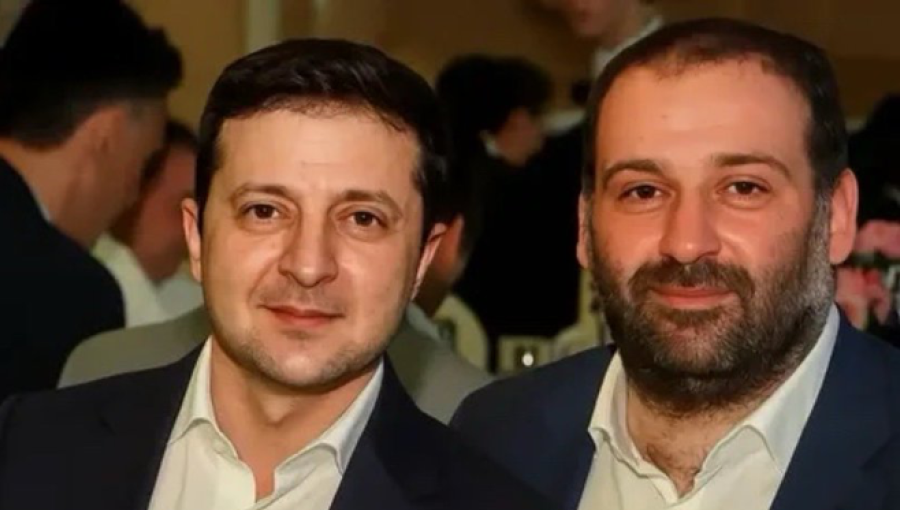
The Operation Midas scandal involving close associates of Ukrainian President Volodymyr Zelenskiy and senior Ukrainian officials in a $100mn kickback scandal continues to expand as more officials get drawn into the net that threatens to bring the government down.
On the one hand the investigation launched by Ukraine’s anti-corruption bodies – National Anti-Corruption Bureau of Ukraine (NABU) and Specialized Anti-Corruption Prosecutor’s Office (SAPO) – is a positive sign as it underscores the strength of Ukraine’s civil society. On the other it also emphasises the depth of corruption in Ukraine where those responsible for leading the country in a time of war plunder tens of millions of dollars for their personal gain.
Zelenskiy is facing his biggest test since taking office six years ago and how he chooses to respond to the crisis will be an acid test that could determine the future of the country and its prospects for staying in the war against Russia.
Snapshot of the main players:
Friends / Business Associates
- Tymur Mindich — Businessman, co-owner of Kvartal 95 Studio, close associate of President Volodymyr Zelenskiy; alleged mastermind of the scheme. Sanctioned by Zelenskiy but has fled the country; call sign “Karlsson”.
- Oleksandr Tsukerman — Businessman, headed a money-laundering “back-office” used by the scheme; call sign “Sugarman”. Sanctioned by Zelenskiy but has fled the country.
Ministers / Political Officials
- Herman Halushchenko — Former Minister of Energy (2021-2025) and later Justice Minister; appears in the audio tapes under call sign “Professor”. Has resigned from office.
- Svitlana Hrynchuk — Minister of Energy from July 17, 2025 to November 12, 2025. Has resigned from office.
- Oleksiy Chernyshov — Former Deputy Prime Minister of Ukraine; charged with illicit enrichment in connection with the scheme; call sign “Che Guevara”. Placed into pre-trial detention in connection with the Operation Midas probe.
State Officials / Company Executives / Others
- Ihor Myroniuk — Former adviser to the Energy Minister (and former deputy head of the State Property Fund); call sign “Rocket”. Placed into pre-trial detention in connection with the Operation Midas probe.
- Dmytro Basov — Former Executive Director of Security at Energoatom; call sign “Tenor”. Placed into pre-trial detention in connection with the Operation Midas probe.
Other implicated:
- Volodymyr Zelenskiy — the president’s name and voice appears in NABU tapes, but there is no conclusive evidence linking him to the scandal yet.
- Andriy Yermak— head of Ukraine’s presidential office, has been indirectly linked to the scandal, but no concrete evidence has been presented yet. He left the country as the scandal broke for a working trip to Turkey that was extended with a trip to Qatar where he remains for now.
Mindich arrest?
Zelenskiy revoked the Ukrainian citizenship of the two key figures in the scandal Mindich and Tsukerman, who had both fled to Israel right before NABU raid, and also imposed sanctions for three years. Mindich’s escape was so complete that he left his front door open for the investigators to spare the locks, local media report. Zelenskiy celebrated his birthday in the same apartment in 2021 in defiance of Covid restrictions. Mindich had a second apartment on the fourteenth floor of the same building where the now famous golden toilet is located. Israel does not extradite its citizens to any country irrespective of their crimes.
Ousted president Viktor Yanukovych also had a golden toilet at this residence, as does Turkish President Recep Tayyip Erdogan, according to reports.
“[Mindich] controlled the work of the so-called ‘laundry room’, where criminally-obtained funds were laundered,” Ukraine’s National Anti-Corruption Bureau (Nabu) said last week.
Ukrainska Pravda reports that both NABU and SAPO began to get threats of “retribution” only hours after the raids occurred. Following Zelenskiy failed attempt to put both anticorruption bodies under the direct control of the General Prospector, a presidential appointee, with the Law 12414 on July 22, the Ukrainian Security Service (SBU), also under the control of the president, has been harassing the staff of both organs, and specifically targeting those working on the Operation Midas investigation, according to local reports.
Critics have said the decision was designed to look tough, but actually dodged the bullet. Arrest warrants have not been issued for either man, despite their obvious central role in the kickback scheme and copious evidence of their guilt.
“By the looks of it, the president can't really avoid jailing three of his friends – in line with Lee Kuan Yew's dictum – if he is to maintain any claim of effective governance,” Ukrainska Pravda said in deep dive into the scandal, but that has not happened yet.
On the positive side, supporters have pointed out that an investigation of this importance and scale would be impossible in somewhere like Russia and underscores the vibrancy of Ukraine’s civil society that appeared following two sets of popular so-called coloured revolutions that is effectively holding the president to account.
By revoking their citizenship, Zelenskiy has put both men beyond the reach of Ukrainian law. Moreover, while the sanctions will make doing business or retrieving any assets they still have in Ukraine, such as property, the three-year term of the sanctions allows them to return to Ukraine after the scandal has blown over.
Further revelations are now widely expected as the scandal mushrooms, the worst political crisis Zelenskiy has faced since taking office in 2019.
Sanctions
Zelenskiy has been criticised for not asking for arrest warrants and choosing lesser responses that may not satisfy public demand for firm action in the face of a mushrooming scandal.
Serhiy Fursa, a Ukrainian investment banker and political commentator, wrote last week: “We cannot afford for the Ukrainian president, for the Ukrainian government, to lose its remnants of legitimacy during the war. Otherwise, we risk losing the state in the same way as during the first world war, when desertion at the front came on top of mass despair and political discord,” the Financial Times reported.
Zelenskiy enacted a decision by the National Security and Defence Council (NSDC) to impose sanctions against businessmen for three years, according to Presidential Decree No. 843/2025 dated November 13. The sanctions against Mindich and Tsukerman include:
- Deprivation of state awards of Ukraine and other honours;
- Asset blocking – temporary deprivation of the right to use or dispose of assets belonging to the individuals or entities concerned, as well as any assets over which they may directly or indirectly (through other individuals or legal entities) exercise rights equivalent to ownership;
- Complete cessation of trade operations;
- Full suspension of resource transit, flights and transport through Ukrainian territory;
- Prevention of capital withdrawal from Ukraine;
- Suspension of the performance of economic and financial obligations;
- Complete termination of licences and other permits;
- Prohibition on participation in privatisation or leasing of state property by residents of foreign states or entities controlled by them;
- Prohibition on the use of Ukraine's radio-frequency spectrum;
- Full suspension of the provision of electronic communication services and use of electronic networks;
- Ban on public and defence procurement of goods, works, and services from legal entities;
- Complete ban on entry of foreign non-military and military vessels into Ukrainian territorial waters, internal waters, ports, and aircraft into Ukrainian airspace or landing on its territory;
- Full ban on transactions involving securities issued by sanctioned persons;
- Prohibition on increasing the authorised capital of companies and businesses;
- Introduction of additional measures in the areas of environmental, sanitary, phytosanitary, and veterinary control;
- Suspension of trade agreements, joint projects, and industrial programmes in specific sectors, including security and defence;
- Ban on the transfer of technologies and intellectual property rights;
- Prohibition on the acquisition of land ownership in Ukraine.
Zelenskiy damage control
The president is now in full damage control mode. Zelenskiy launched a broad shakeup of its state-owned energy companies to tighten governance and restore confidence in a sector.
“This morning, we already held an online meeting with Prime Minister of Ukraine Yuliia Svyrydenko regarding further decisions to clean up and reboot the management of the energy sector and the institutions related to it,” Zelenskiy said.
“We are beginning the overhaul of key state-owned enterprises in the energy sector. Alongside a full audit of their financial activities, the management of these companies is to be renewed. Today, together with Prime Minister Yuliia Svyrydenko and Minister of Economy Oleksii Sobolev, we defined the course of action,” Zelenskiy said.
The first priority is Energoatom, where Zelenskiy demanded that all conditions be set within a week to form a new supervisory board and prepare for a complete renewal of the management board.
At the state-owned hydropower utility, Ukrhidroenergo, the president ordered an urgent open competition for a new chief executive and the completion of its supervisory board. Similar steps were directed for the Gas Transmission System Operator of Ukraine (GTSOU), where both a new CEO competition and finalisation of the supervisory board must begin immediately, the president demanded.
The reforms also extend to Naftogaz, Ukraine’s largest oil and gas company. “Naftogaz of Ukraine – as the current supervisory board's contracts expire in January next year, a competition must be announced and conducted for the new board so that it can start operating in January 2026,” he added.
Going into detail, the president listed five key tasks:
• Instructed the Cabinet of Ministers to submit an urgent draft law to the Verkhovna Rada on renewing the composition of the National Energy and Utilities Regulatory Commission.
• Announced the renewal of the leadership of the State Nuclear Regulatory Inspectorate and the State Energy Supervision Inspectorate.
• Directed the Prime Minister to submit a nomination to the Verkhovna Rada for the new Head of the State Property Fund of Ukraine.
• Ordered full coordination with law-enforcement and anti-corruption bodies to renew the Asset Recovery and Management Agency (ARMA) and complete the competition for a new Head of ARMA by year-end.
• Called for a prompt audit and preparation for sale of assets and shares owned by Russian entities or collaborators who fled to Russia, ensuring all such assets are used fully in Ukraine’s interests — supporting defence and contributing to the state budget.
It remains to be seen if these measures will be about to head off the palpable popular disappointment with Zelenskiy. There have already been calls for his resignation over the fracas by his political opponents, but the majority of Ukraine appear to be reluctant to demonstrate and demand a new government while the war is still going on, according to local reports.
SAPO leaks
In the expanding investigation, Ukrainian anti-corruption officials launched a new investigation of possible leaks in the Mindich case, according to the top prosecutor. Mindich skipped the country only hours before NABU raided his home, suggesting that he was tipped off.
Ukraine's Special Anti-Corruption Prosecutor's Office (SAPO) is investigating allegations that its deputy head, Andriy Synyuk, leaked information, according to Ukraine's chief anti-corruption prosecutor Oleksandr Klymenko. The leaks occurred in the two weeks leading up to the November 10 searches at Mindich’s home and office, Ukrainska Pravda reports. An internal probe is under way and a criminal case into the allegations is possible.
NABU has video footage of Synyuk meeting with Oleksiy Meniv, a lawyer who visited Mindich's apartment building in the same two week period. Synyuk has denied leaking any information and said he was friends with Meniv. Synyuk also said that Meniv's former wife and children live in the same house as Mindich.
Backlash
The scandal comes at a very inopportune time for Ukraine, as Brussels attempts to rally its member states to back a €140bn loan for Ukraine, using the frozen $300bn of Central Bank of Russia (CBR) assets as a Reparation Loan. One vote to seize the money, the only money available to fund Ukraine given America’s withdrawal and the rocky state of most European countries, already failed in November and a second vote in December is expected to also fail. In a sign that Brussels doesn’t expect the Reparation Loans idea to fail, European Commission President Ursula von der Leyen floated the idea of an alternative plan for EU member states to extend bridge loans to Ukraine from their own pockets to tide Bankova over in the first part of 2026, Politico reports. Separately, the publication reported that Ukraine will run out of money in April if no new money is found.
Estonia’s former president and ardent Ukraine supporter Toomas Ilves came out unequivocally to call on Kyiv to issue an EU-wide arrest warrant for Mindich as the only acceptable course of action – something that Zelenskiy has avoided doing so far. In a post on X, Ilves said that only Ukraine can initiate the warrant and stressed that doing so is essential if Kyiv hopes to maintain its prospects for joining the European Union, The Kyiv Post reports.
“If Ukraine wishes to have any chance to join the EU it needs immediately to issue an EU wide arrest warrant for Timur Mindich, the man accused of embezzling 100 million Euro and who fled the country just before being arrested. Only Ukraine can issue it,” Ilves said.
The scandal has also been a gift for Europe’s leaders that have long opposed extending more funding to Ukraine.
Hungarian Prime Minister Viktor Orban said in a social media post after the scandal broke: “The golden illusion of Ukraine is falling apart. A wartime mafia network with countless ties to President
@ZelenskiyUa has been exposed. The energy minister has already resigned, and the main suspect has fled the country.”
“This is the chaos into which the Brusselian elite want to pour European taxpayers’ money, where whatever isn’t shot off on the front lines ends up in the pockets of the war mafia. Madness,” he added. “Thank you, but we want no part of this. We will not send the Hungarian people’s money to Ukraine. It can be put to far better use at home: this week alone we doubled foster parents’ allowances and approved the 14th month’s pension.”
Domestically, claims that Zelenskiy is implicated have led to calls by his opponents to step down. Former MP and member of the ruling presidential party Servant of the People Oleksandr Dubinskyi tweeted: “It's obvious, it’s time to call for Zelensky’s impeachment over wartime plundering. The evidence is clear - he’s been stealing from the country in its darkest hour. He must resign.”
However, Dubinskyi is currently in jail on corruption charges and for traitorous Russia-links. But he is also a close associate of the jailed oligarch Ihor Kolomoisky, who funded Zelenskiy presidential campaign. Dubinskyi’s comments highlight the danger of a major political crisis should Zelenskiy be forced to resign and the fractions that would line up to replace him should he fall. Kolomoisky himself blamed Zelenskiy for the scandal and also called for his resignation.
"He’s an idiot, damn it. What kind of mafia boss could he possibly be?" Kolomoisky told journalists in the courtroom during a hearing about his former business partner Mindich. Kolomoisky suggested that the corruption scheme was orchestrated inside the President’s Office and Mindich was made the “fall guy.”

No comments:
Post a Comment