Yuchen Li in Taipei
DW
08/01/2026
Beijing is "deeply shocked" by the Trump administration's attack on Venezuela, one of China's key partners in Latin America. At the same time, China could find ways to use the kidnapping of Maduro for its own agenda.

China has extended billions in loans to Venezuela and became its biggest oil buyer due to Western sanctions (file photo)Image: Parker Song/dpa/picture alliance
Hours after the US's controversial seizure of Venezuela's Nicolas Maduro this weekend, China's Foreign Ministry stated Beijing was "deeply shocked" by the "blatant use of force against a sovereign state."
The Asian nation also appealed to Latin American and Caribbean countries, calling them "good friends and good partners" and assuring that Beijing was willing to work with them and "navigate the changing international landscape with solidarity and coordination."
While criticizing the United States for attacking Venezuela, Chinese diplomats have also sought to portray their own country as a responsible global power.
Those remarks are likely to resonate strongly across Latin America. With US President Donald Trump reviving the Monroe Doctrine — a foreign policy stance first articulated over 200 years ago about Washington's supremacy in the Western Hemisphere — the kidnapping of Maduro is seen as a grim warning and a demonstration of US power in the region.
William Yang, a senior Northeast Asia analyst at the International Crisis Group think tank, said Beijing is likely to tap into such concerns to challenge US international standing and to "further deepen its influence among countries across the Global South."
China will also "closely monitor how the US handles the situation in Venezuela in the coming weeks and months," Yang added.
Broken ties with Caracas
Trump's swift seizure of Maduro, the leader of a key Chinese ally in Latin America, could significantly impact the world's second-largest economy.
Under Maduro, China formed an "all‑weather strategic partnership" with Venezuela and became the country's largest oil buyer after the US sanctions escalated in 2019.
China has also sold weapons to Venezuela — with deliveries worth $615 million (€526 million) just between 2009 and 2019, according to a US estimate. Perhaps most significantly for China, its officials have provided billions in credit to Venezuela, and Caracas is nowhere near paying off its debt.
US-based think tank AidData puts the total Chinese lending to Venezuela at $105.5 billion, which includes $17 billion to $19 billion in outstanding principal from China Development Bank's oil-for-loans program.
Hours after the US's controversial seizure of Venezuela's Nicolas Maduro this weekend, China's Foreign Ministry stated Beijing was "deeply shocked" by the "blatant use of force against a sovereign state."
The Asian nation also appealed to Latin American and Caribbean countries, calling them "good friends and good partners" and assuring that Beijing was willing to work with them and "navigate the changing international landscape with solidarity and coordination."
While criticizing the United States for attacking Venezuela, Chinese diplomats have also sought to portray their own country as a responsible global power.
Those remarks are likely to resonate strongly across Latin America. With US President Donald Trump reviving the Monroe Doctrine — a foreign policy stance first articulated over 200 years ago about Washington's supremacy in the Western Hemisphere — the kidnapping of Maduro is seen as a grim warning and a demonstration of US power in the region.
William Yang, a senior Northeast Asia analyst at the International Crisis Group think tank, said Beijing is likely to tap into such concerns to challenge US international standing and to "further deepen its influence among countries across the Global South."
China will also "closely monitor how the US handles the situation in Venezuela in the coming weeks and months," Yang added.
Broken ties with Caracas
Trump's swift seizure of Maduro, the leader of a key Chinese ally in Latin America, could significantly impact the world's second-largest economy.
Under Maduro, China formed an "all‑weather strategic partnership" with Venezuela and became the country's largest oil buyer after the US sanctions escalated in 2019.
China has also sold weapons to Venezuela — with deliveries worth $615 million (€526 million) just between 2009 and 2019, according to a US estimate. Perhaps most significantly for China, its officials have provided billions in credit to Venezuela, and Caracas is nowhere near paying off its debt.
US-based think tank AidData puts the total Chinese lending to Venezuela at $105.5 billion, which includes $17 billion to $19 billion in outstanding principal from China Development Bank's oil-for-loans program.
Hours before his capture on Saturday, Maduro welcomed a Chinese delegation in what he described as a "pleasant meeting" to reaffirm their political and economic partnership.
But US media has since reported that the Trump administration is insisting that the interim government in Venezuela must sever economic ties with China, Russia, Iran and Cuba. On social media, Trump has stated that Venezuela would deliver between 30 million and 50 million barrels of its oil to the US.
China decried the move as a violation of international law.
"The United States' brazen use of force against Venezuela and its demand for 'America First' when Venezuela disposes of its own oil resources are typical acts of bullying," Chinese Foreign Ministry spokesperson Mao Ning told a press conference.
China's outrage remains symbolic
However, analysts cautioned that China's rhetoric should be taken with a grain of salt.
"China didn't give a hoot about international law," said Elizabeth Freund Larus, adjunct senior fellow at the Pacific Forum, pointing to China's military assertiveness in the South China Sea and its reluctance to condemn Russia's invasion of Ukraine.
"We can translate China's warning to Washington… as 'Beijing needs its money back!' and 'We demand that the US continue Venezuelan oil flows to China!'" Larus added.
Also, despite Beijing's strong language, China has yet to take any action in retaliation for the US attack on Venezuela.
"Beijing is unlikely to go beyond symbolic expressions of disapproval," said Ryan Hass, director of the John L. Thornton China Center at the Brookings Institution in Washington.
Hass also said he did not expect the incident would significantly alter the trajectory of US-China relations.
"America's actions in Venezuela will only play into the US-China relationship if they cause the United States to get distracted and bogged down in a quagmire in Venezuela," he said.
Will China use Venezuela as template for Taiwan?
Over the weekend, Chinese social media closely followed Trump's capture of the Venezuelan leader, with nationalist users saying the operation offered a way for China to handle tensions with Taiwan.
Beijing claims Taiwan, a self-governing democracy, as its own territory and has vowed to take over the island by force if necessary.
When asked to comment on the speculation regarding Taiwan on Monday, Chinese Foreign Ministry spokesperson Lin Jian reiterated Beijing's standard line that the Taiwan controversy was "an internal affair" and "no external forces are in the position of making any interference."
But analysts say the situations in Venezuela and Taiwan are hardly comparable and that Beijing's calculus is unlikely to change due to the US seizing Maduro.
"Venezuela is a shattered state that was run by a strongman ruler. Taiwan is a vibrant democracy," Hass said. "China could not achieve its aims on Taiwan simply by capturing Taiwan's elected leader."
Elizabeth Freund Larus from the the Pacific Forum said Beijing "has intended to grab Taiwan long before this and will long after."
"China hasn't done it yet because China isn't guaranteed success yet. That day is getting closer, regardless of Trump."
Edited by: Darko Janjevic
Yuchen Li East Asia correspondent covering China and Taiwan
Why Russia has kept quiet over Maduro's ouster in Venezuela
Roman Goncharenko | Daria Nynko
DW
07/01/2026
Russia sent bombers to Venezuela to support Maduro not too long ago, but now the Kremlin has stood by and watched as the US arrested the disputed leader. What does the US surprise attack mean for the war in Ukraine?

In May 2025, Vladimir Putin underscored his close ties with Nicolas Maduro in Moscow
Image: Alexander Zemlianichenko/AFP/Getty Images
Nicolas Maduro showered Vladimir Putin with praise during his visit to Moscow on Victory Day in May 2025. The Venezuelan leader described Russia as "a key power of humanity," and the two heads of state signed a cooperation agreement.
But on January 3, Russia stood back and watched as the US forcibly brought Maduro and his wife to New York, where they are being tried for drug trafficking.
Russian air defenses failed to protect Maduro
Three days after the fall of the Venezuelan president, Putin remained silent. The Russian Foreign Ministry expressed its concern and called for Maduro's release and negotiations between the US and Venezuela. According to official reports, after a phone call in early December, Maduro received a New Year's greeting from the Russian president.
Nicolas Maduro showered Vladimir Putin with praise during his visit to Moscow on Victory Day in May 2025. The Venezuelan leader described Russia as "a key power of humanity," and the two heads of state signed a cooperation agreement.
But on January 3, Russia stood back and watched as the US forcibly brought Maduro and his wife to New York, where they are being tried for drug trafficking.
Russian air defenses failed to protect Maduro
Three days after the fall of the Venezuelan president, Putin remained silent. The Russian Foreign Ministry expressed its concern and called for Maduro's release and negotiations between the US and Venezuela. According to official reports, after a phone call in early December, Maduro received a New Year's greeting from the Russian president.
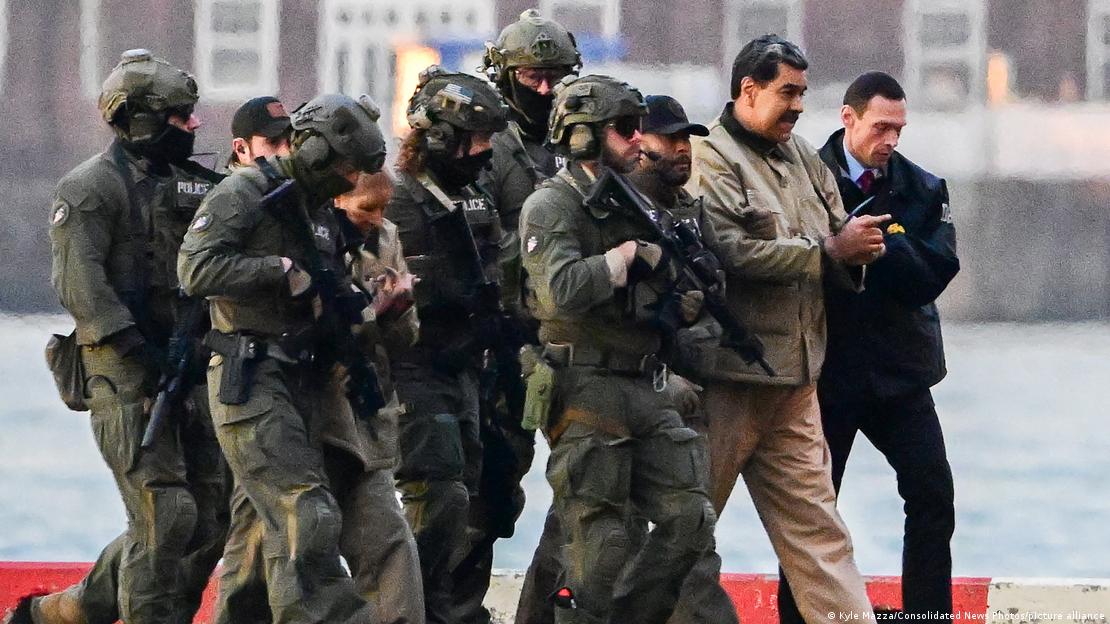
Nicolas Maduro was escorted to court in New York on Monday
Image: Kyle Mazza/Consolidated News Photos/picture alliance
Maduro was one of the few heads of state who supported Russia in February 2022 when Moscow recognized the separatist pseudo-republics of Donetsk and Luhansk before launching its major attack on Ukraine.
In December 2018, Russia sent two Tu-160 strategic bombers to Venezuela for exercises, which experts interpreted as a sign of support for Maduro. They landed at Caracas airport — the same airport used by the US to fly out the Venezuelan leader in handcuffs.
But Russian air defenses were unable to protect the disputed leader during last week's operation, as US Defense Secretary Pete Hegseth has pointed out.
US actions in Venezuela reflect Trump's 'strength' rhetoric
"Russia's support for Venezuela has been more symbolic than practical," Neil Melvin, an expert at the Royal United Services Institute, told DW. In his view, Russia is not in a position to challenge the deployment of US forces in the neighboring region.
Felix Riefer, a German political scientist and author of a book on Russian foreign policy, also said he was not surprised by Putin's response. After Trump's return to the White House led to a rapprochement between Moscow and Washington, Russia responded to "American hints toward Venezuela with relative restraint," he said. "Russia had already abandoned Maduro."
Both experts said a key explanation for Putin's silence is Russia's ongoing war against Ukraine and the US shift from being Kyiv's partner to acting as a mediator in talks. Russia is keen to avoid harsh criticism of Washington because it does not want to cause offense, according to Melvin. In his opinion, Moscow's rhetoric on the events in Venezuela would be "significantly harsher" if it weren't for the war against Ukraine.
The British expert saw no immediate consequences for the war in Ukraine. This could change if Trump does not stop at Venezuela but goes further and, for example, attempts to annex Greenland, which belongs to Denmark — something the US president recently hinted at again.
Melvin believes that NATO would probably not survive such a development. Danish Prime Minister Mette Frederiksen expressed a similar view on Monday.
Cautious optimism in Ukraine
Kyiv, meanwhile, is keeping close tabs on events in Venezuela. "If dictators can be treated this way, then the United States knows what to do next," President Volodymyr Zelenskyy said earlier this week. The Ukrainian Foreign Ministry reiterated that it does not recognize Maduro as president.
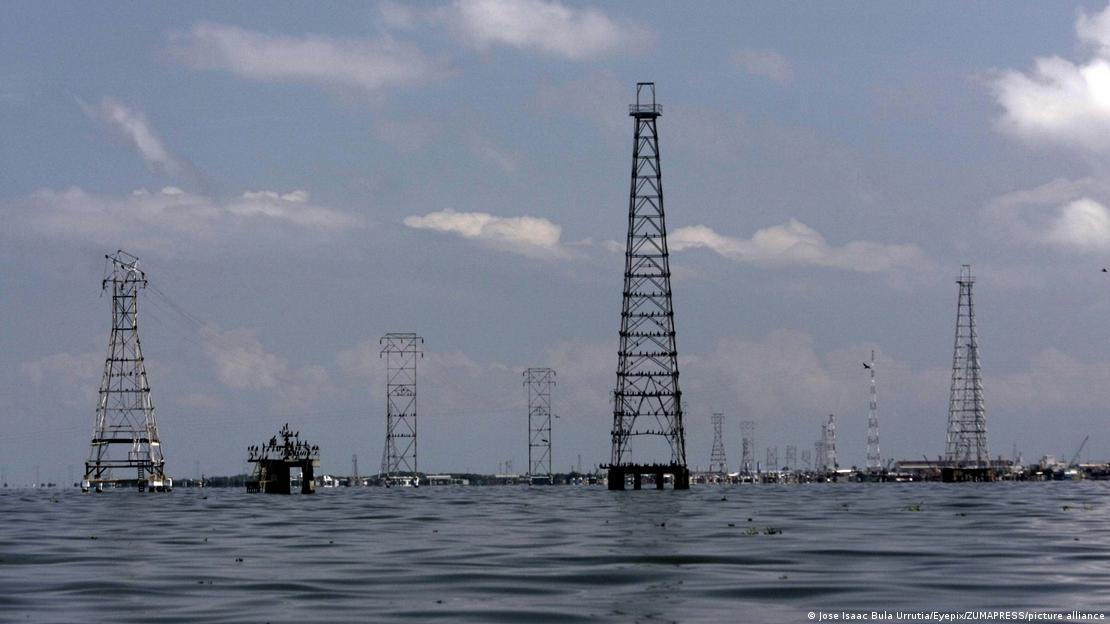
Experts in Kyiv are cautiously optimistic. Markets expect relations between the US and Venezuela to normalize in the foreseeable future, which will open Venezuela up for oil production and have a significant impact on the global economy and oil prices, said political scientist Petro Oleshchuk of Taras Shevchenko National University of Kyiv.
"Anything that lowers oil prices is beneficial for Ukraine and could have a positive impact on negotiations. The cheaper oil is, the less money Russia has at its disposal, making the idea that Russia is prepared for an endless war seem less and less credible," Oleshchuk said.
Maduro was one of the few heads of state who supported Russia in February 2022 when Moscow recognized the separatist pseudo-republics of Donetsk and Luhansk before launching its major attack on Ukraine.
In December 2018, Russia sent two Tu-160 strategic bombers to Venezuela for exercises, which experts interpreted as a sign of support for Maduro. They landed at Caracas airport — the same airport used by the US to fly out the Venezuelan leader in handcuffs.
But Russian air defenses were unable to protect the disputed leader during last week's operation, as US Defense Secretary Pete Hegseth has pointed out.
US actions in Venezuela reflect Trump's 'strength' rhetoric
"Russia's support for Venezuela has been more symbolic than practical," Neil Melvin, an expert at the Royal United Services Institute, told DW. In his view, Russia is not in a position to challenge the deployment of US forces in the neighboring region.
Felix Riefer, a German political scientist and author of a book on Russian foreign policy, also said he was not surprised by Putin's response. After Trump's return to the White House led to a rapprochement between Moscow and Washington, Russia responded to "American hints toward Venezuela with relative restraint," he said. "Russia had already abandoned Maduro."
Both experts said a key explanation for Putin's silence is Russia's ongoing war against Ukraine and the US shift from being Kyiv's partner to acting as a mediator in talks. Russia is keen to avoid harsh criticism of Washington because it does not want to cause offense, according to Melvin. In his opinion, Moscow's rhetoric on the events in Venezuela would be "significantly harsher" if it weren't for the war against Ukraine.
The British expert saw no immediate consequences for the war in Ukraine. This could change if Trump does not stop at Venezuela but goes further and, for example, attempts to annex Greenland, which belongs to Denmark — something the US president recently hinted at again.
Melvin believes that NATO would probably not survive such a development. Danish Prime Minister Mette Frederiksen expressed a similar view on Monday.
Cautious optimism in Ukraine
Kyiv, meanwhile, is keeping close tabs on events in Venezuela. "If dictators can be treated this way, then the United States knows what to do next," President Volodymyr Zelenskyy said earlier this week. The Ukrainian Foreign Ministry reiterated that it does not recognize Maduro as president.
Experts in Kyiv are cautiously optimistic. Markets expect relations between the US and Venezuela to normalize in the foreseeable future, which will open Venezuela up for oil production and have a significant impact on the global economy and oil prices, said political scientist Petro Oleshchuk of Taras Shevchenko National University of Kyiv.
"Anything that lowers oil prices is beneficial for Ukraine and could have a positive impact on negotiations. The cheaper oil is, the less money Russia has at its disposal, making the idea that Russia is prepared for an endless war seem less and less credible," Oleshchuk said.
Cheaper oil prices could help Ukraine during future talks about the war, experts say
Image: Jose Isaac Bula Urrutia/Eyepix/ZUMAPRESS/picture alliance
Some media outlets have suggested the US could weaken its role as a democratic negotiating partner by arresting Maduro. However, experts interviewed by DW are skeptical. According to Oleshchuk, the US military's intervention is in line with the US doctrine of the Western Hemisphere as a sphere of interest. He noted that it's impossible to draw parallels between Maduro's arrest and Russia's aggression against Ukraine.
"In the case of Venezuela, the US is not annexing territory and is not claiming that Venezuela is a fictitious state," he said.
Experts cast doubt on stability of Russia's position
Political scientist Riefer said Russia could try to use the case of Venezuela to justify its aggression against Ukraine. While this is a possible outcome, "a direct comparison is flawed," he said.
Riefer is convinced Moscow's reputation in the world has been weakened, saying "those who rely on Russia cannot hope to be protected."
Melvin, meanwhile, emphasized that this is not the first time that Putin has let an ally go. "Russia has lost Armenia, Syria and now Venezuela," he said. "Russia's international position is weakening noticeably as it escalates its war against Ukraine and lacks the resources to maintain such relationships."
In the case of Cuba, Russia's most important partner in Latin America and one of Venezuela's closest allies, Moscow's protests may be louder, added Melvin, but Russia's options are ultimately "very limited." Cuba has been among the countries that were recently verbally attacked by Trump.
This article was originally written in German.

Roman Goncharenko Writer and senior editor with a focus on European security, Russia and the war in Ukraine.
Some media outlets have suggested the US could weaken its role as a democratic negotiating partner by arresting Maduro. However, experts interviewed by DW are skeptical. According to Oleshchuk, the US military's intervention is in line with the US doctrine of the Western Hemisphere as a sphere of interest. He noted that it's impossible to draw parallels between Maduro's arrest and Russia's aggression against Ukraine.
"In the case of Venezuela, the US is not annexing territory and is not claiming that Venezuela is a fictitious state," he said.
Experts cast doubt on stability of Russia's position
Political scientist Riefer said Russia could try to use the case of Venezuela to justify its aggression against Ukraine. While this is a possible outcome, "a direct comparison is flawed," he said.
Riefer is convinced Moscow's reputation in the world has been weakened, saying "those who rely on Russia cannot hope to be protected."
Melvin, meanwhile, emphasized that this is not the first time that Putin has let an ally go. "Russia has lost Armenia, Syria and now Venezuela," he said. "Russia's international position is weakening noticeably as it escalates its war against Ukraine and lacks the resources to maintain such relationships."
In the case of Cuba, Russia's most important partner in Latin America and one of Venezuela's closest allies, Moscow's protests may be louder, added Melvin, but Russia's options are ultimately "very limited." Cuba has been among the countries that were recently verbally attacked by Trump.
This article was originally written in German.
Roman Goncharenko Writer and senior editor with a focus on European security, Russia and the war in Ukraine.

No comments:
Post a Comment