Revised plan for clean-up of Central Asian uranium legacy sites
_16209.jpg)
Central Asia served as an important source of uranium for the former Soviet Union. Uranium was mined for more than 50 years and uranium ore was also imported from other countries for processing, and large amounts of radioactively contaminated material were placed in mining waste dumps and tailing sites. Most of the mines were closed by 1995 but very little remediation was done before or after the closure of the mining and milling operations. The contaminated material can pose a threat to the environment and the health of the population. The hazards include the possible pollution of ground and surface water in a key agricultural centre of the region.
The IAEA Coordination Group for Uranium Legacy Sites (CGULS) supports countries to safely manage these sites and the residues of radioactive and toxic contaminants to protect people and the environment. Since 2012, CGULS has supported Central Asian countries with practical guidance on remediation strategies, expert missions to guide progress in remediation efforts, and assisted in capacity building and developing legal and regulatory frameworks for remediating legacy sites.
In 2017, the Strategic Master Plan for Environmental Remediation of Uranium Legacy Sites in Central Asia, which focuses on Kyrgyzstan, Tajikistan and Uzbekistan, was adopted by the IAEA, the European Commission, the European Bank for Reconstruction and Development (EBRD) and the Commonwealth of Independent States Economic Council, as well as the governments of Kyrgyzstan, Tajikistan and Uzbekistan, to establish a strategy and concrete mechanisms to remediate the sites safely and sustainably. The plan - published in May 2018 - identifies seven former uranium production sites in the region as the highest priority: Mailuu-Suu, Min-Kush and Shekaftar in Kyrgyzstan; Degmay and Istikol in Tajikistan; and, Charkesar and Yangiabad in Uzbekistan. The total cost of remediating the seven sites was estimated at around EUR85 million (USD99 million). A revised Strategic Master Plan (SMP) was signed in September 2021.
The latest Strategic Master Plan was presented in Tashkent, Uzbekistan, in October 2025, and will guide the future activities of the IAEA, international organisations and collaborating countries, focusing on monitoring, maintenance, record keeping and continuous stakeholder engagement towards the safe and beneficial use of the remediated land.
"The new plan, an extension of our collaboration since 2017, focuses on enhancing the regulatory, technical, financial and human resources for the long term management of the remediated sites, according to IAEA safety standards," said Hildegarde Vandenhove, Director of the IAEA Division of Radiation, Transport and Waste Safety.
"The main objective of the SMP is to demonstrate a sustainable and shared approach to remediation of uranium legacy sites in Central Asia to the international community by collating information on the ongoing projects, required actions and funds," the IAEA said. "This helps avoid duplication of effort, demonstrates progress, and raises awareness of the funding gap which requires further solidarity by the international community."
The total cost estimate of the ERA Remediation Programme currently amounts to EUR113 million, which includes remediation costs, Project Management Unit Services cost, contingencies and other programme costs, according to the new Strategic Master Plan. It says this number is based on final or current contract values, or best cost estimates available.
Since 2017, four out of the seven high priority sites have been remediated - two in Kyrgyzstan and two in Uzbekistan - allowing local communities to use the land safely. Work continues at a fifth site in Kyrgyzstan, one of the largest and most complex, with remediation expected to continue until 2032. In Tajikistan, one site has been partially remediated and another remains to initiate remediation.
As well as ensuring the high priority sites are managed and reused safely, the new plan encompasses lower priority sites for remediation – sites that present lower risks in terms of environmental, social and economic considerations, and were not remediated under the previous plan.
"For the lower priority uranium legacy sites EUR21.4 million funding has been approved by the Russian Federation, for the remediation of Kadji-Say (other objects), Tuya-Moyun and Kyzyl-Djar under the bilateral agreement with the Kyrgyz Republic, and EUR15.6 million for the remediation of Adrasman and Processing facility No.3 of Taboshar district under the bilateral agreement with the Republic of Tajikistan," the SMP says.
"I am firmly convinced that the work of the IAEA Coordination Group for Uranium Legacy Sites stands as a vivid example of how the collective efforts of the international community, united by a shared goal - the protection of people and the environment - can yield tangible and lasting results," said Sardorbek Yakubekov, Deputy Chairman of the Industrial, Radiation and Nuclear Safety Committee of Uzbekistan, who opened the signing event.
Canadian repository project moves on to review stage
The Initial Project Description for the proposed underground deep geological repository system for Canada's used nuclear fuel has been posted on the Impact Assessment Agency of Canada website, triggering the start of the regulatory process for the facility.
_42143.jpg)
The Nuclear Waste Management Organization (NWMO) announced on 5 January that the Initial Project Description - which it describes as a foundational document detailing the repository's purpose, need and expected benefits, as well as explaining how the project will be implemented in a manner that protects people and the environment - has been posted to the Impact Assessment Agency of Canada website. This formally initiates the federal impact assessment and licensing processes and provides the basis for sustained community engagement, the NWMO said.
"For the NWMO, submitting the Initial Project Description represents more than a regulatory requirement," said NWMO Vice-President of Regulatory Approvals Allan Webster. "It is a shared starting point that brings together engineering, environmental, Indigenous Knowledge and community perspectives to guide how the project moves forward through impact assessment, licensing, design optimisation, construction and operations."
The NWMO is a government agency mandated to determine and find and build and operate a long-term solution for disposal of used nuclear fuel in Canada. A consent-based siting process launched in 2010 culminated in the selection in 2024 of Wabigoon Lake Ojibway Nation (WLON) and the Township of Ignace as the host communities for the project. The communities agreed to enter the regulatory decision-making phase as potential host communities for the repository.
The proposed project would be located 21 kilometres southeast of the WLON and 43 kilometres northwest of the Town of Ignace in Ontario. It would provide permanent storage for some 5.9 million bundles of used nuclear fuel between 650 and 800 metres below ground and have an underground footprint of about 2 kilometres by 3 kilometres.
The project is expected to span around 160 years, encompassing site preparation, construction - which is projected to take about 10 years - operation from the 2040s and decades of post-operations closure monitoring, according to information from the Impact Assessment Agency.
The Impact Assessment Agency of Canada and the Canadian Nuclear Safety Commission have invited Indigenous Peoples and the public to submit comments on the summary of the Initial Project Description and to provide feedback by 4 February to support them in the preparation of a summary of issues that will be sent to the NWMO and help shape how the overall integrated assessment will be carried out.
DOE delivers HALEU feedstock for advanced reactor fuel
Standard Nuclear, Inc has received its first shipment of high-assay low-enriched uranium feedstock at its facility in Oak Ridge, Tennessee, under the US Department of Energy's initiative to fast-track the fuel supply chain for advanced reactors.
_55296.jpg)
Standard Nuclear - which describes itself as a reactor-agnostic producer of TRISO (tri-structural isotropic fuel particles) - says it is the first company to both receive authorisation from the Department of Energy (DOE) and also physically receive HALEU for production of advanced TRISO fuel.
The HALEU feedstock has been allotted by the DOE to California-based nuclear microreactor developer Radiant. It will be processed by Standard Nuclear into TRISO fuel for Radiant’s advanced reactor demonstration scheduled for 2026: the volume of material is "sufficient to produce a full core load of advanced nuclear fuel for the first reactor startup by Radiant", Standard Nuclear said.
The project operates under an Other Transaction Agreement (OTA) executed between Standard Nuclear and the DOE's Idaho Operations Office, which was announced in December. This provides authorisation for the company to receive and process the material into advanced nuclear fuel.
"Receipt of this shipment of HALEU feedstock is a transformative moment, firmly entrenching Standard Nuclear’s position at the forefront of the advanced nuclear fuel supply chain," Standard Nuclear CEO Kurt Terrani said. "We are proud to be the first company authorised by the DOE to take this step toward full-scale TRISO fuel production, which is essential for bringing US-made, reliable, and advanced nuclear power to the nation."
HALEU - uranium enriched to contain between 5% and 20% uranium-235 - will be used by many advanced reactors. The USA is working to build up its supply chain for the material: it has recently allocated USD2.7 billion in funding to strengthen the supply chain for both low-enriched uranium and HALEU. The HALEU Availability Program was established as long ago as 2020 to secure a domestic supply of HALEU for civilian domestic research, development, demonstration, and commercial use, to enable nuclear developers to request HALEU material from DOE sources, including material from the National Nuclear Security Administration.
The DOE launched its Fuel Line Pilot Program in July 2025, alongside the Reactor Pilot Program. These two initiatives were launched in response to executive orders issued by President Donald Trump to expedite the testing of advanced nuclear reactor designs under DOE authority outside of the national laboratories, with the goal of three reactors reaching criticality by 4 July this year.
Radiant, developer of the 1 MWe Kaleidos TRISO-fuelled high-temperature gas-cooled portable microreactor, was selected by the DOE in August as one of the first selections under the Reactor Pilot Program. It plans to test its first reactor in 2026, with initial customer deployments beginning in 2028. In mid-December, the California-headquartered company announced it had raised more than USD300 million in a new round of funding to support the scaling of its commercialisation efforts. It is planning to break ground early this year for a factory to make its transportable nuclear generators at Oak Ridge, Tennessee. According to Radiant, the R-50 factory will be the first in the world to mass-produce portable nuclear reactors.
Terrestrial Energy, Oklo execute DOE agreements
_16128_62584.jpg)
"The execution of an Other Transaction Authority (OTA) demonstrates the company's structured programme, which will support Integral Molten Salt Reactor (IMSR) plant commercialisation and its leading market position in the advanced reactor sector," Terrestrial Energy said.
"The agreement establishes a direct, streamlined collaboration with the Department of Energy (DOE) to review and authorise the design and safe operation of the TETRA reactor, a molten salt-fueled, graphite-moderated reactor that uses standard assay, low-enriched UF4-based fuel (SALEU) containing less than five percent U-235. This agreement enables Terrestrial Energy to move quickly from design to operation under DOE authorisation ... the OTA enables the company to operate outside traditional federal contracting constraints, providing a flexible and agile framework designed for swift advanced reactor innovation."
Terrestrial Energy CEO Simon Irish said: "The agreement sits on our development centre-path, allowing the company to expedite key elements of its programme to prepare licensing applications for commercial plant operation. The pilot TETRA reactor project affirms our position as a leading advanced reactor innovator and will demonstrate our ability to deliver the innovations necessary for clean, firm and affordable energy in a competitive timeframe."
Terrestrial Energy's Project TETRA was among 11 advanced reactor projects selected by the DOE in August last year for the Advanced Reactor Pilot Program. The pilot programme, announced in June, aims to expedite the testing of advanced reactor designs that will be authorised by the department at sites located outside of the national laboratories. Part of the Reforming Nuclear Reactor Testing at the Department of Energy executive order signed by President Donald Trump in May, its goal is "to construct, operate, and achieve criticality of at least three test reactors using the DOE authorisation process by 4 July 2026".
Under the programme, each company will be responsible for all costs associated with designing, manufacturing, constructing, operating, and decommissioning their test reactors, but seeking DOE authorisation under the Atomic Energy Act will help them unlock private funding and provide a fast-tracked approach to future commercial licensing activities, the department said.
Project TETRA includes the completion of key testing that is essential to support licensing applications for the construction and operation of commercial IMSR plants in the USA, Terrestrial Energy said.
In September 2025, Terrestrial Energy was separately selected for the DOE Fuel Line Pilot Program, "demonstrating the company's broad engagement with DOE programs to expedite commercial operation of small and modular nuclear plants that use advanced reactor technologies", Terrestrial Energy noted.
Terrestrial's IMSR is a 4th generation reactor that uses molten salt as both fuel and coolant, with integrated components, which can supply heat directly to industrial facilities or use it to generate electrical power. The use of molten salt as both fuel and coolant also enables passive, or inherent, safety features to be built into the reactor design. The design integrates the primary reactor components, including the graphite moderator, into a sealed and replaceable reactor core unit with an operating lifetime of seven years. The plant's thermal and electric power supply systems can be customised to meet specific site demand requirements, and can support distributed generation for energy-intensive industry.
Radioisotope pilot facility
Oklo has also signed an Other Transaction Authority with the DOE to support the design, construction, and operation of a radioisotope pilot plant under the Reactor Pilot Program.
_d5a3729f.jpg)
A render of Atomic Alchemy's radioisotope pilot facility (Image: Hillside Architecture)
Atomic Alchemy Inc - an Oklo subsidiary - will use the Radioisotope Pilot Facility to lay the groundwork for future commercial plants that make medical and research radioisotopes in the USA. These radioisotopes are essential for diagnosing cancer, treating disease, powering medical research, and supporting national security.
"This OTA establishes a framework for execution and risk reduction," said Oklo co-founder and CEO Jacob DeWitte. "By building and operating a pilot reactor, we generate the data and experience to streamline future commercial deployments, improve regulatory efficiency, and deliver long-term value."
With the Other Transaction Authority now in place, Atomic Alchemy will focus its near-term resources on building the Radioisotope Pilot Facility under DOE authorisation. As part of this learn-first-then-scale strategy, Atomic Alchemy has withdrawn its previously submitted Nuclear Regulatory Commission construction permit application for the Meitner-1 commercial radioisotope production facility at Idaho National Laboratory to focus on the Radioisotope Pilot Facility.
Upgrade works for Armenian NPP life extension
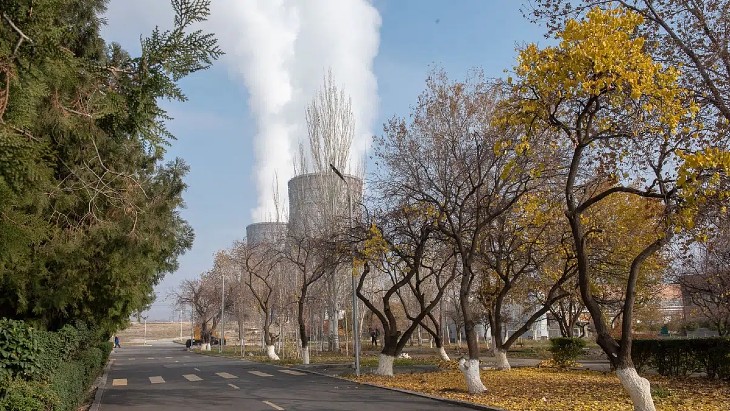
Rosatom said that work carried out by the plant operators and its experts during 2025 included assessing the adequacy of the plant's fire protection system and the technical condition and remaining service life "of safety-critical systems and components, building structures, and NPP buildings and facilities".
Work has also begun "to define a new configuration for the emergency core cooling system to expand the scope of design-basis accidents". The life extension project aims to extend the unit's life to 2036 and improve the plant's safety level by establishing a new maximum design-basis accident limit.
In addition, samples have been sent for specialist assessment - due by November 2026 - which "will form the basis for an assessment of the condition of the reactor pressure vessel metal and will be used to justify the future safe operation of the power unit".
Rosatom said: "Work is currently in the active phase to redefine the service life of the equipment and pipelines of the reactor unit to 2031. A preliminary assessment of the remaining service life has already been completed and indicates that the non-replaceable and non-repairable equipment of the nuclear power plant has the resource to continue operation beyond the additionally justified service life of the unit."
The Armenian Nuclear Power Plant comprises two Russian-built 376 MWe VVER reactors which started operating in 1976 and 1980, respectively. Both units were taken offline in 1988 due to safety concerns regarding seismic vulnerability, although they both continued to operate and had not sustained any damage in a major earthquake in the region earlier that year. Unit 2 was restarted in 1995, and is subject to ongoing safety improvements. Unit 1 is now being decommissioned.
In November 2021, it was announced that the service life of unit 2 at the plant had been extended to 2026 after collaboration with Rosatom which saw the unit's emergency cooling system, engine room, turbines and steam generators modernised, and a unique operation was carried out to anneal the reactor pressure vessel. This restored the properties of the vessel metal by 85%, ensuring the possibility of its further operation. The operator has requested an additional 10-year operating licence.
An International Atomic Energy Agency Safety Aspects of Long-Term Operation (LTO) peer review mission to Armenia in October identified areas of good performance to be shared with the nuclear industry globally, including: continuously improving organisational practices, adopting international best practices and experience from the first LTO period to improve the approach and documentation for the upcoming second LTO period; conducting periodic reviews of the seismic qualification programme, considering the latest knowledge and international operating experience; and implementing a comprehensive modernisation process performed by the staff of the plant.
The team also provided suggestions and recommendations to further improve safe LTO, for example, the plant should: update the existing plant programmes to fully address ageing management for the upcoming second LTO period; complete the qualification programme for equipment in harsh environments and fully implement it for LTO; and effectively implement the ageing management programmes for civil structures.
Chinese SMR completes non-nuclear steam start up test
_66891.jpg)
"As the world's first commercial land-based small modular reactor (SMR), the trial achieved stable operation across all systems, with the steam turbine generator unit meeting all designed parameters," CNNC said. "This marks the successful completion of the non-nuclear steam run test for the project's turbine generator unit."
It said the non-nuclear turbine run test was a critical milestone in nuclear power plant construction, "often described as a comprehensive 'real-world drill' for the conventional island systems before nuclear fuel loading". The successful test verifies that the core systems of the conventional island in the ACP100 - also referred to as the Linglong One - meet functional requirements, "laying a solid foundation for subsequent nuclear-powered turbine runs and grid-connected power generation".
CNNC announced in July 2019 the launch of a project to construct an ACP100 SMR at Changjiang. The site is already home to two operating CNP600 pressurised water reactors (PWRs), while the construction of two Hualong One units began in March and December 2021. Both those units are due to enter commercial operation by the end of 2026.
First concrete for the ACP100 was poured on 13 July 2021, with a planned total construction period of 58 months. Equipment installation work commenced in December 2022 and the main internal structure of the reactor building was completed in March 2023. The outer containment dome was hoisted into place in February last year.
Cold functional tests - carried out to confirm whether components and systems important to safety are properly installed and ready to operate in cold conditions - were completed on 16 October. The main purpose of those tests was to verify the leak-tightness of the primary circuit and components - such as pressure vessels, pipelines and valves of both the nuclear and conventional islands - and to clean the main circulation pipes. The tests mark the first time the reactor systems were operated together with the auxiliary systems.
China plans to start commercial operation of the ACP100 in the first half of 2026, an official with the research arm of CNNC was reported as saying by Reuters on 11 December.
Under development since 2010, the 125 MWe ACP100 integrated PWR's preliminary design was completed in 2014. In 2016, the design became the first SMR to pass a safety review by the International Atomic Energy Agency.
Once completed, the Changjiang ACP100 reactor will be capable of producing 1 billion kilowatt-hours of electricity annually, enough to meet the needs of 526,000 households. The reactor is designed for electricity production, heating, steam production or seawater desalination.
Key commissioning tests completed at Tianwan 7
_25330.jpg)
Hot functional tests involve increasing the temperature of the reactor coolant system and carrying out comprehensive tests to ensure that coolant circuits and safety systems are operating as they should. Carried out before the loading of nuclear fuel, such testing simulates the thermal working conditions of the power plant and verifies that nuclear island and conventional equipment and systems meet design requirements.
China National Nuclear Corporation (CNNC) said the completion of hot tests on 30 December "lays a solid foundation for subsequent work such as nuclear fuel loading and grid connection".
Cold functional tests - which are conducted to confirm whether components and systems important to safety are properly installed and ready to operate in a cold condition - were completed at Tianwan 7 in July 2025. The main purpose of those tests - which marked the first time the reactor systems were operated together with the auxiliary systems - was to verify the leak-tightness of the primary circuit.
In June 2018, Russia and China signed four agreements, including for the construction of two VVER-1200 reactors as units 7 and 8 of the Tianwan plant. Construction of unit 7 began in May 2021, with that of unit 8 starting in February 2022. The units are scheduled to be put into commercial operation in 2026 and 2027, respectively.
.jpg)
Tianwan units 7 and 8 (Image: CNNC)
The Tianwan nuclear power plant is owned and operated by Jiangsu Nuclear Power Company, a joint venture between CNNC (50%), China Power Investment Corporation (30%) and Jiangsu Guoxin Group (20%).
The first four units at the Tianwan site - which began commercial operation between June 2007 and December 2018 - are Gidropress VVER units supplied by Russia, as will be the seventh and eighth. Units 5 and 6 both feature Chinese ACPR1000 reactors.
"Subsequently, Tianwan Nuclear Power Plant Unit 7 will proceed with nuclear fuel loading and grid connection according to plan, with commercial operation scheduled for 2026; the construction of Tianwan Nuclear Power Plant Unit 8 is also progressing smoothly according to plan," CNNC said.
Agreement extension enables continued development of Polish plant
_48751.jpg)
In November 2022, the then Polish government selected Westinghouse AP1000 reactor technology for construction at the Lubiatowo-Kopalino site in the Choczewo municipality in Pomerania in northern Poland. In September 2023, Westinghouse, Bechtel and Polskie Elektrownie Jądrowe (PEJ) - a special-purpose vehicle 100% owned by Poland's State Treasury - signed an 18-month engineering services contract under which Westinghouse and Bechtel will finalise a site-specific design for a plant featuring three AP1000 reactors. In April 2025, PEJ and the Westinghouse-Bechtel Consortium agreed the terms and conditions of an Engineering Development Agreement (EDA) after the previous agreement expired.
On 29 December, PEJ announced it had signed an amendment to the EDA with the Westinghouse-Bechtel Consortium. The amended scope of the agreement provides for the continuation of design works covering the nuclear island, turbine island, and the balance of plant, as well as further in-depth geological survey campaigns. This, it said, allows it to maintain the project schedule by advancing the power plant design and continuing field works, while simultaneously conducting negotiations and finalising the Engineering, Procurement, and Construction (EPC) contract, "which will ultimately determine our cooperation with the Westinghouse-Bechtel Consortium".
"In terms of the current negotiations, we want to proceed reasonably quickly, which is why the amendment signed today allows us to continue talks on the EPC contract, focusing on quality, with no negative impact on the project," PEJ said. "To ensure timeliness, in the amendment to the EDA we have incorporated some of the work that was originally supposed to be included in the EPC contract."
"The extension of the EDA allows for further advancement of design and engineering work, including the finalisation of documentation enabling the procurement of long lead items and documentation for the licence application in order to maintain the assumed project schedule," said Marek Woszczyk, President of the Management Board of PEJ. "These efforts are crucial to meeting the milestones of this strategic project for Poland."
Leszek Hołda, President of Bechtel Polska, added: "The amendment to the EDA paves the way for the launch of the next stage of geotechnical surveys in 2026, covering 1,000 drillings with a total depth of 15 kilometres and 7,000 laboratory tests. In the first half of the year, earthworks will also begin to level the site and prepare it for the construction of temporary internal roads on the construction site. Also, the procurement of the first long lead items, i.e., equipment components of the power plant with an extended production time, will be continued."
State funding
On 30 December, PEJ received treasury bonds issued by the Minister of Finance and Economy with a nominal value of PLN4.6 billion (USD1.27 billion). This is a contribution to cover shares in the company's increased share capital by the State Treasury.
"The state aid received will ensure stable funding for the next stage of the nuclear power plant construction project in Pomerania," PEJ said. "In particular, it will enable the continuation of design and engineering work under the annexed EDA, preparatory works, and activities related to the so-called internal associated infrastructure."
The capital injection for the company was made possible by the European Commission's approval of state aid for the project, given on 9 December, which "enabled, among other things, an increase in PEJ's share capital".
"PEJ is the investor responsible for the construction of Poland's first nuclear power plant to be built in Pomerania," said Wojciech Wrochna, Secretary of State at the Ministry of Energy and Government Plenipotentiary for Strategic Energy Infrastructure. "Currently, preparatory works for the construction are being carried out at the Lubiatowo-Kopalino site. In parallel, the design process for the power plant is under way. The company is negotiating the EPC contract with the US Westinghouse-Bechtel consortium, as well as preparing documentation to inform applications for further administrative permits required to commence construction. The company is also in advanced talks with banks and financial institutions to secure debt financing for the project."
In March 2025, President Andrzej Duda signed a bill that designated funds from the national budget for the construction of the nuclear power plant. Under the bill, PEJ is set to receive PLN60.2 billion in public funding between 2025 and 2030. The remaining funding will be obtained from financial institutions, primarily foreign institutions supporting exports originating from equipment suppliers' countries, including export credit agencies, in particular the American export credit agency Export-Import Bank of the United States.
The aim is for Poland's first AP1000 reactor to enter commercial operation in 2033.
Fuel loading under way at new Chinese units
_87636.jpg)
Both units received operating licences from the Ministry of Ecology and Environment on 24 December, China General Nuclear (CGN) said. The loading of the first fuel assemblies began at each unit later that day following approval from the National Nuclear Safety Administration (NNSA). A total of 177 fuel assemblies will be loaded into each reactor.
"This marks the official entry of the two Hualong One units into the main system nuclear commissioning phase, laying a solid foundation for achieving the goal of grid connection and power generation, and taking a crucial step forward," CGN said. "Initial fuel loading, the process of inserting brand-new nuclear fuel assemblies into the reactor pressure vessel, marks the dividing line between nuclear power engineering with and without nuclear testing, and is one of the most crucial steps before a nuclear power plant is connected to the grid for power generation.
"During the fuel loading preparation phase, the engineering and production teams of the San'ao and Taipingling nuclear power projects collaborated closely and efficiently, ensuring safety and quality while benchmarking against the standards of mature commercial power plants, continuously overcoming challenges to ensure the site met the conditions for high-quality fuel loading. After fuel loading is completed, the project construction team will adhere to the fundamental principles of 'safety first, quality first, and pursuit of excellence', strictly following technical procedures and quality standards to advance subsequent commissioning work, ensuring the unit is put into operation with high quality as planned."
.jpg)
San'ao unit 1 (Image: CGN)
The Taipingling plant will eventually have six Hualong One reactors. The construction of the first and second units began in December 2019 and October 2020, respectively. Hot testing of unit 1 was completed in September 2024. Construction of the second phase of the plant - units 3 and 4 - was approved by China's State Council on 29 December 2023, with construction of unit 3 getting under way in June 2025.
In September 2020, the executive meeting of China's State Council approved the construction of units 1 and 2 as the first phase of the San'ao plant. The NNSA issued a construction permit for the two units on 30 December that year and first concrete for unit 1 was poured the following day. The first concrete for San'ao 2 was poured on 30 December 2021. San'ao 1 and 2 are scheduled to begin supplying electricity in 2026 and 2027, respectively. Cold functional tests were completed at unit 1 in November 2024. A total of six Hualong One units are planned for the site. The construction of two Hualong Ones as units 3 and 4 of the San'ao plant was among plans for 11 reactors approved by the State Council in August 2024.
CGN said it currently has 20 Hualong One units either in operation or under construction, and "the mass production of Hualong One is progressing steadily".
Final unit at Bilibino Nuclear Power Plant permanently shut down
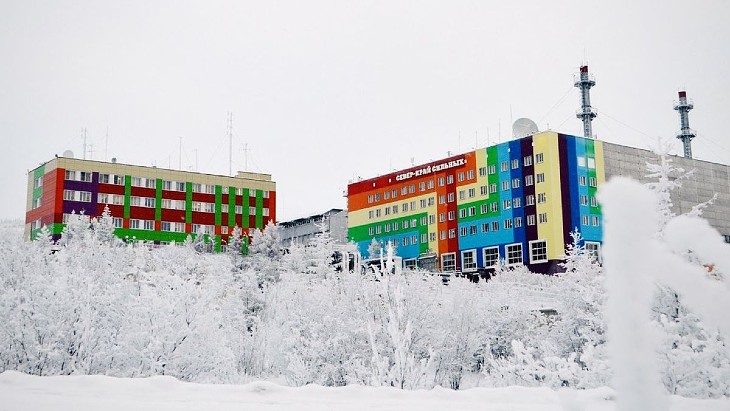
Bilibino Nuclear Power Plant, in Russia's Arctic north east, has been operating for 51 years in the permafrost zone, with its reactors operating for a combined 190 reactor-years, generating 11.6 billion kWh of electricity.
The first unit was shut down in 2018. The remaining three 12 MWe EGP-6 light water graphite-moderated reactors were taken offline during December.
Its capacity has been replaced by the floating nuclear power plant, the Akademik Lomonosov, which has a capacity of 70 MW and which will be providing electricity and heat to the region.
Konstantin Kholopov, Director of the Bilibino NPP, said: "Shutting down all power units at the Bilibino NPP marks the first time Rosenergoatom has experienced a complete shutdown of a nuclear power plant in commercial operation."
Rosatom said that Bilibino's decommissioning experience will be unique, in terms of both the northern conditions and also because it is the first such Russian site to shut down its power units simultaneously. Unloading of the used nuclear fuel is expected to last about two years.
It is anticipated that once the used nuclear fuel has been removed for reprocessing - by around 2042 - decommissioning work will begin. This will involve the dismantling and decontamination of equipment and structures, and managing radioactive waste and is expected to last for more than a decade, with Rosatom saying it expects the site to be fully rehabilitated to "green lawn" conditions by 2055.
Decommissioning licence to 2055 issued for Leningrad 1
_56307.jpg)
Rosatom says that the 30-year decommissioning work will "serve as a benchmark for all subsequent pressure-tube reactor dismantling projects worldwide".
The Russian state nuclear corporation says that what it calls the "Immediate Dismantling" concept has been adopted for the decommissioning of the unit, which "involves dismantling equipment, including reactor units, building structures, and facilities, and removing waste generated from the unit site. During the first eight years after receiving the decommissioning licence, the necessary decommissioning infrastructure will be created at the unit, and decontaminated and lightly-contaminated equipment will be dismantled and removed".
The plan is for dismantling of the reactor facility to take place during the final stage of decommissioning, with the work carried out using specially designed robots. The dismantled and shredded components will then be placed in special containers and transferred for long-term storage.
Leningrad 1 was shut down for decommissioning, after 45 years of power generation, in December 2018. Leningrad 2 was shut down in November 2020. They were considered operational until their nuclear fuel was removed, a process which was completed for unit 1 in August 2021.
Vladimir Pereguda, Director of the Leningrad NPP, said: "One of our company's key tasks at this stage was removing nuclear fuel from the power units, as well as developing design documentation for decommissioning. These tasks were successfully accomplished thanks to the coordinated collaboration of the plant's team with scientific, design, and engineering institutes, as well as equipment manufacturers. Today, the successful decommissioning of RBMK-1000 power units that have reached the end of their service life is the most important task facing Russian nuclear scientists."
The Leningrad nuclear power plant is one of the largest in Russia, with an installed capacity of 4,400 MWe, and provides more than 55% of the electricity demand of St Petersburg and the Leningrad region, or 30% of all the electricity in northwest Russia.
As the first two of the plant's four RBMK-1000 units shut down, new VVER-1200 units started up at the neighbouring Leningrad II plant. The 60-year service life of these fifth and sixth units (also known as Leningrad II-1 and Leningrad II-2) secures power supply until the 2080s. Units 7 and 8 (also known as Leningrad II-3 and Leningrad II-4) will replace units 3 and 4 as they are shut in the coming years.
There are currently seven operating RBMKs in Russia and four which have been shut down. There were also four RBMK reactors at Chernobyl in Ukraine, the last of which closed down in 2000, and two in Lithuania, which shut down in 2004 and 2009 respectively.
Chinese reactor enters commercial operation
_72306.jpg)
On 1 January, the 1126 MWe (net) domestically-designed pressurised water reactor completed a series of commissioning tests, including a test run lasting 168 hours, the China National Nuclear Corporation (CNNC) subsidiary said. "This marks the full completion and commissioning of the first phase of the Zhangzhou nuclear power project, making an important contribution to optimising the national energy structure and achieving the 'dual carbon' goal."
China's Ministry of Ecology and Environment issued construction licences for Zhangzhou units 1 and 2 on 9 October 2019 to CNNC-Guodian Zhangzhou Energy Company, the owner of the Zhangzhou nuclear power project, which was created by CNNC (51%) and China Guodian Corporation (49%) in 2011. Construction of unit 1 began one week after the issuance of the construction licence, with that of unit 2 starting in September 2020. Zhangzhou 1 entered commercial operation on 1 January last year.
The loading of nuclear fuel into Zhangzhou 2 began on 11 October 2025 and the reactor achieved its first criticality on 3 November. It was connected to the grid on 22 November.
.jpg)
The Zhangzhou site (Image: CNNC)
Once fully completed, the six-unit Zhangzhou plant is expected to provide over 60 billion kilowatt-hours of clean energy annually, estimated to meet 75% of the total electricity consumption of Xiamen and Zhangzhou cities in southern Fujian.
China Nuclear Power Corporation said that following the start of commercial operation of Zhangzhou 2, the number of operating nuclear power units controlled by the company has increase to 27, with the installed capacity increasing from 25,000 MWe to 26,212 MWe.
DOE awards USD2.7 billion to strengthen US uranium enrichment
General Matter, American Centrifuge Operating and Orano Federal Services have each been awarded USD900 million of funding by the US Department of Energy to provide uranium enrichment services. A further USD28 million has been awarded to Global Laser Enrichment to continue advancing next-generation uranium enrichment technology.
_43993.jpg)
The "historic" investment expands US capacity for low-enriched uranium (LEU) and jumpstarts new supply chains and innovations for high-assay low-enriched uranium (HALEU), the Department of Energy (DOE) said.
The department had previously signed contracts with a total of six companies allowing them to bid on future LEU and HALEU enrichment work. It has now selected Centrus subsidiary American Centrifuge Operating and startup General Matter to receive ten-year task orders to create domestic HALEU enrichment capacity; and Orano Federal Services to expand US domestic LEU enrichment capacity.
The newly announced task order awards "will transition the United States away from foreign sources of uranium and diversify the nation’s domestic fuel supply", it said.
Orano said the decision was a key milestone to accelerate development of its USD5 billion project to build a new enrichment facility in Oak Ridge, Tennessee, known as Project IKE. CEO Nicolas Maes said the DOE decision "identifies Orano as a proven nuclear fuel supplier", adding that the company anticipates "delivering production" from the new facility "at the beginning of the next decade".
General Matter was one of four companies selected in October 2024 by the DOE to provide enrichment services to help establish a US supply of HALEU. The company did not emerge from stealth until April 2025, and in August signed a lease with the DOE for the reuse of federal land at the former Paducah Gaseous Diffusion Plant in Kentucky for a new commercial uranium enrichment facility.
The new decade-long, milestone-based contract "accelerates that plan and will make Paducah, Kentucky the cornerstone of the US enrichment once again", the company said. "In Paducah we will enrich HALEU to fuel clean, safe, baseload power, enabling American leadership in AI, manufacturing, and other critical industries."
Unenriched, or natural, uranium contains about 0.7% of fissile uranium-235 (U-235), the isotope of uranium that is capable of undergoing the fission process by which energy is produced in a nuclear reactor. Enrichment increases the concentration of the fissile isotope, typically by passing gaseous uranium hexafluoride through gas centrifuges.
Most nuclear reactors need fuel containing between 3.5% and 5% U-235, which is known as LEU. The fuel that will be needed by the advanced reactor designs that are now being developed - and many small modular reactors - requires still higher enrichments. Fuel with enrichment levels of 5-10% U-235 is known as LEU+; HALEU contains 10-20% U-235.
The USA has been dependent on uranium enrichment from overseas enterprises since the last domestically-owned commercial uranium enrichment capacity, the Paducah gaseous diffusion plant, closed in 2013. Since then, the Urenco USA plant at Eunice in New Mexico - a plant using a European centrifuge design manufactured in the Netherlands - has been the only commercial enrichment capacity in the USA.
Laser focus
Alongside the USD2.7 billion of funding, the DOE also announced the award of USD28 million award to Global Laser Enrichment (GLE) "to continue advancing next generation uranium enrichment technology for the nuclear fuel cycle". This is the result of a competitive solicitation issued last December, the DOE said.
GLE is the exclusive licensee of the SILEX laser enrichment technology invented by Australian company Silex Sytems Ltd. In October, the company announced that it had reached Technology Readiness Level 6 following the completion of its large-scale uranium enrichment demonstration programme, and also plans to deploy the technology commercially at Paducah. It completed its full licence application to the US Nuclear Regulatory Commission for the Paducah Laser Enrichment Facility in July.
Washington Commits $2.7 Billion to Break Russia’s Grip on Nuclear Fuel
- The Department of Energy will award $2.7 billion over 10 years to three firms to expand U.S. uranium enrichment.
- Higher-enriched fuel (5–20% U-235) is critical for next-generation nuclear plants.
- Nuclear-linked stocks—especially enrichment and fuel suppliers—have surged on policy backing and AI-driven power demand
The U.S. Department of Energy will award orders totaling $2.7 billion to three companies over the next 10 years to boost domestic uranium enrichment in a bid to lower the country’s dependence on Russian supply. American Centrifuge Operating, a wholly-owned subsidiary of Maryland-based Centrus Energy Corp. (NYSE:LEU), Orano Federal Services, the U.S. arm of the major French nuclear company, Orano SA and Peter Thiel-backed nuclear fuel enrichment startup General Matter secured $900 million each while Global Laser Enrichment, jointly owned by Australia-based Silex Systems (OTCQX:SILXY) and Canada’s Cameco Corp. (NYSE:CCJ), will get $28 million.
"Today’s awards show that this Administration is committed to restoring a secure domestic nuclear fuel supply chain capable of producing the nuclear fuels needed to power the reactors of today and the advanced reactors of tomorrow," Secretary of Energy Chris Wright said.
Under the contracts, the three companies will be required to meet specific milestones related to the enrichment of low-enriched uranium and high-assay low-enriched uranium, or HALEU, for both existing and new nuclear power plants, including smaller modular reactors (SMRs). HALEU is uranium enriched to contain 5% to 20% of the fissile uranium-235 isotope, a higher concentration than the 3-5% typically used in traditional reactors but significantly less than weapons-grade uranium (above 20%). This enriched fuel enables smaller, more efficient advanced reactors such as SMRs to operate longer, produce more power, and generate less waste, making it crucial for next-generation nuclear energy. In essence, HALEU bridges the gap between current reactor fuel and military-grade material, unlocking significant performance gains for future nuclear power.
Currently, Centrus Energy’s American Centrifuge Operating is the only U.S.-owned, NRC-licensed facility to produce HALEU in the United States. The company completed Phase I of its existing contract with the DoE by delivering an initial 20 kilograms in late 2023, and successfully met its Phase II goal of producing an additional 900 kilograms by June 30, 2025.
The DOE exercised an option to extend the contract through June 30, 2026, for additional production, with options for up to eight more years beyond that date. This ensures a continued domestic HALEU supply for advanced reactor development.
Centrus is actively working with the DOE and other private sector partners like TerraPower and X-energy to scale up production and meet the emerging market demand for HALEU, which is vital for the future of U.S. nuclear energy.
The company has initiated design for a large expansion in Piketon, Ohio, to establish a large-scale, U.S.-owned enrichment capability. This includes an investment in a centrifuge manufacturing facility in Oak Ridge, Tennessee, to support the growth and reduce reliance on foreign supply chains. The material produced at the Piketon facility is crucial for fueling next-generation advanced nuclear reactors and helps reduce U.S. dependence on Russian HALEU supply, which has been the only commercial source globally.
Wall Street generally rates Centrus Energy's unique position as the sole HALEU producer in the United States as a strategic advantage, leading to "Buy" or "Outperform" ratings, especially after recent DOE HALEU contract awards. However, some analysts suggest caution due to high valuation, debt and dependence on future capacity expansion. Key positives include critical government support, reducing execution risk, and validating its technology, while concerns focus on premium pricing and financing the significant scale-up needed for full HALEU production.
LEU stock has been on fire, rocketing 276% over the past 12 months and 1,270% over the past five years. On the other hand, stocks of companies involved in Small Modular Reactors (SMRs) have been highly volatile, with significant peaks and steep declines, generally underperforming the broader market despite periods of strong investor interest. Shares of Oklo Inc. (NYSE:OKLO) have nearly tripled over the past year despite a big pullback since October; NuScale Power Corp.(NYSE:NU) is down -22.4% while BWX Technologies (NYSE:BWXT) has returned 68.5% over the timeframe.
Similarly, Cameco's shares have been on a tear, surging 85.2% over 52 weeks thanks to the global resurgence of interest in nuclear energy, a structural uranium supply deficit, strategic business decisions including the acquisition of a stake in Westinghouse Electric, and government partnerships that position the company as a key player in the clean energy transition. Cameco is a major global supplier of uranium fuel for nuclear power, operating mines, and providing processing services (refining and conversion) across the nuclear fuel cycle to help generate clean, reliable electricity. The company focuses on low-cost uranium production from tier-one assets in Canada and Kazakhstan, supplying utilities worldwide with nuclear fuel solutions and investing in technology to support the growing demand for nuclear energy.
Overall, the ongoing nuclear energy boom in the United States and globally is expected to have lasting power, driven primarily by the massive, consistent power demands of AI and large language models, pushing for reliable, carbon-free baseload energy. Indeed, Bloomberg has predicted that the AI boom will drive a $350 billion-plus build-out of nuclear infrastructure, leading to a 60% increase in U.S. nuclear capacity to 159 gigawatts by 2050.
By Alex Kimani for Oilprice.com
Centrus Wins $900 Million to Scale U.S. Uranium Enrichment in Ohio
Centrus Energy has been awarded a $900 million task order by the U.S. Department of Energy to expand uranium enrichment operations at its Piketon, Ohio, facility, marking one of the most significant federal commitments to rebuilding domestic nuclear fuel capacity in decades.
The competitively awarded funding will support a previously announced multi-billion-dollar expansion that includes commercial-scale production of High-Assay, Low-Enriched Uranium (HALEU), a critical fuel for next-generation nuclear reactors, alongside additional production of conventional low-enriched uranium (LEU) for the existing reactor fleet.
The project is expected to create roughly 1,000 construction jobs and 300 permanent operating positions in Ohio, while retaining 150 existing roles at the Piketon site. Centrus also anticipates hundreds of new jobs at its centrifuge manufacturing plant in Oak Ridge, Tennessee, with thousands more indirect jobs generated across supplier networks nationwide.
The award builds on a Department of Energy contract initiated in 2019, under which Centrus constructed and operated a demonstration cascade of its AC-100M centrifuges to produce HALEU. That facility became operational in 2023 and remains the only source of domestically produced HALEU in the United States, a fuel widely viewed as essential for advanced reactors, including small modular reactors and other next-generation designs.
Under the new task order, Centrus plans to install additional centrifuge cascades to scale HALEU output, produce LEU feedstock for those cascades, expand LEU volumes for commercial utilities, and support national security requirements. The first tranche of new enrichment capacity is expected to come online in 2029.
The $900 million award is structured as a fixed-price base task order to bring new enrichment capacity into operation. It also includes optional funding of up to $170 million, at the Department’s discretion, for the production and delivery of HALEU, bringing the potential total contract value to approximately $1.07 billion.
Centrus enters the expansion with substantial commercial and financial backing already in place. The company has secured $2.3 billion in contingent LEU purchase commitments from utilities, including both U.S. and international customers, subject to financing and capacity buildout. It has also raised more than $1.2 billion in private capital through convertible note offerings completed in late 2024 and mid-2025.
The funding reflects growing bipartisan support for restoring domestic uranium enrichment as geopolitical tensions and supply disruptions—most notably following Russia’s invasion of Ukraine—have underscored U.S. dependence on foreign enrichment services. Russia remains a dominant global supplier of enrichment capacity, particularly for HALEU, which has become a strategic vulnerability as advanced reactor projects move closer to deployment.
Congressional backing for the award was anchored in a bipartisan appropriations package advanced in 2024, with strong support from lawmakers representing Ohio and Tennessee, where Centrus’ enrichment and manufacturing operations are located. The expansion also aligns with broader federal efforts to strengthen U.S. nuclear energy as a pillar of energy security, grid reliability, and long-term decarbonization.
Beyond enrichment capacity, Centrus has recently launched domestic centrifuge manufacturing at its Oak Ridge facility, a move intended to reduce reliance on foreign components and accelerate future expansion. That manufacturing capability is expected to play a central role as the company scales operations in Piketon.
While final contract terms with the Department of Energy are still being completed, Centrus has already begun expanding its workforce and operational capabilities in anticipation of the buildout. If executed as planned, the project would significantly reshape the U.S. nuclear fuel landscape, positioning Centrus as the cornerstone of a reconstituted domestic enrichment industry.
By Charles Kennedy for Oilprice.com
Regulatory and Liability Challenges to Unlocking Nuclear Power for Maritime
2025 was a challenging year for the maritime industry’s decarbonization efforts. Reports at the beginning of the year highlighted that despite an acceleration in the industry’s engagement in low-carbon clean technologies, international shipping emissions were said to have largely returned to 2008 levels. Positive signals came early in January with the introduction of FuelEU Maritime (FEUM), which represents one of the most comprehensive pieces of regional emissions legislation to date, and which seeks to incentivize the integration of low-carbon alternative fuels.
FEUM was quickly followed by the unveiling of the IMO’s proposed Net Zero Framework, which represented a watershed moment in unifying previously fragmented regional emissions regulation in place of one codified global framework. However, following the framework’s delay as a result of the Marine Environment Protection Committee (MEPC’s) extraordinary meeting in October, shipping must continue to contend with pervading regulatory uncertainty, whilst having to navigate a patchwork of regional regulations.
Despite this uncertainty, the maritime industry remains committed to achieving the IMO’s 2050 net-zero target. It is within this context that the potential of nuclear technologies has gained significant traction in their marine deployment. In a recent technical report, titled Maritime Nuclear Development, Bureau Veritas Marine & Offshore (BV) details how technical viability, combined with significant technological improvements the new generation of reactors (Gen.IV) could lead to the first Small Modular Reactors (SMRs) being deployed in maritime applications from as early as the mid-2030s, beginning with near-shore operations at national-level projects, before wider international adoption, with the first nuclear-propelled pilot vessels (featuring Gen.IV technology) and commencement of full deployment by 2045.
Small is mighty
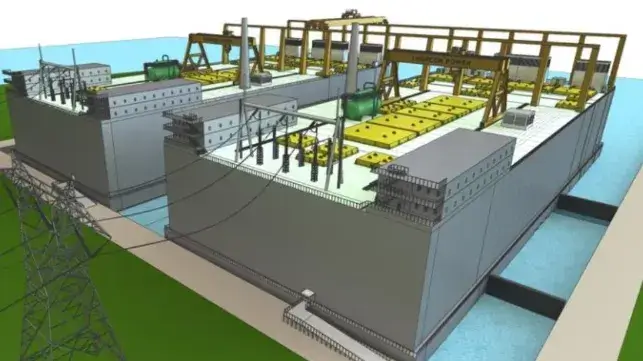
The development of SMR technology, which includes the Gen.IV — also known as Advanced Modular Reactors (AMRs) — is a watershed moment for marine deployment, including nuclear propulsion. These reactors are described as small (between 15 and 300 MWe per unit) and intended to be built in series in dedicated manufacturing plants and then transported (unfuelled) to shipyards ready for integration into assets. AMR designs include high-temperature gas reactors, molten-salt reactors, and liquid-metal reactors.
Notwithstanding their significant power capacity, one of the most notable features of AMRs, which greatly enhances their commercial potential, is their inherent safety characteristics. Widespread market skepticism of nuclear technology, including wider public concerns, is driven by the perception of the risk it poses in the event of an incident. However, Generation IV SMR technology’s passive safety design characteristics can improve such perception. Due to the new fuels and coolants that are used within the reactors, SMRs use natural phenomena to protect the reactor’s core integrity. These passive safety characteristics allow the systems to shut down without the need for external power, or human intervention, ensuring a “walk-away-safe” state during emergencies.
These safety characteristics also extend to the shoreside by theoretically requiring a much smaller emergency planning zone (EPZ) compared to water-cooler reactors. EPZs are designated areas surrounding a nuclear reactor which must have emergency plans, including evacuation and iodine tablets handouts, in the event of an incident.
Historically, the traditional application of EPZs definition criteria has represented a fundamental challenge when it comes to integrating nuclear technology into ships, both from a commercial, regulatory and operational perspective, as well as in public opinion. The itinerant operational profile of commercial shipping means that nuclear powered vessels, when such interpretation of EPZs is applied on a vessel reactor, result in unacceptable constraints to commercial ports.
This barrier is not one of technological immaturity but of a need for an update of the requisite insurance and liabilities provisions. The International Maritime Organization’s (IMO) SOLAS Code of Safety for Nuclear Merchant Ships is based solely on Pressurized Water Reactors (PWR), currently used in nuclear State navies, and is stuck in the 1980s context, when it was ratified. Further complexity is found in the lack of harmonized regulatory frameworks to govern the use of nuclear propulsion technologies in commercial maritime operations.
Regulatory realignment is key to securing nuclear ambition
The regulatory landscape that governs nuclear propulsion technology remains significantly fragmented. Nuclear regulation is at the national level/jurisdiction, while maritime regulation is at the international level. This fragmentation has led to a need to align various regulatory frameworks to allow for civil applications in order to resolve the issue of multiple conflicting jurisdictions that nuclear vessels will have to cross.
To secure the significant potential that modern nuclear propulsion technology represents, clear liability provisions must be established which are supported by coherent and codified regulatory structures.
The 1962 Brussels Conventions, which sought to establish a liability framework for nuclear-powered ships never entered into force (due to the lack of ratifying number of countries), whereas existing nuclear guides from the IAEA – namely the Standard Series SSR6 Regulations for the Safe Transport of Radioactive Material – do not provide for the transportation of nuclear reactors once they have been fuelled. This establishes a clear regulatory gap regarding the transport of non-propelled nuclear civil units such as floating nuclear power plants (FNPP).
Furthermore, the IMO’s 1981 Nuclear Ship Code is the key instrument that governs the deployment of nuclear civil propulsion, but the regulation needs to be drastically updated in order to accommodate the advances that have been made in modern nuclear propulsion technology.
Greater collaboration and alignment between the IAEA and IMO to define a modern regulatory framework will accelerate the development of nuclear propulsion in commercial shipping, unlocking significant investment within the sector.
Collaboration will accelerate nuclear propulsion commerciality
The IMO has implicitly acknowledged the need to address these regulatory inconsistencies and has directed its Sub-Committee on Ship Design and Construction (SDC) to prepare a roadmap for the revision of the Nuclear Ship Code to be presented for a vote at the Maritime Safety Committee 111.
As regulatory clarity develops, industry bodies remain committed to supporting the safe development of nuclear propulsion technologies. As a leading classification society, BV has taken a central role in this effort through participation in the International Association of Classification Societies (IACS) working group on nuclear propulsion, as well as in the different initiatives of marine nuclear deployment at the IAEA, and as a founding member of the Nuclear Energy Maritime Organization (NEMO), which was established to assist governments and international organizations with the modernization of the entire regulatory ecosystem for nuclear-powered ships and floating nuclear power plants (FNPP).
More recently, in November 2025, BV co-headed the signing with more than 30 European companies from the French and international nuclear and maritime sectors, of the Declaration for Accelerating Nuclear for Maritime Applications during the World Nuclear Exhibition, in Paris. The signing represents a landmark initiative that unites international stakeholders across the nuclear, maritime, research, financial and regulatory communities in a shared commitment to promote a European initiative to advance the safe and sustainable use of nuclear technologies for maritime decarbonization.
The challenges facing the development of viable commercial applications of nuclear propulsion technology are multifaceted and complex. However, positive market signals from both regulatory and industry bodies mark a tipping point in the technology’s progression. Through a renewed focus on regulatory alignment, and a concerted effort to dispel widely held misconceptions about the realities of nuclear propulsion technology within commercial operations, the maritime industry has the chance to establish the blueprint by which wider industries may benefit from the net-zero potential of nuclear technology.
Jose Esteve Otegui is Offshore Gas & Power Market Leader, Bureau Veritas Marine & Offshore, and Federico Puente Expel is Maritime Nuclear Strategy Leader, Bureau Veritas Marine & Offshore.
The opinions expressed herein are the author's and not necessarily those of The Maritime Executive.

No comments:
Post a Comment