“No state has the right to use force against vessels duly registered under the jurisdiction of other states,” said the Russian Transport Ministry
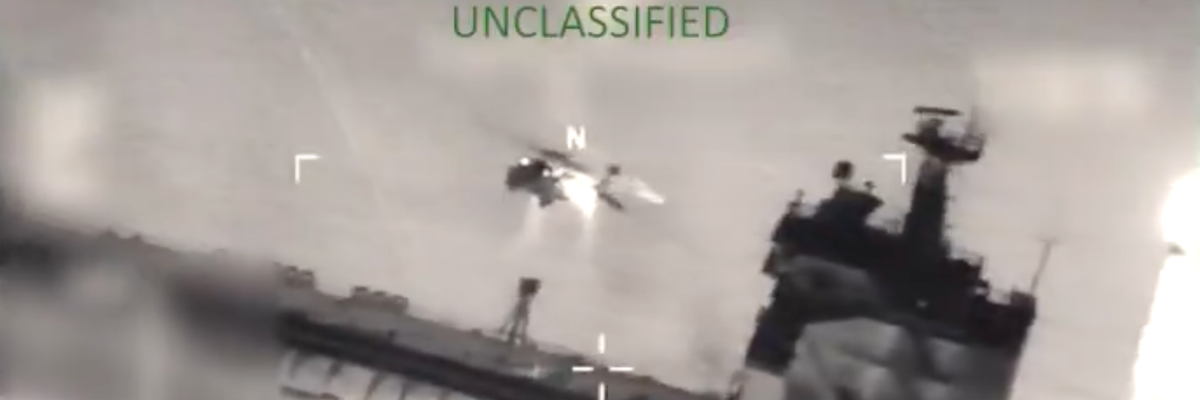
Footage published by the US Southern Command shows American forces boarding an oil tanker on January 7, 2026.
(Photo: US Southern Command)
Jake Johnson
Jan 07, 2026
COMMON DREAMS
Russian officials on Wednesday condemned the US military’s seizure of a Venezuela-linked, Russia-flagged oil tanker in the North Atlantic as a brazen violation of international law.
One Russian lawmaker, Andrei Klishas, said in response to the US military’s takeover of the oil tanker Marinera that the Trump administration “has engaged in outright piracy on the high seas.” Klishas noted that the operation followed “a ‘law enforcement operation’ that killed several dozen people in Venezuela.”.
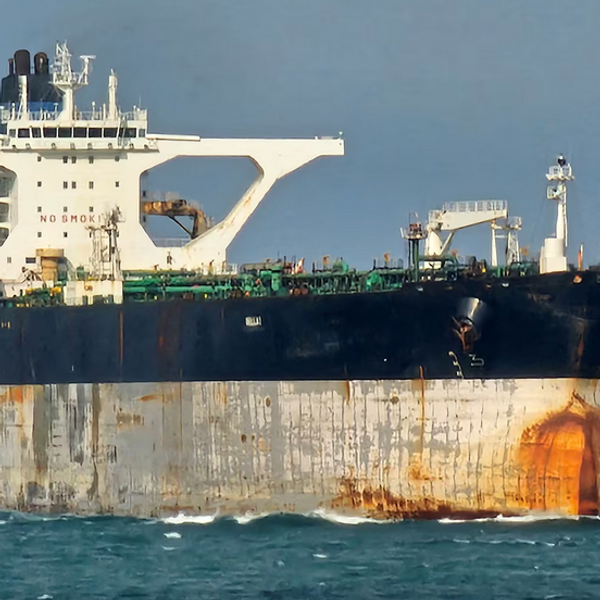
Russia’s Ministry of Transport said in a statement Wednesday afternoon that it lost contact with the oil vessel, which the US Coast Guard had been pursuing for weeks. Russia sent a submarine to escort the ship, which was reportedly en route to Venezuela to pick up oil.
“In accordance with the provisions of the 1982 UN Convention on the Law of the Sea, the high seas are governed by the principle of freedom of navigation, and no state has the right to use force against vessels duly registered under the jurisdiction of other states,” said the Russian Transport Ministry. (The US has not ratified the 1982 treaty.)
Citing unnamed US officials, Reuters reported that “Russian military vessels, including a submarine, were in the general vicinity” of the Marinera when US forces boarded and took it over on Wednesday. The Marinera was reportedly not carrying any cargo when US forces seized it.
“There were no indications of any confrontation between US and Russian military forces,” the outlet added.
The Marinera was one of two tankers seized by US forces in international waters on Wednesday as the Trump administration looks to exert total control over Venezuela’s oil industry. The other vessel, the M/T Sophia, was reportedly carrying around 2 million barrels of Venezuelan crude.
Unclassified footage posted to social media by the US Southern Command—and overlaid with dramatic music—shows American forces descending from a helicopter and boarding the M/T Sophia:
“This is America first at sea,” US Department of Homeland Security Secretary Kristi Noem declared.
British armed forces provided support to the United States in its operation to seize a Russian-flagged oil tanker in the North Atlantic on Wednesday, the Ministry of Defence (MoD) has confirmed.
Issued on: 08/01/2026 - RFI
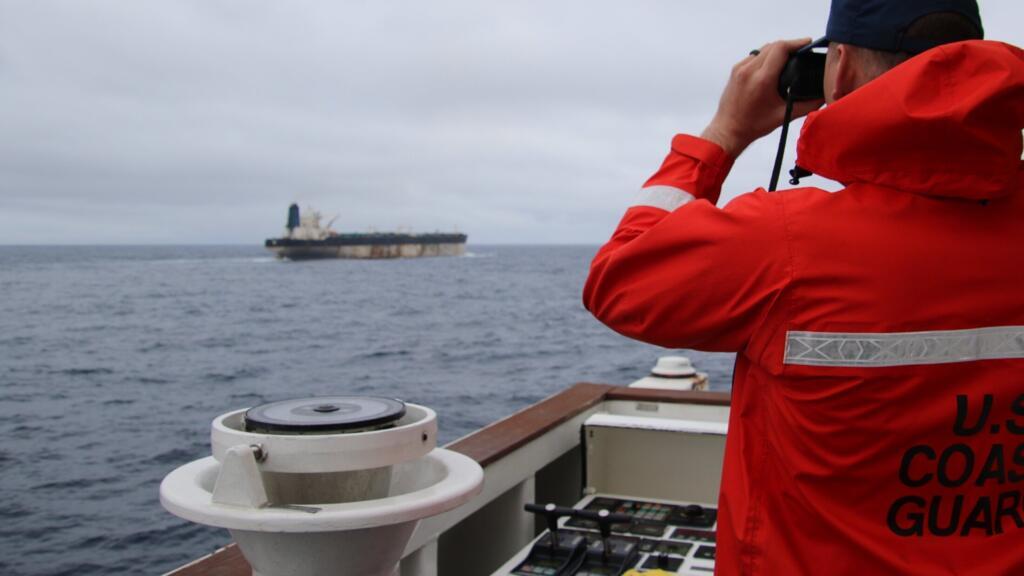
The US Coast Guard stopped the tanker – which was being shadowed by a Russian submarine – on Wednesday, after pursuing it for more than two weeks across the Atlantic as part of Washington's efforts to block Venezuelan oil exports.
Britain said its armed forces gave "pre-planned operational support, including basing" following a US request for assistance.
It said a military vessel provided support for the US forces pursuing the tanker, and the Royal Air Force provided surveillance support from the air.
In a post on X, the US military's European Command thanked the MoD for its "unwavering support" during the operation.
Crackdown on 'sanctions busting'
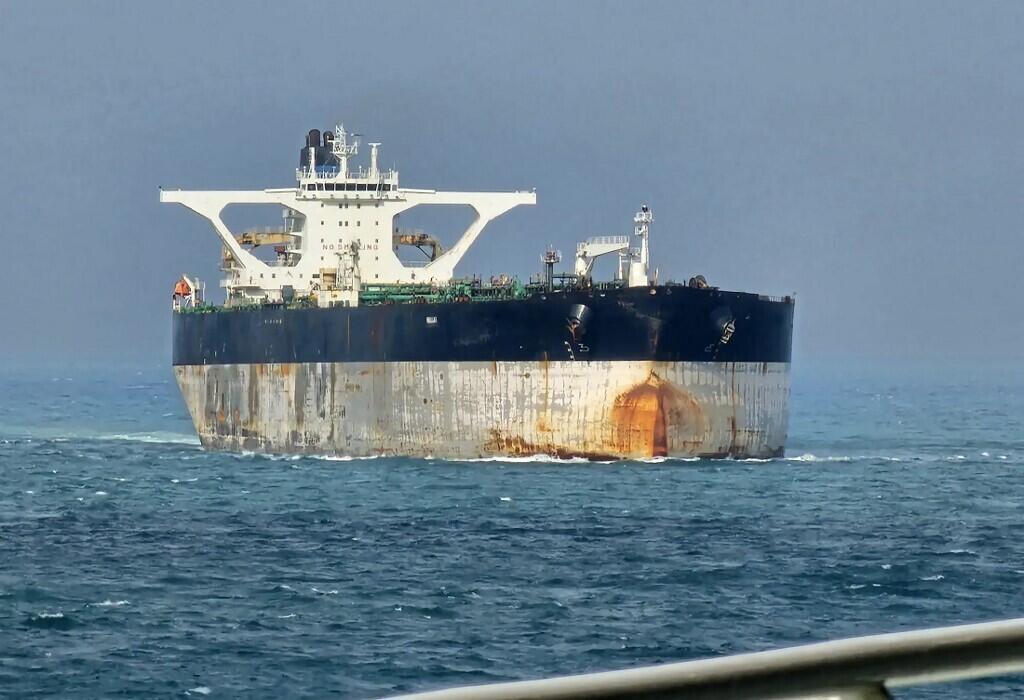
The Marinera, a Venezuelan-linked tanker formerly known as the Bella-1, was not carrying any oil.
But the ship is alleged to be part of the shadow or "ghost" fleets used by Russia, Iran and Venezuela to avoid western sanctions.
UK Defence Secretary John Healey said the operation targeted a vessel "with a nefarious history" linked to Russian and Iranian sanctions evasion networks.
“This action formed part of global efforts to crack down on sanctions busting,” he said in a statement.
He said British support was provided "in full compliance with international law", adding that the UK "will not stand by as malign activity increases on the high seas".
He added that the United States was the UK's closest defence and security partner: "The depth of our defence relationship with the US is an essential part of our security, and today's seamlessly executed operation shows just how well this works in practice."
The Marinera has been under sanctions from the US treasury since June 2024.
The US accuses it of carrying illicit cargo for the Iranian-backed Lebanese militant group Hezbollah.
(with newswires)
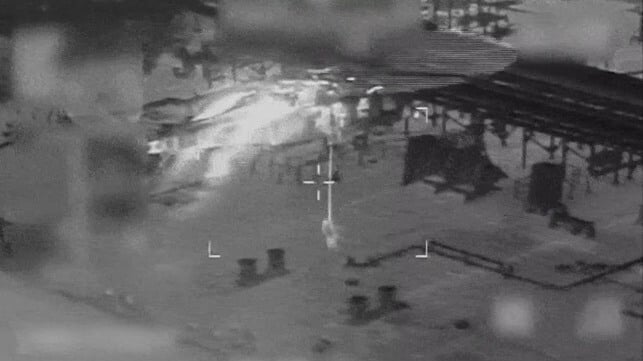
What Does UNCLOS Say About the U.S. Boarding of Bella 1?
[By Andrew Serdy]
Relations between the US and Russia have hit a fresh bump after the US coastguard boarded a vessel sailing in the Icelandic waters, claiming it was in breach of sanctions on Venezuela. The incident immediately sparked claim and counter-claim from the US and Russia.
The US claimed it was acting correctly to execute a warrant issued by a US federal court. Russian officials, meanwhile, were reported by the country’s Tass news agency as saying this was in clear breach of the law of the sea, saying “no state has the right to use force against ships properly registered in the jurisdictions of other states”. The statement asserted that the Bella 1 – which was recently renamed as the Marinera – had received a temporary permit to sail under the Russian flag on December 24.
Unlike the dramatic abduction of Venezuela’s president, Nicolás Maduro, from his Caracas palace on January 3, which the United States does not even appear to be trying to defend in international law terms, the interdiction of the Marinera/Bella 1 appears to raise a new point of the law of the sea which may offer at least some prospect for Washington to show itself to be on the right side of the law.
Before the change of flag, the US seemed to be selecting with some care the ships carrying Venezuelan oil that it was targeting. These were either stateless or suspected of flying a false flag, which provides no protection under Article 92 of the United Nations Convention on the Law of the Sea (UNCLOS), which is also the customary international law rule for non-parties such as the US.
Stateless ships are vulnerable
Being stateless, or acting in a way that gives warships on the high seas a valid basis for treating it as though it were stateless, is a position that any ship would be recommended to avoid if at all possible. A ship that is stateless has by definition no flag state to assert the protective exclusive jurisdiction over it on the high seas.
UNCLOS also provides that a ship which sails under the flags of two or more States, and swaps them depending on the circumstances, "may not claim any of the nationalities in question with respect to any other State." This means it can be regarded legally as stateless.
Thus, until the change of flag reported on December 31, not just the US but any State was entitled to treat the Marinera/Bella 1 as stateless. This made it vulnerable to interception on the high seas and the exercise of domestic law enforcement jurisdiction over it by the State of the interdicting warship or coastguard vessel.
So the legal position remains unclear. It may be a question of whether the US was already pursuing the Marinera/Bella 1 when it changed its flag. If so, the US may be entitled to disregard the re-registration.
UNCLOS allows for what it refers to as “hot pursuit”. It says that: “The right of hot pursuit ceases as soon as the ship pursued enters the territorial sea of its own State or of a third [another] State.” Since no other circumstance in which the right ceases is mentioned, including the ship ceasing to be stateless, this leaves it open to the US to argue that it was already pursuing the Marinera/Bella 1 and was thus not required to call off its pursuit.
But this argument has limited usefulness, as there’s doubt as to whether this was actually a hot pursuit at all. The term is used for pursuits that begin in one of the maritime zones of the State conducting it – not on the high seas.
Claim and counter-claim
So far, the Russian Ministry of Transport has claimed that the US action is contrary to the Article 92 rule. Russia insists that the change of registry occurred as long ago as December 24. To counter this, the US could say that it wasn’t until the Russian flag was painted on the ship’s hull, which was reported on December 31, that the Article 92 rule could be invoked against the US.
Article 92 also lays down that: “A ship may not change its flag during a voyage or while in a port of call, save in the case of a real transfer of ownership or change of registry.” This is often misunderstood and assumed to mean that a change of flag in mid-voyage – such as appears to have occurred in this case – is not permitted at all. But a closer reading reveals that this is not the case. What it prevents is a change of flag without a corresponding change of registration.
But that is not the position here. Assuming there was a real registration to Russia, that is what counts. Painting on a flag because you don’t have a physical one is simply evidence of that.
Reflagging while under pursuit is a new point in the international law of the sea to the extent that no previous incident of it is known. In the absence of a clear answer on this, the way this incident plays out is itself going to set the precedent for the future on this issue. We’ll need to hear the competing legal narratives of the US and Russia to see which of them is the more convincing.
Andrew Serdy is Professor of the Public International Law of the Sea at University of Southampton.
This article appears courtesy of The Conversation and may be found in its original form here.

The opinions expressed herein are the author's and not necessarily those of The Maritime Executive.
U.S. Coast Guard Seizes Fugitive Tanker After Transatlantic Chase
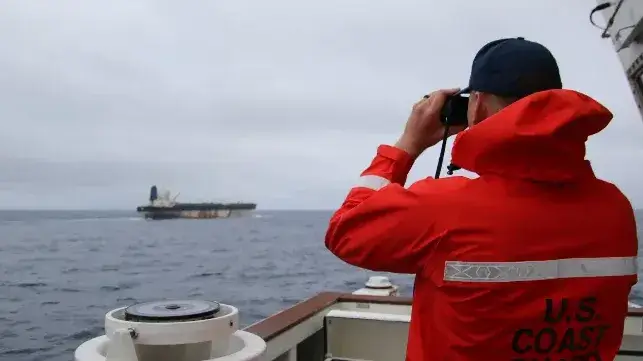
After a protracted low-speed chase across the North Atlantic, the U.S. Coast Guard has seized the sanctioned shadow fleet tanker Bella 1 in international waters near the Faroe Islands. It was the second tanker seizure of the day for U.S. forces, and the fourth since the pressure campaign on Venezuelan oil exports began.
In late December, American forces began chasing Bella 1 (Marinera, IMO 9230880), a sanctioned VLCC with a past in the Iranian oil trade. The vessel was in ballast and approaching Venezuela on a voyage from Iran. As U.S. forces closed in to carry out an interdiction, Bella 1 refused to permit boarding and reversed course. She headed out into the North Atlantic, making for the gap between the UK and Iceland. Mid-voyage, the anonymous shipowner of Bella 1 attempted to transfer the ship to the Russian register and renamed her the Marinera. Nonetheless, U.S. authorities regard the ship as stateless and subject to sanctions.
According to Russian state media, the U.S. Coast Guard conducted a previous boarding attempt during the "pursuit," but was unsuccessful because of the often-rough winter weather of the North Atlantic.
The cutter USCGC Munro was on scene, and other military assets assisted the operation, according to the Wall Street Journal and ABC. Russian state-owned station RT released a photo appearing to show a black MH-6 "Little Bird" helicopter - a favorite tool of U.S. special operations forces - just off the Bella 1's bridge wing.
Air assets suitable for supporting the interception at sea have been noted arriving at US airbases in the UK in recent days, including at two AC-130J gunship aircraft. At the beginning of the week, a US Osprey tiltrotor aircraft was seen conducting a training exercise, dropping divers into the sea off the coast of Felixstowe. Felixstowe is close to the base at RAF Mildenhall, where the Osprey-equipped 7th Special Operations Squadron is based. Additionally, three of the small Pilatus surveillance turboprops operated by USAF Special Operations Command conducted a flight over the area on the same day.
USAF C-17 aircraft may have also delivered heavily-armed U.S. Army MH-60M Black Hawk helicopters to RAF Fairford in the west of England, based on flight records showing the cargo planes' point of departure.
On Wednesday afternoon, UK Defense Minister John Healey confirmed that there was British involvement in the seizure. The fleet auxiliary RFA Tideforce provided support for the operation, along with RAF Rivet Joint and Poseidon surveillance aircraft.
Russian connection
While the U.S. government view is that the vessel remained stateless at the time of the boarding, Moscow asserts that the vessel was properly transferred onto the Russian flag registry days beforehand, and that the seizure was a violation of international law. Russia's embassy in Washington had previously asked the Trump administration to call off the chase, according to the New York Times.
"In accordance with the 1982 UN Convention on the Law of the Sea, freedom of navigation applies in the high seas, and no state has the right to use force against vessels duly registered in the jurisdictions of other states," the Russian Transport Ministry said in a statement.
US officials told Reuters that Russian ships and a submarine were in the “general vicinity” when the seizure took place, but these assets did not apparently intervene.
The Russian government has confirmed that there were Russian citizens aboard the vessel, and called for their "humane and proper treatment" and prompt repatriation. The ministry did not make a public demand for the vessel's release and return.
Charges against crew possible
In a briefing Wednesday, White House Press Secretary Karoline Leavitt said that the tanker has been seized, and the crew will face criminal charges for their involvement in the chase.
"The crew is now subject to prosecution for any applicable violation of federal law, and they will be brought to the United States for such prosecution, if necessary," Leavitt said. "The vessel had a judicial seizure order."
Attorney General Pam Bondi added that the same standard would be applied to other mariners in similar pursuit situations.
"As a consequence of failing to obey the Coast Guard’s orders, members of this vessel are under full investigation and criminal charges will be pursued against all culpable actors," Bondi said in a statement. "The Department of Justice is monitoring several other vessels for similar enforcement action - anyone on any vessel who fails to obey instructions of the Coast Guard or other federal officials will be investigated and prosecuted to the fullest extent of the law."
Bella 1's AIS signal has gone dark, making her movements more difficult to track. Previous tanker seizures during the pressure campaign have ended in diversion to U.S. waters under U.S. Coast Guard escort - in this case, a long transatlantic voyage.
U.S. Captures Fourth Venezuela-Linked Tanker in the Atlantic
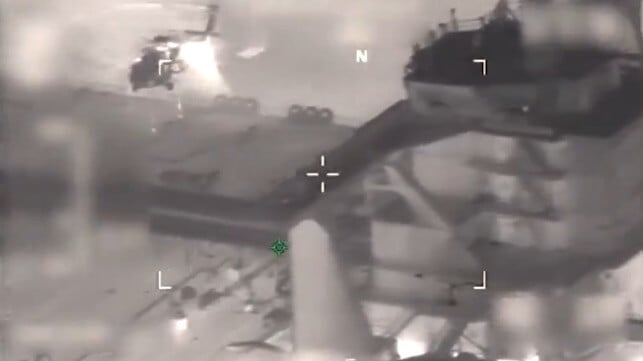
On Wednesday, in addition to the boarding and seizure of the fugitive tanker Bella 1, U.S. forces captured the stateless, sanctioned tanker Sophia (aka Varada Blessing, IMO 9289477) in the Atlantic.
The Sophia was in laden condition with about 1.8 million barrels of heavy Venezuelan crude aboard, according to TankerTrackers.com. The consultancy said that she is one of 15 tankers that got under way and attempted to penetrate the U.S. "blockade" of Venezuelan oil exports in recent days, following the U.S. raid that captured Venezuelan dictator Nicolas Maduro and transferred power to Maduro's vice president.
The U.S. State Department and the Pentagon have pledged to keep pressure on the Venezuelan government through the use of tanker seizures as needed, and U.S. Southern Command said in a statement that it is committed to "crush illicit activity in the Western Hemisphere."
"The United States continues to enforce the blockade against all dark fleet vessels illegally transporting Venezuelan oil to finance illicit activity, stealing from the Venezuelan people. Only legitimate and lawful energy commerce - as determined by the U.S. - will be permitted," said Secretary of War Pete Hegseth. "The blockade of sanctioned and illicit Venezuelan oil remains in full effect - anywhere in the world."
Overall, the White House plans to obtain 30-50 million barrels of Venezuelan oil, to be sold at its market price for American disposition. "That money will be controlled by me, as President of the United States of America," President Donald Trump said in a statement Wednesday. At current discounted pricing for extra-heavy Merey crude, the transfer would be valued at approximately $2 billion, and would offset the cost of the record-size U.S. military deployment to the Caribbean.
Seizing currently-underway Venezuelan tanker cargoes would go a considerable distance towards the White House's 50-million-barrel target. The U.S. has already captured approximately five million barrels of oil on laden tankers, all currently on the water and en route to the U.S. Gulf Coast.
The seizures also send a message to Iran, which is heavily targeted by U.S. oil sanctions. All four tankers seized so far have previously done business with Iranian oil exporters, and all have been listed by the U.S. Treasury for that connection. Shadow-fleet shipowners often deal in multiple "sensitive" crude markets, and opting to transact with Iran's military-controlled export network now carries the risk of physical interdiction - even after the vessel moves on to other markets.
TankerTrackers.com warned that the same risks apply for crewmembers aboard shadow fleet tankers, and it reposted its complete list of suspect vessels.
Bulgaria Seeks Reimbursement from Owners of Salvaged Shadow Fleet Tanker
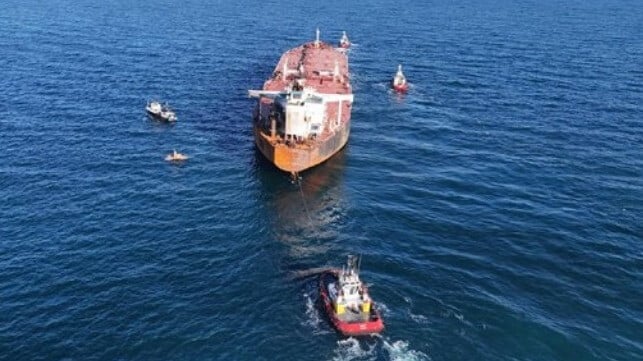
Bulgaria’s Maritime Administration presented a bill to the representatives of the Chinese-owned shadow fleet tanker that it was forced to salvage last month after it washed up on the shores of Bulgaria. The vessel had been attacked by Ukrainian forces while it was in the Black Sea heading to Russia to load crude oil.
The Ministry of Transport and Communications announced on Wednesday, January 7, that it had presented a bill for €270,371 ($315,802) using a private bailiff to deliver the notarized summons. It said the Maritime Administration had incurred the expenses, which included securing three tugs and a specialized generator that was used to power the ship’s hydraulic system to raise the anchor. The summons demanded payment by January 12.
Before day’s end, the Ministry reported it had received the funds from the shipowner’s agent in Bulgaria. It said payment in full was received and would be refunded to the state treasury.
The tanker Kairos had washed up near the Bulgarian seaport of Ahtopol on the afternoon of December 5, with the Bulgarian authorities accusing a salvage tug of releasing the hulk after having brought it from Turkish waters. Ukraine attacked the vessel near the coast of Turkey on November 28 using its Sea Baby drones, setting the empty tanker on fire. Turkish authorities aided in the evacuation of the crew and the firefight.
Bulgaria has continued to demand an explanation over the circumstances of the tow and where the tanker was headed before it drifted toward the port. An emergency operation airlifted some of the crewmembers off the ship and provided supplies as well as an electrical generator. Bulgaria had said it would seek a full reimbursement for its costs, including the tow on December 15 to place the hulk in a more secure location in the Gulf of Burgas.
Because the ship is under EU sanctions, Bulgaria reports that it cannot provide repair services to the vessel. It was permitted to provide emergency services and a port of refuge under the sanctions, but no further assistance is permitted. The Ministry reports that it expects the shipowner will take the necessary actions to prepare and remove the tanker from Bulgarian territorial waters.
Issued on: 08/01/2026 - FRANCE24
The phrase “shadow fleet” refers to ageing oil tankers that operate under false flags to bypass Western sanctions on Russian, Iranian, and Venezuelan crude, a practice Russia has reportedly invested billions of euros in since 2022 to maintain its oil exports. But how these shadow, or so-called “ghost,” fleets function in practice is less widely understood, August Hakansson investigates.

No comments:
Post a Comment