Britain: Poverty and inequality fuel Labour’s crisis
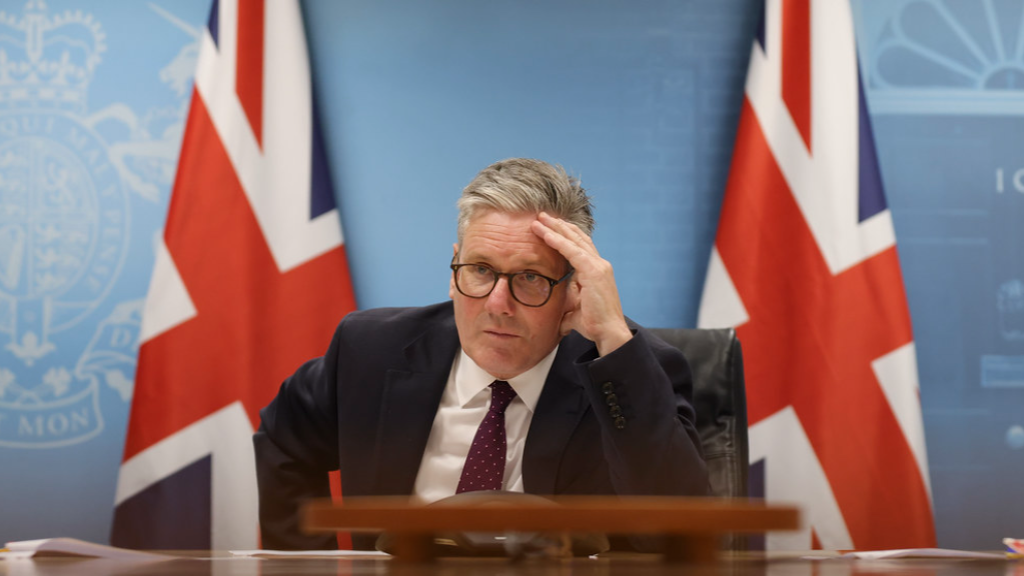
Despite its huge parliamentary majority, Britain’s Labour government is in turmoil after its vote collapsed in the May 7 local council elections and defeat in the February 26 parliamentary by-election in a working-class Manchester suburb to the Green Party.
The crisis has left Prime Minister Keir Starmer facing a challenge from Wes Streeting, who resigned as health secretary on May 14. If Streeting collects enough MP support, a leadership election may ensue. Should that occur, potential opposition to Streeting could come from former deputy leader Angela Rayner or former leader Ed Miliband. The most popular politician in Britain, Manchester mayor Andy Burnham, is not an MP, and therefore unlikely to stand.
In any case, none of the potential candidates are committed to radical policies that could resolve the chronic problems of poverty, inequality, housing shortages and a hugely underfunded health service (NHS). If anything, Streeting would likely push the party further right — on public spending, on Palestine and on the right to protest.
One fact starkly reveals the depth of Britain’s crisis: the difference in healthy life expectancy between rich and poor areas. Life expectancy without a major health condition has fallen from 62 years to 60 years. But the gap between rich and poor areas has widened to about 20 years. Poverty clearly makes people ill.
End of Labour-Conservative dominance
The local council elections saw more than 1000 Labour councillors defeated, alongside substantial gains for Nigel Farage’s far-right Reform UK party and the Greens, led by dynamic new leader Zack Polanski.
With only half of local council seats up for re-election, exact percentages for each party are difficult to calculate. But the raw data shows Reform winning 26%, the Green Party 18%, Labour and the Conservatives both on 17%, and the Liberal Democrats 16%.
As Polanski noted, these results signal “the end of Conservative-Labour two-party politics. The real battle is now between the Greens and Reform.”
The depth of Labour’s crisis is such that many are asking whether it can survive. When even the Labour loyalist paper, Tribune, says the party is on its last legs, the situation is at least deadly serious.
Green Party challenge
The vote to Labour’s left is now dominated by the Greens. Polanski has been responsible for positioning the Greens more clearly as an anti-austerity party focused on housing and environmental issues, while also condemning the US-Israeli wars on Gaza and Iran.
As a result, Green Party membership has undergone a sensational rise — from 54,000 in early 2024 to an estimated more than 220,000 today.
The Greens benefited from the fiasco of Your Party (YP), with Jeremy Corbyn and his trade union allies carrying out a split before its founding conference. YP stood no candidates in these elections.
For the moment, YP is effectively dead as an electoral force. This is a great disappointment to the hundreds of thousands who expressed interest in joining YP, but have now moved on.
Elections for the Welsh and Scottish parliaments were also held. In Wales, Labour suffered an historic defeat at the hands of Reform and Plaid Cymru (the Party of Wales). Plaid, a moderate left-wing nationalist party, will now form a minority government. All Welsh parties have said they will not work with Reform.
In Scotland, the Scottish National Party was again the largest party, but will once more need support from other parties to pass particular bills.
What’s behind the crisis?
Like many decisive political events, the issues that started the current turmoil are underlain by more fundamental events.
On the surface, it began with the revelation that Starmer’s choice for ambassador in Washington, Peter Mandelson, had been flagged by security services as problematic due to his links with Jeffrey Epstein. Starmer claimed the vetting problems were hidden from him — an obvious invention.
Since then, each week has brought a fresh scandal. But the real problem is much deeper.
The common thread is the deference shown by Britain’s major parties towards wealth and power. Even without controversies such as the Mandelson-Epstein revelations, Labour would still be trapped in the contradictions of its economic strategy.
The growth myth
Starmer and finance minister Rachel Reeves promised economic “growth” would magically generate tax revenue. It did not. That partly reflects a sluggish global economy. But, more importantly, it reflects a domestic context in which working-class households and poorer segments of the middle class lack spending power.
The result? Millions face low pay, inadequate benefits and deteriorating public services. The NHS and transport systems are visibly struggling. Meanwhile, the housing crisis grinds on, locking people out of stable and affordable homes.
Yet despite this, Labour has pressed ahead with deeply unpopular policies: keeping the two-child benefit cap, scrapping winter fuel payments, and attempting to cut disability mobility payments. These moves were only withdrawn after backbench revolts. Add to that the retreat on key net-zero pledges and refusal to take meaningful action over Gaza, and the political damage becomes clearer.
Decaying public services and housing
Labour has bound itself to strict fiscal rules, meaning improvements to the NHS, elderly care and housing remain elusive. Local government too is near breaking point. Across public services, the picture is bleak.
Water is a glaring example. Privatisation has delivered vast profits for investors, rising bills for consumers, and chronic under-investment in infrastructure. The result: polluted rivers and sewage-strewn beaches.
Housing is among the Starmer era’s clearest failures. Labour pledged to boost housebuilding dramatically, expand affordable housing, and sweep away planning “obstacles”. Yet little meaningful public investment has followed.
Promises of large-scale social housing construction have not materialised. Labour promised 300,000 new homes each year until 2029; last year, only 122,500 were built.
Everyone knows that climbing onto the housing ladder is hugely difficult when the average house price across Britain is £300,000 and a staggering £553,000 in London. Rent for a two-bedroom flat is also extremely high. Many private renters are paying 50% or more of their disposable income on rent or mortgage repayments.
The housing crisis and low wages are graphically revealed by the fact that about 30% of people are still living at home at 30.
The housing crisis remains a major driver of poverty and insecurity. High housing and utilities costs lead to a substantial transfer of disposable income to finance capital. This, in turn, means hundreds of thousands of households are using their savings and credit cards to sustain household expenditure. They are, in effect, in debt bondage.
All of this creates fertile ground for Reform.
Copying Reform policies
Labour’s slide in the polls was predictable. So too was its failed attempt to deal with Reform by echoing it. Reform cannot be beaten by copying its “keep them out” and “send them back” sentiments.
Instead, the “stop immigration, start repatriation” policies of Enoch Powell and the National Front in the 1970s are now becoming the main parties’ policies — and, shamefully, Labour government policy.
The right’s obsession with small boats crossing the Channel, restrictions on care homes, and the NHS recruiting from abroad, all pose the threat of drastic cuts in care home places and a further squeeze on NHS workers.
If the aim is to encourage British people to take up these roles, this is unlikely to succeed. Unemployed people will not want jobs that offer low pay and very long shifts, and need skills they do not have.
Furthermore, new restrictions on international students, including on family reunions for graduates, will affect higher education finances and the number of skilled workers and researchers wishing to remain in Britain.
The widely held but utterly false view that immigrants are to blame for crisis-ridden services ignores the real causes: decades of under-investment, privatisation and spending squeezes.
The tax taboo
Meanwhile, mention higher taxes and the major parties protest that ordinary people are already stretched. This deliberately obscures where substantial tax revenue could come from.
Corporation tax remains low by international standards. Vast profits are lightly taxed or not at all. Enormous personal wealth sits shielded in offshore havens. Britain is not short of money — it is short of political will.
Dozens of transnational corporations reap vast profits in Britain. They pay minimal tax, claiming to be headquartered in Ireland, Switzerland or Luxembourg, and asserting that their local subsidiaries pay substantial licensing fees, leaving little or no taxable income in Britain.
High-tech giants such as Apple, Amazon, Jigsaw (Google), Meta (Facebook), Microsoft, X (Elon Musk), and OpenAI all benefit from a low or no-tax regime for their British operations.
Meanwhile, untold billions of taxable wealth globally, valued at £388 billion a year, evade tax in offshore havens, the majority of which are British overseas territories.
New Labour’s shadow
What is now unravelling is an attempt to recreate Tony Blair’s New Labour, which was in power between 1997–2010. Across Labour’s leadership — from Streeting to Miliband, Rayner to Starmer — there is broad agreement that New Labour’s record was something close to sacred: pragmatic, modern and electorally successful.
But that is a myth. New Labour’s support began to drain due to Blair’s role in backing the US wars on Iraq and Afghanistan. Domestically, it ended in austerity and political collapse after years of indulgence towards banks and financial institutions.
When mortgage-backed investments imploded in 2008, the state bailed out Northern Rock, Lloyds and the Royal Bank of Scotland, giving significant sums to other banks as well. The cost was in the hundreds of billions of dollars. Austerity followed — first under Labour chancellors Gordon Brown and Alistair Darling, then intensified under David Cameron and George Osborne.
Public-private partnerships left long-term debts that continue to strain health budgets. Some hospital trusts are paying millions annually in interest before funding frontline services.
The tight spending grip is also evident in the slow compensation for victims of the Post Office scandal, the contaminated blood catastrophe and the Windrush scandal. Women affected by the rapid rise in the state pension age have been denied compensation entirely.
Mandelson and the party machine
There is little reason to shed tears for Peter Mandelson or Morgan McSweeney, Starmer’s former chief of staff. Both were, at different times, instrumental in marginalising Labour’s left and steering the party toward intensified neoliberal and anti-left-wing policies.
McSweeney rose the Labour ranks under the protective wing of Steve Reed, then leader of Lambeth Council. As Starmer’s advisor, McSweeney is said to have developed close links with Mandelson.
Alongside Blair and Brown, Mandelson was a principal architect of “Blairism”, under which the largely symbolic Clause 4 on common ownership was swept away, party policy shifted rightward, and relations with the wealthy elite flourished.
Mandelson’s close connections with the mega-rich and his strongly pro-US, pro-Israel positions were positive credentials for an incoming ambassador to the US. After all, the US president also has multiple connections to the rich and famous internationally — a world in which hostility to the needs and rights of ordinary people is taken for granted.
Mandelson once said: “Every morning I wake up and think about how to bring down Jeremy Corbyn.” The party’s right wing attempted to remove Corbyn first in 2016, by standing Owen Smith against him. Smith’s campaign was backed by Starmer, Miliband, Yvette Cooper, Sadiq Khan, Margaret Beckett, Harriet Harman, dozens of other Labour MPs, and some trade unions, including GMB Union and the Union of Shop, Distributive and Allied Workers.
The outcome was a humiliating defeat for Smith, who won just 38% of the vote. But drill down and you find that Smith won 81% of MP votes, 46% of trade union votes, and 40% of constituency member votes.
These votes, however, were ultimately swamped by those of the 123,000 registered supporters who were permitted to vote in 2015 and 2016. This was a shock to the Labour right, who decided something much more serious had to be done to undermine Corbyn.
The core question
The crisis facing Labour is not just about personalities — it is about political economy. Public services are crumbling. Inequality is widening. Living standards are stagnant. But the party leadership refuses to challenge the structures that produce these outcomes.
There is an unavoidable conclusion: if Britain is to repair its public realm — from the NHS to housing, from local councils to environmental infrastructure — state revenue must rise.
Yet government spending is a lower percentage of GDP than in comparable states. In Germany it is 58% of GDP; in France 57%. In Britain, it is about 40%, just above the US rate of 37-38%. These are not just statistics; they represent the extent to which public spending has been repressed in Britain.
Political movements advocating a realignment of the British economy towards working people, the poor and the victimised internationally face a major political struggle. Without it, the far right will walk into the political vacuum the left has failed to occupy.
A government that works for the majority — the millions without significant wealth, who struggle from one payday to the next — must bite the bullet of a realignment of wealth and power. Until that question is confronted, the cycle of disappointment will continue — and the political space will remain open to Reform, the Tories or a coalition of both.
Phil Hearse is a veteran revolutionary socialist, a member of the National Education Union and a supporter of Anti-Capitalist Resistance.
May 17, 2026
Arab News
By Yossi Mekelberg
When the results from the May 7 local elections in England, as well as the Scottish and Welsh parliamentary elections, began to emerge, there were few genuine surprises. Yet the overall outcome still felt like a political earthquake in Britain and the tremors are still being felt. What had essentially been a two-party system for nearly a century is increasingly becoming a fragmented multi-party landscape, reflecting growing socio-political malaise, confusion, and disillusionment.
For the governing Labour Party, it is impossible to sugarcoat these results. Losing nearly 60 percent of council seats in England, losing control in Wales for the first time in a century, and suffering setbacks in the Scottish parliament amounted to a resounding vote of no confidence across the country. In Wales, the nationalist Plaid Cymru emerged victorious in the Senedd election, albeit without an outright majority, while in Scotland the SNP, despite having appeared politically almost on the ropes not long ago, will continue to govern and advocate for Scottish independence. Altogether, these developments raise serious questions about the long-term cohesion and survival of Britain as a unified political entity.
If the results for Labour and its leader, Prime Minister Keir Starmer, were disastrous, they could not conceal what was another poor showing for the Conservatives. The Tories lost hundreds of council seats in England and remain barely a political force in Scotland and Wales. Instead, the biggest winner of these elections was the nationalist-populist Reform Party, the political descendants of the movement that brought on the rest of the country the Brexit debacle. Also making gains were the Greens, who have increasingly moved beyond environmentalism toward a broader left-wing populist agenda.
The electorate expressed clear disdain for Britain’s two traditional governing parties, Labour and the Conservatives, and neither can afford to ignore this message if they wish not only to win the next general election, but to remain politically relevant. Reform’s gains are no longer a fluke but part of a growing trend of an increasingly insular political state of mind, centered primarily around anti-immigration and anti-multiculturalist rhetoric and policies, with little else beyond that defining agenda.
In Scotland, and increasingly in Wales as well, the call for independence is becoming louder, more forceful, and, for many, more persuasive. I belong to those who wish to see the Union remain intact. However, when Scotland voted in the 2014 referendum on whether it should become an independent country, just over 55 percent voted to remain in the UK, while nearly 45 percent supported independence.
One of the strongest arguments made by opponents of independence at the time was that leaving would also mean leaving the EU and would likely make Scotland poorer. But since then, Brexit has happened, leaving Scotland without either independence or EU membership. Now, with Reform gaining momentum and potentially capable of winning a future general election, Scotland also faces the prospect of rising English nationalism. This is bound to reignite the debate over Scottish independence with renewed intensity.
Another unsurprising consequence of last week’s elections has been the growing call within Labour ranks for Starmer to step down. Already, 81 Labour MPs have reportedly expressed support for a future leadership contest, while four junior ministers have resigned. Such developments were perhaps inevitable. For at least a year there has been growing sentiment within the party that the prime minister is, to put it bluntly, failing both the country and Labour itself, and that unless he changes course, the party risks defeat at the next general election.
With the Conservatives at their weakest in years, and some of their supporters already jumping ship to Reform, the path for Nigel Farage to become the next prime minister appears increasingly as plausible as it is undesirable. For many across the country, even the prospect of such an outcome is deeply unsettling, given Farage’s leading role in Brexit, arguably one of the most self-destructive acts of British foreign and economic policy in modern history, and what he represents ideologically and politically. In a first-past-the-post electoral system, his dream of being the prime minister could yet become the country’s nightmare.
To be fair, Starmer has earned much of the criticism directed at him. His cautious and incremental approach seems ill-suited to a period of profound economic and social predicament, when many voters expect bold policies and a greater sense of urgency, particularly on domestic issues. His natural caution often holds him back. Yet while Starmer may not be a charismatic communicator, he has demonstrated statesmanship on foreign policy, especially regarding Ukraine and, to a significant extent, Iran and Greenland.
Nevertheless his recent speech after the elections, aimed at saving his leadership, is unlikely to reassure either his critics within Labour or voters more broadly that he can adequately address the pressing issues affecting everyday life: the cost-of-living crisis, job creation, unaffordable housing, overstretched transport systems, and the toxic national debate surrounding immigration.
However, replacing an elected prime minister, especially one who close to two years ago won a huge parliamentary majority, is hardly a solution nor is it desirable. Britain has developed a troubling habit of changing prime ministers without addressing the deeper long-term structural causes of its problems. Since 2016, the country has had six prime ministers, averaging less than two years per leader. With the exceptions of Boris Johnson, whose government broke its own pandemic regulations, and Liz Truss, whose economic policies brought the UK economy to its knees, leadership changes should ultimately be decided by voters in the ballot box.
Starmer has done nothing remotely comparable to Johnson or Truss, and he was elected with a mandate to govern for five years, even if the law allows for his removal. The real question is whether Starmer has learned enough from his first two years in office to correct the course of what increasingly resembles a drifting ship.
I am not convinced that his policy U-turns should always be used against him. While it is preferable for leaders to get things right the first time, it is still better to have a leader willing to correct course in response to justified criticism than one who stubbornly refuses to acknowledge errors at all, provided such reversals do not become habitual.
Following this humiliating electoral setback, Labour faces a choice: descend further into destructive infighting or learn from the Conservatives’ mistakes and unite around a renewed sense of purpose. With such a commanding parliamentary majority, voters expect Labour to do what they should have done immediately after the 2024 general election and become focused on serving the public rather than perpetuating Westminster’s endless internal dramas.
As for Starmer himself, he may need to become less “Starmer-like”: less managerial, less cautious, and more capable of translating lofty promises of national renewal into tangible policies that ordinary people can genuinely feel in their daily lives and be prepared to support wholeheartedly.
As British Prime Minister Keir Starmer faces increasing pressure to step down, several potential rivals are emerging for a potential leadership race within the Labour Party. Among them are the mayor of Greater Manchester, the outgoing health minister and the former deputy prime minister.
Issued on: 15/05/2026
By: FRANCE 24

As embattled British Prime Minister Keir Starmer faces a likely leadership contest, several rivals are getting into position to stand against him to lead the Labour Party and the country.
If a leadership race is triggered, the winner will be selected by the party membership. Here are the possible contenders:
Wes Streeting
The 43-year-old rising Labour star resigned as health minister Thursday with a barbed message saying he had "lost confidence" in Starmer.
He urged debate on the party's future direction with the "best possible field of candidates", rather than launching a solo bid.
UK health secretary Wes Streeting resigns and is expected to challenge Keir Starmer's leadership
Streeting, whose full name is Wesley, was one of the most visible Labour figures during the 2024 election campaign and hailed as one of its best communicators. Streeting is popular on the party's right.
He comes from a working-class background, growing up on an east London municipal housing estate he has described as "grim" and attending state school.
Streeting has talked about his grandfather being an armed robber who knew notorious London gangsters the Kray Brothers. After studying at Cambridge University, he was elected an MP in 2015.
He came out as gay while a student. His partner is a communications adviser.
In a potentially damaging connection, Streeting initially defended Labour grandee Peter Mandelson when he was sacked as US ambassador over his association with US sex offender Jeffrey Epstein.
Streeting has denied he was close friends with Mandelson.
Angela Rayner
Former deputy prime minister Angela Rayner hinted at standing this week when she announced she has resolved a tax issue that led her to leave the government.
Rayner is well-liked on Labour's left-wing and known for her straight-talking style.
The 46-year-old is an outlier in a country long dominated by a ruling class disproportionately educated at private schools and Oxford and Cambridge universities.
She grew up in social housing in northern England, left school at 16 when she became a single mother.
A trade unionist before being elected to parliament in 2015, she was became Labour's number two in 2020.
She resigned last year over unpaid property tax but said Thursday she had paid up and been cleared of deliberate wrongdoing.
Rayner has three children. One of her sons has a serious disability.
Andy Burnham
Popular mayor of Greater Manchester, Andy Burnham needs to become an MP before any leadership bid and has announced his intention to stand in a by-election.
He said he wanted to return to parliament because "much bigger change is needed at a national level".
The 56-year-old, seen as representing Labour's "soft left", became an MP in 2001 and served as health minister under Gordon Brown.
After twice standing unsuccessfully for party leader, he left parliament in 2017 to become mayor of the northern England metropolis.
He has twice been re-elected mayor, most recently in 2024, gaining the nickname "king of the North".
Born near Liverpool, he joined the Labour Party as a teenager before studying at Cambridge.
He has openly opposed Starmer over welfare cuts and warned of a "climate of fear" in the party.
Burnham has said he wants to stand as MP in Makerfield, northwest England, and is expected to be selected by Labour.
He has a Dutch-born wife and three children and told Huffington Post that he is "Catholic by upbringing" but "not particularly religious now".
Keir Starmer
Starmer will automatically be a candidate if a leadership race is triggered and has insisted he will not step down.
The 63-year-old became prime minister two years ago, after winning a general election landslide, promising to "tread more lightly" on people's lives after 14 years of Conservative rule.
UK: Keir Starmer is fighting for his political survival

01:50
But at home he has made unpopular moves to cut welfare, which were watered down by left-wing lawmakers, and increase business costs amid a cost of living crisis.
He has struggled against the rise of the hard-right Reform UK party, led by Nigel Farage and Labour suffered humiliating defeats in local elections this month.
Starmer has one of the lowest popularity ratings ever among prime ministers at just 19 percent, according to a YouGov poll.
Why is the UK’s Prime Minister Keir Starmer so unpopular?
Born in London, he had a successful career as a human rights lawyer and chief state prosecutor and was knighted by Queen Elizabeth II.
A keen flautist and Arsenal fan, he became an MP in 2015, succeeding Jeremy Corbyn as Labour leader five years later.
Other possibilities
Other candidates could emerge with speculation centred on energy minister Ed Miliband and junior armed forces minister Al Carns – while neither has confirmed.
Miliband, 56, became Labour leader in opposition in 2010, beating his own brother, David. He resigned after the party suffered a severe defeat in the 2015 election.
Carns, a decorated former commando, became an MP in 2024. Allies have suggested the 46-year-old relative unknown would step forward if someone else "fires the starting gun".
(FRANCE 24 with AFP)
Why is the UK’s Prime Minister Keir Starmer so unpopular?
This week British Prime Minister Keir Starmer has been fighting for his political survival as more than 80 members of his own party have asked him to step down, and recent polls show him to be Britain’s most unpopular leader on record. Just two years ago Starmer entered Downing Steet after winning a landslide victory – where did it all go wrong?
Issued on: 13/05/2026 - FRANCE24
By: Joanna YORK

When Keir Starmer became prime minister in 2024, Labour had won a landslide victory and the Conservative party had suffered its worst ever defeat after 14 years of governance.
The new PM had both an impressive legal background as former director of public prosecutions, and working-class credentials as the son of a toolmaker. In his early premiership the worst scandal that the UK media managed to dig up about him was whether or not he paid the correct amount of tax on a field that he bought for his parents’ four pet donkeys.
After the seeming moral vacuum of former prime minister Boris Johnson’s Covid-era government and the revolving door of British PMs that followed, Starmer seemed to represent something new: a sense of stability and decency that British politics hadn’t seen in some time.
But those qualities have not been enough to cement Starmer’s leadership. As of May 2026, his approval ratings are slightly above their lowest ebb, but 70 percent of the British public still think that he’s doing badly as prime minister – and just 19 percent have a positive opinion of him overall.
Keir Starmer 'unpopular PM across the board'
Football stadiums are filled with chants insulting him and focus group descriptions of Starmer throw up words like “doormat” and “jellyfish”, the latter a throwback to a 2023 op-ed by former political rival Michael Gove, who called Starmer “transparent, spineless and swept along by any incoming tide”.
This week much of Starmer’s own party turned against him following crushing local elections that saw Labour incur hefty losses. More than 80 Labour MPs have now called for Starmer’s resignation.
‘Effectively toxic’
Why the prime minister has become so unpopular is something of a mystery considering “the most compelling critiques of Starmer are that he is boring, lacks dynamism and has an annoying voice”, says Rob Johns, professor of politics and a specialist in public opinion at the University of Southampton.
One plausible explanation is that doggedly moderate Starmer is not suited to an era when “the polarising effect of Brexit has made centrism an especially unattractive position”, Johns adds.
Although they have not yet triggered an official leadership contest, Starmer’s own MPs now seem to see his measured leadership style as a political handicap.
“I think you are a good man fundamentally, who cares about the right things however I have seen first-hand how that is not enough,” cabinet minister Jess Phillips wrote in a resignation letter she delivered on Tuesday.
She went on to accuse Starmer of stalling over plans to implement tech solutions that would prevent online child sex abuse. “This is the definition of incremental change. Nothing bold about it,” she concluded.
Disgruntled former Labour voters are also disillusioned with the lack of progress.
Some 29 percent of voters who have defected from the party since the last election believe that it has not delivered on its promises and failed to reduce the cost of living.
Matthew Torbitt, former Labour advisor and political commentator, told FRANCE 24, “9.7 million people voted in 2024 for change – that’s what the Labour party offered… but if you’d have been in a coma for the last two years you wouldn’t notice a difference if you woke up today.”
One of Starmer’s key election promises in 2024 was to improve public services, eroded by years of austerity after the global financial crisis of the late 2000s.
But waiting lists for healthcare remain above pre-pandemic levels with lengthy backlogs for many services while there remains widespread exasperation at under-resourced local government and justice services and disrepair across road networks.
Meanwhile, the global cost-of-living crisis is biting particularly hard in Britain, which has high income inequality compared to other developed nations.
Inflation has pushed interest rates higher than in the eurozone, and high exposure to gas prices also means Britain's economy has been hit harder than others by the Iran war.
Starmer is also seen as failing to tackle the dominant political issue of illegal immigration – despite net migration figures falling – which has boosted the ratings of anti-immigration party Reform UK.
Many of these issues – the after-effects of the Covid-19 pandemic and Brexit, and the current impact of the Iran war – are not Starmer’s doing but impact his popularity nonetheless.
It is “quite plausible that, for various reasons, we're in such an anti-politics moment that pretty much any prime minister would be deeply unpopular”, Johns says.
Many Labour MPs now fear that Starmer has become so deeply unpopular that if he continues to lead the party he will erode any chance of its success in future elections and hand the premiership to Reform UK leader and Brexit-backer Nigel Farage.

Starmer is “effectively toxic”, Torbitt says, adding it’s time for him to “do the selfless thing and hand over to somebody else”.
‘Ambitious programme’
But the prime minister – in one of the bolder moves of his career – is so far refusing to go.
This is perhaps because Tuesday’s challenge to his leadership came at an unusual time, just one day ahead of the annual King’s Speech during which the monarch opens parliament by reading a speech written by the government – in this case, Starmer’s – officialising its policies.
The event is one of the major set pieces of UK politics, and this year provided a chance for the chronically embattled Starmer to make good on a pledge Monday that his government would be "better" and bolder.
In the introduction Starmer vowed to move "with greater urgency" on an "ambitious programme" to make Britain "stronger and fairer".
King Charles III lays out UK government agenda as Starmer's job hangs in the balance

04:16
It remains to be seen whether Starmer will be around to implement them – but any successor may face similar difficulties, Johns says.
“Given that the economic outlook is bleak and it's hard to see where good news is coming from, I don't think anyone would find it easy to be a popular Labour prime minister in the short or medium term.”

No comments:
Post a Comment