Public Health Experts Point to Trump Aid Cuts as WHO Declares Emergency Over Ebola Outbreak in DRC, Uganda
“Before the second Trump administration, USAID would have been on the ground,” said one public health expert.
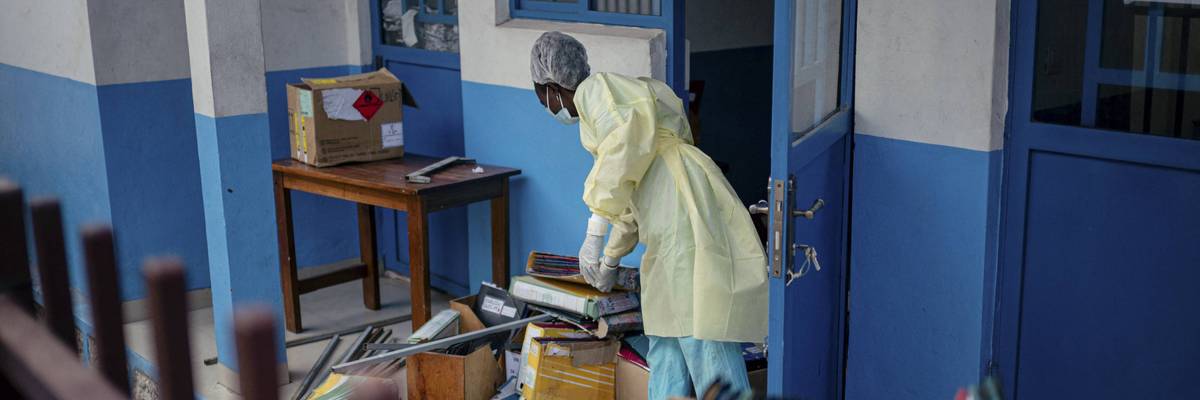
Staff members at CBCA Virunga Hospital prepare rooms intended for possible suspected Ebola cases following official announcements that the disease had been detected in Goma, Democratic Republic of Congo, on May 17, 2026.
(Photo by Jospin Mwisha/AFP via Getty Images)
Julia Conley
May 17, 2026
COMMON DREAMS
The World Health Organization’s official designation of an Ebola virus outbreak in the Democratic Republic of Congo and Uganda as a public health emergency of international concern on Sunday came just a day after the world learned that the disease was spreading at all—a highly unusual chain of events, public health experts said, and one that suggested the virus has been circulating for weeks without the outbreak being detected.
WHO Director-General Tedros Adhanom Ghebreyesus said Sunday that eight laboratory-confirmed cases, 246 suspected cases, and 80 suspected deaths had been reported in at least three health zones across Ituri Province in the DRC. In Kampala, the densely populated capital of neighboring Uganda, two lab-confirmed cases and one death were reported within 24 hours of each other.
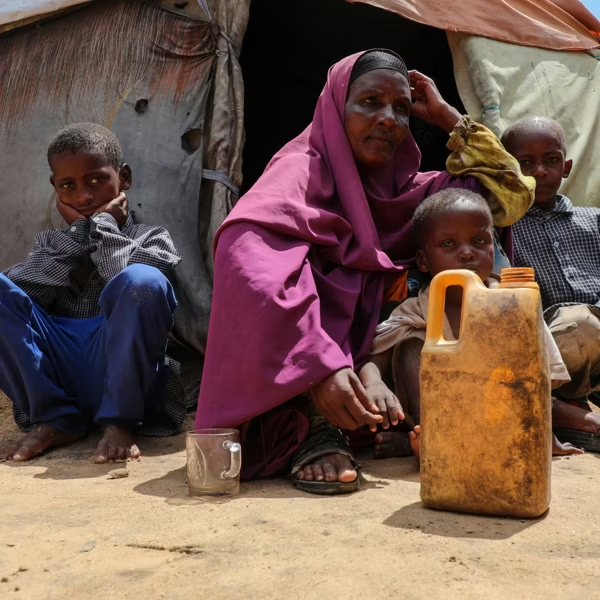
‘Children Are Dying’: Trump-Musk Gutting of USAID Helps Push Somalia to Brink of Famine
The victims in Kampala had no apparent link to one another; both had recently traveled from Congo.
The confirmed cases in Congo include some that have been reported in Kinshasa, the capital. The fact that the disease has been able to spread to two large cities with international airports, and the “clusters of deaths across the province of Ituri” point to “a potentially much larger outbreak than what is currently being detected and reported, with significant local and regional risk of spread,” said WHO.
“At least four deaths among healthcare workers in a clinical context suggestive of viral haemorrhagic fever have been reported from the affected area, raising concerns regarding healthcare-associated transmission, gaps in infection prevention and control measures, and the potential for amplification within health facilities,” the agency said.
Dr. Ashish Jha, who served as the White House Covid-19 response coordinator, said the numbers being reported could make the outbreak “one of the 10 biggest Ebola outbreaks in history.”
“We’re just hearing about this now? That makes no sense. Those numbers take weeks to accumulate,” said Jha, adding that the fact that suspected cases have been detected in capital cities as well as Bunia, the provincial capital of Ituri, “matters enormously for spread.”
Tedros emphasized that the outbreak is considered “extraordinary” because there is no approved vaccine or therapeutics for Ebola caused by the Bundibugyo virus, as this strain is. WHO sent a team to investigate in Ituri after first being notified of suspected Ebola cases on May 5, but initial samples tested negative, as available field equipment was only able to detect the Zaire strain of the disease.
The US Centers for Disease Control and Prevention (CDC) and global partners “need to surge resources in,” Jha said. “A slow response creates unnecessary risks to people everywhere.”
WHO, which President Donald Trump withdrew the US from last year, said the public health emergency designation was made to ramp up surveillance and infection prevention in the countries where the outbreak is occurring, enhance preparedness in bordering countries, and spread awareness in the international community.
The Ebola outbreak is the second to hit Uganda since Trump slashed foreign assistance funding, including by dismantling the US Agency for International Development. Earlier this month, CNN reported that the administration plans to divert $2 billion in global health program funding to cover the cost of closing USAID.
US foreign spending dropped by 56.9% after Trump shut down the agency as well as smaller aid programs and pushed Congress to rescind previously approved foreign assistance. USAID played a critical role in responding to the 2014 Ebola outbreak in West Africa.
In March 2025, when an Ebola outbreak was reported in Uganda, US officials warned that Trump’s actions on foreign assistance at that point, including the termination of USAID grants, was impeding the Ugandan government’s ability to procure lab supplies, diagnostic equipment, and protective gear for medical workers.
Dr. Herbert Luswata, president of the Uganda Medical Association, told The New York Times at the time that the country’s ability to respond to Ebola was notably different than it had been during a previous outbreak in 2022, when dozens of medical workers volunteered to help treat patients.
The lack of funds and protective equipment had “left many afraid to help this time,” the Times reported.
“With no USAID money and CDC expertise, it was like Uganda was left to die,” Luswata told the Times.
Dr. Craig Spencer, an emergency medicine physician who survived Ebola in 2014, told CBS Saturday that “before the second Trump administration, USAID would have been on the ground” to respond to the current outbreak.
“The CDC would have been on the ground at a moment’s notice, maybe even before a moment’s notice, of a new outbreak of Ebola because we were in a bunch of countries,” said Spencer. “We created relationships beforehand.”
Last year, Trump megadonor Elon Musk, who was then leading efforts to slash government spending at the Department of Government Efficiency, said DOGE had “accidentally” canceled US support for Ebola prevention but claimed the funding had been “restored...and there was no interruption.”
But a number of Ebola-related contracts were in fact cut, accounting for $1.6 million out of $2.2 million that had previously gone toward the prevention efforts.
In recent weeks, public health experts have also warned that Trump’s cuts to the CDC and other public health programs have left the US ill-prepared to respond to the hantavirus outbreak that originated on a cruise ship.
Jeremy Konyndyk, president of Refugees International and former leader on USAID’s Covid-19 and disaster relief response work, said the current Ebola outbreak is “very worrying” and appeared to be the result of a “massive surveillance failure.”
“It is really unusual for an Ebola outbreak to get to this scale before being detected; particularly in DRC, which has a lot of Ebola experience,” said Konyndyk.
“I can’t help but wonder,” said Konyndyk, “if the drawdown of USAID and CDC health interventions by DOGE undermined some of the surveillance and detection initiatives that might have helped to catch this earlier.”
WHO emphasized that the current crisis in DRC and Uganda requires “international coordination and cooperation to understand the extent of the outbreak, to coordinate surveillance, prevention, and response efforts, to scale up and strengthen operations and ensure ability to implement control measures.”
Ebola outbreak is a global health emergency, WHO says
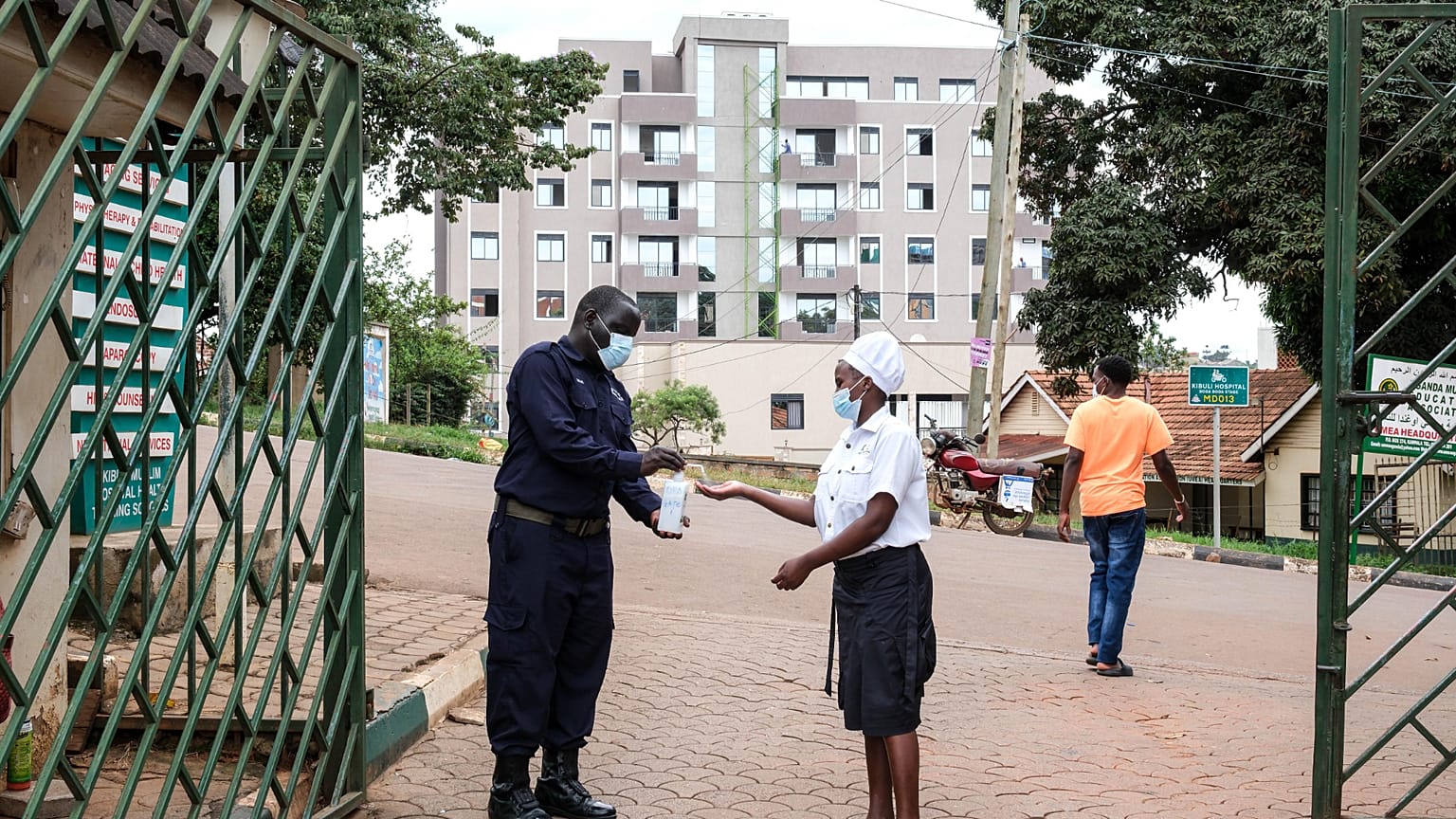
The World Health Organization said that it could be a "much larger" outbreak than what is currently being identified and reported but that is does not meet the criteria of a pandemic emergency.
The World Health Organization has declared an Ebola outbreak in the Democratic Republic of the Congo and Uganda as a global health emergency.
In a statement on Sunday, the agency said its Director-General had consulted with the two nations and determined that the outbreak met the criteria of a "public health emergency of international concern."
As of Saturday, around 246 suspected cases and 80 suspected deaths had been reported across the DRC's Ituri Province, with eight laboratory-confirmed cases.
A further two lab-confirmed cases have been reported in the Ugandan capital Kampala and one in Kinshasa, the capital of the DRC.
"There are significant uncertainties to the true number of infected persons and geographic spread associated with this event at the present time," the World Health Organization said in its statement, adding that there was also "limited understanding of the epidemiological links with known or suspected cases."
The agency said that while the outbreak constituted a global health emergency, it did not meet the criteria of a pandemic emergency.
Ebola is a severe illness first identified in 1976. According to the Centers for Disease Control and Prevention, up to 90% of cases of Ebola are fatal. Symptoms can include fever, weakness, diarrhea and vomiting.
The Africa Centres for Disease Control and Prevention is "closely monitoring" the situation and said it was working with authorities and partners to deliver a "rapid, coordinated response" that aims to interrupt transmission and reduce the risk of cross-border spread.
WHO declares Ebola outbreak in DRC a health emergency 'of international concern'
Kinshasa (AFP) – An Ebola outbreak in the Democratic Republic of Congo has killed more than 80 as authorities warned there was no vaccine for the strain in a crisis that the World Health Organization declared an international health emergency on Sunday.
Issued on: 17/05/2026 - RFI
A total of 88 deaths and 336 suspected cases of the highly contagious haemorrhagic fever have been reported, the Africa Centres for Disease Control and Prevention (CDC Africa) said in an update on Saturday.
The Geneva-based WHO said early on Sunday the outbreak caused by the Bundibugyo strain of Ebola constituted a "public health emergency of international concern" – the second-highest level of alert under international health regulations.
The global health body warned the true scale of the number of cases and spread was not clear but stopped short of declaring a pandemic emergency, the highest alert level introduced in 2024.
Medical aid group Doctors Without Borders (MSF) said it was preparing a "large-scale response", calling the rapid spread of the outbreak "extremely concerning", in warnings echoed by authorities.
"The Bundibugyo strain has no vaccine, no specific treatment," DR Congo's Health Minister Samuel-Roger Kamba said.
"This strain has a very high lethality rate, which can reach 50 percent."
The strain – which was first identified in 2007 – has also killed a Congolese national in neighbouring Uganda, officials said Saturday.
Vaccines are only available for the Zaire strain, which was identified in 1976 and has a higher fatality rate of 60-90 percent.
Health officials had confirmed the latest outbreak Friday in Ituri province in northeastern DRC, bordering Uganda and South Sudan, according to CDC Africa.

No vaccine for latest Ebola outbreak, DRC warns as as toll hits 80
"We've been seeing people die for the past two weeks," said Isaac Nyakulinda, a local civil society representative contacted by AFP by phone.
"There is nowhere to isolate the sick. They are dying at home and their bodies are being handled by their family members."
According to Kamba, patient zero was a nurse who reported to a health facility in Ituri's provincial capital Bunia on April 24, with symptoms suggesting Ebola.
Symptoms of the disease include fever, haemorrhaging and vomiting.
"The number of cases and deaths we are seeing in such a short timeframe, combined with the spread across several health zones and now across the border, is extremely concerning," says Trish Newport, MSF Emergency Programme Manager, which is mobilising medical and support staff to the area.
Large-scale transport of medical equipment is a challenge in DR Congo, a country of more than 100 million people which is four times the size of France but has poor communications infrastructure.
High risk of spread
It is the 17th Ebola outbreak to hit the DRC, and officials warned of a high risk of spread.
"There are significant uncertainties to the true number of infected persons and geographic spread," the WHO said.
But it added the high positivity rate of initial samples, the confirmation of cases in two countries, and the increasing reports of suspected cases, "all point towards a potentially much larger outbreak than what is currently being detected and reported, with significant local and regional risk of spread."
The previous outbreak of Ebola – which has killed around 15,000 people in Africa over the past 50 years, despite advances in vaccines and treatment – was last August in the central region.
That episode killed at least 34 people, before being declared eradicated in December.
Nearly 2,300 people died in the deadliest outbreak in the DRC between 2018 and 2020.
Ebola, believed to have originated in bats, can cause severe bleeding and organ failure.
Outbreaks over the past half century have seen a mortality rate among those affected of between 25 percent and 90 percent, according to WHO.
The virus spreads from person to person through bodily fluids or exposure to the blood of an infected persons, who become contagious only once they display symptoms. The incubation period can last up to 21 days.
Click here for explanatory graphics on Ebola.

No comments:
Post a Comment