U.S. LNG Is Becoming the Backbone of Global Gas Supply
- Rising geopolitical instability in the Middle East is pushing LNG buyers to prioritize supply reliability over low-cost contracts.
- AI-driven data center growth is emerging as a major new source of long-term natural gas demand.
- The United States is rapidly expanding LNG export capacity and increasingly positioning itself as the world’s most dependable supplier.
For years, global LNG markets operated under a fairly comfortable assumption. Qatar would remain a stable supplier, the Middle East would continue functioning as the center of global LNG trade, and buyers in Europe and Asia could rely on long-term contracts to keep gas flowing.
That assumption is now under pressure.
Damage to energy infrastructure in the Middle East, rising geopolitical instability, and growing concerns about shipping security have injected a new layer of risk into global LNG markets. At the same time, demand is accelerating from multiple directions: Europe continues replacing Russian pipeline gas, Asia is still transitioning away from coal, and artificial intelligence is creating a surge in electricity demand that few anticipated even a few years ago.
The result is a tightening LNG market in which reliability suddenly matters as much as supply volume.
And increasingly, the United States is emerging as the market’s anchor supplier.
“The world is short of reliable LNG,” LNG pioneer Charif Souki told me in a recent interview. “And the U.S. is the only producer with the ability to scale quickly.”
The U.S. had already surpassed Qatar as the world’s largest LNG producer before the latest Middle East tensions intensified. U.S. export capacity currently stands at roughly 120 million metric tons per annum (MTPA), compared to around 77 MTPA for Qatar. Based on projects already under construction, U.S. capacity could approach 220 MTPA within five years.
But many countries still depend heavily on Qatar as their primary LNG supplier. When instability threatens that supply chain, the entire global market reprices risk.
That is exactly what is happening now.
A New Wave of Demand
Global LNG demand was already rising before the latest geopolitical flare-up.
Europe’s move away from Russian gas fundamentally reshaped global trade flows after the invasion of Ukraine. Meanwhile, developing nations across Asia continue trying to move from coal toward cleaner-burning fuels.
But perhaps the most unexpected new driver is AI.
“AI is going to consume more electricity than anyone is prepared for,” Souki said. “That means more natural gas.”
The rise of hyperscale data centers is beginning to reshape energy forecasts around the world. These facilities require enormous amounts of reliable electricity 24 hours a day. While renewables will continue expanding, they cannot alone provide the constant dispatchable power large data centers require.
Natural gas remains the fastest scalable solution.
That reality is becoming increasingly obvious in Texas, where data center development is accelerating alongside natural gas infrastructure expansion.
“The true growth story over the next five years is LNG,” Port of Corpus Christ CEO Kent Britton told me during a separate interview. “Demand is only growing, especially with AI and data centers taking off around the world.”
Reliability Has Become a Premium Product
Energy markets do not simply price commodities. Reliability also plays heavily into the mix.
For years, LNG buyers focused heavily on securing the lowest-cost supply. But after Russia’s invasion of Ukraine exposed Europe’s vulnerability to concentrated energy dependence, buyers increasingly began prioritizing supply security.
Now the Middle East is reinforcing the same lesson.
“When a major supplier becomes less reliable, the entire market has to reprice risk,” Souki said.
That doesn’t necessarily mean cargoes stop flowing. It means buyers begin diversifying supply sources, signing additional contracts, and paying premiums for stability.
The United States offers several advantages in that environment:
- Massive shale gas reserves
- Expanding export infrastructure
- Deep capital markets
- A relatively transparent regulatory system
- Lower geopolitical risk than many competing exporters
Most importantly, the U.S. has the ability to grow production rapidly. That flexibility is something few global suppliers can match.
LNG’s Next Growth Phase
The U.S. LNG story is still in its early stages.
Projects already under construction will dramatically expand export capacity over the next several years. Gulf Coast infrastructure continues growing, pipelines are being expanded, and export terminals are preparing for significantly larger volumes.
Corpus Christi is perhaps the clearest example of that transformation.
While best known as America’s largest crude oil export port, the region is also becoming one of the world’s most important LNG hubs. Cheniere Energy’s Corpus Christi Liquefaction facility is already among the largest LNG export terminals globally, and expansion projects are ongoing.
Britton said the port is actively preparing for rising LNG traffic, including the infrastructure challenges associated with large LNG carriers.
“This is what port authorities do,” he told me. “Our responsibility is to improve the economics and maneuverability of the ship channel.”
But the broader story extends far beyond a single port.
The global LNG market is entering a period in which supply growth may struggle to keep pace with demand growth. Europe needs long-term replacement supplies. Asia continues urbanizing and electrifying. AI is increasing electricity consumption forecasts almost everywhere.
And many developing countries still lack reliable access to modern energy altogether.
The Climate Debate Is Shifting
One of the more interesting aspects of the LNG debate is how rapidly the environmental conversation is evolving.
Critics often frame LNG exports as incompatible with climate goals. But many energy executives argue the comparison should not be against an idealized renewable future. It should be against the fuels many countries are actually using today.
“Our natural gas is the cleanest produced in the world,” Britton said. “It seems extremely arrogant to tell 30 or 40 percent of the world that hasn’t reached energy security that we won’t supply them with something far cleaner than what they’re using.”
Souki made a similar argument.
“People talk about getting off fossil fuels, but half the world is still burning coal, wood, diesel — even dung,” he said. “LNG is 50 to 80 percent cleaner. It’s the only realistic bridge.”
That point is difficult to dismiss when viewed globally.
China continues consuming enormous amounts of coal. Southeast Asia is still building coal-fired power plants. Much of Africa lacks reliable electricity infrastructure entirely.
Renewables will grow substantially. But replacing coal at scale requires dispatchable backup generation, and for most of the world, natural gas remains the most practical option.
A Strategic Commodity
The debate over LNG is no longer simply about economics. It is increasingly about geopolitics and national security.
“LNG is now a security commodity,” Souki said. “If the U.S. hesitates, other countries will fill the gap — and they won’t be cleaner or more reliable.”
That may ultimately be the central takeaway from today’s LNG market.
The world is not reducing energy demand. It is increasing it. AI, industrialization, electrification, and rising living standards are all pushing consumption higher simultaneously.
The question is where that energy comes from.
At the moment, the United States is increasingly positioned to become the world’s most dependable large-scale LNG supplier. Not because global demand suddenly appeared overnight, and not because other producers vanished, but because reliability itself has become one of the most valuable commodities in the energy market.
Caturus to start construction of major US LNG facility after securing $9.75B
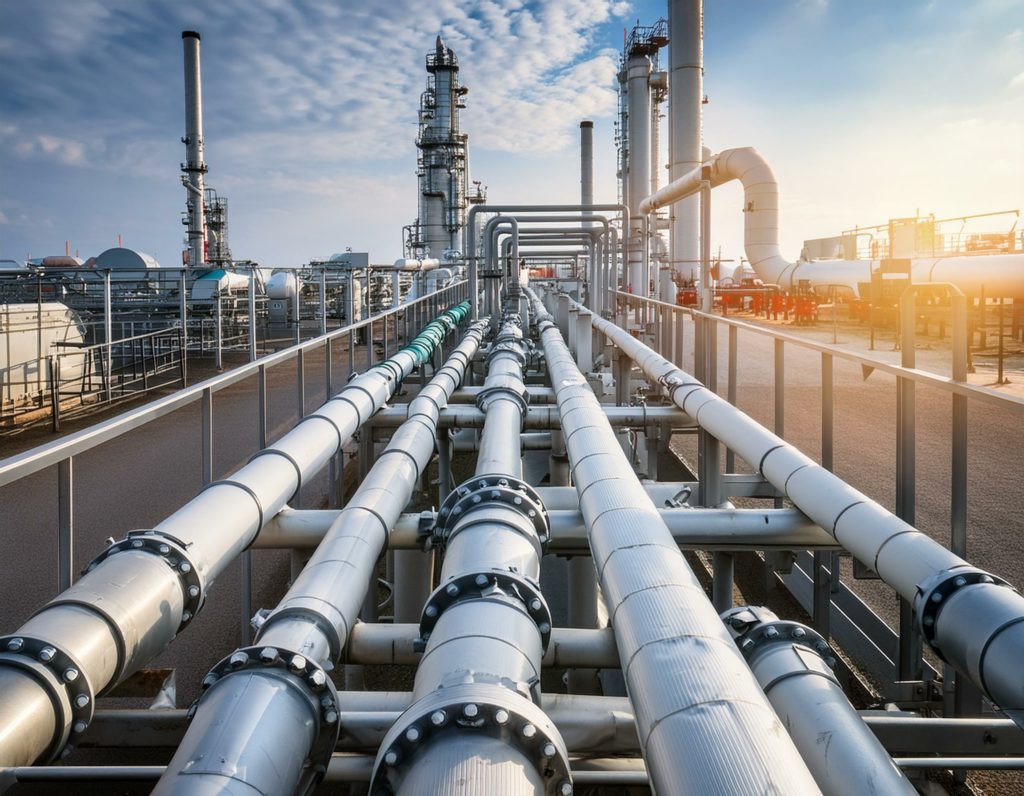
US-based Caturus has approved the construction of a liquefied natural gas export facility in Cameron Parish, Louisiana, after securing $9.75 billion for construction works, the company said on Friday.

The Commonwealth LNG project will cost a total of $12.5 billion including financing fees, chairman Ben Dell said at a ground-breaking ceremony to mark the formal approval.
The engineering, procurement and construction portion of the project is estimated at $8.4 billion, Dell told Reuters on the sidelines of the event.
The plant will include processing units that chill natural gas into liquid for export. Most of the equipment will be built in Italy, with some components sourced from the US, Dell said, adding that tariffs have been factored into the project’s budget.
“We have tariffs like everyone else, and we manage that process like everyone else. It is built into the budget,” Dell said.
About 67% of total project spending will be in the US and Italy, he added.
Integrated LNG project
Mubadala Energy, part of an Abu Dhabi sovereign wealth fund, holds a 24.1% stake in Caturus and participated in the project’s financing. Energy investor Kimmeridge and Canada Pension Plan Investment Board also provided funding, with CPP contributing $1.2 billion and increasing its stake in Caturus to 31%.
The Commonwealth facility will be able to export up to 9.5 million metric tons per year. The project is designed as a fully integrated LNG operation which will include both natural gas production and LNG processing facilities.
Most US LNG export projects operate as standalone infrastructure, buying gas from separate producers, charging liquefaction fees and then selling LNG under long-term contracts with limited exposure to spot markets.
Caturus said it has secured long-term supply agreements with EQT LNG Trading, Glencore, Mercuria, Malaysia’s Petronas and Saudi Aramco’s trading arm. The company expects the plant to begin operations in 2030.
The US is the world’s largest LNG exporter, with American supplies now playing a key role in meeting global demand amid disruptions tied to the war with Iran.
The Commonwealth facility is expected to generate about $3 billion in annual export revenue once operational.
(By Curtis Williams and Shubham Kalia; Editing by Rashmi Aich, Nathan Crooks and Edmund Klamann)

No comments:
Post a Comment