Li
Lithium Americas sees up to $120M tariff hit on Thacker Pass
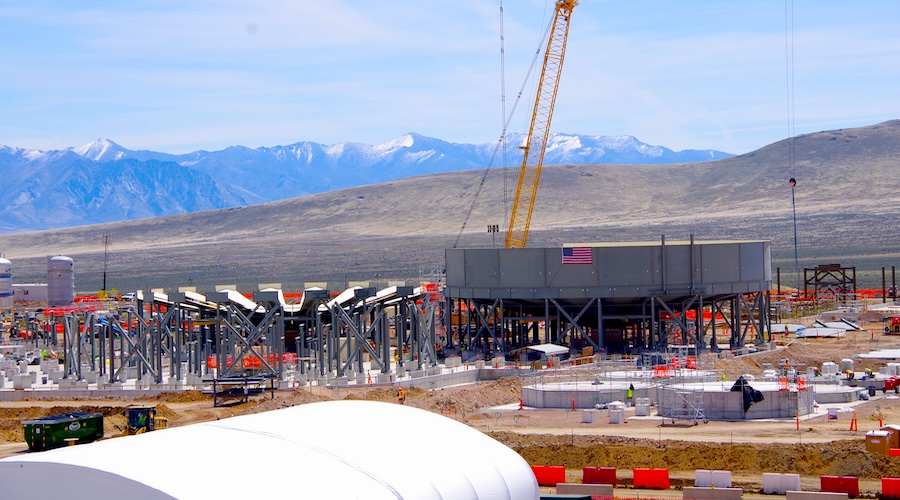
Lithium Americas (TSX,NYSE: LAC) says US tariffs on steel, inflation linked to the conflict in Iran and shipping disruptions around the Strait of Hormuz could add $80 million to $120 million to construction costs at its Thacker Pass lithium project in Nevada, with most of the impact expected this year.

The figures came amid its first-quarter results on Thursday as the company nears detailed engineering completion and procurement surpasses 70%. Lithium Americas still expects Phase 1 spending this year to total between $1.3 billion and $1.6 billion as construction accelerates toward a late-2027 startup.
The company flagged that the original $2.93-billion capital estimate for Phase 1 did not include tariffs, fuel-price increases or broader inflationary pressures tied to the Middle East conflict. Lithium Americas has now launched a definitive capital estimate to incorporate those factors along with updated labour and procurement assumptions.
Lithium Americas said more than 75% of structural steel for the project, sourced from the United Arab Emirates, is either in transit or already at site after shipments were rerouted through Saudi Arabia’s Port of Jeddah to avoid regional disruptions. Major long-lead equipment including transformers, reactors and steam turbine components is also arriving.
Construction at full tilt
Despite the higher-cost risks, Lithium Americas said construction continues to accelerate toward mechanical completion in late 2027. More than 1,300 workers are currently on site, with peak construction expected to exceed 2,000.
As of March 31, Lithium Americas had capitalized $1.3 billion in construction and project-related costs, including $1.1 billion tied directly to the mine’s total estimated capex.
“At a moment when resilient domestic supply chains are more critical than ever, lithium stands out as a strategic resource underpinning both national security and a reliable energy future,” CEO Jonathan Evans said in the release.
Strategic project
The escalating costs underscore the challenge facing Western governments and miners trying to build domestic battery-metal supply chains while geopolitical tensions reshape global trade routes.
Once complete, Thacker Pass is expected to produce 40,000 tonnes of lithium carbonate annually, enough for roughly 800,000 electric vehicles and well above output from Albemarle’s (NYSE: ALB) Silver Peak mine, currently the only operating lithium brine mine in the US.
The project has drawn strategic backing from General Motors (NYSE: GM), Orion Resource Partners and the US government, which last year took separate 5% stakes in both Lithium Americas and the Thacker Pass project itself.
Lithium Americas ended the quarter with about $1.2 billion in cash and restricted cash, including $529 million at the Thacker Pass joint venture level, after receiving another $432-million advance from a Department of Energy loan facility.
Evans said lithium market conditions are improving ahead of the project’s expected startup in late 2027 and ramp-up through 2028.
EnergyX targets Utah lithium with Compass Minerals partnership
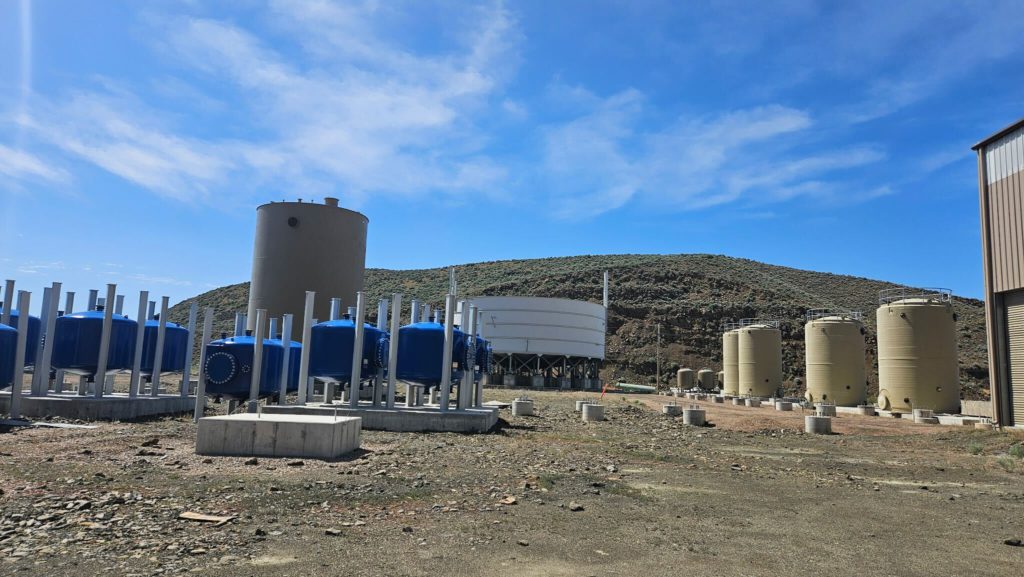
EnergyX is betting its newly announced Utah venture could become one of the first major commercial lithium production projects in the United States, leveraging an existing brine operation owned by Compass Minerals (NYSE: CMP) to fast-track development.
The company announced Monday it has entered into a Memorandum of Understanding with Compass Minerals to advance the development of EnergyX’s 30,000 tons-per-annum (tpa) commercial-scale direct lithium extraction (DLE) near Great Salt Lake.
Under the terms of the agreement, EnergyX plans to design, fund, construct and operate a commercial DLE and refining facility on land owned by Compass Minerals.
The company’s latest initiative — internally dubbed “Project Powderhound” — marks EnergyX’s third lithium project and its second in the US.
In March, EnergyX launched a first-of-its-kind direct lithium extraction facility in Texas, designed to prove its technology at scale and reduce reliance on imported battery materials.
The company also has Project Black Giant, a 100,000-acre lithium resource in Chile’s Antofagasta region, where it plans to develop DLE facilities, along with a refinery near the port.
But according to chief executive Teague Egan, Project Powderhound may ultimately become the company’s most commercially advanced near-term opportunity.
“This one’s special because it could potentially be the most ready near-term project,” Egan said in an interview with MINING.com. “The lithium is ready to go. All we have to do is build the plant.”
The project is centered at Compass Minerals’ Ogden operation near the Great Salt Lake, where the publicly traded minerals producer already operates large-scale sulfate of potash and magnesium chloride facilities.
Compass had previously attempted to enter the lithium business during the 2021-2022 lithium boom, investing tens of millions of dollars into equipment and development before shelving the effort amid collapsing lithium prices, rising capital costs and legislative hurdles in Utah.
“They spent somewhere in the order of $70 million or $80 million just on equipment,” Egan said. “Then the lithium price tanked, CapEx was escalating and there were some legislative headwinds.”
Following a leadership change at Compass, the company shifted strategy, opting to seek a partner with lithium expertise willing to finance development in exchange for access to the resource.
EnergyX first approached Compass in late 2024, with the two companies finalizing an agreement earlier this year.
Existing infrastructure cuts development risk
Unlike many emerging lithium projects that still require extensive drilling and resource delineation, project Powderhound benefits from an already-operating brine system.
“The brine is already on the surface,” Egan said. “There’s no upstream exploration or upstream CapEx cost, which drastically reduces our overall unit economics.”
Under the proposed setup, EnergyX would extract lithium from an existing Compass brine stream using its DLE technology before returning the processed brine back into Compass’s existing production system.
The arrangement could also simplify permitting.
“There’s already a big operating plant there,” Egan said. “We’re basically just taking a stream from Compass, extracting the lithium and then returning the stream to continue their processing.”
EnergyX is targeting a 2028 construction start.
Sustainability focus around Great Salt Lake
Egan emphasized that the project would avoid additional water withdrawals from the Great Salt Lake, an issue that has become politically and environmentally sensitive in Utah.
“We don’t touch any additional water or brine from the Great Salt Lake,” he said. “It’s literally the most sustainable procedure that could possibly be used to extract lithium.”
The company plans to produce lithium carbonate at the site using a process more closely aligned with its Chile operations, though still based within its existing technology portfolio.
Bigger ambitions beyond lithium
While lithium remains EnergyX’s immediate focus, Egan outlined a much broader long-term vision for the company.
“Our short-term goal is to be the biggest lithium producer in the world,” he said, adding that the company ultimately aims to become “one of the leading critical material and technology producers for the energy transition.”
That strategy extends beyond lithium into nuclear-related materials such as uranium and thorium, alongside other battery metals including nickel, cobalt and manganese.
Egan also suggested EnergyX is evaluating opportunities in deep-sea polymetallic nodule mining, an increasingly debated sector gaining momentum among critical minerals developers.
“It’s something that we’re looking at,” he said.
According to Egan, the company sees polymetallic nodules as a potentially lower-impact source of battery metals compared with conventional terrestrial mining.
“I think picking up a polymetallic nodule from the ocean floor that has multiple battery metals has to be dramatically less harmful than digging huge pits on land,” he said.
Potential implications for US supply chains
Egan said Powderhound could eventually leapfrog some of EnergyX’s other projects because of its ready-made infrastructure and existing brine access.
“This could be the first major commercial lithium production in the U.S. before everybody else,” he said. “It’s a ready-to-go resource.”
The project comes as the U.S. continues to push for greater domestic battery supply chain capacity amid rising geopolitical concerns surrounding critical mineral dependence.
MinRes reboots Bald Hill lithium mine after 18-month pause
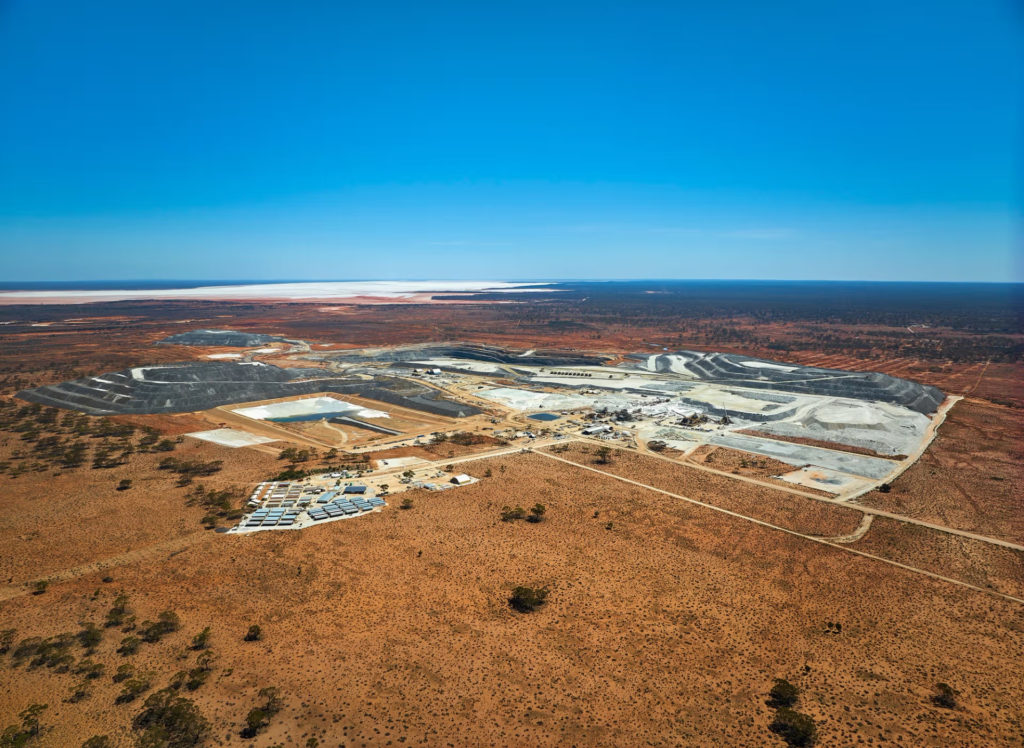
Mineral Resources (ASX: MIN) is restarting its Bald Hill lithium mine in Western Australia after an 18-month hiatus, citing improved market conditions to support production.
The restart follows a significant and sustained recovery in lithium prices and reflects extensive planning undertaken over recent months to ensure the operation can be brought back online safely and efficiently, the Australian miner said in a press release on Monday.
In November 2024, MinRes placed the mine under care and maintenance in a move to “preserve capital and protect the long-term value of the operation.”
Located 50 km southeast of Kambalda in the Goldfields region, the Bald Hill site hosts a total mineral resource of over 58 million tonnes grading 0.9% lithium oxide (Li2O). It has a production capacity of approximately 165,000 dry metric tonnes (dmt) of 5.1% spodumene concentrate per annum, equivalent to 140,000 dmt of benchmark spodumene concentrates (SC6).
First production in July
Outlining its restart plans, MinRes said it expects to begin ramp-up activities soon, followed by crushing and mining operations next month, with first production of spodumene concentrate targeted for July.
First shipment from the Port of Esperance is expected in the first quarter of fiscal year 2027, with full production capacity anticipated in the second quarter, it added.
The restart comes after a recovery in lithium prices as the industry grapples with supply uncertainty from major producers, with China continuing to suspend mine operations and Zimbabwe banning raw mineral exports. So far this year, prices of lithium carbonates have surged more than 50% to break a multi-year downtrend in the battery metal.
“With strong and sustained demand for spodumene concentrate driving a significant recovery in prices, the time is right to restart operations at Bald Hill,” MinRes managing director Chris Ellison said in a statement.
“Once production resumes at Bald Hill, MinRes will be the only company globally operating three hard rock lithium mines, each with their own spodumene concentrate facilities,” he added.
The company currently operates the Wodgina lithium mine in the Pilbara region and the Mt Marion mine located 590 km east of Perth. The assets are both held under 50/50 joint ventures with Albemarle (NYSE: ALB) and Ganfeng Lithium, respectively.
Shares of Mineral Resources, however, slumped 1% in Australia amid weakness in the critical minerals mining sector. It also follows reports of Ellison’s sale of company shares — his first since 2017 — for what he called “personal financial reasons.”
The Perth-based lithium and iron ore miner has a market capitalization of A$12.7 billion ($9.1 billion).
Sigma to deposit some $10M in Brazilian lithium mine case
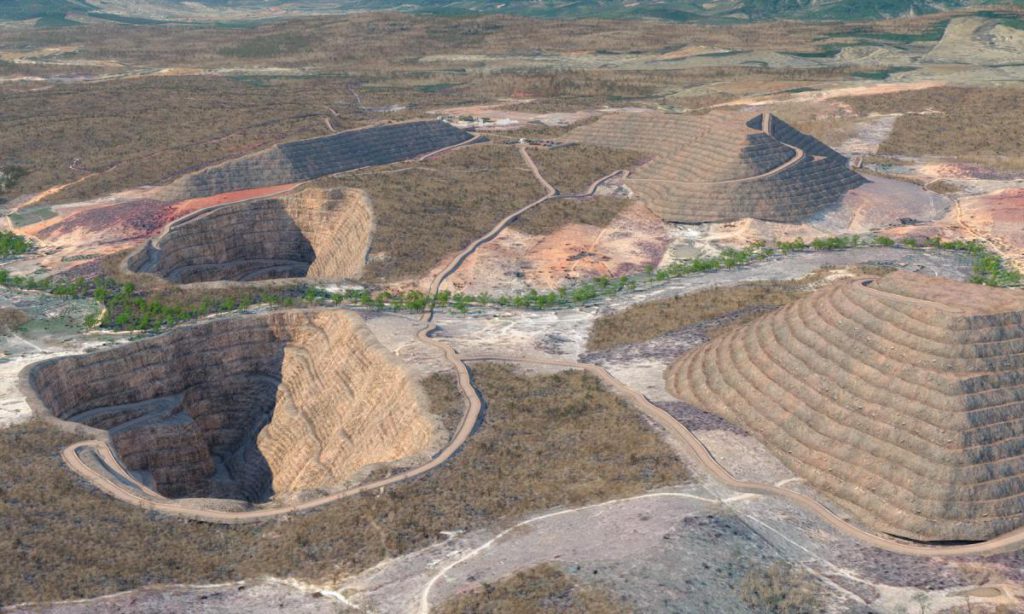
A Brazilian judge ordered Sigma Mineração SA, an operating subsidiary of Sigma Lithium Corp., to deposit 50 million reais ($9.9 million) with a court in the next 10 days to ensure it covers alleged damages linked to the company’s Grota do Cirilo lithium operation.
The emergency injunction on Sunday, part of a collective lawsuit brought by state prosecutors, requires Sigma to pay for independent technical advisers chosen by affected communities, create an optional emergency resettlement program, finance public health measures and suspend noisy nighttime operations from 10 p.m. to 6 a.m.
Judge Patrícia Bergamaschi de Araújo ruled that residents’ accounts of dust, tremors, cracks in homes and constant noise showed “a situation of massive violation of human dignity” in the communities of Piauí Poço Dantas, Ponte do Piauí and Santa Luzia in Minas Gerais state.
Sigma Mineração didn’t respond to a request for comment outside business hours on Sunday.
(By Fabiano Maisonnave)


No comments:
Post a Comment