‘Europe is becoming a solar powerhouse’: Solar tops EU electricity as coal sinks to new low
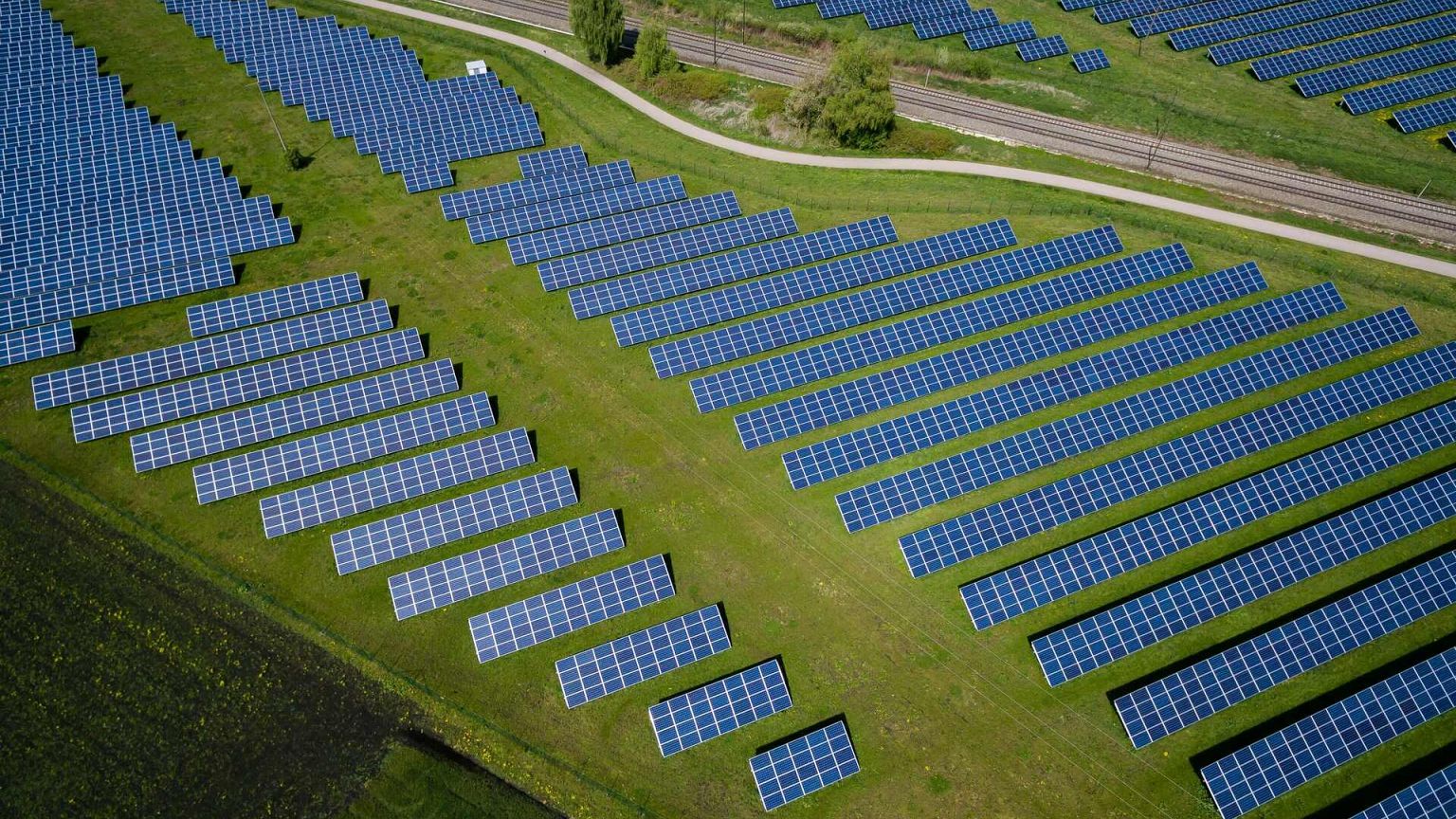
The Netherlands and Greece were the top solar record setters, while wind power also hit new highs in May and June.
In an historic first, solar power generated more electricity than any other source in the EU last month.
New data from energy think tank Ember shows that solar accounted for 22.1 per cent of the EU’s electricity mix in June 2025, narrowly overtaking nuclear – and, notably, far outpacing fossil fuels.
At least 13 member states hit monthly solar power records, including the Netherlands (40.5 per cent) and Greece (35.1 per cent), thanks to a surge in capacity and a stretch of sunny weather.
The shift also helped the EU manage a spike in energy demand driven by the early-summer heatwaves that continue to batter the continent.
“Europe is becoming a solar powerhouse,” says Ember energy analyst Chris Rosslowe.
European countries achieve record low coal electricity levels
As solar has soared, Europe’s reliance on coal has plummeted.
Just 6.1 per cent of EU electricity came from coal, down from 8.8 per cent a year earlier and its lowest monthly level on record.
Germany and Poland, which together account for the majority of the EU’s coal use, both saw record lows. Germany generated only 12.4 per cent of its power from coal, while Poland’s energy mix still featured a large amount of it – 42.9 per cent overall.
Other countries including Czechia (17.9 per cent), Bulgaria (16.7 per cent) and Denmark (3.3 per cent) also hit new lows.
Ten EU states didn’t use coal power at all, including Ireland, which officially shut its last coal plant on 20 June. Spain and Slovakia plan to phase out coal in 2025, too.
Meanwhile, at least 13 EU nations marked their highest-ever share of solar power. These included Belgium, Croatia, France, Hungary, Italy, Portugal and Slovakia.
Collectively, the data holds promise for Europe’s energy transition - pointing to a summer shaped less by fossil fuels and more by the sun.
Public support for green energy remains strong
Europe can partly credit its solar success to overwhelming public support for renewable energy sources, especially when they offer visible economic benefits.
The European Commission reports that almost nine in ten Europeans support the EU taking action to increase renewable energy.
In many countries, rooftop solar, cheaper bills and independence from volatile fossil fuel markets are resonating with younger and more climate-aware consumers, too.
Research shows thatcommunity energy schemes offering discounts, shared ownership or local job creation win consistent backing from European residents. Projects that engage communities early and share financial gains are also more likely to succeed long term.
They have been a boon to solar capacity, too. Solar capacity is surging in Europe, helping to accelerate its shift away from fossil fuels.
In 2008, just 1 per cent of Europe’s renewable energy mix came from solar power. In 2023, solar made up 20.5 per cent of that output, according to the Commission.
“Non-stop records are not just the result of sunny weather, but also from new solar being built every year,” Rosslowe explains.
The solar opportunity is just beginning
While last month’s milestone was significant, analysts say it’s only a glimpse of what’s possible.
A recent study by the Global Energy Monitor revealed that convertingclosed coal mines into solar farms could generate enough electricity to power a country the size of Germany. Across Europe, more than 1.2 million hectares of former coal sites could be repurposed for clean energy, according to the San Francisco-based watchdog.
It’s not just solar that is driving Europe’s energy transition. Wind power accounted for nearly 16 per cent of EU electricity in both May and June, according to Ember’s analysis – the highest-ever share for those months.
Despite Europe’s record-breaking green energy gains, fossil fuels still made up about a quarter of the EU’s electricity in June. That’s far below previous years, but it still highlights the challenges ahead, especially during the times of day or different seasons when solar and wind output dip.
Experts say more storage, smarter grids and better demand-side planning will be crucial to breaking new records and pushing fossil fuels further out of the system.
“Low-cost renewables are already helping to get Europe’s energy system off the rollercoaster of fossil energy prices,” says Rosslowe.
“The next big opportunity comes from adding battery storage and flexibility to extend the use of renewable power into mornings and evenings, where fossil fuels still set high power prices.”
Renewable energy surge puts Latin America on track for climate leadership

Latin America stands at a critical juncture in its energy evolution, with its largest economies showing both remarkable progress in renewable adoption and persistent challenges in weaning themselves off fossil fuels. New analysis from Wood Mackenzie paints a mixed picture for the region, where clean energy breakthroughs coexist with entrenched hydrocarbon dependencies, setting the stage for a transformative decade ahead.
The region's energy transition story has long been one of contrasts. Over the past decade, Chile has emerged as the continental leader, with renewables accounting for 70% of its electricity generation by the end of 2024, a remarkable achievement that positions it amongst the world's clean energy frontrunners. But Mexico remains heavily tethered to fossil fuels, with projections suggesting only a modest reduction in dependency from 95% to 86% by 2050.
Brazil occupies a middle ground, flaunting perhaps the most ambitious decarbonisation commitment amongst the major economies. The country is expected to slash its fossil fuel reliance to 49% by 2050, representing a significant shift for Latin America's largest economy. This transition reflects broader patterns across the six key regional players – Brazil, Mexico, Argentina, Colombia, Chile and Peru – which collectively account for the bulk of the continent's energy consumption and economic output.
Wood Mackenzie research analyst Gerardo Bocard notes that "these countries share broad structural similarities: dependence on fossil fuels and mineral exports, growing urbanisation and rising energy demand." This common foundation creates both shared challenges and opportunities for coordinated regional action.
The International Energy Agency's (IEA) 2023 projections offer cause for optimism, suggesting that Latin America could meet all additional energy demand through to 2030 using renewable sources alone. This rosy scenario points to the region's substantial natural advantages, from Chile's exceptional solar irradiance to Brazil's vast hydroelectric potential.
Hydropower continues to play a foundational role, particularly in Brazil and Colombia, where expanded capacity has provided a reliable baseload alternative to fossil fuels. Nuclear energy, meanwhile, remains a niche contributor, present only in Mexico, Argentina and Brazil, suggesting limited regional appetite for atomic power expansion.
The real growth story lies in solar, wind and biofuels, which are experiencing dramatic expansion across the region. These technologies are capitalising on Latin America's abundant natural resources, from the Atacama Desert's solar potential to Brazil's biomass opportunities and Argentina's wind corridors.
Hydrogen and carbon capture: the next frontier
Perhaps the most striking development, though, is the emergence of green hydrogen as a potential game-changer for the region's energy future. Currently, 82 active projects are underway, predominantly concentrated in Chile, Brazil and Argentina. The total pipeline encompasses 167 low-carbon hydrogen initiatives across the region, with investment projections reaching $300bn by 2050, according to Olade forecasts.
Brazil leads the charge with 43 projects, including substantial carbon capture, utilisation and storage (CCUS) capacity – 24mn tonnes operational and 11.5mn tonnes under development. This positions the country as a potential global hub for both hydrogen production and carbon management technologies.
The 58 CCUS projects announced region-wide represent another pillar of the low-carbon transition strategy. These technologies offer particular promise for heavy industries and hard-to-abate sectors that will struggle to electrify directly.
Infrastructure and investment imperatives
The scale of transformation required is substantial. According to Olade projections, Latin America will need 400 GW of additional electrical infrastructure to support this transition: an investment challenge that will test both public and private sector capabilities.
The diversity of national approaches reflects varying market conditions and resource endowments. "We can see how some of these countries benefit from larger domestic markets, while others rely on external influences, such as the import and export of different raw materials," Bocard observed. This heterogeneity suggests that successful regional coordination will require flexible frameworks that accommodate different national circumstances.
Challenges and opportunities ahead
Despite the encouraging trends, however, significant obstacles remain. The persistence of fossil fuel dependence, particularly in Mexico, highlights the political and economic complexities of energy transition. Infrastructure financing, regulatory frameworks and international cooperation will prove key in determining whether the region can fully capitalise on its renewable potential.
The coming decade will be pivotal. With the IEA's 2023 projection that renewable sources could meet all additional energy demand by 2030, Latin America has an opportunity to become a global clean energy leader.
As Bocard concludes: "despite the progress, there is still work to be done to achieve a sustainable and resilient energy future. Collaborative efforts, targeted policies and investments will be crucial to achieving net-zero emissions goals."
Yet the fundamentals strongly favour success. The region's abundant natural resources, increasingly solid policy frameworks and substantial investment pipeline could lay the groundwork for a swift adoption of renewable energy. The transformation promises to reshape both local development patterns and global energy markets, with Latin America holding all the cards to become a defining force in the worldwide clean energy transition.

No comments:
Post a Comment