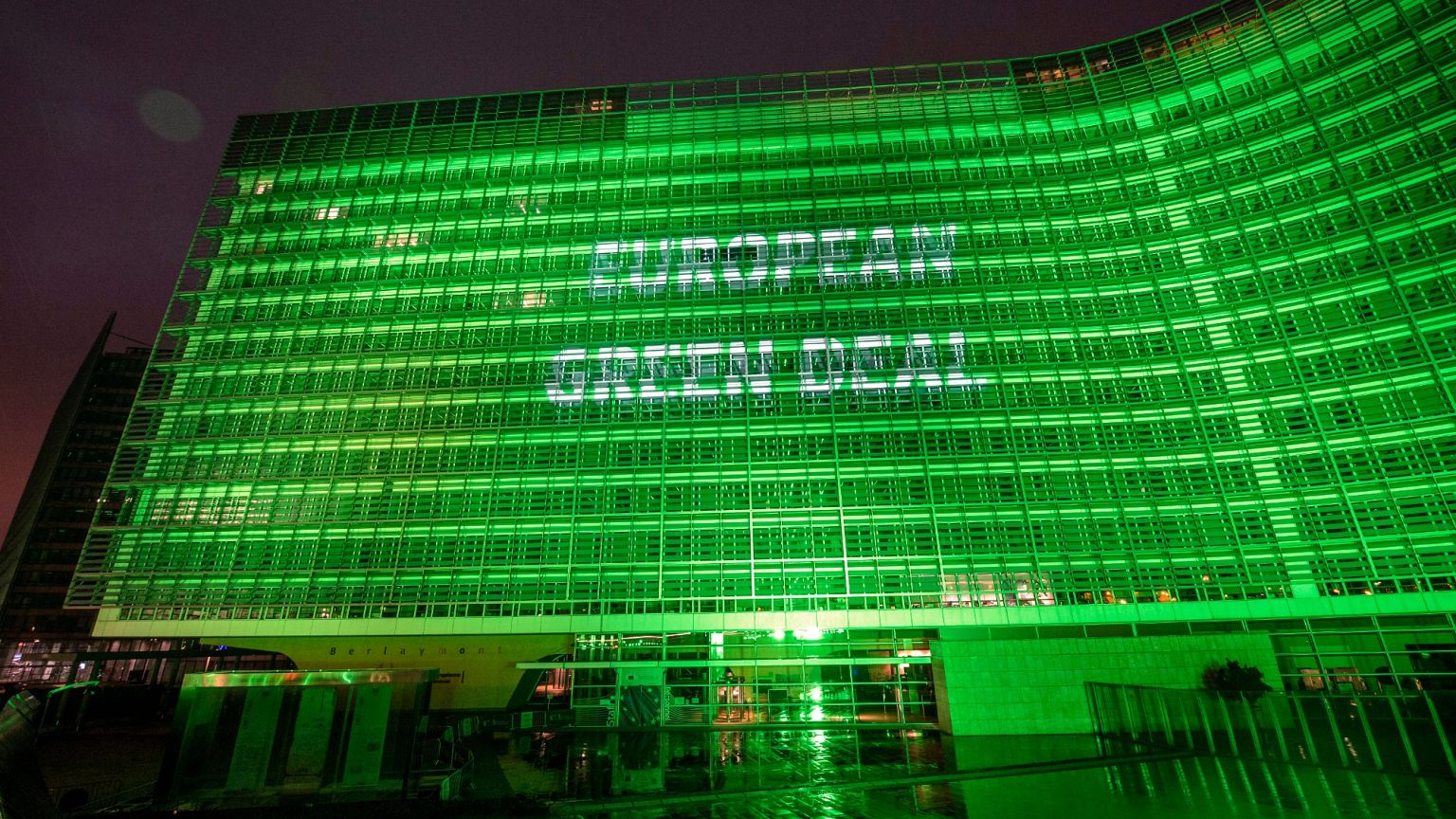
Copyright EC - Audiovisual Service
By Maïa de La Baume & Vincenzo Genovese
Published on 10/07/2025
The far-right Patriots for Europe are now a step closer to derail one of the EU’s flagship policy, the so-called Green Deal.
Key lawmakers from the eurosceptic Patriots for Europe (PfE) group have told Euronews they will seek to use a new power over a key climate file which was confirmed in the European Parliament on Wednesday to derail the EU's climate policy.
On Tuesday it was confirmed that the PfE group will lead negotiations on the EU's new climate target to reduce greenhouse emissions by 90% on 1990 levels by 2040, reserving the key role of rapporteur in the Parliament for the file for one of the group's MEPs.
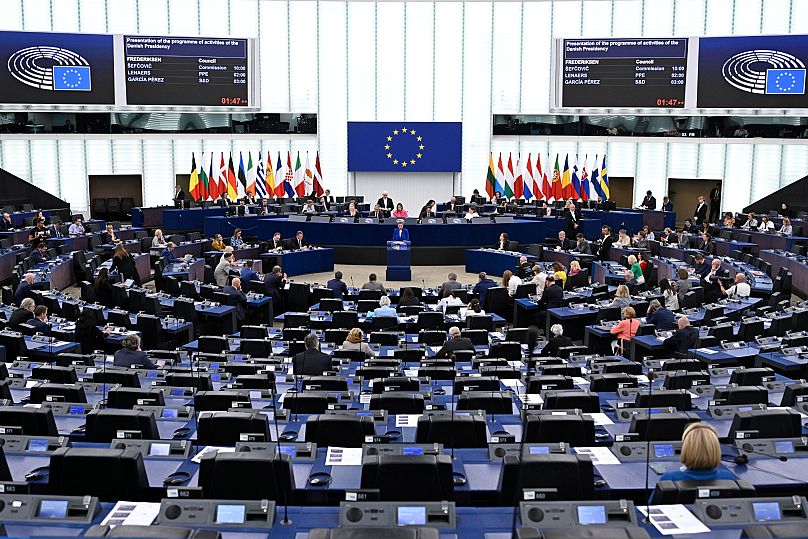
On Wednesday an attempt to dilute this power by pushing the file through an emergency procedure which would allow it to be adopted "without a report or on the basis of an oral report by the committee responsible" failed when 379 MEPs voted it down.
Wednesday's vote provided confirmation that the third largest group in the Parliament, which has systematically opposed the EU's climate policies, will now be tasked to produce a report and recommend a political line attached to the file.
"Now that the vote has dissipated our concerns, we will seek to revise in depth the EU's climate policy, and not just modify on a very small scale some numerical targets," said Fabrice Leggeri, an MEP from the Patriots and France's National Rally.
It's not yet clear which PfE MEP will bag the rapporteur role within the Environment committee (ENVI), which will oversee the legislative work, but officials touted that it might be an MEP from France's National Rally, which has a large contingent of lawmakers on the ENVI.
The Commission 2024 proposal is aimed at reaffirming the bloc's "determination to tackle climate change" according to the Commission's website, and "shape the path" to climate neutrality, an objective that is at the heart of the EU’s Green Deal.
Patriots always disliked the Green Deal
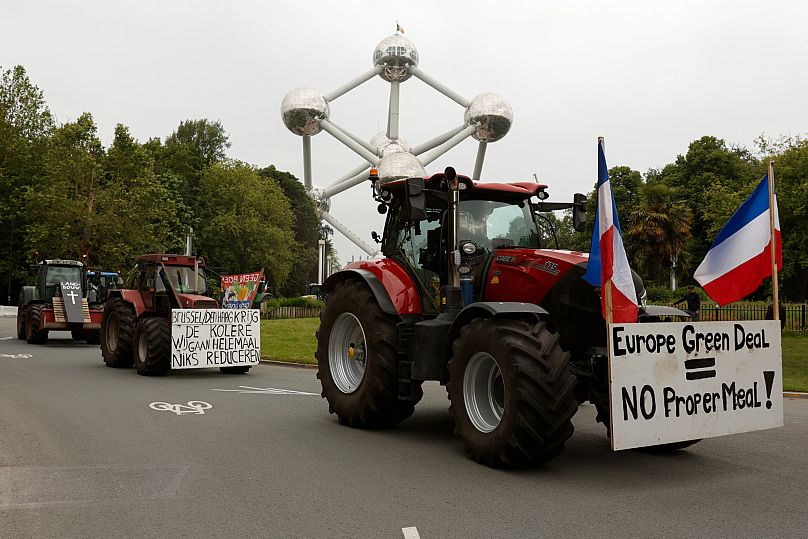
But far-right parties have lashed out against what they see as the bloc's climate change fanaticism and want to undo recent environmental rules. National Rally leader Jordan Bardella called for the immediate suspension of the EU's Green Deal a few months ago.
"We have always opposed this [emission reductions] target, which we consider too difficult to reach for European companies and citizens," Italian League MEP Silvia Sardone told Euronews.
"We need to discuss the best outcome for the European citizens, which of course is different from the target pushed so far," added Sardone, the PfE's coordinator in the ENVI committee.
The attribution of the file to the PfE results from a complex allotment system, which gives the large groups control over important files.
The vote on Wednesday triggered a backlash from leftist and centrist MEPs a day before the chamber is set to vote a motion of censure against Ursula Von der Leyen's Commission.
Many lambasted the centre-right European People Party for rejecting the emergency procedure and letting the file rest in the hands of the far right. The outcome of the vote on the emergency procedure was indeed another display of the so-called "Venezuela majority", the occasional alliance between EPP and right wing and far right parties to get crucial files through the Parliament.
Prior to the vote, the EPP's Jeroen Lenaers had called the chamber to vote down the emergency procedure as "we just want to work on this proposal with the normal proceedings of this house."
But the Greens argued that the Patriots' opposition to the EU's Green Deal will complicate negotiations ahead of the COP30 international climate conference in Brazil and before the United Nations deadline for submitting national climate plans.
Sardone from Patriots confirmed that the file will not pass committee stage in time for the law to be approved by November, when the COP30 takes place.
"The EPP is joining forces with right-wing extremists, making climate change deniers chief negotiators and putting the health, economy and credibility of the EU at risk," said Lena Schilling, an Austrian green MEP.
"The heat waves of the past few weeks have claimed over 2,000 lives in the EU. The climate emergency is now, and it requires immediate action. Instead, the unholy alliance of conservatives and right-wing extremists is slowing [it] down."
Too much manure, too little action:
Dutch farming tests EU green goals
Copyright Euronews
By Monica PinnPublished on 09/07/2025 -
Dutch farms emit too much nitrogen. As targets slip, ecosystems suffer, and EU green goals hang in the balance. Can food production and nature conservation coexist in Europe?
The Netherlands is the second world exporter for agricultural products and ground zero for Europe’s nitrogen crisis. Here, nitrogen deposited onto every acre of farmed land remains three times the EU average. Still, the government has postponed halving nitrogen emissions by 5 years, to 2035. A decision that defies national and European laws which aim at near-zero nitrate pollution by 2050. Intensive farming is among the main causes.
In the Netherlands, there are 620 head of livestock for every 100 residents. All these animals, concentrated in a relatively small area, produce meat, cheese, milk, but also enormous quantities of a by-product that’s increasingly difficult to manage: manure.
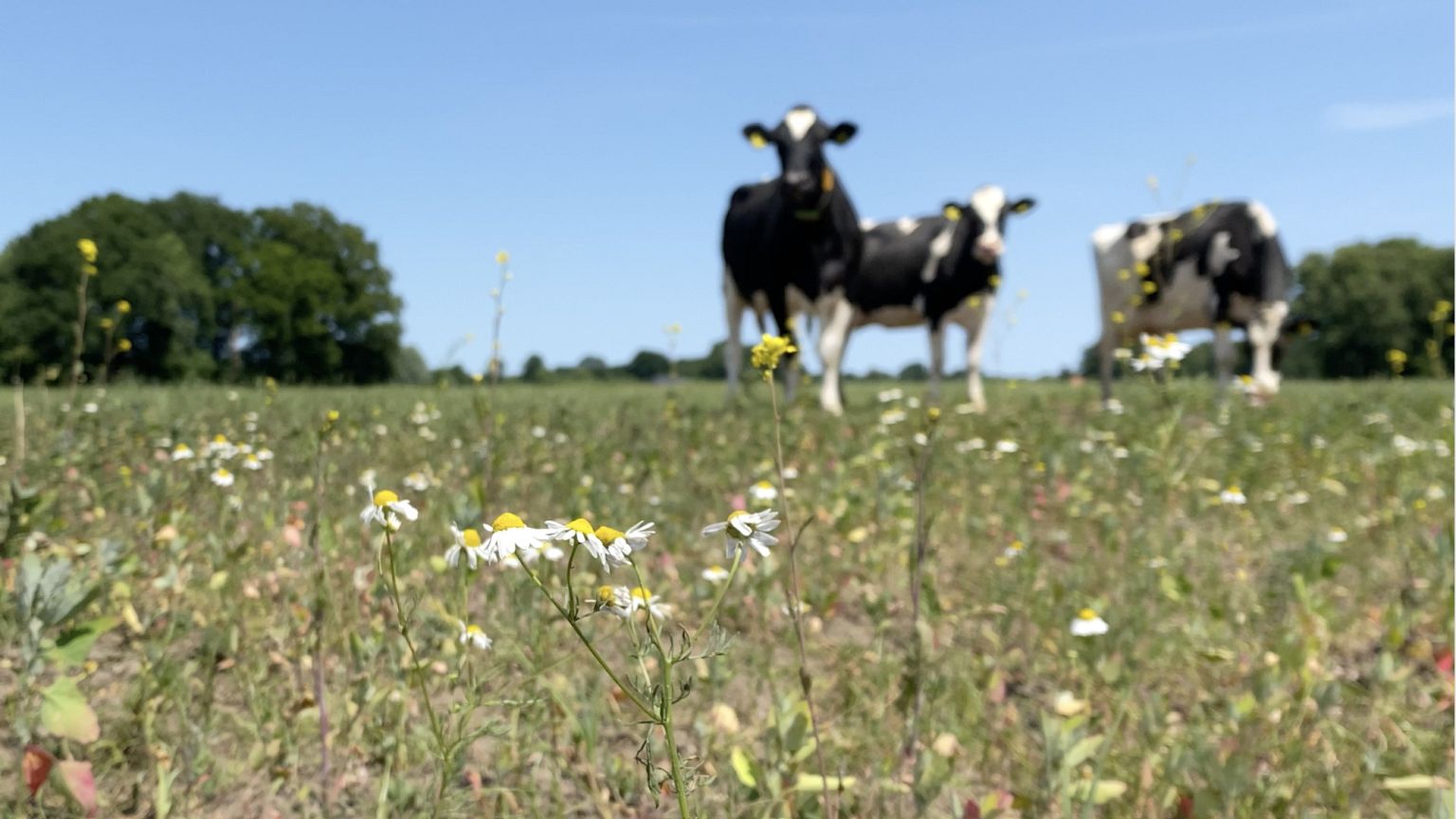
Farmer Nanda van den Pol, explains the 90 cows of her family business produce 30 litres of milk each per day and three thousand cubic metres of manure per year. We found that is the equivalent of 40 medium-sized swimming pools full of slurry. How do they get rid of this?
“At the moment we can use 80% of this slurry in our fields and we have to get rid of the rest.” Nanda explains.
Her farm paid around 100 thousand euros to get rid of the exceeding slurry last year. She estimates that sum might rise to around 400 thousand in the next two years, as the waste poured in their fields will have to decrease.
“If it's all going in the line that they are telling us now – Nada says - I don't think we’ll have our family farm by 2030. Yeah. You want to be a part of the solution, but they make it impossible. It's so difficult not to have any power in this.”
NGOs say the government’s decision to postpone nitrogen emission targets is hitting hard on ecosystems. I met a representative of the organisation Mobilisation for the Environment, known for taking the State and farmers to court in defense of the environment.
“You're in my garden, but it borders the Natura 2000 area called the Kwade Hoek -says activist Max van der Sleen - From here, you basically can try to understand biodiversity loss. Some time ago there was a nice dune vegetation. But it has been completely covered by nettles and hop. That changes the ecosystems.”
In the Netherlands only 28% of Natura 2000 conservation areas are in good condition, he says. These sites were created to protect Europe's most valuable and threatened species and habitats. Max explains the Dutch Government is simply not doing it.
“The government doesn't really want to act so quickly, in five years' time, and they have a good argument for it. They say that the social cost would be very high, but this is already known for 40 years. The regulation that they should act is already from 2019.”
Max says his NGO doesn’t want farms to stop, but to balance production and nature conservation.
“It is not the farmers who don't want to do it. If you give them a chance to go into this direction of more sustainable farming, they will take it. But the government has to allow it.”
Why is it so difficult for the Netherlands, and other European countries, to reduce nitrogen pollution? Jan Willem Erisman, Professor of Environmental Sustainability at the Leiden Institute of Environmental Sciences explains it is often underestimated that agricultural change is a long-term change, while policy “needs solutions tomorrow”.
“There should be a long-term policy which gradually helps the farmers to switch to sustainable and supports them step by step. That's not in place.” Professor Erisman explains.
As delays continue, in the Netherlands and in the rest of Europe the cost of inaction grows — for farmers, ecosystems, and for EU’s green agenda. The question now is whether meaningful change will come in time — and at what cost.

No comments:
Post a Comment