India unlikely to extradite former Bangladesh PM Hasina despite leaked audio
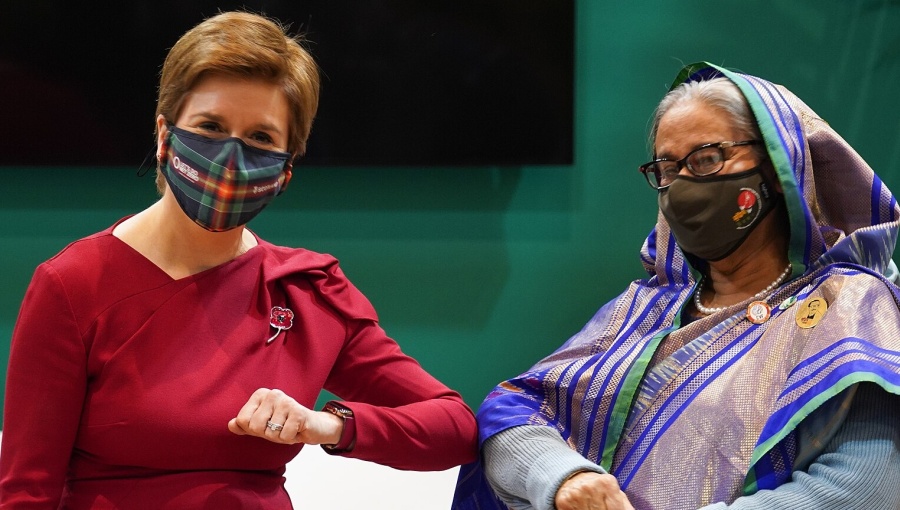
India is unlikely to comply with Bangladesh’s request to extradite former Prime Minister Sheikh Hasina, despite increasing diplomatic pressure and mounting allegations surrounding her role in a deadly crackdown in 2024. The Indian government has maintained an unwillingness to extradite her even after receiving repeated formal requests from Dhaka.
According to a report by Times of India, the most recent extradition request, delivered through a diplomatic note on July 9 2025, is yet to be formally addressed by India. Hasina’s abrupt departure from Bangladesh in the wake of mass unrest that toppled her nearly 16-year premiership was a blow to India’s influence in the country.
Since then, the political situation in Dhaka has shifted dramatically, with a caretaker administration under Muhammad Yunus pursuing criminal charges against top members of the former ruling Awami League party that Hasina still officially heads. From an objective perspective New Delhi’s reluctance to engage with the extradition pleas appear rooted in a complex mixture of legal, political and strategic calculations.
While the interim government of Bangladesh has accused Hasina of crimes against humanity, including state-sanctioned killings during the extraordinarily disruptive and violent student-led protests - India is under no legal obligation to extradite her in the absence of a bilateral extradition treaty. The two countries have previously cooperated on high-profile returns of fugitives, but those cases were grounded in clear-cut criminal proceedings and reciprocal diplomatic consensus.
The current demand, by contrast, is entangled in questions of legitimacy and timing. India is also weighing the potential fallout of sending Hasina back to Dhaka, where she faces prosecution by a tribunal that her supporters and several international human rights groups have criticised for politicisation.
The tribunal has already sentenced Hasina to six months’ imprisonment in absentia in a contempt case and has indicted her on formal charges of crimes against humanity based partly on fresh evidence emerging from international media.
A leaked audio recording published by BBC Bangla, allegedly capturing Hasina instructing security forces to fire on protesters, has heightened the case’s profile. The BBC Eye Investigations unit, which compiled the report, linked the former prime minister to brutal reprisals carried out during the month-long protests in mid-2024.
According to a separate UN human rights investigation, the crackdown resulted in at least 1,400 deaths between July 15 and August 15 2024 during Hasina’s last few months in office. Dhaka has seized on the BBC’s reporting to bolster its claims, with Yunus’s administration arguing that the moral weight of the revelations demands an urgent international response.
Shafiqul Alam, press secretary to the chief adviser, described India’s position as “no longer tenable” and accused New Delhi of ignoring basic standards of justice. He said that neither regional friendships nor the strategic legacy of past cooperation could excuse what he called “the deliberate murder of civilians.” India’s leadership, however, is unlikely to be swayed by emotive appeals.
Delhi has long regarded Hasina as a reliable partner, especially on issues ranging from counterterrorism cooperation to cross-border infrastructure development. Her government’s willingness to align with Indian interests, particularly in countering Chinese influence in the Bay of Bengal, gave her an unusual degree of strategic latitude. Despite growing criticism of her increasingly authoritarian style, Hasina retained high-level contacts in the Indian security and diplomatic establishment up to the moment of her exit.
Granting her extradition now, under an interim regime whose future remains uncertain, would risk alienating Awami League loyalists and potentially complicating India’s future relations with whichever faction emerges dominant in Bangladeshi politics. Moreover, any Indian decision to extradite a former head of government would set a precedent that could echo beyond South Asia. Furthermore, extraditing Hasina would require India to be convinced that the charges against her are not politically motivated.
The international tribunal trying her is domestic in origin and has yet to gain international endorsement, unlike The Hague-based courts that handled the trials of former Yugoslav, Rwandan and more recently Philippine leaders. Without a broader international legal framework, India may find sufficient grounds to argue that extradition would be inappropriate at this stage.
India’s foreign ministry has so far limited itself to acknowledging receipt of Dhaka’s communications, without committing to any timeline or stance. The government’s silence, though criticised across the border in Bangladesh, appears to be part of a deliberate effort to avoid escalating tensions while awaiting further developments.
Even as Dhaka intensifies its campaign, support from major powers is likely to be tepid - especially as the world is focused on several other crises including the ongoing Russia-Ukraine war and the Iran-Israel conflict. Indian officials are likely watching closely to see whether global institutions or the UN push for action, which could provide New Delhi with political cover should it decide to revisit its position.
.jpg)
As a country Bangladesh is at an energy crossroads. Following decades of natural‑gas dominance, its energy planners are charting a course towards a diversified portfolio, including nuclear power-use, LNG, coal-fired generation, and a nascent but ambitious renewable sector.
This multifaceted approach reflects both opportunity and challenge, fuelled by surging power demand, dwindling domestic gas reserves and pressing environmental concerns.
Nuclear: Rooppur’s promise
The jewel in Bangladesh’s emerging energy crown is the Rooppur Nuclear Power Plant. Under construction since 2017 with support from Russia’s Rosatom, it comprises two VVER‑1200 reactors totalling 2.4 GW. Unit 1 is expected online in late 2025, followed by Unit 2 in mid‑2025.
The project, financed via an $11.38bn loan, is projected to meet around 10% of the nation’s electricity needs when complete.
While concerns over foreign debt and geopolitical leverage are voiced, especially in Western commentary on Russia’s overseas nuclear diplomacy, Bangladesh sees Rooppur as a scientific and crucial domesic leap, signalling entry into the atomic age. To this end, there is already talk of extending the site with further reactor units and perhaps a research reactor sources in the region indicate.
LNG: the expensive bridge fuel
Once the country’s lynchpin, natural gas has in recent years been drawn down from domestic fields and supplanted by costly LNG imports. As such, Bangladesh has plunged into the global LNG market, increasing its spot cargoes from 23 to 48 in 2024, with projections to spend around $50bn on LNG infrastructure and plants alone news agencies such as Reuters have reported.
The nation forged a non‑binding deal with Louisiana’s Argent LNG for up to 5mn tonnes per year (tpy) in a bid to diversify suppliers and assuage import issues. Yet this reliance hits hard. LNG prices have spiked 300% since 2021, triggering fiscal stress, underutilised capacity – an example being the Payra plant operating at only 40% or so of its potential, and environmental indignation
Critics of Dhaka’s LNG policy and use argue thay the country is entrapped by “LNG addiction” and the local Dhaka Tribune has indicated these voices highlight that the $36bn spent on LNG plants could have instead powered up renewable capacity to 62 GW.
Coal: the double edged sword
In addition to nuclear power, Bangladesh is rapidly constructing coal-fired capacity to anchor baseload generation. Payra at 1.32 GW and Matarbari at 1.2 GW are the flagship mega‑plants, built with Chinese and Japanese aid respectively.
Meanwhile, Rampal, a 1.32-GW Indo‑Bangladeshi venture, also helps underpin domestic energy security even as concerns flood environmental circles due to its proximity to the environmentally important Sundarbans – an area of mangrove forest home to around 100 Bengali tigers.
Japan’s climate‑finance intervention at Matarbari, and advanced pollution controls at Payra, however, are seen as attempts to green‑wash what is fundamentally a fossil-based project. However, analysts question whether more coal is wise. A 2025 Daily Star editorial warned that yet another coal unit would exacerbate overcapacity as baseload margin already hovers at ~61%. At the same time it would contradict environmental aims .
Renewables
Bangladesh is also making inroads into solar, wind, and off‑grid renewable models. Surprisingly, the country runs the world’s largest off‑grid solar system, serving around 20mn people. Yet utility‑scale utility growth lags: by 2021, renewables made up just 3% of generation, falling short of government targets local media reports. Much of this is attributed to land scarcity and grid constraints which have throttled expansion.
Some progress is being made though: Feni solar park (50 MW), rooftop PV mandates on schools, hospitals, and public buildings, and solar tenders totalling 5.2 GW are underway. The government has also refreshed its Renewable Energy Policy, raising targets to 20% by 2030 and 30% by 2041. Even the interim administration under Nobel laureate Muhammad Yunus has mandated rooftop panels on public institutions, both to help ease monthly bills and unlock private investment.
Balancing act
Bangladesh’s Integrated Energy and Power Master Plan, whether idealistically or otherwise, envisions a future comprising nuclear, gas / LNG, coal, renewables, hydrogen, bioenergy, regional imports from India to the west and Nepal and Bhutan to the north.
But ambition often meets stark realism in Bangladesh. Domestic gas production is expected to run dry by 2033 without fresh discoveries according to reports, and LNG’s volatility pressures finances and environment in a country still lacking in funds and political stability. Coal expansion might lock in high carbon emissions while at the same time stranding assets and renewables need policy consistency, grid investment, and land‑use innovation. Even nuclear, for all its promise, is locked into large foreign‑currency debt and complex regulatory regimes.
Nevertheless, Dhaka’s diversification strategy is pragmatic. Rooppur offers a high‑intensity, carbon‑light backbone. LNG and coal sustain base‑load power while renewables scale and grid resilience improves. Regional imports help buffer against drought or monsoon-induced supply drops. Cross-border energy trading with Bhutan, India and Nepal also helps.
Charting a sustainable future
To this end, even as Bangladesh’s energy narrative may appear disordered and marked by competing priorities and financial risk, it reflects the complex realities that fast-growing economies face.
If Bangladesh can sustain its renewable momentum, claw down LNG and coal’s share, and make Rooppur a safe and financially viable success, it could truly reimagine its energy future. The nation that once burned through daily blackouts now stands at the cusp of an energy transformation - resilient, cleaner and ready for the challenges ahead.

No comments:
Post a Comment