Bridging The Gender Divide – OpEd
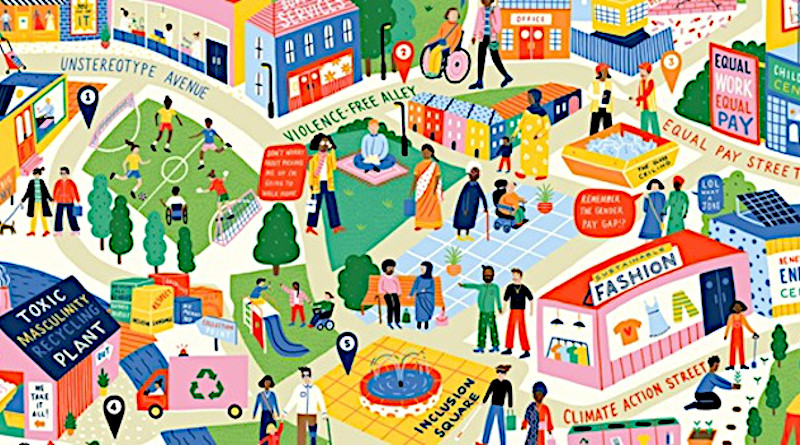
Gender Equality: Image credit: UN Women
The twenty-first century has not achieved its essential objective of establishing gender equality. The worldwide situation in 2025 shows continuing large gaps, which create damage to both women and men, although advocacy efforts and reform initiatives and measurable advancements have occurred for many years.
The current gender equality conversation focuses on women but ignores how social expectations limit men from choosing their own life paths and social connections. The present limited view hides an important truth that gender equality needs to remove both institutional barriers and social biases, which block human growth opportunities for everyone beyond gender differences. The paper shows that community participation is essential for achieving gender equality because it enables the creation of fair treatment and dignity alongside equal possibilities through the elimination of social and cultural, and mental barriers that affect all people based on gender.
A definition of gender equality needs to be exact for it to be useful in 2025. The fundamental definition of equality means that all people should have equal rights and resources and equal opportunities, and decision-making power. The system does not require uniformity because it defends people from discrimination, which stems from their biological or cultural identity. Women need equality to achieve freedom from all forms of discrimination that prevent them from accessing education and employment and participating in political life. For men, it means liberation from restrictive expectations of masculinity that demand emotional suppression, economic dominance and avoidance of caregiving roles. The concept of gender equality functions as a social benefit which enhances family units and economic systems, and political institutions.
Social and cultural norms function as the foundation which sustains ongoing inequality. Women and men across different nations continue to face stereotypes which force them into traditional roles of caring for families and earning money. Women typically bear the responsibility of working outside the home and performing household duties, but men who take on caregiving roles or nonconventional work experience face discrimination, which leads to diminished social standing. Media content shows male authority as superior through its depiction of women in passive roles, which creates a restricted view of what the future will bring for humanity. The established social norms prove that legal changes by themselves are not enough to eliminate existing structural inequalities because cultural transformation is needed to achieve lasting change.
Workplace inequality illustrates the interplay of law, policy and culture. The International Labour Organisation forecasts women will earn 20% less than men for doing the same work, yet they will occupy only 32% of management roles worldwide by 2025. Men face two types of challenges which prevent them from taking parental leave or flexible work arrangements because these obstacles stop them from helping with childcare duties and solidify the belief that caring for children belongs to women. The lack of sufficient paternity leave and flexible work options in various nations forces people to live restricted lives because women must care for children by default, and men face restricted options for home involvement.
The current educational system faces additional obstacles because of the existing educational disparities. In parts of Sub-Saharan Africa and South Asia, poverty, early marriage and cultural constraints keep large numbers of girls out of school; UNESCO’s 2025 estimates put the figure for out-of-school girls in the hundreds of millions. Conversely, many developed countries face worrying trends in which boys underperform in literacy and lag in higher education completion, suggesting a “reverse gap” that also warrants attention. The different patterns indicate that gender inequality exists in multiple forms because solving one aspect does not solve all the problems.
Psychological and social pressures make the situation even more difficult to handle. Women experience harassment and objectification and must demonstrate excessive competence when working in male-dominated industries. According to the World Health Organisation, men will face higher suicide rates in 2025 because society demands that men hide their emotions as a sign of masculinity. Gender policies that fail to consider psychological gender aspects lead to numerous individuals losing essential support which they need to succeed.
The World Economic Forum published the Global Gender Gap Report 2025, which shows that worldwide gender inequality persists at 67.2% and experts predict it will take over 100 years to achieve full gender equality. These predictions need to serve as catalysts for change instead of indicating defeat. The following practical steps will speed up the transformation: Employers need to show all compensation information through required disclosure and must undergo periodic evaluations to ensure they provide flexible work arrangements and shared leave benefits. The government needs to support child and elderly care services through funding, while creating educational programs to help female students stay in school and assist male students in reading improvement. The implementation of reforms depends on additional investments for mental health services and mentorship programs, and community outreach initiatives to produce real-world results. The implementation of collective leadership between governments and businesses, and civil society requires accountability to be in place.
The solution to these obstacles needs responses that are both complete and unified. Policy reform needs to happen because equal pay laws with enforcement power and universal parental leave benefits, and affordable care facilities will distribute caregiving tasks more fairly between men and women. The implementation of policy needs to be supported by cultural transformation because media outlets and public discourse should present men in caregiving roles and women in leadership positions, and educational institutions should train students to identify and fight against hidden prejudices. Organisations can retain their workforce and promote underrepresented groups by establishing training programs at work and reporting systems for harassment and mentorship programs. The combination of improved mental health services with community-based support networks will assist individuals in managing their psychological distress caused by rigid gender norms.
The struggle for gender equality between men and women works as a collective effort to establish fairness and dignity, and equal treatment for every person. Defined as equal access to rights, resources and responsibilities, it demands dismantling stereotypes that consign women to subordination and men to restrictive roles of dominance. Human potential continues to encounter multiple obstacles, which derive from cultural norms and workplace discrimination and educational difficulties, and mental pressure. The organisation needs to establish inclusive policies and cultural transformation, and support systems that will empower both genders to meet their needs.
Gender equality represents a moral imperative and strategic business advantage because it strengthens family bonds while fuelling economic growth and building communities that are both resilient and compassionate. The journey toward equality continues to stretch out before us, yet the pursuit brings endless rewards for women and men and for all of humanity.
The opinions expressed in this article are the author’s own.
References
- Xu, D. (2025). Equal opportunity policy and the reverse gender gap in education. Elsevier Ltd.
- Işıkgöz, M. E. (2025). Challenges and successes in promoting gender equality in physical education and sport. BMC Public Health.
- Peralta-Jaramillo, K. G. (2025). Challenges and advances in gender equity: Analysis of policies, labour practices, and social movements. Social Sciences.

Simon Hutagalung
Simon Hutagalung is a retired diplomat from the Indonesian Foreign Ministry and received his master's degree in political science and comparative politics from the City University of New York. The opinions expressed in his articles are his own.

No comments:
Post a Comment