TotalEnergies Rejects War-Crimes Allegations Tied to Mozambique LNG

TotalEnergies (TTE) has issued a detailed rebuttal to allegations filed before France’s National Anti-Terrorist Prosecutor’s Office, rejecting claims that the company or its Mozambique LNG project was complicit in war crimes, torture, or enforced disappearances in Cabo Delgado in 2021.
The complaint, submitted “against persons unknown and against TotalEnergies,” stems from a September 2024 Politico investigation alleging that Mozambican soldiers committed abuses near the Afungi LNG site between June and September 2021. TotalEnergies says the accusations are baseless, emphasizing that all project personnel were evacuated in early April 2021 after the Islamic State–affiliated Al-Shabab attack on Palma.
TotalEnergies states that neither it nor the Mozambique LNG consortium received any information in 2021 indicating that abuses had occurred, and says internal checks and stakeholder outreach turned up no evidence supporting Politico’s claims. The company also states that Politico has refused to share underlying data or supporting documentation for the allegations.
Cabo Delgado has been an insurgency hotspot since 2017, with Islamist militants targeting villages, infrastructure and government forces. The Palma assault in March 2021, one of the conflict’s deadliest episodes, forced the full evacuation of LNG operations and halted the multibillion-dollar development.
Following the evacuation, Mozambican security forces took control of the Afungi site and surrounding infrastructure during counter-insurgency operations—an environment in which the contested allegations emerged. Human rights reporting in the region remains complex, given fragmented oversight and ongoing conflict conditions.
The company says it has interacted extensively with Politico since the article’s publication, publicly posting the full correspondence after accusing the outlet of selectively quoting company responses. TotalEnergies argues that both the complaint and related media narratives improperly link the company to violent episodes associated with Mozambique’s broader security crisis.
TotalEnergies highlighted that security for the LNG project was managed under a now-expired Memorandum of Understanding between Mozambique and project operators. The MoU required training of more than 5,000 security personnel in the Voluntary Principles on Security and Human Rights, established a grievance mechanism, and allowed for removal of security officers for misconduct.
According to the company, none of the grievances filed through these mechanisms supported the accusations referenced in the complaint.
Mozambique LNG formally asked Mozambican authorities to open an investigation in late 2024, and in March 2025 the country’s Attorney General confirmed that a criminal probe was underway. TotalEnergies says it is cooperating fully and has also requested an independent investigation by Mozambique’s National Human Rights Commission, pledging to publish its findings.
The company pointed to its 2022 independent assessment by Jean-Christophe Rufin, which reviewed humanitarian conditions in Cabo Delgado and led to a 2023 action plan expanding local development and community-support programs. TotalEnergies reiterated that the long-term socio-economic stability of the province remains central to the project’s objectives.
Mozambique LNG—where TotalEnergies holds a 26.5% stake—remains one of the largest LNG developments planned in sub-Saharan Africa, though its restart timeline continues to hinge on security conditions in northern Mozambique.
By Charles Kennedy for Oilprice.com
‘Radical and Reckless’: House Passes LNG Bill to Jack Up Climate Pollution and Energy Prices
“The explosion of LNG exports in recent years has already generated massive profits for the fossil fuel industry, while consumers and local communities pay the price,” said one climate campaigner.
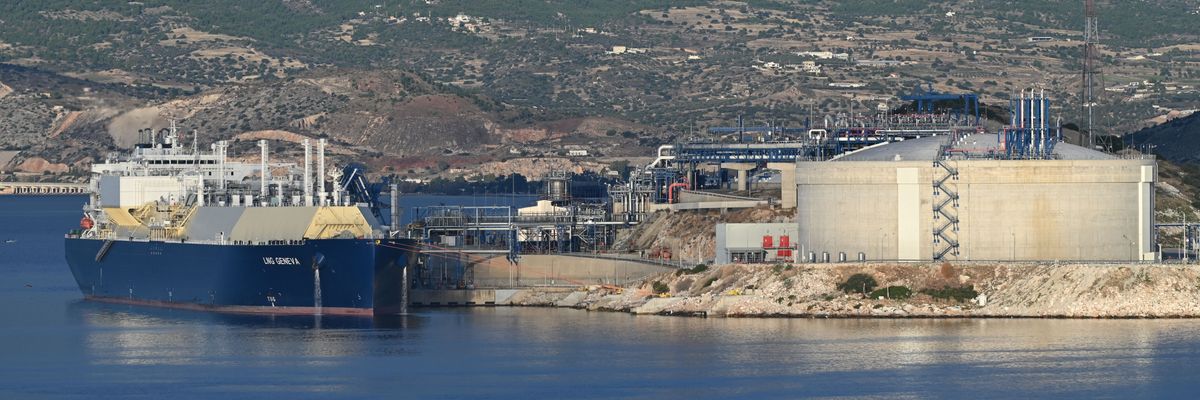
A liquefied natural gas tanker that departed from the Port of Cameron unloads US LNG at the Revithoussa terminal in Greece, on November 7, 2025.
(Photo by Nicolas Koutsokostas/NurPhoto via Getty Images)
Jessica Corbett
Nov 21, 2025
COMMON DREAMS
As government leaders from around the world met in Brazil to discuss solutions to the fossil fuel-driven climate emergency, the GOP-controlled US House of Representatives on Thursday advanced a bill that would lift restrictions on liquefied natural gas.
Eleven Democrats joined all Republicans present in voting for GOP Texas Congressman August Pfluger’s Unlocking our Domestic LNG Potential Act, which would also grant the Federal Energy Regulatory Commission sole authority over applications for import and export facilities. It’s now up to the Senate whether the bill will reach President Donald Trump.
As E&E News reported: “Pfluger and Republican leadership previously championed the bill in response to President Joe Biden’s LNG pause, in which the Department of Energy paused new terminal approvals to evaluate whether they were in the public interest. It passed the House last year, but never received Senate consideration.”
While Pfluger, House Speaker Mike Johnson (R-La.), and Sen. Tim Scott (R-SC), the upper chamber sponsor, celebrated Thursday’s vote, climate campaigners blasted the bill—just one part of a sweeping GOP effort to boost the planet-heating fossil fuel industry during Trump’s second term.
“The explosion of LNG exports in recent years has already generated massive profits for the fossil fuel industry, while consumers and local communities pay the price,” Sierra Club director of beyond fossil fuels policy Mahyar Sorour said in a statement after the vote. “The last thing we need is even less oversight over these costly, polluting export projects.”
“House Republicans should be focused on making investments in a clean economy and reducing energy costs for our families, not further padding the pockets of Big Oil and Gas executives,” Sorour added. “The Senate should reject this dirty bill.”
Tyson Slocum, director of Public Citizen’s Energy Program, highlighted that “President Trump explicitly promised during the campaign that he would lower Americans’ utility bills by half within 12 months. Not only has Trump obviously failed on that promise, but this legislation would exacerbate the energy affordability crisis.”
Slocum pointed to his group’s estimates that “natural gas prices for American households have increased by $10.3 billion from January through August 2025 compared to the same time period a year earlier—a 20% increase.”
“Eight LNG export terminals now consume more natural gas than all American households combined,” he continued. “The US Department of Energy’s Energy Information Administration’s November 2025 Short Term Energy Outlook concludes that Americans face sharply higher natural gas prices ‘primarily due to increased liquefied natural gas (LNG) exports.’”
“This radical and reckless deregulatory proposal eliminates the requirement that gas exports comply with the public interest, allowing fossil fuel companies to enjoy unregulated exports at the expense of affordable energy here at home,” Slocum stressed. “The move by Congress to allow bypassing these safeguards could have catastrophic impacts on the consumers in the US, sending energy prices soaring, while allowing climate change to get far worse.”
“Despite Trump promising he would cut Americans’ energy bills, Congress is set to put consumers at risk of paying more, raising major questions about Trump’s close allegiance with dirty energy executives who want to ship more fuel overseas,” he added. “Creating more capacity to export US fossil fuels abroad will only accelerate the climate crisis and hurt US consumers.”
The vote happened on the same day that Doug Burgum, the billionaire fossil fuel industry ally whom Trump appointed to lead the US Department of the Interior, ordered the termination of the Biden administration’s 2024-29 National Outer Continental Shelf Oil and Gas Leasing Program and the development of a “new, more expansive” plan “as soon as possible.”
Responding to the order in a statement, Sierra Club executive director Loren Blackford said that “Donald Trump and Doug Burgum are once again trying to sell out our coastal communities and our public waters in favor of corporate polluters’ bottom line.”
LNG Shipping Shortage Behind Dramatic Hike in Atlantic Rates
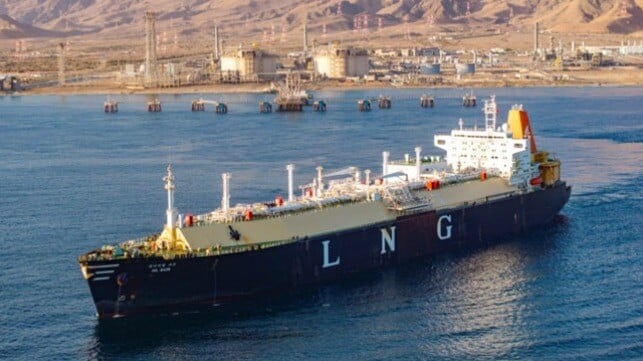
Increased production of LNG in West Africa and the United States, and delays in discharges at Egyptian LNG terminals, has prompted a short squeeze on LNG shipping availability. Rates have increased dramatically over the past three weeks.
LNG freight was being offered at $170,000 per day on the follow in the London market on the morning of November 21. This represents a 150 percent rise in rates in comparison with the Atlantic $75,000 per day rate being quoted two weeks ago. The prices at the beginning of November were already about 50 percent higher than rates prevailing in August. At current levels, Atlantic freight rates are the highest they have been for two years, whilst Pacific rates have risen but not by the same margins. Inevitably, the longer the shortage of shipping lasts, the wider the effect on geographic rates will be.
Some LNG importers in the United States are delaying purchases in the hope that the spike in shipping rates will fall away. Others in Europe are likely to do the same, leading to the prospect that come the winter there will be a shortfall in supply, particularly if Ukraine is successful in further restricting Russian output and shipments.
New Fortress Energy Warns of Possible Bankruptcy as Debt Pressures Mount

Shares of billionaire Wes Edens’ New Fortress Energy Inc. plunged on Friday after the liquefied natural gas (LNG) firm warned that it may file for bankruptcy protection in the U.S. if it cannot reach an out-of-court restructuring deal with creditors. The New York-based company said in a regulatory filing that it’s also considering a court-supervised restructuring in the U.K., underscoring the severity of its financial strain.
New Fortress, which supplies natural gas across the Caribbean and Latin America, has been battling shrinking revenues and rising debt burdens for months. The company reported $8 billion in liabilities against only $1.3 billion in assets, admitting “substantial doubt” about its ability to continue operating without fresh liquidity. Shares fell as much as 27% in intraday trading, extending a year-long slide of more than 80%.
The firm has been scrambling to buy time with creditors, most recently securing a short-term reprieve to delay interest payments on its 2029 senior-secured notes until mid-December. Bloomberg previously reported that management had explored both U.S. Chapter 11 protection and U.K. restructuring mechanisms as options to preserve value while renegotiating debt.
Founded by Edens to capitalize on LNG demand in emerging markets, New Fortress Energy expanded rapidly through acquisitions and project financing but has since faced liquidity pressures amid volatile gas prices and delayed project cash flows. Analysts warn that unless a comprehensive refinancing deal materializes soon, the company could face court-supervised restructuring before year-end.

No comments:
Post a Comment