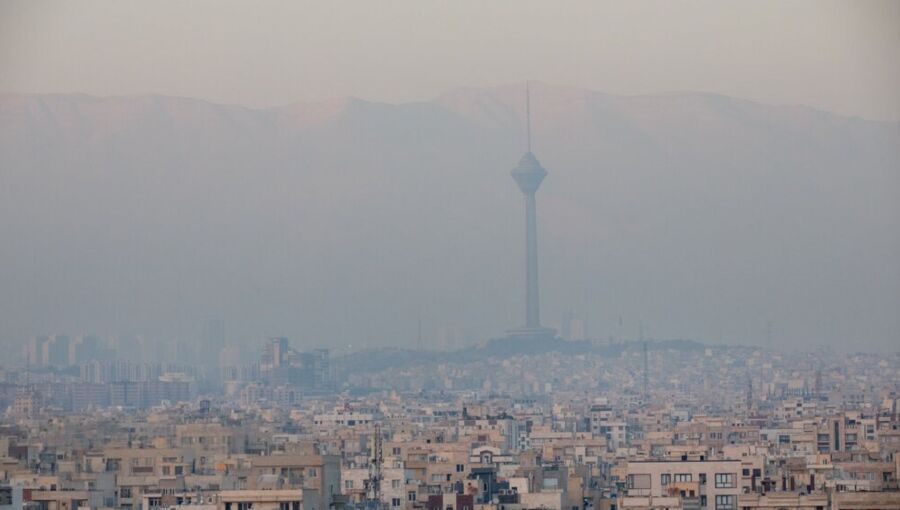
Air pollution in Tehran reached hazardous levels on November 23, prompting authorities to move schools online and implement emergency measures across the province, Newsbase has learnt.
Tehran's chronic air pollution stems from a combination of geographic and industrial factors, with the city's location in a valley surrounded by mountains creating an atmospheric inversion effect that traps pollutants close to ground level due to cold weather. During winter months, the inversion layer intensifies as cold air becomes trapped beneath warmer air above, preventing pollutants from dispersing and creating hazardous conditions.
Monitoring at the Royal Danish Embassy in northern Tehran on November 23 showed a US Air Quality Index reading of 189 at 1:30pm local time, with PM2.5 levels of 109 microgrammes per cubic metre, categorising conditions as "unhealthy." Earlier reports from the embassy monitoring stations showed a peak of more than 220 PM2.5 levels on November 22.
Online social media in Iran has become increasingly critical of government pollution readings, fearing that monitoring stations have been either switched off or producing metered-down readings.
According to the Iran National Air Quality Monitoring System represented on another website, all government monitoring stations in the capital city appear to have been turned off or are malfunctioning, IntellIiNews notes.

Hassan Abbasnajad, secretary of the emergency air pollution working group, said the decisions were taken following a meeting chaired by Tehran Governor Mohammad Sadegh Motamadian to manage the worsening air quality crisis.
Classes for primary school pupils across Tehran province, except Firoozkooh district in the Alborz mountains behind the city, will be held remotely on November 25 and 26.
Pre-schools, primary schools and nurseries in cities where pollution has reached unhealthy levels for all groups will be closed.
Female civil servants with primary school-age children will be permitted to work from home.
Abbasnajad attributed the majority of air pollution to vehicles and said the municipality and traffic police are required to prevent polluting vehicles from operating, enforce traffic schemes regularly and monitor terminals and buses that remain idling overnight.
The capital's air quality crisis is exacerbated by the widespread use of low-quality fuel in vehicles and heating systems, emissions from ageing factories within and around the metropolitan area, and the concentration of millions of vehicles on congested roads.
The measures, which have become increasingly common in recent years. Local power companies have been forced to implement periodic shutdowns across the capital and other regions, with outages lasting several hours as much of the electricity for the city comes from oil and coal powerplants.
The school shutdown comes amid ongoing concerns about water shortages in Tehran due to the ongoing drought, which coincides with widespread pollution. Areas of the capital have begun experiencing water shortages as the local water company starts rationing its water supplies.
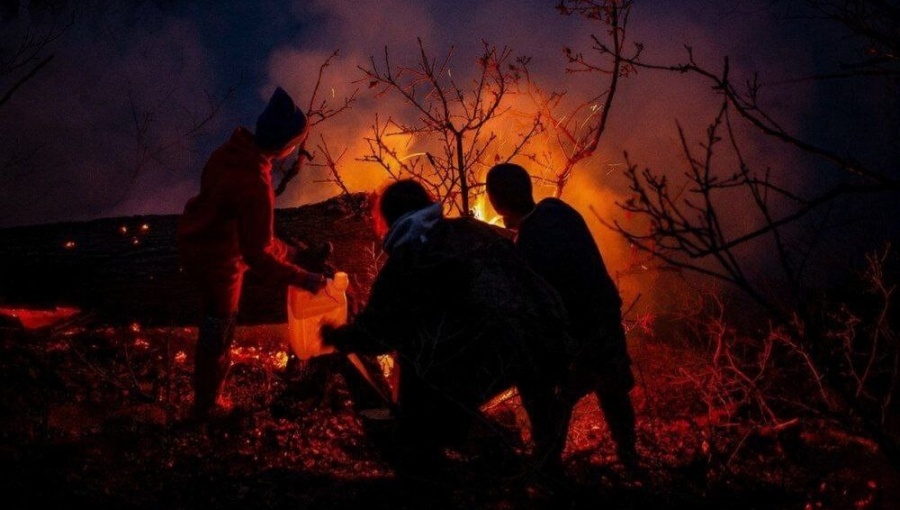
A massive wildfire has scorched more than ten hectares of the Hyrcanian forests in northern Iran, with international assistance arriving on November 22 to help contain the blaze, IRNA reported.
Shina Ansari, head of Iran’s Department of Environment, said field inspections showed the fires continued in scattered patches and intensified with strong winds. “Domestic agencies and international teams have been mobilised to tackle this crisis,” she told reporters.
Two Ilyushin water‑bombing aircraft operated by the Islamic Revolutionary Guard Corps (IRGC) were dispatched to the Elit region of Mazandaran Province, completing one sortie early in the morning and preparing for a second. Six helicopters were also deployed to fight the spot fires, she said.
Ansari added that around 400 personnel, including local volunteers, park rangers, forestry staff, crisis management units and Red Crescent teams, were stationed in the area. “With the cooperation of the Foreign Ministry, two firefighting planes from Turkey, accompanied by a helicopter and eight specialists, are joining operations today. Russia has also declared readiness to provide support if required,” she said.
Each aircraft can conduct two water drops daily, carrying up to 40 tonnes of water per mission. Turkish planes, being smaller, are able to fly at lower altitudes, according to Ansari, while additional specialist crews from the Zagros forests in Kohgiluyeh and Boyer Ahmad Province have been dispatched to reinforce efforts.
The Elit woodlands near Marzanabad have suffered two major outbreaks this month. The first began on November 1 and was contained after several days; the second reignited on November 15 and continues to burn.
Natural resources experts believe human activity is the likely cause, citing careless hunters or abandoned campfires left by tourists. Mazandaran’s governor, Mehdi Younesi Rostami, said the origin of the blaze was “most likely human.”
High temperatures, rugged terrain and accumulated dry leaves and timber have fuelled repeated flare‑ups in the Chalous forests. More than ten hectares have been damaged, with young saplings, shrubs and fertile soil layers worst affected. Specialists caution that full recovery may take years. Even after containment, the threat persists, as hidden embers can smoulder beneath the soil for weeks and reignite with the slightest gust of wind, requiring constant vigilance from emergency teams.
The crisis has underscored the pressing need for advanced firefighting technology, local community training and early warning systems in Iran. The Hyrcanian forests, stretching along the southern Caspian Sea and believed to be between 25 and 50 million years old, were added to UNESCO’s World Heritage list in 2019 for their exceptional biodiversity and geological significance.
Kaveh Madani, an environmental expert, lamented on his X account, saying: “We are losing a natural heritage that predates ancient Iranian civilisation.”

No comments:
Post a Comment