Gazan students bound for Canada remain trapped in administrative limbo
More than 130 Gazan students are pleading with Canada to grant visas so they can attend universities that have already offered them full scholarships. Some visa applications have been pending for more than 18 months without progress. Two students have already lost their lives during the wait; others remain at risk.
Issued on: 22/11/2025
By: FRANCE 24
Video by: Jessica LE MASURIER
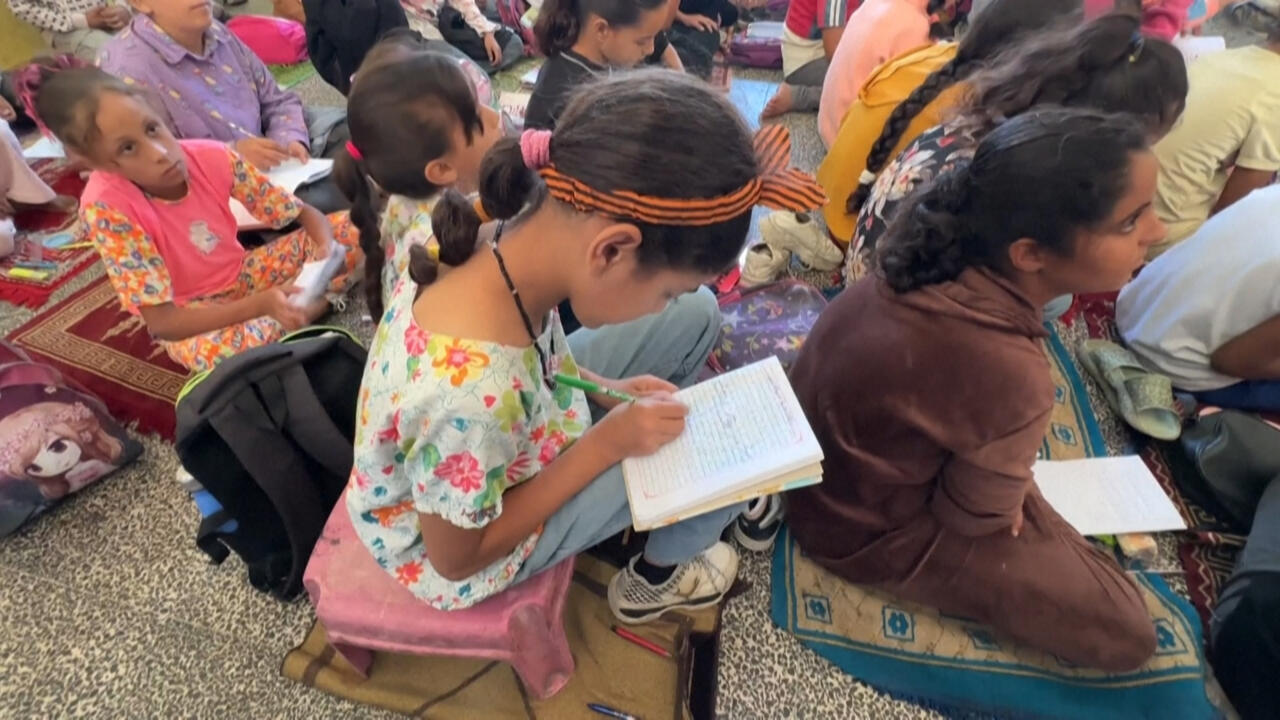
Meanwhile, videos from Sondos show her teaching children in a tent as drones buzz overhead – another symbol, Abu-Zahra says, of the determination to keep learning.
“I think how courageous those teachers, how courageous those parents and those children are – that they want to learn, despite every effort to stop them. They’re unstoppable,” Abu-Zahra said as she watched a video Sondos sent on her iPhone.
Other countries, including the UK, Italy, Ireland and France, have managed to evacuate Gazan students so they can continue their studies abroad. Sondos and her peers are waiting for Canada to do the same.
More than 130 Gazan students are pleading with Canada to grant visas so they can attend universities that have already offered them full scholarships. Some visa applications have been pending for more than 18 months without progress. Two students have already lost their lives during the wait; others remain at risk.
Issued on: 22/11/2025
By: FRANCE 24
Video by: Jessica LE MASURIER
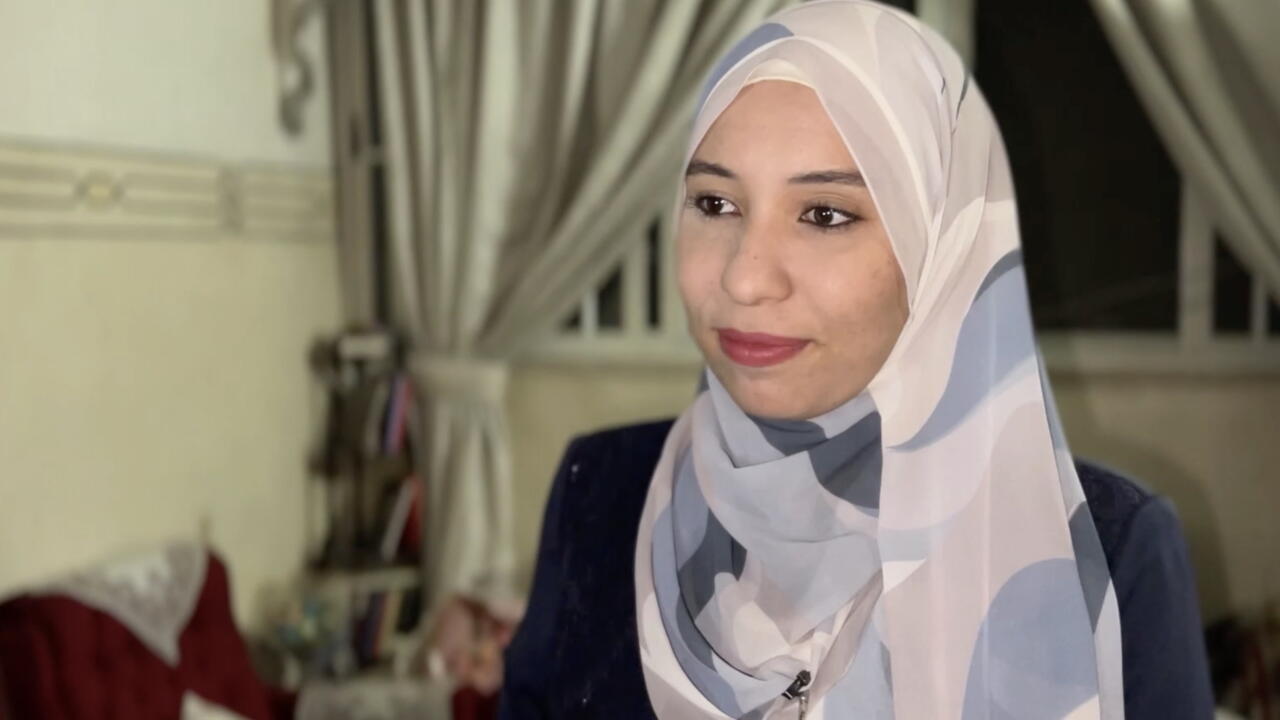
Palestinian student Sondos shown at her home in Gaza City.
© FRANCE 24
02:15
Ottawa blames the visa delays on the complexity of the cases, which necessitate security and biometrics checks, and difficulty evacuating the students from Gaza.
When the war interrupted Sondos’s studies in Gaza, she began looking for opportunities to study abroad. But it was difficult to find a stable internet connection to complete her application to the University of Waterloo in Canada. She had to walk several kilometres before finding a spot on a sandy street in Gaza City where the Wi-Fi was strong enough.
On the day she submitted it, she was about to leave the street when an Israeli strike hit a group of people using the internet there.
“I started running and fell to the ground; shrapnel and blood were everywhere,” Sondos recalled. She was unable to speak for days after witnessing the horror.
Sondos received the news that she had been accepted into the university's global governance master’s programme on November 26 of last year.
“I was overjoyed,” she said. “I felt as if the war had laid down its arms for my sake, to let me celebrate for a few minutes, and that the sky – lit up by explosions and rockets – was sending another kind of light, one that illuminated my heart, which had grown hopeless from the hell we were living.”
Sondos dreams of becoming a human rights lawyer and representing the Palestinian people on the world stage. After her university was destroyed in the war, the prospect of studying abroad gave her a rare glimmer of hope.
“I want to be a hand that offers help to the world, and that contributes to spreading justice and human rights for many people, including my own,” she said.
But like some 130 other Gazan students who have received scholarships to Canada, she is still waiting for a visa – and still trapped in Gaza.
Many students have sought help from the Canadian non-profit Palestinian Students and Scholars at Risk. But for some, the wait proved fatal. Gazan twins Dalia and Sally, who had also been accepted to the University of Waterloo, were killed in an Israeli air strike on December 5, 2024, the university confirmed.
Professor Nadia Abu-Zahra has been advocating for the students in Ottawa. She has spoken with Sondos, exchanging voice notes with words of encouragement. She says the students’ resilience in the face of relentless bombardment and the destruction of every university in Gaza demonstrates their determination to survive – and to pursue their education despite everything.
02:15
Ottawa blames the visa delays on the complexity of the cases, which necessitate security and biometrics checks, and difficulty evacuating the students from Gaza.
When the war interrupted Sondos’s studies in Gaza, she began looking for opportunities to study abroad. But it was difficult to find a stable internet connection to complete her application to the University of Waterloo in Canada. She had to walk several kilometres before finding a spot on a sandy street in Gaza City where the Wi-Fi was strong enough.
On the day she submitted it, she was about to leave the street when an Israeli strike hit a group of people using the internet there.
“I started running and fell to the ground; shrapnel and blood were everywhere,” Sondos recalled. She was unable to speak for days after witnessing the horror.
Sondos received the news that she had been accepted into the university's global governance master’s programme on November 26 of last year.
“I was overjoyed,” she said. “I felt as if the war had laid down its arms for my sake, to let me celebrate for a few minutes, and that the sky – lit up by explosions and rockets – was sending another kind of light, one that illuminated my heart, which had grown hopeless from the hell we were living.”
Sondos dreams of becoming a human rights lawyer and representing the Palestinian people on the world stage. After her university was destroyed in the war, the prospect of studying abroad gave her a rare glimmer of hope.
“I want to be a hand that offers help to the world, and that contributes to spreading justice and human rights for many people, including my own,” she said.
But like some 130 other Gazan students who have received scholarships to Canada, she is still waiting for a visa – and still trapped in Gaza.
Many students have sought help from the Canadian non-profit Palestinian Students and Scholars at Risk. But for some, the wait proved fatal. Gazan twins Dalia and Sally, who had also been accepted to the University of Waterloo, were killed in an Israeli air strike on December 5, 2024, the university confirmed.
Professor Nadia Abu-Zahra has been advocating for the students in Ottawa. She has spoken with Sondos, exchanging voice notes with words of encouragement. She says the students’ resilience in the face of relentless bombardment and the destruction of every university in Gaza demonstrates their determination to survive – and to pursue their education despite everything.
In Gaza, education fights to survive © AFP
01:59
Canadian authorities have said the need for biometrics and background checks, and the difficulties of evacuating students from Gaza, are behind the delays. But Abu-Zahra says these are just excuses.
"Other countries have already resolved these administrative obstacles to expedite assistance for students, making Canada’s position increasingly difficult to justify."
“They’re not even asking for refugee status," she says. "The refusal to let them in as students, as scholars, is baffling.”
01:59
Canadian authorities have said the need for biometrics and background checks, and the difficulties of evacuating students from Gaza, are behind the delays. But Abu-Zahra says these are just excuses.
"Other countries have already resolved these administrative obstacles to expedite assistance for students, making Canada’s position increasingly difficult to justify."
“They’re not even asking for refugee status," she says. "The refusal to let them in as students, as scholars, is baffling.”
Meanwhile, videos from Sondos show her teaching children in a tent as drones buzz overhead – another symbol, Abu-Zahra says, of the determination to keep learning.
“I think how courageous those teachers, how courageous those parents and those children are – that they want to learn, despite every effort to stop them. They’re unstoppable,” Abu-Zahra said as she watched a video Sondos sent on her iPhone.
Other countries, including the UK, Italy, Ireland and France, have managed to evacuate Gazan students so they can continue their studies abroad. Sondos and her peers are waiting for Canada to do the same.
November 23, 2025
Al Bawaba News
By Osama Ali
(Al Bawaba) — As part of a larger plan to set up temporary communities for displaced Palestinians in the south, starting with Rafah, the United States is pushing for a plan to split the Gaza Strip into clearly defined zones of control. One zone would be controlled by the Israeli military and the other would stay under Hamas control.
The Wall Street Journal says that the plan is a big change in Washington’s strategy for “dismantling Hamas,” which is one of the goals of the second phase of the American 20-point peace initiative. However, U.S. officials admit that reaching that goal is unlikely in the near future.
The plan says that areas controlled by Hamas would be marked in red and areas controlled by Israel would be marked in green. Washington wants to build “alternative safe communities” in the green zones. These will be temporary homes for families who have had to leave their homes and will have schools, medical centers, and basic services.
Officials in the U.S. say that engineering teams are already in Gaza to look at how to remove debris and clear unexploded ordnance so that these communities can be built. Even though construction hasn’t started yet, the temporary sites are expected to work until a permanent reconstruction plan is made for the war-torn area.
American and Israeli sources say that Rafah is the best choice to test the new model, even though Hamas’s tunnel system is still fighting underground.
Uncertain Security Plans
One of the biggest questions that still needs to be answered is how security will be kept up in the temporary communities. The Wall Street Journal says that it is still not clear how the U.S. and Israel plan to keep Hamas members out of these areas or from having an effect on them.
One of the ideas going around is to use local armed groups that Israel supports, like the Yasser Abu Shabab group, which runs schools and small businesses in areas where it has power.
But Washington doesn’t like this idea. Some U.S. officials think that some of these groups are undisciplined and that some of their members might even be criminals, which makes them worried about stability and governance.
Sources say that the American plan calls for Hamas’s areas of control to gradually get smaller, making room for an international stabilization force mandated by the UN and a local Palestinian police force.
During the transition period, a proposed “Peace Authority,” which is part of President Donald Trump’s plan, would be in charge of civil administration and rebuilding. After that, a Palestinian governing body would take over.
Hamas Says No to the Proposal
Hamas has completely turned down the U.S. plan, calling it a kind of “international guardianship” meant to keep Gaza separate from the Palestinian people.
The movement also spoke out against the recent UN Security Council resolution that supports sending in international troops. They said it tries to force a system on Palestinians that is driven by outside forces and takes away their right to resist the occupation and decide their own future.
Al Bawaba News
Al Bawaba provides top stories and breaking news about the Middle East and the world. The Al Bawaba network consists of several web portals and media platforms.
At least 98 Palestinians have died in custody since October 2023, Israeli data shows
Issued on: 23/11/2025 - FRANCE24
Israeli data indicate that at least 98 Palestinians have died in custody since October 2023, though the actual number is likely much higher, as hundreds of detainees in Gaza remain unaccounted for, according to Israel-based human rights group Physicians for Human Rights - Israel (PHRI). The organisation’s new report, based on freedom of information requests, forensic reports, and interviews with lawyers, activists, relatives, and witnesses, attributes the deaths to causes including physical violence, medical neglect, and malnutrition. Project coordinator, Physicians for Human Rights in Jerusalem, Oneg Ben Dror shares her insights.

No comments:
Post a Comment