
November 23, 2025
By Lim Teck Ghee
Ukraine became the world’s largest importer of major arms in the period 2020–24, with its imports increasing nearly 100 times over compared with 2015–19. — SIPRI
Media headlines of the Ukrainian President Voledmyr Zelensky, after he signed a military procurement letter of intent with his French counterpart Emmanuel Macron, quoted him describing the deal as providing Ukraine with “one of the greatest air defense systems in the world” to defend against Russian air attacks and ensure long-term security.
According to the agreement, Ukraine will receive up to 100 of France’s Rafale F4 fighter jets as well as advanced air defence systems. The estimated sales value of a new Dassault Rafale fighter jet typically ranges from Euro $225 million to Euro $285 million per aircraft, depending on the specific contract which includes weapons packages, training, and support. This would make the deal worth an eye watering Euro $22 to $28 billion alone. Other military hardware to be procured but not yet to be cost include air defense systems, advanced air-to-air missiles and guided bombs, radar systems and drones, with production of interceptor drones planned to begin in late 2025.
The French success in this procurement exercise brings to closer attention a very important, but often under reported and less detailed, aspect of the war. While much reporting on Ukraine focuses on the war itself and the aid packages to support the country, the commercial competition and industrial winners within its supporters in the European Union (EU) and other armament exporters such as the United Kingdom for military aid and procurement contracts are significant. This competition for the economic and financial benefits of war and reconstruction will intensify even as the war, in its current form, is ending.
According to available data, the European Union collectively has provided over US$60 billion in military aid and contracts to Ukraine. Germany has frequently been cited as the largest individual EU country contributor. However, when looking specifically at arms sales and procurement contracts which indicate which country’s defense industry is “winning” in terms of new business, the picture is more complex and dynamic. An added feature is the perception that Ukrainian military procurement is riddled with kickbacks and corruption is widespread, both internally among Ukrainians and externally among international partners and observers. As recently as March 2025, surveys indicated that over 91% of the Ukrainian population believed corruption is “somewhat” or “very widespread.” This has not discouraged sellers of armaments to Ukraine. Instead it appears to have encouraged them.
European Key Armament Players
Germany has consistently been one of the largest single European donors of military aid to Ukraine, often ranking second globally after the United States in terms of total allocated aid. This includes high-value equipment like the Leopard 2 tanks and IRIS-T air defense systems. German companies, such as the arms manufacturer Rheinmetall, have secured major contracts for producing and supplying ammunition, vehicles, and other equipment, making the country a significant industrial winner.
France has become the world’s second-largest arms exporter overall (in a recent period from 2020–2024), and its exports to other European states have surged. While the letter of intent does not represent immediate sales, it proposes potential contracts for the French defense industry (Dassault Aviation, etc.) and will be a major shift in Ukraine’s future military air procurement.
Sweden has signed a similar letter of intent for a long-term deal to supply up to 150 Gripen E fighter jets to Ukraine, with the first deliveries expected within the next few years. Sweden has also provided significant military aid in other forms, including armored vehicles, artillery, air defense systems, and financial contributions to various funds.
Poland is also consistently cited as a major supplier of military aid, often ranking third among all suppliers to Ukraine (after the US and Germany) in terms of the transfer of major conventional arms.
Biggest Winner in Ukraine’s Reconstruction And Rearmament
Unreported behind the scenes as Europe’s leaders go public in continuing to urge Zelensky to reject a settlement of the war except on terms that are deemed as a clear defeat for Russia has been the fierce competition among their military and industrial interests to win the lucrative contracts enriching the lobby groups and buttressing national economies. This competition is intensifying as Zelensky makes a last ditch effort to rally European military support to avoid a more comprehensive defeat as Russia’s war machine grinds forward and closes in on Ukrainian positions in the Donbas region.
The biggest winner is unlikely to emerge from among individual EU countries heavily invested in the armament and industrial complexes or even from the EU as a collective. It will be the United States which, having provided the largest amount of military assistance to Ukraine – an estimated $66.5 billion in military aid since February 2022 – is determined not only to call the shots in the peace settlement but also to recover its war ‘investment’ in the reconstruction and rearmament years ahead.
This can be seen clearly from the 28 point draft peace settlement plan presented to Ukraine which is essentially an American imposition on Ukraine and its supporters in the EU. The entire structure of the plan – particularly control over Russian frozen assets, the financial profits for the US in reconstruction, the US-led security dialogue,and the key position and authority of the Peace Council to be chaired by Trump to monitor implementation – appear designed to establish US primacy in shaping the post-war European order and accessing strategic and economic opportunities, potentially at the expense of the EU’s own efforts, leverage, and desired role in continental security.
European military and industry critics of the plan will be hoping that the final peace settlement will see more than a few contracts thrown their way as American military and economic hegemony over Europe continues uncontested.
Lim Teck Ghee
Lim Teck Ghee PhD is a Malaysian economic historian, policy analyst and public intellectual whose career has straddled academia, civil society organisations and international development agencies. He has a regular column, Another Take, in The Sun, a Malaysian daily; and is author of Challenging the Status Quo in Malaysia.
INTERVIEW: Ukraine’s "cheap, fast and brutally effective” innovation positioning it as European defence hub
Ukraine is rapidly emerging as a centre for defence and dual-use technological innovation, accelerated by the ongoing war, according to Maria Repko, deputy executive director at the Centre for European Strategy (CES).
From autonomous systems to first person view (FPV) drones and cyber defence tools, the conflict is forcing Ukrainian engineers and tech firms to innovate at unprecedented speed, Repko told bne IntelliNews.
“The war has made Ukraine a real-time testing ground for battlefield technologies,” Repko said. “R&D cycles are measured in days, not years. It’s cheap, fast and brutally effective.”
Repko noted that Ukraine’s innovation is not limited to military applications. “Ukraine combines several strategic advantages: a large, educated workforce (over 30mn people today, and nearly 40mn pre-war), abundant and cheap green energy — particularly from nuclear and renewables — and geographic proximity to key European markets,” she said. These factors, she added, make Ukraine a potential hub for high-value manufacturing and nearshoring once the war ends.
Real-time laboratory
According to Repko, the country’s rapid adaptation to wartime needs has fundamentally shifted how defence and dual-use technologies are developed. “Critically, Ukraine is now also a leader in dual-use and defence innovation,” she said.
A CES report, titled “Europe’s next frontier: why Ukraine matters now”, describes Ukraine as an “indispensable contributor to the continent’s defence”. Ukrainian innovations in drones, autonomous vehicles, and cybersecurity are increasingly attracting international attention, offering a model for how smaller economies can leapfrog traditional R&D timelines under urgent conditions.
“Even beyond defence, the skills and technologies developed in Ukraine have broad commercial applications,” Repko said. “Cybersecurity, AI, and advanced engineering developed under wartime pressures can feed into European tech and industrial sectors in peacetime.”
EU integration
Ukraine’s integration with European supply chains is already deepening. The CES report argues that full economic and industrial integration into the EU could boost Europe’s competitiveness, industrial resilience, and energy security.
Before 2014, Ukraine’s economy remained largely tied to post-Soviet supply chains. But since Russia’s annexation of Crimea, trade patterns have shifted dramatically. The DCFTA agreement with the EU laid the groundwork for deeper integration, a process accelerated by wartime migration, which has created new personal and professional links across Europe. “Many European firms already source from Ukraine, and Ukrainian companies increasingly operate to EU standards,” Repko said.
She noted that EU accession is “crucial” for long-term investor confidence. “EU accession acts as a magnet for investment because it signals long-term market integration and legal stability,” she said. “The prospect of joining the EU Single Market is what transformed investor confidence in countries like Poland. Ukraine is following a similar path—just compressed into a much shorter timeline. Progress on EU chapters is already solid.”
The country has a highly educated population, a strong industrial base, and sectoral strengths that align with European needs. Advanced manufacturing, metallurgy, engineering, and IT form a robust foundation for future reconstruction and industrial expansion.
In the IT sector alone, Ukraine has more than 360,000 professionals, ranking eighth in Europe by workforce size. The country has developed reputations for cybersecurity, software development, and AI applications. “Ukraine has built strong reputations in cybersecurity, AI, and software development,” Repko said.
Wartime conditions
Ukraine is operating under wartime conditions, meaning its potential in many areas cannot yet be fulfilled. Repko stresses the need for robust air defence and war-risk insurance to protect investors, assets, and goods. Workforce mismatches, both territorial and skills-related, require investment in mobility and training. Legal and institutional improvements are also necessary to reduce bureaucratic risks and strengthen the business climate.
The CES report highlights the synergy between Ukraine’s industrial capabilities and Europe’s strategic needs, from clean energy and green metallurgy to advanced R&D. It argues that post-war reconstruction could be a catalyst for relocating higher-value operations to Ukraine, boosting both local development and European competitiveness.
Repko considers “realistically” this will be mostly after the war. “High-value operations — from clean energy infrastructure and green metallurgy to advanced R&D — can and should be relocated to Ukraine once reconstruction begins and the security environment stabilises. The talent is there. The industrial base is there. And the alignment with EU needs—from green transition to defence innovation—couldn’t be clearer,” she told bne IntelliNews.
The CES report also points to Ukraine’s energy resources as a key advantage. Nuclear power, renewables, and natural gas could help reduce European dependence on external suppliers while supporting decarbonisation goals. Repko said that, with strategic investment, Ukraine could evolve from being an energy importer to a supplier of affordable, sustainable energy for Europe, further enhancing its role in regional competitiveness.
Overall, Repko and the CES report argue that Ukraine’s wartime innovations and industrial capabilities are helping to position it as a strategic partner for Europe. “If Russia is treated as a long-term threat—and many now do—then Ukraine's defence-tech ecosystem will remain highly relevant for decades,” she said.
By combining defence innovation, a skilled workforce, strong industrial sectors, and EU integration, CES analysts consider Ukraine could not only rebuild after the war but also emerge as a key contributor to European competitiveness and security.
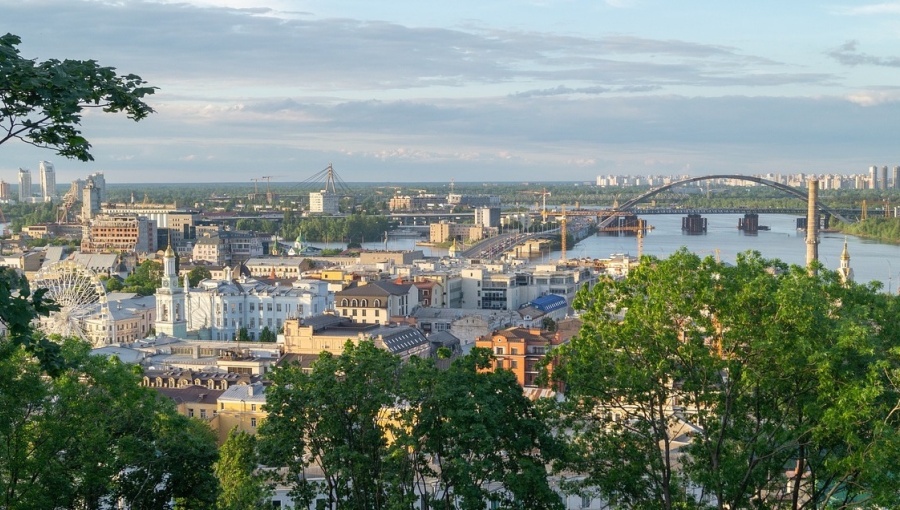
Ukraine is rapidly emerging as a centre for defence and dual-use technological innovation, accelerated by the ongoing war, according to Maria Repko, deputy executive director at the Centre for European Strategy (CES).
From autonomous systems to first person view (FPV) drones and cyber defence tools, the conflict is forcing Ukrainian engineers and tech firms to innovate at unprecedented speed, Repko told bne IntelliNews.
“The war has made Ukraine a real-time testing ground for battlefield technologies,” Repko said. “R&D cycles are measured in days, not years. It’s cheap, fast and brutally effective.”
Repko noted that Ukraine’s innovation is not limited to military applications. “Ukraine combines several strategic advantages: a large, educated workforce (over 30mn people today, and nearly 40mn pre-war), abundant and cheap green energy — particularly from nuclear and renewables — and geographic proximity to key European markets,” she said. These factors, she added, make Ukraine a potential hub for high-value manufacturing and nearshoring once the war ends.
Real-time laboratory
According to Repko, the country’s rapid adaptation to wartime needs has fundamentally shifted how defence and dual-use technologies are developed. “Critically, Ukraine is now also a leader in dual-use and defence innovation,” she said.
A CES report, titled “Europe’s next frontier: why Ukraine matters now”, describes Ukraine as an “indispensable contributor to the continent’s defence”. Ukrainian innovations in drones, autonomous vehicles, and cybersecurity are increasingly attracting international attention, offering a model for how smaller economies can leapfrog traditional R&D timelines under urgent conditions.
“Even beyond defence, the skills and technologies developed in Ukraine have broad commercial applications,” Repko said. “Cybersecurity, AI, and advanced engineering developed under wartime pressures can feed into European tech and industrial sectors in peacetime.”
EU integration
Ukraine’s integration with European supply chains is already deepening. The CES report argues that full economic and industrial integration into the EU could boost Europe’s competitiveness, industrial resilience, and energy security.
Before 2014, Ukraine’s economy remained largely tied to post-Soviet supply chains. But since Russia’s annexation of Crimea, trade patterns have shifted dramatically. The DCFTA agreement with the EU laid the groundwork for deeper integration, a process accelerated by wartime migration, which has created new personal and professional links across Europe. “Many European firms already source from Ukraine, and Ukrainian companies increasingly operate to EU standards,” Repko said.
She noted that EU accession is “crucial” for long-term investor confidence. “EU accession acts as a magnet for investment because it signals long-term market integration and legal stability,” she said. “The prospect of joining the EU Single Market is what transformed investor confidence in countries like Poland. Ukraine is following a similar path—just compressed into a much shorter timeline. Progress on EU chapters is already solid.”
The country has a highly educated population, a strong industrial base, and sectoral strengths that align with European needs. Advanced manufacturing, metallurgy, engineering, and IT form a robust foundation for future reconstruction and industrial expansion.
In the IT sector alone, Ukraine has more than 360,000 professionals, ranking eighth in Europe by workforce size. The country has developed reputations for cybersecurity, software development, and AI applications. “Ukraine has built strong reputations in cybersecurity, AI, and software development,” Repko said.
Wartime conditions
Ukraine is operating under wartime conditions, meaning its potential in many areas cannot yet be fulfilled. Repko stresses the need for robust air defence and war-risk insurance to protect investors, assets, and goods. Workforce mismatches, both territorial and skills-related, require investment in mobility and training. Legal and institutional improvements are also necessary to reduce bureaucratic risks and strengthen the business climate.
The CES report highlights the synergy between Ukraine’s industrial capabilities and Europe’s strategic needs, from clean energy and green metallurgy to advanced R&D. It argues that post-war reconstruction could be a catalyst for relocating higher-value operations to Ukraine, boosting both local development and European competitiveness.
Repko considers “realistically” this will be mostly after the war. “High-value operations — from clean energy infrastructure and green metallurgy to advanced R&D — can and should be relocated to Ukraine once reconstruction begins and the security environment stabilises. The talent is there. The industrial base is there. And the alignment with EU needs—from green transition to defence innovation—couldn’t be clearer,” she told bne IntelliNews.
The CES report also points to Ukraine’s energy resources as a key advantage. Nuclear power, renewables, and natural gas could help reduce European dependence on external suppliers while supporting decarbonisation goals. Repko said that, with strategic investment, Ukraine could evolve from being an energy importer to a supplier of affordable, sustainable energy for Europe, further enhancing its role in regional competitiveness.
Overall, Repko and the CES report argue that Ukraine’s wartime innovations and industrial capabilities are helping to position it as a strategic partner for Europe. “If Russia is treated as a long-term threat—and many now do—then Ukraine's defence-tech ecosystem will remain highly relevant for decades,” she said.
By combining defence innovation, a skilled workforce, strong industrial sectors, and EU integration, CES analysts consider Ukraine could not only rebuild after the war but also emerge as a key contributor to European competitiveness and security.

No comments:
Post a Comment