
US operations against Maduro “within days”, say officials
Washington is set to launch some kind of intervention against Venezuela imminently, as the Trump administration escalates its drive against President Nicolás Maduro alongside an unprecedented Caribbean military deployment, Reuters reported on November 22.
Four US officials informed the news agency that covert activities would likely constitute the opening phase of fresh measures, although neither the precise schedule nor full extent have been established, and it remains unclear whether President Donald Trump has issued definitive approval.
The officials, speaking under anonymity, indicated Washington was evaluating multiple tactics, including attempts at forcing Maduro from power, the report said.
A senior administration official told Reuters that Trump stood "prepared to use every element of American power to stop drugs from flooding into our country and to bring those responsible to justice".
The prospective escalation follows months of steadily mounting tensions, with the White House casting Maduro as an accomplice in supplying illicit narcotics responsible for American fatalities — claims the Venezuelan leader dismisses.
Maduro, who has ruled Venezuela since 2013 and claimed re-election in last year’s disputed vote, has consistently maintained that the US seeks his removal and vowed that Venezuelans and the armed forces will resist such attempts.
Washington intends to label the Cartel de Los Soles a foreign terrorist organisation on November 24 for its alleged role in importing illegal drugs, officials said. The Trump administration asserts Maduro leads the cartel, whose very existence remains disputed, and has offered a $50mn bounty for information leading to the president's capture.
Defence Secretary Pete Hegseth stated last week that the terrorist label "brings a whole bunch of new options to the United States.” Trump has floated the idea that such designation would enable the US to strike Maduro's assets and facilities inside Venezuela, whilst also suggesting willingness for diplomatic talks, likely aimed at offering the leftist autocrat a last chance to stage a peaceful exit.
The USS Gerald R Ford, the world's largest warship, arrived in Caribbean waters on November 16 near Venezuelan territory. The carrier's more than 4,000 sailors joined an existing naval presence that began forming in late August, bringing total personnel to approximately 15,000 — the region's largest American military concentration since the 1989 Panama operation.
The strike group encompasses at least seven other warships, a nuclear submarine and F-35 aircraft, the report said. US forces have conducted at least 21 strikes on alleged drug-carrying vessels in Caribbean and Pacific waters since September, killing at least 83 people. Rights groups have denounced the strikes as illegal extrajudicial killings of civilians, and some US allies have voiced worries about potential international law breaches.
Meanwhile, several international airlines suspended flights to and from Venezuela on November 22 following the Federal Aviation Administration's warning of a "potentially hazardous situation" over the country, citing deteriorating security conditions and intensified military operations in the region.
Brazil's Gol, Colombia's Avianca and Portugal's TAP cancelled departures from Caracas, according to Flightradar24. Spain's flag carrier Iberia announced it would halt Caracas flights from November 24 until further notice, whilst a Latam Airlines service to Bogotá was also scrapped.
Colombia's civil aviation authority said in a statement there were "potential risks" of flying near Maiquetia "due to the deterioration of security conditions and increased military activity in the region."
The FAA notice referenced the "worsening security situation and heightened military activity in or around Venezuela" and warned that threats could pose risks for aircraft at all altitudes.
Last week, Defence Secretary Hegseth characterised the naval mission, dubbed "Southern Spear", as vital for homeland protection and removing "narco-terrorists" from the hemisphere. Yet the deployment's scale appears excessive for anti-trafficking operations alone and seems misaligned with the principal drug routes into the US.
US official data shows Venezuela accounts for just 8% of cocaine output, whilst having no involvement in fentanyl trafficking, the synthetic opioid responsible for most American overdose deaths.
Despite Washington's counter-narcotics rhetoric and repeated denials of military action plans, Trump has proclaimed Maduro's days "numbered". This, alongside his acknowledgement of authorising covert CIA operations inside Venezuela, indicates the naval build-up primarily serves as pressure tactics aimed at forcing Maduro out.
Secretary of State Marco Rubio, a Cuban-American and long-time foe of communist Latin American regimes, has steered Trump's Venezuela policy reversal, which initially involved diplomatic efforts towards engagement with Maduro. By presenting Venezuela as a national security threat tied to narcotics, Rubio has won support from key administration players and sidelined former envoy Richard Grenell, who had pursued dialogue with Caracas.
For now, most analysts believe a full-scale invasion is unlikely. An escalation would rather see targeted strikes on alleged drug-trafficking infrastructure inside Venezuela, sustained military demonstrations and concerted attempts to fracture unity between the regime and its military factions.
Venezuela's armed forces retain advanced weaponry such as Russian S-300VM air defence systems, but years of neglect have hollowed out their capabilities. Experts doubt they could withstand a US intervention, and neither Russia nor China, Caracas’ main backers on the international stage, appear willing or able to provide military support.
Maduro's government has considered fallback plans should the US invasion occur, including guerrilla-style resistance termed "prolonged resistance" to be carried out by what he calls a “civic-military unity.” Such an approach would utilise small military units across more than 280 locations for sabotage and guerrilla operations, Reuters said, citing planning documents.
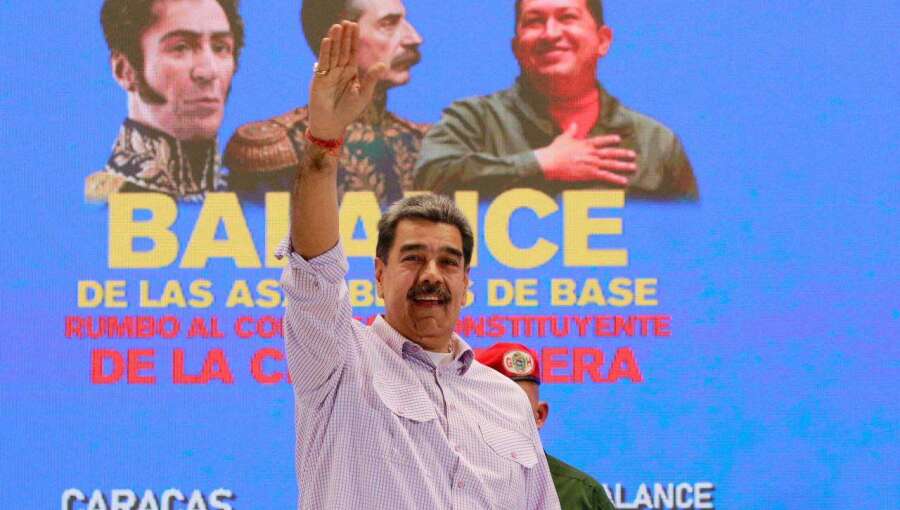
Washington is set to launch some kind of intervention against Venezuela imminently, as the Trump administration escalates its drive against President Nicolás Maduro alongside an unprecedented Caribbean military deployment, Reuters reported on November 22.
Four US officials informed the news agency that covert activities would likely constitute the opening phase of fresh measures, although neither the precise schedule nor full extent have been established, and it remains unclear whether President Donald Trump has issued definitive approval.
The officials, speaking under anonymity, indicated Washington was evaluating multiple tactics, including attempts at forcing Maduro from power, the report said.
A senior administration official told Reuters that Trump stood "prepared to use every element of American power to stop drugs from flooding into our country and to bring those responsible to justice".
The prospective escalation follows months of steadily mounting tensions, with the White House casting Maduro as an accomplice in supplying illicit narcotics responsible for American fatalities — claims the Venezuelan leader dismisses.
Maduro, who has ruled Venezuela since 2013 and claimed re-election in last year’s disputed vote, has consistently maintained that the US seeks his removal and vowed that Venezuelans and the armed forces will resist such attempts.
Washington intends to label the Cartel de Los Soles a foreign terrorist organisation on November 24 for its alleged role in importing illegal drugs, officials said. The Trump administration asserts Maduro leads the cartel, whose very existence remains disputed, and has offered a $50mn bounty for information leading to the president's capture.
Defence Secretary Pete Hegseth stated last week that the terrorist label "brings a whole bunch of new options to the United States.” Trump has floated the idea that such designation would enable the US to strike Maduro's assets and facilities inside Venezuela, whilst also suggesting willingness for diplomatic talks, likely aimed at offering the leftist autocrat a last chance to stage a peaceful exit.
The USS Gerald R Ford, the world's largest warship, arrived in Caribbean waters on November 16 near Venezuelan territory. The carrier's more than 4,000 sailors joined an existing naval presence that began forming in late August, bringing total personnel to approximately 15,000 — the region's largest American military concentration since the 1989 Panama operation.
The strike group encompasses at least seven other warships, a nuclear submarine and F-35 aircraft, the report said. US forces have conducted at least 21 strikes on alleged drug-carrying vessels in Caribbean and Pacific waters since September, killing at least 83 people. Rights groups have denounced the strikes as illegal extrajudicial killings of civilians, and some US allies have voiced worries about potential international law breaches.
Meanwhile, several international airlines suspended flights to and from Venezuela on November 22 following the Federal Aviation Administration's warning of a "potentially hazardous situation" over the country, citing deteriorating security conditions and intensified military operations in the region.
Brazil's Gol, Colombia's Avianca and Portugal's TAP cancelled departures from Caracas, according to Flightradar24. Spain's flag carrier Iberia announced it would halt Caracas flights from November 24 until further notice, whilst a Latam Airlines service to Bogotá was also scrapped.
Colombia's civil aviation authority said in a statement there were "potential risks" of flying near Maiquetia "due to the deterioration of security conditions and increased military activity in the region."
The FAA notice referenced the "worsening security situation and heightened military activity in or around Venezuela" and warned that threats could pose risks for aircraft at all altitudes.
Last week, Defence Secretary Hegseth characterised the naval mission, dubbed "Southern Spear", as vital for homeland protection and removing "narco-terrorists" from the hemisphere. Yet the deployment's scale appears excessive for anti-trafficking operations alone and seems misaligned with the principal drug routes into the US.
US official data shows Venezuela accounts for just 8% of cocaine output, whilst having no involvement in fentanyl trafficking, the synthetic opioid responsible for most American overdose deaths.
Despite Washington's counter-narcotics rhetoric and repeated denials of military action plans, Trump has proclaimed Maduro's days "numbered". This, alongside his acknowledgement of authorising covert CIA operations inside Venezuela, indicates the naval build-up primarily serves as pressure tactics aimed at forcing Maduro out.
Secretary of State Marco Rubio, a Cuban-American and long-time foe of communist Latin American regimes, has steered Trump's Venezuela policy reversal, which initially involved diplomatic efforts towards engagement with Maduro. By presenting Venezuela as a national security threat tied to narcotics, Rubio has won support from key administration players and sidelined former envoy Richard Grenell, who had pursued dialogue with Caracas.
For now, most analysts believe a full-scale invasion is unlikely. An escalation would rather see targeted strikes on alleged drug-trafficking infrastructure inside Venezuela, sustained military demonstrations and concerted attempts to fracture unity between the regime and its military factions.
Venezuela's armed forces retain advanced weaponry such as Russian S-300VM air defence systems, but years of neglect have hollowed out their capabilities. Experts doubt they could withstand a US intervention, and neither Russia nor China, Caracas’ main backers on the international stage, appear willing or able to provide military support.
Maduro's government has considered fallback plans should the US invasion occur, including guerrilla-style resistance termed "prolonged resistance" to be carried out by what he calls a “civic-military unity.” Such an approach would utilise small military units across more than 280 locations for sabotage and guerrilla operations, Reuters said, citing planning documents.
The US People Don’t Want a War on Venezuela
Roughly two-thirds of American adults said they oppose an invasion of Venezuela and only 15% support one. But will this be enough to stop Trump?
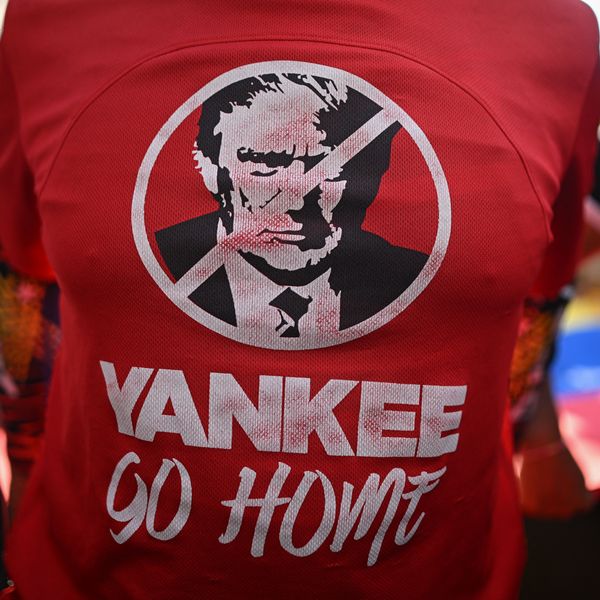 This detail view shows a T-shirt depicting US President Donald Trump and the slogan “Yankee go home” worn by a supporter of Venezuelan President Nicolas Maduro during a rally against US military activity in the Caribbean, in Caracas on October 30, 2025.
(Photo by Federico Parra / AFP via Getty Images)
Catherine LutzAnne
Lutz Fernandez
Nov 23, 2025
Responsible Statecraft
The White House is ready for war.
As the Trump administration’s made-for-Hollywood strikes on alleged drug-smuggling boats have dominated the news, the Pentagon has been positioning military assets in the Caribbean and Latin America and reactivating bases in the region. More recently, the Washington Post reported that high-level meetings were held about a possible imminent attack on Venezuela and the New York Times has learned that the president gave authorization for CIA operations there.
There is one problem: Americans don’t seem to be very enthusiastic.
While voters returned Donald Trump to office in 2024 based on a host of campaign promises, his faithful took his long-voiced complaints about spending on foreign aid and entanglement in overseas wars as vows to focus on the homeland. A range of Americans are in sync with his past statements about avoiding war; opposition to military intervention abroad is common for the left and right. Simply put, the public is not interested in going to war. Indeed, one recent poll found that just 15% of American adults support invading Venezuela.
A 2023 survey found a souring of views of military intervention more broadly, with growing numbers believing that intervention by the US tends to “worsen situations.”
Some see Trump’s Venezuela moves as an attempt to distract from domestic policy failures or the Jeffrey Epstein scandal, but his actions can’t be dismissed as wagging the dog. Trump has shown himself willing to engage with militarism. It’s not just “drug boats,” and it’s not just Venezuela. He has spent 2025 belying the myth, which has persisted over his three campaigns for president, that he is averse to war-making.
What Polls Say About Venezuela
The public has mixed views on some of the Trump administration’s specific actions toward Venezuela. Asked in a recent YouGov poll about the US Navy’s presence in Caribbean waters, for example, the percentage who approve (30%) was not much lower than the percentage who disapprove (37%).
Framing its actions against the South American nation as narcotics enforcement seems to have benefited the administration: A Harvard/CAPS poll in early October found 71% of registered voters in favor of “the US destroying boats bringing drugs into the United States from South America.” Different wording—and perhaps media coverage of the continued boat strikes raising issues of their necessity, legality, and effect—could help explain why a Reuters/Ipsos poll in mid-November found only 29% answered yes to the question, “Should the U.S. government kill suspected drug traffickers abroad without judicial process?”
Importantly, however, in YouGov’s survey, roughly two-thirds of American adults said they oppose an invasion of Venezuela and, as noted above, only 15% support one. Over half oppose the US using the military to overthrow the country’s president, Nicolás Maduro.
A 2023 survey found a souring of views of military intervention more broadly, with growing numbers believing that intervention by the US tends to “worsen situations.” Respondents seem to have based this on more recent examples, including the wars in Iraq and Afghanistan and the Syrian and Yemeni civil wars. None of these interventions were seen by the majority of those polled as “successful” uses of US forces abroad.
A Cost-Benefit Analysis
Overall, Americans do not want to get, to use Trump’s own words, “bogged down” in foreign wars. Public opinion on intervention appears driven by a cost-benefit analysis as John Mueller, professor of political science emeritus at Ohio State University describes it. This may be why some Americans are more willing to accept action in the form of targeted strikes such as the boat bombings and limited displays of military might.
In the end, Trump may not attack Venezuela, but it likely won’t be because the people are against it.
Since the Cold War and especially the 9/11 attacks, the US has become increasingly militarized. One measure of this, of course, is government spending. The Costs of War project at The Watson School of International and Public Affairs estimates that the US has spent $8 trillion as a result of the post-9/11 wars. The $22 billion in support for Israel’s war in Gaza since October 7, 2023 is one of the latest and most egregious instances of the US’ support for a military first approach.
Unfortunately, the official end of the post-9/11 wars was not the end of their financial costs to ordinary Americans. The percent of the discretionary federal budget devoted to the military continues to rise and at the expense of domestic programs. Pentagon spending alone in 2026 will jump to well over $1 trillion. Though many of the economic costs of war are hidden or deferred to an indeterminate future—especially when they are funded through deficit spending—Americans still rightly worry about getting involved in costly conflicts like the wars in Iraq and Afghanistan.
Can Public Opinion Halt Trump’s Militarism?
Many have taken note of how Congress’ passage of the 2001 Authorization for Use of Military Force has helped concentrate power in the executive, enabling swifter, unilateral military deployment by the commander-in-chief. With the AUMF, Congress relinquished its constitutionally assigned war powers and ceded to the president its duty to decide whether, when, and where to use the military to combat terrorism. Since then, the executive branch has conducted counterterrorism activities in an astounding 78 countries.
Despite Americans’ low trust in Congress, they nonetheless want the president to seek congressional approval before going to war. Feeding their mistrust, Congress has failed to respond to them on this crucial issue.
Look at how a compliant Congress has abdicated responsibility for oversight of the bombings in the Caribbean—which have now killed more than 83 people—as the Pentagon arrays warships, missiles, drones, and jet fighters in the region. Senate Republicans voted down legislation that would have required Trump to get their approval for any attacks on Venezuela, blatantly ignoring the disapproval of a public they are meant to represent.
So the bombings and the buildup continue, with Trump matter-of-factly telling a journalist, “We’re just going to kill people” without seeking congressional approval.
In the end, Trump may not attack Venezuela, but it likely won’t be because the people are against it. He is in the process of commandeering all armed capacities of the US government, military, and law enforcement to serve his purposes foreign and domestic. Reasserting the rights of the people, including the right to peace, requires Congress to aggressively reassert its constitutional duty and the citizenry to demand its will be met.
© 2023 Responsible Statecraft
Catherine Lutz
Catherine Lutz is an American anthropologist and Thomas J. Watson, Jr. Family Professor of Anthropology and International Studies at Brown University.
Full Bio >
Anne Lutz Fernandez
Anne Lutz Fernandez writes about education, politics, transportation, and culture. A former teacher, investment banker, and brand manager, she has coauthored two books of nonfiction, Carjacked and Schooled.
Full Bio >
Six airlines halt flights to Venezuela after US warns of 'heightened military activity'
Six major carriers suspended flights to Venezuela after the US aviation regulator warned of “heightened military activity” amid a growing American buildup in the region, deepening tensions with President Nicolas Maduro’s government.
Issued on: 23/11/2025 By: FRANCE 24
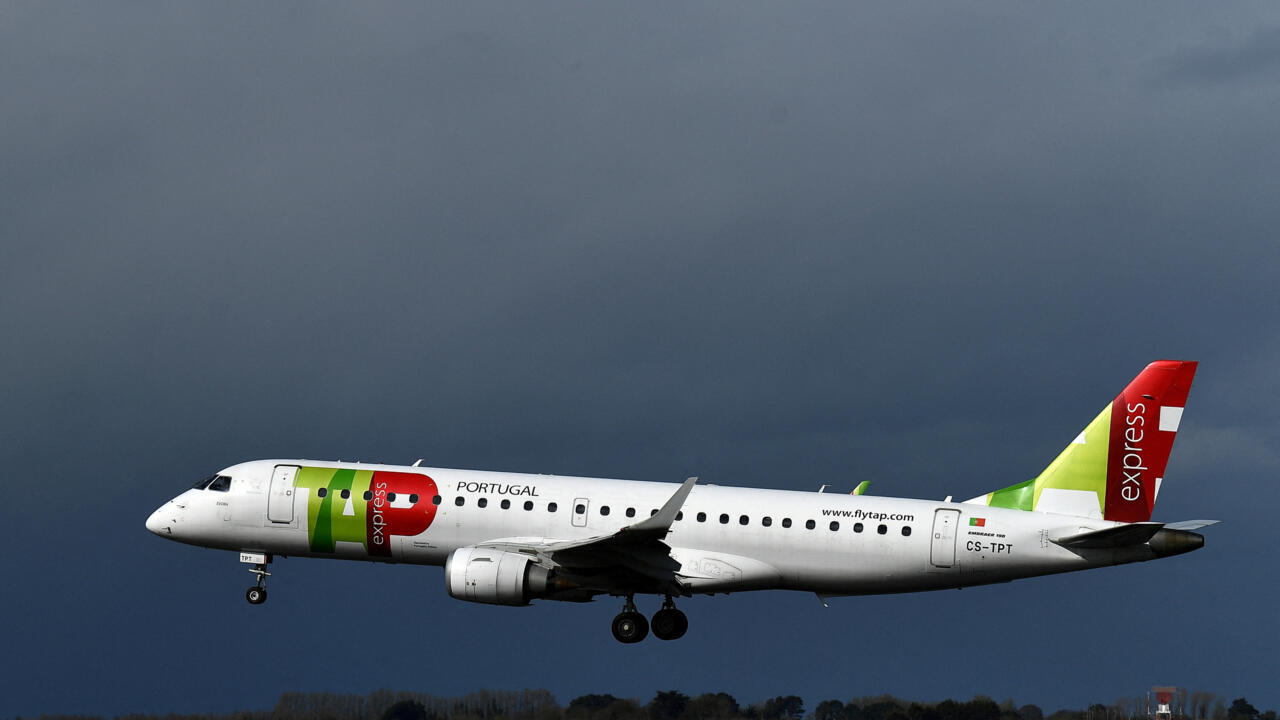 File photo: A TAP Air Portugal plane takes off from Dublin Airport in Dublin, Ireland, on March 26, 2021. © Clodagh Kilcoyne, Reuters
Six airlines cancelled flights to Venezuela on Saturday, an industry group said, after the US aviation regulator warned of dangers from "heightened military activity" amid a major buildup of American forces in the region.
Spain's Iberia, Portugal's TAP, Chile's LATAM, Colombia's Avianca, Brazil's GOL and Trinidad and Tobago's Caribbean have suspended their flights to the country, said Marisela de Loaiza, president of the Venezuelan Airlines Association (ALAV).
She did not specify how long the flight suspensions would last.
Panama's Copa Airlines, Spain's Air Europa and PlusUltra, Turkish Airlines, and Venezuela's LASER are continuing to operate flights for now.
The US Federal Aviation Administration on Friday urged civilian aircraft in Venezuelan airspace to "exercise caution" due to the "worsening security situation and heightened military activity in or around Venezuela".
"Threats could pose a potential risk to aircraft at all altitudes, including during overflight, the arrival and departure phases of flight, and/or airports and aircraft on the ground," it said.
Maduro-linked ‘cartel’ added to US terror list
Washington has sent an aircraft carrier strike group, other Navy warships as well as stealth aircraft to the region – deployments it says are aimed at curbing drug trafficking but which have sparked fears in Caracas that regime change is the goal.
A US terrorism designation takes effect Monday for a drug cartel allegedly headed by leftist Venezuelan leader Nicolas Maduro – a move that some believe could presage military action against his government.
Washington's forces have carried out strikes against more than 20 alleged drug-smuggling vessels in the Caribbean Sea and eastern Pacific Ocean since early September, killing more than 80 people.
But the United States has yet to release concrete evidence that the vessels it targeted were used to smuggle drugs or posed a threat to the country, and regional tensions have flared as a result of the campaign and the accompanying military buildup.
(FRANCE 24 with AFP)
Wag the Dog in Venezuela
November 21, 2025
Image by Planet Volumes.
Analysis of why countries go to war sometimes argues that leaders are motivated by problems at home. They attack another country to divert attention from an economic crisis, an unlawful act, or—as in the Robert De Niro movie, Wag the Dog—a sex scandal. In recent years, for example, Israel’s all-out response to the Hamas attack in October 2023 might be explained as having been prompted by Prime Minister Benjamin Netanyahu’s political and legal troubles. India’s brief war with Pakistan in May may have occurred to release domestic political pressures in both countries. These explanations may be off the mark, but they appear regularly in speculation about why political leaders decide to fight rather than negotiate.
Trump’s Deep Troubles at Home
Now, as Pres. Trump considers what to do with his Caribbean armada and Venezuela’s “narco-terrorist” leader, Nicolas Maduro, we may be witness to another wag-the-dog event: US military pressure on Venezuela that could lead to a direct attack if Maduro doesn’t step down. The case for Trump to be highly motivated to act out of self-interest is strong. Consider:
His approval ratings are very low and declining by the week—around 36 percent in overall approval, with even lower ratings on his handling of the economy, tariffs, and the government shutdown.
His economic policies have led to food and health care inflation, declining consumer confidence, a very large population living from paycheck to paycheck, and considerable grumbling among corporate leaders. Trump is now flailing about for a response, such as $2,000 direct payments to families and lower tariffs on food imports, that will assuage people’s growing anger. It’s desperation time.
The Epstein case is about to explode in Trump’s face. Republicans are defecting in droves on a vote to demand the release of all government files on Epstein. It is already clear that Trump, Attorney General Pam Bondi, and others in Trump’s circle have lied about the Trump-Epstein relationship. Trump’s order to Bondi to prosecute his political enemies and investigate Democrats who knew Epstein will probably do little to displace the Trump-Epstein story.
The stark corruption in and around the White House is a sharp contrast with rising economic inequality. Trump’s crypto currency ventures, the East Wing demolition, the glitzy White House parties, the Argentina bailout, the Middle East hotel projects—these are all bad optics, as the spin doctors would say.
A blue tide is emerging: the Democrats are getting traction on Epstein, “affordability,” and incompetence in Trump’s cabinet. 2026 doesn’t look promising.
Judges around the country are ruling against National Guard deployments to cities and brutal ICE tactics against immigrants and citizens.
Why Not Venezuela?
As Trump looks around for an off-ramp, preparing for an attack on Venezuela surely has come to mind. After all, he and Pete Hegseth have assembled an enormous force in the Caribbean that goes far beyond any counter-drug operation. Hegseth has reinforced the mission’s importance by giving it a name–Operation Southern Spear. What better way to showcase the war on drugs than to use all that firepower and score a dramatic win against a second-rate Venezuelan army? Trump has also lined up the legal argument, thanks to Bondi. As the New York Times has reported, the Justice Department’s legal counsel has given Trump precisely the justification he cites for attacking alleged drug boats, namely, that the US is engaged in armed conflict against the drug cartels and “narco-terrorism.” By that argument, taking the fight to its source must also be legal. And since the President has made a “determination” as to the national security implications, presumably there is no need to consult with or obtain the consent of Congress.
Trump’s way of dealing with foreign affairs further lends itself to the wag-the-dog possibility. Self-interest comes first, the consequences of aggressive actions last. What to do about Venezuela is above all a personal issue, just as the Gaza peace plan, the war in Ukraine, and the eight other wars Trump has resolved are personal triumphs. He may pretend to be consulting with military leaders about options in Venezuela, but does he really care what they say? They are interested in strategy and the national interest, not in protecting him and his regime. Only Trump can protect Trump.
To be clear, wag-the-dog explanations are alluring, but rarely persuasive. It is all too easy to assign domestic troubles as the reason for a foreign adventure, since all countries have economic, political, or social problems at a given moment. Authoritarian rule in Venezuela provides a convenient, well-used pretext for US action. Maduro’s regime is “illegitimate”; Venezuela’s oil wealth can be taken; drug cartels in Mexico, Colombia, and elsewhere can be put on notice. Yet in this instance, wag-the-dog can’t be dismissed. Not that Trump had the idea of targeting Venezuela as a diversion all along. It may only have occurred to him in the last few days as bad news piled up and began to seem insurmountable. We can speculate that the failure to bury the Epstein files is a tipping point: “I’ve got to do something that takes attention away from those files,” Trump may be thinking. “Otherwise, the 2026 elections are lost, not to mention my presidency.”
If nothing else, this might be a good time to take another look at Wag the Dog. Its relevance never seems to end.

Six major carriers suspended flights to Venezuela after the US aviation regulator warned of “heightened military activity” amid a growing American buildup in the region, deepening tensions with President Nicolas Maduro’s government.
Issued on: 23/11/2025
Six airlines cancelled flights to Venezuela on Saturday, an industry group said, after the US aviation regulator warned of dangers from "heightened military activity" amid a major buildup of American forces in the region.
Spain's Iberia, Portugal's TAP, Chile's LATAM, Colombia's Avianca, Brazil's GOL and Trinidad and Tobago's Caribbean have suspended their flights to the country, said Marisela de Loaiza, president of the Venezuelan Airlines Association (ALAV).
She did not specify how long the flight suspensions would last.
Panama's Copa Airlines, Spain's Air Europa and PlusUltra, Turkish Airlines, and Venezuela's LASER are continuing to operate flights for now.
The US Federal Aviation Administration on Friday urged civilian aircraft in Venezuelan airspace to "exercise caution" due to the "worsening security situation and heightened military activity in or around Venezuela".
"Threats could pose a potential risk to aircraft at all altitudes, including during overflight, the arrival and departure phases of flight, and/or airports and aircraft on the ground," it said.
Maduro-linked ‘cartel’ added to US terror list
Washington has sent an aircraft carrier strike group, other Navy warships as well as stealth aircraft to the region – deployments it says are aimed at curbing drug trafficking but which have sparked fears in Caracas that regime change is the goal.
A US terrorism designation takes effect Monday for a drug cartel allegedly headed by leftist Venezuelan leader Nicolas Maduro – a move that some believe could presage military action against his government.
Washington's forces have carried out strikes against more than 20 alleged drug-smuggling vessels in the Caribbean Sea and eastern Pacific Ocean since early September, killing more than 80 people.
But the United States has yet to release concrete evidence that the vessels it targeted were used to smuggle drugs or posed a threat to the country, and regional tensions have flared as a result of the campaign and the accompanying military buildup.
(FRANCE 24 with AFP)
Wag the Dog in Venezuela
Image by Planet Volumes.
Analysis of why countries go to war sometimes argues that leaders are motivated by problems at home. They attack another country to divert attention from an economic crisis, an unlawful act, or—as in the Robert De Niro movie, Wag the Dog—a sex scandal. In recent years, for example, Israel’s all-out response to the Hamas attack in October 2023 might be explained as having been prompted by Prime Minister Benjamin Netanyahu’s political and legal troubles. India’s brief war with Pakistan in May may have occurred to release domestic political pressures in both countries. These explanations may be off the mark, but they appear regularly in speculation about why political leaders decide to fight rather than negotiate.
Trump’s Deep Troubles at Home
Now, as Pres. Trump considers what to do with his Caribbean armada and Venezuela’s “narco-terrorist” leader, Nicolas Maduro, we may be witness to another wag-the-dog event: US military pressure on Venezuela that could lead to a direct attack if Maduro doesn’t step down. The case for Trump to be highly motivated to act out of self-interest is strong. Consider:
His approval ratings are very low and declining by the week—around 36 percent in overall approval, with even lower ratings on his handling of the economy, tariffs, and the government shutdown.
His economic policies have led to food and health care inflation, declining consumer confidence, a very large population living from paycheck to paycheck, and considerable grumbling among corporate leaders. Trump is now flailing about for a response, such as $2,000 direct payments to families and lower tariffs on food imports, that will assuage people’s growing anger. It’s desperation time.
The Epstein case is about to explode in Trump’s face. Republicans are defecting in droves on a vote to demand the release of all government files on Epstein. It is already clear that Trump, Attorney General Pam Bondi, and others in Trump’s circle have lied about the Trump-Epstein relationship. Trump’s order to Bondi to prosecute his political enemies and investigate Democrats who knew Epstein will probably do little to displace the Trump-Epstein story.
The stark corruption in and around the White House is a sharp contrast with rising economic inequality. Trump’s crypto currency ventures, the East Wing demolition, the glitzy White House parties, the Argentina bailout, the Middle East hotel projects—these are all bad optics, as the spin doctors would say.
A blue tide is emerging: the Democrats are getting traction on Epstein, “affordability,” and incompetence in Trump’s cabinet. 2026 doesn’t look promising.
Judges around the country are ruling against National Guard deployments to cities and brutal ICE tactics against immigrants and citizens.
Why Not Venezuela?
As Trump looks around for an off-ramp, preparing for an attack on Venezuela surely has come to mind. After all, he and Pete Hegseth have assembled an enormous force in the Caribbean that goes far beyond any counter-drug operation. Hegseth has reinforced the mission’s importance by giving it a name–Operation Southern Spear. What better way to showcase the war on drugs than to use all that firepower and score a dramatic win against a second-rate Venezuelan army? Trump has also lined up the legal argument, thanks to Bondi. As the New York Times has reported, the Justice Department’s legal counsel has given Trump precisely the justification he cites for attacking alleged drug boats, namely, that the US is engaged in armed conflict against the drug cartels and “narco-terrorism.” By that argument, taking the fight to its source must also be legal. And since the President has made a “determination” as to the national security implications, presumably there is no need to consult with or obtain the consent of Congress.
Trump’s way of dealing with foreign affairs further lends itself to the wag-the-dog possibility. Self-interest comes first, the consequences of aggressive actions last. What to do about Venezuela is above all a personal issue, just as the Gaza peace plan, the war in Ukraine, and the eight other wars Trump has resolved are personal triumphs. He may pretend to be consulting with military leaders about options in Venezuela, but does he really care what they say? They are interested in strategy and the national interest, not in protecting him and his regime. Only Trump can protect Trump.
To be clear, wag-the-dog explanations are alluring, but rarely persuasive. It is all too easy to assign domestic troubles as the reason for a foreign adventure, since all countries have economic, political, or social problems at a given moment. Authoritarian rule in Venezuela provides a convenient, well-used pretext for US action. Maduro’s regime is “illegitimate”; Venezuela’s oil wealth can be taken; drug cartels in Mexico, Colombia, and elsewhere can be put on notice. Yet in this instance, wag-the-dog can’t be dismissed. Not that Trump had the idea of targeting Venezuela as a diversion all along. It may only have occurred to him in the last few days as bad news piled up and began to seem insurmountable. We can speculate that the failure to bury the Epstein files is a tipping point: “I’ve got to do something that takes attention away from those files,” Trump may be thinking. “Otherwise, the 2026 elections are lost, not to mention my presidency.”
If nothing else, this might be a good time to take another look at Wag the Dog. Its relevance never seems to end.
Report: US Destroyer Blocks Sanctioned Shadow Tanker’s Route to Venezuela
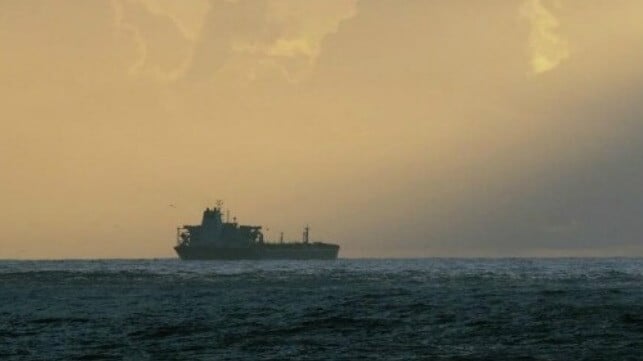
It appears the Trump administration is further tightening its pressure on Venezuela, using one of the destroyers deployed to the Caribbean to spook a sanctioned shadow tanker from approaching Venezuela. Using tracking data, Bloomberg reports the sanctioned tanker Seahorse has attempted to approach Venezuela three times, and each time the U.S. destroyer USS Stockdale has “positioned itself in the path” of the tanker.
Bloomberg reports the situation began on November 13 when the Seahorse first approached Venezuela. It says the vessel made a U-turn, reversing course toward Cuba. The tanker, Bloomberg reports, has since tried two more times to approach Venezuela, but both times has turned back. The vessel’s AIS signal places it north of Aruba, along with several other tankers that are all reporting they are “awaiting orders.”
The Seahorse is typical of the sanctioned shadow fleet, with Bloomberg reporting it has been used for transporting a lighter fuel distillate, naphtha, from Russian refineries to Venezuela. In the past, United Against Nuclear Iran (UANI) has also reported that the vessel was being used in the Iran to Venezuela trade, with both Russia and Iran supporting Venezuela’s need for distillate products to maintain its oil operations.
The 70,246-dwt tanker, which was built in 2004, has had eight names, three of which were in the last two years. It claims a flag of Comoros, which Equasis reports as false, after jumping between Liberia, Panama, and Barbados. The EU sanctioned the vessel in May 2025, and the UK followed in July 2025. Its last listed inspection is October 2024 in the Russian Black Sea, where it was cited for a dozen deficiencies. This included fire safety, lifeboats, steam and pressure pipes, and other operational and safety issues.
Bloomberg writes that the effort to spook the tanker is likely part of a “maximum pressure” policy launched by the Trump administration against Venezuela. The U.S. has moved to block the oil trade and disrupt the flow of narcotics in the Caribbean, which claims are coming from Venezuela-based terrorist organizations. The U.S. has built up its fleet of warships in the region in a show of force, and Donald Trump is reported to be considering military strikes in Venezuela to stop the drug trade and topple the regime of Venezuelan President Nicolás Maduro.
The United States is also continuing its pressure campaign against Iran. It has launched further sanctions on tankers and companies enabling Iran’s energy trade, as well as the administration’s first sanctions on Russia related to the war in Ukraine.
The U.S. sanctions on both Russian companies Rosneft and Lukoil formally start on Friday, November 21. Analysts report they have already disrupted the flow of oil from Russia, especially to India, as well as to China. Bloomberg, using Kpler data, estimates that there are 50 tankers still heading toward China and India, while many others are holding at various points such as the Baltic. It speculates that nearly 48 million barrels of Russian crude could become stranded at sea.
Venezuela Doubles Down on Energy Alliance with Russia

Venezuela’s Parliament has approved a 15-year extension of the country’s oil-producing joint ventures with Russian companies, Venezuelan Vice President Delcy Rodriguez said on Telegram as the South American country doubles down on its strategic alliance with Russia.
The 15-year extension now allows the joint ventures established under the strategic energy alliance between the two countries to continue operations until 2041, Rodriguez said, adding it is a crucial step toward Venezuela’s energy development.
“No illegitimate blockade can overcome our energy strengths,” the Venezuelan vice president said.
Venezuela’s state-owned oil firm PDVSA has joint ventures with a unit of Russian firm Roszarubezhneft that develop two oilfields, Boqueron and Perija, in western Venezuela.
Roszarubezhneft, owned by a unit of the Russian Ministry of Economic Development, was incorporated in 2020. After the U.S. sanctioned two units of Rosneft for trading Venezuelan oil, Roszarubezhneft bought the Venezuelan assets of the Russian state-controlled oil giant Rosneft.
The strengthening of the Venezuela-Russia energy alliance with the 15-year extension of the joint ventures comes as the two countries are under increased pressure from the United States.
The Trump Administration has just sanctioned Rosneft and the second-biggest Russian producer, Lukoil, while U.S. aircraft carriers have moved to the Caribbean close to Venezuelan waters.
In recent days, the U.S. has moved the USS Gerald R. Ford, the world’s most advanced aircraft carrier, close to Venezuela, and U.S. President Donald Trump earlier this week said he would not rule out sending U.S. troops to Venezuela.
Hours after the President’s comments, Nicolas Maduro said that he is “ready” to hold face-to-face talks with representatives of the Trump Administration.
Meanwhile, U.S. sanctions on the global operations of Russian oil heavyweights Rosneft and Lukoil come into effect today, with some 48 million barrels of Rosneft and Lukoil crude on tankers that will now have to look for new destinations.
By Charles Kennedy for Oilprice.com

No comments:
Post a Comment