Reuters | November 22, 2025 |
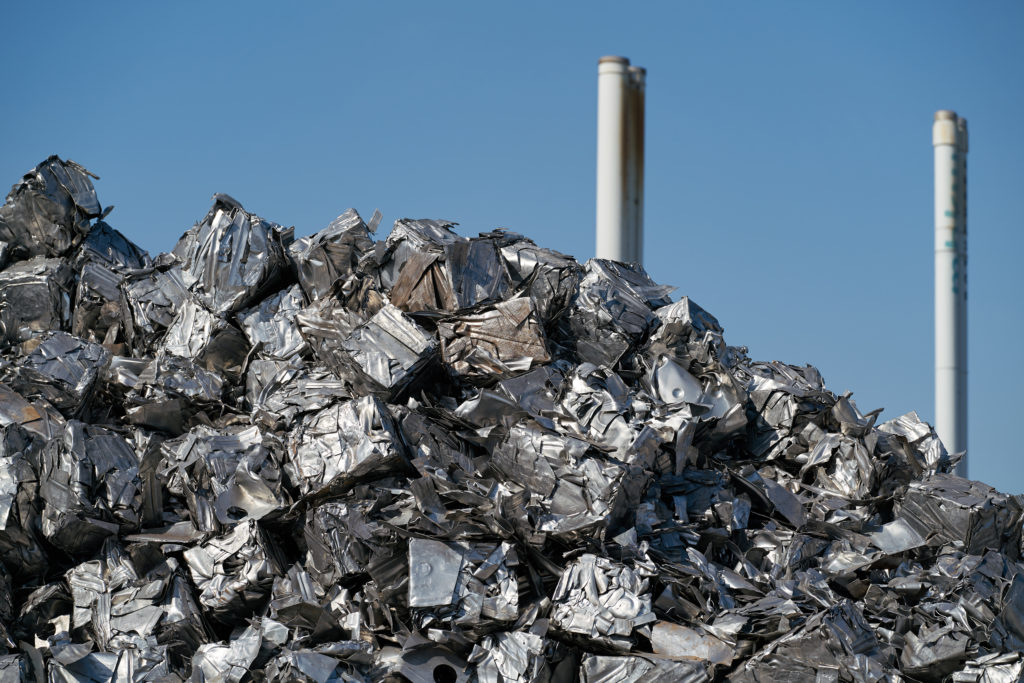
Cubes of pressed scrap at a scrap yard in the harbor in Magdeburg in Germany. Stock image.
The global competition for critical minerals has reached the least glamorous part of the metallic supply chain.

Aluminum scrap may not be most people’s idea of “a strategic commodity” but that’s exactly what it is, according to EU trade chief Maros Sefcovic. And too much of it, over a million metric tons a year, is leaking out of the bloc in the form of exports.
The European Commission is preparing what Sefcovic described as “a balanced measure” to ensure more recyclable material stays in Europe.
Industry association European Aluminium points the finger at the United States, arguing that the country’s import tariffs have created a price differential that is pulling more European scrap to the US market.
US industry group The Aluminum Association is equally concerned about scrap leakage but it blames China and is calling for “smart, targeted export controls.”
The global battle for scrap has begun.
A strategic commodity
Scrap metal has strategic value to European policy-makers because it sits at the heart of the bloc’s industrial policy, the nexus where circularity, decarbonization and strategic autonomy align.
Europe has set a target for recycling to meet 25% of the region’s critical minerals demand by 2030.
Aluminum is already there. The metal is infinitely recyclable and remelting it requires only five percent of the energy needed to make virgin metal, which means a much lower carbon footprint.
Scrap’s importance as a feedstock for European manufacturers has steadily increased over recent years as many of the region’s aluminum smelters have succumbed to high energy prices. The region’s annual primary aluminum production has fallen by a quarter since 2011.
The worry is that European recycling capacity is now also at risk, with European Aluminium estimating around 15% of the bloc’s recycling furnace capacity is idle for want of feed.
Aluminum scrap is exempt from US import tariffs on primary metal and semi-manufactured products, doubled to 50% by US President Donald Trump in June. But the resulting arbitrage window is accelerating Europe’s scrap leakage, the association warns.
US import figures through July show increased shipments from Germany and Spain in particular but from a very low base. The biggest suppliers of scrap to the US remain Mexico and Canada, accounting for 53% and 32% of total imports respectively.
However, there is no denying the broader trend. Consultancy Project Blue calculates that European exports of aluminum scrap to non-EU countries rose at a compound average growth rate of 8.9% between 2018 and 2024.
A graded question
Of course, it all depends on what sort of scrap we’re talking about.
Both Europe and the United States have long exported low-grade, end-of-life scrap due to declining domestic dismantling and recycling capacity.
China and India, both hungry for raw materials, have been the biggest buyers, although China’s crackdown on low-grade imports in 2020 created a transshipment loop through countries such as Malaysia and Thailand, where scrap is upgraded before onward dispatch to Chinese recyclers.
The European Commission’s promise that there won’t be a blanket export ban is tacit acknowledgement that Europe currently can’t process all the grades of aluminum scrap it generates.
Types of scrap such as “Zorba” and “Twitch” sound exotic but denote less than glitzy bales of shredded, mixed-up material, most often from end-of-life vehicles. They are difficult and expensive to process, hence the growing trade with countries willing to recycle them.
High-purity types of scrap such as used beverage cans are an altogether different matter, which is why the Aluminum Association is calling for an immediate ban on exports of such material outside of North America.
Although the Europeans are worried about rising US imports, the reality is that the United States runs a consistent trade deficit with the rest of the world in aluminum scrap to the tune of a million tons last year.
India was the single largest destination for US aluminum scrap shipments, followed by Thailand and Malaysia, the two largest suppliers to China.
China pivots to scrap
China is the West’s primary competitor in the global race for critical minerals and so it is also when it comes to aluminum scrap.
China’s imports of recyclable aluminum have been rising at a fast clip since the ill-considered ban on “foreign garbage” in 2020, quickly reversed under pressure from China’s recycling industry.
Chinese demand for aluminum scrap is set to grow even more in the coming years. The country’s huge primary smelter sector is now operating close to Beijing’s mandated capacity cap, meaning more demand must be met from recycling.
There is an official target of lifting aluminum recycling capacity to 15 million tons per year in 2027, creating a huge potential draw on recyclable material from the rest of the world.
The danger for both Europeans and Americans is that China is gearing up to dominate the secondary aluminum sector just as it has already done the primary.
Where there’s muck, there’s brass (and aluminum)
The drift towards scrap protectionism is testament to how important the dirty world of metals recycling has become to Western supply chains.
With China so dominant in the primary processing of critical metals, including aluminum, recycling is one of the West’s easiest routes to reduce import dependency.
It seems somewhat inevitable then that there will be some sort of export restrictions on some types of aluminum scrap on both sides of the Atlantic.
But, as the Aluminum Association concedes, part of the West’s solution is also to get the general public to recognize the importance of scrap.
It’s still a fact that the United States has one of the lowest aluminum beverage can recycling rates at just 43% in 2023, compared with a global rate of 75%. That’s a lot of high-quality mill-ready metal that is being thrown away.
Trade measures look inevitable but the answer to scrap availability also lies closer to home.
(The opinions expressed here are those of the author, Andy Home, a columnist for Reuters.)
(Editing by Philippa Fletcher)
Inalum targets 2029 to commission new aluminum plant
State aluminum company PT Indonesia Asahan Aluminium (Inalum) will aim for 2029 to commission the new aluminum plant it plans to build in West Kalimantan, its chief executive said on Thursday.
The company plans to build a smelter capable of producing 600,000 metric tons of aluminum a year with an estimated investment of nearly $2.5 billion, chief executive Melati Sarnita told members of parliament.
The new plant will add to the company’s current production capacity of around 275,000 tons.
The additional capacity is designed to reduce Indonesia’s dependence on imports, she said, noting that the country currently sources around 54% of its aluminum from abroad.
“Looking ahead, we believe that we can increase our capacity to reduce reliance on imports and strengthen the national aluminum supply chain,” she told parliamentarians.
The company is in talks with potential strategic partners for the aluminum plant, including sovereign wealth fund Danantara and other global companies, Melati said.
A Chinese company providing the smelting technology is also expected to take a stake of around 5% to 10% in the project, she said. She did not give the name of the company.
The project will require 1.2 gigawatts of power capacity, and is planning to purchase the electricity from the state utility firm or other suppliers.
The company is also expanding the capacity of its refinery to double its output of smelter-grade alumina, the raw material for aluminum, raising production to 2 million tons by 2028 from 1 million tons now.
(By Fransiska Nangoy; Editing by David Stanway)

No comments:
Post a Comment