Claudio Katz: ‘The Argentine left must aim to govern with a strategy for power’
First published in Spanish at Argentina Indymedia. Translation by Federico Fuentes for LINKS International Journal of Socialist Renewal.
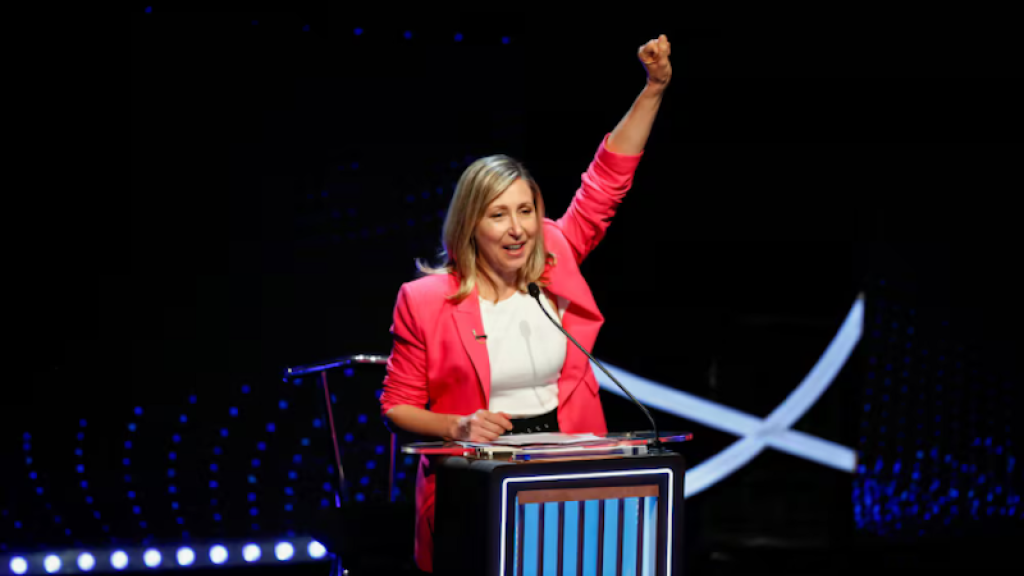
In this interview, Claudio Katz assesses the newfound prominence in Argentine politics of Workers’ Left Front – Unity (FIT-U) MP Myriam Bregman, and outlines some of the debates on the left. Katz also examines Argentina’s political situation, its economic crisis and President Javier Milei’s declining support, within a regional framework marked by events in Cuba, Venezuela and Bolivia.
Is Argentina’s political landscape changing?
Yes. Milei’s discrediting is very obvious, even among sectors that propelled him to power. His low approval rating, various expressions of disapproval with his administration, and the early election campaigning all indicate this.
The causes are obvious: two years of a dramatic fall in consumption and a brutal transfer of income to the wealthiest has caused widespread discontent. Daily life has been dramatically disrupted. A simple trip to work is now a nightmare, with reduced services and fares rising 12 times faster than wages. The healthcare system’s collapse is even more severe. Price hikes of 400% have pushed 740,000 people out of private health care and into already overcrowded public hospitals. Many pensioners are going without medicines to pay for food.
Inequality is shameful. As fuel exports rise, so do domestic energy costs. Each new record harvest comes with more empty tables in homes, cartoneros [a person who collects waste, such as cardboard, to resell]. rummaging through bins and school canteens run short on food supplies.
Milei took his chainsaw to the country, paralysing public works. He also abandoned his last remaining campaign pledge to cut inflation. It is again hovering at about 3% a month, according to a fictitious measurement based on obsolete household costs. The government itself is fuelling inflation by imposing tariff hikes and violating its monetarist ideology, which attributes price rises to money supply. By manipulating the exchange rate, it is artificially containing a further surge.
But this has not caused his economic model to collapse…
In reality, it is creaking and the shock absorbers are wearing out. 140,000 jobs losses were offset by 100,000 new informal gig economy jobs. No economy can function with 930 businesses closing each month and disposable income collapsing, with families asked to compensate for unpayable debts.
As so many times before, the huge trade surplus has evaporated due to capital flight, and another Trump rescue package is unlikely should last year’s critical exchange rate scenario be repeated. Milei's only solution to the crisis he has created is yet more austerity cuts. With tax revenue plummeting in a stagnating economy, Milei has imposed further cuts to sustain the fiction of a fiscal surplus and avoid a debt default. He has created a vicious circle of economic contraction and poverty, with no way out in sight.
Against this critical backdrop, outrage over corruption has resurfaced…
Absolutely. There is enormous anger over embezzlement by Milei’s gang. Their thievery is so brazen that even the tax collection agency head is hiding assets from tax authorities. The Libra cryptocurrency scandal, [general secretary of the presidency] Karina Milei’s 3% kickback revelations, bribery in more than 600 contracts between the national disability agency and a Kovalivker family-owned business, Milei-backed candidate José Luis Espert’s resignation over campaign funds from a high-profile drug trafficker, all expose how a gang of thugs have taken over the state to line their pockets. The scandals around Milei’s former cabinet chief, Manuel Adorni, go beyond anything imaginable and reveal a scandalous network of salary kickbacks and private plunder. They protect each other with codes and complicity like the mafia.
Milei, however, is more furious that no one cheers his outbursts and antics anymore. He does not know how to handle defeat in the culture war. His inner circle are cynically blaming people for their misfortunes, claiming they “got themselves into too much debt”. Others reinforce the ideology of cruelty, mocking destitute pensioners.
But the huge turnout at the March 24 commemorations [of the 1976 military coup] put those stories to rest. Official denialism [of the military junta's crimes] has as little resonance as attempts to revive theories of “the two demons” [morally equating the military junta’s state violence with leftist political subversion] or dictatorship “excesses”. Milei had to shelve plans to pardon the genocide perpetrators, amid widespread demands for “Memory, Truth and Justice”. These causes are a source of pride for a society that views the trials of the junta leaders as a victory embedded in the country’s DNA.
This same pattern was repeated with the mass march for education. Milei was left isolated after provocatively calling for further cuts to the lowest education budget in 35 years. He has failed to comply four times with the law requiring him to transfer owed funds to universities, attacking institutions that embody the ideal of upward mobility in the popular imagination. Attempting to destroy the symbol of qualification, knowledge and culture that public education embodies, he is losing his audience at breakneck speed.
He is not losing the support of everyone though, because the ruling class still backs him…
That is true, but the establishment is waiting for his term to finish in a respectable manner before continuing with “Mileism” without Milei. They are already sounding out potential replacements, such as the chameleon-like [right-wing Peronist1 MP Miguel Ángel] Pichetto, the reborn [former new right president Mauricio] Macri, the enigmatic [talk show host and pastor Dante] Gebel or the ever-changing [right-wing senator Patricia] Bullrich. Some are even considering a de facto replacement, should the president fall before then. In that scenario, they would keep the government afloat with the support of state governors and the Peronist right.
But Milei is uncontrollable and refuses to give up. He seeks to survive with Trump’s blessing. He has spent more time in the United States than in any Argentine town. New concessions to his patron include contentious laboratory patents and help with business disputes with China in several provinces. Milei has assembled a group of like-minded capitalists, who are vying with [multinational conglomerate Techint CEO Paolo] Rocca, [media mogul and Clarín group CEO Héctor] Magnetto and other local capitalists to reap the benefits of privatisations. They are also competing for control over the judiciary, where disputes between them are settled.
But, as always happens in Argentina, the streets will have the final say on the political course…
Exactly. The March 24 demonstrations exceeded all expectations. An estimated more than 1 million people attended, including a broad mix of generations, refuting claims that young people are shifting right. The education marches reaffirmed this resurgence. Trade union protests in various provinces show that the negative situation created by the recently approved labour reform has been reversed, after several months of retreating from street actions. These are significant mobilisations, but they lack the scale and militancy needed to defeat Milei. There is not yet the prospect of a repeat of the 2001 rebellion [that toppled several presidents] or the 2017 electoral victory against Macri.
Another significant shift is the sudden rise of Myriam Bregman…
Yes. Her rise in the polls is significant, as she has a very high net positive image, which is boosting her voting intentions. Many analysts say Myriam’s appeal has expanded beyond the traditional left-wing or progressive electorate. They believe that the angry anti-establishment voters that supported Milei might soon channel their discontent via the left. The atmosphere, to a certain extent, resembles that around [left-wing MP Luis] Zamora in the years before and after 2001. There are plenty of reasons to launch a major campaign in support of Myriam’s presidential candidacy. All the left agrees we need to shore up this prominence in the coming months.
There have been debates, expressed through various open letters and documents, on the strategic significance of this campaign. What is your view?
There is discussion on the need for Bregman to shift her discourse to show a genuine intent to become president. Such a positive tone requires an affirmative message, highlighting how the left can govern. This approach distinguishes between government and power, and calls on the people to take hold of both. The challenge lies in working out a strategy to achieve this objective.
Some participants in the debate have taken a negative view. They believe the Workers’ Left Front – Unity (FIT-U) should not seek to govern, as it has no viable policy to achieve that goal. Such pessimism simply repeats the right’s tired arguments against the left and fails to recognise potential shifts in the battle for power.
Is this pessimism being reconsidered?
We will have to see. The traditional Trotskyist view sees the struggle for government and power as two simultaneous processes, occurring in close succession. This is the 1917 Bolshevik model: revolution, soviets, the storming of the Winter Palace and the immediate launch of a socialist process. Calls to deepen the struggle, with hopes that popular power will emerge from below, are premised on repeating this.
Some documents reformulate this possibility, presenting Myriam’s candidacy as a link in the chain. They propose a positive campaign, presenting her winning the presidency as closely tied to a revolutionary upsurge. This is the reason for proposing “Committees to fight for a workers’ government, with Bregman as president”.
The obvious objection is this view is unrealistic. There are no signs, as yet, this could occur. But this sensible criticism can lead to the wrong conclusion of abandoning any effective campaign for the presidency. Some documents reject running such a campaign, instead arguing that the focus should be simply on recruitment while reaffirming the idea that elections are merely a platform to spread socialist ideas.
More moderate versions of this position argue that now is not the time to win government, because the social support needed to implement a revolutionary program does not exist in the current climate. They say the left should instead prioritise the immediate building of a party to address this weakness. I disagree with these positions, which I think help perpetuate the left’s political marginalisation.
What is your position?
Basically, fight to win the elections and form government as a means to initiate a struggle for power. A victory at the ballot box that is grounded in popular mobilisation and grassroots organisations would allow us to start the struggle to seize economic, judicial, military and media power. This is a clear, forceful strategy and, above all, one understood by the majority of the population. It avoids abstract debates about whether the conditions exist to advance the socialist project, because it situates that objective within an unpredictable course of events.
We do not know whether conditions for the classic revolutionary model to unfold will materialise. It is just as misguided to dismiss that possibility as it is to stake everything on it. Reaching government and contesting power views that path as a stage in the socialist project. The left may soon be in a position where it can and must govern with a strategy for power. But the most realistic approach is to assess contexts, taking into account the recent history of our country and region.
Which is?
In Argentina, the 2001 uprising. This was a revolt involving assemblies, picket lines and widespread grassroots organisations. This in turn led to an electoral process and the subsequent Kirchnerist cycle [of centre-left administrations headed by Nestor Kirchner (2003-07) and Cristina Fernandez de Kirchner (2007-15)]. It seems to me the left had no strategy then to intervene in elections. We should not repeat that mistake.
In contrast, Evo Morales became president in Bolivia and [Hugo] Chávez was elected in Venezuela. Their paths were similar to Salvador Allende in Chile. This path was greatly debated throughout the 20th century in terms of assessing the concrete meaning of a workers’ government. In my view, this path aligns, converges or complements — but is in no way counterposed to — the revolutionary dynamics in Russia, China, Vietnam or Cuba.
But the obvious objection would be that those attempts failed to combine the electoral path with revolutionary development…
That is not a valid objection, in my opinion. With that abstract yardstick, every left political process failed. All of them faced limits, setbacks and frustrations at some point. Was Leon Trotsky’s path a success? It seems to me there is a bad habit in polemics to attack an opponent’s failures, without considering one’s own shortcomings. It is not enough to say, for example, that Peronism has failed, without providing an example, national or international, that one considers successful.
If Myriam can consolidate her prominence on the political stage, these shortcomings will be overcome, especially if the left sets more ambitious goals in line with the position it could potentially occupy. This is not just a question of electing more MPs, but winning elections at the district, municipality or provincial level in 2027, and from there launching a campaign to win government at the national level and contest for power. Achieving these goals requires alliances and coalitions that go beyond just the left.
If the FIT-U significantly expanded its electoral base, it would have to clarify its positions on a potential run-off between a progressive centre-left and right-wing presidential candidate. This is not an immediate issue, as Myriam’s positive presidential campaign supposes that she will make it into that second round. But it is essential to develop a position for what typically happens in second round run-offs in Latin America. In that scenario, we cannot hesitate in calling for a vote against the right. Refining strategies is unavoidable in a regional context marked by dramatic events.
Are you referring to the threat of an imperialist attack on Cuba?
Yes. Trump has already stated his intention to take the island and do with it as he pleases. His naval fleet has surrounded Cuba and the US has fabricated a charge against Raúl Castro to pave the way for kidnappings, targeted assassinations or even an invasion. The tycoon needs to make up for his defeat in Iran. This means he could intensify the embargo and oil blockade through military action. The island is preparing for resistance. We must step up our solidarity initiatives here.
Marches are planned, supplies are being sent, and solidarity gestures are multiplying. But the FIT–U should demonstrate a more explicit and visible commitment by, for example, having Bregman visit Cuba, just like [Peronist left-wing leader Juan] Grabois did. This would have a major impact and constitute an important gesture regionally, following Nicolás Maduro's kidnapping.
What is your view on the situation in Venezuela?
To call it “worrying” would be an understatement. We all know that the government has a gun to its head after Maduro’s abduction. We assumed that [Acting President] Delcy [Rodríguez] was buying time, gathering strength and preparing to launch a counter-offensive. We interpreted the concessions to Trump as the heavy and unavoidable cost of such a strategy.
But several months on, the evidence is rapidly mounting that a different path has been taken. This includes a suspicious reorganising of the military command, the foreign ministry’s whitewashed statements on the war against Iran, the release of right-wing conspirators from prison, and the much-celebrated meetings with the empire’s emissaries.
While the head of the [US military] Southern Command talks with Delcy, there is total silence about the humiliating image Trump posted of Venezuela as the “51st state”. The final straw was the mock evacuation of the US Embassy, with Pentagon aircraft flying in the skies over Caracas. It is forgotten that the guest carrying out these operations holds Venezuela’s president hostage.
Furthermore, laws have been passed benefiting US companies in terms of appropriating oil profits. Oil profits are funnelled on a large-scale to the US Treasury, while the IMF resumes inspections.
Criticisms of all this mainly come from within Chavismo’s heart. Luis Britto García has called for transparency over Maduro’s abduction and demands explanations for the government’s appeasement of Trump. Former Vice-President Elías Jaua has insisted Venezuela is under occupation, with Washington planning a protectorate. Lastly, the handover of financier Alex Saab to US courts is completely unjustified. He kept foreign trade circuits open amid the empire’s sanctions. If he committed a crime, he should be tried in Caracas, not held in a prison cell near Maduro.
There are too many signs of a regressive shift to ignore. This should be discussed openly. Continuing to discuss whether there was a betrayal leads us nowhere. What matters is how we characterise this in political terms. Perhaps we could look at what happened after Sandinismo’s first electoral defeat as a precedent for Venezuela today.
Fortunately, we have encouraging developments in Bolivia…
Yes. The popular uprising is truly remarkable. Six months into the right-wing government’s term, there is a huge uprising against austerity, which again demonstrates the strong tradition of militancy in the Altiplano [Bolivia’s western highlands].
This rebellion has laid siege to La Paz, through radical methods of struggle such as roadblocks and mass demonstrations. Protesters demand the president resign for failing to fulfil his mandate and are acting with the force needed to bring the oppressors to their knees. The confrontation is ongoing; the government is using the military to crack down on the streets, issuing arrest warrants for leaders and deploying equipment supplied by Milei.
Remember that in recent decades, Bolivia has paved the way for regional cycles of struggle. At the turn of the century, Bolivia kicked off the wave of rebellions that then swept through Ecuador, Venezuela and Argentina. A few years ago it spearheaded a second wave, which then saw rebellions in Ecuador, Chile, Colombia and Peru.
Today, Bolivians are once again taking the lead, against a backdrop of important resistance in Chile, just a few months before [far-right incoming president José Antonio] Kast takes office. The rebellion in Bolivia transcends borders, challenges Trump’s agenda and strikes a blow against his far-right henchmen. It is charting a path that the Argentine left has already adopted as its own.
- 1
Peronism has been the dominant political force in Argentine politics since the rise to power of President Juan Domingo Perón in 1946. Currently in opposition, it has also been the main ruling party since the end of the military dictatorship in 1983. As a broad political movement, it encompasses a wide spectrum of politicians (from right-wing to centre-left and progressive), including the previous centre-left administrations of Nestor Kirchner (2003-07) and Cristina Fernandez de Kirchner (2007-15).
Tuesday 9 June 2026, by Eduardo Lucita, Israel Dutra
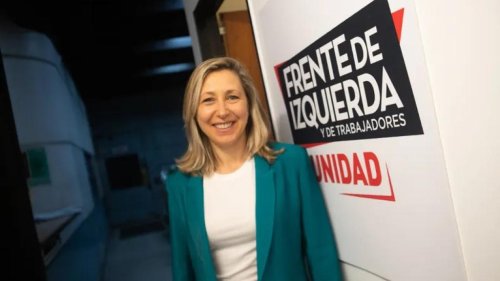
Against the backdrop of a Javier Milei government in crisis and Peronism’s [1] decline, polls are showing a surge in support for Myriam Bregman, a Workers’ Left Front – Unity (FIT-U) MP. With between 9–14% support and a strong social media presence, the FIT-U is emerging as an alternative for millions. However, historic difficulties that have plagued Argentina’s radical left have also re-emerged. Despite its combativeness, the radical left remains fragmented and, in some cases, very sectarian.
Israel Dutra interviewed veteran Argentine revolutionary Eduardo Lucita about Argentina’s emerging political landscape. Lucita is a Fourth International member and co-coordinator of Argentina’s Left-Wing Economists (EDI) collective. Lucita, along with other comrades, initiated a debate with an open letter addressed to the parties in the FIT-U, “The Left Faces a Major Challenge”. The letter has been circulating in Argentina for over a month and was recently followed by a second letter, also signed by well-known left-wing activists. [2]
As we believe it is important to raise awareness internationally about what is happening in Argentina, we interviewed Lucita, a signatory to both letters, on May 27. He discussed this process, provided an overview of the international situation and argued the case for building on the successful anti-fascist conference recently held in Porto Alegre in Brazil.
Your open letter addressed to the parties in the FIT-U has had a big impact within left-wing circles and beyond. Its impacts have even been felt here in Brazil. Could you give us an overview of the letter’s purpose and why it was published now?
I will focus on the letters’main points. To start, there is a broader context to bear in mind: the deepening social crisis and young people’s sense of a lack of future; the president’s declining popularity and strong rejection of his government’s actions; the serious difficulties Peronism has resolving its internal crisis; and the rise of the anti-capitalist left, embodied in the figure of Myriam Bregman. This general context seemed to us a turning point in the political situation, as well as both an opportunity and a challenge for the left.
So, the first objective was initiating a debate about this juncture, which I view as exceptional. Judging by the comments, criticisms and suggestions we have received, and that the Socialist Workers’ Party (PTS), Workers’ Socialist Movement (MST) and Socialist Left (IS) [all parties within the FIT-U] published the first letter on their websites, I think this first objective was achieved.
Beyond the analyses and characterisations, the letter also puts forward concrete proposals, such as creating “Committees of Struggle and Support for Myriam Bregman,” and establishing technical working groups to develop the left’s program with greater precision. We believe this would help consolidate its rise.
As for why now, the idea flowing through the text is that, for the first time in more than 40 years, the chance exists to mobilise sections of the masses to support a workers’ government and, within a broader perspective, raise the idea of contesting for real power. As we say, the committees could play an important role in this. It strikes me as an unprecedented situation that we must capitalise on.
Polls show surging support for Bregman, in terms of her image, approval and voting intentions. Did this surprise you?
Well, Bregman’s profile has been rising for several years. She is a left-wing activist with a long track record around human rights, and supporting trade union and social struggles. She is also a very powerful voice in the National Congress.
But I would be lying if I said that the surge in support for her over the past two months did not take me by surprise. She is the only political figure in the country with a positive approval rating and has an average voting intention of 10%. I am pleasantly surprised by all this.
What do you think explains this explosive rise in the polls? Is it her personal qualities, the policies she proposes, or rather the political and social situation being ripe for a figure as disruptive as Milei was in his day?
It is a combination of several factors. On the one hand, there is no doubt that the socio-economic situation carries significant weight. This is reflected in Milei’s falling approval ratings — now at their lowest point since he came to office [in 2023]— and, above all, by the 60% disapproval of his government’s performance.
The shift to the right within Peronism is also important. The party’s leaders have drifted a fair way from its historic base, which is fragmented, leaderless and disoriented. In a recent conversation with colleagues from some outer Buenos Aires suburbs, they said they had observed a shift in voting intentions within Peronism away from traditional figures towards Juan Grabois [who leads a progressive wing of Peronism closely linked to sectors of the Catholic Church], but now, for reasons unknown, Grabois’s rise had stalled and people were looking to vote for Bregman. I do not know if that is exactly the case, but such anecdotes are worth bearing in mind.
I believe her role as an uncompromising opposition figure who has never made deals with any government (just like the other FIT-U MPs) has been decisive. Her personality and charisma also carry weight. She is pleasant to deal with, always smiling, cultured and intelligent. She is also not afraid to speak out in parliamentary debates, to put her body on the line on the streets and to speak with the media, becoming the most sought-after figure these days.
I would also add that she has been a member of a Trotskyist party [the PTS] for 20 long years. You, as a full-time party activist, and I know full well the demands such parties entail. Bregman’s personality stems from her DNA, but I also believe it comes from being shaped and raised within that party.
The first open letter disagreed with statements by Bregman and Christian Castillo [another PTS leader and FIT-U MP] that the conditions do not exist for a left-wing government, nor for contesting power, as there is no powerful social movement or organs of dual power.
In my opinion, those statements were rather unfortunate. It is not that they are entirely wrong, but they failed to account for the context and came across as defensive, whereas we believe — and the letter makes this clear — that the conditions exist for a more active stance, putting forward proposals and seeking to overcome resistance.
Fortunately, our comrades have not repeated those statements. I think there was a process of reflection, and Bregman recently said in an interview: “Of course we want to be in government, of course we want to have the power to transform this situation at its roots.”
You also controversially characterised the current moment, saying that “an electoral breakthrough is more likely than an insurrectionary one”, before proposing “Committees of Struggle and Support for Myriam Bregman”. Is this not a sign of electoralism? How does this fit with the PTS’s proposal for a new workers’ party? And is the open letter not overly optimistic?
Well, in the face of so much resignation and despair that others want to impose on us, we have opted for the optimism of the will. But not in the abstract; rather, an optimism based on the shifting situation.
As for a workers’ party, I cannot answer definitively, as I am not clear what they are proposing. Speaking at the Ferro stadium on May 1, Bregman referred to a workers’ party, then to an instrument of the workers, then a party of the new working class, and finally a new historic movement. I suppose this proposal will be more defined in time and be discussed within the FIT-U, whose coordinating committee I understand is due to meet in the coming days.
As for electoralism, no one doubts that capital, led by Milei, is waging an offensive against working people’s living conditions, environmental protections and women’s rights, the LGBTQ+ community and various minorities in the country involved in multiple resistance movements.
But a common feature of these struggles — which all indications suggest will intensify — is that they are dispersed, fragmented and often influenced by identity politics, which hinders attempts to unify and centralise them. To make matters worse, leaders such as those of the CGT [General Confederation of Labour] favour negotiation over confrontation, or simply look the other way.
No one believes a social uprising is imminent, although the class struggle is obviously unpredictable. Otherwise, we would have all predicted the 2001 uprising [against neoliberal policies that forced the resignation of several presidents]. As I am older, I remember the 1959 conflict at the Lisandro de La Torre meat-processing plant, which culminated in a general strike organised via word of mouth. But it is a fact that the polls show electoral progress is far more likely to occur today than an uprising.
In the second letter, “Some reflections on the tasks ahead”, you place great emphasis on the committees, presented under the slogan “For a workers’ government: Myriam Bregman for president”.
Yes. The proposal for committees — which, it must be acknowledged, Bregman took up in her May 1 speech when she spoke of “organising support” — seeks not only to unite activists from parties in the FIT-U or other organisations and movements, but also intellectuals, artists and, above all, those leading the currently scattered and fragmented struggles. It aims to call for the broadest possible unity so that we can discuss together a minimum program to address the emergency we face and opens possibilities for profound transformations.
In recent days, the PTS launched its public call of “We need you.” We support this as a step forward, which invites people to organise around the idea of a workers’ government. It also raises the idea of a workers’ party and/or a new historic movement, but as I said, this requires more in-depth discussions.
Logically, these committees, convened by and rallying behind Bregman, should also be involved in election campaigning. The reality is that we will most likely enter a lull period now, due to the World Cup. But elections will be happen soon after it finishes. And they will be important, not only because many think things cannot go on as they are, but because within the ruling classes there is a sector already doubting that Milei will be re-elected, or if it is even in their interests if he is. So, there is no shortage of people wanting to drop him to save their project, and are already looking for a replacement.
So, for me, this is not electoralism. It is about seizing an unprecedented opportunity. But looking at the two open letters, you will see that they insist on not abandoning the struggles or the streets. The electoral arena is just another battlefield. As they used to say in the past, we must not ignore the battles on the terrain that the rulers dominate.
You also talk about shifting from defence to offence. I find this interesting, and not just for the Argentine left. Can you explain what this might look like?
It is clear that Bregman’s support and the shift in public sentiment that I have described — and it is not just me talking about this — will not automatically translate into organised support or votes. Achieving this political objective requires a sort of cultural shift on the left, here and around the world. It involves leaving behind a simply self-serving or self-referential politics and prioritising the general interests of the workers’ and popular movement. That is to say, less vanguardism and more mass politics to reach broad sectors hit hard by the crisis, including those who do not identify with anti-capitalism or socialism.
In our case, we need to reach out to the many groups and sectors within Peronism that are now directionless — without a project, program,or clear leadership — and who have repeatedly expressed their intention to vote for Bregman, to ask them to join the committees.
This leads us to the need for left unity, not simply because together we are more, but because it allows us to jointly think and act. This unity cannot simply be declared, it has to put aside fruitless arguments and create independent, democratic and autonomous committees as a common space for uniting the activist energy currently dispersed across multiple, often ineffective, spaces.
Making progress on this front requires a change in attitude among the members of the various parties in the FIT-U. If we manage this, we can leave behind the defensive position we have been stuck in for a long time, and go on the offensive. This would allow us to go beyond just resisting to envisioning ways to transform this intolerable reality, deal with the problem of power and forge the alliances needed to make this possible.
We have an unprecedented window of opportunity that also poses a major challenge for the left. This opportunity is not open-ended. We know politics abhors a vacuum. If the left does not occupy that space, others will. There is no time to lose.
I also have the international situation in mind. In that sense, how do you see what is happening in Argentina, but also in Bolivia, fitting into a world marked by geopolitical tensions, the rise of the right, and a figure like Donald Trump?
Well, Argentina is, to some extent, an exceptional case. We have a president who defines himself as an anarcho-capitalist and is at the ideological vanguard of the right’s global rise. As if that was not enough, he has also subordinated the country’s foreign policy to Trump’s US and Netanyahu’s Israel.
On the other hand, we have an anti-capitalist left, I believe, unlike any other in the world at the moment. It is spearheaded by an electoral alliance (the FIT-U) of four Trotskyist parties, which has existed for 15 years now, something equally unprecedented.
Bolivia is undergoing a severe political crisis fuelled by a workers’, indigenous and peasant uprising that has blocked the country’s main roads and cities. They demand the Rodrigo Paz government, elected just over six months ago, resign. If this happens — and we should not rule out that something similar could happen in my country, given the critical social situation — it would have a tremendous impact internationally.
Even defeating Milei in the 2027 presidential elections would be significant. It would concretely demonstrate that, whether through insurrection or the ballot box, the far right can be defeated. And if the anti-capitalist left plays a decisive role in these movements, it would serve as an example for the left internationally.
As for Trump, it is clear that he heads a decaying empire seeking to take refuge in the “Western bloc” and that, as it declines, has become more aggressive and predatory. This was demonstrated by the military invasion of Venezuela and kidnapping of its president, the threats and strangulation of Cuba, and his remarks about annexing Canada and Greenland.
Trump allowed Israel to drag him into the Middle East war, while letting Israel run rampant in Gaza, the West Bank and Lebanon. Trump became involved in the war without a clear entry or exit strategy. It is now clear that he will emerge weakened from this self-inflicted chaos. This could have consequences for the US November mid-term elections.
The flip side is the rise of China, now the main reference point on the global chessboard, as a Spanish political scientist put it. In just under a week, China’s president Xi Jinping received Trump and Vladimir Putin on state visits to Beijing and signed various trade and political agreements with both, granting neither anything of significance. He forced Trump to back down on arms sales to Taiwan and made clear to Putin that China is more important to Russia than Russia is to China.
We face a changing world order, and everything indicates that we are heading towards a division of spheres of influence. This may stabilise the situation for a while, but tensions will return, especially considering that global capitalism’s unresolved crisis underlies all this.
Finally, here in Porto Alegre, we held the 1st Anti-Fascist Conference for the Sovereignty of Peoples in March, with a significant delegation from Argentina. What were your thoughts on this event and how do you see it developing in the future?
I do not know if you are aware, but I collaborated with Eric Toussaint in organising the conference. I no longer travel, but from the reports I received and comments from various comrades, the conference was a success in terms of participation and the diversity of topics debated in the various panels and self-organised activities.
There is no doubt that this success stemmed from focusing on the common objective of an international convergence to confront far-right forces across the world, an objective shared by various parties and social movements in Brazil and internationally by organisations such as CADTM [Committee for the Abolition of Illegitimate Debt], the Fourth International, Jubilee South and the Rosa Luxemburg Foundation.
A large delegation from my country took part, comprising members of anti-capitalist organisations and centre-left and/or progressive movements, as well as some prominent intellectuals.
I believe the conference must be followed up. This was also the view of the International Committee, which decided to organise two events, one in Mexico and another in Argentina. We will see when these can take place. The decision has been made and it is our duty to carry them out.
2 June 2026
Source: A version of this interview was first published in Spanish at Revista Movimento. Translation by Federico Fuentes for LINKS International Journal of Socialist Renewal.
Footnotes
[1] Peronism has been the dominant political force in Argentine politics since the rise to power of President Juan Domingo Perón in 1946. Currently in opposition, it has also been the main ruling party since the end of the military dictatorship in 1983. As a broad political movement, it encompasses a wide spectrum of politicians (from right-wing to centre-left and progressive), including the previous centre-left administrations of Nestor Kirchner (2003-07) and Cristina Fernandez de Kirchner (2007-15).
[2] Among the signatories of these open letters are also Ariel Petruccelli, a renown intellectual; Juan Pablo Casiello, a well-known teachers’ union leader from Rosario, and Aldo Casas, a lifelong revolutionary socialist.
Eduardo Lucita
Eduardo Lucita is a Director of the Marxist review Cuadernos del Sur, and member of the Argentinian group Economists of the Left (EDI) and of the Fourth International. He has been active on the revolutionary left since the 1960s.
Israel Dutra
Israel Dutra is a sociologist. He is secretary of international relations of the National Directorate of the PSOL and an activist of the Movement of the Socialist Left (MES, member of the Fourth International in Brazil).
.png)

No comments:
Post a Comment